Moderate
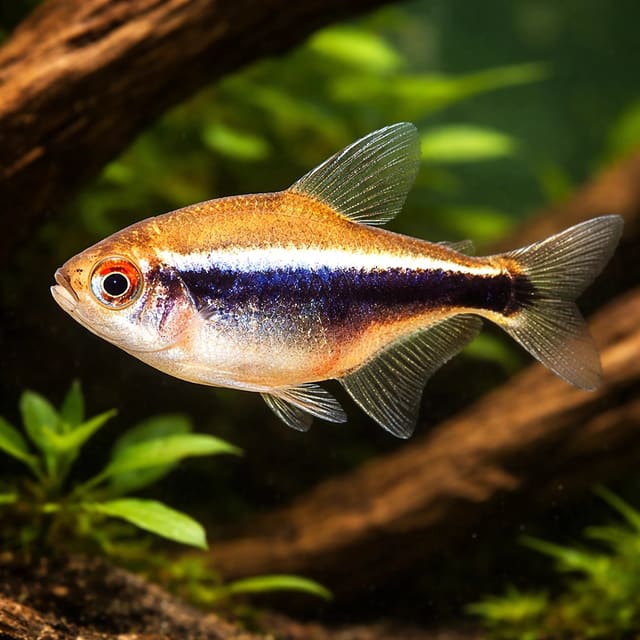
Neon Tetra (Paracheirodon innesi)
21–25°C · pH 5–7
£2.99

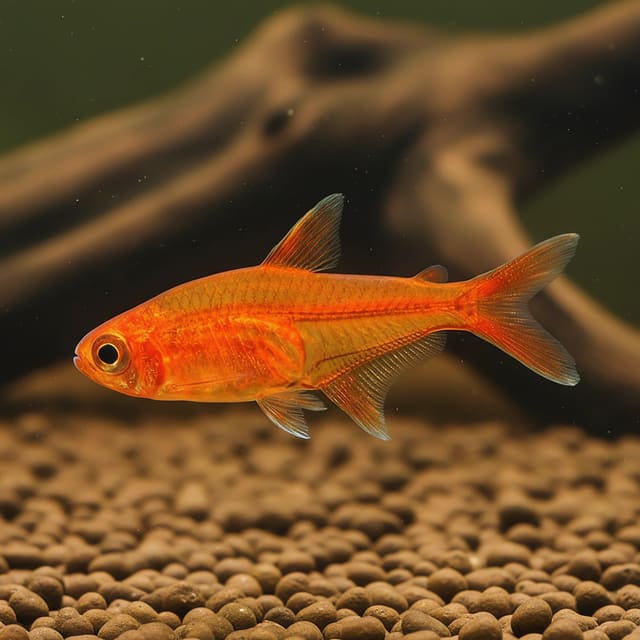
The Serpae Tetra (Megalamphodus eques) is a 4 cm South American shoaling fish with a real fin-nipping risk when space or group size is inadequate. One purchase supplies one animal in the selected dispatch size. Keep at least 12 in an aquarium of at least 80 × 30 cm, around 72 litres, and avoid timid or long-finned tank mates.
Adult size is the maximum length this species reaches at full maturity (scientific sources). The livestock you receive will be younger and smaller — pick a size above for the actual shipping size. Product-photo provenance and any image-specific limitations are stated on the listing.
Megalamphodus eques
Shoaling fish: kept in a group they feel safer, stay calmer and show their best colour.
Minimum of 2 per order.
The Serpae Tetra (Megalamphodus eques) is a 4 cm South American shoaling fish with a real fin-nipping risk when space or group size is inadequate. One purchase supplies one animal in the selected dispatch size. Keep at least 12 in an aquarium of at least 80 × 30 cm, around 72 litres, and avoid timid or long-finned tank mates.
Adult size is the maximum length this species reaches at full maturity (scientific sources). The livestock you receive will be younger and smaller — pick a size above for the actual shipping size. Product-photo provenance and any image-specific limitations are stated on the listing.
Maintain these water conditions for optimal health and vibrant colors
The Serpae Tetra is a small freshwater South American tetra suited to keepers who can plan around group behaviour rather than treating it as a quiet background fish. FishBase now lists it as Megalamphodus eques, in the American-tetra family Acestrorhamphidae. Older aquarium references may place it under Hyphessobrycon callistus. The accepted name is used throughout the practical care details.
Its recorded distribution covers the Amazon, Guaporé and Paraguay River basins in South America. FishBase describes a freshwater, benthopelagic fish and records a maximum of 4 cm standard length. That adult figure is the decisive size for long-term planning, even when a much smaller dispatch grade is selected.
Jewel Tetra, Red Minor Tetra, Blood Tetra and Callistus Tetra are established aquarium names for the same animal. Serpae Tetra remains the clearest customer-facing name. You can also browse the current tetra collection when comparing different social and behavioural profiles.
Seriously Fish describes a gregarious fish that forms loose hierarchies and has a recognised reputation for fin-nipping. Nipping is most pronounced when too few are kept or space is restricted. A group of at least 12 is therefore a behavioural requirement, not simply a visual preference.
| Suits | Not suited to |
|---|---|
| Keepers able to maintain at least 12 fish with a long swimming footprint | Solitary keeping or a group below 12 |
| A well-furnished aquarium with open swimming room | A cramped aquarium with restricted swimming space |
| A carefully screened community in more than the minimum space | Communities built around timid or long-finned fish |
This fish suits an aquarium planned around a lively same-species group, a long swimming footprint and carefully screened companions. It is a poor fit for a cramped community, a solitary display or an aquarium built around timid or long-finned fish. Brief chasing within the group can form part of its hierarchy, but repeated fin damage, one fish being excluded or other inhabitants hiding requires action.
Its likely natural diet is omnivorous and includes small invertebrates, crustaceans, filamentous algae and fallen fruit. Aquarium feeding should translate that variety into a measured routine rather than heavy feeding. Food cannot compensate for inadequate space, too small a group or unsuitable companions.
One purchase quantity supplies one animal of the selected option. The live size selector shows 1–1.5 cm, 1.5–1.9 cm, 2 cm, 2.5–3 cm, 3–3.5 cm and XXL. Use the selector when choosing the dispatch grade and quantity for the planned group.
The size you select is the size supplied, not the adult size. Treat XXL as a named dispatch grade rather than assigning it a numerical adult measurement. All grades belong to the same species and must be planned around the recorded maximum of 4 cm standard length.
Sex is guaranteed only when the selected option explicitly states male or female. This Serpae Tetra listing has no sex-guaranteed option.
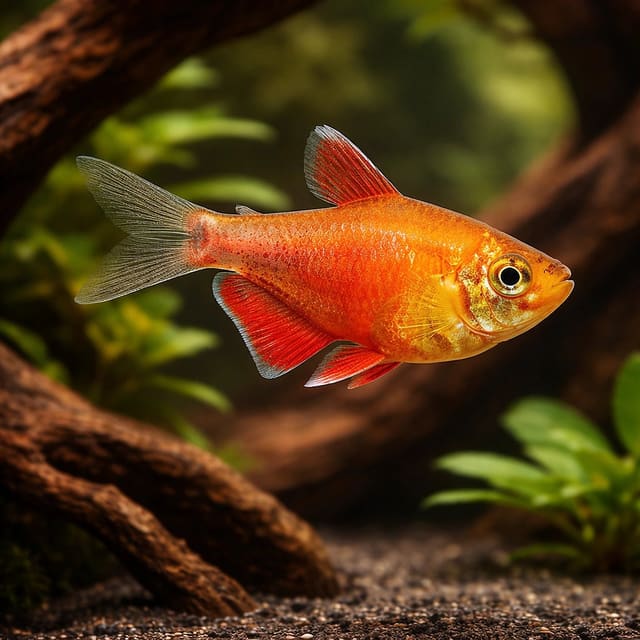
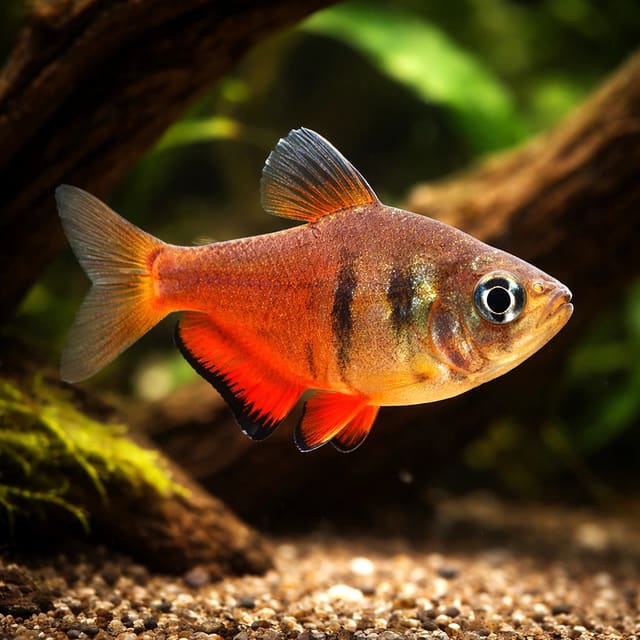
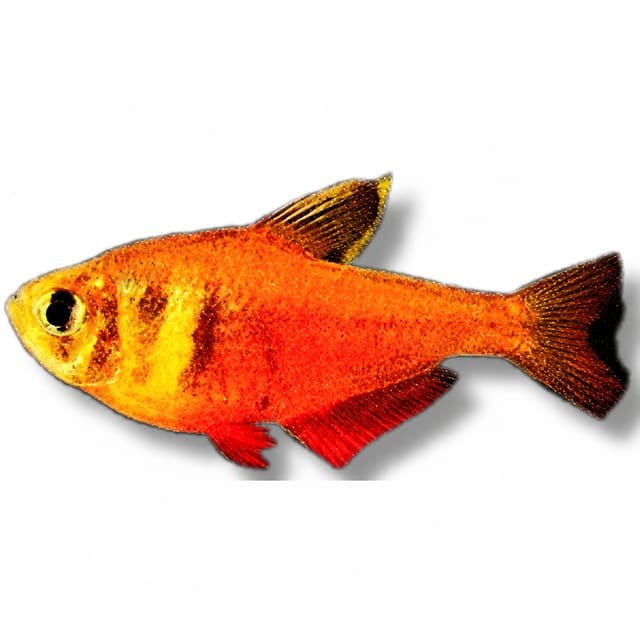
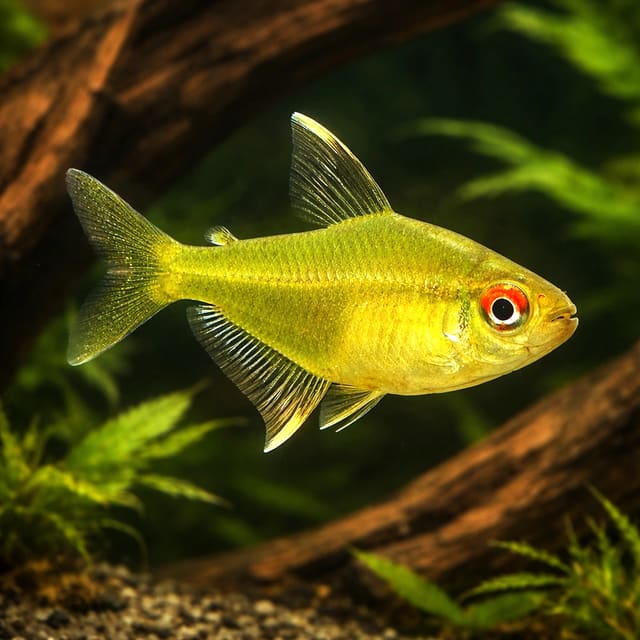
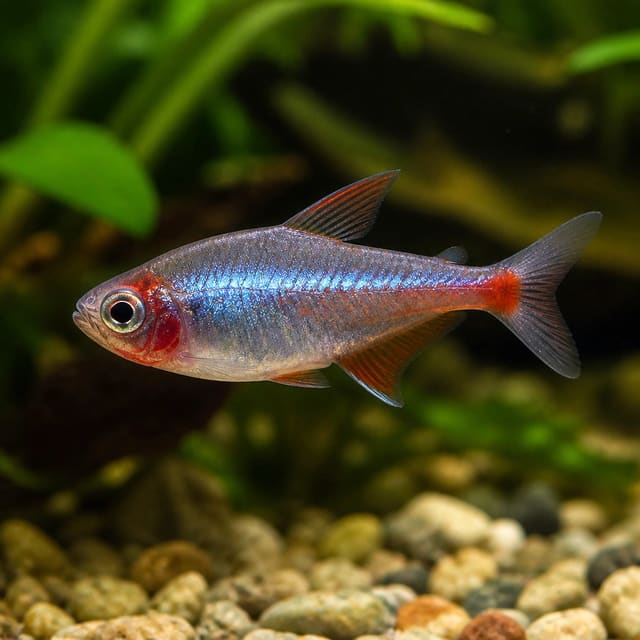
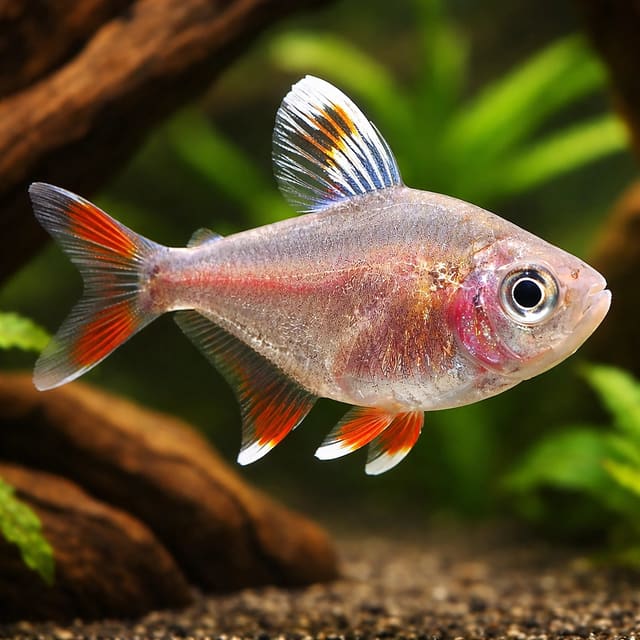
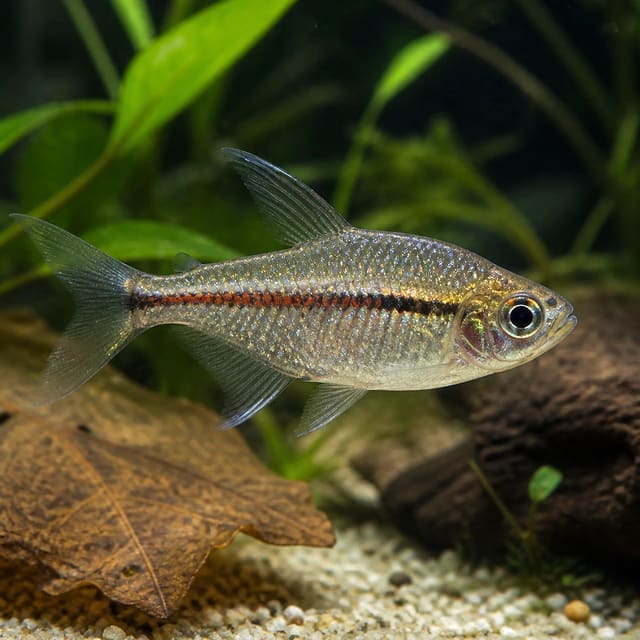
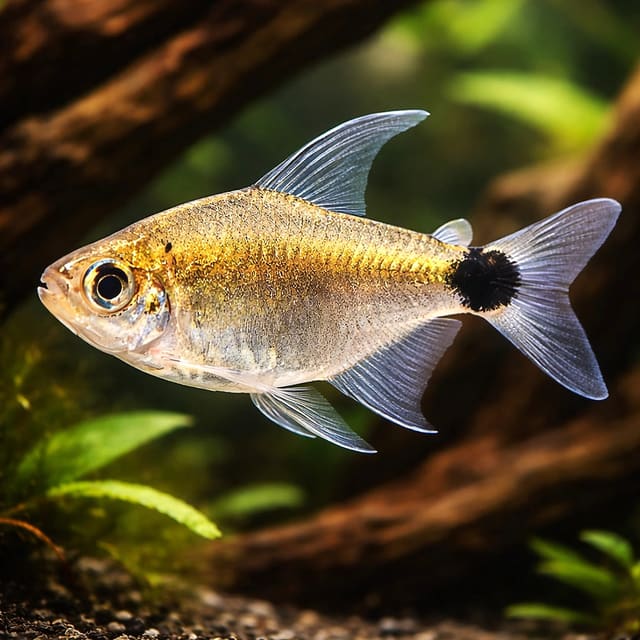
The gallery images are representative, based on reference photographs of this species, so colours can look slightly different from the live animal.
| Decision | Planning figure |
|---|---|
| Adult length | Maximum 4 cm standard length |
| Same-species group | At least 12 |
| Absolute minimum footprint | At least 80 × 30 cm or equivalent |
| Approximate minimum volume | Around 72 litres |
| Aquarium temperature | 20–28°C |
| Aquarium pH | 5.0–7.5 |
| Aquarium hardness | 1–15 dGH |
The minimum arrangement is intended for a group of 12–15 without another upper-water species. Adding compatible species calls for a larger aquarium, because the Serpae group still needs room to establish its hierarchy and move without continually pressing against other fish.
Around 72 litres is tied to the 80 × 30 cm footprint and should not be treated as permission to use a tall aquarium with a shorter base. Floor area and swimming length remain important. If the aquarium falls below the stated footprint, choose a different stocking plan rather than reducing the group below 12.
An aquarium with base dimensions of at least 80 × 30 cm, or an equivalent footprint, is the absolute minimum to consider. This corresponds to roughly 72 litres. Plan the usable aquarium around a group of at least 12; a group of 12–15 is advised in the minimum dimensions when no other upper-water species is included.
The minimum is a complete planning package: footprint, volume, group size and restrained community stocking work together. Meeting only one part does not solve pressure elsewhere. A 72-litre aquarium with a shorter base loses horizontal room, while an 80 cm aquarium crowded with other upper-water fish loses the space intended for the Serpae group.
Any compatible additional species requires a larger aquarium than the minimum arrangement. There is no single larger volume that suits every community because the decision depends on adult size, swimming position, temperament and the number of animals involved. Preserve the Serpae group of at least 12, then assess how much separate swimming and retreat space the proposed companions need.
| Proposed arrangement | Action |
|---|---|
| 12–15 Serpae Tetras only in the upper water | Use at least an 80 × 30 cm base and around 72 litres |
| Serpae group plus another upper-water species | Choose a larger aquarium and screen the added species carefully |
| Fewer than 12 Serpae Tetras | Increase the planned group rather than relying on a small shoal |
| Base shorter than 80 cm | Choose another fish or a larger aquarium |
Use adult dimensions in every stocking calculation. A selected 2 cm or 3–3.5 cm animal still grows towards the same recorded maximum and joins the same hierarchy. The selected grade changes what arrives; it does not reduce the aquarium, group or compatibility requirement.
Décor is flexible, but this tetra tends to show better colouration in a well-furnished aquarium with live plants and a dark substrate. A natural-looking arrangement can use soft sand with wood roots and branches positioned to form shaded areas. Keep useful open water between these structures so the group can move together without being funnelled through one narrow route.
Planting and wood also create visual breaks. These give a fish somewhere to move out of direct view during social interactions without splitting the aquarium into cramped compartments. Concentrate structure where it creates several routes around the aquarium, then retain a clear swimming lane through the main water column.
Dried leaf litter can strengthen a biotope-style arrangement. As the leaves decompose, beneficial microbial colonies may develop and provide a secondary food source for fry. Tannins and other compounds released during decomposition also help simulate natural conditions.
Leaves may be left to break down fully or removed and replaced every few weeks. Choose one method and monitor how it affects maintenance, water appearance and access to the substrate. Leaf litter should remain a deliberate feature rather than accumulating until solid waste can no longer be removed effectively.
A well-furnished aquarium does not replace the minimum footprint or group size. Cover helps individuals manage interactions; enough space and at least 12 fish address the underlying social requirement.
Maintain 20–28°C, pH 5.0–7.5 and hardness of 1–15 dGH. These are practical aquarium ranges for this fish, not targets to swing between. Measure the aquarium and replacement water, choose stable values within the ranges and avoid creating abrupt changes during routine maintenance.
Use our water chemistry guide to understand the values being measured, then compare the results with the stated ranges through the water matcher. Record actual test results so a change in behaviour can be compared with a change in water conditions.
OATA’s tetra and pencilfish guidance is broad group advice rather than a Serpae-specific optimum: ammonia and nitrite should remain at 0 mg per litre, while nitrate should not exceed 20 mg per litre above the normal tap-water level. Test at least weekly and again whenever breathing, feeding, colour or swimming changes.
RSPCA aquarium welfare guidance explains why a working biological filter is vital. Fish release toxic ammonia. Beneficial bacteria convert it to nitrite, which is also toxic, and then to the safer nitrate. A mature filter therefore manages an ongoing waste process; clear-looking water alone cannot show that ammonia and nitrite are controlled.
| Equipment decision | Figure for roughly 72 litres |
|---|---|
| Filter turnover | Four to five times the aquarium volume each hour |
| Filter rating | About 290–360 litres per hour |
| Heater power | Roughly 50–75 W when the room is around 20°C |
Check real flow and temperature after installation rather than relying only on the equipment label. Blocked filter media can reduce turnover, while room temperature affects how much heating is required. Keep the chosen temperature steady inside the 20–28°C range.
Set up and mature the aquarium before livestock is introduced. Our first tropical aquarium guide covers the preparation sequence. A working filter needs an established bacterial population able to process ammonia and nitrite; running equipment for appearance alone does not demonstrate that this process is ready.
Before adding the fish, confirm that ammonia and nitrite are both 0 mg per litre. Check that temperature, pH and hardness sit within 20–28°C, pH 5.0–7.5 and 1–15 dGH. Make these checks against measured aquarium water rather than assumptions about local tap water.
Increase aquarium livestock slowly. Every increase in fish numbers and feeding creates more waste, so the beneficial bacterial population must adjust to the new load. Stocking too quickly can lead to new tank syndrome, with ammonia or nitrite rising to levels that can make fish ill or cause death.
The Serpae Tetra still needs a planned group of at least 12. Reconcile that social requirement with biological capacity before ordering: prepare a mature aquarium and filter for the intended group rather than placing a few fish into an immature system and leaving them in an inadequate shoal.
Use the live selector for the dispatch grade and quantity. For dispatch timing and the steps attached to the Live Arrival Guarantee, read the current delivery and Live Arrival Guarantee policy before the planned delivery.
Feed a good-quality flake or granule as the regular aquarium staple. Add suitably small live or frozen foods such as daphnia, small bloodworm or tubifex for variety. The species guidance also identifies live and frozen chironomid larvae, mosquito larvae, Daphnia and Moina as useful menu components.
This varied aquarium diet reflects an omnivorous feeding pattern. In nature, the fish is likely to consume small invertebrates, crustaceans, filamentous algae, fallen fruit and similar material. Variety should come from alternating suitable foods, not from combining every item into an oversized meal.
Feed once a day and give only what the fish can eat within a few minutes. Begin with a small amount, watch the whole group eat, and stop when food is no longer being taken promptly. If uneaten food remains, reduce the next portion rather than adding another feed later.
| What you observe | What to do |
|---|---|
| Food is eaten promptly by the group | Keep the portion and daily schedule consistent |
| Food remains after a few minutes | Reduce the next meal and remove accessible waste |
| One fish repeatedly misses food | Check its position in the hierarchy, swimming and condition |
| The group loses interest in food | Test water and check for other health changes |
Overfeeding creates uneaten food that decomposes and releases toxic waste into the water. It also increases the load on the biological filter. More food will not resolve chasing caused by inadequate space, an undersized group or incompatible companions.
Judge the routine through body condition as well as appetite. A sustained increase or decrease in condition belongs with the other health observations; respond by checking feeding quantity, access to food and water quality rather than making several changes at once.
At least once every week, carry out a partial water change of 25%. Use a siphon to remove solid waste from accessible areas of the substrate. Treat replacement tap water with a suitable conditioner to remove chlorine or chloramine before it enters the aquarium.
Test the water at least weekly. Ammonia and nitrite should read 0 mg per litre, and nitrate should stay no more than 20 mg per litre above the normal tap-water level. Record temperature, pH and hardness often enough to recognise drift from the chosen stable point inside the species range.
Check the filter for blockages. If the filter needs cleaning, do not run it under the tap, because chlorine or chloramine may kill part of the beneficial bacterial population established in the media. Instead, rinse it lightly in aquarium water removed during the partial water change.
Cleaning should restore useful flow without stripping the filter unnecessarily. Compare the outlet with its normal output and check that the equipment continues to provide the planned turnover. In the roughly 72-litre minimum aquarium, the reference filter rating is about 290–360 litres per hour.
This order preserves useful clues. If behaviour changes before maintenance, write down the observation and test result instead of assuming the water change caused or solved it. A repeatable routine makes gradual changes easier to recognise.
Healthy fish should have clear, bright eyes, intact scales, undamaged fins and appropriate swimming behaviour. They should show interest in the measured daily feed. Individual variation is normal, so compare each fish with its usual behaviour and with the rest of the group.
Watch for changes in swimming, colour, temperament, breathing, appearance, body condition and feeding. Warning signs include hanging at the surface, sitting on the bottom, erratic movement, unusual hiding, faster or slower gill movement, white spots, fluffy growths, lost fins or scales, bumps, ulcerations, weight change and reduced appetite.
| Change | First response |
|---|---|
| Surface hanging or abnormal breathing | Test ammonia, nitrite, nitrate and temperature immediately |
| Erratic swimming or sitting on the bottom | Test water and check whether the change affects one fish or the group |
| Torn fins on several fish | Review group size, space and companions |
| One fish is repeatedly excluded | Check the layout, hierarchy and whether the group contains at least 12 |
| Reduced feeding | Test water, review the previous portion and inspect body condition |
| White spots, growths, ulcers or scale loss | Record the appearance and seek case-specific health guidance |
Fin damage can result from social pressure, so do not treat torn fins as a diagnosis on their own. If several fish are affected, the immediate practical checks are the Serpae group size, the 80 × 30 cm minimum footprint, visual cover and the presence of timid or long-finned companions.
If a health change persists, test the water and contact us with the measured results, aquarium volume, group size, recent additions, feeding pattern and observed signs. These details allow the next step to address the actual situation rather than relying on a symptom alone.
Avoid timid and long-finned fish. Serpae Tetras have a recognised tendency to nip fins, especially when the group is too small or the aquarium is cramped. Slow or easily intimidated fish may receive repeated attention and may struggle to compete in an active upper-water community.
Begin with the same-species requirement: at least 12 Serpae Tetras in adequate space. In the minimum 80 × 30 cm aquarium, a group of 12–15 is advised without another upper-water species. A proposed community therefore needs a larger aquarium before any additional fish is assessed.
| Screen | Required decision |
|---|---|
| Temperament | Choose fish able to live with an active, potentially nipping tetra |
| Fins and movement | Avoid long-finned, slow or timid fish |
| Adult size | Compare adult dimensions rather than dispatch grades |
| Water | Require an overlap with 20–28°C, pH 5.0–7.5 and 1–15 dGH |
| Swimming space | Preserve room for the full Serpae group and choose a larger aquarium for additions |
| Feeding | Check that every species can obtain its food within the planned routine |
No fixed companion list guarantees the result in every aquarium. Individual behaviour, layout, group composition and space can change the outcome. The honest decision is to screen the complete proposed stocking plan and continue observing it after introduction.
For a stocking and compatibility assessment, contact us with the aquarium’s base dimensions and volume, measured water values, filter capacity, existing animals and the adult size and temperament of each proposed addition. This is more useful than choosing companions from a generic name list.
This gregarious species forms a loose hierarchy. Keeping at least 12 increases the likelihood that displays and chasing remain focused within the group rather than on other inhabitants. Inadequate numbers or restricted space make fin-nipping more pronounced.
A larger group cannot repair a cramped aquarium, and a larger aquarium cannot replace the social group. Meet both requirements together. For the 80 × 30 cm minimum, plan 12–15 Serpae Tetras and no other upper-water species. Move to a larger aquarium before adding compatible community fish.
Do not respond to social pressure by increasing food. The species should receive one measured daily meal that is eaten within a few minutes. Additional food increases waste and cannot create more swimming room or alter an incompatible fin shape.
Observe the whole aquarium rather than only the chasing fish. The condition of the pursued fish, access to food, fin damage and changes in hiding reveal whether the interaction remains brief or has become a welfare problem. Act on persistent patterns instead of waiting for damage to become severe.
It is the accepted scientific name for the Serpae Tetra, a freshwater South American member of the American-tetra family Acestrorhamphidae. FishBase records it from the Amazon, Guaporé and Paraguay River basins and gives a maximum length of 4 cm standard length.
One purchase quantity supplies one animal of the selected option. Choose the required dispatch grade and number of animals through the live size selector, remembering that the social group should contain at least 12 fish.
The dispatch sizes are 1–1.5 cm, 1.5–1.9 cm, 2 cm, 2.5–3 cm, 3–3.5 cm and XXL. These are supplied sizes rather than adult sizes; plan every choice around the recorded maximum of 4 cm standard length.
Use an aquarium with base dimensions of at least 80 × 30 cm or equivalent, corresponding to roughly 72 litres. That minimum is advised for 12–15 fish without another upper-water species; choose a larger aquarium when adding compatible species.
No. It is a gregarious fish that forms a loose hierarchy and should be kept in a group of at least 12. Too few fish or restricted space makes fin-nipping more pronounced and increases the likelihood that attention shifts towards tank mates.
Maintain 20–28°C, pH 5.0–7.5 and hardness of 1–15 dGH. Keep ammonia and nitrite at 0 mg per litre, and keep nitrate no more than 20 mg per litre above the normal tap-water level.
Feed a good-quality flake or granule with small live or frozen foods such as daphnia, small bloodworm or tubifex for variety. Offer only what the group can eat within a few minutes once a day to limit waste.
Prepare a mature, filtered aquarium, confirm ammonia and nitrite are 0 mg per litre, and check temperature and pH before introduction. Increase livestock slowly so biological filtration can adjust, then watch swimming, breathing, appetite and fin condition closely during the first week.
Avoid timid and long-finned fish because this active tetra may nip fins, particularly when kept in insufficient numbers or restricted space. Screen every proposed companion for adult size, temperament, water overlap, swimming position and ability to obtain food.
No reviews for this item yet. Bought one? Honest reviews only, good or bad.
What customers say about ordering from us
I have a small group of long finned mountain minnows. So was delighted to be able to order ten of this variety to increase the genetics in my tank . The ones I recieved are healthy but it’s to early to give a verdict on wether they are of a long finned type since they are small currently.
Gordon Walker · 23 Sept 2026
100% success travel and "installation". Pleased with quality of purchase. The Siamese fighter a bit "shy" so have not yet seen him at his best yet but looking good. Happy customer. GG
George E Garratt · 21 Sept 2026
Reviews of our shop, collected by Judge.me, an independent third-party review collector. Newest first.