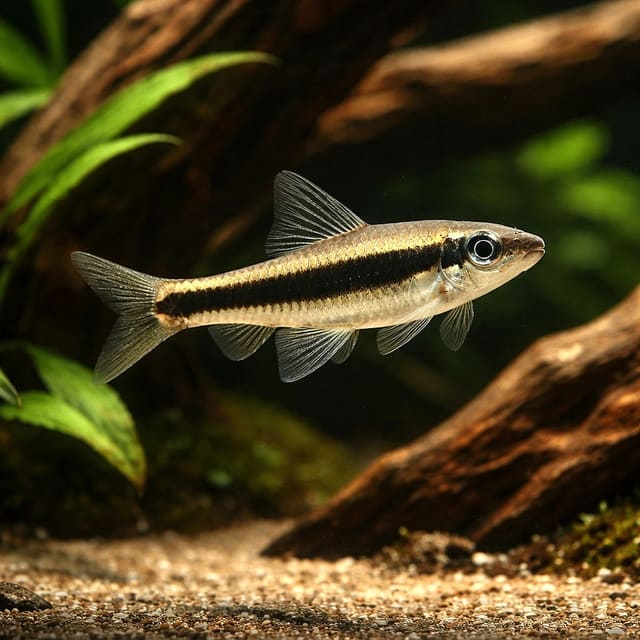

Epalzeorhynchos kalopterus
Flying Fox - Moderate Care Tropical Fish | UK
Add a lively Flying Fox to your aquarium for natural algae control and constant activity. Moderate care, ideal for tropical setups. Order now for UK delivery.
Care at a Glance
Premium Quality
Healthy, vibrant fish from trusted suppliers
Expert Care
Detailed care guides and support
Live Arrival Guarantee
Your fish arrives healthy or we'll replace it
Acclimated
Properly quarantined and ready for your tank
Quick Care Guide
Water Parameters
Maintain these water conditions for optimal health and vibrant colors
Why Choose This Fish?
Add a lively Flying Fox to your aquarium for natural algae control and constant activity. Moderate care, ideal for tropical setups. Order now for UK delivery.
The Flying Fox, Epalzeorhynchos kalopterus, is one of the most striking algae-grazing fish available to aquarists who want more than a plain utility species. Native to fast-flowing waters in Southeast Asia, this elegant cyprinid combines a bold black lateral stripe, warm bronze body tones, and constant foraging behaviour that brings movement to the lower half of the aquarium. Adult flying fox size reaches around 15 cm / 6 inches, and with good care the flying fox lifespan can reach 8 years. That makes it a long-term choice rather than a temporary clean-up fish. In the right flying fox tank setup, it becomes an active, characterful resident that helps manage soft algae while adding contrast to planted layouts and river-style aquascapes.
This species is especially popular with keepers of tropical fish UK community aquariums because it offers a useful balance of beauty and function. It is often searched as an aquarium algae eater UK option, a freshwater algae eater UK favourite, and even as the best algae eater for community tank discussions continue online. See our detailed photos showing the body line, fin edging, and mature patterning in the product image flying-fox.webp, which helps you distinguish a true Flying Fox from lookalike species. If you want a fish with personality, visible flying fox activity, and a practical role in algae control, this is a rewarding species for medium to large aquariums.
🔹 Quick Facts
- Scientific Name: Epalzeorhynchos kalopterus
- Care Level: Moderate
- Min Tank Size: 150 litres (about 33 gallons)
- Temperature: 22-26°C (72-79°F)
- pH Range: 6.0-7.5
- Lifespan: Up to 8 years
- Temperament: Semi-aggressive, territorial with age
- Diet: Omnivore with strong interest in algae and prepared foods
Classification
- Order: Cypriniformes
- Family: Cyprinidae
- Genus: Epalzeorhynchos
The Flying Fox is a true carp-family fish rather than a catfish or pleco. In the aquarium hobby it is well known for being confused with the Siamese algae eater, but it belongs to a different group with a more territorial adult temperament. Its place in the hobby sits between practical algae control and display fish appeal, making it a smart choice for aquarists who want an active bottom-zone grazer with a more defined personality.
Where Do Flying Fox Come From? Natural Habitat Explained
The flying fox habitat in the wild is very different from the mammal-related searches you may have seen online such as flying fox what kind of animal, flying fox bat, flying fox bats, or flying fox fruit bat. In aquarium terms, the Flying Fox is a freshwater fish from Southeast Asia, especially Borneo, Sumatra, and Java. It inhabits clear streams and rivers with moderate to brisk current, oxygen-rich water, and a mix of sand, gravel, roots, and submerged wood. These waterways often run through forested areas, so the fish is adapted to dappled light, leaf litter, and natural surfaces covered in biofilm and algae.
Understanding this origin is central to any good flying fox care guide. In nature, these fish spend much of the day grazing on algae films, aufwuchs, and tiny edible particles attached to hard surfaces. They are not strict herbivores, and wild feeding includes insect larvae and organic detritus. This explains why a balanced flying fox diet in the aquarium should never rely on algae alone. Their streamlined body and strong fin placement also reflect life in flowing water, where they hold position near the bottom and dart between cover.
Because of this background, the best flying fox ideal conditions include stable water quality, current, and plenty of surfaces to explore. Aquarists sometimes arrive here after unrelated searches like black flying fox, little red flying fox, grey headed flying fox fun facts, flying fox wingspan, or flying fox face. Those terms refer to fruit bats, not this fish. For fishkeepers, the useful takeaway is that the aquarium Flying Fox is a riverine grazer that thrives in a mature, well-oxygenated freshwater setup.
In the hobby, it is valued as a hardy species for tropical fish uk freshwater aquariums, especially where owners want a more robust alternative to delicate nano algae eaters. While not generally considered endangered in the trade, wild-type fish always benefit from responsible sourcing and careful acclimation.
💡 Expert Tip
Mimicking the natural habitat with current, smooth stones, driftwood, and shaded areas improves confidence, feeding response, and natural grazing behaviour. Fish kept in sparse tanks often become more defensive because they lack clear resting spots and territory boundaries.
How to Set Up the Perfect Tank for Flying Fox
A strong flying fox aquarium setup starts with space. The accepted flying fox minimum tank size is 150 litres, but a larger aquarium is better once the fish matures. If you are researching flying fox tank size because you want to keep one long term, think in terms of footprint rather than height. A tank at least 90-120 cm long gives this active species room to patrol, graze, and avoid conflict with tank mates. For mixed communities, 180 litres or more is often the smarter choice.
Tank Size Requirements
One of the most common questions is how many flying fox in a tank. For most home aquariums, the answer is one. This species can be territorial, especially toward similar-shaped bottom dwellers and algae eaters. Juveniles may appear sociable in shop tanks, but adults often establish dominance. A single specimen in a well-structured community tank is usually the safest route. If you are considering multiples, only very large aquariums with broken sight lines and abundant territory should be attempted, and even then success is not guaranteed.
Water Parameters
The ideal flying fox water parameters are stable rather than extreme: flying fox temperature 22-26°C, flying fox pH level 6.0-7.5, and flying fox water hardness 4-15 dGH. If you are checking flying fox water temperature for seasonal adjustments, aim for the middle of the range around 24-25°C in a community tank. These values suit many popular barbs, rainbowfish, and medium tetras. Sudden swings matter more than chasing exact numbers, so consistency is key.
Filtration and Flow
Good flying fox filtration needs are often underestimated. Because this fish is active, produces a fair amount of waste for its size, and appreciates oxygen-rich water, filtration should be efficient and well maintained. A quality external canister filter or a powerful internal filter with broad circulation works well. Moderate flow encourages natural station-holding and grazing. Dead spots should be avoided, especially behind decor where waste can build up.
If you are building a community around algae eaters, compare options such as the X Siamese Algae Eater, X Gold Chinese Algae Eater, and X Black Gold Chinese Algae Eaters. Each has different flow tolerance, adult temperament, and algae-eating habits, so the best algae eater comparison depends on tank size and livestock.
Substrate, Plants, and Decor
A practical flying fox tank setup uses sand or smooth fine gravel to protect the underside as the fish rests and forages. Add rounded stones, bogwood, root tangles, and shaded retreats. This species does very well flying fox in planted tank layouts as long as there is swimming room. Hardy plants attached to wood and rock are ideal because they leave the substrate open. A mature planted aquarium also develops the biofilm and algae films that encourage natural grazing.
For alternative algae-grazing companions in larger setups, aquarists often look at Golden Oto Otocinclus Affinis Golden Dwarf, X Chinese Algae Eaters - Gyrinocheilus, X Sucker Heads - Garra Gotyla, and Garra Rufa Tropical Fish Doctor Fish. These links are useful if you are deciding on a flying fox or alternative for your aquascape.
Lighting
Moderate lighting is usually best. Bright lighting can help algae growth for grazing, but intense light without plant balance can cause nuisance blooms. A photoperiod of 7-9 hours suits most community tanks. In heavily planted systems, use floating cover or wood to create shaded lanes so the fish feels secure.
🔹 Quick Setup Checklist
- Choose a tank of at least 150 litres, preferably larger for community setups
- Keep one Flying Fox per tank in most home aquariums
- Maintain 22-26°C, pH 6.0-7.5, hardness 4-15 dGH
- Use strong filtration and moderate water movement
- Add wood, stones, shaded retreats, and algae-growing surfaces
- Allow the aquarium to mature before expecting natural grazing behaviour
💡 Pro Tip
Always cycle the tank for 4-6 weeks before adding a Flying Fox. In immature aquariums, unstable nitrogen levels and lack of natural biofilm often lead to stress, poor feeding, and unnecessary aggression.
What Do Flying Fox Eat? Complete Feeding Guide
The flying fox diet is omnivorous, with a strong preference for algae films and attached foods when young. Many keepers buy this species expecting a nonstop algae machine, but adults usually become more interested in prepared foods. That does not make them poor algae eaters; it simply means a proper flying fox feeding guide should include variety. In a mature aquarium, they graze naturally between meals, picking at soft algae, biofilm, and edible debris from wood, rocks, and decor.
Staple Foods
Use high-quality sinking pellets, algae wafers, and spirulina-based foods as the core diet. These provide consistency and reduce the risk of nutritional gaps. For owners searching buy algae eater UK, algae eater for sale UK, or live algae eater UK, this is the key point: no algae eater should be expected to live on tank algae alone. Supplementation is essential.
Supplemental Foods
Blanched courgette, spinach, shelled peas, and cucumber can all be offered in small portions. Protein should also be included once or twice a week in the form of frozen bloodworm, daphnia, or brine shrimp. This mixed approach reflects the natural feeding style of the flying fox fish and prevents weight loss in clean, well-maintained aquariums where algae is limited.
Treats and Portion Control
Feed once or twice daily, offering only what is eaten within 2-3 minutes, with vegetable portions removed after several hours. In a busy community, make sure food reaches the bottom. This matters if you keep flying fox with other fish that are fast surface feeders. A target-feeding approach with sinking foods after lights dim slightly can help.
| Time | Food | Amount |
|---|---|---|
| Morning | Sinking algae pellet or spirulina wafer | 1 small portion, fully eaten in 2-3 minutes |
| Evening | Vegetable slice or frozen food | Small supplement, remove leftovers promptly |
When comparing species, the Flying Fox is often included in best tropical fish comparison and best tropical fish uk discussions for working community tanks. It is not always the best algae eater for community tank if your goal is delicate planted nano care, but it is excellent in medium to larger aquariums with robust companions. It also suits keepers looking for large tropical fish uk algae-control options that still fit standard home aquariums.
A useful comparison species if you want a more dedicated soft algae grazer with a generally calmer adult temperament.
A smaller algae-eating option for mature planted aquariums where a Flying Fox would be too bold or too large.
⚠️ Feeding Warning
Overfeeding causes ammonia spikes, encourages obesity, and often makes Flying Fox less interested in natural grazing. If the belly is constantly rounded and algae growth is untouched, reduce prepared food and improve feeding discipline.
Flying Fox Appearance: Colors, Patterns & Varieties
The true Flying Fox has a sleek, torpedo-shaped body built for movement in current. Adult length reaches about 15 cm, which answers many searches around flying fox dimensions in aquarium terms. The body is usually golden-brown to olive-bronze, with a strong black stripe running from the snout through the body and into the tail. Above this dark line is a subtle gold or bronze band that catches the light beautifully in a mature display tank.
The fins often show a warm amber to smoky tone with darker edging, giving the fish a more refined look than many utilitarian algae eaters. Our photos show the contrast especially well against dark substrate and wood. This is one reason hobbyists choose the Flying Fox over plainer species when building a display aquascape.
Many online searches such as pteropus length, flying fox mass, pteropus mass, golden crowned flying fox, giant golden crowned flying fox bat, spectacled flying fox, and flying fox flying refer to fruit bats rather than this fish. For aquarium keepers, the important visual distinction is between the Flying Fox and similar algae eaters. A true Flying Fox tends to have more obvious fin edging and a cleaner, more structured side stripe than some lookalikes.
Flying fox male vs female differences are subtle. Mature females may appear slightly fuller-bodied, especially when carrying eggs, while males often look slimmer and more streamlined. There are no dramatic colour morphs widely established in the trade, so condition, diet, lighting, and dark decor are the main tools for bringing out the best appearance.
What Fish Can Live With Flying Fox? Compatibility Guide
Flying fox tank mates should be chosen with care because this species changes with age. Juveniles are often fairly easygoing, but adult flying fox behaviour can become territorial, especially toward bottom dwellers, similar-shaped fish, and direct competitors for algae. This is why many keepers ask about flying fox compatible fish before buying. The best companions are midwater species that are confident, quick enough to avoid minor chasing, and not interested in occupying the same resting spots.
Ideal Tank Mates
Good choices include medium tetras, robust barbs, rainbowfish, and many peaceful upper-level community fish. Corydoras can work in larger tanks with enough floor space, though close observation is wise because the Flying Fox may defend favourite areas. If you want algae-eater comparisons, the X Siamese Algae Eater is often calmer, while X Silver Flying Foxes - Crossocheilus can be considered where identification and adult behaviour are understood. For broader community planning, Golden Oto Otocinclus Affinis Golden Dwarf suits smaller peaceful planted tanks, while Garra Rufa Tropical Fish Doctor Fish and X Sucker Heads - Garra Gotyla fit more specialised river-style systems.
Species to Avoid
Avoid keeping the Flying Fox with other territorial algae eaters, Chinese algae eaters, similar-looking labeo-type fish, or multiple Flying Fox in standard aquariums. This answers the common question of flying fox with other fish: yes, but not with direct rivals. Fish that are very slow, long-finned, or bottom-bound may be stressed by its patrol behaviour. The species is generally not ideal with delicate shrimp colonies, and snail interactions vary.
Community Stocking Examples
In a 150-litre tank, one Flying Fox can work with a school of medium tetras and a group of upper-level fish. In a 180-240 litre aquarium, you have more freedom to build around rainbowfish, barbs, and a single Flying Fox as the lower-zone grazer. This is usually a better plan than trying to keep a pair. If you are wondering flying fox for beginners, the answer is yes for aquarists with a properly sized tank and realistic expectations about adult temperament.
| Species | Compatible? | Notes |
|---|---|---|
| X Siamese Algae Eater | ⚠️ Caution | Possible in very large tanks, but both may compete for territory and grazing space. |
| Golden Oto Otocinclus Affinis Golden Dwarf | ⚠️ Caution | Only in larger peaceful setups; the Flying Fox may outcompete smaller algae grazers. |
| X Gold Chinese Algae Eater | ❌ Avoid | Too similar in niche and often too aggressive as both fish mature. |
Some search terms like flying fox vs neon tetra sound odd, but the question behind them is useful: can this fish live with small schooling species? In many cases yes, provided the tank is large enough and the tetra species is not tiny or timid. The Flying Fox spends most of its time at the bottom and mid-lower levels, so it usually ignores healthy midwater shoals.
Other searches such as flying fox vs bat, flying fox australia, indian flying fox, and large flying fox refer to mammals, not this aquarium fish. For fishkeepers, the practical compatibility lesson is simple: one Flying Fox per tank, avoid similar algae eaters, and choose active community species that use different zones.
💡 Compatibility Tip
Always quarantine new arrivals for 2-4 weeks before adding them to a Flying Fox community. Territorial fish react badly to stressed newcomers, and quarantine helps you spot parasites before they enter the display tank.
How to Breed Flying Fox: Complete Breeding Guide
Flying fox breeding is considered difficult in home aquariums, and confirmed hobbyist success is uncommon. Most specimens in the trade are commercially bred or collected through specialist supply chains rather than produced casually in community tanks. If you are researching how to care for flying fox with breeding in mind, it is best to treat spawning as an advanced project rather than a likely bonus event.
Breeding Setup
A breeding attempt would require a spacious, mature aquarium with excellent water quality, strong oxygenation, and carefully conditioned adults. Because flying fox male vs female differences are subtle, selecting a true pair is one of the first challenges. Soft to moderately soft water, stable warmth around the upper-middle flying fox temperature range, and rich conditioning foods are likely helpful.
Spawning Behaviour
In nature and commercial settings, seasonal cues, water changes, and hormonal techniques may play a role. In the home aquarium, spontaneous spawning is rare. This is why many aquarists compare flying fox vs similar species before attempting breeding projects. Species like the Siamese algae eater may still be challenging, but the Flying Fox remains one of the harder algae-eating cyprinids to reproduce reliably.
Egg and Fry Care
If spawning were to occur, eggs would likely need protection from adults, as grazing fish often consume eggs opportunistically. Fry would require microscopic first foods before graduating to powdered prepared foods and finely crushed algae-based diets. Clean water and gentle but well-oxygenated flow would be essential.
Common Challenges
The biggest issues are sexing, pair formation, territorial aggression, and triggering actual spawning. Searches like flying fox baby are more common than successful home reports. For most keepers, success means maintaining a healthy adult rather than producing fry. Still, understanding reproductive limits helps set realistic expectations and prevents unnecessary stress on the fish.
Advanced Breeding Tip
If you ever attempt breeding, use a species-only conditioning setup with visual barriers and heavy oxygenation. In mixed community tanks, territorial pressure and food competition usually prevent the stable pair behaviour needed for any realistic spawning chance.
Flying Fox vs Similar Species: Which Should You Choose?
Comparison matters because the Flying Fox is one of the most misidentified algae eaters in the hobby. Many buyers searching flying fox vs similar species are really trying to avoid buying the wrong fish. The closest common comparison is the Siamese algae eater, which is often preferred for soft algae control in peaceful community tanks.
| Feature | Flying Fox | Siamese Algae Eater |
|---|---|---|
| Max Size | 15 cm / 6 in | 15-16 cm / 6-6.5 in |
| Care Level | Moderate | Moderate |
| Temperature | 22-26°C | 24-26°C |
| Price | £5.00 | Varies by stock |
| Best For | Characterful algae grazer in larger communities | Soft algae control in peaceful planted tanks |
| Feature | Flying Fox | Chinese Algae Eater |
|---|---|---|
| Adult Temperament | Semi-aggressive | Often more aggressive |
| Algae Usefulness | Good when young, mixed diet as adult | Variable, often declines with age |
| Community Suitability | Good with planning | Limited in many mixed tanks |
| Alternative Product | X Gold Chinese Algae Eater | X Black Gold Chinese Algae Eaters |
| Best For | Structured medium-large tanks | Specialist keepers with caution |
Choose the Flying Fox if you want a bold, active bottom-zone fish with visible personality and useful grazing behaviour. Choose the X Siamese Algae Eater if your top priority is peaceful algae control in a planted community. Choose alternatives like X Chinese Algae Eaters - Gyrinocheilus only if you understand the long-term behaviour. This is the heart of any best algae eater comparison: the right fish depends on your stocking plan, not just algae appetite.
Common Health Problems in Flying Fox & How to Prevent Them
Good flying fox health starts with clean, oxygen-rich water and a balanced diet. A healthy specimen is alert, actively grazing, holding a stable body line, and showing clear eyes with intact fins. It should not gasp at the surface, clamp fins, or hide constantly. Because this species is active, a sudden drop in movement is often one of the earliest warning signs.
Common Diseases and Symptoms
Like many cyprinids, the Flying Fox can suffer from ich, bacterial fin damage, skin irritation, and stress-related wasting if water quality declines. Searches for flying fox diseases often reflect these common aquarium issues rather than species-specific illness. Aggression injuries can also happen if kept with rivals. Thin body condition is another frequent problem in tanks where owners assume natural algae will provide enough food.
Treatment and Prevention
Prevention is far easier than cure. Maintain stable flying fox water parameters, avoid overcrowding, and offer varied foods. Weekly water changes, filter maintenance, and observation during feeding are the basics. If disease appears, move the fish to a hospital tank where possible and treat according to the diagnosis. Because this species is often kept in communities, always consider how medications affect tank mates.
⚠️ Health Warning
Never use medications casually without identifying the problem. Poor water quality is often mistaken for infection, and unnecessary treatment can stress a Flying Fox further. If shrimp or snails are present, check medication safety carefully before dosing.
🔹 Quarantine Protocol
- Use a separate tank for 2-4 weeks before adding to the display
- Observe feeding response, respiration, and body condition daily
- Check for white spots, frayed fins, flashing, or excess mucus
- Keep water clean and stable with gentle aeration
- Only introduce the fish when active, feeding well, and symptom-free
Some unrelated searches such as giant flying fox bat, giant golden-crowned flying fox, philippine flying fox, golden flying fox bat, golden-crowned flying fox, golden-crowned flying fox bat, the flying fox, and the flying fox bat refer to mammals. In aquarium care, the priority is simple: stable water, low stress, and enough food to support a fish that is always on the move.
Understanding Flying Fox Behavior in the Aquarium
Flying fox activity is one of the main reasons aquarists enjoy this species. It spends much of the day cruising the lower levels, grazing surfaces, darting between wood and stones, and investigating food quickly when it appears. This makes it much more visible than many shy bottom fish. In a mature tank, it often establishes favourite routes and resting spots.
The key to understanding flying fox behaviour is recognising that it is not a schooling fish. It is better described as a solitary, territory-aware grazer. This explains why the answer to how many flying fox in a tank is usually one. As the fish matures, it may chase similar occupants away from preferred feeding areas, especially at the bottom.
To encourage natural behaviour, provide current, line-of-sight breaks, and structured decor. A sparse tank can make the fish feel exposed and defensive. In a well-designed setup, the Flying Fox becomes an active worker fish with real display value rather than a hidden utility species.
Why Buy from Tropical Fish Co?
When you buy flying fox UK stock, identification matters. The aquarium trade includes several similar species, and one of the biggest frustrations for buyers is receiving a fish that is not the true Epalzeorhynchos kalopterus. Our focus with Flying Fox is on supplying the correctly identified species with clear care guidance, so you know whether it suits your community before you order. That matters far more than chasing a cheap flying fox UK listing that gives little detail about adult size or temperament.
Each fish is assessed for feeding response, body condition, fin quality, and overall vigour before dispatch. We prepare fish for home aquariums by ensuring they are stable, feeding well, and ready for careful acclimation into UK tropical setups. For customers searching flying fox for sale UK, live flying fox UK, flying fox online UK, order flying fox UK, where to buy flying fox UK, or flying fox shop UK, this product page is built to answer the practical questions that matter after delivery as well as before purchase.
Your fish is packed for safe transit using insulated packaging, professional bagging methods, and seasonal heat packs where needed. Tracked flying fox delivery UK service helps minimise travel stress, and clear acclimation guidance supports a smooth arrival. If you are comparing flying fox price UK against other listings, remember that healthy, settled fish with reliable identification usually save money in the long run by reducing losses and compatibility mistakes. For aquarists who prefer to buy live fish online uk rather than travel from shop to shop, this is a practical and informed way to source a characterful algae eater.
Why Choose Tropical Fish Co for Flying Fox
- Correctly identified Flying Fox, helping you avoid common confusion with similar algae eaters
- Fish selected for active feeding response and sound body condition before dispatch
- Detailed care information tailored to adult size, territorial behaviour, and community suitability
You Might Also Like
If you are building an algae-control or river-style community, consider the X Siamese Algae Eater for softer community behaviour, or the X Silver Flying Foxes - Crossocheilus if you are comparing similar species. For smaller planted tanks, the Golden Oto Otocinclus Affinis Golden Dwarf is a gentler grazer. If you want a stronger specialist look, explore X Sucker Heads - Garra Gotyla or Garra Rufa Tropical Fish Doctor Fish. For keepers researching alternatives with more caution required, see X Gold Chinese Algae Eater and X Black Gold Chinese Algae Eaters. You can also browse our wider tropical fish UK collection to complete a compatible setup.
You Might Also Like


Botia almorhae Yoyo Loach (Pakistani Loach) - UK

X Sucker Head (Garra rufa) - UK

Golden Otocinclus (Otocinclus vittatus) - UK

Black Helmet Snail - Moderate Care | UK

X Mix Nerite Snail - Moderate Care | UK

X Silver Flying Fox (Crossocheilus oblongus) - UK

Lemon Blue Eye L144 Bristlenose Pleco - UK
Popular Right Now

Yellow Vampire Crab (Geosesarma sp.) - UK

Aulonocara sp. 'Firefish' - Tropical Fish for Sale UK

Yellow Lepturus Cichlid - UK

Apistogramma agassizii “Super Red” - UK

Endler Gold Guppy Breeding (Poecilia wingei) - UK

X Neon Green Rasbora - UK

Rasbora Heteromorpha (Trigonostigma heteromorpha) - UK
