By Tropical Fish Co Editorial Team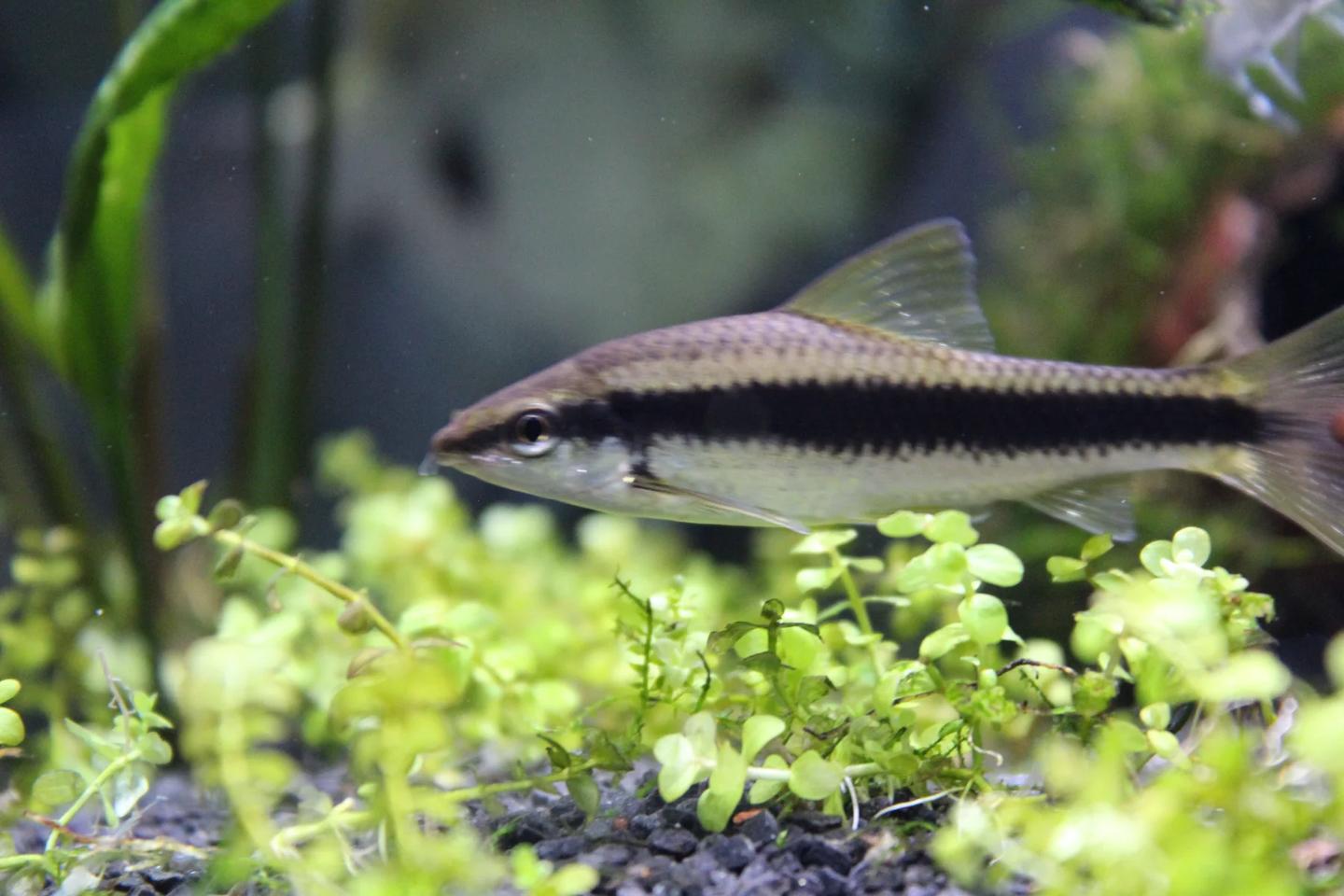
Is a Siamese algae eater right for your aquarium?
A Siamese algae eater can be a useful grazer in a large, mature and well-oxygenated aquarium. It is not a small clean-up tool. OATA's UK guidance says these fish can reach 16 cm and require an aquarium at least 120 cm long, a secure lid and highly oxygenated water[5].
That adult commitment should decide the purchase—not the size of a juvenile in a shop photograph and not an algae outbreak. Persistent algae can indicate a problem with maintenance or water chemistry, and OATA is explicit that algae-eating fish do not replace regular maintenance or suitable stocking[5].
Choose this fish only if you want to keep an active Crossocheilus-type grazer for its full life and can provide the adult home. Do not buy one solely to promise a black-beard-algae cure.
What does “Siamese algae eater” identify?
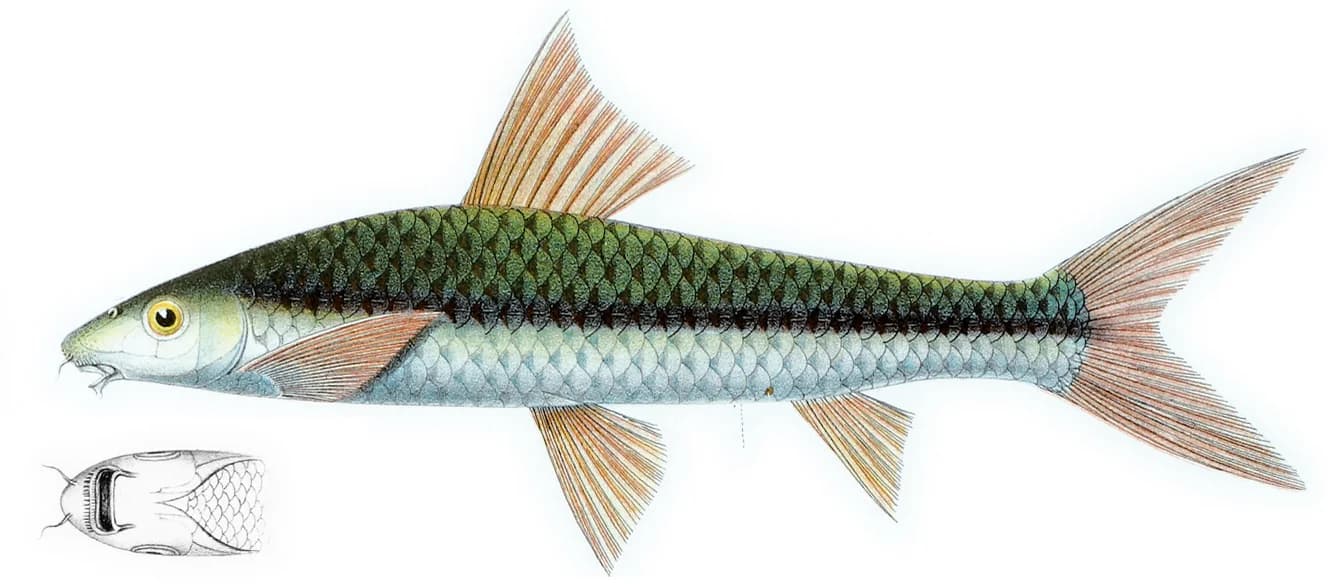
Crossocheilus oblongus is a valid species in the minnow and carp family Cyprinidae. The California Academy of Sciences catalogue records the accepted name and published Southeast Asian distribution[1]. FishBase describes verified C. oblongus from clear, fast-flowing river and stream habitats[3].
The aquarium trade name is less precise than the scientific record. Several similar Crossocheilus have circulated as Siamese algae eaters, false Siamese algae eaters or flying foxes. The modern genus revision separates these species using combinations of anatomical characters, while specialist aquarium references warn that trade identities remain confused[2][9].
For that reason, an unvouchered trade fish is often better described cautiously as Crossocheilus cf. oblongus or simply a Crossocheilus sold as a Siamese algae eater. “Cf.” means it resembles the named species; it is not a certificate.
What a photograph can and cannot tell you
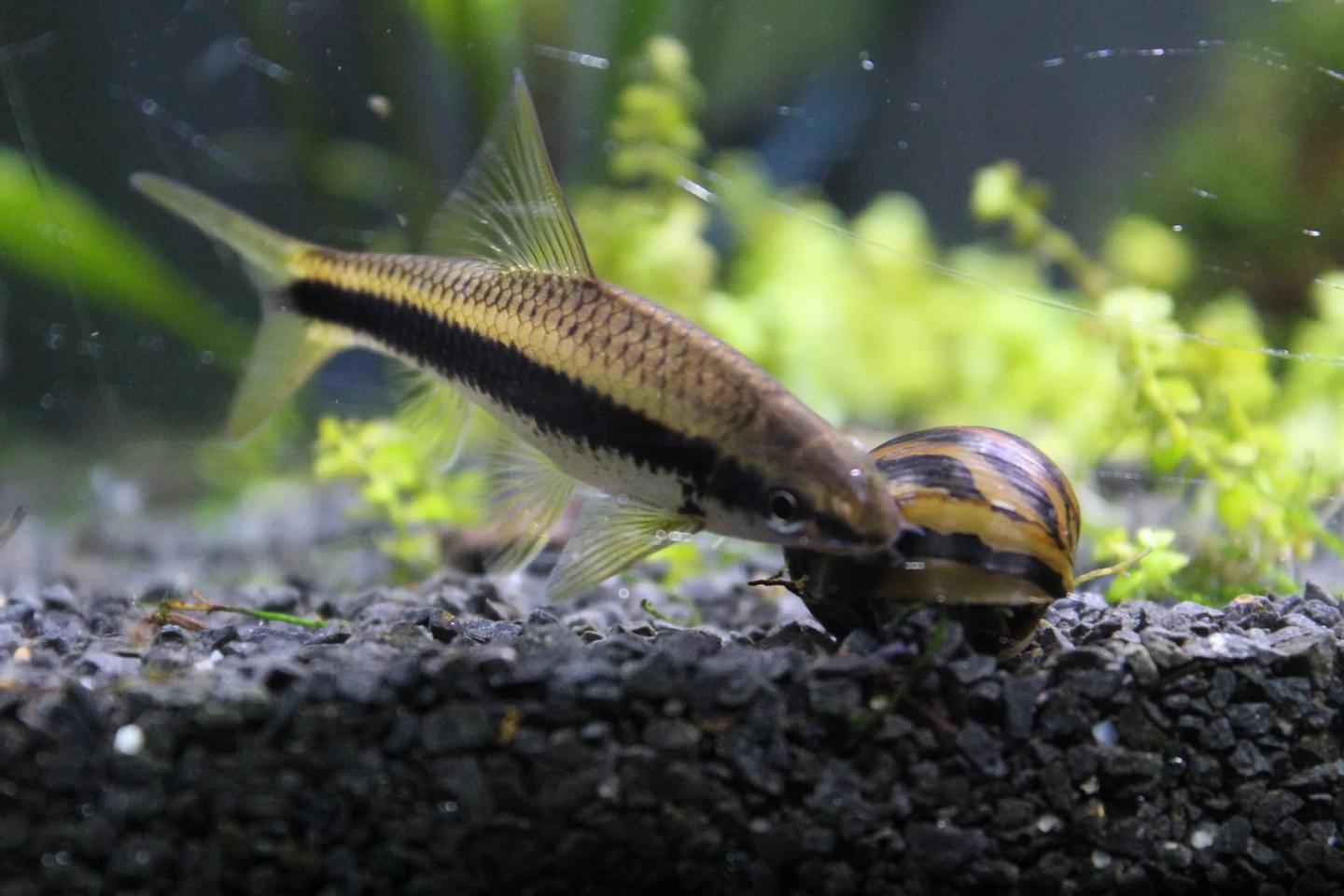
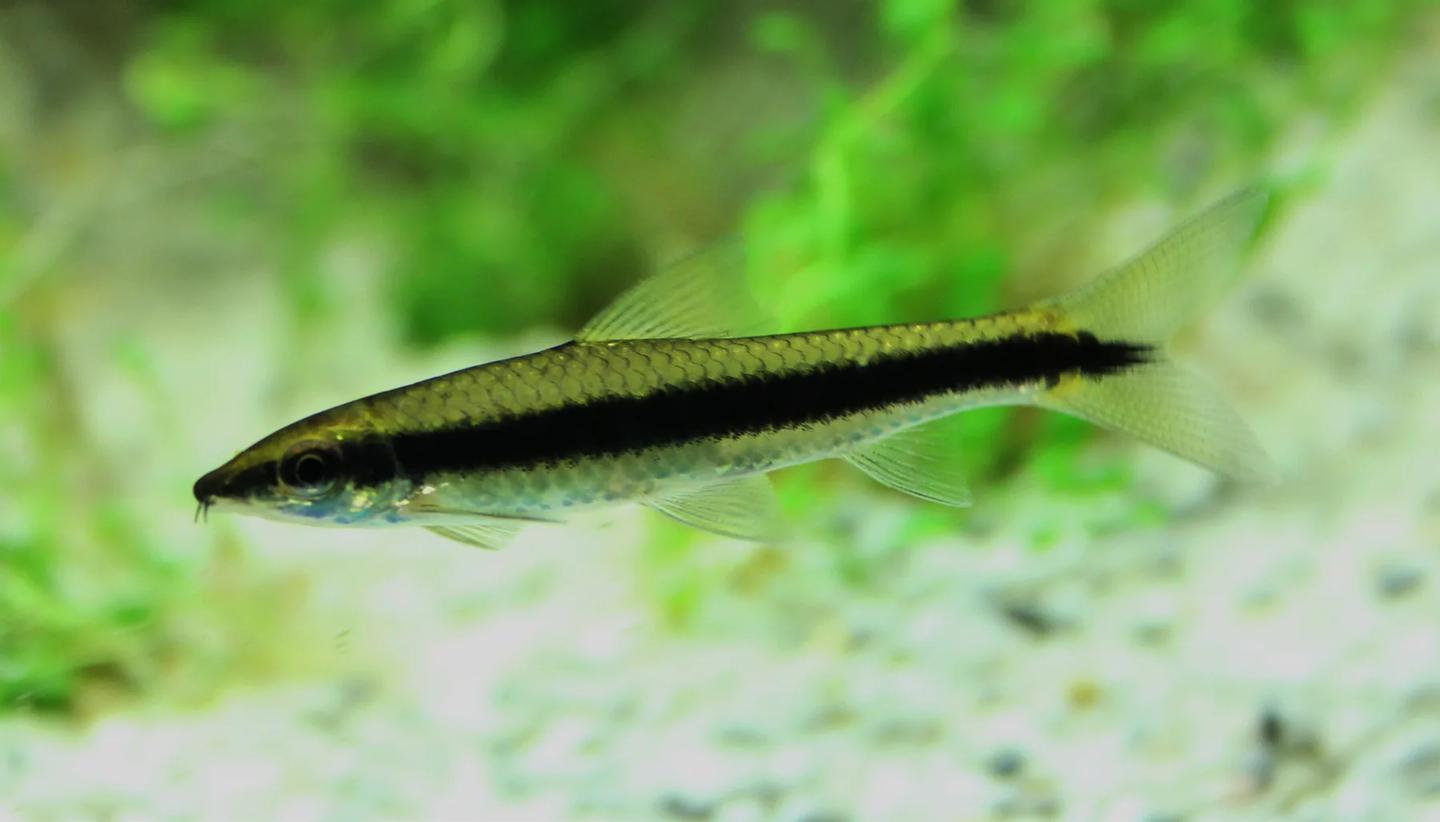
A long silver body and dark stripe running through the eye towards the tail are useful first clues. OATA also mentions a cross-hatched back pattern and a black line through the eye and tail fin[5]. Those features can reject some obvious lookalikes, but they do not prove exact species on their own.
Ask the seller for the scientific name used by the supplier, clear side and fin photographs, source information and the current sale size. If exact identity materially changes your plan, request expert identification instead of relying on a one-feature internet chart.
Siamese algae eater size: plan around the adult
OATA's practical UK care sheet says Siamese algae eaters grow up to 16 cm. FishBase records 16 cm standard length for verified C. oblongus[5][3].
Standard length stops at the base of the tail and excludes the tail fin[4]. This means the two 16 cm figures are not automatically identical measurements. Neither is a guarantee for an unidentified shop lineage or an individual fish.
Use the adult figure as a planning screen. A juvenile may look comfortable in a short aquarium today while lacking the straight swimming room, surface area and mature filter capacity it will need later. RSPCA guidance likewise asks keepers to consider adult size, filtration and water quality rather than treating a simple volume label as the whole answer[7].
Tank size: why 120 cm length matters more than a litre shortcut
Use at least a 120 cm-long aquarium for an individual Siamese algae eater. That is OATA's species-specific starting point[5]. It is a minimum length screen, not permission to ignore width, depth or the fish already living there.
Before buying, check all six parts of the adult system:
- Swimming length: at least 120 cm of usable horizontal space, not a tall but short tank.
- Oxygen and flow: good surface movement and circulation without leaving every area exposed.
- Mature filtration: ammonia and nitrite must remain at zero; test rather than guess.
- Secure cover: OATA recommends a well-fitting lid.
- Resting structure: plants, wood and rockwork should provide cover without blocking the swimming route.
- Existing load: adult tank mates, feeding competition and the filter's demonstrated capacity still count.
OATA gives 22–27°C, pH 6.0–8.0, 4–12 dGH and 3–10 dKH, with ammonia and nitrite at zero[5]. These are working care ranges, not targets to chase with sudden chemical adjustments. Test the aquarium and source water, acclimate changes gradually and keep written results.
Do Siamese algae eaters eat black beard algae?
They are genuine grazers, but the evidence supports a bounded answer, not the old “only fish” promise.
| Evidence | What it supports | What it does not prove |
|---|---|---|
| FishBase ecology | C. oblongus feeds on periphyton and plant-associated material | Guaranteed control of one named aquarium algae |
| Musi-basin stomach study | Diatoms dominated the reported diet index in 91 wild C. cf. oblongus | A controlled home-aquarium black beard algae trial |
| OATA UK guidance | Siamese algae eaters are excellent aquarium algae grazers | A fixed clearance time or maintenance-free aquarium |
| Aquarium observation | Some keepers report grazing on black beard algae | That every trade identity or individual will perform equally |
The Musi-basin study is valuable because it measured stomach contents rather than repeating a care-sheet claim: diatoms formed 85.83% of the reported index in the sampled wild fish[8]. It still cannot tell us that a fish will clear an aquarium outbreak in two or four weeks.
If black beard algae is increasing, also investigate lighting duration and intensity, accumulated organic waste, plant health, circulation and—for injected planted systems—carbon-dioxide stability. A fish can graze symptoms while the cause continues.
Never reduce food to force grazing. OATA says algae eaters need supplementary prepared food, and persistent algae may signal a maintenance or water-chemistry issue. A healthy fish is not a treatment product.
Feeding: algae is part of the job, not the whole diet
FishBase describes C. oblongus as a microphagous feeder associated with periphyton, while the wild C. cf. oblongus study found diatoms plus smaller amounts of other algae, detritus and plant material[3][8].
In an aquarium, offer an appropriate complete prepared food and use well-washed vegetable material only as suitable variety. Observe whether each fish reaches food. A clean-looking tank, dominant tank mate or recently introduced fish can leave an active grazer underfed even when pellets enter the aquarium.
Body condition and behaviour are better checks than the amount of visible algae. Seek experienced aquatic-veterinary or retailer advice for persistent weight loss, rapid breathing, abnormal swimming, lesions or a sustained appetite change; do not diagnose a disease from one online symptom.
Should you keep one or a group?
OATA recommends one fish or a group of five or more to reduce bullying[5]. This is why a casual pair or trio is a poor default.
A group is not merely the individual setup multiplied by five. It needs much more usable swimming space, mature biological capacity, several feeding positions, visual breaks and a realistic separation plan. The 120 cm minimum is not automatically enough for five adults. If the aquarium cannot meet those group-level needs, individual keeping is the clearer OATA-supported starting point.
Watch actual behaviour. Repeated chasing, exclusion from food, loss of condition or one fish constantly hiding requires intervention even when the group count looked correct on paper.
Tank mates: use a compatibility screen, not a “safe fish” list
No species list can guarantee compatibility. Screen every proposed tank mate against the same adult aquarium:
- Water: overlapping temperature, pH, hardness and water-quality needs.
- Space: enough room for the adult fish and their normal swimming zones.
- Temperament: no persistent harassment, territorial bottleneck or fin targeting.
- Feeding: every fish can reach an appropriate diet without competition or starvation.
- Vulnerability: eggs, fry and small shrimp may be food even when adult fish appear peaceful.
- Fallback: a cycled separation option exists before a conflict starts.
Our Otocinclus care guide, Amano shrimp care guide and Bristlenose Pleco care guide explain the very different needs behind three other common “algae crew” names. Read those needs before combining animals; sharing a feeding label does not make a compatible community.
Siamese algae eater vs flying fox and Chinese algae eater
These names do not describe interchangeable fish.
| Trade name | Scientific boundary | Responsible buying question |
|---|---|---|
| Siamese algae eater | Usually a Crossocheilus; exact species may be uncertain | What supplier identity and photographs support the label? |
| Flying fox | Commonly applied to Epalzeorhynchos kalopterus, but trade usage varies | Are the scientific name and adult care requirements stated? |
| Chinese algae eater | Gyrinocheilus rather than Crossocheilus | Can the aquarium meet its distinct adult size and behaviour? |
Our Chinese algae eater guide covers the last fish separately. Do not substitute care advice because two juveniles share a stripe or an algae-related common name.
A careful UK buying checklist
Before ordering, confirm:
- the seller's stated scientific identity and any uncertainty;
- the photographed fish or representative-image status;
- current sale size without mistaking it for adult size;
- a covered aquarium at least 120 cm long;
- mature filtration, strong oxygenation and tested water;
- an individual or properly resourced five-plus social plan;
- a complete supplementary diet;
- compatibility based on every adult animal, not a generic label;
- a cycled fallback if aggression or misidentification appears;
- the seller's current delivery, acclimation and livestock-support instructions.
For acclimation, prepare and test the receiving aquarium before delivery, dim the aquarium lights, inspect the fish on arrival and follow the seller's current instructions. OATA's broader freshwater guidance supports a prepared, cycled aquarium and close post-arrival observation[6]. One rigid drip rate or feeding ban is not appropriate for every bag, water difference or retailer protocol.
If every adult-care screen passes, view current algae-eater availability. Availability, exact identity, sale size and price belong on the current shop listing; this guide does not imply that a particular fish is in stock.
How this guide handles evidence and corrections
We separate four things that are often blurred together: the valid scientific species, an uncertain aquarium trade identity, published natural-history evidence and practical UK care guidance. A scientific record for verified C. oblongus does not automatically identify a shop fish, and an aquarium observation does not become a controlled trial because it is repeated often.
The named author is the Tropical Fish Co Editorial Team, not an invented individual keeper. References are visible below, image licences are attached to each photograph, and claims are deliberately limited to what the selected source can support. If you find a taxonomic or welfare error, send the exact sentence and a stable source through the site's contact route. A correction request is editorial feedback, never a lead or ecommerce conversion.