Moderate
Bristlenose Pleco (Ancistrus sp.)
22–27°C · pH 6–8
From £3.51Some sizes on sale

Red/Black Longfin Bristlenose Pleco (Ancistrus sp.) is one live, long-finned grazing catfish per purchase, with the selected dispatch size supplied. It suits an established, filtered aquarium with wood and cover; use OATA’s broad bristlenose guidance of 22–27 °C and choose calm companions that leave its fins and cave space alone.
Ancistrus sp.
Red/Black Longfin Bristlenose Pleco (Ancistrus sp.) is one live, long-finned grazing catfish per purchase, with the selected dispatch size supplied. It suits an established, filtered aquarium with wood and cover; use OATA’s broad bristlenose guidance of 22–27 °C and choose calm companions that leave its fins and cave space alone.
For one typical common bristlenose, start with a mature, filtered aquarium of at least 90 litres, useful floor area, wood and cover. OATA reports about 15 cm adult length, 22-27°C, pH 6-8 and 4-12 dGH. Confirm the exact trade identity before applying species-level claims.
Maintain these water conditions for optimal health and vibrant colors
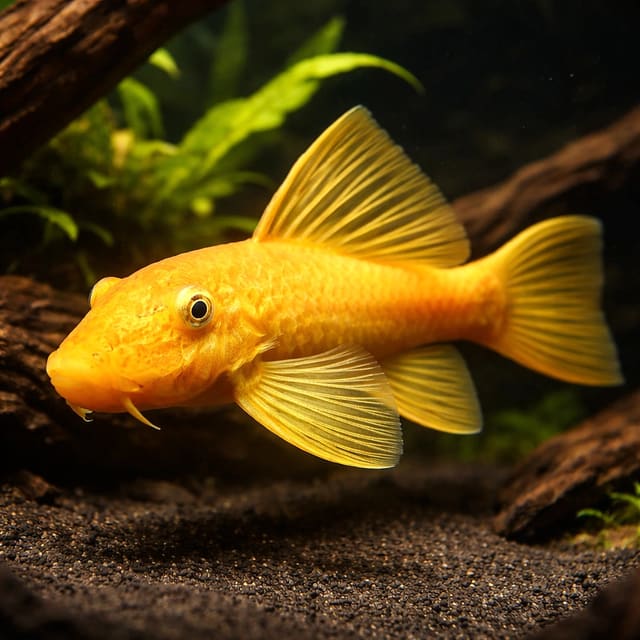
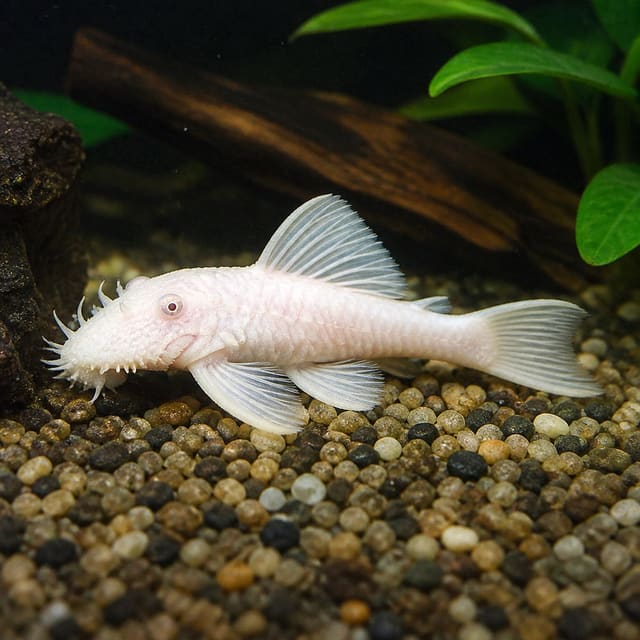
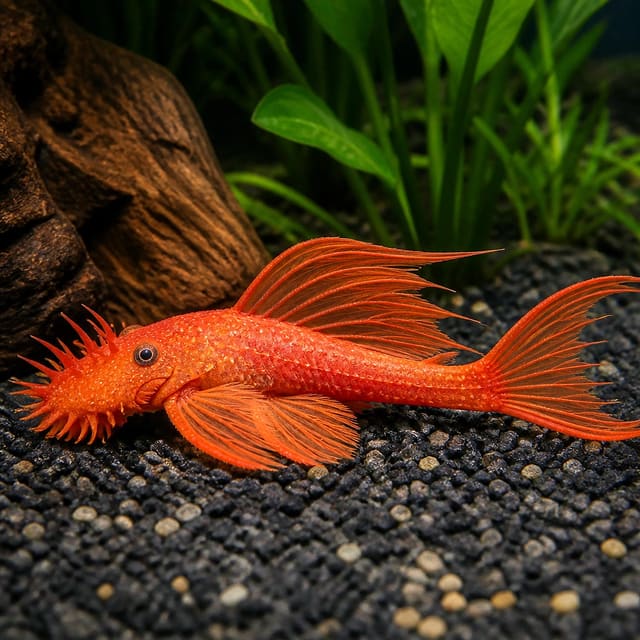
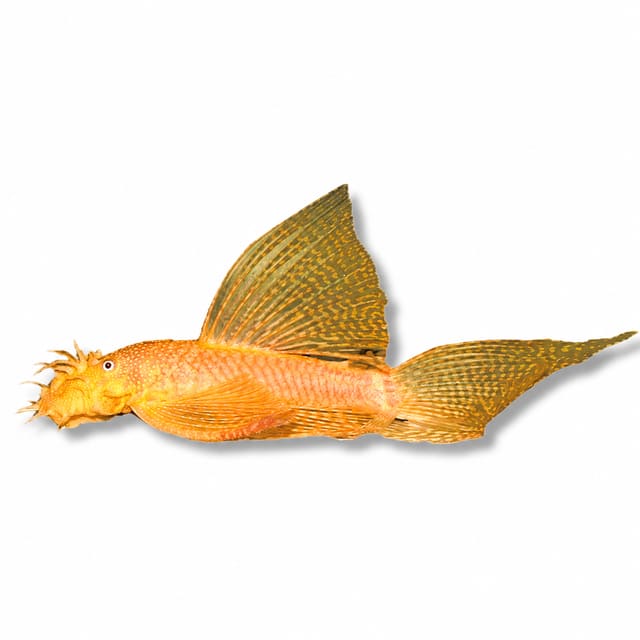
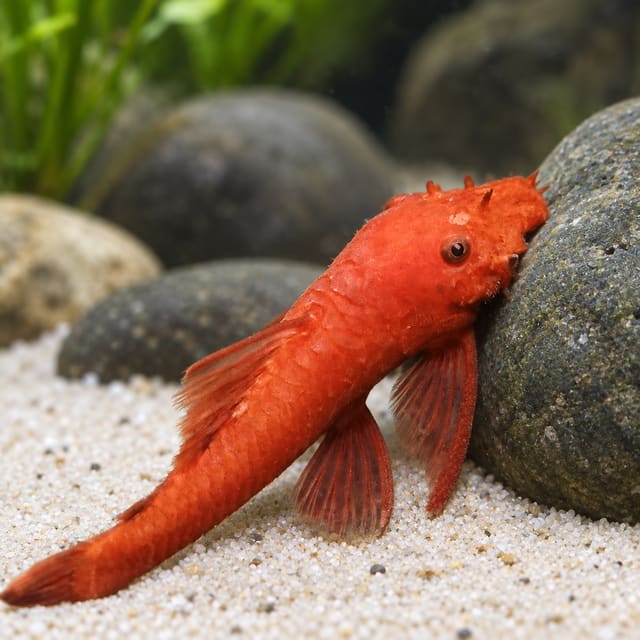
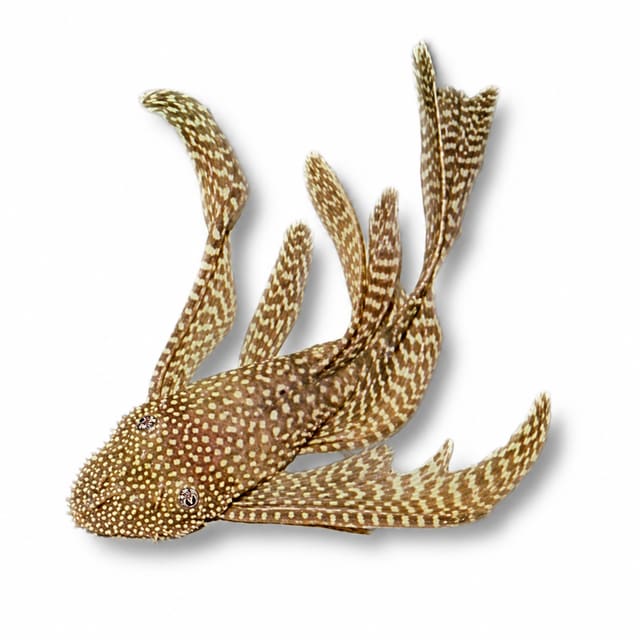
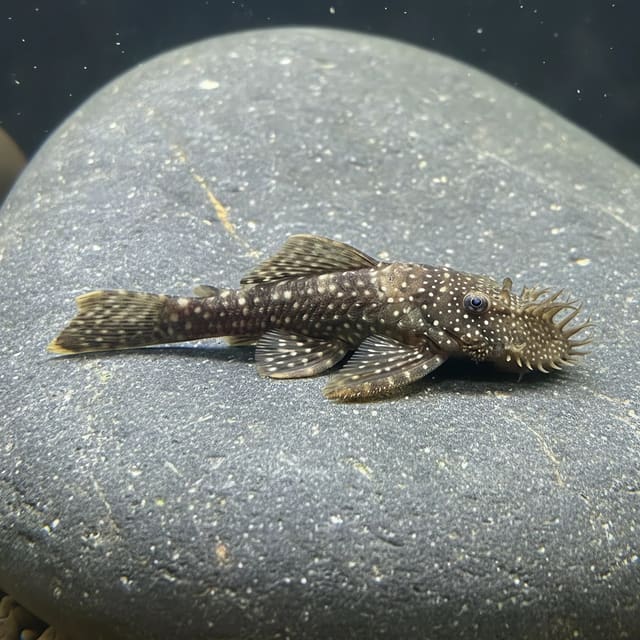
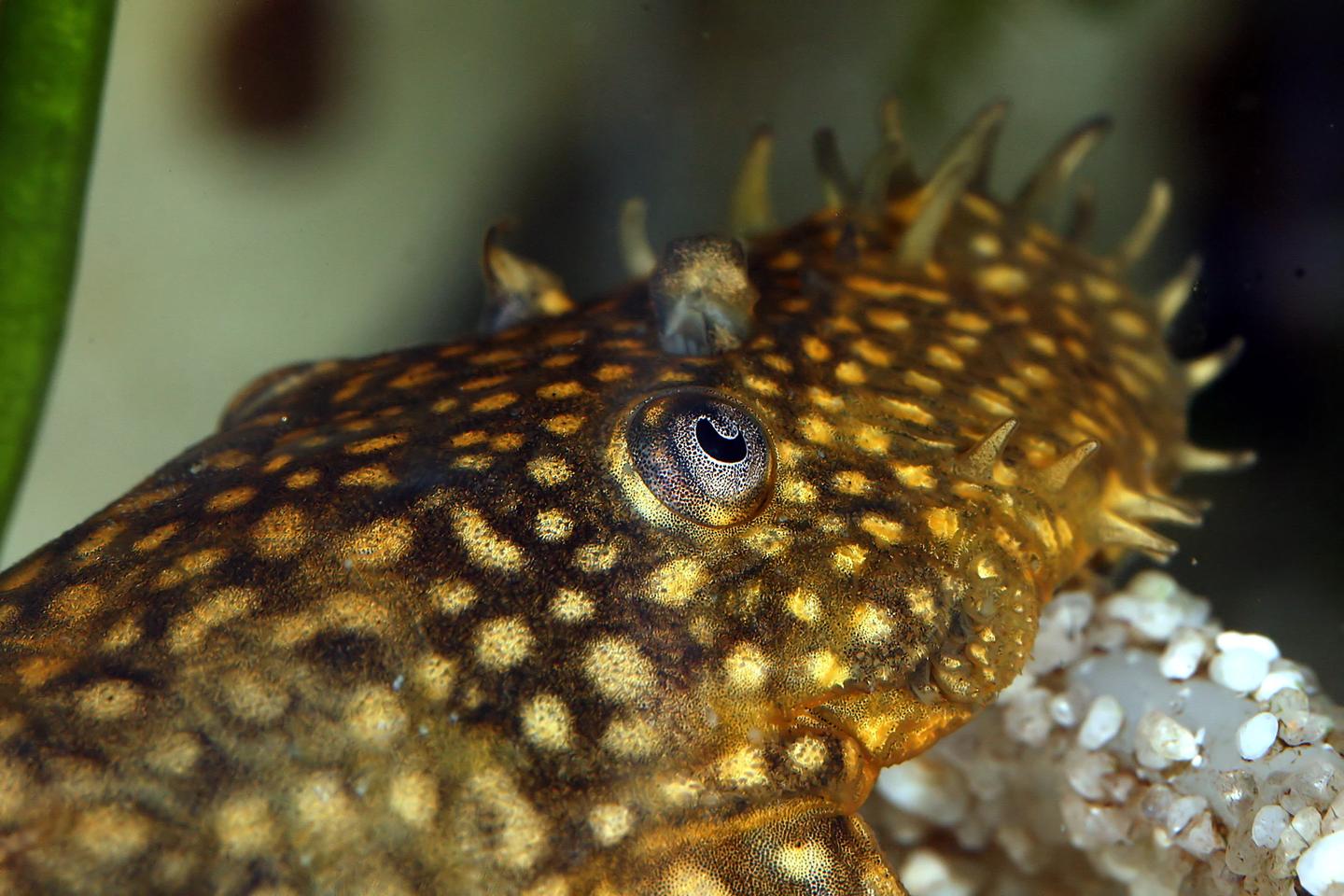
Red/Black Longfin Bristlenose Pleco (Ancistrus sp.) is a long-finned aquarium catfish with a dark body, warm red-toned fins and the flattened, armoured shape associated with bristlenose plecos. The extended fins give it a more flowing outline than a standard-finned bristlenose, especially when it moves between wood, stone and shaded cover. Colour intensity, markings, fin carriage and bristle development change with age, condition and the individual fish, so the name describes the aquarium form rather than a promise that every animal will look identical.
This listing supplies one live fish per purchase. The selectable dispatch grades are approximately 2.5–3 cm, 3–4 cm, 5–6 cm and XL. The size you select is the size supplied, not the adult size. Measure the aquarium around the fish it will become, not just the fish that arrives: bristlenose care guidance describes an adult around 15 cm, although the precise adult outcome of an unidentified Ancistrus can vary.
The exact species has not been identified, so the care advice here follows the genus Ancistrus and its care group. That distinction matters. Ancistrus contains multiple species and aquarium forms, and a red/black longfin trade name does not establish a species identity or a wild locality. The World Register of Marine Species recognises Ancistrus as a genus; it does not turn this trade form into a named species. Care numbers on this page are therefore presented as broad bristlenose guidance rather than a species-specific optimum.
Sex is guaranteed only when the selected option explicitly states male or female. This Ancistrus red black long fin listing has no sex-guaranteed option. Bristles can become more obvious as some fish mature, but size, viewing angle and individual development make a juvenile photograph or dispatch grade an unreliable basis for a sex promise.
| Suits | Think carefully if |
|---|---|
| An established, filtered tropical aquarium | The aquarium is new, uncycled or has detectable ammonia or nitrite |
| A layout with real wood, caves and shaded retreats | There is no secure refuge or the decor has sharp fin-catching edges |
| Calm companions with overlapping water needs | Existing fish are aggressive, highly territorial at the bottom or persistent fin nippers |
| A keeper prepared to provide varied food after lights-out activity | The plan is to rely on incidental algae as the complete diet |
| Someone planning for an adult bristlenose rather than only today’s dispatch grade | Floor space, filtration or maintenance are already at their practical limit |
A longfin bristlenose can be an excellent focal point for the lower levels of a peaceful tropical display. It grazes surfaces, rests beneath wood and often becomes most active around dusk or feeding time. That useful grazing behaviour should not be confused with a maintenance service: it still produces waste, needs deliberate feeding and cannot correct excess light, excess nutrients or neglected water changes. If you are comparing this form with a standard-finned fish, the bristlenose pleco collection provides the closest route within the range.
Before choosing a dispatch grade, inspect the route from the aquarium opening to the prepared cave. The fish needs enough room to be transferred without squeezing extended fins past braces, nets or sharp decor, and the keeper needs access for later siphoning and observation. Planning that route now is more useful than trying to dismantle a settled aquarium after arrival. The right choice is the grade that fits a properly prepared long-term home, not simply the largest fish available.
Gallery images have been digitally enhanced to improve image quality. Natural colour, pattern, size and maturity can vary between live animals.
A bristlenose should enter an aquarium whose nitrogen cycle is already working. Beneficial bacteria in the filter convert toxic ammonia into nitrite and then into less harmful nitrate; adding a fish before those bacteria are established exposes it to invisible but damaging waste. Ammonia and nitrite should both test at zero before introduction and remain there afterwards. If either becomes detectable, treat that as a husbandry problem requiring prompt testing, a suitable water change and investigation of feeding, stocking and filtration—not as a number the fish should be expected to tolerate.
The first tropical tank guide explains the setup sequence, while the RSPCA’s aquarium environment guidance reinforces the need for adequate space, working filtration and a cycled system. Add livestock gradually so the filter has time to respond to the extra biological load. Test the water through the first week and after any change that could affect the cycle, including a filter interruption, a missed maintenance period or an unexpected death.
For this unidentified Ancistrus, use OATA’s broad bristlenose care range as a practical planning envelope: 22–27 °C, pH 6.0–8.0, general hardness 4–12 °dH and carbonate hardness 3–10 °dKH. These are group-level figures, not a species-specific optimum. Stability inside a compatible part of the range is more useful than repeatedly adjusting water to chase a central number. Check the needs of every proposed companion as well; an overlap on temperature alone is not enough if hardness, behaviour or oxygen needs conflict.
Learn what comes from the tap before selecting livestock. Test pH and hardness after the water has stood and aerated, and compare them with the aquarium over time. The water chemistry guide explains the relationship between pH, GH, KH, ammonia, nitrite and nitrate, and the water matcher can help compare a stable supply with a broad care range. Avoid routine chemical correction unless you understand why it is needed and can reproduce the result safely at every water change. Sudden pH or temperature shifts can be more stressful than a stable value that is not exactly centred.
OATA’s algae-eater care sheet advises weekly testing, with ammonia and nitrite at zero and nitrate kept no more than 20 mg/l above the normal tap-water level. Nitrate is best understood against that baseline: some supplies already contain nitrate, so the meaningful question is how much the aquarium has added. Record results rather than relying on memory, particularly while settling a new fish or diagnosing changes in appetite, breathing or behaviour.
A useful routine is a partial water change of about 25% each week, adjusted when measured waste, feeding or stocking shows that more attention is needed. Match replacement water reasonably closely for temperature, use a conditioner appropriate to the local supply, and siphon accessible debris without stripping every surface clean. Clean filter media only when flow drops or debris accumulation requires it, and rinse biological media gently in removed aquarium water rather than untreated tap water. Never replace all mature media at once.
Warm water holds less dissolved oxygen than cool water. Maintain clear filter flow and enough surface movement for gas exchange, especially during hot weather. Long fins and a bottom-oriented lifestyle do not remove the need for oxygen-rich water. Watch the whole aquarium: rapid gill movement, unusual trips to the surface, inactivity in an exposed spot or several fish clustering near the outlet can signal a water-quality or oxygen problem that deserves immediate testing.
Do not let a bristlenose’s tolerance for shaded retreats lead to a dirty cave. Uneaten food can collect under wood and inside enclosed decor. Use a narrow siphon where practical, direct some gentle circulation past sheltered areas and inspect them during maintenance. The aim is secure cover with fresh water passing nearby, not a stagnant pocket.
Build the lower part of the aquarium around stable structure. Real aquarium-safe wood provides grazing surfaces and broken sight lines; at least one snug cave or tunnel gives the fish somewhere to rest. Secure heavy stones and wood so digging, maintenance or a collision cannot collapse them. Place weight on the tank base or a suitably protected foundation rather than balancing it on loose substrate. Leave enough open route for an adult fish to turn without dragging long fin rays across abrasive edges.
Run a hand over ornaments and cave mouths before use. Rough resin seams, sharp slate points and narrow holes can damage extended fins or trap a growing catfish. Natural-looking cover is valuable only when it is structurally safe. Plants can be included, but choose planting and anchoring methods that tolerate a fish moving across the substrate and wood. A shaded area under leaves or timber helps the fish choose its exposure rather than being forced into constant bright light.
No single minimum volume has been set here because usable floor area, adult dimensions, filtration, decor and companion load all matter, while the exact species identity is unresolved. Plan around an adult bristlenose of roughly 15 cm under OATA’s broad care group, allow a full turning circle and reserve territory around the preferred cave. A long but shallow footprint can sometimes offer more useful bottom area than a tall aquarium of the same nominal volume; neither shape excuses weak filtration or crowding.
Offer a varied diet deliberately. A quality sinking algae or herbivore wafer can form part of the routine, supported by appropriate vegetable-based foods and occasional protein-rich items suitable for loricariid catfish. Feed after the faster mid-water fish have had their share, or place food close to the bristlenose’s refuge as the aquarium quietens. Confirm that this individual is actually eating rather than assuming food reaches it because a wafer was dropped into the tank.
Algae on glass, wood and stone is enrichment and supplementary grazing, not a complete nutritional plan. A very clean new aquarium may have little natural growth; a mature aquarium may grow types the fish barely touches. If algae becomes excessive, investigate light duration, nutrient input, plant health and maintenance. Adding more fish increases waste and can worsen the underlying imbalance.
Blanched or softened vegetable pieces may be used as part of a varied schedule when they are clean, securely placed and removed before they spoil. Portions should be modest enough to be consumed without clouding the water. Rotate foods rather than feeding one item indefinitely, and include wood in the layout because bristlenose keepers commonly observe sustained rasping and browsing on its surfaces. The goal is a fish with a gently filled abdomen and steady condition, not a bloated animal surrounded by leftovers.
Juveniles need reliable access to food as well as clean water, but more feeding must be matched by more observation and waste control. If several bottom feeders share the aquarium, use more than one feeding point. This reduces the chance that a dominant fish guards the only tablet while a shy or newly introduced fish loses condition out of view.
Prepare before the parcel arrives: complete maintenance early, confirm zero ammonia and nitrite, set the temperature, make a secure cave available and keep a clean net or transfer container nearby. Review the store’s delivery and Live Arrival information in advance so the evidence and contact requirements are understood before opening.
A newly transported bristlenose may remain hidden, darken, lighten or show little interest in food at first. Those responses can be temporary, but they should not be used to dismiss laboured breathing, loss of balance, visible injury or worsening water results. Photograph any concern, test the water and contact the retailer promptly when the delivery policy requires it. Avoid adding unnecessary treatments to the display aquarium without a diagnosis and a plan that is safe for catfish.
Choose filtration for the completed aquarium rather than treating the manufacturer’s volume label as a guarantee. Media capacity, actual flow through the decorated tank, oxygen exchange and the keeper’s cleaning routine all affect performance. Wood, caves and plants create the sheltered layout this fish needs, but they also interrupt circulation. After arranging the decor, check that food and waste are not continually collecting behind a structure where a siphon cannot reach.
Protect filter intakes so a small dispatch-grade fish cannot enter a gap or rest against excessive suction. The guard must itself remain clean enough to pass water. At the other end of the size range, make sure an adult cannot dislodge heaters, pipework or loosely mounted equipment while moving beneath wood. A heater guard may be sensible where the layout forces close contact, provided the guard has no narrow slots or sharp points that could trap long fins.
Have a plan for a power cut or filter stoppage. Biological media needs oxygenated water, and a warm, stocked aquarium can lose oxygen surprisingly quickly when circulation stops. Do not feed heavily during an outage. Restore aeration as soon as safely possible, keep media wet in aquarium water and test ammonia and nitrite after a prolonged interruption. If a filter has been stagnant for a long period, inspect and clean it appropriately before pushing accumulated foul water back into the display.
Maintenance should be consistent but not sterile. Biofilm on safe wood and rock provides grazing interest, while mulm packed around food remains and stagnant pockets is different. Clean different parts of the aquarium in rotation, leave mature biological media intact and use test results to judge whether the routine is controlling waste. A rising nitrate trend, falling flow or repeated debris accumulation is information: adjust feeding, access and maintenance before simply buying a larger pump.
View the fish from the side and, when it is attached to the front glass, from below. A gently rounded abdomen is easier to assess from that angle than through armour on the back. A persistently hollow belly can indicate that food is not reaching the fish, that it has not settled or that a health problem needs investigation. Check the mouth area for injury and the body for white patches, reddening, swelling, parasites or unusual mucus. Compare both sides and follow changes with dated photographs.
Long fins deserve a separate daily glance. A single clean split after transport is different from edges that continue to recede, turn opaque or redden. First test the water and watch interactions: excellent water and removal of the cause are central to recovery from physical damage. Do not assume every ragged fin is an infection, but do not leave progressive damage unexamined. Territorial pressure may occur out of sight, so review the aquarium after dark and around feeding.
Be cautious with medication. Catfish may respond poorly to some treatments or doses, and a display tank contains other animals, plants and biological filtration that also matter. Identify the likely problem, read the current product label, calculate the real water volume and seek qualified aquatic-veterinary or experienced professional advice where the condition is unclear. Never combine products casually. Extra doses do not compensate for a missed diagnosis, and treatment cannot replace correction of toxic water.
A separate, cycled observation setup can reduce the chance of introducing disease to an established community, but it must be a proper aquarium with heat, oxygen, cover and mature biological filtration—not an unfiltered container. Use dedicated nets and siphons if possible. Observe appetite, breathing, waste and skin over time. Moving a newly arrived fish repeatedly between unsuitable systems creates its own stress, so prepare any observation setup before the animal is due.
Learn the individual’s normal resting places and feeding rhythm. A change is easier to spot when you know where it usually rests, whether its abdomen is gently rounded, how its fins are carried and when it emerges. Long fins should be checked for splits, reddening or progressive erosion. Minor clean tears may recover in excellent water, while repeated damage points to sharp decor, territorial pressure, fin-nipping companions or deteriorating conditions.
Weigh behaviour alongside test results. A fish can be active while water chemistry is beginning to fail, and a naturally shy fish is not automatically ill. Good care joins the two kinds of evidence: measured water, appetite, body condition, respiration, waste, social interactions and physical inspection. Keep a simple dated log after introduction and whenever changes are made. That record is much more useful than trying to reconstruct several weeks from memory.
Choose companions by matching water, temperament, adult size, feeding access and use of space. A calm mid-water community can work well when all fish accept the same stable conditions and the bristlenose has its own retreat. Small peaceful schooling fish are often less intrusive at cave level than territorial bottom dwellers, but no species name is an automatic guarantee. Assess the actual aquarium and the behaviour of its residents.
OATA’s broad bristlenose guidance allows fish to be kept alone, as a pair or in a small group, usually with only one male in a group. This is group-level advice rather than a certainty for an unidentified Ancistrus. One fish avoids same-kind territorial competition and can be the simplest choice. More than one requires additional floor area, separate caves, broken sight lines and a plan for what happens if mature fish dispute the same shelter.
The retail choices here are not sex-selected, so selecting two fish does not create a guaranteed pair. Juvenile appearance cannot safely promise a future sex ratio. If breeding is not wanted, do not assume an unsexed combination will prevent it; if breeding is wanted, do not assume two fish will form a compatible pair. The keeper must be able to separate animals if chasing becomes persistent or one fish is excluded from food and cover.
Avoid large predatory fish capable of swallowing or injuring the bristlenose, persistent fin nippers attracted to extended rays, and highly territorial bottom fish that compete for the same caves. Also avoid adding it merely to solve algae in an already overstocked aquarium. The new fish brings its own feeding and waste requirements.
Cool-water setups are not automatically suitable because one value appears to overlap at an edge. Goldfish, for example, bring different temperature preferences, feeding behaviour, waste load and long-term housing needs; build each aquarium around a coherent community instead of forcing animals together under a broad label. The same principle applies to delicate warm-water specialists at the other end of the range.
Brief displacement from a cave or a short chase can occur while fish establish space. Repeated pursuit across the aquarium, damaged fins, hollow condition, a fish pinned behind equipment or exclusion from every refuge requires action. Add visual barriers and separate feeding points only when the aquarium still has appropriate capacity; do not use extra decor to conceal crowding. Be prepared to move a fish to another fully cycled aquarium if the social arrangement fails.
Check after dark as well as during daytime. A bristlenose that seems peaceful while resting may become more territorial when food is offered, while a shy newcomer may eat only after other fish settle. Use subdued observation rather than repeatedly dismantling the layout. The best community is one in which every resident can feed, rest and move without chronic competition.
Red/Black Longfin Bristlenose Pleco (Ancistrus sp.) is the trade identity for this dark, red-finned longfin aquarium catfish. The genus is supported, but the exact species is not identified, so its numbers are broad bristlenose care guidance rather than a species-specific optimum.
Plan around roughly 15 cm as OATA’s broad bristlenose-group adult figure, while allowing for individual and species-level variation. The selected 2.5–3 cm, 3–4 cm, 5–6 cm or XL grade is the approximate dispatch size, not the adult ceiling.
OATA’s broad bristlenose guidance is 22–27 °C, pH 6.0–8.0, 4–12 °dGH and 3–10 °dKH, with ammonia and nitrite at zero. These are group-level ranges, not a species-specific optimum; stable, cycled water and an overlap with every companion matter most.
No. Surface grazing is useful enrichment, but algae amount and nutritional value vary. Provide deliberate sinking foods, suitable vegetable matter and measured variety, make sure this fish gets its share, and remove leftovers before they impair the water.
Potentially. OATA’s broad bristlenose guidance allows one, a pair or a small group, usually with one male in a group. More than one needs extra floor area, several caves, broken sight lines and a separation plan; these unsexed choices cannot guarantee a pair or ratio.
Choose calm fish with overlapping water needs that will not occupy every bottom refuge, steal all sinking food or nip long fins. Avoid predators and aggressive or strongly territorial cave competitors. Review adult size, waste load and behaviour rather than relying on a generic community label.
Yes. Aquarium-safe wood provides useful grazing structure and cover, while a stable, smooth-edged cave gives the fish a secure retreat. Leave clear turning room, protect long fins from rough openings and keep sheltered areas free of trapped waste.
Start one continuous video with the sealed parcel and record opening through the fish in its sealed bag. Float the closed bag for 20–30 minutes, then add small amounts of aquarium water over up to 20 minutes, transfer with minimal bag water and monitor breathing and water quality through the first week.
No reviews for this item yet. Bought one? Honest reviews only, good or bad.
What customers say about ordering from us
I have a small group of long finned mountain minnows. So was delighted to be able to order ten of this variety to increase the genetics in my tank . The ones I recieved are healthy but it’s to early to give a verdict on wether they are of a long finned type since they are small currently.
Gordon Walker · 23 Sept 2026
100% success travel and "installation". Pleased with quality of purchase. The Siamese fighter a bit "shy" so have not yet seen him at his best yet but looking good. Happy customer. GG
George E Garratt · 21 Sept 2026
Reviews of our shop, collected by Judge.me, an independent third-party review collector. Newest first.