Moderate
Bristlenose Pleco (Ancistrus sp.)
22–27°C · pH 6–8
From £3.51Some sizes on sale

One Marigold Bristlenose Pleco (Ancistrus sp.) in the selected size grade. Plan for an adult around 15 cm, a mature aquarium, wood, cover and complete sinking food.
Ancistrus sp.
One Marigold Bristlenose Pleco (Ancistrus sp.) in the selected size grade. Plan for an adult around 15 cm, a mature aquarium, wood, cover and complete sinking food.
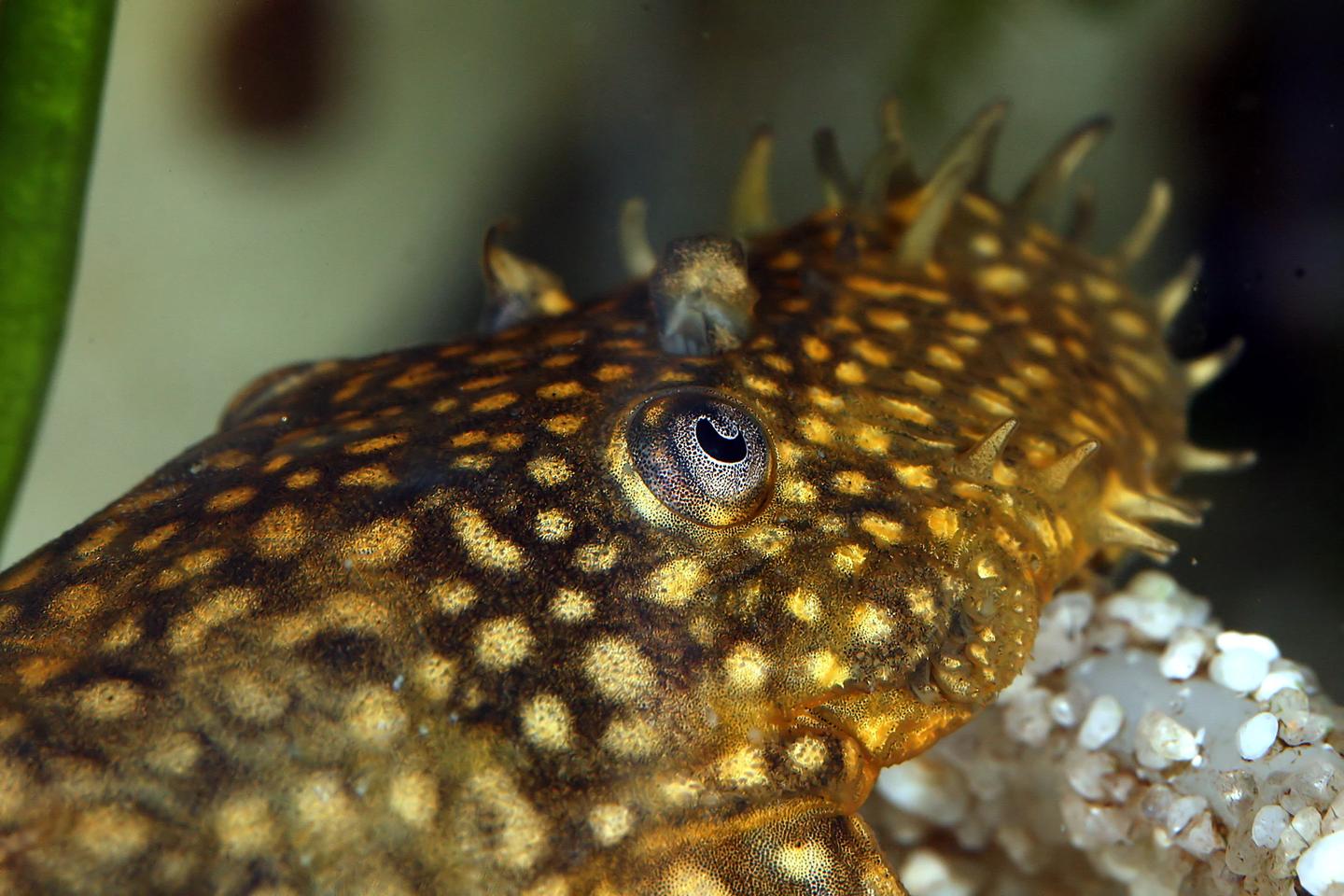
For one typical common bristlenose, start with a mature, filtered aquarium of at least 90 litres, useful floor area, wood and cover. OATA reports about 15 cm adult length, 22-27°C, pH 6-8 and 4-12 dGH. Confirm the exact trade identity before applying species-level claims.
Maintain these water conditions for optimal health and vibrant colors
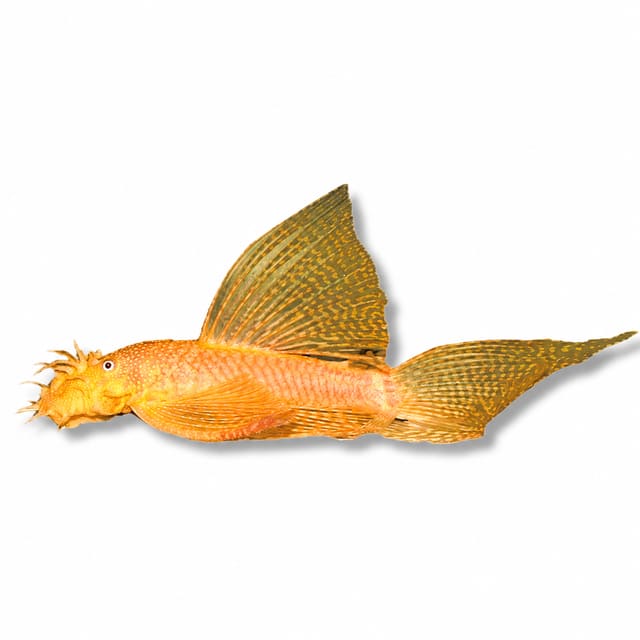
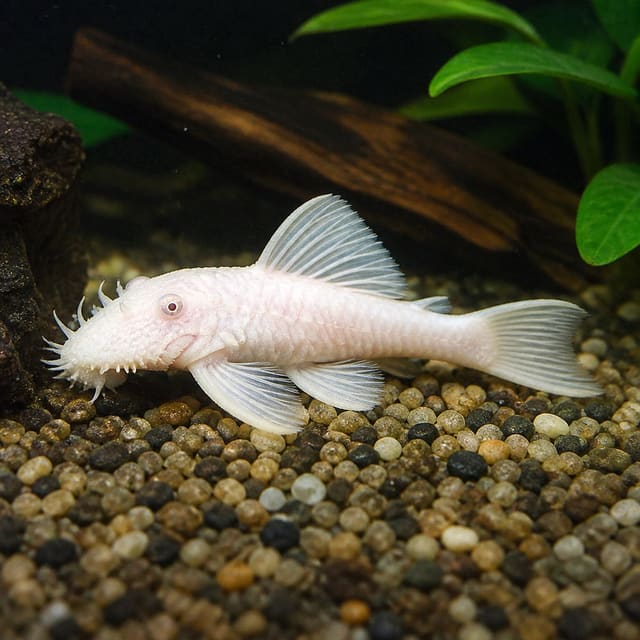
The Marigold Bristlenose, supplied under the name Ancistrus sp. gold, is the yellow-gold bristlenose pleco often called a Golden Bristlenose Pleco in the UK aquarium trade. It combines the compact build and surface-grazing behaviour associated with bristlenose catfish with a conspicuous warm colour. This is a useful fish to watch and care for, but it is not a substitute for aquarium maintenance and it must receive its own food.
One purchase supplies one Marigold Bristlenose in the selected size. Sex is guaranteed only when the selected option explicitly states male or female. This Marigold Bristlenose listing has no sex-guaranteed option. The size you select is the size supplied, not the adult size. The selector includes grades from 2–2.5 cm through 6–7 cm and an XL grade; XL has no fixed centimetre claim here. This listing has no sex-guaranteed option. Colour intensity and bristle development vary between individuals.
| Planning point | Guidance for this listing |
|---|---|
| Scientific identity | Ancistrus sp. gold - gold trade form |
| Common trade names | Marigold Bristlenose; Golden Bristlenose Pleco |
| Sale unit | One unsexed fish in the selected size grade |
| Expected adult length | Plan for approximately 15 cm; individual fish and trade lines vary |
| Minimum aquarium | Choose an established aquarium with sufficient floor area and filtration for an adult of about 15 cm; allow more room for other bottom fish |
| Water temperature | 22–27°C |
| Water chemistry | pH 6.0–8.0; a hardness appropriate to the individual fish and its community, with stability more important than chasing one exact value |
| Temperament | Generally peaceful; adults, especially males, may defend caves or feeding areas from similar bottom-dwellers |
| Food | Complete sinking loricariid foods plus measured plant-rich variety; algae and biofilm are supplementary |
| Essential setup | A mature filtered aquarium, high oxygenation, smooth surfaces, cover, caves and real wood for shelter and grazing structure |
The trade name Ancistrus sp. gold is preserved because it is the identity attached to this stock. The abbreviation "sp." means that a precise species name has not been supplied. "Gold" describes the aquarium trade form; it is not a formally described species epithet. The responsible way to present the fish is therefore as a golden or marigold Ancistrus trade form rather than quietly assigning it to a species, river locality or breeding line that the available provenance does not establish.
This distinction matters when comparing listings. The words "golden", "yellow", "albino", "leucistic" and "L144" are sometimes used inconsistently by sellers and hobbyists. Colour alone in a product photograph is not enough to prove one of those identities. Gold colour alone does not establish an L144, albino form, particular eye-colour line, locality or breeder. The supplied fish should be chosen because you want the marigold/golden bristlenose trade form described here, not because you need a guaranteed genetic line.
Ancistrus belongs to the armoured catfish family Loricariidae. Members of the genus have ventral mouths adapted for holding onto and grazing submerged surfaces. The characteristic tentacles around the snout are generally most developed in mature males, while mature females and juveniles tend to have fewer or smaller tentacles. That is a useful adult sexing clue, not a reliable basis for promising the sex of small fish.
Small size grades are juveniles. A 2–3 cm fish needs the same long-term plan as a larger specimen even though it occupies little space on arrival. OATA's general guidance gives bristlenose plecos an adult length of about 15 cm, so this listing uses approximately 15 cm as the planning figure. A fish may finish smaller or larger according to its exact ancestry, sex, husbandry and trade line; a narrower adult measurement would be misleading for this genus-level trade form.
Choose a juvenile if you want to watch it develop and your established aquarium can protect it from large, forceful or food-competitive tank mates. Choose a larger grade when you need a fish less vulnerable to accidental predation or when matching an established community, while still checking compatibility carefully. “XL” is a size grade and should not be interpreted as a guaranteed centimetre measurement unless the selector gives one.
Do not choose on length alone. The aquarium must be mature, filtered and able to keep ammonia and nitrite at zero before any grade is introduced. A tiny pleco is not suitable for an uncycled nano aquarium, and a larger one does not make unstable water safer.
The exact species has not been identified, so the care advice here follows the genus Ancistrus and its care group. The gold colour is a trade description rather than a species name or a guaranteed pedigree. For a first aquarium, read the tropical tank setup guide before selecting any livestock.
For one bristlenose, choose an aquarium with a useful footprint, mature filtration, oxygenation and appropriate cover. A larger, longer aquarium is easier to manage because it provides more grazing area, separates feeding sites and dilutes waste more effectively. Volume alone can mislead: a tall, narrow tank may hold the same litres as a longer aquarium while offering much less usable bottom area.
Bristlenose catfish are often described as compact, but they are substantial bottom-dwellers that eat and produce waste. The filter and maintenance routine must be sized for the whole community, not just the headline tank volume. An overstocked aquarium does not become suitable simply because the pleco itself is under 15 cm.
One fish is the simplest plan for a modest community aquarium. More than one can be possible in a substantially larger, well-structured tank, but each fish needs access to cover, food and a retreat. Mature males may contest caves. Adding a second fish does not guarantee a compatible pair, and two juveniles cannot be assumed to become one male and one female. If several bristlenose are planned, provide more caves than fish, break lines of sight with wood and plants, and be ready to separate an animal that is excluded from food or shelter.
Use efficient biological and mechanical filtration with steady surface movement. The objective is not a violent current across every part of the tank; it is reliable oxygen exchange, capture of solid waste and a stable colony of nitrifying bacteria. Wood and caves should not create dead areas where food and waste collect unnoticed. Clean pre-filters and mechanical media as needed without sterilising all biological media at once.
Test water rather than judging it by clarity. Ammonia and nitrite should remain at zero. Nitrate should be controlled through appropriate stocking, feeding, plant growth where used and regular water changes. Sudden deterioration is especially risky for a small newly introduced fish. A mature aquarium is defined by stable biological function, not by a fixed number of weeks on a calendar.
OATA's tropical algae-eater guidance gives bristlenose plecos a broad range of 22–27°C and pH 6.0–8.0. Those are planning ranges, not a reason to move a fish repeatedly between extremes. Match the new fish to stable, conditioned aquarium water and avoid abrupt changes in temperature, pH or dissolved mineral content.
Use a dechlorinator appropriate to the water supply. Keep heaters guarded or positioned so the fish cannot become trapped behind them. Maintain a secure lid because startled fish can enter filter chambers or tight equipment gaps. If the aquarium has unusually soft, hard, acidic or alkaline water, choose tank mates with overlapping requirements rather than continually forcing the water toward conflicting targets.
Provide at least one piece of aquarium-safe real wood and a retreat that the fish can enter fully. Wood creates surface area for biofilm and gives the fish a natural place to graze and shelter. Wood itself is not a complete food or proven nutritional necessity, so provide a suitable staple diet. The useful role here is structure, cover and a living grazing surface.
Use smooth sand, fine rounded gravel or another substrate that does not present sharp edges. Inspect ceramic caves and ornaments for rough seams. Arrange heavy wood and stone so they cannot collapse if the fish moves underneath. Leave enough open floor and glass access for cleaning rather than filling every centimetre with hardscape.
Hardy attached plants such as Java fern and Anubias can work well because they tolerate shade and create extra cover. Rooted plants are also possible, although a fish moving around the base may disturb light planting. Healthy, properly fed bristlenose usually focus on biofilm and offered foods, but hungry fish may rasp soft or deteriorating plant tissue. Plant damage should prompt a review of feeding, plant health and stocking rather than an assumption that the fish can survive on leaves.
Lighting should serve the aquarium rather than force the fish into view. Moderate light with shaded areas allows natural day-time retreat and evening activity. A fish hiding during bright periods is not necessarily unhealthy. Sudden changes in behaviour, breathing, body condition or feeding are more informative than whether it remains visible all day.
A bristlenose pleco is an active grazer, not a self-sustaining cleaning tool. Aquarium algae and biofilm are variable and rarely provide a complete diet. Feed the fish deliberately even when the glass looks green. Use a reputable complete sinking food formulated for loricariid or herbivore-leaning bottom fish as the nutritional base, then add measured variety.
Suitable plant-rich additions can include blanched courgette, green bean, spinach or another aquarium-safe vegetable offered in a portion the fish can use. Cucumber is readily accepted but is mostly water, so it should not displace a nutritionally complete staple. Remove uneaten fresh food before it deteriorates. Portions depend on fish size, food density, natural grazing, temperature and competition; a universal instruction such as "one wafer per fish" can overfeed one aquarium and underfeed another.
Loricariid diets are more diverse than the simple label "algae eater" suggests. Small amounts of suitable omnivore food may be encountered in a community aquarium, but a high-protein diet intended for carnivorous catfish is not the right staple. Observe body condition and faeces, and adjust the whole feeding plan rather than adding food automatically whenever the fish is hidden.
Feed near its retreat shortly before or after the main lights go out. In a busy community, use more than one feeding location so faster fish cannot monopolise every item. Check the food after a short interval and learn whether the pleco is reaching it. A rounded but not swollen abdomen, steady growth in juveniles and regular grazing are more useful indicators than the disappearance of a wafer that other fish may have eaten.
If the fish is not eating, first check water quality, temperature, oxygen, hiding security and competition. A newly arrived animal may feed after dark without being seen, so use a dim light and inspect body condition rather than repeatedly disturbing its cave. Continued food refusal, a hollow abdomen, rapid breathing, loss of grip or unusual colour warrants prompt investigation and qualified aquatic-veterinary advice where necessary.
Expect a calm, bottom-oriented fish that spends time attached to wood, glass, stone and shelter. Activity often increases in dim light and after the aquarium lights go out. A secure fish may appear more frequently over time, but forcing it out of a cave removes the protection that helps it settle.
The sucker-shaped mouth allows grazing and attachment; it does not mean the fish should be relied upon to polish every surface. Some algae will be ignored, and no fish removes dissolved waste or replaces glass cleaning, substrate care and water changes. The best reason to keep a bristlenose is that its own behaviour and appearance suit the aquarium, with algae grazing treated as one part of its natural activity.
Territorial behaviour is most likely around caves, food or other similar-shaped bottom fish. Watch for one fish pinning another behind equipment, blocking a cave entrance or preventing access to food. Chasing that looks brief from the front of the tank can become chronic exclusion after dark. Add structure only if it genuinely creates separate territories; if an animal continues to lose condition, separation is safer than waiting for the hierarchy to resolve itself.
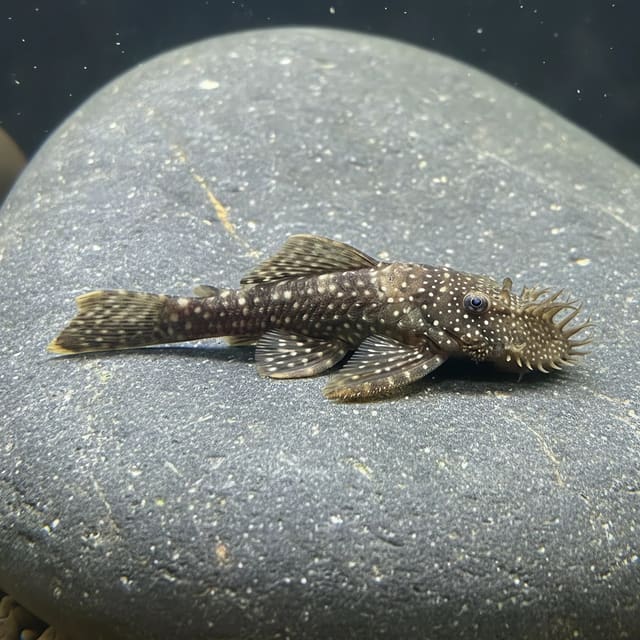
Mature males generally develop more prominent tentacles over the snout and head. Mature females usually have fewer and smaller tentacles, often closer to the lip margin, and juveniles may show little useful difference. Scientific work on Ancistrus supports strong adult sexual dimorphism in the tentacles, but it does not make every juvenile visually sexable.
This product is sold without a sex guarantee. Colour intensity also does not identify sex. Buyers who need a proven breeding group should source mature, individually assessed animals rather than infer sex from a small size grade.
Ancistrus are cavity spawners. In established compatible adults, a male may occupy a cave, guard a clutch and continue guarding early young. That general behaviour is well documented for the genus. It does not mean that two fish bought here will form a pair, that juveniles can be sexed to order, or that spawning will occur in a community aquarium.
Anyone planning a breeding project needs mature fish, more than one secure cave, stable high-quality water, appropriate conditioning foods, oxygenation and separate capacity for growing young. Community tank mates may disturb caves or consume fry. Exact hatch timing changes with temperature and conditions, so the listing does not promise a fixed number of days. Repeatedly lifting or shining light into an occupied cave can cause stress; observation should be non-invasive.
Breeding should never be used to justify keeping multiple territorial adults in an undersized aquarium. Plan adult accommodation and homes for offspring before attempting a group. The Bristlenose Pleco care guide provides a broader husbandry framework, but live behaviour and welfare must guide decisions in the individual tank.
Prevention starts with mature filtration, stable water, oxygen, adequate food and a layout without traps or sharp surfaces. Observe the fish's abdomen, breathing, grip, fins, eyes and response to food. A fish can remain hidden and healthy; the important question is whether its condition and normal routine are stable.
Warning signs include persistent rapid breathing, loss of grip, a markedly hollow abdomen, swelling, sores, frayed fins, unusual white spots, repeated surface distress or complete food refusal with declining condition. These signs are not diagnoses. Test water immediately, review recent additions and seek advice from an aquatic veterinarian or experienced fish-health professional rather than selecting medication from appearance alone.
Catfish and invertebrate tank mates may be sensitive to some treatments. Never copy a dose from an unrelated species or combine medications casually. Use a separate treatment system when professionally advised, measure actual water volume and follow the product label. Copper can also be hazardous to shrimp and snails. Good husbandry is safer than routine preventative dosing.
A separate, cycled quarantine aquarium can be a useful way to observe new fish without exposing the main community, provided it has suitable cover, heat, filtration and water quality. Quarantine length should reflect the source, symptoms, veterinary advice and the keeper's protocol rather than an arbitrary promise that every problem appears by one date. Nets, siphons and other wet equipment should not be moved between systems without appropriate hygiene.
Have the aquarium, food and test kit ready before ordering. Check the live delivery date and service area, arrange for someone to receive the parcel, and read the current delivery and Live Arrival Guarantee terms. The guarantee has conditions and reporting steps, so follow the current policy rather than relying on a shortened claim copied elsewhere.
On arrival, inspect the fish while it remains in the bag. Allow the sealed bag to adjust to temperature, acclimatise gradually and avoid adding transport water to the display. Watch the fish's breathing and posture, then release it into a tank with a secure retreat. If a Live Arrival Guarantee claim is needed, the current delivery terms explain the same-day contact and continuous sealed-parcel opening video required before the fish is released.
Offer a secure retreat immediately. Do not expect a newly moved catfish to graze in the open on the first day. Check breathing and posture without repeatedly lifting wood or caves. Feed modestly after it has settled and remove food that is not used. Continue testing because adding livestock changes the biological load even in a mature aquarium.
When testing the aquarium, compare readings over time rather than changing the water to chase one number. The water parameter guide explains pH, ammonia, nitrite and nitrate in the context of the source water. For this unidentified gold trade form, the OATA temperature and pH figures are broad care-group guidance; they are not a measured optimum for a named species.
The water parameter matcher can help compare measured aquarium water with broad guidance, while repeated tests and the fish's behaviour still determine the daily care plan.
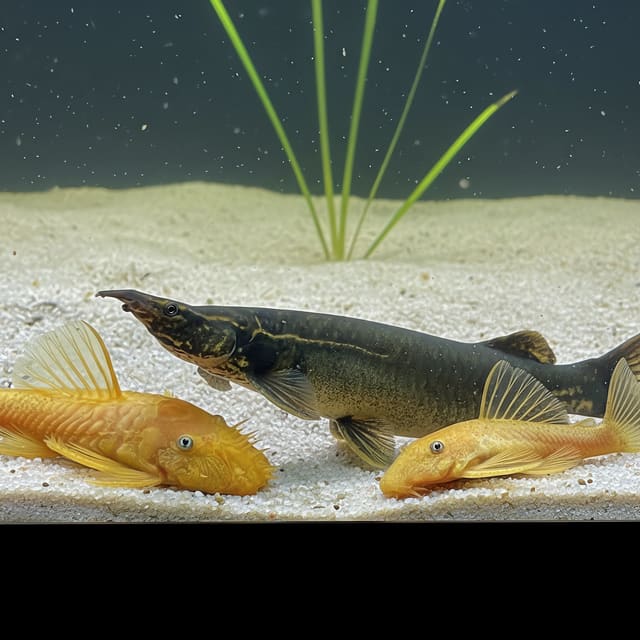
A single Marigold Bristlenose can fit a peaceful tropical community when all species share suitable water, temperature and space. Mid-water tetras and rasboras are often easier companions because they do not compete directly for caves. Peaceful gouramis may be possible in appropriately sized aquariums. Corydoras can share a community, but both groups use the lower area, so floor space, group requirements, substrate and feeding access must be planned rather than assumed.
Avoid large predatory fish capable of swallowing the selected size, persistent cave competitors, aggressive fish that attack resting catfish and combinations requiring incompatible water. Be especially cautious with other plecos in smaller tanks. Similar fish may contest the same retreat even when both species are described as peaceful.
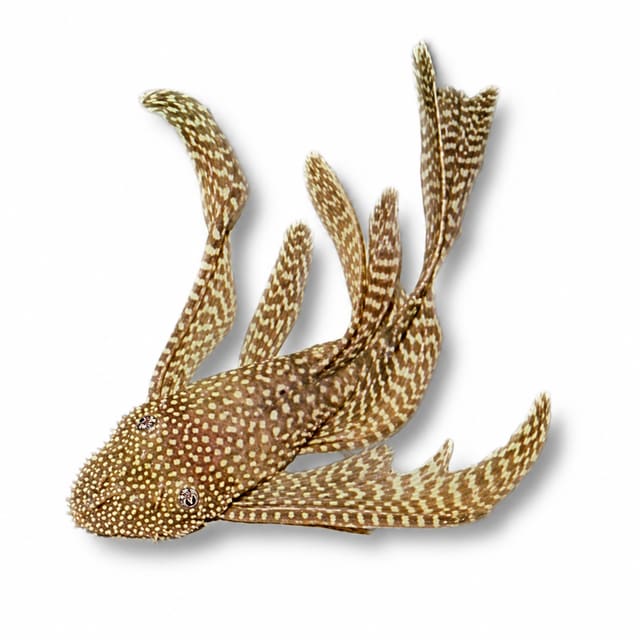
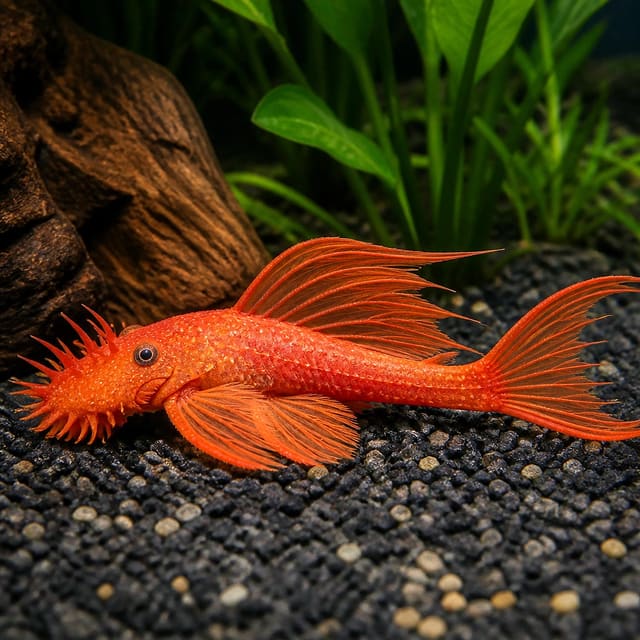
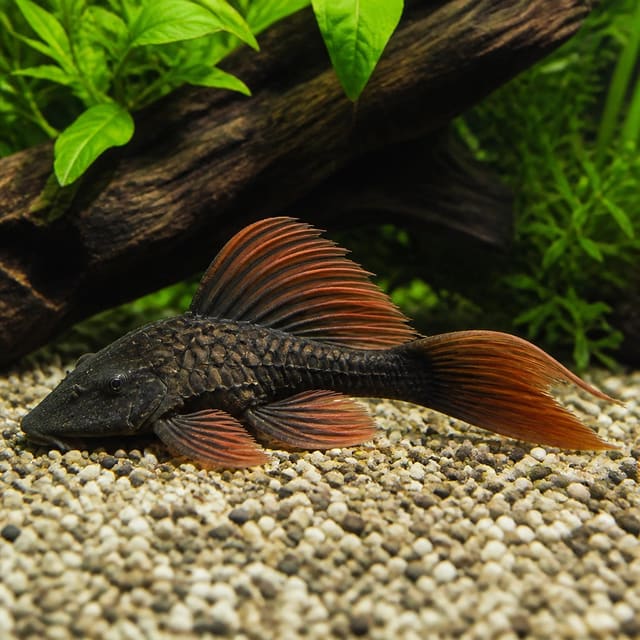
For closely related alternatives, compare the Common Bristlenose, the Super Red Bristlenose and the Gold Longfin Bristlenose. Compare colour and finnage as well as the care needs of the fish you choose. The wider Bristlenose Plecos collection groups current related stock.
None of these forms should be chosen as a disposable cleaner. Pick the fish whose adult appearance and behaviour you want to keep for its full life, then provide the aquarium around that animal. If the main goal is algae control, first identify the algae and its cause; lighting, nutrients, plant health and manual removal may matter more than adding livestock.
Choose the size appropriate to the established aquarium and its present inhabitants. A smaller juvenile needs protected intakes and freedom from fish that could swallow it; a larger grade still needs ample adult floor space and a retreat. One purchase supplies one fish. This product has no male, female or pair option.
Check the current delivery and Live Arrival Guarantee terms before ordering, and arrange for someone to receive the fish. Any claim follows the live policy's evidence and reporting conditions. Welfare still depends on a mature, compatible aquarium being ready.
If comparing colour forms, the bristlenose collection is a browsing aid. Colour and finnage do not establish identical ancestry or make two adults suitable for the same cave. Compare each actual offer and plan the aquarium around mature behaviour.
OATA's bristlenose care-group guidance suggests planning for about 15 cm as an adult. A selected size grade is the size supplied, not the final length; the final length varies among individuals.
Use a mature filtered aquarium with enough floor area, wood and secure retreats for an adult around 15 cm. A longer, roomier tank provides more stability and feeding space, especially with other bottom dwellers. No single litre figure makes an overstocked aquarium suitable.
One is a straightforward starting plan. More than one requires a substantially larger structured aquarium, several caves and feeding places, close observation and a separation option; mature fish may defend retreats.
It can suit a prepared keeper who has a mature aquarium, tests water, feeds a complete sinking food and monitors bottom-level competition. It is not suitable for an uncycled tank or as a substitute for cleaning.
Offer a complete sinking loricariid food as the staple, with measured plant-rich variety. Algae and biofilm are supplementary; remove uneaten fresh food before it spoils.
OATA's broad bristlenose guidance is 22–27°C and pH 6.0–8.0. These are care-group planning ranges, not a species-specific optimum. Stable conditioned water with zero ammonia and nitrite matters more than chasing an exact midpoint.
It is generally peaceful toward suitable mid-water fish, but an adult may defend a cave or food from similar bottom dwellers. Watch for persistent exclusion or injury and separate fish if added structure does not resolve it.
Peaceful tetras, rasboras or suitable gouramis can be considered where water needs and adult sizes overlap. Corydoras need their own group, floor area and food access. Avoid predators, aggressive cave competitors and incompatible water requirements.
Tropical Fish Co uses a licensed live-animal courier and protective packing under its current delivery policy. Arrange for someone to receive the parcel, check the Live Arrival Guarantee terms for same-day reporting and sealed-parcel video evidence.
The identity on this page is a Marigold Bristlenose trade form in the genus Ancistrus; no precise species or lineage is claimed. The broad adult-size, temperature, pH, feeding and social guidance comes from the Ornamental Aquatic Trade Association's tropical algae-eater care sheet. The RSPCA aquarium environment guidance explains mature filtration and water testing. The precise ancestry of individual fish can vary.
No reviews for this item yet. Bought one? Honest reviews only, good or bad.
What customers say about ordering from us
I have a small group of long finned mountain minnows. So was delighted to be able to order ten of this variety to increase the genetics in my tank . The ones I recieved are healthy but it’s to early to give a verdict on wether they are of a long finned type since they are small currently.
Gordon Walker · 23 Sept 2026
100% success travel and "installation". Pleased with quality of purchase. The Siamese fighter a bit "shy" so have not yet seen him at his best yet but looking good. Happy customer. GG
George E Garratt · 21 Sept 2026
Reviews of our shop, collected by Judge.me, an independent third-party review collector. Newest first.