By Priya Ramesh
Moderate
Full Orange Koi Angelfish (Pterophyllum scalare)
24–27°C · pH 6.5–8 · 200L
£12.99
South American Cichlids · Buying Guide
Koi angelfish (Pterophyllum scalare koi) explained - the orange crown, why patterns shift with stress, tank size and tank mates. See ours in stock.
11 products in stock today
Live prices and stock. Every fish covered by our Live Arrival Guarantee.
24–27°C · pH 6.5–8 · 200L
22–25°C · pH 6–7.4
22–25°C · pH 6–7.4 · 41L

23–27°C · pH 5.5–7 · 60L
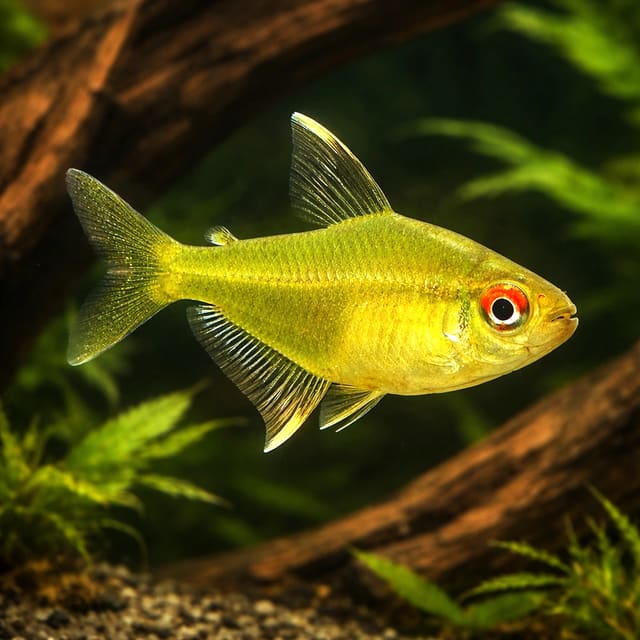
22–27°C · pH 6.5–7.5 · 72L
22–27°C · pH 6–8

22–26°C · pH 6–7.5 · 60L
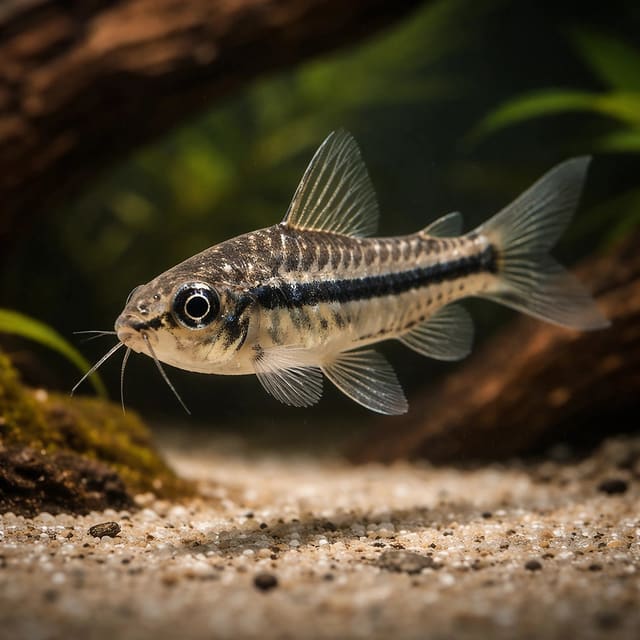
22–26°C · pH 6.4–7.4 · 41L
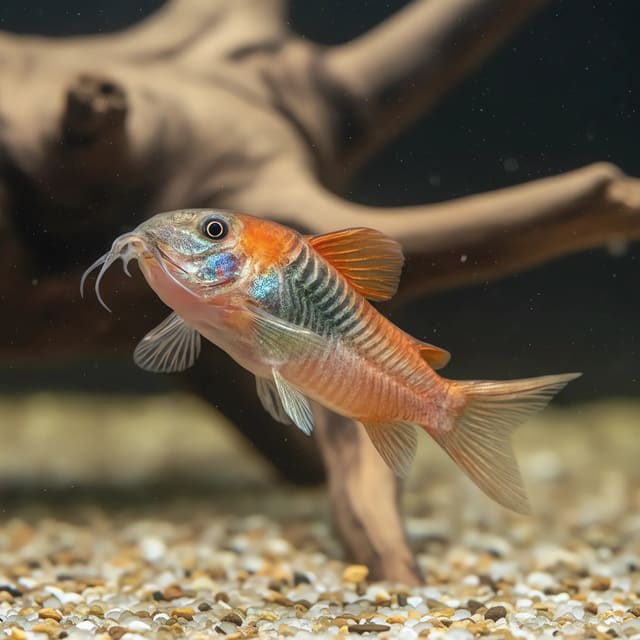
25–27°C · pH 6–8

22–26°C · pH 6–7
24–26°C · pH 6–8 · 81L
The shaded band shows the range koi angelfish is comfortable in. Match it to your tap water before you buy.
Our trained assistant knows this koi angelfish page inside out. Ask it anything — water parameters, tank mates, how many to buy — or have it read the guide aloud while you set up your tank.
If you've searched "koi angelfish" you've probably already noticed the problem: half the results talk about it like a rare, delicate species, and the other half are shop listings that tell you nothing about why the fish in the photo looks different from the one that arrives. Both miss the point.
I'm Priya Ramesh, I look after the angelfish and dwarf-cichlid side of the shop, and I've kept Pterophyllum for years - long enough to watch the same koi angel go from a pale, patchy juvenile to a confident adult with a deep orange crown. So let me give you the answer I give over the counter when someone asks "is the koi a different fish?"
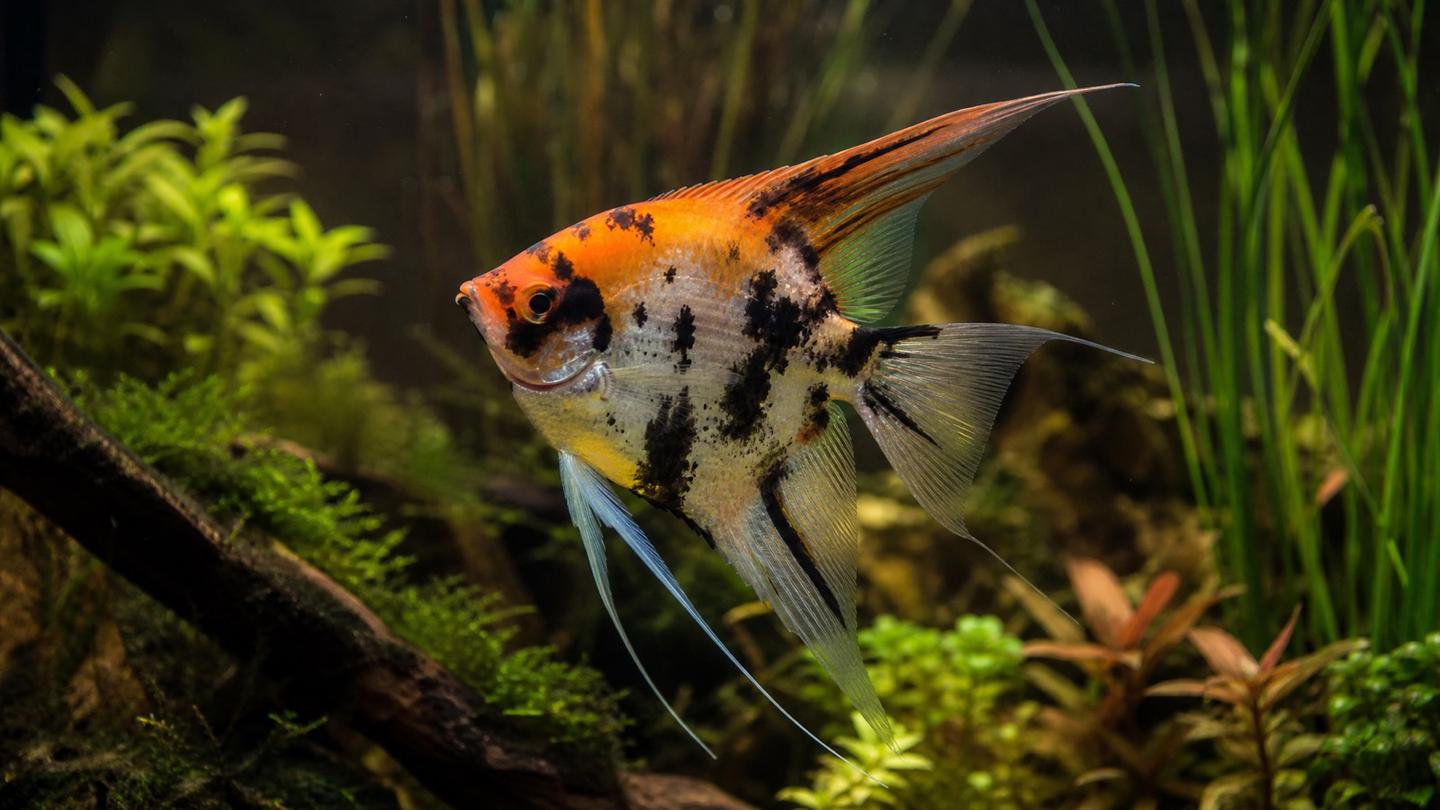
It isn't. A koi angelfish is the everyday freshwater angelfish, Pterophyllum scalare, bred for a koi-carp-style pattern - a white or cream body, bold black blotches, and usually an orange or red cap over the head and shoulders [1] [3]. The care is identical to a silver, marble or zebra angel. What you're paying a small premium for is the pattern and the way it behaves - and that pattern is genuinely more interesting than a fixed colour, because it shifts with age and mood. This page is about that strain specifically. If you want the full species biology, our angelfish care guide covers it; if you want to compare koi against platinum, marble and the rest, the angelfish types guide lines them all up.
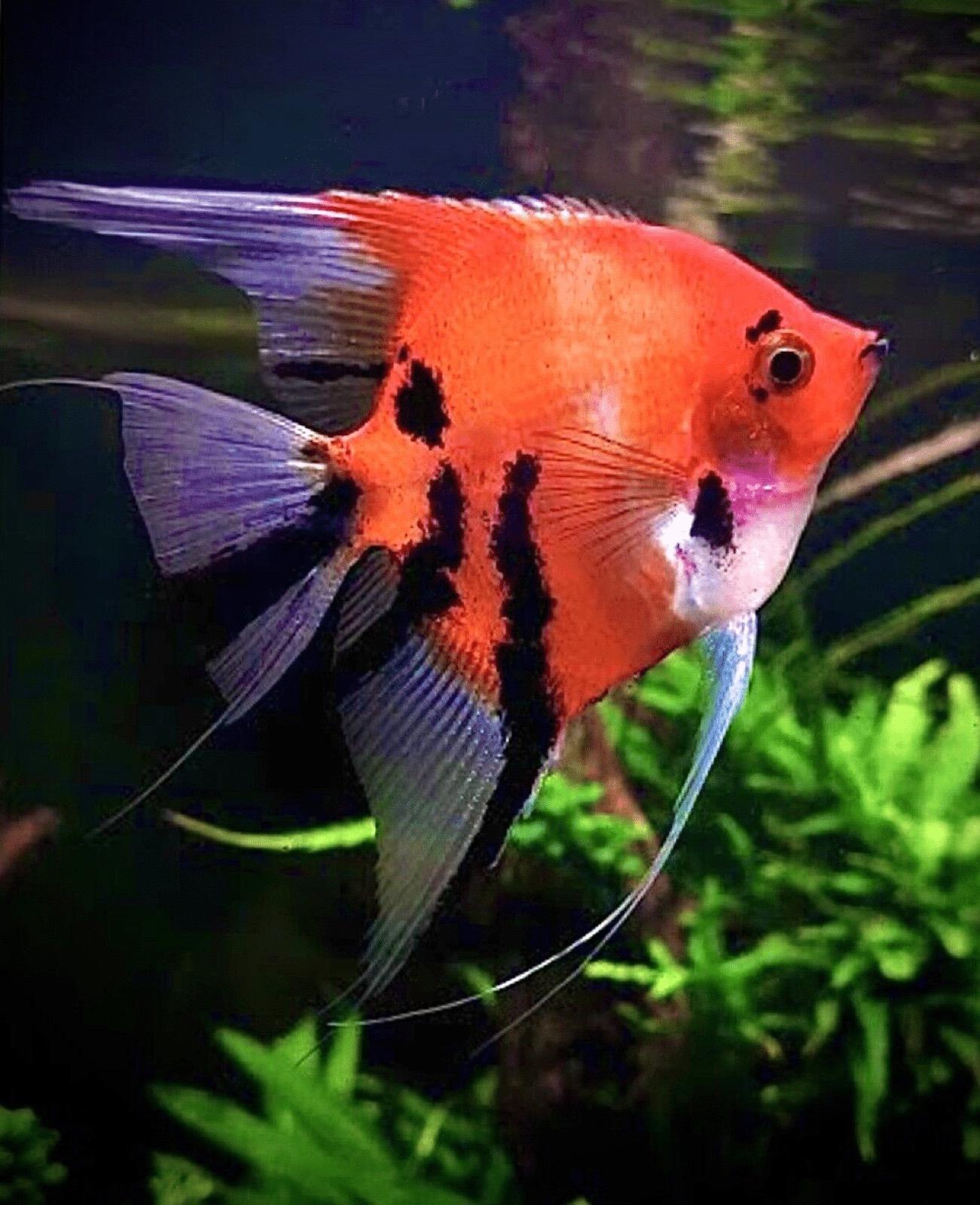
A koi angelfish (Pterophyllum scalare koi) showing the classic orange "crown" over the head and the bold black koi blotching down a white body. The cap is brightest on younger fish. Photo: Tropical Fish Co.
Koi is a pattern, not a species. Every care number on this page - tank size, temperature, pH, lifespan - is the same as any other Pterophyllum scalare. Buy the koi for its looks, plan the tank for an angelfish.
Every fish in this table is the same species (Pterophyllum scalare), so the care columns don't change - only the look and the price tier do. The point of comparing is to set expectations on pattern and cost, not care.
| Strain | Pattern | Orange "crown" | Pattern shifts with stress? | Typical price tier |
|---|---|---|---|---|
| Koi | White body, black koi blotches, orange cap | Yes - strongest when young | Yes - very visible | Mid (premium over silver) |
| Silver (wild-type) | Silver body, vertical black stripes | No | Stripes fade/darken slightly | Lowest |
| Marble | Irregular black-and-white marbling | No | Mild | Low-mid |
| Zebra | Extra vertical stripes vs silver | No | Stripes darken/lighten | Low-mid |
| Platinum | Solid pearly white, no markings | No | Very little to show | Mid-high |
| Veil-tail (any colour) | Long trailing fins | Depends on base | Depends on base | Mid (fins fragile) |
If you specifically want the colour-changing, orange-capped look, the koi is the strain that delivers it - the others are either fixed-colour or stripe-based. Just don't expect any of them to need different care. The angelfish types guide goes deeper on each.
Because a koi angelfish is a scalare, the setup is the standard angelfish setup - there's no koi-specific trick. The three things that matter most:
Height before length. Angelfish are tall, not long. A koi grows to roughly 12-15 cm of body height as an adult [1], and it needs vertical room to turn without folding its fins. Aim for a tank at least 45 cm tall and 150 litres or more for a small group; an adult pair wants 200 litres+.
Stock five or six juveniles, or one bonded pair. The trap is buying three or four. Angelfish form dominance hierarchies - they even shoal by colour phenotype [2] - so in a small group two fish pair off and harass the rest. Buy five or six young koi, let a pair form naturally, then move the surplus when the tank turns territorial.
Warm, stable, not too bright. Hold 24-28 °C with a heater, keep pH in the 6.0-7.5 band and hardness 3-15 dGH [1], and feed a varied diet - quality flake or pellet plus frozen bloodworm and brine shrimp. Stability beats chasing perfect Amazon numbers, especially in hard UK water [5].
Someone buys three coin-sized koi for a 60 L community tank "to see how they do." Six months on, two have paired, the third is hiding with clamped fins, and none of them fit the tank any more. Size and stock for the adult from day one - a tall 150 L+ tank and five or six fish, or upgrade before you buy, not after.
Choose tank mates for the adult angel, not the juvenile you collect. The golden rules: nothing small enough to be eaten by a grown angel, nothing that nips those long fins, and nothing aggressive enough to turn the tank into a turf war. A koi angel rules the open mid-water, so the easiest companions live somewhere else in the tank.
Larger tetras such as lemon and cardinal look stunning against a koi's pattern, but remember a fully grown angelfish can eat very small fish [3] - so keep the tetras on the larger side and watch as the angel matures. For a broader shortlist of calm community fish, our South American cichlids hub and the planted-tank fish hub are good starting points.
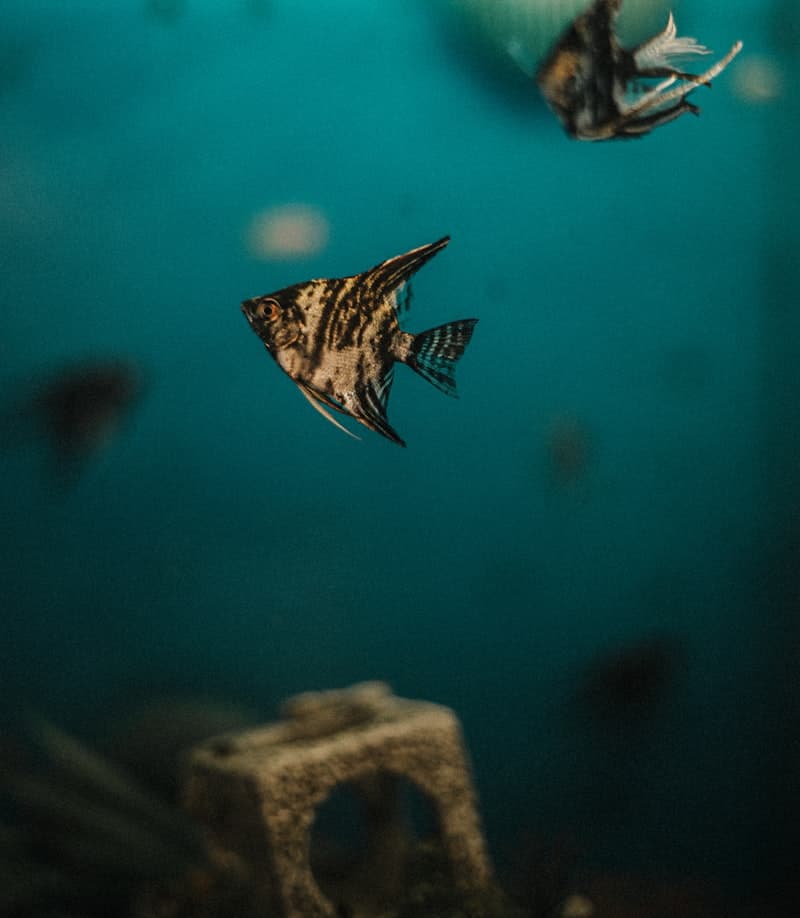
Notice the unhurried swimming and the vertical space. That slow, floaty movement is exactly why koi angels need height and calm tank mates - a chaotic, fast-moving community stresses them, and a stressed koi shows it instantly in its darkened pattern.
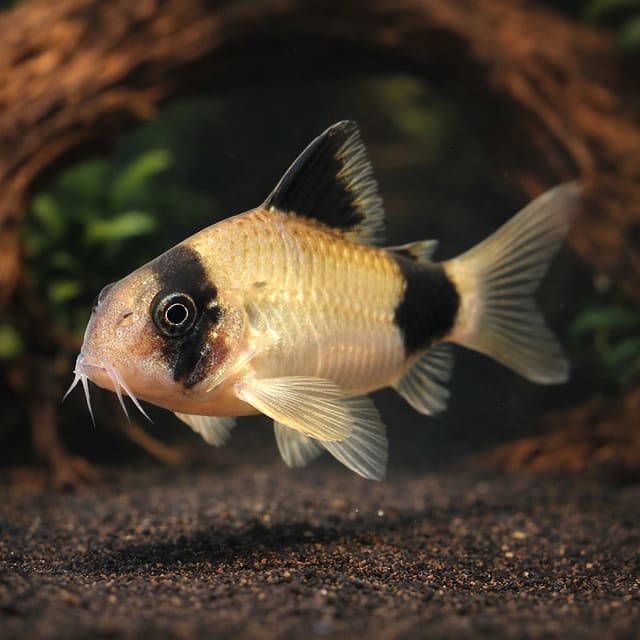
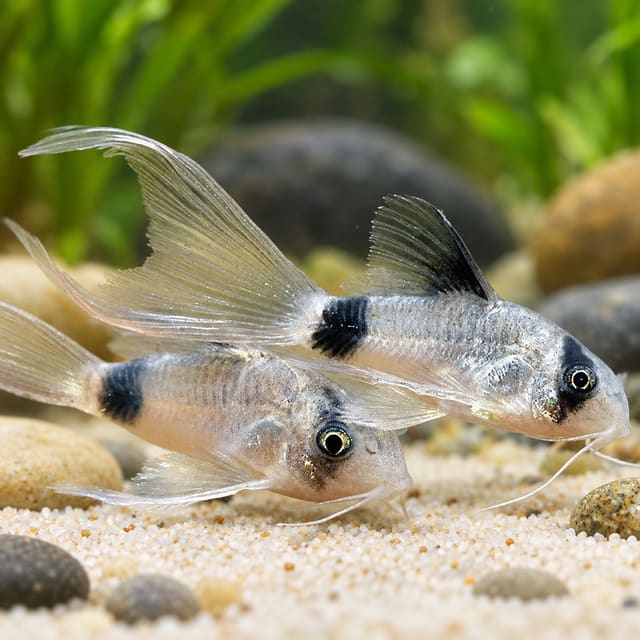
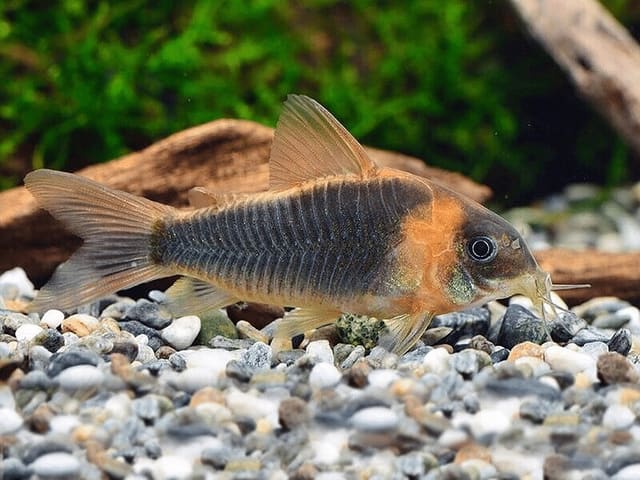
Panda corydoras working the substrate. Bottom-dwelling catfish like these are the easiest koi angelfish companions - they use the floor while the angel owns the open water, so the two rarely clash. Photo: Tropical Fish Co.
Koi angels ship well when they're packed with room for those fins, but they react badly to sudden swings - and because their pattern darkens under stress, a newly arrived koi often looks pale and blotchy at first. That's expected. Acclimate gently and the colour returns.
Much of south-east England runs hard, alkaline tap water [5]. Wild Pterophyllum prefer soft, acidic water, but farm-bred koi scalare are raised in a wide range of conditions and adapt well. Don't chase a perfect Amazon pH with chemicals - a stable, well-filtered hard-water tank beats an unstable "perfect" one every time [1].
Close the loop - everything you need to plan a koi angelfish tank from here:
Koi angelfish are no harder than any other angelfish - they're just more interesting to watch. Give them a tall, mature tank, calm company and stable warm water, treat the shifting pattern as a feature rather than a fault, and a koi angel will reward you for the better part of a decade.
Visual route into the rest of our UK live-fish range.
Material factual claims cite the sources below; store policy and cautious inference are labelled in the article. Sources are grouped by type so you can judge their weight at a glance.
Peer-reviewed evidence that angelfish use body colour as a social cue and shoal with the colour phenotype they were raised among - context for the koi pattern.
Source for max size, pH 6.0-8.0, temperature 24-30 °C and Amazon distribution. Koi is a strain of this species.
Husbandry cross-check; lists black, gold and koi strains and notes scalare may eat small fish such as tetras.
Lists the common strains (silver, veil, koi, zebra, marble, albino, leopard, platinum) and general angelfish husbandry.
Visual walkthrough of angelfish strains, tank setup, behaviour and acclimation.
UK tap-water hardness classification - context for keeping koi scalare in hard south-east England water.
Fishkeeping moves fast and we want every guide spot-on. If you think something here is wrong, out of date, or could be clearer, tell us — our team reads every message and updates the page.
Suggest an editEvidence-checked UK angelfish care: adult size and height, tank planning, pair or group needs, water, feeding, tank mates, health and breeding.
Compare African lake, South American and Central American cichlids by adult size, water, social behaviour and aquarium footprint before choosing.
Corydoras care for UK aquariums: compare popular cory catfish by adult size and temperature, then check tank, group, substrate, food and tank mates.
Discus & Cichlid Expert · 15+ years in the hobby
Priya has bred discus commercially in Leicester since 2016 — supplying Tropical Fish Co and two other UK retailers with F1 tank-bred juveniles. Before that she spent seven years on South American dwarf cichlids. Her discus and cichlid guides on this site are written from the perspective of someone who has actually hatched, grown out, and shipped the fish — not from library research alone.