−10%
Easy
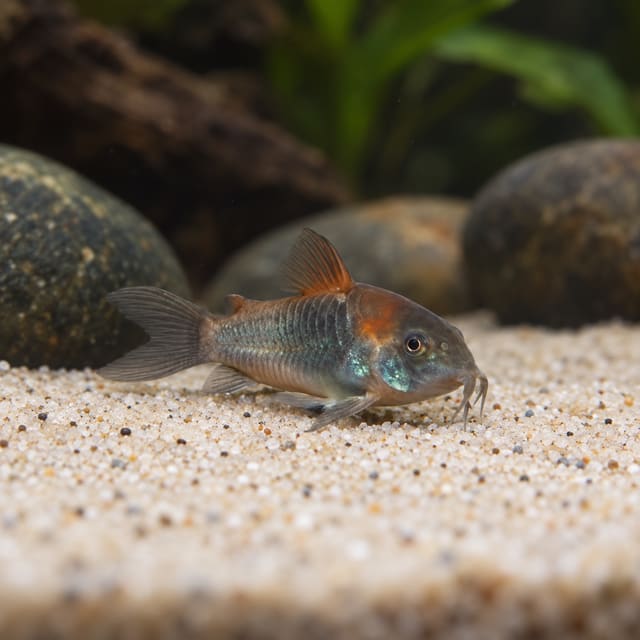
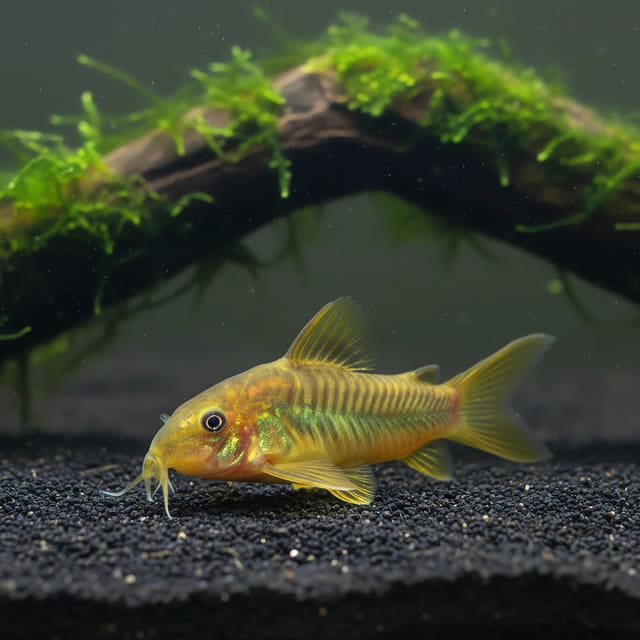
Bronze Corydoras, Bronze Cory Catfish (Corydoras aeneus)
22–26°C · pH 6–7.5 · 60L
£3.59£3.99

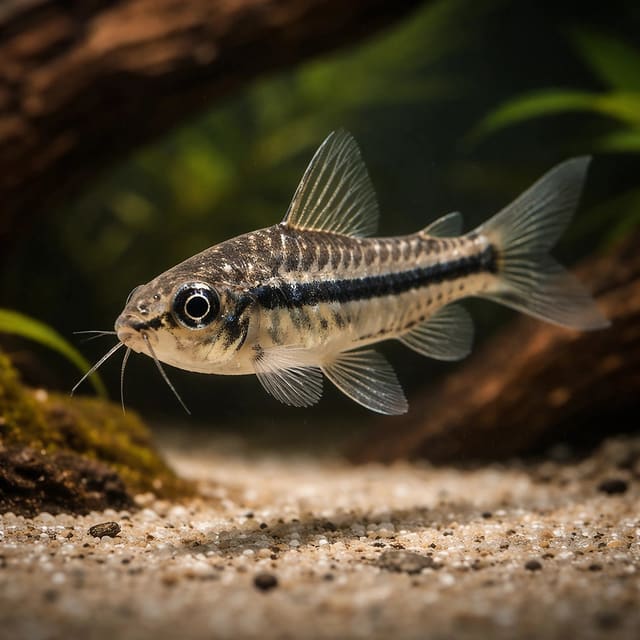
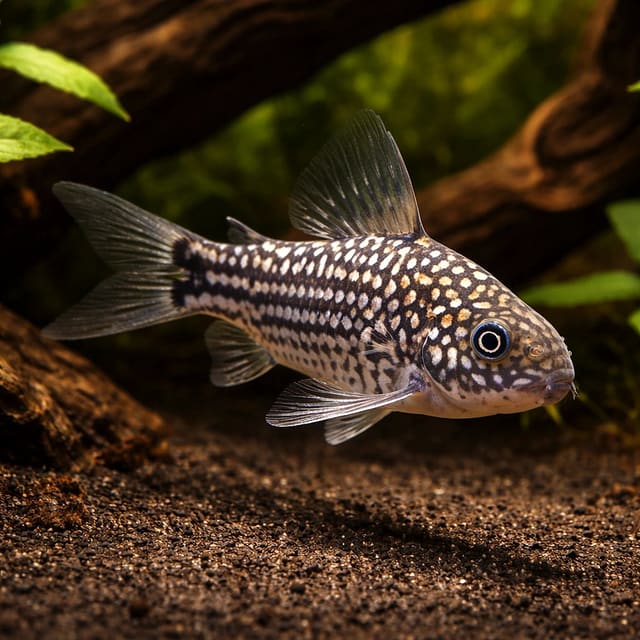
Panda Cory Catfish (Corydoras panda) is a peaceful, social freshwater catfish for a group of at least six. One quantity supplies one animal in the selected 2–5 cm dispatch band; plan a filtered aquarium with a 45 × 30 cm base, about 41 litres and water at 22–25°C.
Adult size is the maximum length this species reaches at full maturity (scientific sources). The livestock you receive will be younger and smaller — pick a size above for the actual shipping size. Product-photo provenance and any image-specific limitations are stated on the listing.
Corydoras panda
Shoaling fish: kept in a group they feel safer, stay calmer and show their best colour.
Panda Cory Catfish (Corydoras panda) is a peaceful, social freshwater catfish for a group of at least six. One quantity supplies one animal in the selected 2–5 cm dispatch band; plan a filtered aquarium with a 45 × 30 cm base, about 41 litres and water at 22–25°C.
Adult size is the maximum length this species reaches at full maturity (scientific sources). The livestock you receive will be younger and smaller — pick a size above for the actual shipping size. Product-photo provenance and any image-specific limitations are stated on the listing.
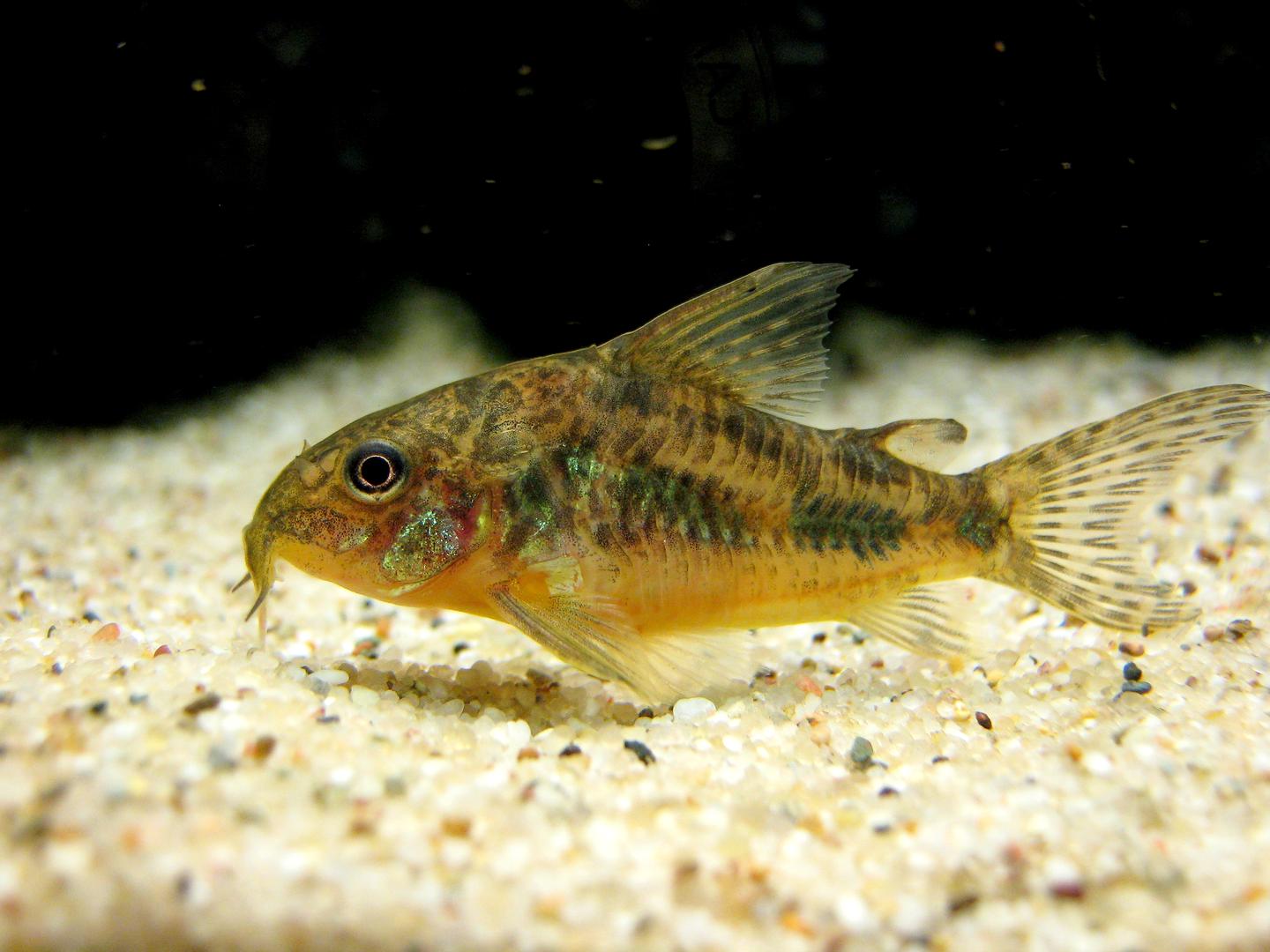
Identify the exact cory catfish before choosing care. Our starting policy for many common medium species is six compatible conspecifics, a mature 60 x 30 cm aquarium of about 60 litres, smooth fine sand and measured species-appropriate water.
Maintain these water conditions for optimal health and vibrant colors
Panda Cory Catfish is a small, peaceful freshwater catfish from the upper Amazon River basin in South America. It lives close to the bottom and belongs to Callichthyidae, the armoured-catfish family. FishBase now lists it as Hoplisoma panda.
One purchase quantity supplies one animal in the option selected. The dispatch-size options are 2–2.5 cm, 2.5–3 cm, 3–3.5 cm, 4–4.5 cm and 5 cm. Use the live size selector to see which option can be chosen when placing an order rather than relying on a static stock statement.
The size you select is the size supplied, not the adult size. A larger option changes the approximate measurement at dispatch; it does not identify a different form, sex, age or care requirement. Natural variation means an individual fish may not rest in a position that makes an exact visual measurement practical.
Sex is guaranteed only when the selected option explicitly states male or female. This Panda Cory Catfish listing has no sex-guaranteed option.
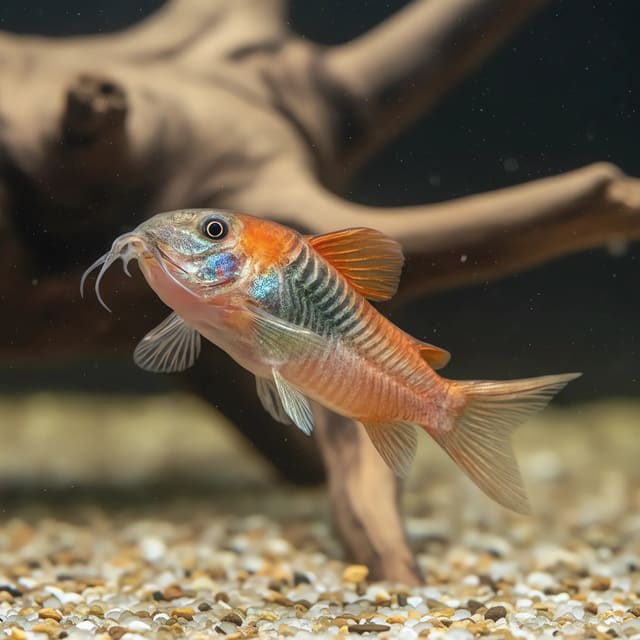
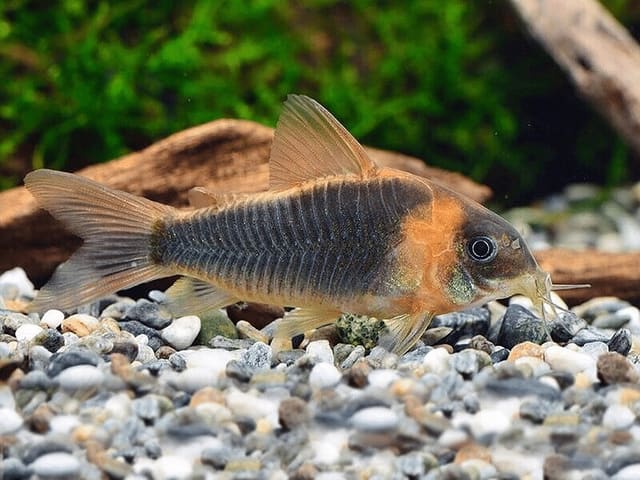
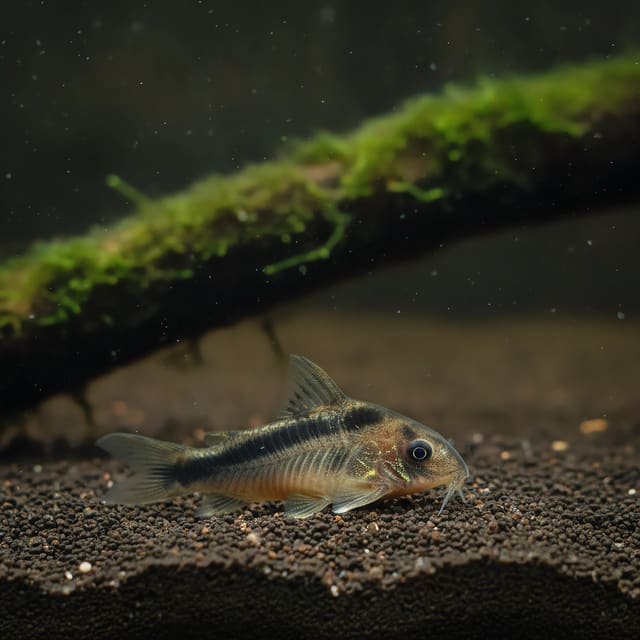
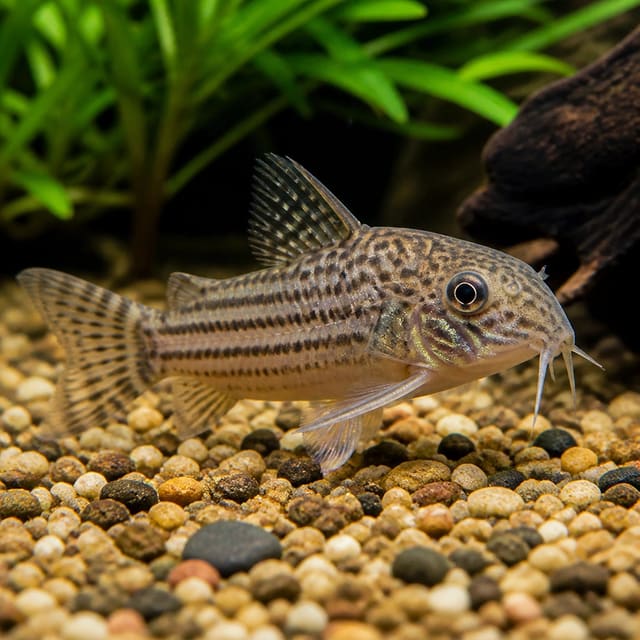
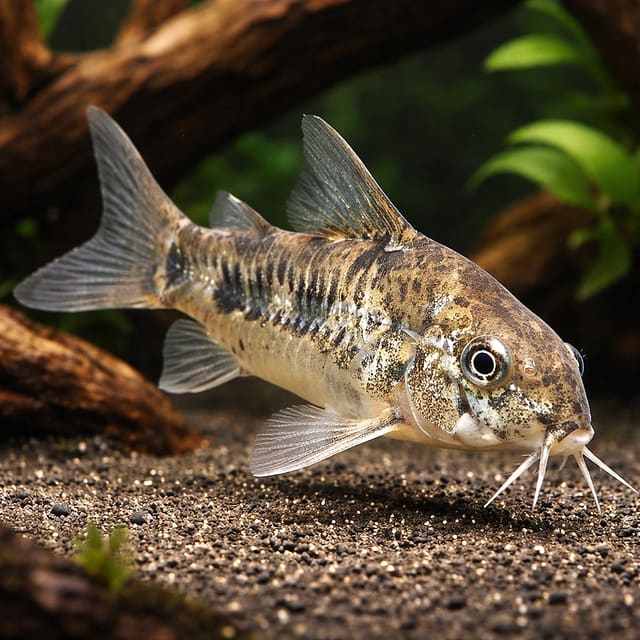
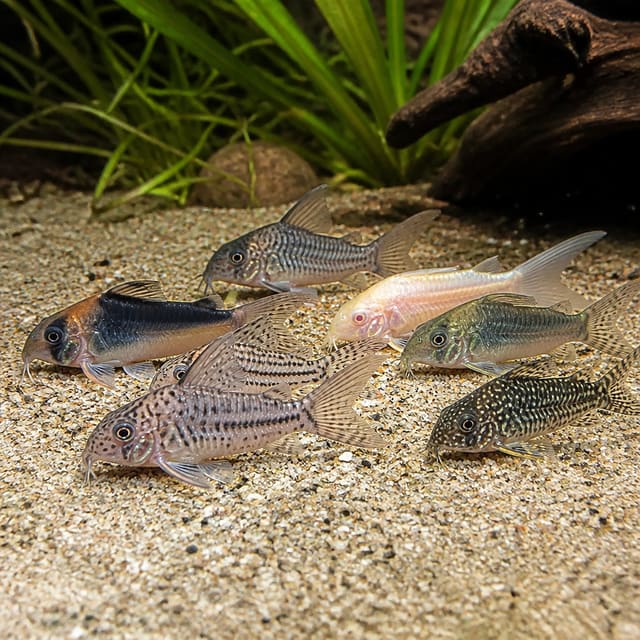
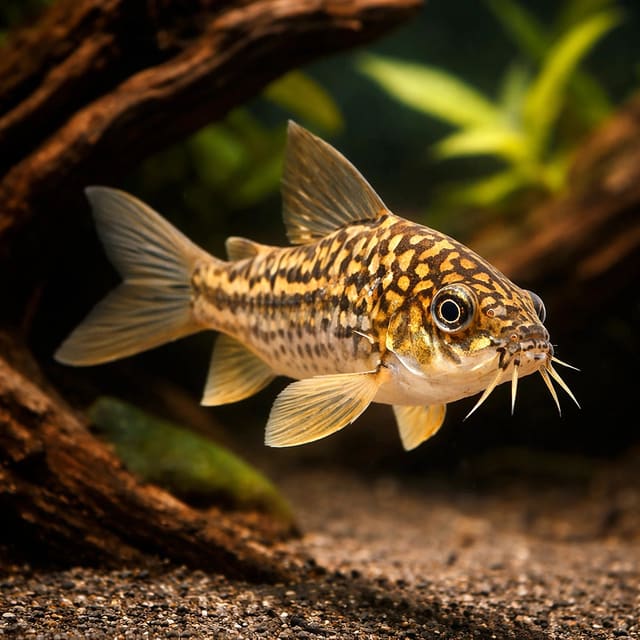
Some gallery images have been digitally enhanced to improve image quality. They show the listed type of animal rather than guaranteeing the exact markings of the individual supplied, so natural colour and pattern can vary.
Plan for the social needs of the fish before choosing a quantity. The species is more confident and active with its own kind, and a group of at least six is best. One quantity remains one animal, so building a six-fish group requires six purchase quantities unless the selector expressly describes a pack.
Adult planning needs two measurements to be read carefully. FishBase records a maximum of 3.8 cm standard length, while the Seriously Fish aquarium profile uses 5 cm standard length as its planning length. Standard length excludes the tail fin. Use 5 cm standard length when assessing long-term floor space so the aquarium is not planned around the smallest dispatch option; this is a planning reference rather than a guaranteed final measurement.
A tank measuring 45 × 30 × 30 cm, approximately 41 litres, is described as adequate for a small group. The 45 × 30 cm base is as important as the nominal volume because these fish live and feed near the bottom. Measure the usable base after wood, stones, plants and equipment have been installed. A tall aquarium can hold the same litres while offering less useful bottom area.
At least six of the same species should be planned together. Six is a group requirement, not a stocking calculation for every 41-litre aquarium. Other fish, hardscape, filtration capacity and feeding competition all reduce the space and biological capacity left for the Cory group. A larger aquarium gives more room to separate resting and feeding areas, but it still needs an appropriate filter and maintenance routine.
| Decision | Planning value |
|---|---|
| Group | At least six of the same species |
| Base | 45 × 30 cm for a small group |
| Approximate volume | About 41 litres for that base and height |
| Aquarium temperature | 22–25°C |
| pH | 6.0–7.4 |
| General hardness | 1–12 dGH |
This combination suits a keeper prepared to maintain a mature biological filter, reserve bottom space for a proper group and deliver food directly to every fish. The peaceful temperament makes community keeping possible, but compatibility still depends on shared water values, adult size, behaviour and feeding access.
| Suits | Not suited to |
|---|---|
| Stable aquarium water maintained at 22–25°C and pH 6.0–7.4 | Water outside 22–25°C and pH 6.0–7.4 |
| Peaceful small characins sharing the same water range | Anything very large relative to the Panda Cory |
Begin with a base of at least 45 × 30 cm and about 41 litres for a small group of six. Treat those dimensions as one complete planning reference: choosing a tall tank that reaches the same volume does not create the same bottom area. The aquarium must also have enough capacity for every other adult inhabitant, not merely enough empty space when first arranged.
Measure the clear bottom area once the filter, heater, wood, roots and plants are in position. Leave an open section where sinking food can be seen and distributed. Add cover around that opening rather than filling the entire base with dense decor. This arrangement lets the group retreat while giving the keeper a clear view of appetite, movement and body condition.
| If the aquarium has | Make this decision |
|---|---|
| A 45 × 30 cm base with no other fish | Assess it for one small six-fish group, filtration and open feeding space |
| The same base with an established community | Count the other fish and their waste, space and food demands before adding the group |
| More litres but a narrow base | Do not substitute height for usable bottom area |
| A longer base | Use more than one feeding point so all six can reach food |
A volume calculation cannot replace water testing. Six small dispatch-size fish still add waste immediately, and the biological filter must adjust as stocking and feeding increase. Prepare and mature the aquarium before livestock arrives by following our first tropical aquarium guide. A tank that looks established can still be unsuitable if ammonia or nitrite is present.
Check whether existing fish occupy the same bottom area or intercept sinking food. Peaceful fish can still create an unsuitable setup through crowding or competition. If the only clear feeding area is already controlled by another bottom fish, redesign the layout or choose a different stocking plan before adding Panda Corys.
Review the plan at adult size rather than assuming the smallest selector option will remain small. Keep room for routine maintenance around the hardscape, because an attractive layout that cannot be cleaned safely will make long-term water quality harder to maintain.
Use river sand as the substrate when creating a natural-style setup. Seriously Fish also describes two workable furnishing approaches: an Amazon-inspired aquarium with wood, roots and dried leaves, or a more standard aquarium that is preferably well planted. Whichever approach you choose, retain a clear bottom area for group feeding and observation.
| Layout | Practical arrangement |
|---|---|
| Amazon-inspired | River sand, driftwood branches, twisted roots, dried leaves and fairly dim lighting |
| Planted aquarium | Plants and cover around an open feeding area, with enough floor space for six fish |
An Amazon-inspired display may use thoroughly dried, bark-free beech wood when suitable driftwood cannot be found. Dried beech or oak leaves can add the natural feel described for this setup. Replace old leaves every few weeks before they rot and foul the water. Use only aquarium-safe materials, and keep the quantity manageable enough to inspect and remove.
The wood and leaves may stain the water to the colour of weak tea. That colour is part of the intended natural presentation rather than a substitute for testing or maintenance. Aquarium-safe peat may be placed in a small net bag in the filter when deliberately simulating blackwater conditions. Monitor the aquarium values whenever the furnishing or filter materials are changed.
Provide more than one sheltered boundary so the whole group is not funnelled into a single resting place. Keep the central feeding area visible from the front or side. At each meal, you should be able to check that every fish reaches food and that no individual remains apart while the rest feed.
Aquatic plants are not described as a feature of the natural waters used for the Amazon-biotope example, but the species also does well in a preferably well-planted tank. This makes the choice practical rather than compulsory: select the style you can keep clean, stable and spacious. Lighting can be fairly dim in the natural-style arrangement, helping the wood, leaf cover and open sand work as one consistent environment.
Maintain the aquarium at 22–25°C, pH 6.0–7.4 and 1–12 dGH. These aquarium values come from the Panda Cory husbandry guidance and are narrower than FishBase’s environmental range of 20–25°C, pH 6.0–8.0 and 2–25 dGH. Use the narrower aquarium range for routine care rather than moving the fish between the outer limits.
Test the aquarium and source water, then compare the results with the stated ranges using our water matching tool. The aquarium water chemistry guide explains what the measured values mean. Aim for consistency inside the range; repeated attempts to force an exact midpoint can create more change than the fish experiences in a stable aquarium.
Temperature needs equal care at both ends. Tank-bred specimens are described as comfortable at 22–25°C, while prolonged warmer water is unsuitable. Check the normal operating temperature after the lights and room heating have been running, then check again during unusually warm weather. Tank mates must also suit this complete range rather than merely tolerating one overlapping number.
OATA’s freshwater-catfish guidance gives zero mg per litre for ammonia and nitrite and says nitrate should not exceed 20 mg per litre above the normal tap-water level. Those are broad group figures rather than a Panda Cory optimum, but they set clear limits for routine testing and maintenance.
| Test result | Action |
|---|---|
| Ammonia above zero | Pause further stocking, test again and correct the waste-processing problem |
| Nitrite above zero | Treat the aquarium as biologically unstable and investigate the filter |
| Rising nitrate | Review feeding, stocking and the water-change routine |
| Water outside 22–25°C | Bring the aquarium into range without an abrupt transfer |
Record results rather than relying on water clarity. Clear water can still contain dissolved ammonia or nitrite, while naturally tea-coloured water can remain suitable when its measured chemistry and maintenance are sound.
Use a well-set-up and maintained biological filter for the entire aquarium. The RSPCA explains that fish release toxic ammonia; filter bacteria convert it first to toxic nitrite and then to safer nitrate. The filter therefore manages a living waste-processing system, not just visible particles.
For the approximately 41-litre aquarium described for a small Panda Cory group, the husbandry guidance uses turnover of four to five times the aquarium volume each hour. That gives a filter-flow planning figure of about 165–205 litres per hour. Treat the rating as a starting point because media loading, pipework and blockages can reduce actual flow.
Check that circulation reaches the aquarium without preventing the fish from resting or reaching sinking food. Filter performance must also support the other inhabitants. If stocking or feeding increases, the bacteria need time to adjust to the additional waste, so build the population slowly rather than adding several unrelated groups at once.
Do not run biological filter media under the tap because chlorine or chloramine may kill the established bacteria. Avoid replacing all mature media at the same time. A sudden loss of bacterial capacity can allow ammonia and nitrite to rise even when the aquarium previously tested well.
| What you notice | First check |
|---|---|
| Reduced outlet flow | Look for blocked intake, clogged media or obstructed pipework |
| Waste collecting on sand | Review siphoning, feeding amount and circulation |
| Ammonia or nitrite appears | Review recent stocking, feeding and filter cleaning |
| Fish breathing differently | Test water and check filter operation immediately |
Panda Corys are omnivorous and need food delivered to the bottom. Use a good-quality sinking pellet or tablet as the staple diet. Supplement it with suitable live or frozen foods such as Daphnia, Artemia, bloodworm and similar small foods. This varied approach supplies a deliberate diet instead of expecting the fish to live on particles missed by other inhabitants.
OATA’s freshwater-catfish guidance recommends feeding once a day and offering only what the fish can eat within a few minutes. Apply that schedule while watching the whole Panda Cory group. The correct portion is the amount every fish can reach without persistent food remaining to break down in the aquarium.
Place sinking food where it will reach the bottom before faster fish consume it. In a longer aquarium or a community with active feeders, divide the portion between two feeding points. This is not a reason to double the total amount; it is a way to spread access across the group.
| If you see | Adjust the next meal |
|---|---|
| Food gone before Corys reach it | Change the placement or choose a sinking format that reaches them |
| One fish repeatedly missing food | Add a second feeding point and check for competition |
| Food remaining after a few minutes | Remove it and reduce the next portion |
| Reduced interest across the group | Test water and inspect behaviour before adding more food |
Watch from more than one angle until every individual has been located. A fish hidden behind wood may still feed, but repeated absence from meals needs investigation. Look for changes in body condition, breathing, balance or social behaviour at the same time.
Do not compensate for a missed meal by repeatedly adding tablets. Uneaten food releases waste as it breaks down, increasing the load on the biological filter. Correct the underlying issue—placement, competition, water quality or an observed health change—then return to a measured once-daily portion.
Prepare the aquarium before the fish arrive. Confirm that temperature is 22–25°C, ammonia and nitrite are zero, the filter is operating normally and a clear feeding area remains after furnishing. The long-term plan must already accommodate at least six Panda Corys rather than relying on a solitary fish while space is reconsidered later.
Read the current delivery and Live Arrival Guarantee policy before the order arrives. That page contains the current dispatch pattern, delivery information and guarantee process, which should be followed directly rather than copied into permanent care text.
Adding fish and increasing food both raise the amount of waste the filter must process. OATA advises increasing aquarium populations slowly so established nitrifying bacteria can adjust. Stocking too quickly can lead to new tank syndrome, in which bacterial capacity is too low and ammonia or nitrite reaches harmful levels.
For the first meal, use a modest amount of the normal sinking staple and observe whether every fish finds it. Do not add repeated portions when a newly introduced group does not feed immediately. Remove persistent leftovers and test water before deciding that more food is needed.
Test ammonia and nitrite daily when the biological load has just increased. Check swimming, breathing, colour, appetite, fins and body condition at the same time each day. The useful comparison is whether the group is settling into a stable pattern, not whether every fish behaves identically.
If ammonia or nitrite rises above zero, stop further additions and correct the aquarium problem. A larger water volume offers more stability, but it does not remove the need to test after a stocking change.
Learn the group’s normal pattern by observing it during feeding and at rest. Healthy freshwater fish should have clear, bright eyes, undamaged fins, intact scales, no ulcers or bumps, appropriate swimming behaviour and steady feeding. Individual behaviour varies, so look for a change from the animal’s usual pattern or a change affecting several fish together.
| Change | First response |
|---|---|
| Hanging at the surface or erratic swimming | Test water and check the filter immediately |
| Faster or slower gill movement | Check temperature, ammonia, nitrite and circulation |
| Darker or paler colour than normal | Review recent changes and compare the whole group |
| More hiding or altered temperament | Check tank-mate behaviour, feeding access and water quality |
| White spots, fluffy growths or damaged skin | Record the signs and seek fish-health guidance |
| Reduced food intake | Test water, inspect body condition and remove leftovers |
Water testing comes first because ammonia, nitrite, temperature or filter failure can affect several fish at once. Correcting the environment also gives a clearer basis for assessing an individual problem. Do not treat a vague symptom by adding food or making several unrelated aquarium changes together.
Compare the first month’s test results rather than judging one isolated reading. Ammonia and nitrite should remain at zero, while the weekly water-change routine should prevent an unchecked nitrate rise. Note whether each fish reaches food and whether competition has increased as the group settles.
Inspect the substrate and filter flow during the 25% water change made at least once each week. Remove settled waste, check the intake for obstruction and rinse dirty media lightly in removed aquarium water when needed. Keep the routine consistent so a problem is easier to trace to a recent stocking, feeding or equipment change.
If appearance, breathing, swimming or appetite changes persist after the water and equipment checks, contact us for health guidance. Give the measured values, aquarium size, stocking, recent changes and the signs observed so the next decision is based on the whole setup.
Panda Corys are described as very peaceful and suitable for many community aquariums. That temperament does not make every combination safe. Screen each companion for adult size, aggression, water requirements, use of bottom space and feeding behaviour before it enters the same aquarium.
Avoid anything very large or aggressive. Seriously Fish names small characins, cyprinids, anabantoids, dwarf cichlids and other peaceful catfish as possible companions. Treat those as conditional groups: the particular fish must remain peaceful, share 22–25°C, pH 6.0–7.4 and 1–12 dGH, and leave the Cory group enough floor space and sinking food.
| Screen | Pass condition |
|---|---|
| Adult size | The companion will not become very large relative to the Cory |
| Temperament | It does not chase, attack or intimidate peaceful bottom fish |
| Water | Its routine range overlaps all three Panda Cory water values |
| Floor space | The adult community leaves a usable 45 × 30 cm base arrangement |
| Food | Sinking food reaches every Cory without persistent competition |
Other peaceful catfish do not replace the need for at least six Panda Corys together. Assess the Panda group first, then consider whether another bottom-dwelling species can share the remaining floor area and filter capacity. A nominally peaceful fish can still be a poor choice if it occupies every shelter or consumes the Cory food.
Observe the actual community after introduction. Repeated chasing, blocked feeding access, increased hiding or a fish losing condition means the arrangement needs changing even when both names appear on a general community-fish list. Individual behaviour and aquarium layout create honest uncertainty in every mixed setup.
Browse the Corydoras collection to compare identities and care needs, but do not combine species until their adult size, water range and group requirements have been checked separately.
Compatibility is a whole-aquarium decision. Begin with six Panda Corys, the 45 × 30 cm base and the 22–25°C range, then add the adult requirements of every proposed companion. If one fish needs warmer water, becomes very large or prevents food reaching the bottom, the combination fails even if its temperament is usually described as peaceful.
Consider an aquarium measuring 45 × 30 × 30 cm, about 41 litres. That volume is described as adequate for a small Panda Cory group. If it already contains an active midwater community, do not conclude that six Corys automatically fit because the base measurement matches. Check current nitrate trend, filter loading, open substrate, feeding competition and the adult size of the existing fish.
In a longer aquarium with greater capacity, food may still fail to reach every Cory if all tablets are placed in one busy corner. Divide the same portion between two bottom areas and watch each fish. More litres solve neither aggression nor unequal feeding unless the layout and routine use that space effectively.
| Observation | Compatibility response |
|---|---|
| The group feeds together without disturbance | Continue monitoring body condition and water tests |
| A companion repeatedly takes all sinking food | Change placement and reassess whether the combination can work |
| Corys hide more after a new fish is added | Check chasing, crowding and access to cover |
| Several fish breathe or swim differently | Test water before treating it as a social dispute |
| A companion grows very large or aggressive | Separate it from the Panda Cory group |
For a stocking and compatibility assessment, contact us with the aquarium dimensions, measured temperature, pH and hardness, filter details, current inhabitants and proposed group size. A list of names alone cannot show whether the physical space, water and feeding plan fit together.
Panda Cory Catfish is Corydoras panda, a freshwater, bottom-dwelling member of the armoured-catfish family Callichthyidae.
One quantity supplies one live Panda Cory in the selected dispatch-size option. Increase the quantity to build the required group unless the live selector expressly describes a pack.
The recurring dispatch bands are 2–2.5 cm, 2.5–3 cm, 3–3.5 cm, 4–4.5 cm and 5 cm. These measurements are dispatch sizes rather than guaranteed adult lengths.
A small group needs a mature filtered aquarium with a base of 45 × 30 cm, approximately 41 litres, plus river sand, open feeding space and sheltered areas.
No. Keep at least six of the same species because they are more confident and active in the presence of their own kind.
Maintain 22–25°C, pH 6.0–7.4 and 1–12 dGH. Keep ammonia and nitrite at zero and nitrate no more than 20 mg per litre above the normal tap-water level.
Feed a good-quality sinking pellet or tablet once daily, in an amount eaten within a few minutes. Supplement it with Daphnia, Artemia, bloodworm or similar live and frozen foods.
Before introduction, confirm 22–25°C and zero ammonia and nitrite, check filter operation and increase the aquarium population slowly so its biological filter can adjust.
Consider peaceful small characins, cyprinids, anabantoids, dwarf cichlids or peaceful catfish that share its water range and feeding space. Avoid anything very large or aggressive.
No reviews for this item yet. Bought one? Honest reviews only, good or bad.
What customers say about ordering from us
I have a small group of long finned mountain minnows. So was delighted to be able to order ten of this variety to increase the genetics in my tank . The ones I recieved are healthy but it’s to early to give a verdict on wether they are of a long finned type since they are small currently.
Gordon Walker · 23 Sept 2026
100% success travel and "installation". Pleased with quality of purchase. The Siamese fighter a bit "shy" so have not yet seen him at his best yet but looking good. Happy customer. GG
George E Garratt · 21 Sept 2026
Reviews of our shop, collected by Judge.me, an independent third-party review collector. Newest first.