Easy
Three-Stripe Cory (Hoplisoma trilineatum)
22–26°C · pH 6–7.2 · 41L
£14.99

Palespotted Cory / Gosse's Cory is a peaceful soft-sand cory now accepted as Hoplisoma gossei and still widely searched as Corydoras gossei. Best kept in groups of 5-8+ in a mature community aquarium. 22-26 C, pH 6.0-7.5.
Adult size is the maximum length this species reaches at full maturity (scientific sources). The livestock you receive will be younger and smaller. Product-photo provenance and any image-specific limitations are stated on the listing.
Hoplisoma gossei
Shoaling fish: kept in a group they feel safer, stay calmer and show their best colour.
Confirm your email, then we’ll send an availability message for this exact item if it returns within 180 days.
This request is only for this product—no newsletter or other promotions. A mail-provider retry may very rarely duplicate the same availability message. Unconfirmed addresses are removed after 48 hours. See our privacy policy.
Palespotted Cory / Gosse's Cory is a peaceful soft-sand cory now accepted as Hoplisoma gossei and still widely searched as Corydoras gossei. Best kept in groups of 5-8+ in a mature community aquarium. 22-26 C, pH 6.0-7.5.
Adult size is the maximum length this species reaches at full maturity (scientific sources). The livestock you receive will be younger and smaller. Product-photo provenance and any image-specific limitations are stated on the listing.
Identify the exact cory catfish before choosing care. Our starting policy for many common medium species is six compatible conspecifics, a mature 60 x 30 cm aquarium of about 60 litres, smooth fine sand and measured species-appropriate water.
Maintain these water conditions for optimal health and vibrant colors
Palespotted Cory, also known as Gosse's Cory, is a peaceful South American armoured catfish now accepted as Hoplisoma gossei. Many aquarists still search for it by the long-established trade name Corydoras gossei, so both names are useful: Hoplisoma gossei is the current taxonomy, while Corydoras gossei is the familiar aquarium label. This listing is for young fish around 2.5-3cm, with adults reaching a larger, sturdier cory size of about 5.5-6cm when settled and well fed.
This is not a fish for a sharp-gravel, newly set up aquarium. Its best display comes from a mature soft-sand layout where the group can sift, rest under wood and move together across open foreground areas. The orange-yellow edge to the fins, rounded pale-spotted body and busy bottom-level behaviour make it especially attractive in a planted or botanical community tank. It is calm enough for small peaceful tank mates, but it should be treated as a specialist cory rather than a disposable cleaner fish.
| Current scientific name | Hoplisoma gossei |
|---|---|
| Trade/search synonym | Corydoras gossei |
| Common names | Palespotted Cory, Pale Spotted Cory, Gosse's Cory |
| Sale size | Usually supplied around 2.5-3cm |
| Adult size | About 5.5-6cm |
| Temperament | Peaceful, social bottom dweller |
| Best kept | Group of 5-8+ on soft sand |
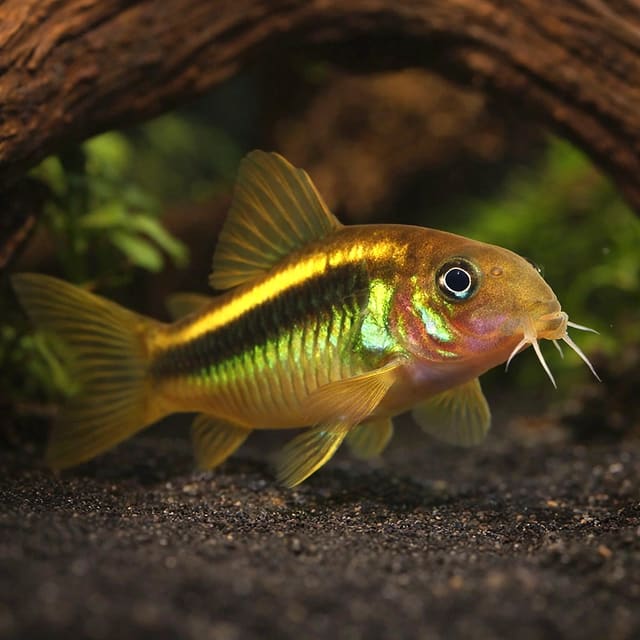
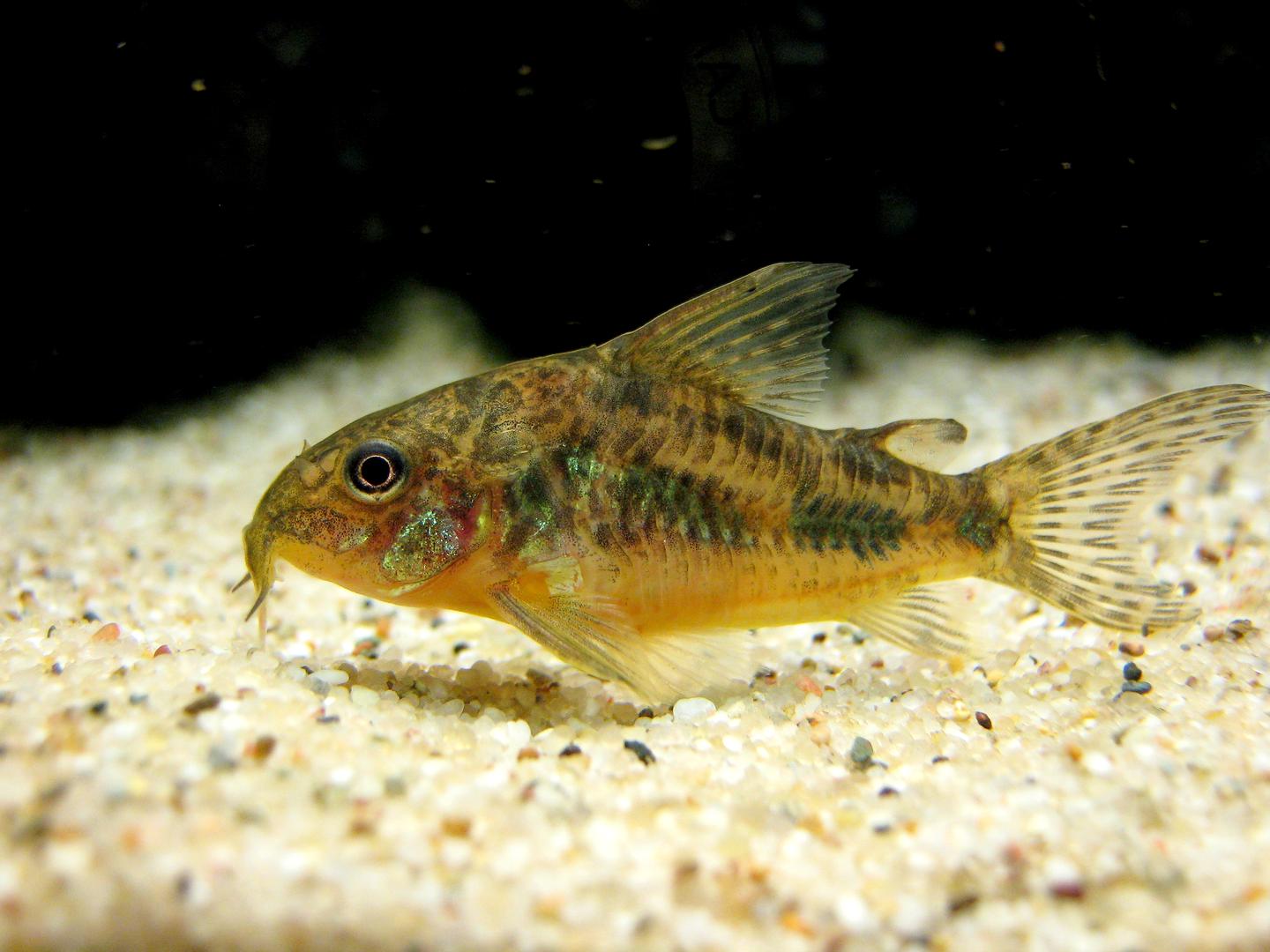
Palespotted Cory has the rounded, short-snouted look expected from this group, with a deeper body than the smallest dwarf corys and a more compact head shape than long-snouted species. The body is generally grey-brown to warm bronze, broken by pale spotting and contrasted by yellow-orange highlights along the dorsal, pectoral and pelvic fins. The tail is usually translucent with darker cross markings. Because the pattern can vary with sex, age, mood and lighting, the most reliable ID is the overall combination of rounded snout, pale spotted body and warm fin edging rather than a single isolated mark.
It can be confused with similar armoured catfish, especially in dealer tanks where old Corydoras names are still used. Keeping the current name and the old trade name together on the page helps customers and search engines understand that this is the same fish, not a different stock line. Females normally become fuller when viewed from above, especially when well conditioned; males tend to remain slimmer and can be more active during spawning behaviour.
The species is associated with the Mamore River drainage in the western Amazon region of Brazil and Bolivia, including the Guajara-Mirim area in Rondonia. In aquarium terms that points us toward warm, clean, oxygenated freshwater, a soft or fine substrate, and calm shelter rather than heavy flow or abrasive decor. It is reported from clear or white-water habitats over fine sand, so a practical home aquarium can use pale sand, smooth wood, leaf litter, open feeding patches and shaded resting areas.
A planted tank is suitable even if plants are not the whole story in its natural habitat. Plants help soften the layout, break sight lines and stabilise water quality. Leave open sand in front for feeding and observation, then use wood, roots, botanicals or broad leaves at the back and sides. The visual result is better for people and less stressful for the fish.
| Temperature | 22-26°C |
|---|---|
| pH | 6.0-7.5, with soft to slightly acidic water preferred |
| Hardness | Soft to moderate; avoid hard, unstable extremes |
| Minimum aquarium | 60 litres for a small group; 90-100 litres is easier for a larger shoal |
| Substrate | Fine sand or very smooth rounded gravel |
| Filtration | Mature, gentle to moderate, with good oxygenation |
| Water changes | Small regular changes; keep nitrate low and avoid dirty substrate pockets |
This is a social cory. A single specimen may survive, but it will not show the same confidence, feeding response or natural movement. Aim for at least five, and choose eight or more when the aquarium has the floor space. A group will sift sand together, pause in loose contact, then move as a small wave when food enters the tank. That behaviour is one of the reasons this fish is worth choosing over a generic bottom cleaner.
Like other cory relatives, it can gulp air at the surface and use intestinal air breathing. That is normal when the fish occasionally darts upward, but constant surface visits can point to low oxygen, dirty water or stress. Keep a small air gap above the water and avoid tight glass covers that leave no breathing space. Good surface movement, clean sand and stable temperature do more for long-term health than heavy medication or chasing perfect numbers.
Palespotted Cory is best with peaceful midwater fish that do not bully slow bottom feeders. Small tetras, pencilfish, rasboras, calm livebearers, small peaceful gouramis and other gentle community fish are sensible choices. Avoid large predatory cichlids, aggressive barbs, fin-nippers, territorial bottom fish in cramped tanks, and anything likely to outcompete the cory group at feeding time.
Mixing several similar cory species can look attractive, but it is not always the best welfare choice in small aquariums. If space is limited, one proper group of Hoplisoma gossei is better than two or three undersized groups of different corys. If you want a comparison, see our other soft-sand cory listings such as Banded Cory, Bandit Cory, Sands' Cory and Three-Stripe Cory.
| Best companions | Small tetras, rasboras, pencilfish, peaceful livebearers and calm dwarf cichlids |
|---|---|
| Use caution | Other bottom dwellers, only if the tank has enough floor space and hiding places |
| Avoid | Predators, rough cichlids, fin-nippers, sharp decor and boisterous feeding rivals |
| Feeding zone | Bottom; make sure food reaches the group after midwater fish have fed |
| Best display | Open sand at the front with shaded wood, botanicals and plants behind |
Gosse's Cory is omnivorous and should receive a varied bottom-feeder diet. Use quality sinking micro pellets, cory tablets, fine granules and frozen foods such as bloodworm, daphnia, cyclops and brine shrimp. Feed after the lights dim or after midwater fish have eaten if the group is shy. The goal is not to make the corys live on leftovers; the goal is to make sure they receive targeted food before it pollutes the substrate.
Small portions work better than one heavy meal. Uneaten food trapped in sand or under wood can cause water-quality problems and barbel irritation, so observe the group and adjust. Healthy fish should show rounded bodies without looking bloated, clear barbels, regular foraging and a strong response to sinking foods.
We pack live fish for specialist UK live-animal courier service and support eligible livestock orders with our Live Arrival Guarantee. Because this species appreciates stable, mature water, prepare the tank before dispatch day: check temperature, make sure the filter is fully cycled, leave open sand for the group, and avoid major aquascaping or large chemistry changes just before arrival.
Dim the aquarium lights during acclimation, float the sealed bag to match temperature, then gradually mix small amounts of tank water before release. Do not pour transport water into the aquarium. For the first week, feed lightly, keep tank mates calm and watch for normal sand-sifting, group contact and occasional surface air-gulping. A first-order discount may be shown by the site when eligible, but the long-term value is healthy stock, careful packing and a page that helps you keep the fish properly.
Well-conditioned adults may spawn in typical cory fashion after clean-water changes and richer feeding. Females place small groups of adhesive eggs on glass, plants or smooth surfaces after the classic cory spawning embrace. If you want to raise fry, move eggs or protect them from adults and other fish. Newly hatched fry need very clean water and tiny foods, so breeding is best attempted in a dedicated setup rather than a busy display tank.
Choose Palespotted Cory if you want a peaceful, uncommon cory-type catfish for a mature soft-sand community aquarium and you are willing to keep a proper group. It is a poor match for sharp gravel, aggressive tank mates, unstable new tanks or aquariums where bottom feeders are expected to live on scraps. Kept correctly, Hoplisoma gossei is active, distinctive and far more interesting than its old stuffed product title suggested.
Care and taxonomy were checked against FishBase, Eschmeyer's Catalog of Fishes, Maidenhead Aquatics/Fishkeeper, Fishipedia, Aqua Imports and the 2024 Corydoradinae revision summary. The page keeps Corydoras gossei naturally for customers who know the older name, while using Hoplisoma gossei as the current accepted name.
No reviews for this item yet. Bought one? Honest reviews only, good or bad.
What customers say about ordering from us
I have a small group of long finned mountain minnows. So was delighted to be able to order ten of this variety to increase the genetics in my tank . The ones I recieved are healthy but it’s to early to give a verdict on wether they are of a long finned type since they are small currently.
Gordon Walker · 23 Sept 2026
100% success travel and "installation". Pleased with quality of purchase. The Siamese fighter a bit "shy" so have not yet seen him at his best yet but looking good. Happy customer. GG
George E Garratt · 21 Sept 2026
Reviews of our shop, collected by Judge.me, an independent third-party review collector. Newest first.