Moderate
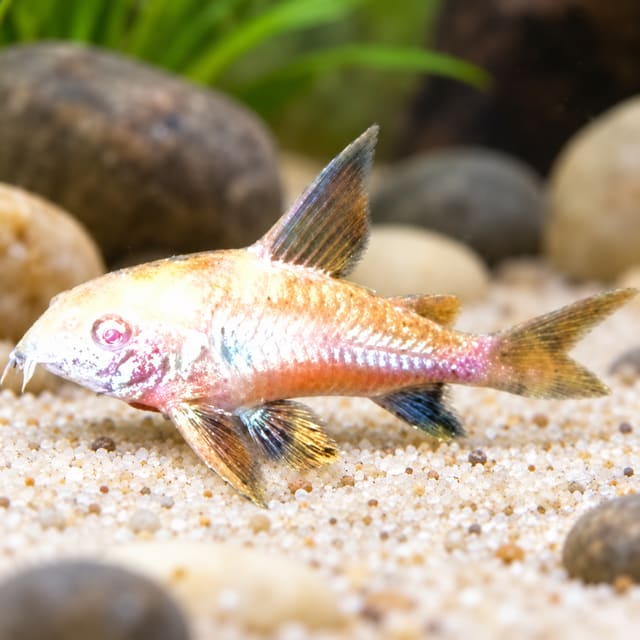
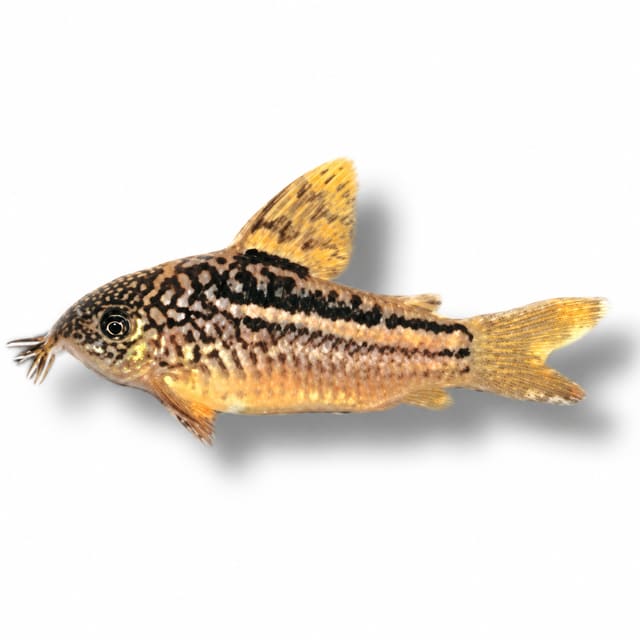
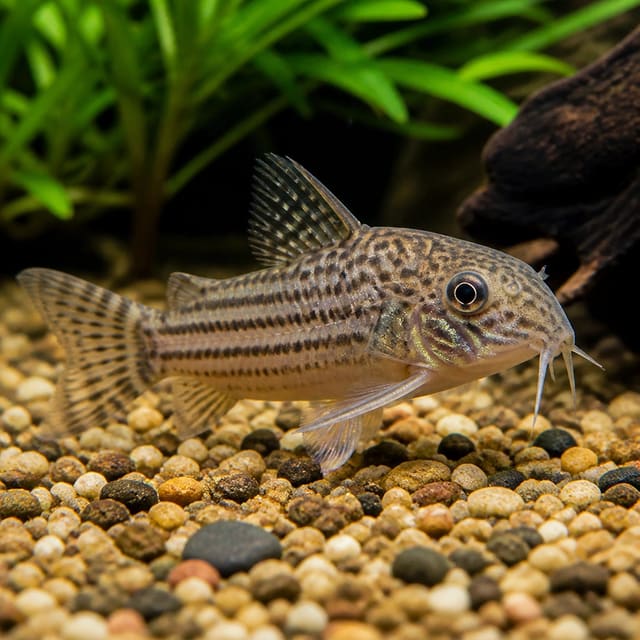
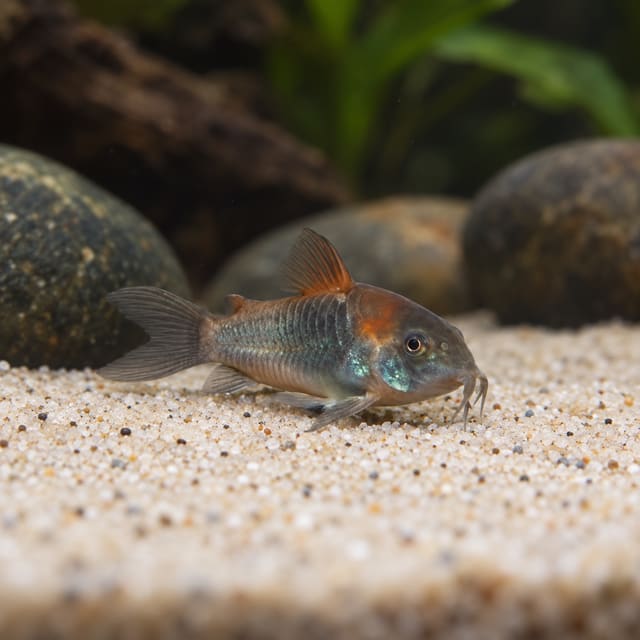
Black Venezuela Corydoras (Corydoras sp. Black Venezuela)
22–26°C · pH 6–7.8 · 75L
From £6.79Some sizes on sale

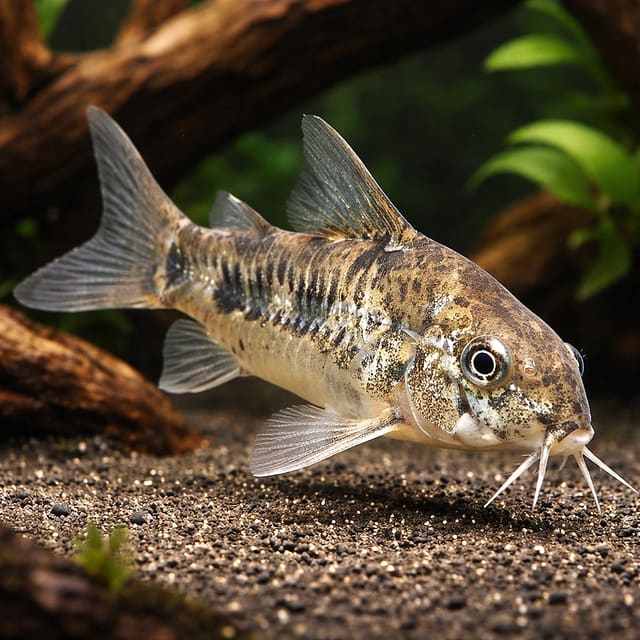
Bandit Cory is a peaceful blackwater cory catfish for mature softwater community aquariums, best kept in a proper group on clean soft sand.
Adult size is the maximum length this species reaches at full maturity (scientific sources). The livestock you receive will be younger and smaller — pick a size above for the actual shipping size. Product-photo provenance and any image-specific limitations are stated on the listing.
Hoplisoma melini
Shoaling fish: kept in a group they feel safer, stay calmer and show their best colour.
Bandit Cory is a peaceful blackwater cory catfish for mature softwater community aquariums, best kept in a proper group on clean soft sand.
Adult size is the maximum length this species reaches at full maturity (scientific sources). The livestock you receive will be younger and smaller — pick a size above for the actual shipping size. Product-photo provenance and any image-specific limitations are stated on the listing.
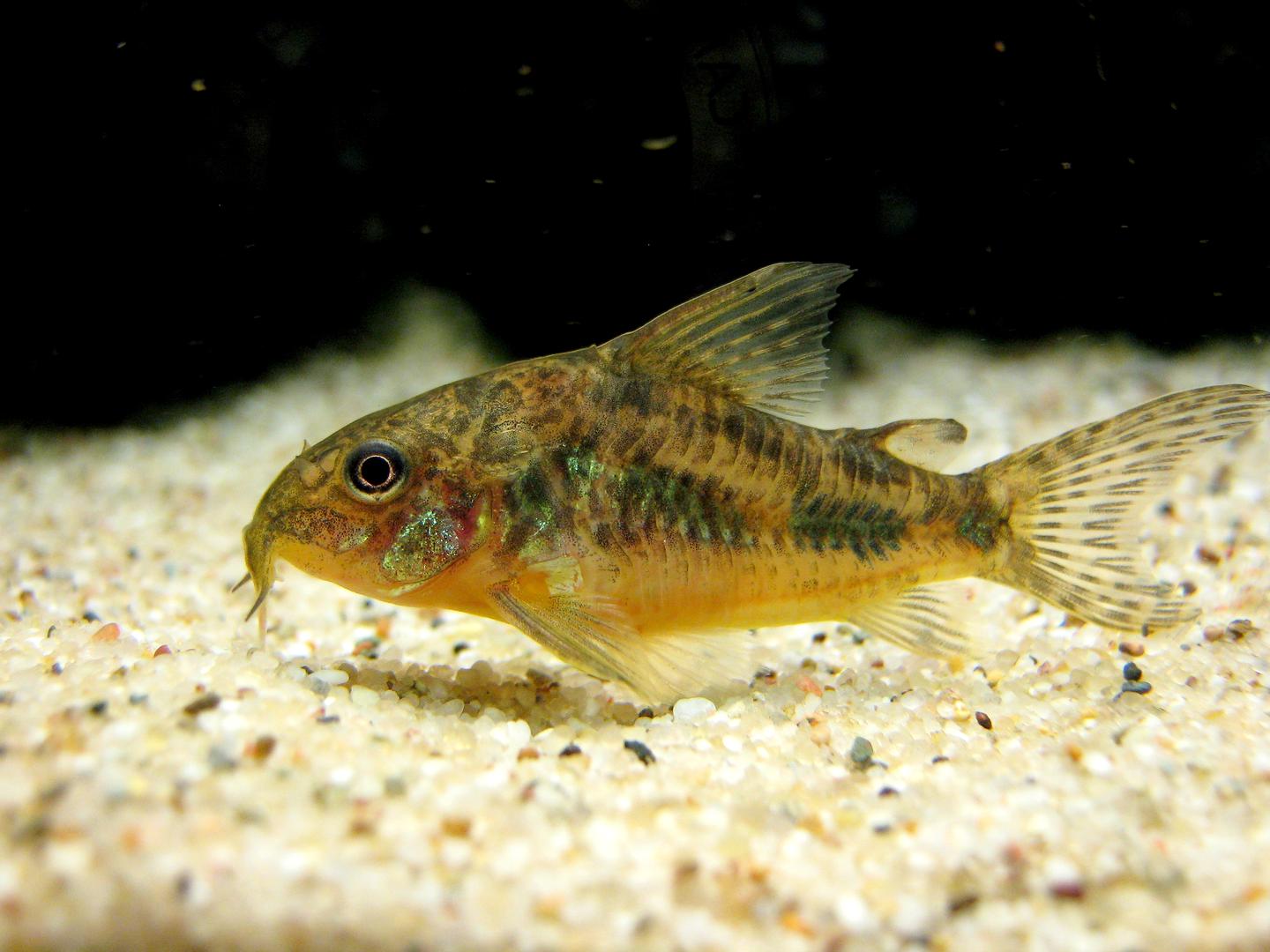
Identify the exact cory catfish before choosing care. Our starting policy for many common medium species is six compatible conspecifics, a mature 60 x 30 cm aquarium of about 60 litres, smooth fine sand and measured species-appropriate water.
Maintain these water conditions for optimal health and vibrant colors
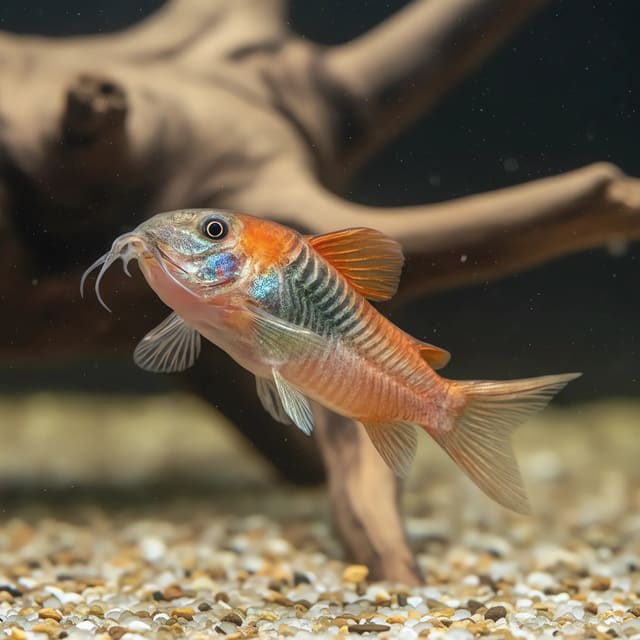
Bandit Cory (Hoplisoma melini) is a peaceful shoaling cory catfish from the upper Negro and Meta river systems. It is also widely known in the aquarium trade as Corydoras melini.
This listing covers the 3.5-4 cm size, with a smaller size also shown in the size selector.
Bandit Cory is best treated as a softwater community bottom-dweller, not as a clean-up tool. The fish needs a mature aquarium, a clean soft substrate and enough companions of its own kind to feel secure. In the right setup, a group will patrol the open sand, sift constantly and use shaded wood or planting as resting cover.
| Current name | Hoplisoma melini |
|---|---|
| Trade name | Corydoras melini, Bandit Cory, Bandit Corydoras, False Bandit Cory |
| Adult size | About 5-6 cm, with this SKU supplied at 3.5-4 cm |
| Origin context | Upper Negro and Meta river basins in South America |
| Temperament | Peaceful shoaling catfish for calm community aquariums |
| Best kept as | A group of at least 5-6, with more if floor space allows |
| Substrate | Soft sand or very smooth clean fine substrate |
Like other cory cats, Bandit Cory feeds by probing and sifting across the substrate. Sharp gravel, compacted waste and dirty pockets around decor can damage the barbels and lead to infections. Fine sand is strongly preferred because it lets the fish forage naturally and makes it easier for you to see uneaten food.
Keep the bottom open enough for a group to move together. Driftwood, smooth stones, shaded planting and leaf-litter-style cover can all work well, but avoid a crowded base where food disappears under hardscape. A clean feeding lane at the front of the aquarium makes daily checks much easier.
| Temperature | 22-26 C |
|---|---|
| pH | Soft, slightly acidic water is best long term; roughly pH 5.5-7.0 is a sensible target |
| Hardness | Soft to low-moderate hardness; avoid sudden swings |
| Aquarium maturity | Add after the filter is cycled and the substrate stays clean between water changes |
| Layout priority | Floor area, clean sand and shaded cover matter more than tank height |
For a practical home aquarium, stability is more important than chasing an exact blackwater number every day. Use regular partial water changes, gentle filtration and a substrate you can keep clean. If your tap water is moderately hard, avoid sudden chemical swings; if you soften water, do it consistently and make changes slowly.
Floating plants, wood and shaded corners help the group behave naturally, but the aquarium should still have open sand where you can observe feeding. Corys that hide constantly, breathe hard or lose barbel length are usually telling you that the group size, tank mates, substrate cleanliness or water stability needs attention.
Keep Bandit Cory in a proper group. One or two fish often hide, breathe nervously or miss food, while a settled group is far more confident and visible. Peaceful midwater fish such as small tetras, pencilfish and rasboras can help the group feel secure because they show that the open water is safe.
Avoid large predatory fish, boisterous cichlids, aggressive bottom dwellers and fast feeders that take all sinking foods before the corys can reach them. If the aquarium is busy at feeding time, feed the top and middle first, then add sinking food once the rush has passed.
Offer sinking catfish pellets, fine granules and a varied mix of frozen or live foods such as bloodworm, white mosquito larvae, daphnia and brineshrimp. Bandit Cory will browse constantly, but it still needs direct feeding; leftovers from other fish are not a reliable diet.
Feed modest portions and watch body shape. A healthy cory should not look pinched behind the head, and uneaten food should not remain in the sand after feeding.
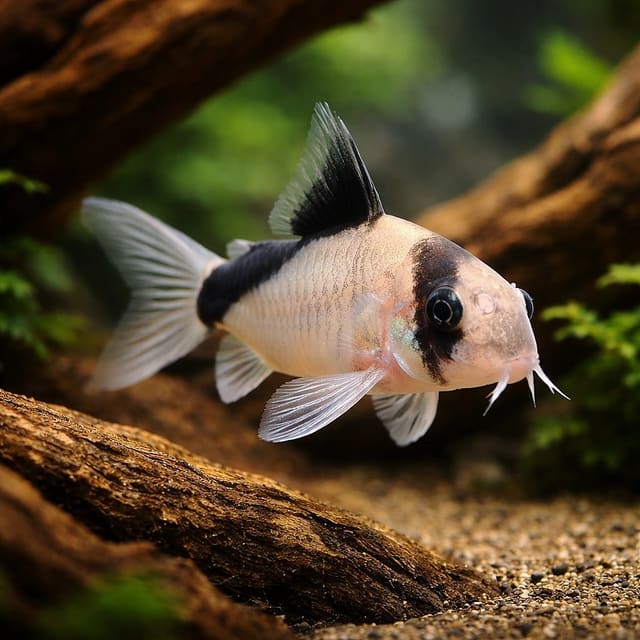
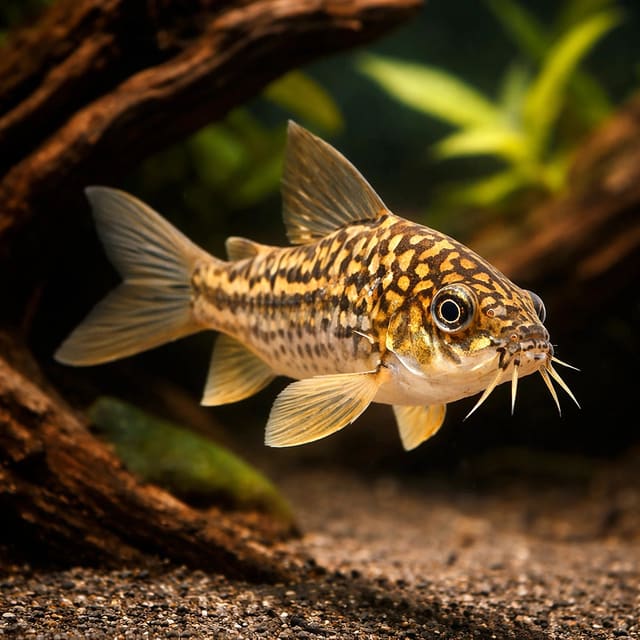
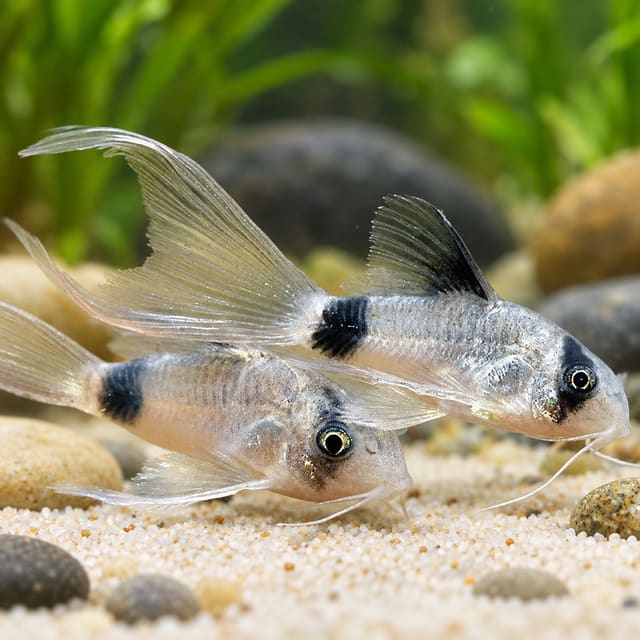
Hoplisoma melini is often confused with H. metae and H. davidsandsi. The dark diagonal stripe, mask and how the stripe continues or divides across the back are useful clues, but identification requires care because similar corys are easy to mix up in trade photos. The familiar trade name is Bandit Corydoras / Corydoras melini.
The common name can be confusing because several corys wear a dark facial mask. The fish is commonly known as Bandit Corydoras or Corydoras melini, while newer references may show Hoplisoma melini.
| Ready aquarium? | Mature, stable and already holding clean water between maintenance days |
|---|---|
| Group size planned? | Plan for 5-6 or more rather than a single specimen |
| Substrate checked? | Use soft sand or very smooth fine substrate to protect the barbels |
| Food plan checked? | Use sinking foods and confirm the group is not outcompeted |
| Tank mates checked? | Choose peaceful fish that will not bully, nip or swallow small catfish |
Bandit Cory has been bred in aquariums. Mature pairs may respond to a large, slightly cooler water change, then lay adhesive eggs on glass, plants or decor. Eggs can be fungus-prone, so breeders often move them to a separate rearing container and keep the water very clean. Fry need tiny first foods before moving on to newly hatched brineshrimp.
Orders are packed for livestock transport through a licensed live-animal courier process and eligible orders are covered by our Live Arrival Guarantee. On arrival, keep lights low, acclimate slowly, and avoid heavy feeding on the first day. Watch breathing, posture, barbel condition and appetite during the first week.
No reviews for this item yet. Bought one? Honest reviews only, good or bad.
What customers say about ordering from us
I have a small group of long finned mountain minnows. So was delighted to be able to order ten of this variety to increase the genetics in my tank . The ones I recieved are healthy but it’s to early to give a verdict on wether they are of a long finned type since they are small currently.
Gordon Walker · 23 Sept 2026
100% success travel and "installation". Pleased with quality of purchase. The Siamese fighter a bit "shy" so have not yet seen him at his best yet but looking good. Happy customer. GG
George E Garratt · 21 Sept 2026
Reviews of our shop, collected by Judge.me, an independent third-party review collector. Newest first.