Myxocyprinus asiaticus
15.5–21°C · pH 6–8
£29.99

The West African Lungfish (Protopterus annectens) is an obligate air-breathing freshwater fish from Africa that reaches 100 cm. It suits keepers planning an exceptionally large filtered system at 25–30°C, with OATA's very-large-fish guidance setting ammonia and nitrite at zero mg per litre. Sold individually in 10–15 cm and 15–20 cm dispatch sizes.
Adult size is the maximum length this species reaches at full maturity (scientific sources). The livestock you receive will be younger and smaller — pick a size above for the actual shipping size. Product-photo provenance and any image-specific limitations are stated on the listing.
Protopterus annectens
The West African Lungfish (Protopterus annectens) is an obligate air-breathing freshwater fish from Africa that reaches 100 cm. It suits keepers planning an exceptionally large filtered system at 25–30°C, with OATA's very-large-fish guidance setting ammonia and nitrite at zero mg per litre. Sold individually in 10–15 cm and 15–20 cm dispatch sizes.
Adult size is the maximum length this species reaches at full maturity (scientific sources). The livestock you receive will be younger and smaller — pick a size above for the actual shipping size. Product-photo provenance and any image-specific limitations are stated on the listing.
Maintain these water conditions for optimal health and vibrant colors
The West African Lungfish, Protopterus annectens, is an obligate air-breathing freshwater fish from Africa, including West and Central Africa and the northern half of Southern Africa. FishBase records a maximum total length of 100 cm. It suits a keeper prepared to plan an exceptionally large filtered system around that adult size, maintain permanent freshwater and preserve an unobstructed route to atmospheric air.
FishBase describes its wild habitats as marginal swamps and the backwaters of rivers and lakes. A West African Lungfish natural-history summary describes its wide freshwater range. Tana Lungfish and African Lungfish are also used as common names.
| Suits | Not suited to |
|---|---|
| A long-term plan based on a 100 cm maximum recorded length | An ordinary small or off-the-shelf aquarium |
| An exceptionally large system with substantial biological filtration | An aquarium without a well-established filter |
| Permanent freshwater at 25–30°C | A setup intended to reproduce seasonal drying |
| An unobstructed route to atmospheric air | A layout that prevents the fish reaching the surface |
| A plan that excludes much smaller fish | A community built around much smaller fish |
Wild feeding is more varied than a simple predator label suggests. FishBase describes the species as carnivorous and records molluscs, frogs, fish and seeds in its diet, while fish in Kenya feed mostly on plant material such as roots. That variation is important when choosing aquarium food: use suitably sized prepared and frozen foods rather than assuming one ingredient represents the whole natural diet.
The species is associated with aquatic plants in its wild feeding and breeding ecology. During seasonal drying on flood plains, it can secrete a slime layer that dries into a fragile cocoon. In an aquarium, keep it in permanent, clean freshwater instead of attempting to reproduce drought or aestivation.
This is a substantial commitment because the recorded maximum length changes every later decision: enclosure capacity, filtration, feeding, maintenance and compatible livestock. If you are comparing unusual freshwater fish before committing, browse our loaches and oddballs collection while judging every animal by its own adult requirements.
One purchase supplies one West African Lungfish of the selected option. Use the live size selector when ordering; the named choices are 10–15 cm and 15–20 cm.
The size you select is the size supplied, not the adult size. A dispatch measurement tells you the size of the animal being ordered. It is not a life-stage label and does not reduce the space, filtration or long-term commitment required for a fish recorded at a much greater maximum length.
| Selector information | How to use it |
|---|---|
| 10–15 cm | Treat this as the selected dispatch-size range. |
| 15–20 cm | Treat this as the selected dispatch-size range. |
| One purchase quantity | One animal of the selected option. |
| Adult planning figure | Use the recorded maximum of 100 cm total length. |
Sex is guaranteed only when the selected option explicitly states male or female. This West African Lungfish listing has no sex-guaranteed option.
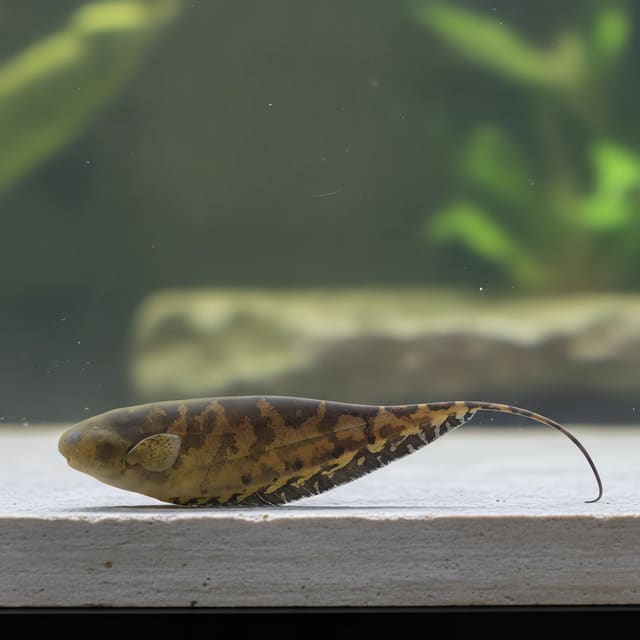
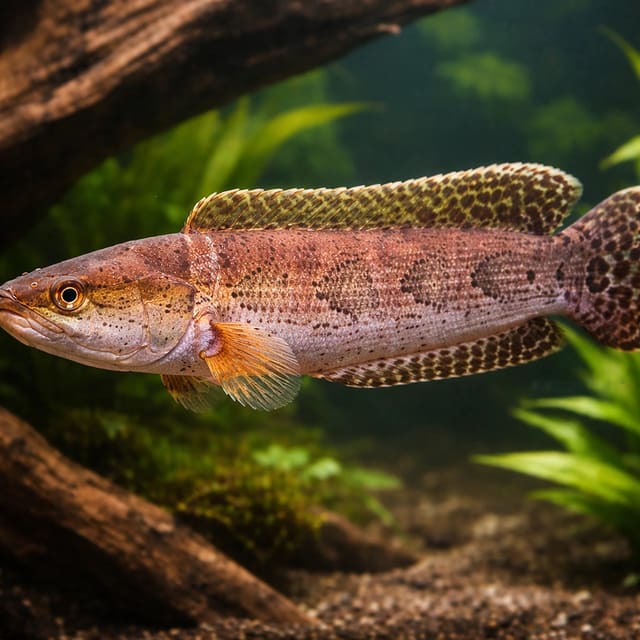
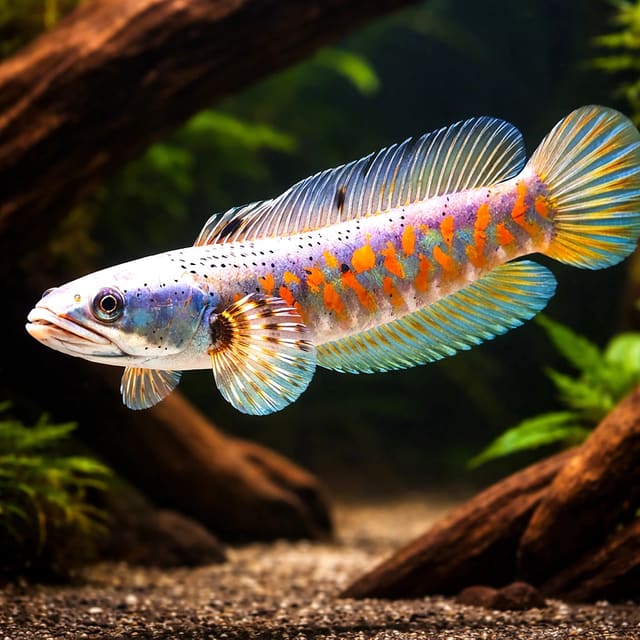
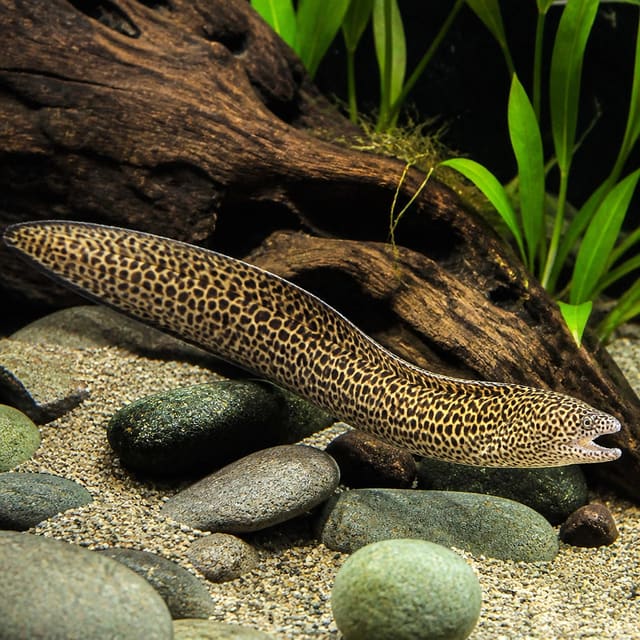
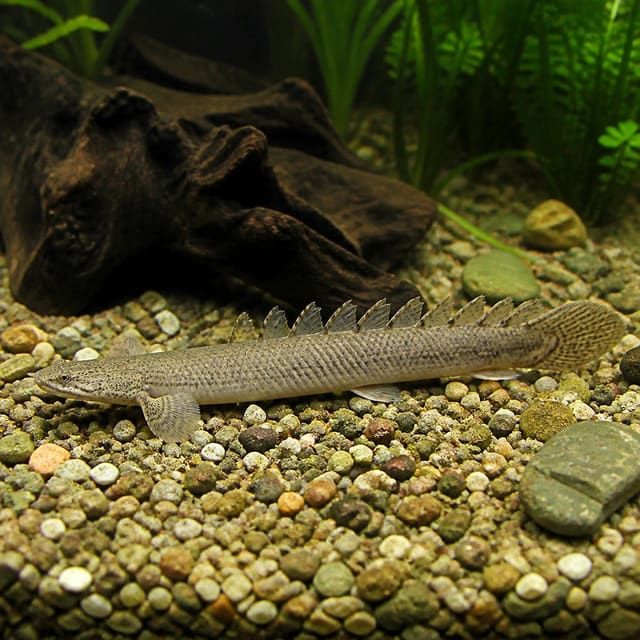
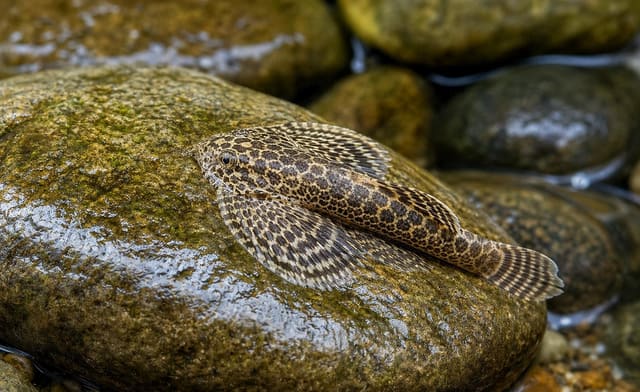
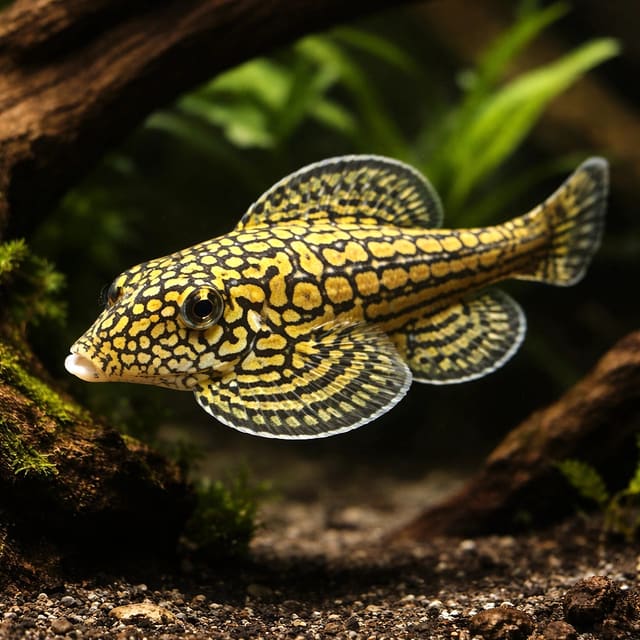
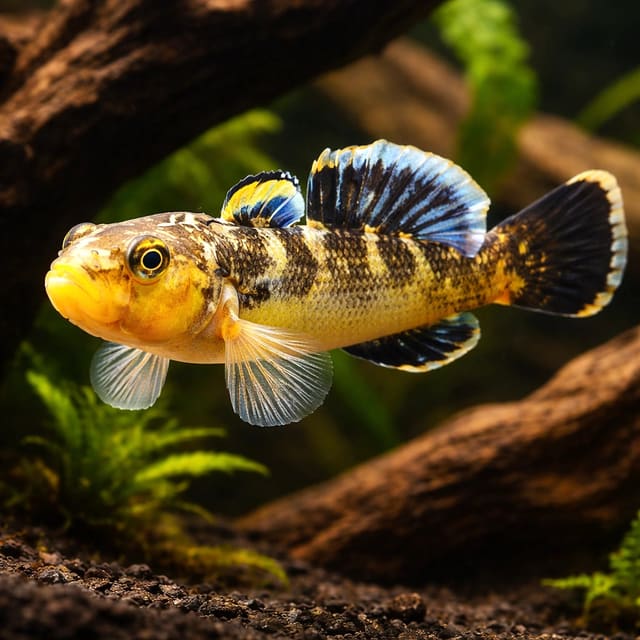
The gallery images are representative of this type of animal rather than photographs of the exact animal supplied, so colours can look slightly different from the live animal.
Choose between the size labels according to the live selector, then check that the receiving system can manage the selected fish immediately and the species over the long term. Do not use the smaller dispatch measurement as the basis for a permanent enclosure.
FishBase records a maximum total length of 100 cm in its male/unsexed category. This is a maximum recorded length rather than a promise that every individual will reach exactly 100 cm, but it is the decisive planning reference for long-term housing.
OATA's guidance for very large fish explains that these animals often need aquariums in excess of 500 litres and that an off-the-shelf aquarium is unlikely to be large enough in the long term. That figure is broad group guidance, not an automatic minimum for this fish. Judge the finished system around the adult dimensions, activity, stable water volume and waste load. An indoor heated pond is another housing format identified by OATA for very large fish.
A smaller interim aquarium may physically contain a dispatch-sized fish, but it is only an interim stage. Before ordering, decide where the adult system will stand, how it will be maintained and how filtration will scale with growth. This avoids making the permanent housing decision after the fish has already outgrown the first system.
The adult plan should also work without relying on other livestock sharing the enclosure. Compatibility must be judged separately, and much smaller fish should be excluded.
An obligate air-breathing fish must be able to reach atmospheric air. Arrange the aquarium so the West African Lungfish has an unobstructed route to the surface throughout the enclosure. Plants, décor and equipment should not create a barrier that prevents it surfacing.
Surface access does not replace filtration or water care. The fish still releases waste into the aquarium, and that waste must be processed by an established biological filter. Treat air breathing and clean water as two simultaneous requirements.
| Wild biology | Aquarium decision |
|---|---|
| Obligate air breathing | Maintain a clear route to atmospheric air. |
| Marginal swamps and backwaters | Provide permanent freshwater with stable quality. |
| Associated with aquatic plants | Keep any planting arranged so it does not obstruct movement or surfacing. |
| Forms a cocoon during seasonal drying | Do not induce drying or aestivation as routine husbandry. |
The cocoon is a survival response used on flood plains when the habitat dries. Aquarium care should instead provide continuous water, working filtration and regular maintenance. A biological adaptation that permits survival through a harsh wild season is not a substitute for meeting normal welfare needs.
Check the route to the surface whenever plants, décor, hoses or filter outlets are moved. Review it again as the fish grows because an opening that suits the selected dispatch size may become restrictive at a much larger body length. The same growth check applies to turning room and access around fixed equipment.
Keep the layout practical enough that waste can be removed during the weekly maintenance routine. Clear observation of the fish also makes changes in swimming, colour, breathing, condition and feeding easier to detect.
A filter is essential at every size. The RSPCA explains biological aquarium filtration as the process in which beneficial bacteria convert toxic ammonia to nitrite and then to the safer nitrate. The filter must be established and maintained so that this process continues while the fish grows and feeding increases.
OATA sets three practical water-quality targets for the very-large-fish group: ammonia at zero mg per litre, nitrite at zero mg per litre and nitrate not exceeding 20 mg per litre above the normal tap-water level. Use test results, rather than clear-looking water alone, to judge whether filtration and maintenance are coping.
Do not increase feeding or add other livestock faster than the filter bacteria can adjust. OATA describes the resulting imbalance as new tank syndrome: insufficient nitrifying bacteria allow ammonia and nitrite to reach unhealthy levels. A large fish can create a significant change in biological load even when it is the only new animal.
Filter capacity and aquarium volume work together. More water can help with stability, but it does not process waste by itself; an efficient biological filter is still required. Likewise, a large filter does not make a cramped enclosure suitable for an animal whose recorded maximum length is 100 cm.
When results move away from zero ammonia or zero nitrite, respond to the water-quality problem before increasing food or livestock. Check the filter for reduced flow or blockage, remove accumulated waste during the partial water change and continue testing until the values return to target.
Use 25–30°C as the temperature range for aquarium planning. This is FishBase's recorded environmental range for Protopterus annectens, while OATA supplies the maintenance targets for ammonia, nitrite and nitrate used here.
Keep the temperature within that range and prioritise consistency during routine care. Replacement water and maintenance should not create abrupt changes. Test the aquarium rather than relying only on equipment settings, particularly after a water change or equipment service.
| Measurement | Working target |
|---|---|
| Temperature | 25–30°C |
| Ammonia | Zero mg per litre |
| Nitrite | Zero mg per litre |
| Nitrate | Not more than 20 mg per litre above normal tap water |
Use our aquarium water-chemistry guide to understand what each test measures and why biological filtration affects the result. Record the tap-water baseline as well as the aquarium result because the nitrate target is expressed relative to normal tap water.
The water matcher can help you compare measured values with the stated guidance. Keep a simple dated log of temperature, ammonia, nitrite and nitrate so changes are visible before they become a repeated pattern.
For example, a nitrate reading 15 mg per litre above the tap-water result remains within OATA's ceiling, while a reading 25 mg per litre above it exceeds that ceiling and calls for maintenance. Any detectable ammonia or nitrite also requires action, even when the fish appears to be behaving normally.
Feed only what the fish can eat within a few minutes, once a day. This schedule comes from OATA's guidance for very large fish and gives a clear control against overfeeding. Portion size should match the fish being fed rather than the recorded adult maximum.
Choose appropriately sized food that reflects the animal's varied natural diet. OATA identifies large pellets for very large fish and larger frozen foods such as mussel, shrimp and lance fish for carnivorous species. FishBase records molluscs, frogs, fish and seeds in the wild diet, with roots forming most of the recorded diet in a Kenyan population.
Uneaten food breaks down and adds toxic waste to the water. A portion that is too large therefore creates both a feeding problem and a filtration problem. Remove accessible leftovers during maintenance, test the water and adjust the following meal instead of repeating the same quantity.
As the fish grows, increase the physical size or amount of food only when the animal can finish it within the same short feeding window and water quality remains on target. Growth does not justify continuous access to excess food.
A change in appetite can be an early warning sign. If the fish takes less food than usual, first check ammonia, nitrite, nitrate, temperature, swimming and breathing. Do not compensate for reduced interest by leaving a larger quantity in the aquarium.
At least once every week, carry out a partial water change of 25%. Use a siphon to remove solid waste from the substrate where necessary, and test the water at least weekly so ammonia or nitrite does not build up unnoticed.
Treat replacement tap water with a suitable conditioner before adding it to the aquarium. This removes harmful chlorine or chloramine that could affect the fish and the beneficial bacteria in the biological filter.
If filter media needs cleaning, do not rinse it under the tap. Chlorine or chloramine may kill part of the beneficial bacterial population. Rinse it lightly in aquarium water removed during the partial water change, which reduces bacterial loss.
A weekly 25% change is the baseline routine rather than permission to ignore the test results between maintenance days. Detectable ammonia, detectable nitrite or nitrate exceeding 20 mg per litre above tap water calls for prompt attention to waste, feeding and filtration.
Large fish may require several filters, so check each unit rather than assuming flow from one outlet represents the whole system. Stagger only the work needed on individual filters so the biological process remains established, and avoid unnecessary heavy cleaning of all media together.
Keep the maintenance route practical as the system scales up. Water removal, replacement-water preparation, filter access and waste disposal should all be manageable every week, not merely during initial setup.
Set up and establish the biological filter before introducing the West African Lungfish. Our first tropical aquarium guide explains the preparation and filter-maturation process. For this species, apply that process to a system planned around exceptional growth and waste production.
Immediately before introduction, test the water. Ammonia and nitrite should both read zero mg per litre, temperature should be within 25–30°C, and nitrate should remain within 20 mg per litre above the normal tap-water level.
Read the current delivery and Live Arrival Guarantee policy before arranging receipt. Someone must be present to receive the parcel.
Adding livestock gradually allows the beneficial bacteria to respond as feeding and waste increase. Even when only one fish is being introduced, its size and feeding can create a substantial new load for the filter.
During the first week, keep the normal once-daily feeding limit, test the water at least weekly and observe swimming, breathing, colour, condition and appetite. If ammonia or nitrite appears, prioritise water quality and filtration rather than increasing food or adding further livestock.
Learn the fish's usual swimming, colour, breathing, temperament, body condition and feeding response. Individual fish vary, so a change from its own established pattern is often more useful than comparing it with a single fixed pose or activity level.
OATA highlights several changes that warrant closer attention: hanging at the surface, sitting on the bottom or swimming erratically; becoming darker or paler; altered aggression or increased hiding; faster or slower gill-cover movement; white spots, fluffy growths, lost fins or scales; changing body condition; and reduced feeding.
| If you notice | Do this first |
|---|---|
| Changed swimming or breathing | Test temperature, ammonia, nitrite and nitrate and check filter flow. |
| Reduced interest in food | Remove leftovers, test the water and keep the next portion controlled. |
| Darker or paler colour | Compare it with the fish's normal appearance and review recent water results. |
| White spots, fluffy growths or damaged fins | Check water quality and seek prompt guidance. |
| Increasing or decreasing condition | Review the once-daily portion, feeding response and water quality. |
When a health change concerns you, test the water first and contact us for further guidance. Report the measured temperature, ammonia, nitrite and nitrate alongside the change you observed; those details are more useful than appearance alone.
Do not let obligate air breathing disguise a change in normal breathing behaviour. Surface access is expected, but a marked change in frequency, gill-cover movement or swimming still deserves a water-quality check.
A dated log can connect behaviour with practical events such as a filter blockage, maintenance day, changed portion or newly added livestock. Use the pattern to correct the cause while continuing the normal weekly maintenance schedule.
Avoid mixing the West African Lungfish with much smaller fish. OATA advises against that combination for very large fish because of their size and, in many cases, large mouths. FishBase also records fish among the natural foods eaten by Protopterus annectens.
Do not turn that one clear exclusion into a universal approved list. Very large fish vary in aggression, predatory behaviour and compatibility, and OATA notes that some may not mix with any other species. Assess any proposed shared aquarium around the adult animals rather than their present dispatch sizes.
| Question | Decision |
|---|---|
| Is the other fish much smaller? | Avoid the pairing. |
| Will both adults have sufficient space? | Proceed only if the enclosure can accommodate both at full size. |
| Can filtration manage both waste loads? | Use measured ammonia, nitrite and nitrate to judge capacity. |
| Can both animals feed appropriately? | Make sure one animal will not prevent the other finishing its correct food. |
| Has behaviour changed with growth? | Reassess the pairing and be ready to separate the animals. |
One purchase supplies one lungfish, but that retail unit is not a social group recommendation. Treat one fish as a complete planning project and make shared housing an additional decision rather than an assumed requirement.
For a stocking and compatibility assessment, contact us with the aquarium dimensions, filtration, current water results, the identity and adult size of every resident, and a separation plan. Compatibility remains conditional because similarly sized animals can still differ in behaviour and feeding demands.
A pairing that appears manageable at a 10–15 cm or 15–20 cm dispatch size should not be assumed to remain suitable. The lungfish has a recorded maximum total length of 100 cm, so relative body size, enclosure use, food size and waste production can all change substantially during growth.
A dedicated system removes the need to find a universal tank-mate formula and makes it easier to plan feeding, filtration and surface access around one exceptionally large animal. That is a practical planning choice rather than a claim that every individual must always be kept alone.
If shared housing is attempted after assessment, maintain a workable separation option. Reassessment should be based on observed behaviour and measured water quality, not on how long the animals have already occupied the same enclosure.
Do not choose another large fish merely because it has a similar dispatch size. Compare its adult dimensions, diet, activity and filtration load independently. Related-product suggestions elsewhere on the page are alternatives to research, not compatibility recommendations.
FishBase records a maximum total length of 100 cm. Use that figure to plan the permanent enclosure, filtration and access to the surface rather than treating it as a guaranteed size for every individual.
Plan an exceptionally large aquarium or indoor heated pond around a fish that can reach 100 cm. OATA's broad guidance says very-large-fish aquariums are often in excess of 500 litres, but the finished system must also provide adult movement, surface access, stable water and enough filtration for the waste load.
Treat one fish as a complete planning project rather than assuming a social group. Avoid much smaller fish and assess any proposed shared housing individually for adult space, behaviour, feeding and filtration load.
It suits a keeper who can plan exceptional adult space, substantial biological filtration, unobstructed surface access and at least weekly testing and maintenance. An off-the-shelf aquarium is unlikely to meet its long-term requirements.
Feed appropriately sized food once daily and offer only what it can finish within a few minutes. OATA's very-large-fish guidance includes large prepared foods and frozen mussel, shrimp or lance fish, while FishBase records a varied wild diet that also includes seeds and plant roots.
Keep it at 25–30°C, based on FishBase's recorded environmental range. Measure pH before introduction and track it alongside temperature, ammonia, nitrite and nitrate during routine testing.
Treat compatibility cautiously: FishBase records fish in its natural diet, and OATA says mixing very large fish with much smaller fish should be avoided. Assess every other pairing individually and keep a workable separation plan.
Avoid much smaller fish. No universal companion type follows from that rule, so judge any other proposed fish by adult space, behaviour, feeding needs and the combined filtration load.
Start filming every delivery while the parcel is still sealed and before floating the bag; someone must be present to receive it. Open it in one continuous take with the fish still inside the sealed bag, float the bag for 20–30 minutes, then release the fish without pouring the bag water into the aquarium.
No reviews for this item yet. Bought one? Honest reviews only, good or bad.
What customers say about ordering from us
I have a small group of long finned mountain minnows. So was delighted to be able to order ten of this variety to increase the genetics in my tank . The ones I recieved are healthy but it’s to early to give a verdict on wether they are of a long finned type since they are small currently.
Gordon Walker · 23 Sept 2026
100% success travel and "installation". Pleased with quality of purchase. The Siamese fighter a bit "shy" so have not yet seen him at his best yet but looking good. Happy customer. GG
George E Garratt · 21 Sept 2026
Reviews of our shop, collected by Judge.me, an independent third-party review collector. Newest first.