Advanced
Eastern Bottlenose Mormyrid (Mormyrus longirostris)
£35.99

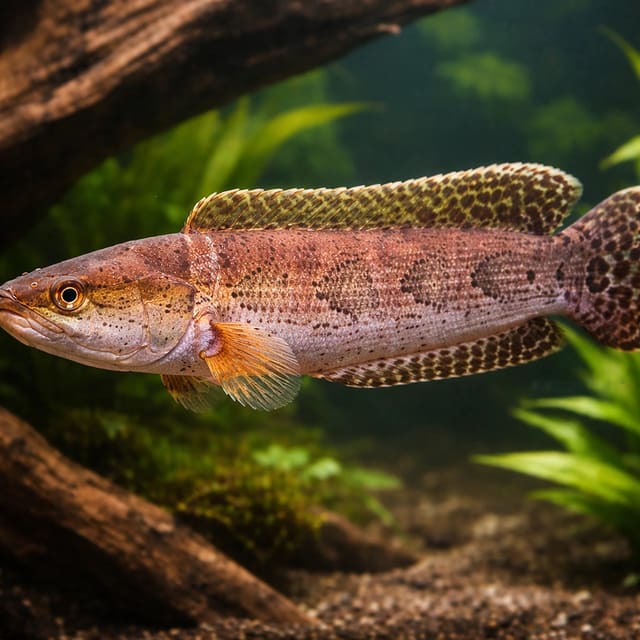
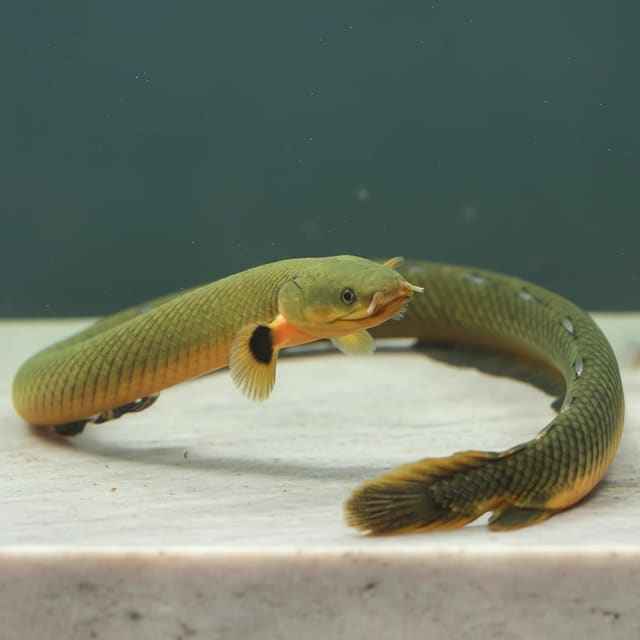
Peacock Snakehead (Channa pulchra) is an air-breathing, territorial predator from cool, clear headwaters in western Myanmar. It is supplied as one unsexed fish in a 5–6 cm or 7–10 cm size band and needs an escape-proof specialist aquarium planned around an adult record of 30 cm total length.
Channa pulchra
Peacock Snakehead (Channa pulchra) is an air-breathing, territorial predator from cool, clear headwaters in western Myanmar. It is supplied as one unsexed fish in a 5–6 cm or 7–10 cm size band and needs an escape-proof specialist aquarium planned around an adult record of 30 cm total length.
Peacock Snakehead is the aquarium trade name used here for Channa pulchra, a member of the snakehead family Channidae from western Myanmar. It is an alert, air-breathing predator with a long body, broad head and striking orange-red flank marks. This is a specialist fish for a keeper who wants to build the aquarium around one impressive animal, rather than add another fish to an established mixed community.
One purchase supplies one live fish in the size band chosen at checkout: 5–6 cm or 7–10 cm. These are juvenile dispatch sizes. The size you select is the size supplied, not the adult size. FishBase records a maximum of 30 cm total length for male or unsexed fish; total length includes the tail. That record is more useful for long-term planning than treating either dispatch grade as a guide to the aquarium this fish will eventually need.
Sex is guaranteed only when the selected option explicitly states male or female. This Peacock Snakehead listing has no sex-guaranteed option. Colour, pattern intensity, body proportions and maturity can vary as the fish grows, so plan for the species and its adult needs rather than a presumed sex or an exact photographic appearance. One quantity means one fish, not a pair.
| Suits | Experienced keepers able to provide a secure species-style aquarium, measured water and a separation plan |
|---|---|
| Scientific identity | Channa pulchra, family Channidae |
| Sold unit | One live, unsexed fish per purchase |
| Dispatch sizes | 5–6 cm or 7–10 cm |
| Adult record | 30 cm total length, male or unsexed, in FishBase |
| Native setting | Cool, clear, fast-flowing, highly oxygenated headwater streams in Rakhine State, Myanmar |
| Breathing | Obligate air-breather, so unobstructed surface access and a secure cover both matter |
| Care assessment | Advanced, because escape prevention, predatory behaviour, long-term space and uncertain social tolerance all need active management |
The combination of predatory feeding, territorial behaviour and an eventual body length around 30 cm changes every stocking decision. Small companions may become prey, while another large or territorial fish can create competition and injury. A lid gap that would be a nuisance with a small shoaling fish can become an escape route for an air-breathing snakehead. The safest starting point is therefore a species aquarium with the floor area, structure and maintenance routine planned before the fish arrives.
The natural-history picture also differs from the generic warm-community model. FishBase records Channa pulchra as a freshwater, benthopelagic, obligate air-breathing fish from Myanmar and reports a wild environmental temperature figure up to 23°C. The species summary describes headwater habitat rather than a warm lowland pond. This does not create a single thermostat setting, but it does rule out assuming that constant high tropical heat is automatically suitable.
Browse the loaches and oddball fish collection if you are comparing specialist aquarium projects. Compare adult size, behaviour, water requirements and escape risk first; an unusual appearance alone does not make two species interchangeable or suitable tank mates.
Start with adult length, turning room and usable floor area. A 30 cm total-length snakehead needs much more than a glass box long enough to contain its body. It must be able to turn without rubbing against decor, move between cover and open water, reach the surface freely and retreat from activity outside the aquarium. The aquascape, filter hardware and any companions all reduce usable space, so nominal litres never tell the whole story.
Use FishBase's 30 cm total-length record as the biological planning anchor. Choose a substantially sized aquarium with a long footprint, then judge the finished layout against the adult fish rather than a bare-tank label. If the planned decor leaves narrow channels or traps the fish at one end, increase the footprint or simplify the structure.
Secure the top before water is added. Use a close-fitting, robust lid and close gaps around cables, pipework and filter returns. Check feeding hatches after every use. Because snakeheads breathe atmospheric air, leave clear access to the surface and do not seal the enclosure in a way that prevents safe gas exchange. A cover must solve escape risk without obstructing the fish's breathing route.
Channa pulchra was described from clear, fast-flowing, highly oxygenated headwater streams in western Myanmar. An aquarium cannot reproduce an entire stream, but that setting supports a practical emphasis on clean water, oxygenation, shade and structure. Use aquarium-safe wood, robust plants or other stable features to make sheltered areas. Anchor every item so a powerful fish cannot dislodge it onto glass, pipework or itself.
Break long sight lines, especially if any carefully considered companion is ever attempted, while preserving an open route along the aquarium and to the surface. Floating cover can soften overhead light, but it must not mat across the entire surface. Avoid sharp rockwork and tight caves that may become too small as the fish grows. A retreat should allow the animal to enter, turn and leave without scraping its flanks or fins.
Flow should keep waste moving towards filtration and maintain oxygen without forcing the fish to fight a jet everywhere it rests. Create a quieter refuge as well as a moving-water zone. Watch the animal rather than relying only on pump ratings: persistent hiding in one corner, repeated swimming against a barrier or difficulty holding position can show that the layout needs adjustment.
A large predatory fish places a meaningful load on the biological filter. The aquarium should be fully cycled and able to process the expected waste before the snakehead arrives. The first aquarium setup guide explains how to establish and test biological filtration. A calendar alone does not prove maturity; use reliable tests and confirm zero measurable ammonia and nitrite under realistic conditions.
The RSPCA's aquarium welfare guidance explains why filtration is essential: fish release toxic ammonia, which an established biological filter converts through nitrite towards the less immediately toxic nitrate. That process depends on living bacteria, water flow and oxygen. Do not run biological filter media under the tap, because chlorine or chloramine can kill beneficial bacteria. Avoid changing every piece of mature filter material together or leaving the filter switched off for extended periods.
Make mechanical maintenance easy. Predatory meals can leave fragments, so choose a filter that can be inspected and cleaned without dismantling the whole aquascape. Remove obvious leftovers promptly and siphon waste from accessible areas. Clean only the media that needs attention, using removed aquarium water where appropriate, and preserve established biological media.
Test more often after arrival, a feeding change, filter maintenance or any interruption to power and flow. Record results so a slow trend is visible. Water that looks clear can still contain ammonia or nitrite; appearance is not a substitute for measurement.
FishBase reports a wild environmental temperature figure up to 23°C for Channa pulchra, while the natural-history summary describes relatively cold, highly oxygenated streams. Treat that as habitat context, not a complete aquarium range. FishBase leaves the aquarium minimum temperature, pH range and hardness range unspecified, so measure the aquarium and compare it with the current holding water before dispatch.
Measure the aquarium rather than describing it as simply soft, hard, warm or cool. The water-chemistry guide explains ammonia, nitrite, nitrate, pH and hardness, while the water matcher helps compare measured values with stated guidance. Ask for the current holding-water temperature, pH and hardness before dispatch, then decide whether the difference can be managed gradually.
Avoid rapid change. A fish moved between markedly different water can be stressed even when both sets of numbers look reasonable in isolation. Stabilise the aquarium, check heater and thermometer accuracy, and have a summer plan if the room overheats. Do not use the 23°C wild record as permission to expose the fish to an abrupt cold transfer, nor as a reason to maintain it at the warmest possible value.
Ammonia and nitrite should remain at zero. Track nitrate as a trend and use water changes, sensible feeding and filter care to prevent deterioration. Match replacement water for temperature and chemistry closely enough to avoid sudden swings, and always treat tap water for chlorine or chloramine with an aquarium conditioner used according to its label.
Peacock Snakehead is a predator, so build the diet around suitable animal-based foods sized for the fish. Offer a varied rotation of good-quality carnivore pellets and appropriate frozen or fresh aquatic foods that the animal accepts. Suitable clean, correctly sized examples can include prawn, mussel, earthworms and insects when they form part of a balanced rotation rather than the whole diet.
Do not use a fixed feeding quantity copied from another fish. Appetite and portion size change with body size, water temperature, food energy and activity. Offer a controlled portion, observe the response and remove recurring waste. A swollen abdomen, food repeatedly left behind or deteriorating water tests are reasons to reduce the next portion and review the schedule.
Live feeder fish bring avoidable risks, including injury, parasites, disease and poor nutritional balance. Training the snakehead to accept prepared and frozen foods makes the diet easier to control and the aquarium easier to keep clean. Use feeding tongs carefully if needed, keep fingers away from an adult predator and avoid encouraging the fish to strike at hands during routine maintenance.
Watch feeding behaviour without turning one missed meal into a diagnosis. A newly arrived fish may be cautious, while a sudden sustained loss of appetite in an established animal deserves a full check of water, temperature, equipment, injury and recent changes. Record the date and foods offered so advice can be based on a pattern rather than memory.
Set a routine that keeps conditions stable and allows the fish to remain secure throughout. Check the lid, surface access, filter flow, temperature and the animal's breathing and movement every day. Test water regularly and change an appropriate portion before nitrate and dissolved waste climb. The correct interval depends on feeding, filter capacity, actual water volume and test trends.
Before opening the cover, prepare every tool and close the room door. Keep the fish under observation whenever a hatch is open. Use a container or guard to prevent a jump while equipment is moved, and replace every clip or weight immediately. Never leave a cable gap for later.
During a water change, avoid exposing a resting fish to equipment that can trap or injure it. Match replacement water, add it steadily and recheck the filter afterwards. If the filter has been stopped, restart it promptly and confirm normal flow. Keep a spare air pump and a plan for power cuts, because warm, heavily stocked water can lose oxygen quickly even though the fish can breathe air.
Juvenile size can make the aquarium look empty at first. Resist filling that space with temporary companions or decor that will later restrict the adult. Review turning room, hide size, filter intake protection and lid strength as the fish grows. Measure the fish from clear photographs only when it can be done without chasing or handling it, and remember that total length includes the tail.
Growth does not establish sex. This offer is not sexed, and the gallery should not be used to promise male or female. Behaviour between two juveniles also does not prove a permanent pair. If more than one Channa is ever kept, the keeper needs the experience, space and immediately usable equipment to separate them at the first sign of persistent aggression.
Learn the normal pattern for this individual: resting place, surface-breathing rhythm, colour at different times, appetite and reaction to the keeper. Changes are most useful when compared with its own baseline. Rapid breathing, loss of balance, repeated rubbing, damaged fins, ulcers, swelling or a prolonged appetite change call for immediate water testing and suitably qualified help.
Avoid treatment by guesswork. Confirm the water and equipment first, photograph the signs clearly and seek aquatic veterinary or experienced specialist advice. Read the exact label before adding any medicine, because dosage, target organism and safety differ between products. Quarantine new livestock and avoid sharing wet nets or siphons between aquariums where practical.
A short husbandry record makes gradual changes easier to spot. Note the date, temperature, ammonia, nitrite, nitrate where used, pH, hardness, water-change volume, filter work and foods offered. Add brief observations about surface access, resting places, appetite, waste and any marks on the body or fins. Use the same reliable tests and similar sampling time where practical. The aim is not paperwork for its own sake: a consistent record can show whether a change followed heavier feeding, maintenance, hot weather or equipment trouble.
Prepare for predictable failures before the fish arrives. Keep a secure, fish-safe container or separate cycled enclosure available for urgent separation, plus a spare air pump, thermometer and water conditioner. Know how long the filter can remain without flow and how the aquarium temperature changes during a power cut. If the lid, filter or heater fails, protect surface access and containment first, then restore stable conditions without making several abrupt changes at once.
Review the enclosure as the juvenile grows. Recheck every lid gap, feeding hatch, cable route, hide entrance and turning space. Equipment that was safely out of reach at 5–6 cm may be movable by a much larger fish. Photograph changes from outside the aquarium when possible, rather than chasing or handling the animal. A calm, repeatable routine gives better evidence than a single impression and helps another experienced keeper or aquatic veterinarian understand the sequence if advice is needed.
The most dependable starting point is one Peacock Snakehead in an aquarium designed around it. This removes the pressure to find companions that match an unusual mix of adult size, predatory behaviour, temperature context and territorial needs. A species setup is still interesting: the fish's movement, feeding response, use of cover and interaction with the keeper provide plenty to observe.
Small fish and invertebrates can be viewed as prey. Larger fish are not automatically safe; another predator or territorial animal can compete for shelter and surface space or injure the snakehead. Fast, persistent fish can also prevent a shy juvenile from settling or feeding. Compatibility should therefore be judged on adult body size, mouth size, behaviour, water overlap and escape risk together.
| Lower-risk starting plan | One Peacock Snakehead with no other fish |
|---|---|
| Avoid | Animals small enough to be swallowed and any occupant that prevents safe surface access |
| Use great caution | Other snakeheads, territorial predators and powerful bottom or surface competitors |
| Never assume | That two juveniles form a permanent pair, that matching size prevents aggression or that a photograph establishes sex |
| Backup | A cycled separate aquarium, suitable secure divider and tools ready before any social experiment |
This listing sells one unsexed fish per purchase. Buying two does not create a sexed pair or a bonded pair. Juveniles may tolerate one another temporarily and later become territorial. If a keeper with suitable experience attempts more than one, the aquarium must be large and structured enough to offer genuine retreat, and separation equipment must be ready before introduction.
Look for persistent pursuit, blocking access to the surface or food, cornering, torn fins, bite marks and one fish hiding continuously. Do not wait for serious injury to prove that the arrangement has failed. Separate early, using secure accommodation that also meets the species' cover and air-access needs.
Other unusual fish may appeal to the same keeper, but a related-product suggestion is only another project to consider. It is not a compatibility endorsement. Research each animal's adult dimensions, predatory behaviour, water and space separately, then choose the project that best fits the available aquarium.
Have the aquascape, filter, cover and lighting settled before arrival. A quiet, dimly lit period can reduce disturbance while the fish explores, but maintain enough visibility to confirm normal orientation, surface access and breathing. Feed only after the fish has settled and the current arrival instructions allow it.
Keep initial observations factual. Note whether the fish can reach the surface, locate cover and hold position comfortably. Do not interpret brief hiding as proof of illness or a momentary display as proof of aggression. Use water tests and repeated behaviour over time to guide changes.
If another animal could fit in the snakehead's mouth, compete strongly for the same cover or surface route, or cannot share the measured water without compromise, do not combine them. If the answer remains uncertain, keep the Peacock Snakehead alone. A safe single-species aquarium is a complete plan, not a temporary failure to find companions.
FishBase records Channa pulchra to 30 cm total length for male or unsexed fish. Total length includes the tail, so this is not interchangeable with standard length. The 5–6 cm and 7–10 cm bands on this listing are dispatch sizes, not adult sizes.
Use FishBase's 30 cm total-length record as the biological planning anchor. Plan a substantially sized, long-footprint aquarium around a fish recorded to 30 cm total length, with turning room, secure cover, clear surface access, filtration and retreat space. Judge the finished layout, not litres alone.
Plan for one. This listing supplies one unsexed fish, and two purchases do not guarantee a male-female or bonded pair. Keeping more than one requires specialist experience, extensive structure and immediately available separate accommodation.
It is better treated as an advanced-care fish. Escape prevention, atmospheric breathing, adult space, predatory feeding and uncertain social tolerance all need more planning than a typical small community species.
It is a predator. Use a varied rotation of quality carnivore pellets and appropriately sized animal-based frozen or fresh foods that the fish accepts. Feed controlled portions, remove recurring leftovers and avoid routine feeder fish because they add nutritional, injury and disease risks.
FishBase reports wild water up to 23°C and leaves aquarium pH and hardness unspecified. Compare measured holding and aquarium water, keep conditions stable and avoid abrupt change.
It is a territorial predator rather than a routine community fish. Small animals may be eaten, while other large or territorial fish can create conflict. A secure species aquarium for one fish is the safest starting plan.
Tropical Fish Co hand-packs livestock in an insulated box and uses a licensed live-animal courier. Read the current delivery and Live Arrival Guarantee terms before the parcel arrives. If a claim is needed, contact the store the same day with the order number and a continuous unboxing video that begins with the sealed parcel and shows the fish still in its bag.
This offer supplies Channa pulchra in 5–6 cm and 7–10 cm dispatch grades. Aquarium guidance is tied to the cited biological and welfare references.
Gallery images have been digitally enhanced to improve image quality. Natural colour, pattern, size and maturity can vary between live animals.
No reviews for this item yet. Bought one? Honest reviews only, good or bad.
What customers say about ordering from us
I have a small group of long finned mountain minnows. So was delighted to be able to order ten of this variety to increase the genetics in my tank . The ones I recieved are healthy but it’s to early to give a verdict on wether they are of a long finned type since they are small currently.
Gordon Walker · 23 Sept 2026
100% success travel and "installation". Pleased with quality of purchase. The Siamese fighter a bit "shy" so have not yet seen him at his best yet but looking good. Happy customer. GG
George E Garratt · 21 Sept 2026
Reviews of our shop, collected by Judge.me, an independent third-party review collector. Newest first.