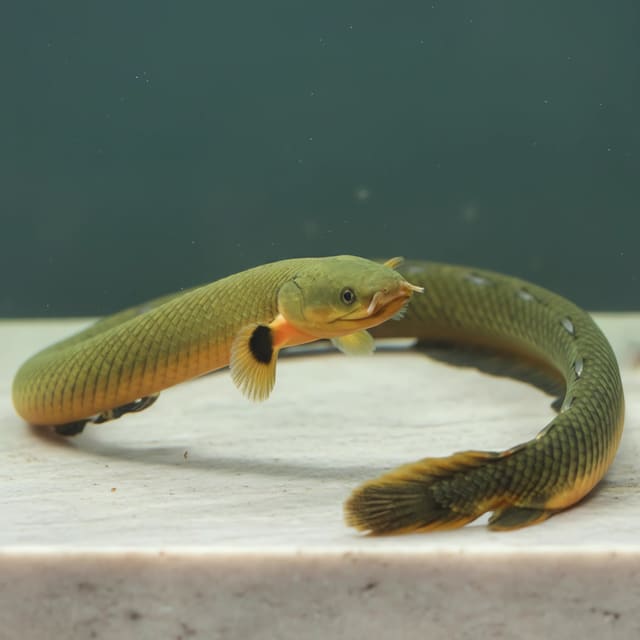
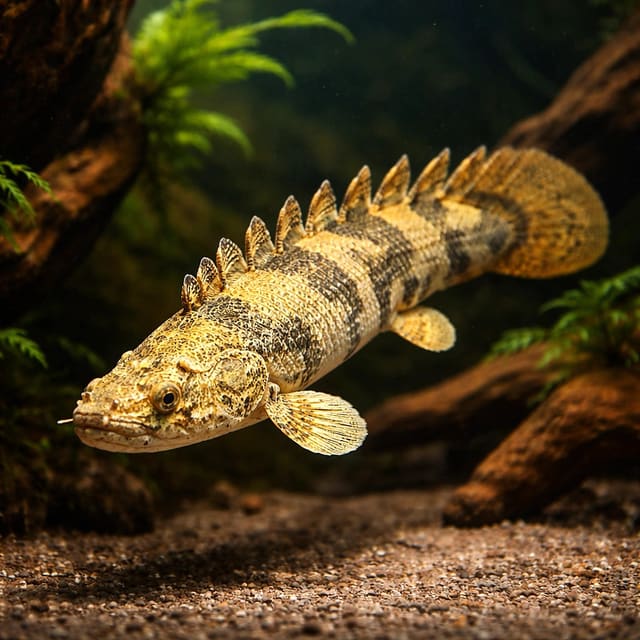
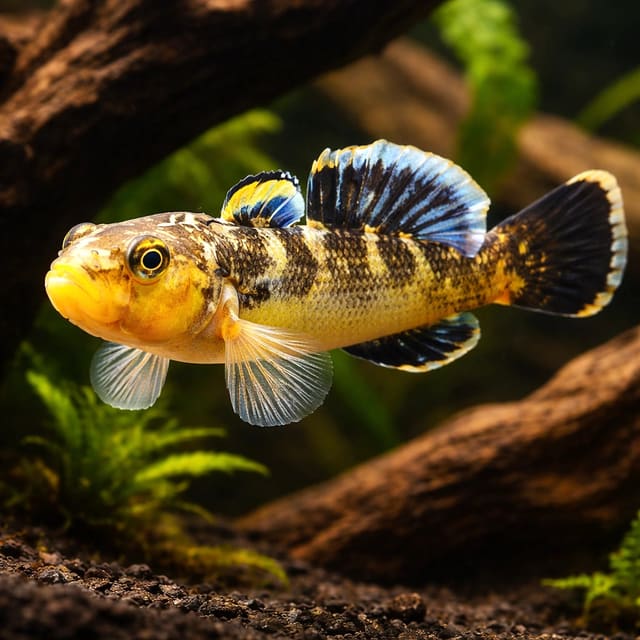
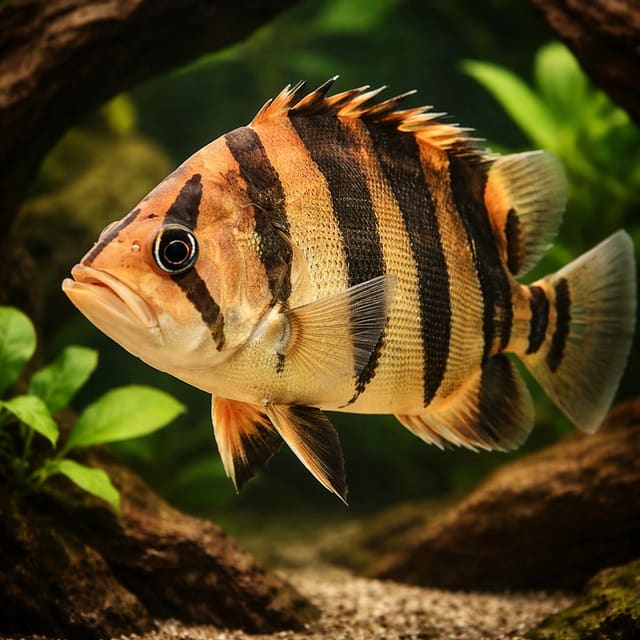
Reticulated Hillstream Loach (Sewellia lineolata)
20–24°C · pH 6–7.5 · 68L
£11.99
Sewelia breviventralis is a freshwater fish for a mature, stable, filtered aquarium. It suits keepers prepared to test water at least once a week, keep ammonia and nitrite at 0 mg/l, and assess tank mates by adult size, temperament, water needs and feeding behaviour. Sold individually in 3.5-5 cm and 5.5-7 cm dispatch sizes.
Sewelia breviventralis
Already 12% off. New customers can take 5% more with WELCOME5.
Sewelia breviventralis is a freshwater fish for a mature, stable, filtered aquarium. It suits keepers prepared to test water at least once a week, keep ammonia and nitrite at 0 mg/l, and assess tank mates by adult size, temperament, water needs and feeding behaviour. Sold individually in 3.5-5 cm and 5.5-7 cm dispatch sizes.
Sewelia breviventralis is a freshwater fish for a mature, stable aquarium with effective biological filtration. It suits a keeper who is prepared to test water regularly, maintain the filter, choose food for the fish’s feeding group and assess every proposed tank mate individually. Judge whether you are ready by those requirements.
Start with the aquarium rather than the fish’s dispatch size. The biological filter must already be handling waste, ammonia and nitrite must both measure 0 mg/l, and the aquarium must have enough usable room for the fish when fully grown. Decorations and plants enrich the environment, but they also occupy space and must be included in the stocking decision.
A larger aquarium is preferable where practical because its greater water volume is less susceptible to sudden changes in temperature and pH. The aquarium still needs regular testing and maintenance; water volume does not replace a mature filter or careful stocking.
| Suits | Not suited to |
|---|---|
| A mature, stable, filtered freshwater aquarium | An aquarium without a well set up and maintained filter |
| A keeper able to test water at least weekly | A setup where ammonia or nitrite is above 0 mg/l |
| Stocking planned around full-grown dimensions | A decision based only on the dispatch-size label |
| Tank mates screened by size, temperament, water and feeding needs | A community assembled from a universal tank-mate rule |
Plan the final stocking level from the fish’s full-grown space, the aquarium’s usable dimensions, filtration capacity and the needs of every other animal. OATA explains that it is not possible to say exactly how many fish an aquarium can hold, because body size, species requirements, water parameters and compatibility differ so widely.
To compare other fish before choosing, browse the loaches and oddballs collection. Treat that collection as a comparison route rather than a compatibility list; every proposed combination still needs its own assessment.
One purchase supplies one Sewelia breviventralis in the size selected. Use the live size selector to choose the label that fits your plan: 3.5-5 cm or 5.5-7 cm. The size you select is the size supplied, not the adult size.
Dispatch size tells you the size of the fish sent; it is not a final aquarium-planning figure. Base the long-term setup on full-grown dimensions, usable swimming and resting space, the room displaced by decoration, filtration capacity and the total stocking plan. Do not use the centimetres in the selector as a substitute for that assessment.
| Offer detail | What it means |
|---|---|
| Purchase unit | One live fish per purchase |
| 3.5-5 cm | The dispatch-size label selected |
| 5.5-7 cm | The dispatch-size label selected |
| Adult planning | Allow for the fish when fully grown, not only at dispatch |
Sex is guaranteed only when the selected option explicitly states male or female. This Sewelia breviventralis listing has no sex-guaranteed option.
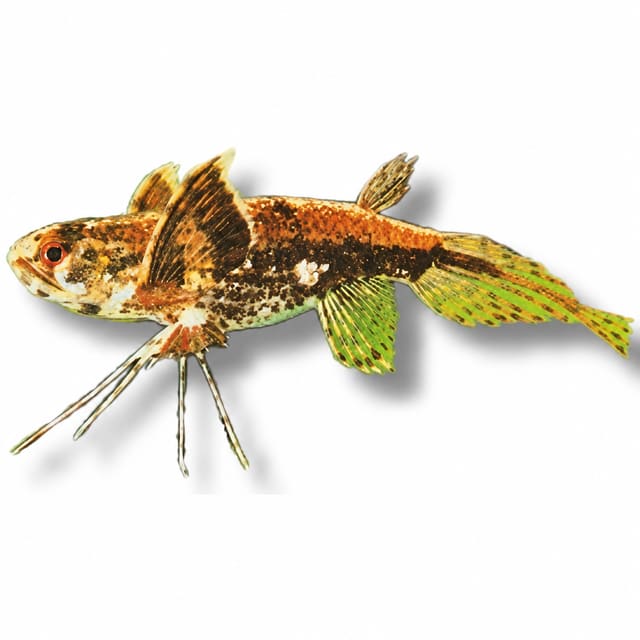
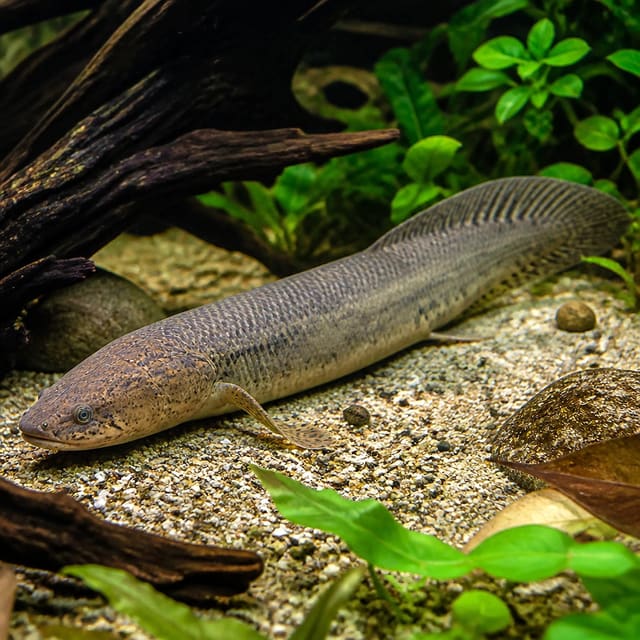
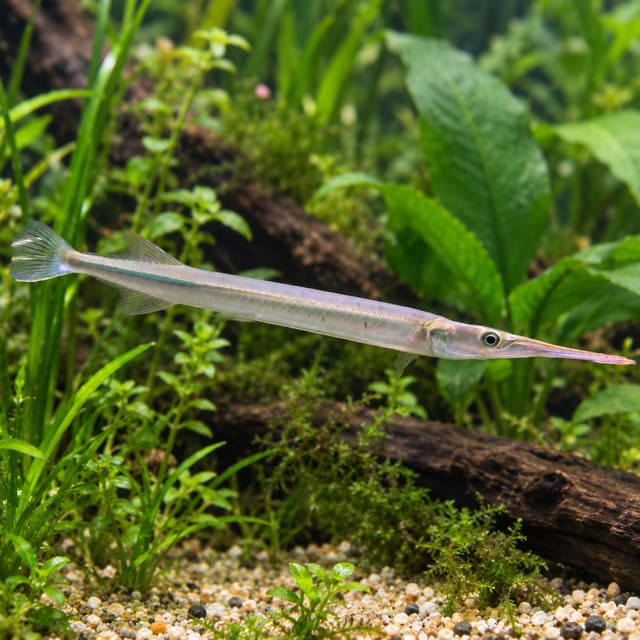
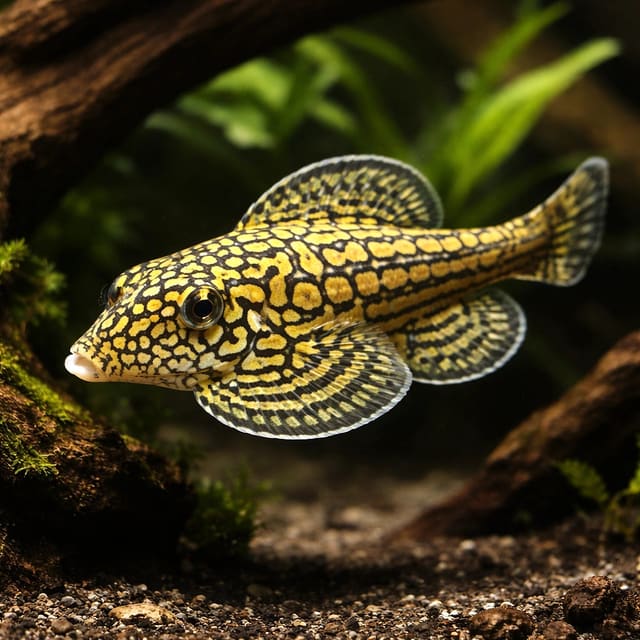
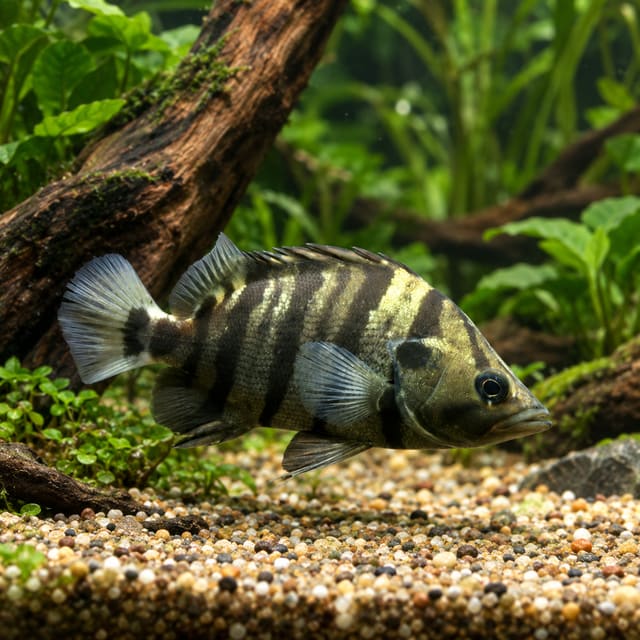
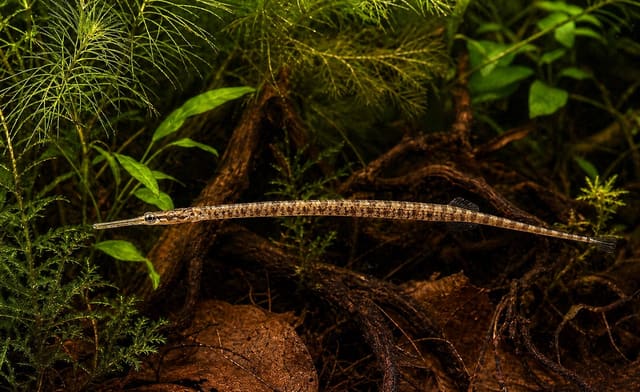
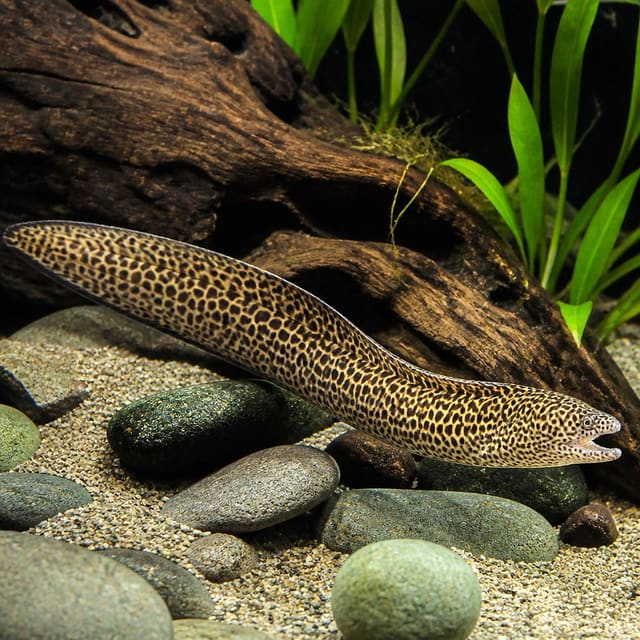
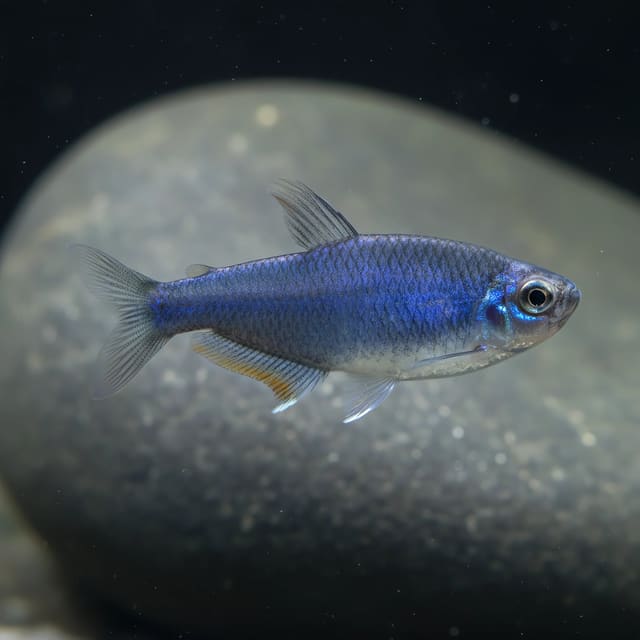
The gallery images are representative, based on reference photographs of this species, so colours can look slightly different from the live animal.
Choose between the size labels only after checking that the receiving aquarium is mature and that the planned community passes the compatibility screen. The size you choose tells you nothing about temperament, sex, social needs or compatibility with the animals already in your aquarium.
Add this fish only to a mature aquarium with a well set up and maintained biological filter. The RSPCA’s aquarium welfare guidance explains that fish release toxic ammonia and that beneficial filter bacteria convert it first to toxic nitrite and then to the safer nitrate.
OATA’s freshwater aquarium guidance sets ammonia and nitrite at zero in home aquaria; do not add this fish until both read 0 mg/l. Test kits should also cover nitrate and pH, while a separate check confirms that temperature is correct and stable.
The 24–48-hour settling period checks temperature and equipment operation; the biological filter must also be mature enough to process waste. A clear aquarium is not automatically ready, because ammonia and nitrite cannot be judged by sight.
Use the first tropical aquarium guide to organise preparation before livestock arrives. The practical decision remains the same at the end of the process: do not add the fish until testing shows 0 mg/l ammonia and 0 mg/l nitrite.
Increase stocking slowly after the aquarium is mature. The beneficial bacterial population has to grow when fish numbers and feeding increase; adding too many fish too quickly can leave the filter unable to process the extra waste.
Test ammonia, nitrite, nitrate and pH at least once a week, and check temperature regularly. Test more often while setting up the aquarium, after adding fish or whenever behaviour, breathing, colour, appetite or condition changes.
Keep ammonia and nitrite at 0 mg/l. Record the result rather than relying on memory, because a sequence of readings shows whether the aquarium is stable or moving in the wrong direction. Nitrate in tap water can vary widely between areas, so test the source water as well as the aquarium when investigating an unexpected result.
| Reading or observation | Action |
|---|---|
| Ammonia at 0 mg/l | Continue routine testing and maintenance |
| Nitrite at 0 mg/l | Continue routine testing and maintenance |
| Ammonia or nitrite detected | Pause further additions and check filtration, stocking pace, feeding and maintenance |
| pH changes from its normal reading | Check recent water changes, source water and aquarium stability |
| Temperature changes unexpectedly | Check equipment and nearby heat or draughts |
| Behaviour or appetite changes | Test the water immediately rather than waiting for the weekly check |
The water chemistry guide explains why these measurements matter. Once you have actual readings, use the water matcher to compare measured aquarium water with the guidance relevant to the planned community.
Stability comes from repeated attention rather than one acceptable test. Take readings under a consistent routine, write down maintenance carried out between tests and note changes in feeding or stocking. That makes it easier to connect a rising waste reading with a recent addition, heavier feeding or a filter blockage.
Do not add another fish merely because today’s reading is acceptable. Consider the recent trend and remember that the biological filter must adapt whenever stocking and feeding increase.
Carry out a partial water change of up to 25% every week and test the aquarium as part of the same routine. Frequency and volume can vary with the species kept, aquarium size, number of fish and other conditions, so let measured water quality and aquarium load guide any adjustment.
Prepare replacement tap water before it enters the aquarium. Make it safe for fish and bring it to the correct temperature. A water change that removes waste should not introduce chlorine or a sudden temperature change.
| Task | Decision |
|---|---|
| Test first | Measure ammonia, nitrite, nitrate, pH and temperature |
| Change water | Replace up to 25% during the weekly routine |
| Prepare new water | Treat it to make it safe and match the correct temperature |
| Inspect the filter | Check for blockages and accumulated fish waste |
| Review feeding | Look for uneaten food contributing to the waste load |
| Review stocking | Consider whether recent additions increased demand on the filter |
Keep the filter working reliably because the fish depends on it to process ammonia and nitrite. Check it for reduced flow, blockages and waste during maintenance, but preserve the biological filtration on which the aquarium relies.
Plants can help remove nitrate, while ornaments and other decoration can provide retreats for less boisterous or reclusive fish. Both still take up physical room. Judge the aquarium’s capacity from the usable space left after these additions, not from its empty volume.
If ammonia or nitrite is detected, treat that result as a warning that the aquarium is not processing waste adequately. Check the filter, recent stocking, feeding and maintenance history before considering any further addition. Continue measuring until both return to 0 mg/l.
If the aquarium remains stable, keep the same repeatable schedule rather than waiting for visible dirt. Harmful dissolved waste can rise before the water looks cloudy, and a clear appearance does not replace testing.
When replacement water produces an unexpected pH or nitrate result, test the tap water separately. This distinguishes a change entering with the new water from one developing inside the aquarium and allows the next maintenance decision to be based on measurements.
Feed aquarium foods appropriate to this fish’s feeding group, using modest portions and watching appetite, body condition and water quality. Fish differ in where and how they feed: some take food at the surface, some through the water column and others near the bottom. Choose food and presentation only after accounting for the feeding behaviour of this fish and the rest of the community.
Use the fish’s response to judge whether the portion and presentation are working. The practical goal is that it can reach suitable food without leaving a persistent excess. Uneaten food adds to the ammonia load and increases the work required from the biological filter.
| What you see | What to do next |
|---|---|
| The fish approaches and eats | Continue with modest portions while monitoring body condition |
| Food remains uneaten | Reduce the next portion and recheck whether the food suits its feeding group |
| Other fish take all the food | Reassess feeding access and whether the community allows this fish to eat |
| Interest in food falls | Test water quality and compare breathing, colour and behaviour with normal |
| Body condition changes | Review food suitability, access, portioning and water quality together |
Do not choose a food simply because it is labelled for freshwater fish in general. OATA notes that dietary needs vary between species and that some fish have specific feeding requirements. The food must fit the animal’s feeding group, while the portion must fit what is actually eaten without degrading the water.
Watch the whole community during feeding. A nominally suitable food does not help if this fish cannot reach it, if more boisterous animals monopolise it or if the presentation places it in the wrong part of the aquarium. Feeding access is therefore part of compatibility, not merely a choice of food.
Avoid feeding heavily on the first day after arrival. Let observation guide the next modest portion, and treat reduced appetite alongside water readings, breathing, colour, swimming and condition rather than as an isolated sign.
Choose an aquarium as large as practical and able to accommodate the fish when fully grown. Larger volumes are generally more stable and less susceptible to changes in temperature and pH, although they still require a mature filter, testing and maintenance.
Judge space after the aquarium is furnished. Plants, rocks, wood and ornaments take up volume, while some decoration can provide a safe retreat for less boisterous or reclusive fish. The useful setup is therefore the one that balances enrichment with enough open and accessible room for the final stocking plan.
Position affects stability. Direct sun and nearby heat can influence temperature, while draughts work in the opposite direction. A secure, level support protects the aquarium once the weight of water, substrate and decoration is added.
| Planning factor | Question to answer |
|---|---|
| Full-grown fish | Can the aquarium accommodate it after growth? |
| Decoration | How much usable space do rocks, wood and ornaments displace? |
| Plants | Do they enrich the setup without obstructing necessary room? |
| Retreats | Can a less boisterous fish move away from disturbance? |
| Filter capacity | Can the mature biological filter process the planned waste load? |
| Other animals | Do their adult size and requirements fit the same final plan? |
Do not derive a fish count from litres alone. Body size, water requirements, temperament, feeding behaviour and compatibility all affect stocking. Flow requirements can also differ between fish, so the final setup must be assessed as one community rather than as a collection of individual volume allowances.
Allow room for future growth from the beginning. If the aquarium cannot accommodate the planned fish fully grown, choose a larger setup before relying on an upgrade later. This keeps the long-term welfare decision separate from the smaller dispatch size shown in the selector.
Prepare the mature aquarium before the parcel is due, with ammonia and nitrite at 0 mg/l and temperature checked. Once the parcel is received, follow the steps below in order.
If you record a video, keep it with your order number. The Live Arrival Guarantee requires someone at the address to receive the parcel, the parcel opened and inspected the same day it arrives; an unboxing video is optional and clear photos are accepted. Contact us the same day if anything has gone wrong. We strongly recommend an unboxing video when practical: it helps us investigate arrival concerns faster, resolve them with less back-and-forth and understand packing or transit issues so we can reduce recurrence. Video is optional and clear photos are accepted. Never delay necessary animal care to record evidence.
Tropical Fish Co hand-bags live fish in pure oxygen and uses an insulated poly box, adding a heat pack when the weather calls for it. A tracked courier licensed to carry live animals transports the parcel, and tracking and the confirmed delivery date are sent by email so someone can be present.
Read the delivery and Live Arrival Guarantee policy before the parcel is due. Have a recipient present. If practical, film continuously from the sealed parcel. Inspect it on the day it arrives, never delay necessary care for the fish to record an optional video, float the bag for 20–30 minutes and release without adding transport water to the aquarium.
Do not replace these steps with a visual check of the aquarium. Stable-looking water can still contain ammonia or nitrite, and acclimatisation cannot compensate for an immature biological filter.
Watch breathing, swimming, posture, colour, temperament, condition and appetite closely during the first week. The purpose is to learn the fish’s settled pattern and notice a change early enough to test the aquarium and review the setup.
Individual fish can vary in behaviour and appearance, so compare the animal with its own developing baseline. A single position or movement means less than a clear change combined with altered breathing, colour, feeding or condition.
| Sign | Change to notice |
|---|---|
| Swimming | Hanging at the surface, sitting differently or moving erratically |
| Colour | Becoming darker or paler than normal |
| Temperament | More aggression or more hiding than normal |
| Breathing | Gill covers moving more slowly or quickly than normal |
| Appearance | White spots, fluffy growths, or loss of fins or scales |
| Condition | An increase or decrease in body weight and condition |
| Feeding | Reduced intake or no interest in food |
If any of these changes appears, test ammonia, nitrite, nitrate, pH and temperature. Water quality is the first practical check because ammonia and nitrite are toxic and must remain at 0 mg/l. Also inspect the filter for blockage and review recent feeding, maintenance and additions.
Pause further stocking if the aquarium shows detectable ammonia or nitrite, or if the new combination produces repeated chasing, hiding or feeding problems. The biological filter needs time to adjust when fish numbers and feeding increase.
For a health concern, test the water first and contact us with the readings and the changes observed.
Assess every proposed tank mate by adult size, temperament, water requirements, flow needs and feeding behaviour. Two freshwater fish are not automatically compatible: different species may prefer different water types and flow rates, each has its own preferred temperature range, and some species are territorial or aggressive and will not live together peacefully.
After introduction, watch Sewelia breviventralis and every tank mate for chasing, more aggression or hiding than normal, and damaged fins. Do not judge temperament or how many to keep from the size supplied or the gallery image.
| Check | Decision |
|---|---|
| Adult size | Allow enough usable room for every animal fully grown |
| Temperament | Consider territorial, aggressive, boisterous and reclusive behaviour |
| Water type | Confirm the animals can share the same stable conditions |
| Temperature and pH | Use measured values rather than a general freshwater label |
| Flow | Check that one setup can meet the animals’ flow requirements |
| Feeding behaviour | Ensure each animal can reach appropriate food |
| Filter capacity | Allow for the extra waste and feeding load |
No universal tank-mate list applies. A pairing must pass all of these checks together; matching on one factor does not cancel a conflict in another. Judge compatibility on full-grown requirements, not on fish being a similar size when they arrive.
Decoration can provide a retreat for less boisterous or reclusive fish, but it does not turn an unsuitable combination into a suitable one. Include retreats in the setup while still assessing adult space, temperament, water, flow and feeding access.
For a stocking and compatibility assessment, contact us with the aquarium dimensions and volume, measured temperature and pH, ammonia and nitrite results, filter details, decoration, and the full names and numbers of animals already kept or planned. Include their present sizes where known, but base the final decision on their full-grown requirements.
Do not proceed while ammonia or nitrite is above 0 mg/l. Compatibility includes the aquarium’s capacity to process the additional waste, not only how the animals behave towards one another.
Increase the number of fish slowly and watch the combination closely after introduction. The mature filter’s beneficial bacterial population must increase as fish numbers and feeding rise. Adding too many fish too quickly can cause new tank syndrome because there are not enough nitrifying bacteria to process the increased waste.
Test before adding the fish and confirm ammonia and nitrite are both 0 mg/l. After introduction, use the first week to check whether water quality remains stable and whether every animal can occupy the aquarium and feed without persistent problems.
Watch for repeated chasing, increased hiding, altered aggression, reduced food intake or an inability to reach suitable food. These signs call for a review of the pairing, layout and feeding access alongside immediate water testing.
Use decoration to provide safe retreats where appropriate, but keep enough usable room for all animals. A retreat helps a less boisterous or reclusive fish move away from disturbance; it does not resolve incompatible water requirements, insufficient adult space or persistent feeding competition.
A successful first day is only the start of the assessment. Behaviour, feeding access and biological filtration can change as animals settle and the waste load increases, so use repeated observations and measurements before deciding that the community can take another addition.
Plan the aquarium around its full-grown dimensions and choose as large an aquarium as practical. Allow for usable swimming space, decoration and the capacity of the mature filter when making the final stocking decision.
Choose an aquarium as large as practical that can accommodate it fully grown. OATA notes that larger aquariums are more stable and less susceptible to changes in temperature and pH.
Set the number only after assessing its social needs, adult space, filtration and the other fish already planned. Add fish slowly so the biological filter can adjust as stocking and feeding increase.
It suits a keeper who can prepare a mature, filtered aquarium, test water at least weekly and respond promptly to changes in behaviour, breathing, colour, condition or appetite.
Feed aquarium foods appropriate to its feeding group in modest portions. Watch appetite, body condition and water quality, because uneaten food contributes to ammonia and the correct diet varies between fish.
Keep temperature stable and suitable for the fish, check it regularly and test pH at least weekly. Keep ammonia and nitrite at 0 mg/l, the level OATA’s freshwater aquarium guidance sets for home aquaria.
Screen every proposed tank mate by adult size, temperament, water needs, flow and feeding behaviour, then watch closely after introduction for chasing, more aggression or hiding than normal, and damaged fins.
Choose only animals whose adult size, temperament, water type, flow needs and feeding behaviour fit the same aquarium. No universal tank-mate list applies; assess each proposed combination before adding it.
Tropical Fish Co hand-bags live fish in pure oxygen inside an insulated poly box, adding a heat pack when weather calls for it, and uses a tracked licensed live-animal courier. Someone must receive the parcel.
No reviews for this item yet. Bought one? Honest reviews only, good or bad.
What customers say about ordering from us
Easy website plenty of info on fish your buying great to pick a time slot
TRACEY DURRANT · 7 Oct 2026
Got some lovely fish thank you
Kevin Mackie · 7 Oct 2026
Reviews of our shop, collected by Judge.me, an independent third-party review collector. Newest first.