Reticulated Hillstream Loach (Sewellia lineolata)
20–24°C · pH 6–7.5 · 68L
£11.99

The Freshwater Butterflyfish (Pantodon buchholzi) is a surface-dwelling member of Pantodontidae from West and Central Africa that reaches 12 cm. It suits a keeper who can provide a covered aquarium with a 90 × 30 cm base and calm surface water; FishBase and Seriously Fish overlap at 23–30°C, while Seriously Fish gives pH 6.0–7.5 and 5–15 dGH. Sold individually at a dispatch size of 5 cm.
Adult size is the maximum length this species reaches at full maturity (scientific sources). The livestock you receive will be younger and smaller. Product-photo provenance and any image-specific limitations are stated on the listing.
Pantodon buchholzi
Save when buying multiple fish. Each quantity is one fish; sex and pair formation are not guaranteed unless the selected variant explicitly states them.
The Freshwater Butterflyfish (Pantodon buchholzi) is a surface-dwelling member of Pantodontidae from West and Central Africa that reaches 12 cm. It suits a keeper who can provide a covered aquarium with a 90 × 30 cm base and calm surface water; FishBase and Seriously Fish overlap at 23–30°C, while Seriously Fish gives pH 6.0–7.5 and 5–15 dGH. Sold individually at a dispatch size of 5 cm.
Adult size is the maximum length this species reaches at full maturity (scientific sources). The livestock you receive will be younger and smaller. Product-photo provenance and any image-specific limitations are stated on the listing.
Maintain these water conditions for optimal health and vibrant colors
The Freshwater Butterflyfish (Pantodon buchholzi) is a tropical freshwater fish in the family Pantodontidae. It comes from West and Central Africa, including Nigeria, Lake Chad, Cameroon, the Ogowe and Congo basins and the upper Zambezi River, and reaches a recorded maximum of 11.9 cm total length. It suits a keeper prepared to build the aquarium around a calm, covered surface zone rather than treating it as an ordinary community fish.
In nature it occupies calm water in swamps, creeks, backwaters and quieter parts of rivers. It stays at the surface, depends on breathing air and feeds on terrestrial insects, aquatic insect larvae and nymphs, crustaceans and fish. Its large pectoral fins contribute to the butterfly-like outline seen from above and help power the jumps used to catch food or escape predators. It is a ballistic jumper rather than a gliding fish, so a tightly fitting cover is a core welfare requirement.
For routine aquarium care, keep the temperature at 23–30°C, pH at 6.0–7.5 and hardness at 5–15 dGH. The temperature is the overlap of FishBase’s recorded environment and the Seriously Fish aquarium guidance; the pH and hardness ranges come from the same species-level aquarium guidance. Plan a base measuring at least 90 × 30 cm and approximately 81 litres, with width and usable surface area taking priority over extra depth.
This fish is generally quite peaceable, but it remains a surface predator. It will eat any fish it can fit in its mouth, is often aggressive towards other surface-dwelling species and has trailing fins that attract fin-nippers. Those traits make companion screening, surface feeding and observation more important than building a large mixed collection quickly.
| Suits | Not suited to |
|---|---|
| Covered aquariums with a 90 × 30 cm or larger base | Open-topped aquariums |
| Calm surface water with floating cover | Strong movement across the surface |
| Varied live and frozen surface foods | Flake used as the dietary basis |
| Carefully screened companions | Fin-nippers or fish small enough to swallow |
One purchase supplies one Freshwater Butterflyfish. The dispatch grade is 5 cm, while the adult planning figure is 11.9 cm. Dispatch size describes the fish when sent and does not identify its sex or life stage; arrange the aquarium for its recorded adult size before it arrives.
Sex is guaranteed only when the selected option explicitly states male or female. This Freshwater Butterflyfish listing has no sex-guaranteed option.
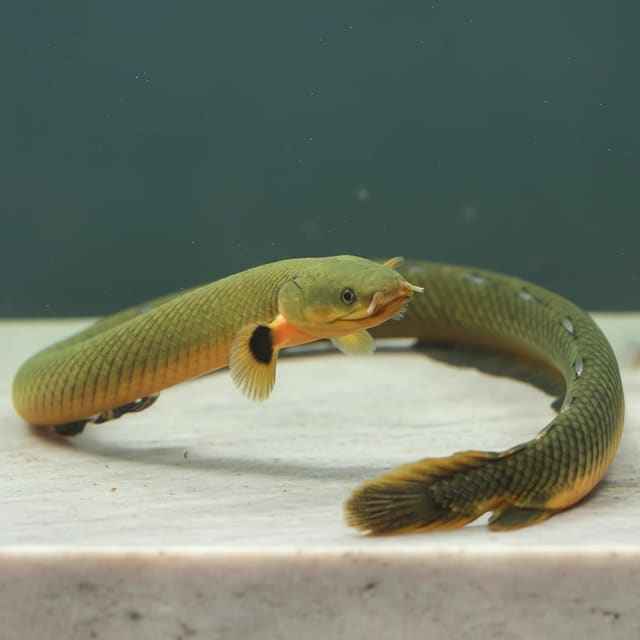
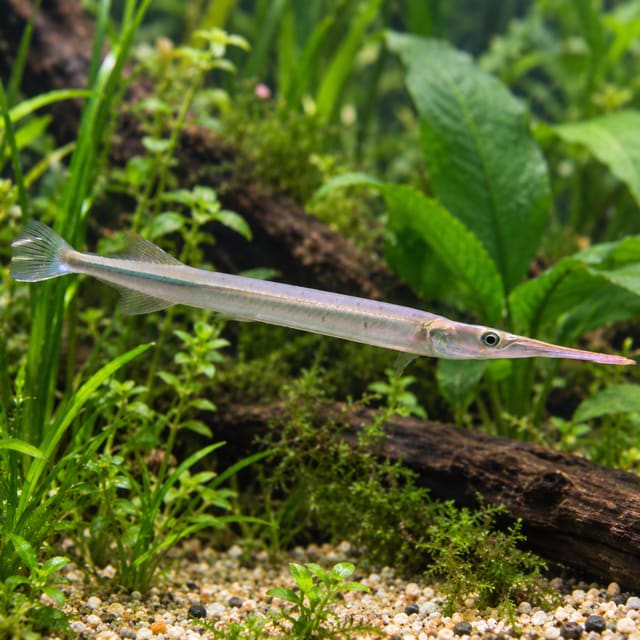
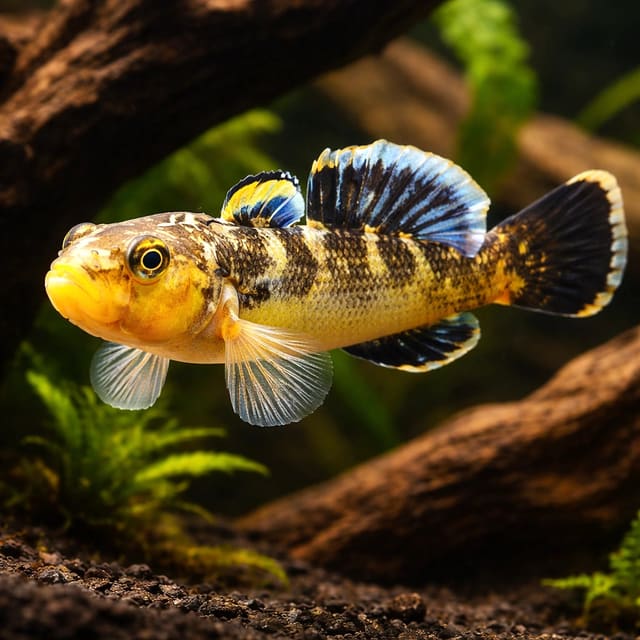
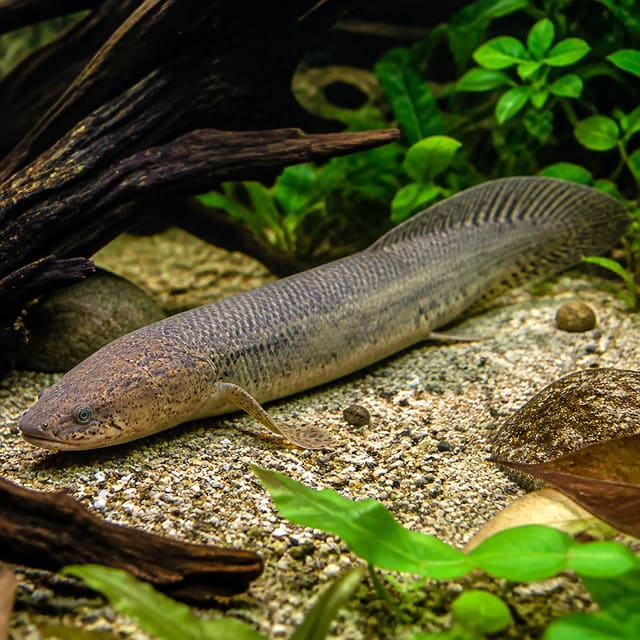
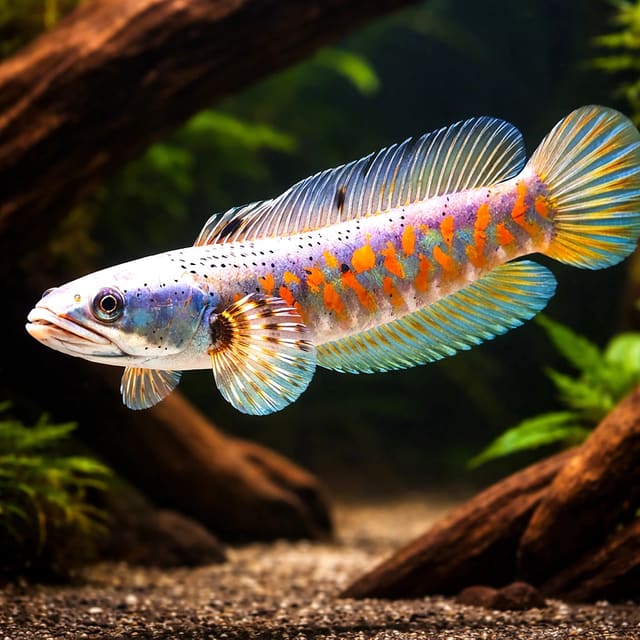
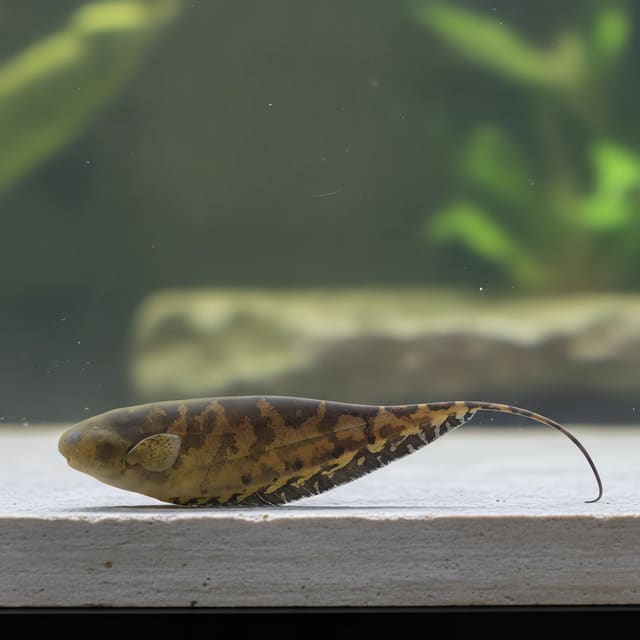
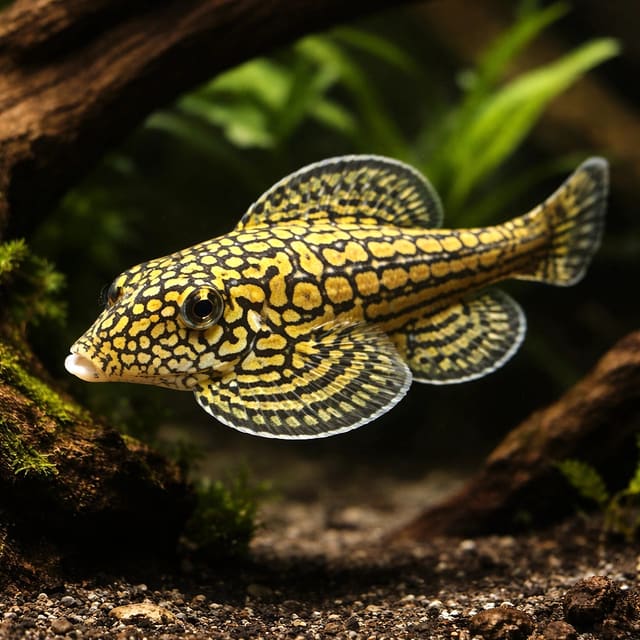
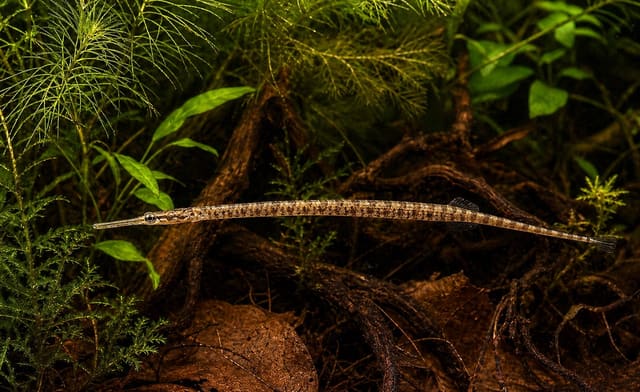
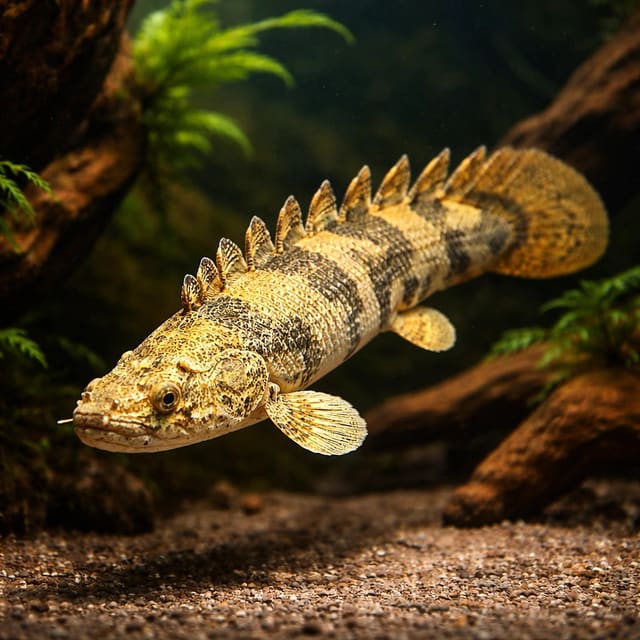
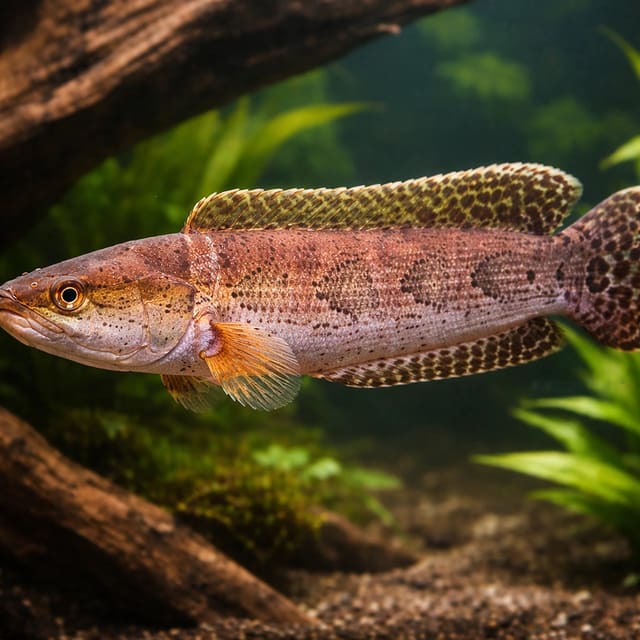
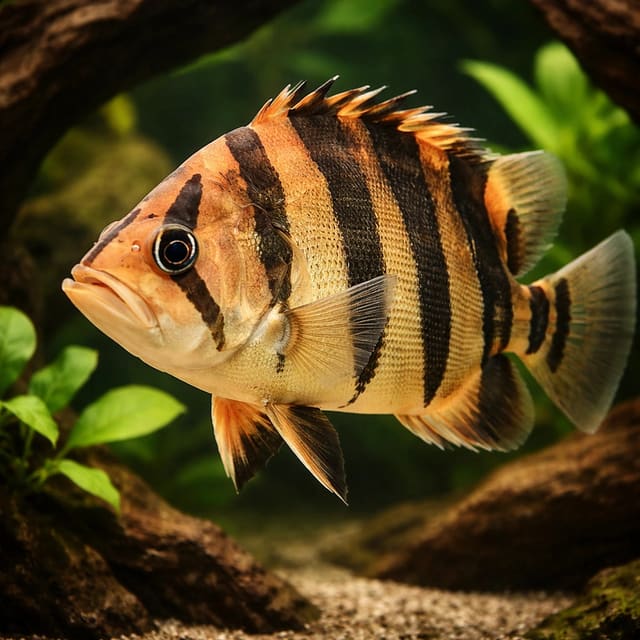
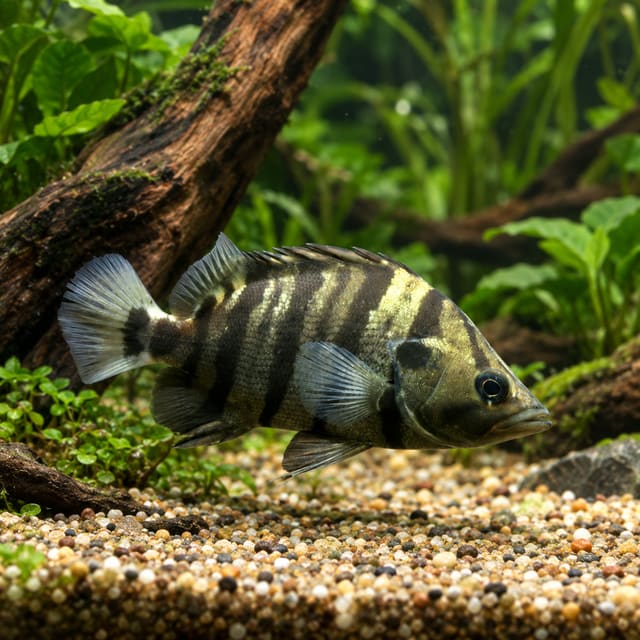
The gallery images are representative of this type of animal rather than photographs of the exact animal supplied, so colours can look slightly different from the live animal.
This is an unusual choice for a keeper who enjoys observing specialised behaviour and adapting the aquarium to it. Much of the decoration below the surface can be arranged around compatible companions, but the lid, surface cover, flow and feeding position must remain centred on the butterflyfish. You can browse the wider loaches and oddballs collection separately; products shown there are alternatives to consider rather than automatic companions.
Plan the aquarium around an adult length of 11.9 cm and a base of at least 90 × 30 cm. FishBase records 11.9 cm total length for male or unsexed fish. Choose companions that remain too large for it to swallow once it reaches that length.
The species spends much of its time at the water surface, so the footprint matters more than depth. Seriously Fish associates a 90 × 30 × 30 cm aquarium with approximately 81 litres and says the tank width is far more important than depth. Where possible, use an aquarium 15 inches (about 38 cm) or more from front to back. Use those dimensions together: a tall aquarium with a narrow top does not replace the stated 90 × 30 cm base.
Do not judge capacity from litres alone. An aquarium can hold a similar volume while offering a shorter or narrower surface, which works against the dimensions stated for this fish. Start with the base measurement, then consider volume, filtration and the space used by plants or decoration.
Growth planning also prevents the dispatch measurement from becoming a long-term limit. The fish is supplied at 5 cm, but the aquarium, cover and stocking plan should already suit the 11.9 cm adult. OATA advises choosing an aquarium that can accommodate fish once fully grown, because larger aquariums are also less susceptible to rapid changes in temperature and pH.
Create a dim, calm upper layer with floating plants and a tightly fitting lid. The aquarium should be dimly lit with floating plants, and any water movement should be kept to a minimum, so the Freshwater Butterflyfish can show its natural surface behaviour. The fish tends to remain motionless among surface plants when it is not feeding and becomes more active around dusk in the wild.
Floating plants perform two useful roles here: they diffuse the light and give the fish cover close to the waterline. Keep enough usable surface around them for the fish to rest and take food. Watch how the plants move after filtration is switched on. Constant movement across the whole surface means the water movement is too strong, even when the filter itself is appropriately sized.
The fish’s large pectoral fins help create the dead-leaf-like outline described by Seriously Fish and also contribute to its jumping power. A secure cover therefore matters even when the fish appears inactive. Check the fit after moving equipment, maintaining the filter or rearranging plants rather than assuming the lid still closes in the same way.
Keep surface calmness separate from poor water quality. Low visible flow does not mean running the aquarium without biological filtration. Use a mature filter that processes waste effectively while keeping water movement throughout the aquarium to a minimum. That balance allows the aquarium to stay filtered while respecting the species’ calm-water habitat.
Keep the Freshwater Butterflyfish at 23–30°C, pH 6.0–7.5 and 5–15 dGH. The 23–30°C instruction is the overlap between FishBase’s recorded environment and Seriously Fish’s aquarium range. Around 25–27°C (77–80°F), near the middle of that range, is best.
Set all three values as a compatible combination rather than checking temperature alone. Treat any single reading outside 23–30°C, pH 6.0–7.5 or 5–15 dGH as out of range, even when the other two are suitable. Correct out-of-range conditions before introducing the fish.
Stability starts with knowing the water that enters the aquarium. Use our water chemistry guide to understand the measurements and record the results rather than relying on appearance. The water matcher can then compare measured aquarium values with the stated range for this fish.
The species does best in slightly soft, acidic water, preferably stained with tannins, kept within pH 6.0–7.5 and 5–15 dGH. If the aquarium already runs within those figures, prioritise keeping it steady. Test more frequently while a new aquarium is being established or after livestock is added, because changes in biological load can affect water quality.
Use a mature biological filter and keep ammonia and nitrite at zero mg per litre. The RSPCA explains that fish release toxic ammonia, which biological filtration converts first to nitrite and then to the safer nitrate. No fish should be kept without a well-set-up and maintained filter.
OATA’s freshwater aquarium sheet gives broad group guidance: dechlorinate the water, switch on the equipment and allow 24–48 hours for the system to settle so the temperature and equipment can be checked. The biological filter must then mature before fish are added. Use test kits for ammonia, nitrite, nitrate and pH rather than judging maturity from clear water.
If this is your first system, follow our first tropical tank guide before arranging livestock. Increase the aquarium population slowly because filter bacteria must respond whenever the number of fish and the amount of feeding rise. Rapid stocking can leave too few nitrifying bacteria to process the extra waste.
Seriously Fish uses a turnover of four to five times the aquarium volume per hour for an approximately 81-litre aquarium. That corresponds to a filter rating around 325–405 litres per hour. At the same time, it instructs keepers to minimise water movement for the butterflyfish. Choose filtration that processes waste effectively while keeping water movement throughout the aquarium to a minimum.
| Check | Action |
|---|---|
| Ammonia above zero | Treat it as a water-quality warning and reassess waste, feeding and filter performance. |
| Nitrite above zero | Do not add more fish; continue testing and restore safe water quality. |
| Plants driven continually across the top | Reduce the water movement in the aquarium. |
| Filter blockage or waste build-up | Include the filter in routine maintenance and recheck water readings. |
Base the diet on varied live and frozen animal foods presented at the surface. FishBase records a wild diet of terrestrial insects, aquatic insect larvae and nymphs, crustaceans and fish. Seriously Fish recommends foods such as bloodworm, brine shrimp, prawn and small mealworms, with suitable live insects also matching the fish’s natural feeding biology.
This fish feeds only from the surface, so placement is as important as the food itself. Watch the food and confirm that the butterflyfish receives its share, particularly in a mixed aquarium. Food that drops away before the fish notices it does not meet its surface-feeding behaviour, even if another inhabitant later eats it.
Use the fish’s response and water tests to manage the routine. Present the food where it can be taken, confirm that it is eaten and remove uneaten material so it does not add to the aquarium’s waste load. OATA explains that uneaten food contributes to ammonia, making feeding and filtration part of the same water-quality decision.
If the fish ignores food sinking through the water column, change the presentation rather than assuming it has no appetite. If it accepts flake, continue to centre the diet on the live and frozen foods that suit its recorded insect-eating biology. In a community, watch for faster surface feeders taking everything first; the butterflyfish needs direct access to its own food.
Test water quality at least once a week and carry out partial water changes of up to 25% every week. Adjust the exact change to the aquarium, species and number of fish.
Treat replacement tap water to make it safe and bring it to the correct temperature before adding it. Check the aquarium temperature regularly alongside ammonia, nitrite, nitrate and pH. Ammonia and nitrite should remain at zero mg per litre, while temperature and pH must stay inside the Freshwater Butterflyfish ranges of 23–30°C and 6.0–7.5.
| When | Decision |
|---|---|
| Regularly | Observe surface position, breathing, colour, temperament and interest in food. |
| At least weekly | Test water quality, check temperature and inspect the filter for blockage or waste build-up. |
| Every week | Change up to 25% of the water, using treated replacement water at the correct temperature. |
| After adding fish | Test more frequently while the biological filter responds to the increased load. |
Position the aquarium where room conditions support this routine. OATA advises a flat, level stand capable of carrying the full aquarium indefinitely, away from direct sunlight, heat, draughts, loud noises, vibrations and sudden movement. These choices reduce external changes that can work against stable temperature and behaviour.
Learn the fish’s normal appearance and actions so changes stand out. Warning signs include darker or paler colour, altered aggression or hiding, faster or slower gill movement, erratic swimming, loss of fins or scales, white spots, fluffy growths, changing body condition or reduced feeding. If you see a concerning change, test the water first and contact us for guidance. Water results help distinguish an aquarium-wide problem from a change affecting one animal.
Prepare the mature, covered aquarium before the parcel arrives. Confirm that ammonia and nitrite are zero mg per litre and that temperature, pH and hardness sit within the stated ranges. Someone must be present to receive live fish, and the parcel must be opened and inspected on the day it arrives.
Our delivery and Live Arrival Guarantee policy explains that fish are hand-bagged in oxygen, placed in an insulated poly box and given a heat pack when the weather calls for it. A licensed live-animal courier carries the parcel. Follow the receiving sequence without opening the parcel before filming begins.
Film every delivery from the sealed parcel onward. For a Live Arrival Guarantee claim, send the order number and short continuous unboxing video on the same day; the recording should show the sealed parcel, the opening and the fish inside the sealed bag.
Once released, observe the fish at the surface and compare its behaviour with the calm, covered conditions prepared for it. Keep the lid secure from the moment the fish enters the aquarium. Continue checking water quality more frequently after adding livestock because the biological filter must adjust to the increased waste and feeding load.
Avoid fin-nipping species and fish small enough to fit in the Freshwater Butterflyfish’s mouth. The Seriously Fish compatibility guidance describes the butterflyfish as generally quite peaceable, but its trailing fins tempt fin-nippers and it will eat fish it can swallow. It is also often aggressive towards other surface-dwelling species.
Use those three points as the first screening test: mouth size, fin-nipping behaviour and use of the surface. A fish should not be added merely because its water values match. It must also be too large to swallow, unlikely to damage trailing fins and able to share the aquarium without creating conflict in the upper layer.
| Decision | Animals or traits |
|---|---|
| Avoid | Fin-nipping species and fish small enough to be swallowed |
| Use caution | Other surface-dwelling species and additional Freshwater Butterflyfish |
| Consider after full screening | Congo tetras, elephant nose fish, Synodontis catfish, African knife fish and Ctenopoma species |
| Consider after full screening | Small to medium-sized West African cichlids, Corydoras, many Loricariids and peaceful South American cichlids |
These recommended companions are not guaranteed matches for every aquarium. Check that every animal shares suitable temperature, pH and hardness and that the completed stocking plan fits the aquarium’s dimensions and filtration. Individual behaviour and the way a particular aquarium divides its surface can still change the result.
For a mixed plan, check the complete animal list against the aquarium’s base dimensions and measured water values before buying any of them. Judge the space by the base dimensions rather than litres alone, because this species depends on surface area. Add livestock slowly so the biological filter can respond to each increase in waste and feeding.
A small group of Freshwater Butterflyfish can usually be kept in a roomy aquarium with plenty of surface vegetation. Treat that as a conditional choice: the species can be somewhat aggressive towards its own kind, and a group needs both extra room and plenty of surface cover.
Plan the group around the upper layer rather than only the total litres. Start with the 90 × 30 cm species footprint, then choose a roomier aquarium for multiple butterflyfish. Extra depth alone does not address the surface-space requirement. Floating plants should provide cover while leaving enough usable waterline for every fish to rest and take food.
A larger aquarium does not make fin-nippers or fish small enough to be eaten safe companions; keep both out. More space can support a carefully planned group of butterflyfish, but it does not remove the species’ predatory feeding biology or protect its trailing fins from a known nipper.
Other surface-dwelling species require particular caution because the butterflyfish is often aggressive towards fish using that zone. The named potential companions still need the same water, size and behaviour checks before introduction. Observe the completed community and revise the arrangement if feeding access, fin condition or surface sharing deteriorates.
It reaches a recorded maximum of 11.9 cm total length. Plan the aquarium around that adult figure rather than the 5 cm dispatch grade.
Use a base of at least 90 × 30 cm and approximately 81 litres. Width matters far more than depth, so use an aquarium 15 inches (about 38 cm) or more from front to back where possible.
A small group can usually be kept in a roomy aquarium with plenty of surface vegetation, although the species can be somewhat aggressive towards its own kind. Increase surface area when keeping more than one.
Have a mature filter, a tightly fitting lid, a base of at least 90 × 30 cm, minimal water movement, live and frozen foods to offer at the surface and companions checked for mouth size, fin-nipping and surface use. Set all of this up before the fish arrives and keep watching its behaviour after release.
Feed varied live and frozen animal foods at the surface, including bloodworm, brine shrimp, prawn and small mealworms. Most will accept flake, but it should not form the basis of the diet.
Keep it at 23–30°C, pH 6.0–7.5 and 5–15 dGH. The temperature is the overlap of FishBase and Seriously Fish, while Seriously Fish gives the pH and hardness ranges.
It is generally quite peaceable, but it is often aggressive towards other surface-dwelling species and can be somewhat aggressive towards its own kind. Its trailing fins attract fin-nipping species, so keep fin-nippers out of its aquarium.
Potential companions include Congo tetras, elephant nose fish, Synodontis catfish, African knife fish, Ctenopoma, Corydoras, many Loricariids and peaceful South American cichlids. Screen each one for water needs, adult size, fin-nipping and surface use.
It is hand-bagged in oxygen, packed in an insulated poly box with a heat pack when the weather calls for it, and carried by a licensed live-animal courier. Receive it in person, film the sealed parcel before opening and float the bag for 20–30 minutes before release.
No reviews for this item yet. Bought one? Honest reviews only, good or bad.
What customers say about ordering from us
I have a small group of long finned mountain minnows. So was delighted to be able to order ten of this variety to increase the genetics in my tank . The ones I recieved are healthy but it’s to early to give a verdict on wether they are of a long finned type since they are small currently.
Gordon Walker · 23 Sept 2026
100% success travel and "installation". Pleased with quality of purchase. The Siamese fighter a bit "shy" so have not yet seen him at his best yet but looking good. Happy customer. GG
George E Garratt · 21 Sept 2026
Reviews of our shop, collected by Judge.me, an independent third-party review collector. Newest first.