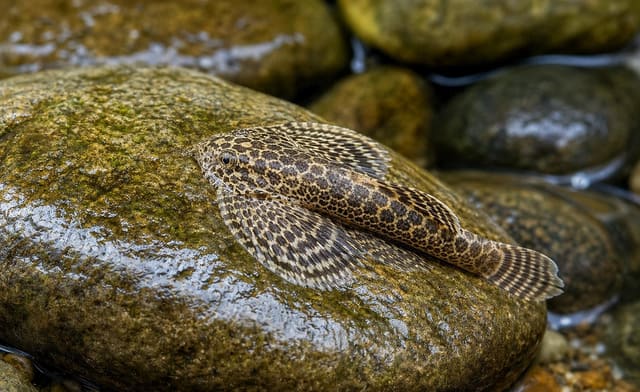
Reticulated Hillstream Loach (Sewellia lineolata)
20–24°C · pH 6–7.5 · 68L
£11.99
Myxocyprinus asiaticus is a non-aggressive Chinese sucker that grows far beyond ordinary home-aquarium scale: FishBase records 68 cm total length, while Seriously Fish uses 90 cm standard length for planning. One purchase supplies one animal; long-term care needs a public installation or one of the very largest private aquaria with cool, spotless, oxygen-rich moving water.
Adult size is the maximum length this species reaches at full maturity (scientific sources). The livestock you receive will be younger and smaller. Product-photo provenance and any image-specific limitations are stated on the listing.
Myxocyprinus asiaticus
Myxocyprinus asiaticus is a non-aggressive Chinese sucker that grows far beyond ordinary home-aquarium scale: FishBase records 68 cm total length, while Seriously Fish uses 90 cm standard length for planning. One purchase supplies one animal; long-term care needs a public installation or one of the very largest private aquaria with cool, spotless, oxygen-rich moving water.
Adult size is the maximum length this species reaches at full maturity (scientific sources). The livestock you receive will be younger and smaller. Product-photo provenance and any image-specific limitations are stated on the listing.
Maintain these water conditions for optimal health and vibrant colors
Myxocyprinus asiaticus is a freshwater, bottom-oriented member of the sucker family Catostomidae. It comes from China’s Yangtze River basin and is also known in the aquarium trade as the Chinese sucker, Chinese banded shark, freshwater batfish and high-fin banded loach. The shark name refers to its high-backed outline rather than its identity: this is a bony freshwater fish, not a true shark.
Size is the decisive issue. FishBase records a maximum of 68 cm total length, while Seriously Fish uses 90 cm standard length as its aquarium-planning reference. Total length includes the tail and standard length does not, so these figures use different measurements and should not be treated as a simple disagreement. Plan around the larger 90 cm standard-length reference rather than juvenile proportions.
| Decision | Planning point |
|---|---|
| Adult accommodation | A public installation or one of the very largest private aquaria |
| Routine temperature | 15.5–21°C |
| Water chemistry | pH 6.0–8.0 and 2–20 dGH |
| Water movement | High oxygen with a decent current |
| Swimming room | Extensive open space around a very large adult fish |
This is a commitment for a purpose-built display, not a standard community aquarium. Seriously Fish reports that import and private ownership are illegal in the UK. Confirm the legal position applying to your intended possession before choosing this animal.
One purchase supplies one animal. A small fish still needs a firm route to accommodation planned around the 68 cm recorded maximum and the 90 cm standard-length planning reference.
Sex is guaranteed only when the selected option explicitly states male or female. This Myxocyprinus asiaticus listing has no sex-guaranteed option. External sexing is almost impossible at the smaller sizes described by Seriously Fish. Adult males may develop intense red flanks when in breeding condition, while females are plainer, but those adult traits do not identify the sex of the fish being selected here.
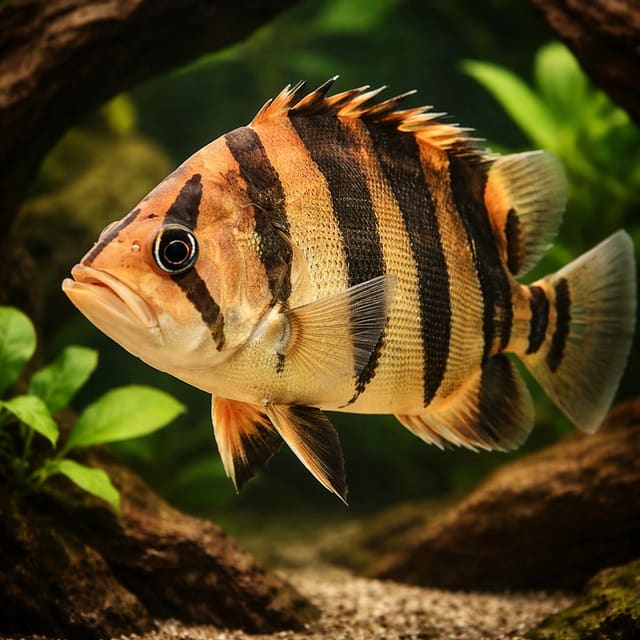
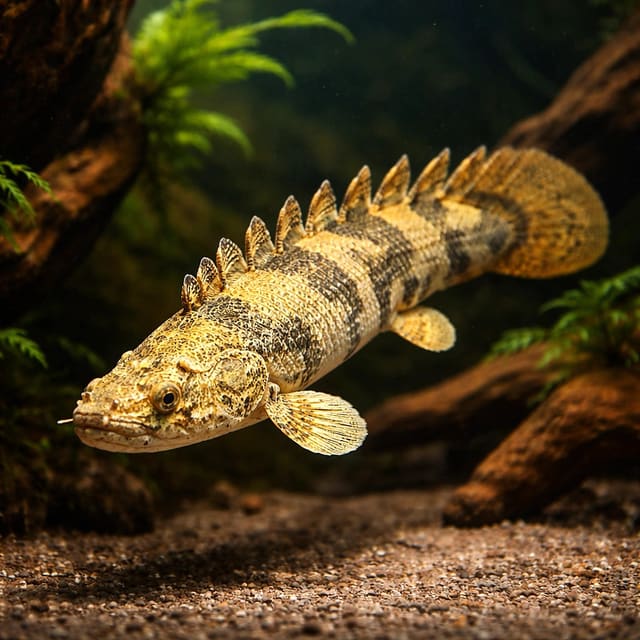
Smaller examples are associated with a tall triangular dorsal fin and prominent banding. Seriously Fish reports that the striped subadult pattern begins to break up at 12–14 inches, after the fish is already several years old. Adult appearance should therefore not be judged from the strongly marked smaller form.
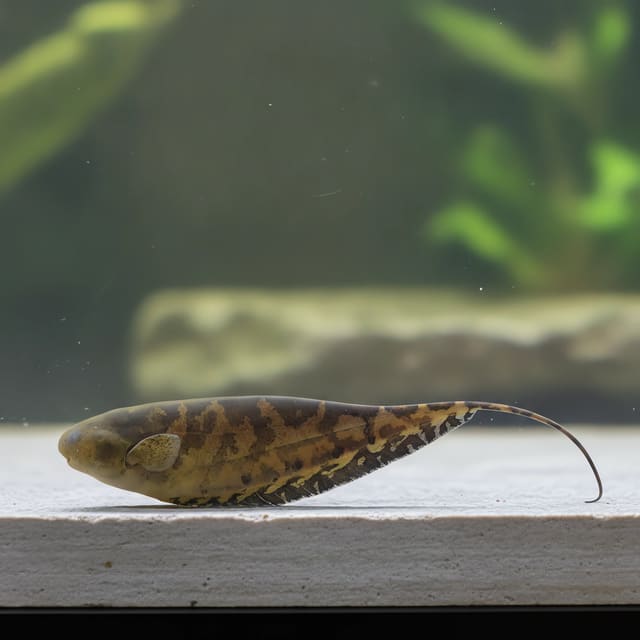
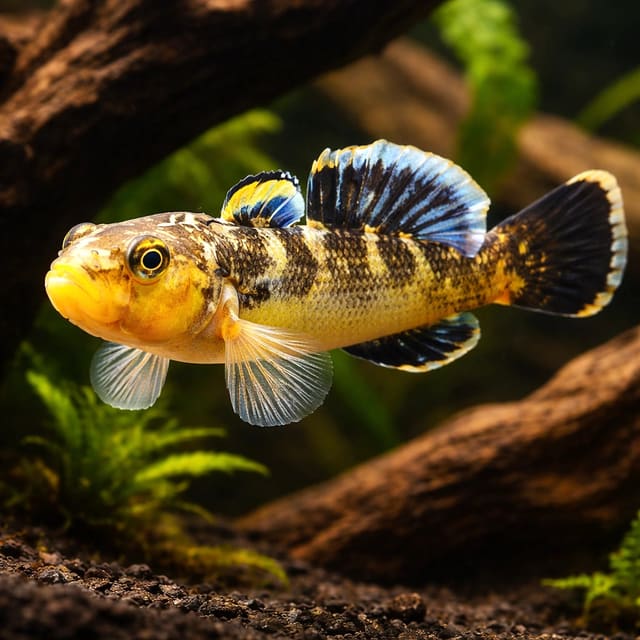
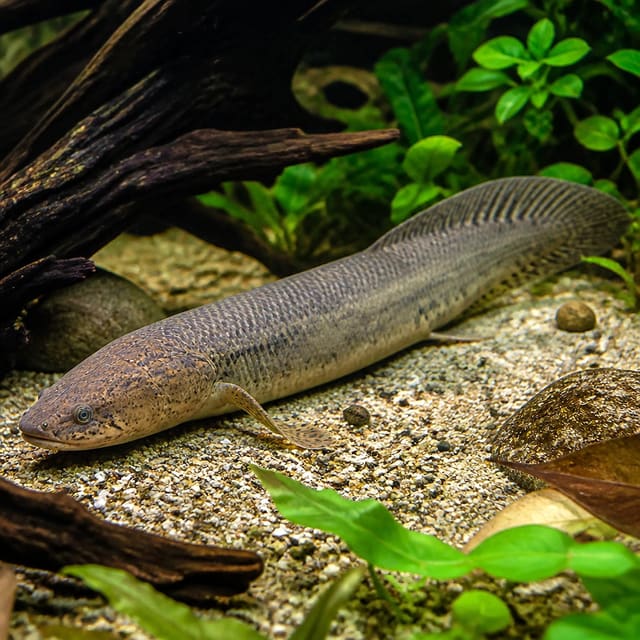
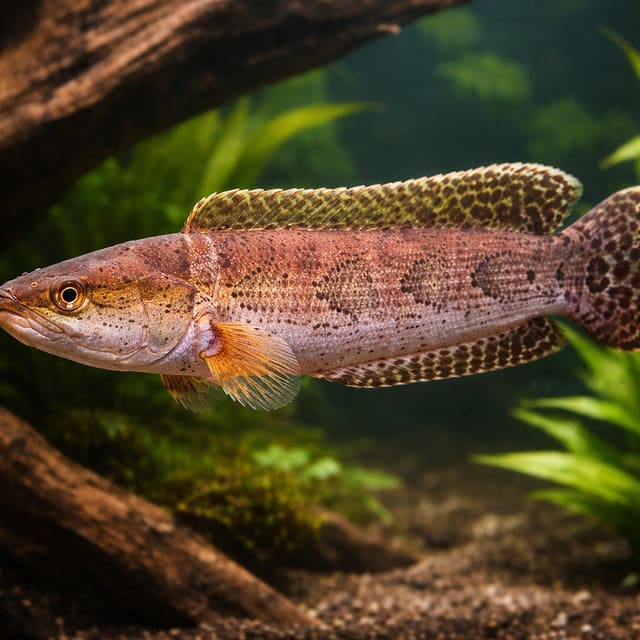
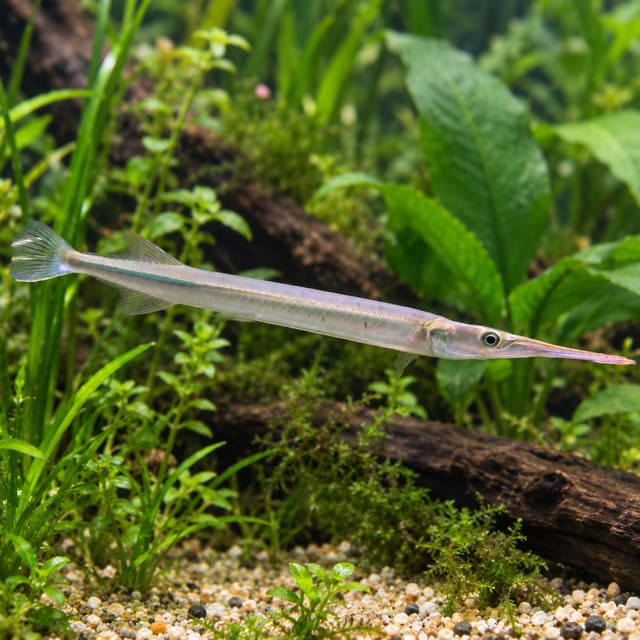
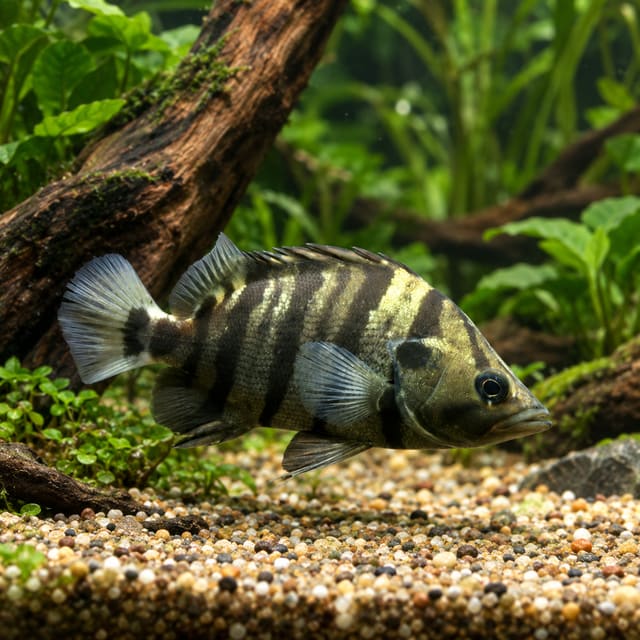
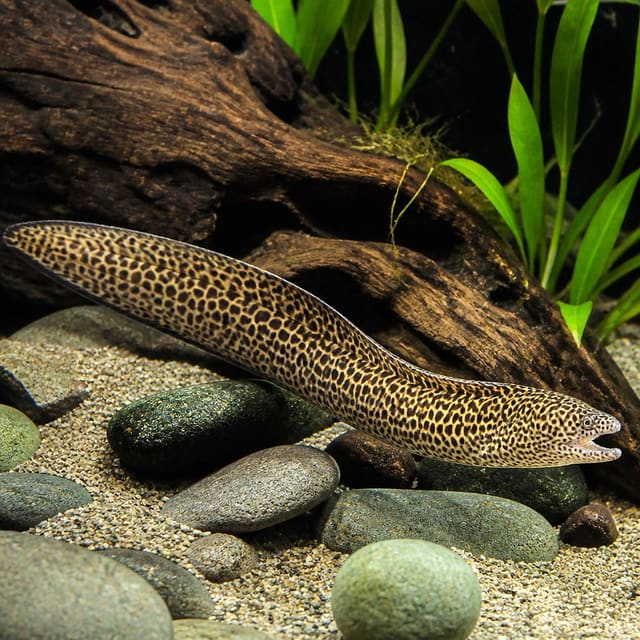
Some gallery images have been digitally enhanced to improve image quality. They show the listed type of animal rather than guaranteeing the exact markings of the individual supplied, so natural colour and pattern can vary.
If this scale is unsuitable, compare different body plans in our loaches and oddballs collection without assuming that similarly shaped fish share the same care.
| Suits | Not suited to |
|---|---|
| Stable aquarium water maintained at 15.5–21°C and pH 6–8 | Water outside 15.5–21°C and pH 6–8 |
| Large, non-aggressive riverine fish in a suitably sized display | Much smaller fish |
Use adult dimensions, activity and waste production to design the system. Seriously Fish limits this species to public installations or the very largest private aquaria. The same guidance prioritises open swimming space and water quality over elaborate decoration. A nominal litre figure cannot replace those physical checks.
Do not treat temporary physical fit as long-term suitability. A small fish may have room to turn and swim in an ordinary aquarium, but that observation says nothing about the system’s ability to accommodate its recorded adult scale. The responsible sequence is to secure the long-term installation first and then decide whether a smaller growing fish can be managed within that plan.
First, can the adult fish move through the complete swimming route without décor taking over the available width? Second, can the filtration and water-change routine keep ammonia and nitrite at zero as waste increases? Third, can the system remain within 15.5–21°C while delivering strong oxygenation and water movement? A failure on any one point means the accommodation plan needs redesigning before the fish is chosen.
An indoor heated pond may accommodate some very large fish under OATA’s broad tankbuster guidance, but this species still needs its own cool temperature range, high oxygen, current and immaculate water. Judge every installation by those conditions rather than by the word aquarium or pond.
Trace the complete maintenance route before committing to permanent construction. There must be practical access to remove solid waste, service every filter, condition replacement water and complete large partial water changes without compromising the fish’s swimming area. Equipment also needs enough reserve capacity for the adult waste load rather than merely producing acceptable readings while the fish is small.
Write down the adult accommodation, filtration and water-change plan as one system. If any stage depends on moving the fish later without a prepared destination, the long-term route is incomplete. A purpose-built display should be capable of meeting the adult needs before growth makes relocation urgent.
Décor is secondary to swimming room and water quality, but a river-style arrangement suits the conditions described for this fish. Seriously Fish recommends variably sized rocks and gravel, larger water-worn boulders and perhaps driftwood branches. Keep those features around a broad open route instead of filling the centre with a dense hardscape.
| Layout feature | Purpose |
|---|---|
| Open central route | Preserves uninterrupted swimming space |
| Rocks and gravel | Creates the recommended river-style substrate |
| Water-worn boulders | Adds structure without replacing open space |
| Driftwood branches | Provides optional natural-looking detail |
| External filters or powerheads | Help create movement and high oxygen conditions |
Position equipment and décor as one design. Flow should travel through the open part of the aquarium rather than striking a wall of ornament and leaving still areas behind it. External filters and powerheads are specifically suggested for producing the required movement, although every device must form part of a system that also provides biological filtration.
When deciding between another ornament and more swimming space, keep the space. When deciding between a decorative feature and access for siphoning waste, keep the maintenance access. This species is intolerant of accumulating organic waste, so a layout that looks convincing but traps debris works against its most important requirement.
Use the full adult plan when positioning permanent structures. Moving large rocks, boulders or branches after the fish has grown will be more difficult than leaving an effective route from the beginning. The best arrangement is visually simple: an open flow path, a practical substrate that can be cleaned, selected river-style features and enough clear access to inspect the fish and service the system.
Look along the route used for siphoning and filter access, not only through the main viewing panel. Gravel behind an inaccessible boulder can collect waste even when the visible foreground appears clean. Rearrange any feature that creates an area you cannot inspect or reach during routine maintenance.
Check the current after each permanent feature is placed. A branch or boulder can redirect flow, so confirm that movement still crosses the open route and that debris is not settling in sheltered pockets. The layout succeeds when swimming space, current and cleaning access work together.
Seriously Fish recommends 15.5–21°C, pH 6.0–8.0 and hardness of 2–20 dGH for routine aquarium care. FishBase records the wild environmental temperature range as 15–28°C, but the narrower 15.5–21°C range is the appropriate long-term aquarium target. Prolonged exposure near the upper end of the wider activity range is discouraged because reports of fungal problems may be associated with excessive aquarium temperatures.
| Value | Routine target |
|---|---|
| Temperature | 15.5–21°C |
| pH | 6.0–8.0 |
| Hardness | 2–20 dGH |
| Ammonia | 0 mg/l |
| Nitrite | 0 mg/l |
Keep temperature within the routine range rather than allowing repeated movement between its extremes. A reading of 21°C is already the upper end of the long-term target; the fact that wild fish are active at higher temperatures is not a reason to run the aquarium at 26–28°C for extended periods.
Test the actual aquarium rather than estimating from local tap-water reputation. Our water chemistry guide explains what the principal readings mean, and the water matcher helps compare measured values with the stated range. Check temperature, pH and hardness together because a suitable temperature does not compensate for chemistry outside pH 6.0–8.0 or 2–20 dGH.
Make changes carefully and measure the result. The goal is a stable point inside all three ranges, not constant adjustment towards a single ideal number. Stability also depends on controlling waste, which is why ammonia, nitrite and nitrate testing belongs beside temperature and chemistry checks.
If temperature is rising but remains inside the range, identify the cause and prevent it continuing towards 21°C rather than waiting for the limit to be crossed. If pH or hardness moves after a water change, compare the aquarium and replacement water before making another adjustment. One measured change should lead to one considered response followed by another test.
Record values with the date and time so trends are visible. A sequence of readings reveals gradual warming or chemistry drift more clearly than an isolated result. Keep temperature, pH, hardness, ammonia, nitrite and nitrate together in the same log because all influence the decision about whether conditions are stable.
This fish needs spotless, highly oxygenated water with a decent level of movement. Seriously Fish describes it as intolerant of accumulated organic waste and recommends external filters, powerheads or similar equipment to create the required conditions. Flow equipment must work alongside a properly established biological filter rather than serving as a substitute for one.
The RSPCA explains that biological filtration houses beneficial bacteria which convert toxic ammonia to toxic nitrite and then to safer nitrate. A very large fish places a substantial demand on that process. OATA notes that several large aquarium filters or even a pond filter may be needed for tankbusters to control water quality and remove solid waste.
Prepare and mature the filter before livestock is introduced. Our first aquarium guide covers filter maturation and the need to establish beneficial bacteria before adding fish. The word tropical in the guide’s title does not change this species’ routine target of 15.5–21°C.
Check flow throughout the open swimming route and inspect filters for blockage. A moving surface alone does not demonstrate that ammonia and nitrite are controlled, while a zero test result alone does not demonstrate that the fish has enough current or oxygen. Meet all three requirements together: biological capacity, waste removal and oxygen-rich movement.
Reduced current may indicate a blockage even when water tests still read zero, so inspect the mechanical path and filter intake before flow deteriorates further. Conversely, strong visible movement does not correct an ammonia or nitrite reading above 0 mg/l. Test the water and examine biological capacity whenever either compound appears.
After cleaning equipment, confirm both the water readings and the restored movement through the swimming route. Avoid changing every component at once, because the biological filter depends on its established bacterial population. Service blocked equipment as needed while preserving the mature media that processes waste.
OATA’s tankbuster guidance is broad group-level advice: test at least weekly, keep ammonia and nitrite at 0 mg/l, and hold nitrate at no more than 20 mg/l above the normal tap-water level. It also strongly recommends making a 25% partial water change at least once every week. This species’ demand for spotless water makes those figures a starting routine rather than a reason to wait for visible dirt.
The nitrate limit is relative to the normal tap reading. If tap water measures 15 mg/l nitrate, the aquarium should not exceed 35 mg/l because 15 plus 20 equals 35. If the tap reading is 5 mg/l, the corresponding ceiling is 25 mg/l. Record both readings so that a changing tap baseline is not mistaken for a change caused entirely by the aquarium.
Calculate the water change from actual operating volume. A 2,000-litre system requires 500 litres for a 25% change, while a 4,000-litre system requires 1,000 litres. These examples only show the maintenance calculation and do not set a suitable aquarium size for this fish.
Watch for altered swimming, surface hanging, unusual bottom sitting, erratic movement, faster or slower gill-cover movement, colour change, hiding, damaged fins or scales, white spots, fluffy growths, body-condition change or reduced feeding. Test water promptly when any of these signs appears. If the fish shows a health change, contact us for guidance after recording the readings and observed behaviour.
If ammonia or nitrite is above 0 mg/l, treat the result as a failure of current waste processing rather than postponing action until the next scheduled test. Check feeding, solid-waste removal, filter flow and biological capacity together. If nitrate approaches the tap baseline plus 20 mg/l before the week ends, reassess the water-change interval and waste load.
Keep a record of the amount changed, conditioner used, filter work and test results. This makes it possible to connect a rising nitrate trend or reduced flow with a specific change in feeding, stocking or maintenance. The routine is effective only when the readings remain inside their limits between water changes.
Myxocyprinus asiaticus is a benthic omnivore, not a strict algae eater. Seriously Fish describes insects, crustaceans, small molluscs, annelids, algae and other vegetable matter in its natural diet. In the aquarium, offer small live or frozen foods such as bloodworm, Daphnia and Artemia alongside good-quality sinking dried food containing additional plant material such as Spirulina.
| Food type | Role |
|---|---|
| Bloodworm | Small live or frozen animal food |
| Daphnia | Small live or frozen animal food |
| Artemia | Small live or frozen animal food |
| Sinking dried food | Reliable bottom-reaching portion |
| Spirulina-containing food | Adds the recommended plant component |
For the schedule, OATA’s tankbuster guidance recommends feeding once a day and giving only what the fish can eat within a few minutes. The instruction to provide daily meals does not mean feeding generously without a limit. Uneaten food breaks down, increases the waste load and works directly against the spotless-water requirement.
Place food where it reaches the bottom-oriented fish and observe the meal. If food remains after a few minutes, remove what can be removed and reduce the next portion. If companions take every item before this fish reaches it, reassess the stocking plan and feeding distribution rather than simply adding a large excess.
Use a varied rotation across the named food types while retaining both animal and vegetable components. Do not describe this fish as primarily herbivorous or expect algae growth in the aquarium to form a complete diet. Its natural feeding biology and aquarium recommendations both support a mixed diet, while the once-daily time limit helps prevent overfeeding.
Watch where the fish begins feeding, whether it reaches both the animal and plant-containing foods, and whether the portion disappears inside the few-minute limit. Reduced interest, difficulty reaching the food or a companion repeatedly taking the whole portion requires investigation rather than automatic extra feeding.
Compare appetite with body condition and water readings. A larger portion is not the correct response when uneaten food is present or ammonia, nitrite or nitrate is rising. Keep the mixed diet, reduce waste and correct access problems so the fish receives the intended food without excess entering the system.
Complete the aquarium checks before the fish arrives. Confirm 15.5–21°C, pH 6.0–8.0 and 2–20 dGH, with ammonia and nitrite at 0 mg/l. Make sure filtration, current and oxygenation are working together and that the open swimming route is clear. Someone must be present to receive live fish rather than leaving the parcel unattended.
These steps follow our delivery and Live Arrival Guarantee policy. For a Live Arrival Guarantee claim, send clear photos or an optional video with your order number and follow the policy page for the complete claim conditions. We strongly recommend an unboxing video when practical: it helps us investigate arrival concerns faster, resolve them with less back-and-forth and understand packing or transit issues so we can reduce recurrence. Video is optional and clear photos are accepted. Never delay necessary animal care to record evidence.
Continue the same observations through the first month while maintaining the weekly test and water-change routine. Add other fish slowly because every increase in livestock and feeding requires the biological filter’s bacterial population to process more waste. A zero reading before arrival is the starting condition; repeated tests show whether that condition is being maintained.
During the first day, concentrate on breathing, swimming and the prepared water conditions rather than altering décor or adding companions. Keep the open route clear and verify that current reaches the area the fish uses. Record anything unusual with the time and the corresponding water readings so later changes can be compared accurately.
By the end of the first week, confirm that feeding access, waste processing and flow remain effective. By the end of the first month, review the complete log for trends in temperature, nitrate, appetite and behaviour. Stable early readings support the existing routine; drift shows which part of the plan needs adjustment before the fish becomes larger.
Seriously Fish describes Myxocyprinus asiaticus as non-aggressive and says it can live with other large riverine species in a suitably sized display. That is a conditional compatibility description, not approval for an ordinary community tank. The enormous adult scale, cool routine temperature, strong flow, high oxygen and need for open swimming space must all suit every animal in the proposed combination.
OATA advises avoiding much smaller fish with tankbusters because their size and, in many cases, large mouths can make mixing unsafe. Apply that broad precaution here without assuming this benthic omnivore is an active predator. Choose companions large enough for the display and assess whether each one can feed, move and remain in good condition under the same regime.
| Screen | Question to answer |
|---|---|
| Adult scale | Can every fish fit at full size without losing open swimming room? |
| Temperature | Can every fish live long term at 15.5–21°C? |
| Chemistry | Do all ranges overlap within pH 6.0–8.0 and 2–20 dGH? |
| Flow and oxygen | Can every animal thrive in strong, oxygen-rich movement? |
| Feeding | Can each fish obtain suitable food without being excluded? |
A species name by itself cannot settle compatibility because the final result depends on aquarium dimensions, adult stocking, filtration and individual behaviour. Avoid much smaller fish, and do not add any animal whose needs fall outside the shared conditions. Ask us for a stocking assessment with the aquarium dimensions, operating volume, measured water values, filtration and the adult identity of every proposed companion.
Passing the planning screen is the beginning of the assessment, not the end. Observe whether every fish can use the swimming route, hold position in the current and reach its own food. Persistent hiding, reduced feeding, altered body condition or displacement from usable space means the combination needs reassessment.
Check water alongside behaviour because additional animals increase waste and feeding. A socially calm combination can still be unsuitable if ammonia, nitrite or nitrate control deteriorates or open space becomes restricted. Judge success by shared conditions and full adult capacity rather than by the absence of obvious aggression alone.
Seriously Fish reports that this species apparently occurs in groups in the wild. Treat that observation as natural behaviour rather than as a fixed aquarium stocking number. Start the accommodation plan with one full-sized fish as the basic welfare unit, then consider another only when the installation can provide the same swimming, water-quality and feeding conditions for every individual.
| Plan | What must be allowed for |
|---|---|
| One fish | The complete adult-size, flow, oxygen, filtration and maintenance commitment still applies |
| More than one | Additional adult swimming space, waste-processing capacity and feeding access for each fish |
Do not describe this fish as naturally solitary or claim that it forms no social bonds. Equally, do not crowd several small fish into temporary accommodation merely because wild fish have been seen in groups. The correct decision rests on whether the final installation remains suitable after every animal reaches adult scale.
Observe whether each individual can use the open route and reach food. If one fish consistently prevents another from feeding or occupying the usable space, the group plan is failing even when aggression is not obvious. Reduced feeding, hiding, body-condition change and altered swimming are practical warning signs.
Apply the same companion screen whether the additional animal is another Myxocyprinus asiaticus or a different large riverine fish. Shared identity does not remove the need for more space and filtration, while different identity adds the need to compare temperature, chemistry, current, oxygen and diet. Keep the plan conditional and leave enough capacity for adult animals rather than judging the combination at juvenile size.
For each additional fish, repeat the complete assessment rather than adding only its body length. The plan must absorb another adult waste load, another feeding route and another claim on open swimming space while preserving 15.5–21°C, pH 6.0–8.0, 2–20 dGH and oxygen-rich movement.
Review the group as the fish grow. A combination that functions while every individual is small may cease to provide fair access or enough space later. Retain enough practical capacity to maintain water quality and separate feeding access throughout growth, not only during the first weeks.
It is a freshwater, demersal Chinese sucker in Catostomidae, also traded as Chinese banded shark, freshwater batfish and high-fin banded loach; it is not a true shark.
One purchase supplies one animal.
No. FishBase records 68 cm total length, while Seriously Fish uses 90 cm standard length as an aquarium-planning reference, so accommodation must be planned around the much larger adult.
It needs a public installation or one of the very largest private aquaria, with extensive open swimming space, spotless water, high dissolved oxygen and a decent current.
It apparently occurs in groups in the wild; plan first for one full-sized fish and consider more only when the installation has adult swimming space, filtration and feeding access for every individual.
Maintain 15.5–21°C, pH 6.0–8.0 and 2–20 dGH, with ammonia and nitrite at 0 mg/l and nitrate no more than 20 mg/l above the normal tap-water level.
Feed once daily with small live or frozen bloodworm, Daphnia or Artemia alongside good-quality sinking dried food containing plant material such as Spirulina, limiting the portion to what is eaten within a few minutes.
If practical, start filming before opening the parcel, with it still sealed and the outer box visible. Open it in one continuous take and show the fish inside the sealed bag, then float the bag for 20–30 minutes and release the fish without pouring bag water into the aquarium.
Consider only large, non-aggressive riverine fish that share 15.5–21°C, pH 6.0–8.0, 2–20 dGH, strong oxygenated flow and the enormous adult space requirement; avoid much smaller fish.
No reviews for this item yet. Bought one? Honest reviews only, good or bad.
What customers say about ordering from us
Easy website plenty of info on fish your buying great to pick a time slot
TRACEY DURRANT · 7 Oct 2026
Got some lovely fish thank you
Kevin Mackie · 7 Oct 2026
Reviews of our shop, collected by Judge.me, an independent third-party review collector. Newest first.