Advanced
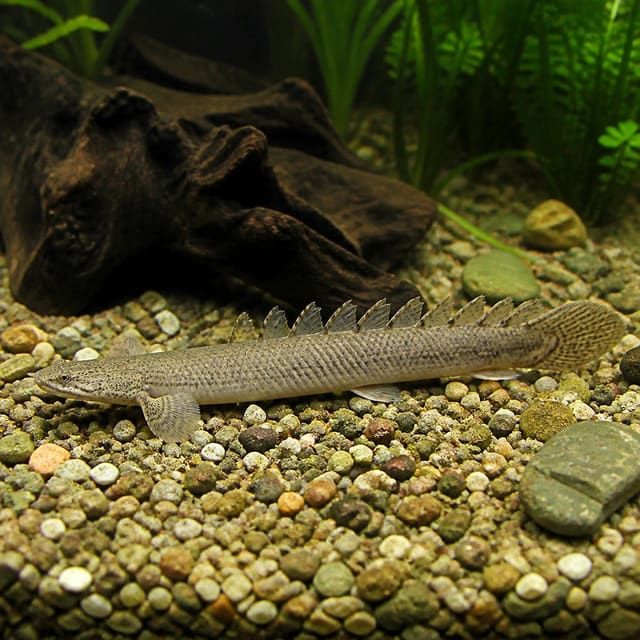
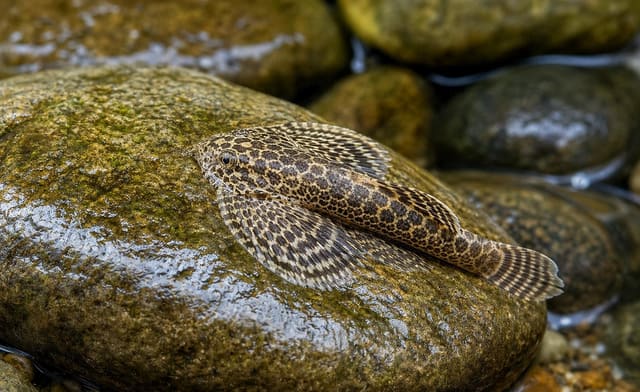
Saddled Bichir (Polypterus endlicherii) – 5–25cm Size Grades
From £17.99Some sizes on sale

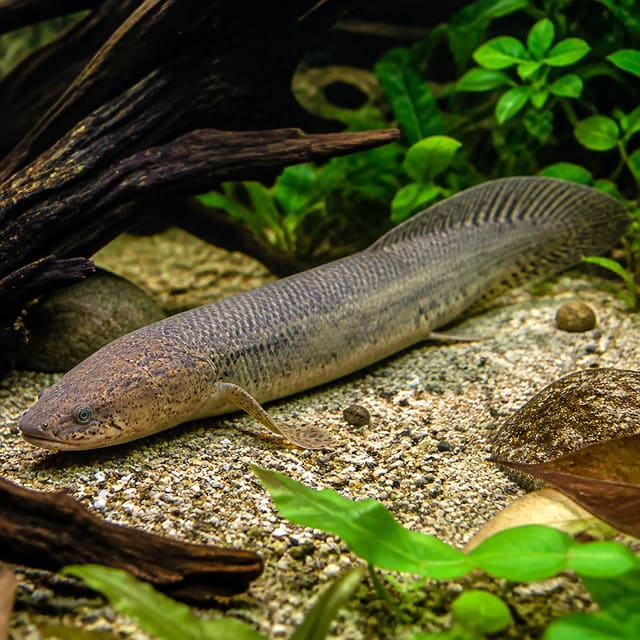
Reedfish / Ropefish (Erpetoichthys calabaricus) is an African nocturnal carnivore supplied as one unsexed live fish, in the 20–30 cm dispatch grade. Plan a spacious mature aquarium with a secure cover, surface-air access, soft substrate and hides. Keep only suitably sized companions and confirm it receives meaty food.
Erpetoichthys calabaricus
Reedfish / Ropefish (Erpetoichthys calabaricus) is an African nocturnal carnivore supplied as one unsexed live fish, in the 20–30 cm dispatch grade. Plan a spacious mature aquarium with a secure cover, surface-air access, soft substrate and hides. Keep only suitably sized companions and confirm it receives meaty food.
Maintain these water conditions for optimal health and vibrant colors
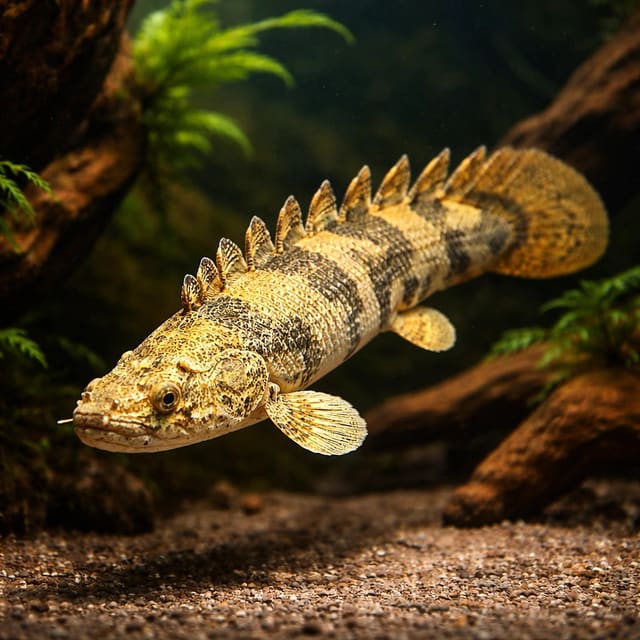
Reedfish, also called Ropefish (Erpetoichthys calabaricus), is a slender, eel-like freshwater fish related to the bichirs. One purchase supplies one live fish. The supplier dispatch grade is 20–30 cm; this is the supplied size band, rather than the adult size. Sex is guaranteed only when the selected option explicitly states male or female. This Reedfish / Ropefish listing has no sex-guaranteed option. Choose it for a mature, spacious aquarium with a securely fitted cover, accessible surface air and a feeding plan that works for a nocturnal carnivore.
The rope-like body is immediately distinctive, but its behaviour is just as interesting. Reedfish moves through cover and along the bottom, searching for food rather than rushing around the open water. FishBase describes slow-flowing rivers and standing waters, apparently associated with reedy habitats. Its coastal African range extends from the Ouémé River in Benin to the Sanaga River in Cameroon. Those habitat details help explain the appeal of planted cover and quieter feeding opportunities in an aquarium; they do not turn a small decorative tank into a suitable home.
FishBase records a maximum of 37 cm standard length for male or unsexed specimens. Standard length excludes the tail fin, so it must not be read as an exact nose-to-tail measurement. Plan the adult accommodation before ordering. The dispatch grade already represents a substantial fish, and its narrow body does not remove the need for floor space, retreat routes and secure equipment openings.
For aquarium husbandry, Seriously Fish gives a 150 × 60 cm base and describes an approximately 540-litre adult setup. That is a useful starting point for planning space, rather than permission to fill the remaining volume with any companions. The finished layout, number of fish, feeding competition and usable floor area all matter. A taller aquarium with much less length or width is not an equivalent choice merely because the volume looks impressive.
Peaceful and safe with small fish are different things. Reedfish is relatively peaceful towards suitably sized companions, but Seriously Fish warns that fish which fit in its mouth cannot be trusted with it. A calm daytime fish can still hunt after lights dim. Equally, a vigorous community may leave it hungry even when food goes into the aquarium regularly. Compatibility therefore depends on both prey size and access to food.
The other essential distinction is between air-breathing ability and freedom from normal aquarium care. Reedfish needs access to atmospheric air, while its aquarium still needs a mature biological filter, clean water and routine testing. It should never be denied access to the surface. A secure cover must allow that access within the aquarium while preventing escape through gaps around cables, pipes and the lid.
This is a rewarding choice for a keeper who enjoys observing less obvious behaviour and managing a deliberate feeding routine. It is less suitable when the aim is a brightly lit, constantly active display of tiny schooling fish, or when a lid cannot be secured. Keep the practical care requirements at the centre of the decision, rather than treating the unusual shape as the whole reason to buy.
The guide below explains the setup, water, feeding and community decisions together. The figures describe adult planning and aquarium husbandry, while the supplied size remains the dispatch grade stated above. Natural colour, pattern, size and maturity vary between live animals, and an individual fish should be assessed through its behaviour and condition after introduction.
For other fish with individual care requirements, browse the loaches and oddball fish collection and assess each species separately.
Start with the adult aquarium rather than a temporary home justified by the fish's slim outline. Seriously Fish recommends a base of 150 × 60 cm and describes about 540 litres for an adult specimen. Measure the available length and width, then sketch where the substrate, wood, plants, filter equipment and feeding areas will sit. The fish needs usable routes through the finished layout, not just a large number on the tank label.
A soft substrate and a densely planted arrangement with driftwood hiding places match the species-specific husbandry guidance. Fine sand offers a straightforward way to provide a soft bottom, provided it can be maintained cleanly. Arrange wood and other furnishings securely, so that servicing the aquarium does not leave loose pieces or unstable cover. Provide sheltered resting areas alongside accessible feeding space, rather than packing the entire floor with decoration.
Consider maintenance while designing the display. You need to reach uneaten food, inspect the fish and clean around cover without dismantling the whole aquarium. A hide that can never be inspected makes appetite and body condition harder to judge. Leave working room around equipment and choose a layout that can be kept stable over time. Useful shelter should make the fish feel secure while still allowing you to notice changes.
A tight-fitting cover is essential: Seriously Fish describes Reedfish as an excellent escape artist. Examine the whole rim, not just the largest lid panel. Openings made for filter pipes, electrical leads and feeding are part of the containment problem. Resolve these before the fish arrives, and check them again after moving equipment. A lid returned slightly out of position after a water change can undermine an otherwise suitable home.
Air access is equally important. Reedfish has an accessory breathing organ and must be able to reach atmospheric air. Keep a clear route from its resting and feeding areas to the surface. Dense planting can provide valuable cover below, but surface obstruction should not prevent the fish coming up to breathe. Do not interpret the need for a tight cover as a reason to fill every space with water or block the surface.
Plan how you will feed and service the aquarium without leaving a broad opening unattended. Have the required tools ready before opening the cover, keep track of the fish and close the opening promptly when finished. The objective is a practical routine you can repeat reliably, including when cleaning hoses or moving a filter. An escape-proof arrangement is only useful if it remains secure during ordinary care.
Seriously Fish's aquarium guidance is 23–30°C, pH 6.0–7.5 and hardness 5–20 dGH. These are the species-profile husbandry ranges used here. Check the actual aquarium temperature with a thermometer and measure pH and hardness before ordering. Choose a stable operating point that also suits every intended companion, rather than repeatedly moving the water towards opposite ends of a range.
FishBase separately records environmental values of 22–28°C, pH 6.0–8.0 and hardness 5–19 dH. Those are records about the species' environment, not instructions to use every extreme as a routine aquarium target. Its freshwater and brackish environment entry is also not a reason to add salt to this freshwater setup. Keep the care plan anchored to the stated aquarium guidance, the fish's condition and measured water.
Changes should be planned and repeatable. Test the replacement water you intend to use, account for any difference from the aquarium and prepare it appropriately before a partial change. The aquarium water-testing guide explains the roles of pH and hardness tests. Water that looks clear still needs testing; appearance alone does not tell you whether ammonia or nitrite is present.
Air breathing does not replace biological filtration. The RSPCA explains that fish release toxic ammonia and that a maintained biological filter supports organisms which convert ammonia to nitrite and then nitrate. Both ammonia and nitrite need to read zero before introducing fish. Continue testing afterwards, because adding livestock and increasing feeding change the amount of waste that the filter must process.
A new aquarium should have a completed maturation plan and verified results before a Reedfish arrives. Allowing a filled tank to stand until it warms is an equipment check, not proof that the filter can handle fish waste. OATA distinguishes settling and equipment checks from filter maturation. Follow a suitable maturation method and its test requirements rather than judging readiness only by elapsed time.
The guide to preparing a tropical aquarium covers the sequence from adult stocking plans to filter readiness. Reedfish still requires its particular floor space, air access and cover within that general process. General freshwater advice helps establish the life-support system; it does not reduce the species' accommodation requirements.
Position the aquarium on a level support appropriate for its filled weight, away from direct sunlight, draughts, heat sources and disturbance, as OATA advises for freshwater tanks. Make sure there is enough access to service the filter and lid. A stable location reduces avoidable changes and makes routine care manageable. Follow the equipment manufacturers' instructions when selecting and installing filtration and heating.
Reedfish is carnivorous. FishBase describes nocturnal feeding on worms, crustaceans and insects, while Seriously Fish recommends meaty live or frozen foods such as earthworms, prawns, mussel and bloodworm. Use an appropriate variety rather than relying on one item simply because it is accepted first. Prepare food so that you can observe the fish taking manageable pieces without leaving excess around its shelters.
Seriously Fish says it will not usually accept dried foods, although some specimens have taken pellets. That makes a pellet-only plan unsuitable as the starting assumption. If an individual later accepts an appropriate prepared food, confirm actual consumption rather than assuming disappearance means the Reedfish ate it. Do not withhold its established suitable foods merely to force a preferred feeding format.
Feed when the aquarium is quieter and the lighting has dimmed, taking account of its nocturnal behaviour. Place food where the fish can reach it without having to compete at the surface. Watch the meal from placement through consumption where possible. A quiet fish concealed among plants can be easy to overlook, so its feeding success deserves a separate check from the appetite of the rest of the community.
Remove uneaten food and adjust the next offering to what you observe. More food is not automatically the solution to feeding competition: it can increase waste while the same fast fish still take everything. A feeding plan should give the Reedfish a realistic opportunity to eat and leave the biological filter a manageable load. There is no supported universal portion or feeding frequency for every individual in this offer.
OATA's broad freshwater guidance recommends regular water checks, including at least weekly testing, with more frequent checks when setting up or adding fish. Its example of partial changes of up to 25% weekly is general guidance; the appropriate routine depends on the aquarium, livestock and measured waste. Record your results so that a gradual change is easier to recognise than when relying on memory.
During a service, check temperature, filter flow, lid fit and the condition of the hiding areas. Clear accumulated food and waste where accessible without disrupting the layout unnecessarily. Plants and cover enrich the aquarium, but they do not remove the need to maintain the filter or monitor water. Re-check any pipe or cable openings after equipment has been moved.
Observe the individual fish as well as the equipment. OATA advises watching for changes in swimming, breathing, appearance, body condition, feeding and temperament. For a Reedfish, compare behaviour with its own established pattern: spending time in cover is not by itself the same thing as a sudden change in appetite or condition. If something changes, test the water and seek competent advice with your observations and results.
Prepare the mature aquarium, subdued lighting and secure cover before the parcel arrives. Have a clear plan for receiving and inspecting the shipment so that live fish are not left unattended. Follow the current arrival instructions for that consignment, including the gradual acclimatisation guidance. Tropical Fish Co's policy describes floating the bag for 20–30 minutes before release and says not to pour transport water into the aquarium.
Keep claim evidence separate from the care procedure. If there is a problem, the Live Arrival Guarantee requires a continuous unboxing video beginning with the sealed parcel and showing the fish still in its sealed bag. Contact the store the same day with the order number and video, following the current policy. Recording the required evidence should not be mistaken for leaving the fish in transport indefinitely.
After introduction, restore the secure lid and allow the fish to find cover. Observe that it can reach surface air and that companions do not harass it. Check meals deliberately as the routine becomes established, and continue water testing while the filter responds to the addition. Do not expect a new nocturnal fish to display continuously under bright lights, but investigate persistent failure to feed or deteriorating condition with appropriate advice.
The Water Parameter Matcher can help compare measured water with care guidance. Use it alongside the complete species needs and the actual aquarium plan.
The central rule is simple: do not keep Reedfish with fish it can fit in its mouth. Seriously Fish describes it as relatively peaceful otherwise, but that does not protect a small neighbour. Judge the adult community and the current size difference, not just a label such as peaceful, community or African. A fish can be unsuitable as prey even when neither species fights during daylight.
Look at the aquarium as it will develop. A small companion does not become safe merely because it is intended to grow larger later, and a juvenile predator does not remain the same size. Plan around the Reedfish's recorded adult length and the feeding space available to every animal. If you cannot keep incompatible sizes apart, choose a different community rather than relying on supervision to prevent nocturnal predation.
Do not use a successful meal as evidence that small tank mates are now safe. The predator's diet should be met properly, but feeding does not cancel the species-specific warning. Tiny fish are poor companions for this setup. Evaluate any proposed animal with the same mouth-size rule, instead of assuming that an unusual appearance or a different swimming level makes it exempt.
Seriously Fish cautions against very vigorous species because the Reedfish may be outcompeted at feeding time. This is a conditional risk which depends on the actual community and access to food. Watch how meals work in practice. If faster fish take every portion before it reaches the Reedfish, an apparently peaceful aquarium still fails to meet its needs.
Compare feeding times, feeding locations and the ability to observe consumption. A fish that eats eagerly in open water may be easy to monitor, while a Reedfish in planted cover needs more deliberate attention. Offer suitable food where it can reach it and confirm it is taken. If the rest of the community repeatedly dominates meals, reassess that community rather than simply increasing the total food.
Water requirements must overlap as well. The aquarium husbandry range given here cannot be applied to a companion without checking that species separately. Consider temperature, pH, hardness, current, adult size, temperament and shelter use together. A shared origin or broad catalogue category is not a complete compatibility assessment, and a sufficiently large fish can still be too boisterous or aggressive.
Seriously Fish names Synodontis species, larger characins and cichlids such as Severum, Angelfish and some Tilapia among possible companions. These are examples from the profile, not blanket endorsements of every member of those groups. Individual species differ in adult size, water needs and behaviour, and the aquarium must support all of them together. Re-check the exact animal you intend to add.
For example, the phrase larger characins does not include every tetra merely because it belongs to that wider group. Likewise, some Tilapia is deliberately limited wording, not a recommendation for any fish sold under that name. Assess prey size and competition first, then the remaining environmental requirements. A named group gives you a research direction; it does not replace a stocking plan.
Keep a practical separation option available when assembling any mixed community. Observe the fish beyond the first introduction and include feeding-time behaviour in the assessment. Changes as fish settle or grow can reveal problems that were not obvious at purchase. If harassment, persistent competition or injury appears, obtain advice and resolve the combination promptly rather than waiting for it to become normal.
Seriously Fish states that Reedfish can be maintained in small groups because they are not particularly territorial. Plan a small group around the aquarium and its occupants rather than an arbitrary minimum shoal count. One fish is the retail unit; buying additional fish is a separate husbandry decision involving floor space, shelter, filtration and food access.
A group plan should give each fish access to suitable cover and meals. Do not assume that adding companions solves every issue for a shy or newly introduced fish. First confirm water quality, secure accommodation, surface access and appropriate feeding. When considering more than one Reedfish, evaluate the complete adult setup rather than multiplying a guessed litres-per-fish allowance.
Observation is especially useful when several slender fish share the same hiding area. Check the condition and appetite of each individual rather than concluding that all are fed because one is visible eating. A well-planned small group can be an interesting display, but numbers should follow the actual space and management capacity. The absence of strong territoriality is only one part of that decision.
Reedfish makes most sense in a calm, covered aquarium where the keeper enjoys watching activity around cover and during quieter periods. A brightly lit display stocked to keep every part of the water busy can make its needs harder to meet. Build the community around the fish's feeding opportunity and retreats, while leaving a clear route to the surface.
If the goal is a small-fish planted community, choose livestock suited to that goal rather than adding a predator for novelty. If the goal is a spacious oddball aquarium, plan the different adults carefully and avoid filling every gap with an extra species. There is no need to force a related-product suggestion when another animal brings a different set of requirements.
FishBase records Erpetoichthys calabaricus at 37 cm standard length for male or unsexed specimens. Standard length excludes the tail fin; this is an adult record, not the dispatch grade or an exact full-body measurement.
Seriously Fish gives a 150 × 60 cm base and describes an approximately 540-litre adult setup. Plan usable floor space, soft substrate, hiding places, a secure cover and access to surface air; litres alone do not settle the stocking decision.
It can be maintained in small groups. Choose group size according to adult space, cover, filtration and feeding access, and monitor every individual.
Its secure-cover requirement, air access, adult accommodation and carnivorous feeding need careful preparation. It suits a keeper able to manage those needs in a mature aquarium; an ordinary small starter tank is not an appropriate shortcut.
It takes suitable meaty live or frozen foods, including earthworms, prawns, mussel and bloodworm in Seriously Fish's guidance. Dried food is not usually accepted, though some individuals take pellets. Confirm actual consumption in a calm feeding period.
Seriously Fish's aquarium guidance is 23–30°C, pH 6.0–7.5 and hardness 5–20 dGH. These are husbandry ranges; keep conditions stable and compatible with the other intended fish rather than treating wild environmental extremes as targets.
Reedfish is relatively peaceful with suitably sized companions, but fish that fit in its mouth are at risk of being eaten. Very vigorous companions may outcompete it for food, so assess both prey size and feeding access.
Seriously Fish gives Synodontis species, larger characins and selected cichlids such as Severum, Angelfish and some Tilapia as examples. Each exact species still needs its adult size, water, temperament and feeding compatibility checked.
Tropical Fish Co hand-packs fish with pure oxygen in an insulated poly box, using a heat pack when weather calls for it, and sends them with a licensed live-animal courier. Read the current delivery policy, be present to receive the parcel and inspect it the same day. For a Live Arrival Guarantee claim, contact the store that day with your order number and a continuous video showing the sealed parcel being opened and the fish still in the sealed bag.
FishBase: Erpetoichthys calabaricus supports the identity, African distribution, recorded length and natural-history information. Its environmental ranges describe the species' recorded environment, rather than a complete aquarium recipe. The length used here is the 37 cm standard-length record.
Seriously Fish: Reedfish husbandry supplies the aquarium footprint, water guidance, diet and compatibility discussion. Its aquarium guidance is used for the practical care range here, while its much larger headline length is not used as the adult-size record. The footprint and adult setup are planning guidance, not a universal stocking allowance.
OATA freshwater aquarium care and RSPCA aquarium environment guidance cover general filtration, water testing, maturation and maintenance. These are broad welfare resources rather than evidence for Reedfish-specific water optima, group numbers or treatment instructions.
For packing, receiving a parcel and the conditions of the Live Arrival Guarantee, use Tropical Fish Co's delivery policy. That policy is the appropriate source for delivery arrangements and claim evidence. If you need help assessing an aquarium, provide its dimensions, measured water values, existing livestock and feeding plan so advice can address the actual setup.
No reviews for this item yet. Bought one? Honest reviews only, good or bad.
What customers say about ordering from us
I have a small group of long finned mountain minnows. So was delighted to be able to order ten of this variety to increase the genetics in my tank . The ones I recieved are healthy but it’s to early to give a verdict on wether they are of a long finned type since they are small currently.
Gordon Walker · 23 Sept 2026
100% success travel and "installation". Pleased with quality of purchase. The Siamese fighter a bit "shy" so have not yet seen him at his best yet but looking good. Happy customer. GG
George E Garratt · 21 Sept 2026
Reviews of our shop, collected by Judge.me, an independent third-party review collector. Newest first.