Moderate
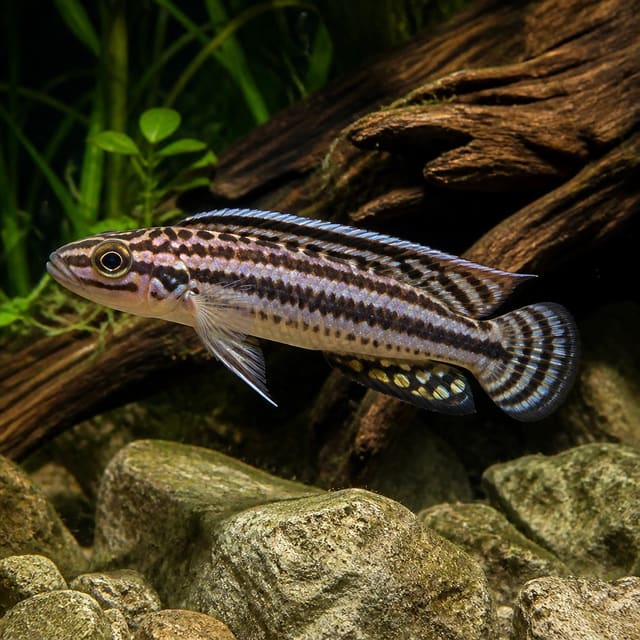
Julidochromis regani Zambia
24–27°C · pH 7.8–9 · 150L
£15.99

Karilani Herring Cichlid (Cyprichromis microlepidotus) is a peaceful, open-water Lake Tanganyika cichlid for a covered specialist aquarium. One fish is supplied per purchase at the 4–5 cm dispatch grade; sex is not guaranteed. Plan for an 8–10+ group and generous uncluttered swimming space.
Adult size is the maximum length this species reaches at full maturity (scientific sources). The livestock you receive will be younger and smaller. Product-photo provenance and any image-specific limitations are stated on the listing.
Cyprichromis microlepidotus
Shoaling fish: kept in a group they feel safer, stay calmer and show their best colour.
Karilani Herring Cichlid (Cyprichromis microlepidotus) is a peaceful, open-water Lake Tanganyika cichlid for a covered specialist aquarium. One fish is supplied per purchase at the 4–5 cm dispatch grade; sex is not guaranteed. Plan for an 8–10+ group and generous uncluttered swimming space.
Adult size is the maximum length this species reaches at full maturity (scientific sources). The livestock you receive will be younger and smaller. Product-photo provenance and any image-specific limitations are stated on the listing.
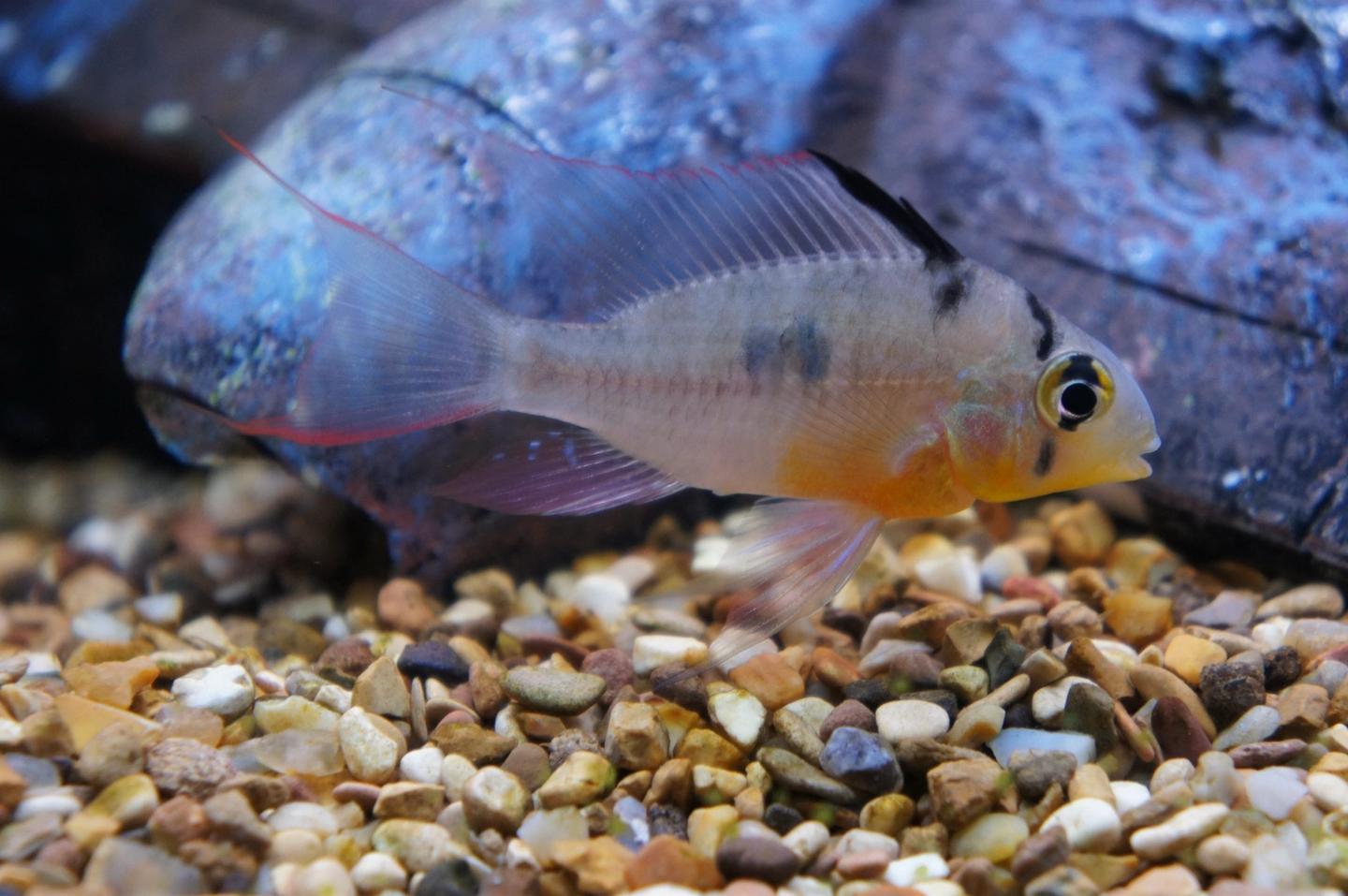
Cichlids are a family of roughly 1,800 accepted species, not one care type. Before buying, identify the exact species and source, then compare adult measurement, usable tank dimensions, social system, territory, tested water, diet and an exit plan. No family-wide minimum tank, water range or tank-mate list is safe.
Maintain these water conditions for optimal health and vibrant colors
Karilani Herring Cichlid (Cyprichromis microlepidotus) brings movement to the open water of a Lake Tanganyika aquarium. Unlike the cichlids that spend most of the day guarding a cave or scraping over rocks, this species is built around life in the water column. A settled group cruises above the rockwork, feeding on small suspended foods and using the height and length of the aquarium rather than clinging to one patch of substrate.
One purchase supplies one live fish at the supplier's 4–5 cm dispatch grade. That is the size sent, not the adult size. The species reaches a recorded maximum of 11 cm total length in FishBase, while the specialist aquarium profile reports 110 mm standard length; the two measurements are taken to different endpoints and should not be casually combined. No male or female choice is offered, so colour or a gallery view must not be used to promise sex.
The Karilani name is a locality or trade-form reference within C. microlepidotus. Colour, tail pattern and maturity can differ among individuals, and males can become more colourful than females. Keep one locality form together rather than mixing geographical forms: the specialist account warns that forms can interbreed, losing the distinct character that made them worth keeping.
| Suits | Needs another plan |
|---|---|
| A mature Lake Tanganyika system with hard, alkaline water | A new, biologically immature aquarium |
| A keeper able to build an 8–10 or larger social group | A plan centred on one solitary specimen |
| A long, covered aquarium with open upper water | A low, cramped tank filled to the surface with rock |
| Peaceful Tanganyikan companions using other zones | Mbuna, boisterous feeders or persistent pursuers |
| Several small feeds suited to a small mouth | One heavy meal or food too large to take comfortably |
The species-specific aquarium profile recommends a base of 120 × 45 cm and about 243 litres, with a group of at least 8–10. Treat those as the starting point for planning, not a promise that every tank of that nominal volume will work. A long tank with clear upper-water lanes is more useful than a tall decorative tank with little horizontal room. More fish, more males or a mixed community increases the space and filtration required.
This is an absorbing specialist fish rather than a shortcut to a generic “African cichlid” display. The reward comes from building around its open-water behaviour: a calm shoal, flashes of male display and a layout that leaves the animals room to move. If that is the aquarium you want to create, the Karilani Herring Cichlid can become the defining species rather than an afterthought above the rocks.
Start with the water you can maintain, the adult group you intend to keep and the aquarium footprint available. These choices are connected. A keeper with naturally hard, alkaline water and a long covered tank is solving a very different problem from someone trying to convert a small soft-water community aquarium. Confirm the whole plan before buying the first fish, because a social species should not be left indefinitely as a lone specimen while a suitable home is worked out.
Next, decide whether this will be a species-led display or a Tanganyika community. A species-led aquarium can devote almost all of its upper space and feeding pattern to the herring cichlids. A community needs separate lower territories, extra biological capacity and a feeding method that reaches the quieter open-water group. Both can succeed, but the second uses space faster than the litre figure suggests.
Finally, allow for ordinary variation. An unsexed young fish may mature into a more colourful male or a subtler female, and individuals do not all grow or settle at the same rate. The correct response is not to promise a particular appearance. It is to provide enough companions, swimming distance and observation time for the group that actually develops.
Sex is guaranteed only when the selected option explicitly states male or female. This Karilani Herring Cichlid listing has no sex-guaranteed option.
Cyprichromis microlepidotus is pelagic by aquarium-cichlid standards. FishBase describes it as gregarious and occurring off rocky slopes in quiet, deep water, while the specialist aquarium profile places it in the upper part of the tank. Translate that into a layout with structure below and swimming room above. Rock piles can give lower-dwelling companions boundaries and refuge, but they should not form a wall across the entire water column.
A 120 × 45 cm base and roughly 243 litres is the species-profile starting point. Height is genuinely useful because the fish forms three-dimensional social and breeding spaces, yet length remains vital for cruising and for a subordinate fish to move away from a display. Leave the middle and upper portions visually open. Secure every rock before filling the tank; rocks resting on loose sand can shift if lower-zone cichlids excavate around them.
Use a fitted lid or cover. The specialist profile notes that the fish can jump when excited. Close cable gaps and feeding openings that a startled fish could find, while preserving safe gas exchange. A cover is especially important during netting, maintenance, introductions and sudden room activity, when an otherwise settled group may accelerate sharply.
A sand substrate works well with a Tanganyika layout, but the herring cichlids themselves need the space above it more than a particular grain. Plants are optional. If you use species that tolerate mineral-rich alkaline water, attach them around the lower structure and keep the central swimming lane clear. The visual test is simple: from one end of the aquarium, can the group travel through the upper half without repeatedly squeezing around wood, tall stone or dense planting?
For routine aquarium care, the species profile gives 24–27 °C, pH 7.8–9.0 and 10–25 dGH. FishBase records a narrower wild environmental range of 23–25 °C, pH 7.5–8.5 and 10–18 dH. Use the aquarium profile for the managed home range while recognising that both point in the same direction: warm, hard, alkaline water without abrupt swings.
Test the source water before choosing the fish. If your tap water is naturally soft and acidic, repeatedly chasing a high pH with small doses of buffer can produce instability. A repeatable preparation method is safer than a dramatic number on one test. Measure temperature, pH and hardness in the aquarium and in prepared replacement water, then use our aquarium water-parameter guide to understand what each result means. The water matcher can help compare measured values with the stated range.
Ammonia and nitrite should remain at zero in a functioning aquarium. A biological filter provides surfaces for the bacteria that convert toxic waste, which is why the RSPCA stresses that fish should not be kept without a properly set-up and maintained filter. Nitrate management depends on feeding, stocking, plant uptake and water changes; watch the direction of the readings rather than waiting for an obvious behavioural problem.
Stability does not mean avoiding all maintenance. It means making changes in a controlled way. Prepare replacement water with conditioner where needed, match it sensibly for temperature and mineral content, and change enough water to keep waste under control without turning every maintenance day into a chemistry shock. Record results for several weeks. A short log exposes a slow pH decline or rising nitrate far earlier than memory does.
The specialist profile uses a turnover example of four to five times the aquarium volume per hour for a tank around 243 litres. That example equates to a filter rating of roughly 970–1,215 litres per hour, but ratings are measured under ideal conditions. Media, head height and dirty hoses reduce real flow. Choose equipment with sensible capacity, then judge the aquarium by waste capture, surface movement and the fish's behaviour rather than the label alone.
Distribute the return so it moves the surface and avoids a single harsh jet through the shoal's main route. The natural notes refer to quiet waters, so “well oxygenated” should not become a torrent. Broad circulation is usually more useful than one narrow blast. Check for dead areas behind rockwork where debris collects, and siphon those areas during maintenance.
Never replace or sterilise all biological media at once. If mechanical media needs rinsing, use removed aquarium water rather than running it under the tap; chlorine or chloramine can harm the filter bacteria. Check intakes for obstruction and keep a maintenance rhythm appropriate to the load. A declining flow rate is information: find the restriction instead of compensating by pointing an ever-stronger return at the fish.
Warm water carries less dissolved oxygen than cool water, and a social group creates a meaningful biological load. Surface agitation, clean filtration and conservative feeding work together. Rapid gill movement, gathering at the surface or an abrupt loss of appetite demands an immediate water-quality and equipment check, not a guess at medication.
FishBase records drifting plankton feeding and copepods in a specimen's stomach. The specialist profile describes an adapted zooplankton feeder with a small mouth. Food therefore needs to be appropriately small and presented where the group can take it in the water column. Oversized pellets falling straight into the rocks do not match the fish's feeding style.
Use a varied rotation of fine, good-quality dried food and suitably small frozen or live foods such as brine shrimp and daphnia. Bloodworm is also named by the species profile. Thaw frozen food appropriately and offer only what the group can take cleanly. Variety matters more than chasing a magical ingredient: the practical aim is complete nutrition in pieces every fish can swallow.
The specialist profile recommends several feeds a day rather than one large meal because the species grazes through the day in nature. Split the daily amount into modest portions. Watch the whole shoal for a minute after feeding. Confident fish should move towards suspended particles; a fish repeatedly missing meals, hanging apart or being displaced needs attention before it loses condition.
Feed distribution matters in a mixed community. A large predatory or boisterous cichlid may clear the food before Cyprichromis can feed. Spread small food across more than one point in the upper water, but keep portions controlled to prevent uneaten food settling among the rocks. Adjust the technique, not simply the quantity, when one area of the shoal is being excluded.
The species profile says not to consider fewer than 8–10 fish and notes that larger groups are better. This is a social requirement, not a pack size: this listing supplies one fish per purchase. Plan the intended total group before ordering, and make sure the aquarium can support the adult biomass and social space rather than only the smaller dispatch size.
Groups allow attention to be spread and make the open-water behaviour visible. Multiple males may develop fuller colour in larger groups, while females and subordinate males need room to move through the aquarium without being pinned against a wall. There is no sex guarantee on this listing, so do not design a precise ratio around an assumed sex from juvenile colour. Work with the group that matures and be prepared to reassess space if one fish becomes persistently targeted.
Additions to an established group deserve care. Differences in size, confidence and social familiarity can affect the first days. Observe from a distance as well as at feeding time: look for fish using the full water column, relaxed fins, even respiration and access to food. Persistent hiding, clamped fins or isolation from the shoal is a prompt to test water and review social pressure immediately.
Imagine a 120 × 45 × 45 cm aquarium, the dimensions used in the species profile's approximate 243-litre example. Put stable rockwork across the lower rear and ends, leaving a broad channel through the middle and upper water. Keep the tallest pieces below the normal cruising band. Add a fitted lid, a return that moves the surface across the tank and enough mechanical access that debris can be removed without dismantling the whole layout.
For filtration, the profile's four-to-five-times turnover example points to roughly 970–1,215 litres per hour on that nominal volume. That is a planning calculation, not a guarantee of actual flow. Allow for resistance through media and pipework, then watch the result. The desired outcome is even circulation, good surface movement and clear water without forcing the shoal to hold position against a jet.
Stock the Cyprichromis group as the central commitment. Eight to ten is the species-profile minimum, not the maximum a tank may need to support. If lower-zone companions are added, map their rock or shell areas before purchase and keep the upper route intact. The filter, maintenance schedule and feeding technique must support every adult inhabitant, not merely the first juveniles introduced.
At feeding time, release small food across the upper flow so it remains available long enough for the shoal to take it. Observe which fish arrives late and which area collects waste. That information can guide small changes to return direction or feeding position without rebuilding the aquarium. The plan is successful when the fish can cruise, feed and move away from a display without repeatedly meeting a barrier.
FishBase identifies the species as a maternal mouthbrooder and typical lek breeder. The specialist profile describes males holding three-dimensional territories in open water and displaying to passing females. Spawning occurs in mid-water, after which the female carries the eggs in her mouth. This biology explains why height, open volume and a settled group matter even when breeding is not the keeper's goal.
A mouthbrooding female may feed less while holding. Do not turn that single observation into a diagnosis without checking the whole picture: breathing, body condition, water tests and the behaviour of the group still matter. Give her routes away from displaying males and avoid constant disturbance. The source recommends a species aquarium when the aim is to raise a good number of fry, because a general community creates more competition and risk.
This listing does not promise a pair or a selected sex. Building around a supposed male-to-female ratio from juvenile appearance is therefore unreliable. Start with a suitably sized social group, allow the fish to mature and treat any successful courtship as behaviour emerging from good husbandry rather than something owed by an individual purchase.
Prepare the aquarium before delivery. It should be biologically mature, within the intended hard-water range and free of detectable ammonia or nitrite. If this is a first system, use the first tropical aquarium guide to plan cycling and testing well before livestock is due.
The complete, current terms are on the delivery and Live Arrival Guarantee page. The policy is claim evidence as well as practical preparation: begin the video while the parcel is still sealed, not after a bag has been opened or floated.
Healthy management is built from trends. Each day, note the group's position in the tank, breathing, appetite and how attention is distributed. Each week, compare water tests and check filter flow, heater operation, the cover and rock stability. During water changes, remove trapped debris while keeping the upper-water route undisturbed.
A single shy moment is less informative than a pattern. A fish that repeatedly separates from the shoal, darkens, breathes faster or loses feeding access is telling you that something has changed. Start with temperature, ammonia, nitrite, pH, equipment and social interactions. Those checks are fast, objective and often reveal the cause earlier than visual diagnosis alone.
During the first days, keep the routine calm and consistent. Confirm the heater and filter are operating, then observe whether the new fish holds itself upright, breathes evenly and begins to use the same water zone as the established group. Offer a modest amount of familiar small food and remove what is not taken. A heavy “welcome” meal only makes water-quality interpretation harder.
Compare behaviour at similar times each day. A fish may be cautious immediately after transfer, but the direction should be towards joining the shoal and feeding. If the direction is wrong, test the water and review pursuit or food competition promptly. Early action can be as simple as correcting equipment flow, restoring stable water or separating an unsuitable aggressor.
By the second week, establish the ordinary maintenance baseline: test results, flow rate, feeding response and the areas where debris gathers. Those notes make later changes easier to spot. They also help distinguish a genuine decline from normal differences between a bright displaying male, a subdued female and a newly settled juvenile.
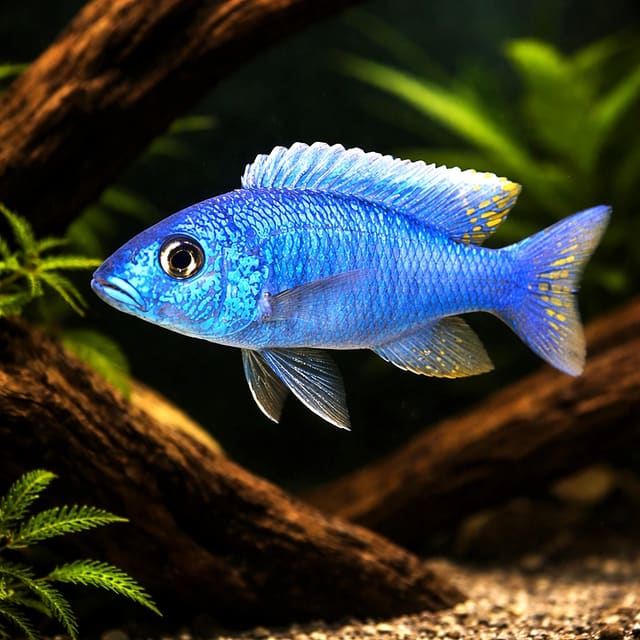
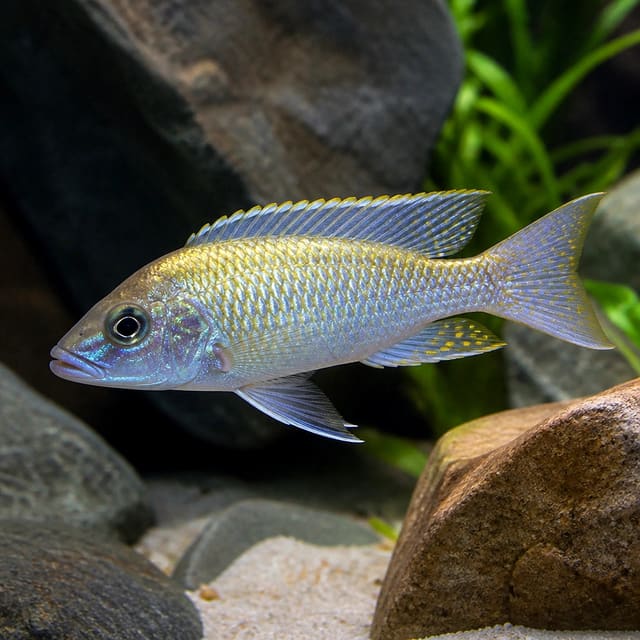
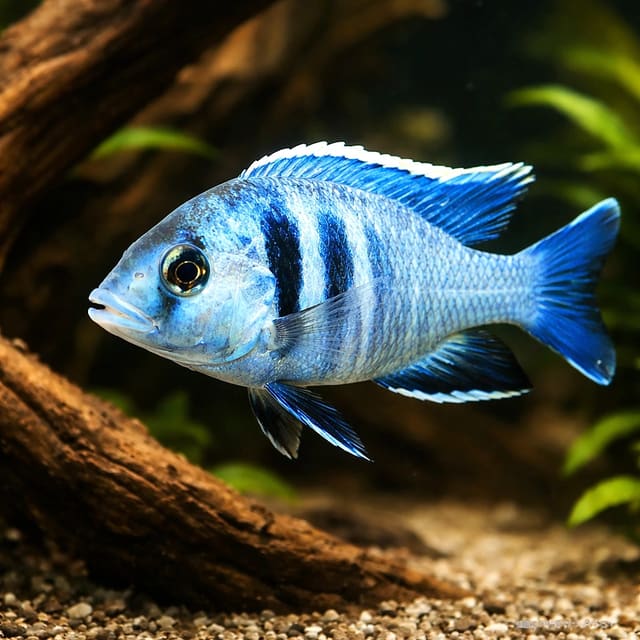
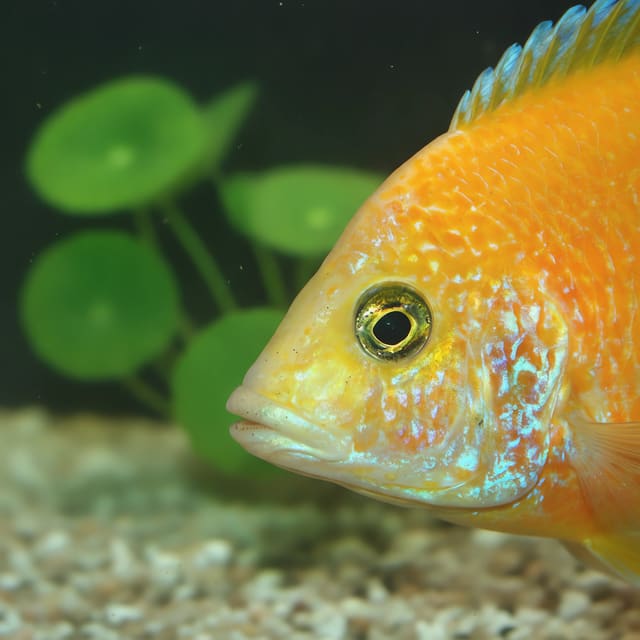
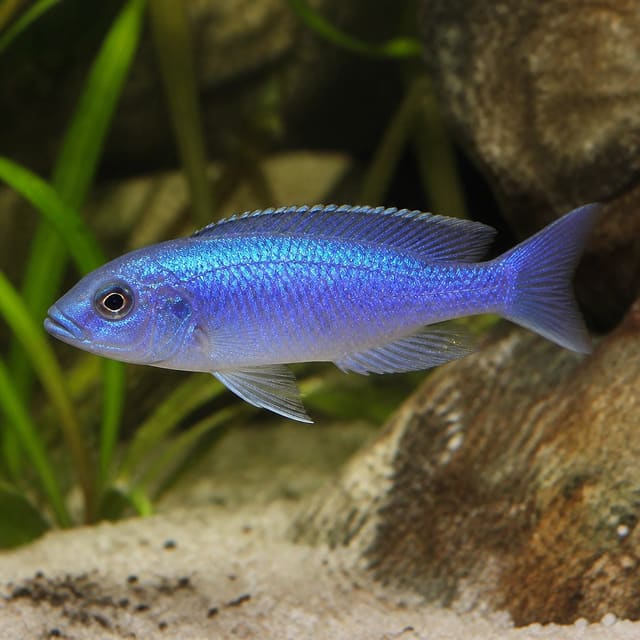
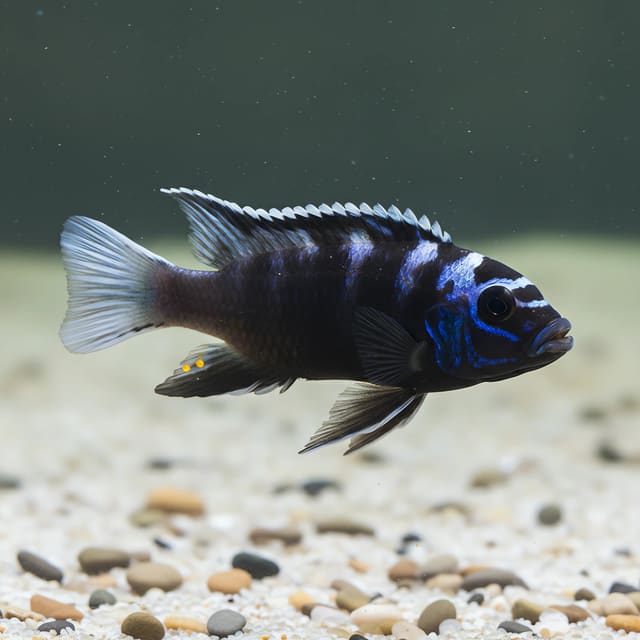
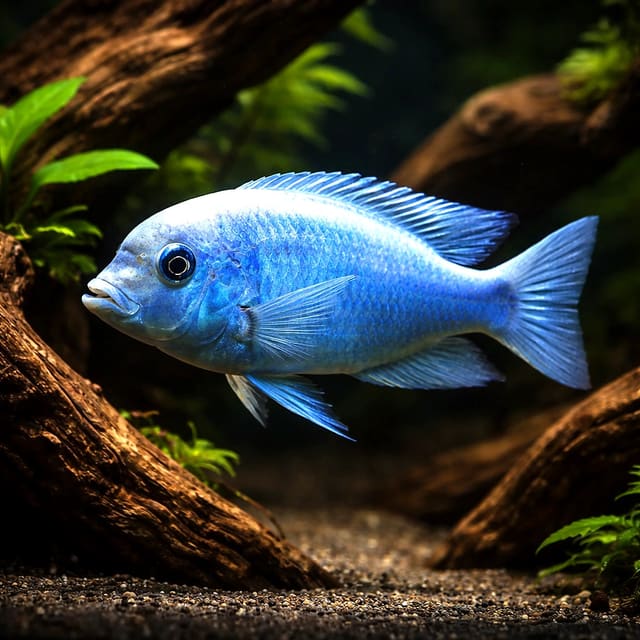
Gallery images have been digitally enhanced to improve image quality. Natural colour, pattern, size and maturity can vary between live animals.
The Karilani Herring Cichlid is placid compared with many African cichlids, but “peaceful” does not make it a general community fish. Its hard, alkaline water, social group and open-water feeding style all narrow the sensible choices. The species profile specifically warns that it competes poorly with rowdy fish and should not be housed with Mbuna.
Look first at peaceful Lake Tanganyika species that use different parts of the aquarium. The specialist account names less aggressive Julidochromis or Altolamprologus and the various shell-dwelling species as examples. Those are conditional examples, not an automatic shopping list. Each candidate still needs compatible adult size, temperament, diet, water values and enough territory in the actual aquarium.
Zone planning reduces direct competition, but it does not erase territorial behaviour. A rock fish that continually launches into the upper water can still stress the shoal. Likewise, a shell colony needs floor space that the rockwork and maintenance routine will not repeatedly disturb.
Avoid Mbuna and other forceful, highly competitive cichlids. Their activity and feeding pressure can keep the herring cichlids from feeding normally even before physical damage is visible. Avoid companions that demand soft, acidic water; matching temperature alone is not enough when long-term mineral and pH requirements differ.
Do not mix geographical forms of C. microlepidotus. The specialist profile notes yellow- and blue-tailed forms and warns that different forms may interbreed. Keeping the Karilani form distinct protects the lineage and removes avoidable uncertainty when juveniles appear.
Other open-water planktivores require particular caution. Even a non-aggressive species can compete for the same food and route through the tank. If both groups cannot feed calmly and hold natural positions, the combination is not working. Increasing food without fixing the competition only increases waste.
Males can establish three-dimensional display territories in open water. Display, colour and brief chasing can be part of social behaviour, but repeated pursuit of one fish, blocked feeding or confinement to a corner is not a healthy equilibrium. More structure below will not solve a shortage of open-water escape distance; the remedy may be more swimming space or a different stocking plan.
Keep the species in its own social group rather than relying on unrelated “dither fish”. The 8–10 minimum in the species profile reflects conspecific company. One or two herring cichlids placed above a busy rock community do not gain the security or group behaviour that the aquarium should be designed to support.
For browsing rather than a claim of compatibility, the African cichlid collection shows the wider range. Research every candidate independently; the collection includes fish from different lakes, ecological roles and temperaments.
Karilani Herring Cichlid reaches a recorded maximum of 11 cm total length in FishBase. The specialist aquarium profile gives 110 mm standard length, which excludes the tail, so the two figures use different measurement methods. Plan around an adult social group rather than the smaller 4–5 cm dispatch grade.
Use the species-profile starting point of a 120 × 45 cm base and about 243 litres. Length, a secure cover and uncluttered upper water matter as much as nominal volume. A larger group, several males or additional Tanganyika species needs more room and filtration.
Keep at least 8–10 Cyprichromis microlepidotus, with a larger group where the aquarium supports it. They are gregarious open-water fish, and a proper group gives more natural movement while spreading social attention. This listing supplies one fish per purchase, not a ready-made group.
It is better for an aquarist comfortable with cycling, hard alkaline water and group stocking than for a first untested aquarium. The fish is placid, but its 243-litre starting point, 8–10+ social group, jumping risk and sensitivity to rowdy companions make the overall setup intermediate.
Karilani Herring Cichlids are small-mouthed zooplankton feeders. Offer fine, good-quality dried food plus suitably small live or frozen foods such as brine shrimp and daphnia. Several modest feeds through the day suit the species profile better than one heavy meal.
For aquarium care, use the species profile's 24–27 °C, pH 7.8–9.0 and 10–25 dGH range. Keep the water stable and biologically clean, with zero ammonia and nitrite. Test the source water first and maintain the range with gradual, repeatable preparation.
Karilani Herring Cichlids are placid cichlids, although displaying males chase rivals in open water. The greater risk is that rowdy fish outcompete or harass them. Persistent pursuit, cornering or loss of feeding access means the stocking or space needs changing.
Peaceful Lake Tanganyika species using other zones are the best candidates. The specialist profile names less aggressive Julidochromis or Altolamprologus and shell dwellers. Avoid Mbuna, soft-water community fish and any companion that dominates the open water or food.
Tropical Fish Co sends live fish through its licensed live-animal courier. Be present to receive the parcel and, before opening, make one continuous unboxing video showing the sealed parcel, outer box and fish in the sealed bag if a claim is needed. Inspect on arrival, float the closed bag for 20–30 minutes and do not pour transport water into the aquarium.
FishBase: Cyprichromis microlepidotus supports the accepted scientific name, Cichlidae family placement, northern Lake Tanganyika distribution, gregarious open-water biology, plankton feeding, maternal mouthbrooding and the recorded 11 cm total length. Its wild environmental values are not presented as the sole aquarium target.
Seriously Fish: Cyprichromis microlepidotus supports the 120 × 45 cm base, approximately 243-litre planning figure, 24–27 °C, pH 7.8–9.0, 10–25 dGH, secure cover, small-food feeding method, 8–10+ group and conditional Tanganyika companion examples.
RSPCA aquarium environment guidance supports the need for a properly established and maintained biological filter and explains the conversion of ammonia through nitrite to nitrate. It is general welfare guidance rather than a species profile.
Tropical Fish Co supplies one live fish per purchase at the 4–5 cm dispatch grade without a sex guarantee. The store's linked delivery page supplies the licensed-courier, sealed-parcel video and introduction steps used above.
No reviews for this item yet. Bought one? Honest reviews only, good or bad.
What customers say about ordering from us
I have a small group of long finned mountain minnows. So was delighted to be able to order ten of this variety to increase the genetics in my tank . The ones I recieved are healthy but it’s to early to give a verdict on wether they are of a long finned type since they are small currently.
Gordon Walker · 23 Sept 2026
100% success travel and "installation". Pleased with quality of purchase. The Siamese fighter a bit "shy" so have not yet seen him at his best yet but looking good. Happy customer. GG
George E Garratt · 21 Sept 2026
Reviews of our shop, collected by Judge.me, an independent third-party review collector. Newest first.