Moderate
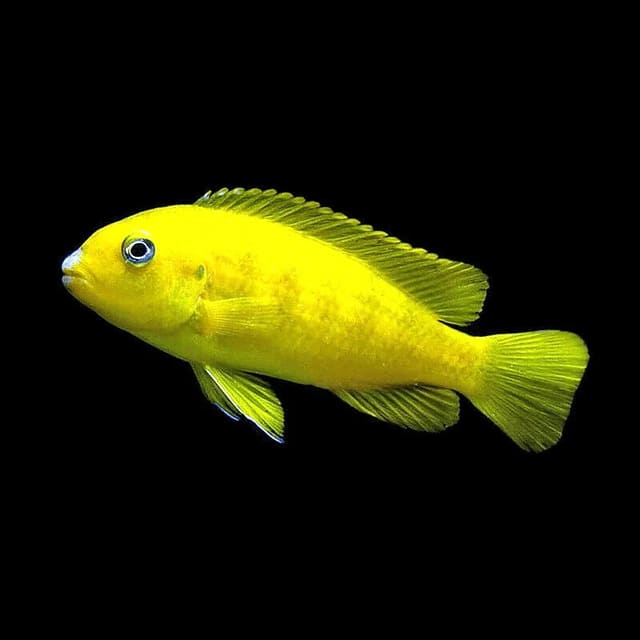
Acei Cichlid (Pseudotropheus sp. “acei”)
24–26°C · pH 7.5–8.5 · 300L
£7.99

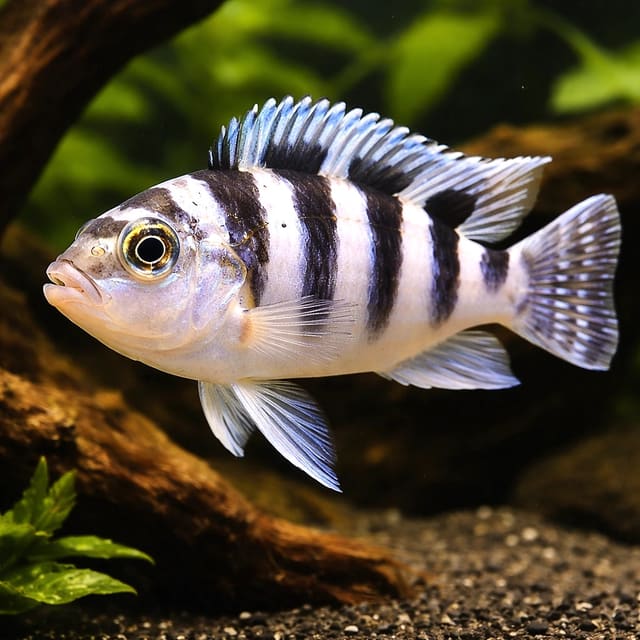
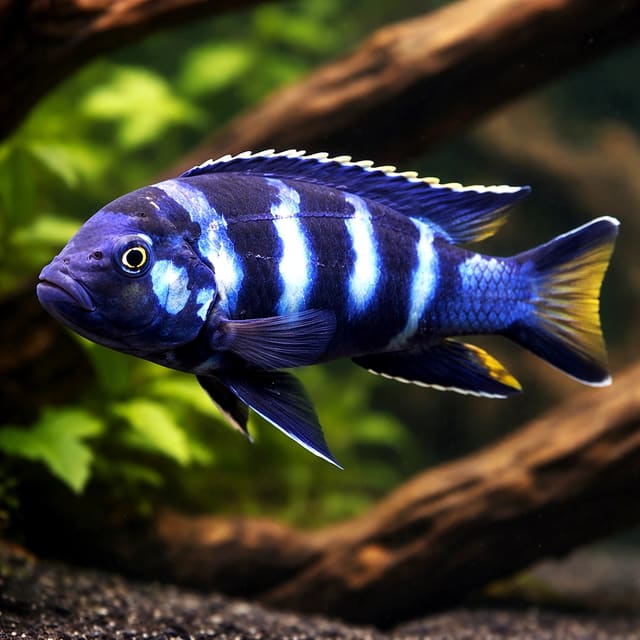
The Nyasa Blue Cichlid, Zebra M (Pseudotropheus zebra) is a rock-dwelling cichlid from Lake Malawi that reaches 11.3 cm standard length. It suits keepers planning an assertive Malawi community; Seriously Fish and OATA guidance overlaps at 23–27°C, pH 8.0–8.6 and 12–18 dGH. Sold individually in dispatch sizes labelled 3–4 cm, 4–5 cm, 6–7 cm, 7–9 cm and XL.
Adult size is the maximum length this species reaches at full maturity (scientific sources). The livestock you receive will be younger and smaller — pick a size above for the actual shipping size. Product-photo provenance and any image-specific limitations are stated on the listing.
Pseudotropheus zebra
Shoaling fish: kept in a group they feel safer, stay calmer and show their best colour.
The Nyasa Blue Cichlid, Zebra M (Pseudotropheus zebra) is a rock-dwelling cichlid from Lake Malawi that reaches 11.3 cm standard length. It suits keepers planning an assertive Malawi community; Seriously Fish and OATA guidance overlaps at 23–27°C, pH 8.0–8.6 and 12–18 dGH. Sold individually in dispatch sizes labelled 3–4 cm, 4–5 cm, 6–7 cm, 7–9 cm and XL.
Adult size is the maximum length this species reaches at full maturity (scientific sources). The livestock you receive will be younger and smaller — pick a size above for the actual shipping size. Product-photo provenance and any image-specific limitations are stated on the listing.
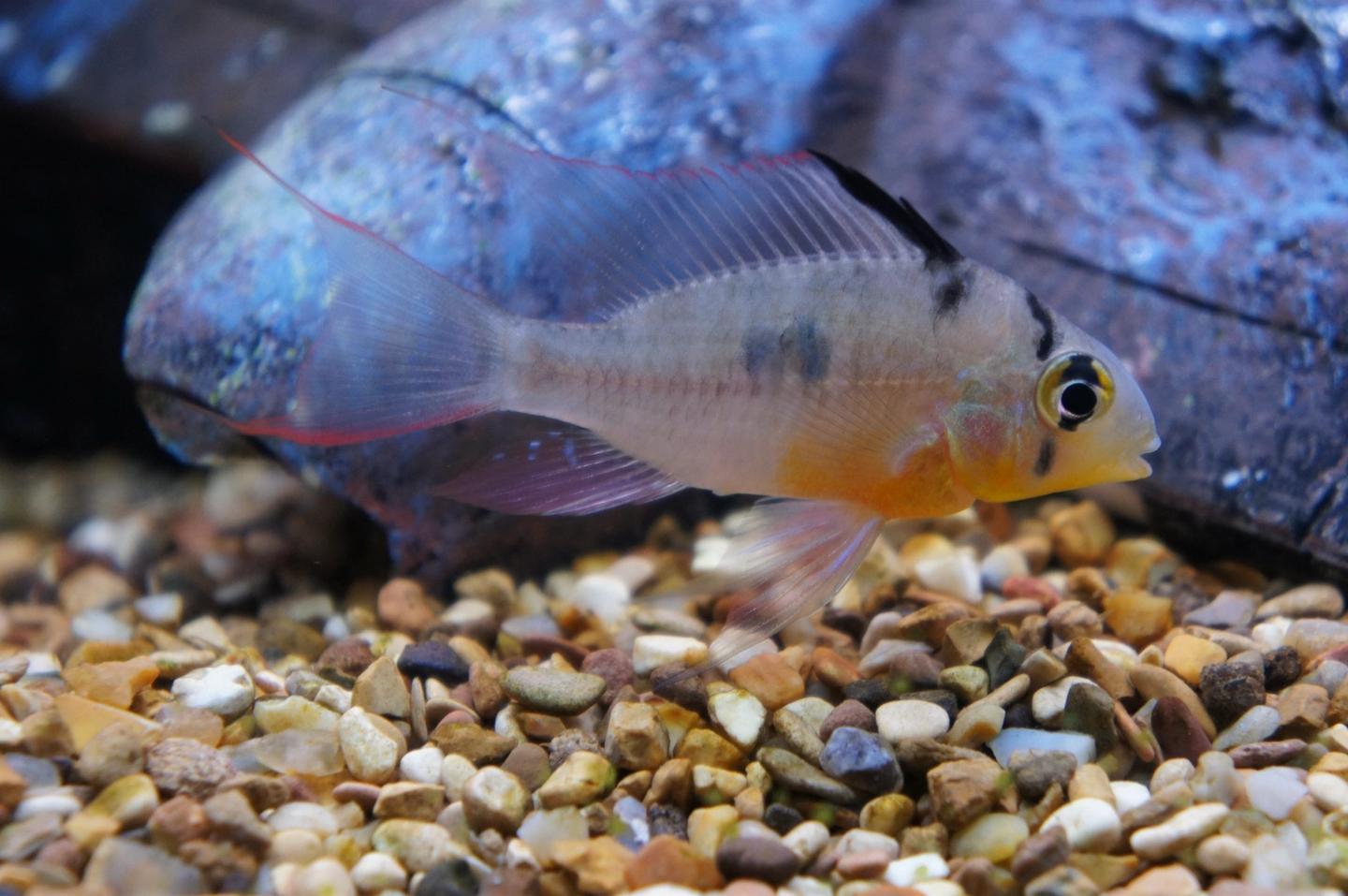
Cichlids are a family of roughly 1,800 accepted species, not one care type. Before buying, identify the exact species and source, then compare adult measurement, usable tank dimensions, social system, territory, tested water, diet and an exit plan. No family-wide minimum tank, water range or tank-mate list is safe.
Maintain these water conditions for optimal health and vibrant colors
The Nyasa Blue Cichlid, Zebra M (Pseudotropheus zebra) is a freshwater cichlid from Lake Malawi in Africa and belongs to the rock-dwelling group known as mbuna. FishBase records a maximum of 11.3 cm standard length for male or unsexed fish and places it in the cichlid family. This assertive species suits a keeper prepared to plan a dedicated Malawi community with hard, alkaline water, extensive rockwork, mature filtration and carefully screened companions. It is not a general tropical community fish. FishBase now lists it as Maylandia zebra.
In nature, adults occur in rocky areas at depths of 6–28 metres, including shallow, sediment-free habitat and deeper areas where sediment is present. They hold their bodies at right angles to the substrate and comb loose material from the biological growth covering the rocks. They also take plankton in open water. That feeding behaviour explains two central aquarium decisions: build around extensive rockwork and make vegetable matter the basis of the prepared diet rather than relying heavily on animal protein.
The aquarium must combine hard, alkaline water, excellent biological filtration, caves, separated rocky areas and companions selected for compatible water needs and temperament. The species is most appropriate for a keeper prepared to manage territories and monitor aggression rather than someone seeking a peaceful mixed aquarium.
| Suits | Not suited to |
|---|---|
| A deliberately planned Lake Malawi community | A general tropical community aquarium |
| Hard, alkaline water within the stated range | Fish requiring soft-water conditions |
| A rocky aquarium with caves and sand | A layout without sufficient rocky territories |
| Keepers prepared to manage an aggressive mbuna | Communities centred on gentle mbuna such as Aulonocara |
Use the live size selector to choose the dispatch label that suits your aquarium plan. Labels include 3–4 cm, 4–5 cm, 6–7 cm, 7–9 cm and XL. The size you select is the size supplied, not the adult size. A smaller dispatch choice does not reduce the permanent space, filtration or compatibility requirements.
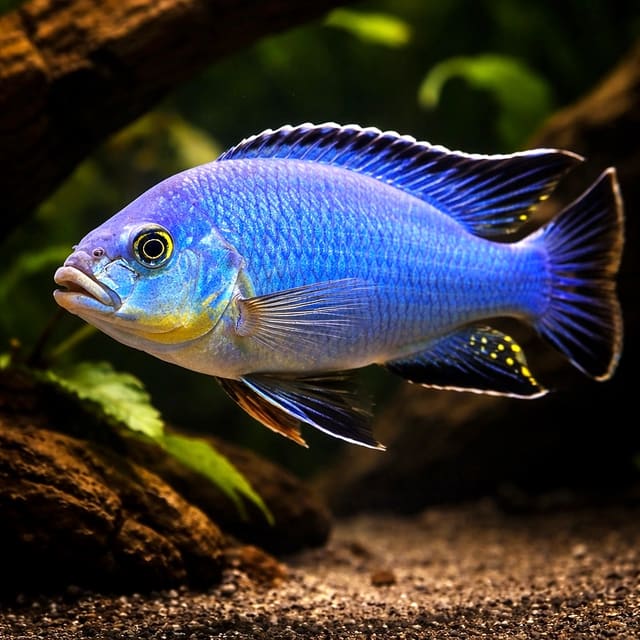
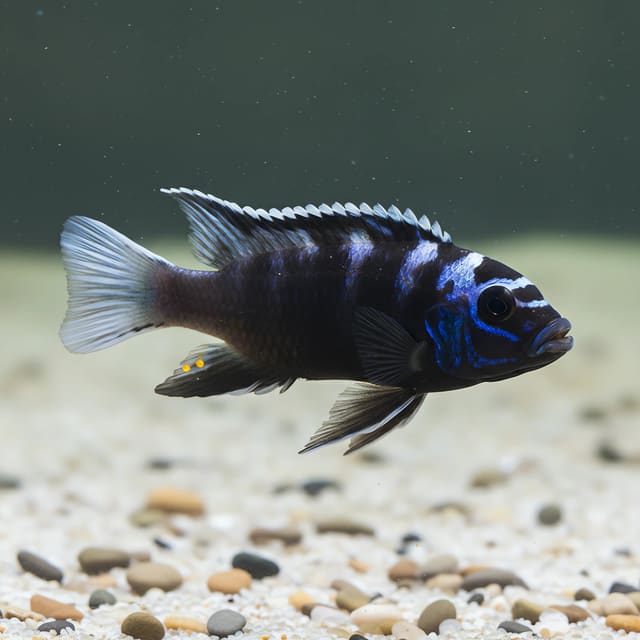
One purchase quantity supplies one animal of the selected option. A gallery scene may show two fish, but that visual composition does not change the purchase unit. Plan the number of animals deliberately around the aquarium footprint, established residents, filtration capacity and intended male-to-female structure before changing the basket quantity.
Sex is guaranteed only when the selected option explicitly states male or female. This Nyasa Blue Cichlid, Zebra M listing has no sex-guaranteed option.
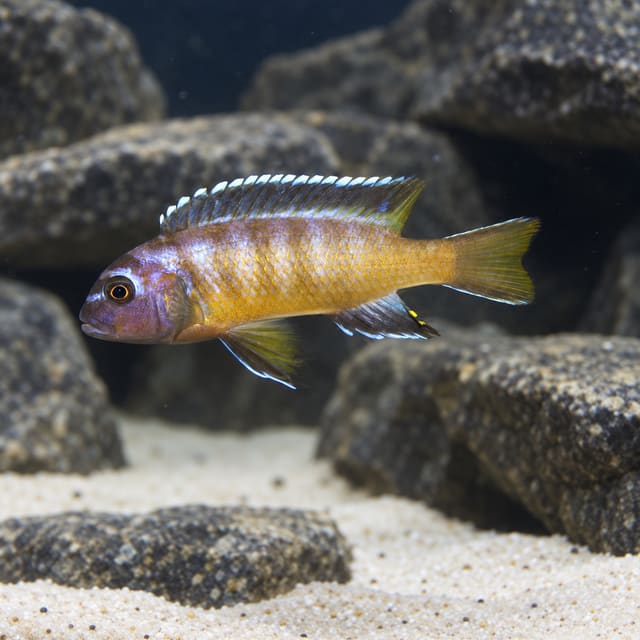
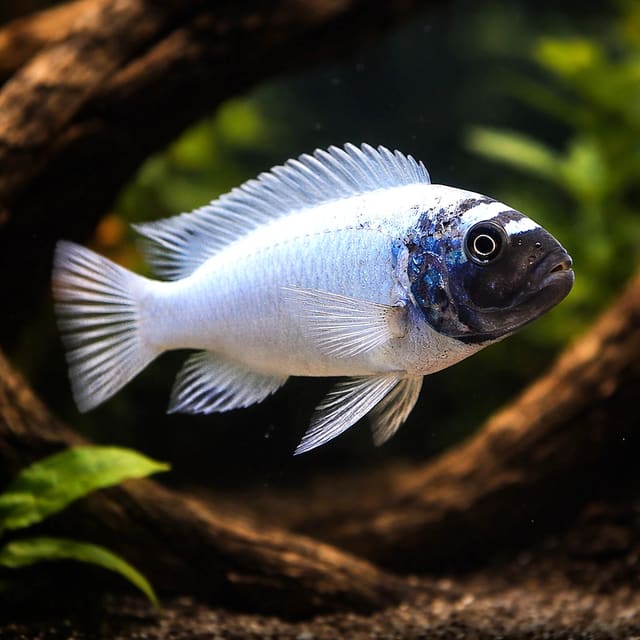
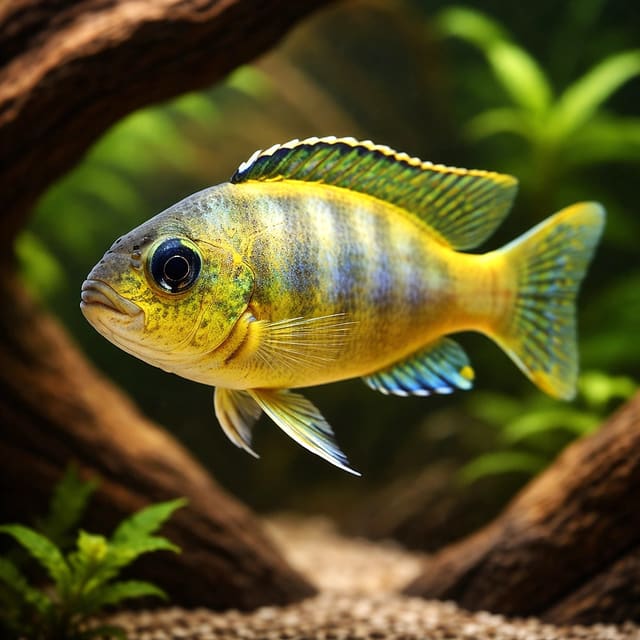
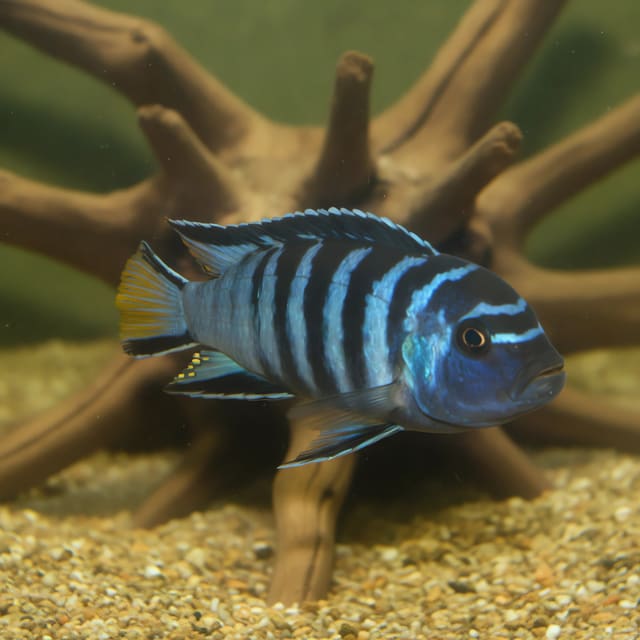
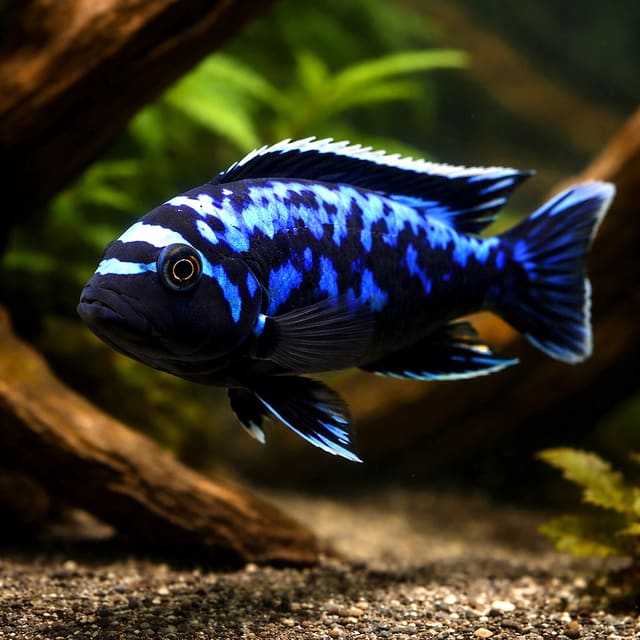
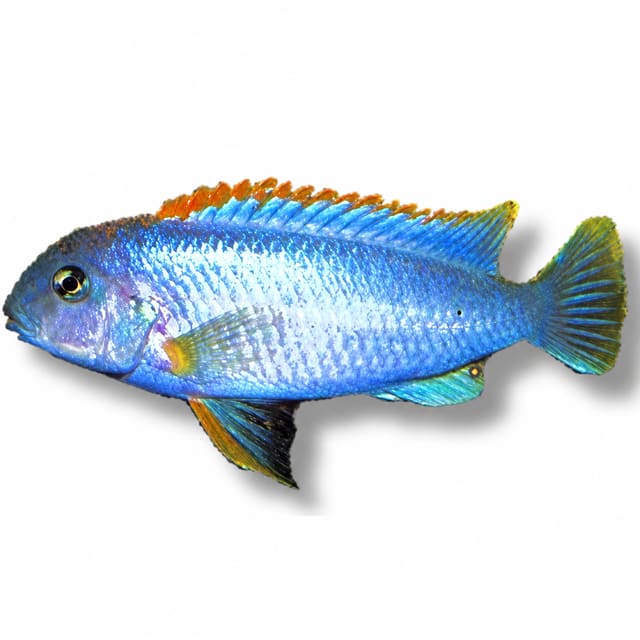
The gallery images are representative, based on reference photographs of this species, so colours can look slightly different from the live animal.
| Selector detail | How to use it |
|---|---|
| Centimetre label | Treat it as the approximate dispatch size for that animal. |
| XL label | Treat it only as that named dispatch size; do not convert it into an assumed age, sex or adult measurement. |
| More than one fish | Set the purchase quantity to the number required by your completed stocking plan. |
| Future growth | Reserve the full adult-planning footprint before the fish arrives. |
Do not infer sex, maturity or origin from a size label. Colour can also vary, so use behaviour, space and water requirements—not an expected shade—as the basis of the purchase decision.
FishBase records a maximum of 11.3 cm standard length for male or unsexed fish. Seriously Fish uses 15.2 cm standard length for aquarium planning, together with a 120 × 38 cm base and approximately 205 litres. Use the larger planning length as an allowance rather than a guaranteed outcome, and prioritise the 120 cm footprint because territories and escape routes need horizontal room.
The practical starting point is therefore a rocky aquarium around 205 litres with a base of at least 120 × 38 cm. Volume alone is not enough: a tall tank with a short base can hold a similar number of litres while offering fewer separate territories. Lay out the rocks before stocking and confirm that caves, separated rocky areas and open sand can coexist without reducing the usable swimming area to narrow dead ends.
Seriously Fish gives 22–28°C, pH 7.6–8.6 and 10–25 dGH for the species. OATA’s Malawi-cichlid group guidance narrows the routine aquarium target to 23–27°C, pH 8.0–8.6 and 12–18 dGH. Use those narrower values while keeping ammonia and nitrite at zero.
| Decision | Working figure |
|---|---|
| Aquarium base | 120 × 38 cm planning reference |
| Volume | Approximately 205 litres |
| Routine temperature | 23–27°C |
| Routine pH | 8.0–8.6 |
| Routine hardness | 12–18 dGH |
Fill much of the aquarium with rock piles arranged to create numerous caves, crevices and broken lines of sight. The layout should let a chased fish move away without entering another single-exit trap. Keep an open area of sand as usable swimming and feeding space, and arrange the rock structure so digging cannot undermine it.
Bright lighting is useful because it encourages algae and the microorganisms associated with it to grow on exposed surfaces. This complements the fish’s natural grazing behaviour, but it does not replace a measured prepared diet. Feed the fish directly and treat growth on the rocks as environmental enrichment.
Rooted plants are likely to be disturbed as Malawi cichlids dig and rearrange the substrate. If greenery is part of the design, choose hardy plants that can be attached to décor rather than depending on an undisturbed root bed. Do not sacrifice caves or separated rocky areas simply to preserve a planted layout.
A successful layout is not the one with the greatest quantity of stone. It is the one that divides the aquarium into several defensible but escapable areas while leaving room for water circulation and routine cleaning.
Set the routine target at 23–27°C, pH 8.0–8.6 and 12–18 dGH. These figures are the overlap between the species ranges from Seriously Fish and OATA’s narrower Malawi-cichlid group guidance. Test the source water before choosing décor or livestock, because a stable aquarium begins with knowing what enters during each water change.
Use our aquarium water chemistry guide to understand temperature, pH, hardness, ammonia, nitrite and nitrate as separate measurements. Then enter the measured figures in the water matcher and compare them with this fish’s working range. Do not treat a clear-looking aquarium as proof that these values are suitable.
| Reading | Decision |
|---|---|
| 23–27°C | Keep the heater and room conditions steady enough to avoid repeated swings across the range. |
| pH 8.0–8.6 | Confirm the value before stocking and recheck it during the weekly routine. |
| 12–18 dGH | Use hard water suitable for Malawi cichlids and avoid mixing fish that require soft conditions. |
| Ammonia 0 mg/l | Pause stocking and correct the biological-filtration problem if any is detected. |
| Nitrite 0 mg/l | Treat any reading as a warning that waste processing is not keeping pace. |
OATA advises that nitrate should not exceed 20 mg per litre above the normal tap-water level. Record the tap-water reading as well as the aquarium reading so the comparison has a genuine baseline.
Coral sand or a similar substrate can help buffer Malawi water. Test rather than assuming that substrate alone will hold the required chemistry, especially after maintenance or a change in the water entering the aquarium.
For an aquarium around 205 litres in a room near 20°C, Seriously Fish gives a heater-planning range of roughly 200–300 W. Choose and position heating equipment around the actual aquarium, room temperature and water circulation, then confirm the result with measured temperature rather than the heater dial alone.
A mature biological filter is essential. RSPCA aquarium welfare guidance explains that fish release toxic ammonia, which beneficial filter bacteria convert first to toxic nitrite and then to safer nitrate. The filter therefore protects the fish only when it is established, flowing correctly and maintained without destroying those bacteria.
Seriously Fish recommends turnover of four to five times the aquarium volume each hour. For a tank around 205 litres, that calculation gives approximately 820–1,025 litres per hour. Treat the stated flow as a planning figure: media, pipework and blockages can affect real circulation, so inspect the aquarium for quiet waste traps as well as reading the filter label.
If filter media needs cleaning, rinse it lightly in aquarium water removed during the water change. Do not wash established biological media under the tap, because chlorine or chloramine may kill beneficial bacteria and reduce the filter’s capacity to process waste.
Malawi communities may place a heavy load on filtration, particularly when stocking is designed to spread aggression. OATA therefore recommends an oversized filter and strong aeration for these aquariums. Extra fish must never be used as an aggression strategy unless the aquarium has the footprint, mature biological capacity, oxygenation and maintenance routine to carry the resulting waste.
If ammonia or nitrite rises above zero, stop adding fish, reduce the immediate waste burden and perform the tested, conditioned-water maintenance needed to restore safe readings. Check for blocked flow, excess food and recent stocking changes. Resume stocking decisions only after repeated tests show that the biological filter is processing the aquarium’s load.
Build the aquarium diet around vegetable matter. The wild fish combs loose material from the growth covering rocks and also takes plankton, while the species profile advises that high-protein foods should not form the main diet. Suitable staples include spirulina flakes, specialised Malawi cichlid food with a high algae content, blanched spinach, nori and other green foods.
Feed only what the fish can finish within a few minutes, twice a day. Start with a deliberately small portion, watch every piece and stop adding food when interest falls or food begins reaching places where it will decay. Uneaten food adds waste, increases the demand on the filter and can contribute to dangerous water-quality changes.
| Food role | How to use it |
|---|---|
| Daily basis | Algae-rich Malawi food, spirulina flakes and appropriate green foods. |
| Fresh vegetable | Offer a measured amount of blanched spinach or another suitable green food. |
| Occasional treat | Use a small portion of live or frozen bloodworm or Artemia only a couple of times a week. |
| Avoid | Do not feed beefheart or other animal meat. |
The occasional animal-protein treat is an addition, not a substitute for the algae-rich basis of the diet. Seriously Fish warns against overdoing protein and notes that animal meat interferes with the digestive system of mbuna. The profile also highlights a tendency towards obesity, so assess body condition rather than increasing portions simply because the fish continues to approach at feeding time.
Do not depend on naturally growing algae as the sole food. Its quantity and composition vary with lighting and aquarium conditions, while a measured feeding routine lets you control portions and notice changes in appetite.
Mature the aquarium and biological filter before adding livestock. Our first tropical aquarium guide explains how to prepare the system before fish arrive. For this mbuna, the completed preparation also includes the rocky territory layout, stable 23–27°C water, pH 8.0–8.6, hardness of 12–18 dGH, and zero ammonia and nitrite.
Be present to receive live fish; the parcel must not be left unattended. Follow the current delivery, acclimatisation and Live Arrival Guarantee policy.
After release, observe swimming, breathing and interactions. OATA advises watching for changes such as hanging at the surface, sitting on the bottom, erratic swimming, abnormal breathing, increased hiding or reduced feeding.
Watch whether the new fish can leave a chase, reach food and occupy cover without remaining trapped at the surface or bottom. Check for rapid breathing, persistent hiding, loss of appetite, colour change, erratic swimming or damaged fins. Test the water promptly when behaviour changes rather than assuming every problem is territorial.
Additions increase both social pressure and biological load. Do not add another group simply because the first introduction appears calm for a few hours; allow the filter readings and territorial pattern to settle before making the next stocking decision.
Establish a normal daily picture for the fish: where it swims, which cave it uses, how strongly it feeds, how quickly the gill covers move and how it responds to neighbouring territories. Individual behaviour can vary, but a change from that animal’s usual pattern gives you a practical reason to test the aquarium and inspect the social layout.
| What you see | What to do first |
|---|---|
| Hanging at the surface | Check aeration, filter flow, temperature, ammonia and nitrite. |
| Sitting on the bottom | Test the water and look for repeated chasing or blocked access to cover. |
| Erratic swimming | Check water quality and observe whether the movement follows an aggressive encounter. |
| Faster or slower breathing | Confirm oxygenation, temperature and nitrogen-waste readings. |
| Darker or paler colour | Compare behaviour, feeding and social pressure with the fish’s normal pattern. |
| White spots, fluffy growths or damaged scales | Test the water promptly and contact us for health guidance. |
Also watch for damaged fins, bumps, ulcerated areas, loss of scales, reduced food intake and an increase or decrease in body condition. These signs do not all have the same cause, so begin with measured water quality and direct observation rather than applying a treatment at random.
A fish that eats eagerly can still be under territorial pressure, while a clear aquarium can still contain ammonia or nitrite. Combine appearance, behaviour and test results before deciding that the system is functioning well.
Seriously Fish describes this zebra as one of the more aggressive mbuna and excludes it from the general tropical community aquarium. Avoid gentle mbuna such as Aulonocara peacock cichlids. OATA limits the broader compatibility field to other Malawi cichlids and some Lake Malawi Synodontis, but that category is only the start of the decision—not a universal tank-mate promise.
Screen each proposed companion for adult planning size, territorial strength, swimming behaviour, diet, hard alkaline water and its ability to use the rock layout. A fish requiring softer water fails the water screen even if its temperament appears robust. A peaceful Malawi fish can fail the behaviour screen even when its water values match.
OATA’s broad Malawi guidance discusses groups of at least 15 and slight overstocking to spread aggression. Do not read that figure as an instruction to place 15 fish into every 200-litre aquarium. Species mix, adult sizes, footprint, filtration and aeration must all carry the proposed population.
No fixed list makes every Malawi combination safe. Temperament varies between individuals and changes as territories form. For a stocking and compatibility assessment, ask us with the aquarium dimensions, volume, water values, filter capacity and the exact residents you intend to mix.
You can also browse the African cichlid collection when building a shortlist, but apply this full screen to every candidate before treating it as part of the plan.
A carefully screened species mix can still produce aggression if the layout gives one fish control of every cave or if additions are made in the wrong order. Build several separated rocky areas, distribute cover across the full base and preserve routes around the rock piles. The aim is to interrupt pursuit and divide attention, not to create one narrow refuge where a subordinate fish remains trapped.
| Situation | Action |
|---|---|
| New Malawi aquarium | Plan the complete adult community before buying and introduce the more peaceful species before the more aggressive ones. |
| Adding Malawi cichlids | Add a planned group rather than leaving one newcomer to receive all established attention. |
| Established territories | Rearrange décor before the introduction so every fish must reassess its boundaries. |
| Persistent targeting | Pause further additions, recheck the layout and reassess the species and sex structure. |
| Rising waste readings | Stop stocking and restore zero ammonia and nitrite before considering social changes. |
A female-to-male ratio of three to one can spread male attention when the fish are reliably sexed. The ratio does not compensate for a short aquarium, weak filtration or a dominant male controlling the whole rock structure. In tanks below 200 litres, the species profile advises no more than one male.
Stocking intended to spread aggression increases feeding competition, waste and oxygen demand. Use an oversized filter, strong aeration and the weekly 25% water-change routine before considering a denser Malawi community. Never increase numbers merely to solve chasing when the existing aquarium cannot support the resulting adult population.
Brief chasing around a claimed cave may occur in a territorial group. Repeated pursuit becomes a practical concern when a fish cannot leave cover, reach food, swim normally or maintain intact fins and scales. Darkening, paling, increased hiding, abnormal breathing or loss of appetite strengthens the reason to intervene in the stocking plan.
Review the community again as fish grow. A dispatch-size group that initially shares the aquarium may require more distinct territories and stronger management later. Adult planning, rather than calm behaviour on the first day, determines whether the combination has a workable future.
FishBase records a maximum of 11.3 cm standard length for male or unsexed fish. Plan its permanent aquarium around that adult figure rather than the dispatch size.
Plan around the Seriously Fish reference of approximately 205 litres with a base of at least 120 × 38 cm, sand, stable rockwork, caves, mature filtration and strong aeration.
Plan a carefully managed Malawi community rather than a small casual group. OATA discusses Malawi groups of at least 15, while Seriously Fish advises three females per male and no more than one male below 200 litres; the aquarium must support the complete adult population.
It is better suited to a keeper prepared to manage an aggressive mbuna, hard alkaline water, territorial rockwork and carefully screened companions than to someone seeking a peaceful general tropical community.
Feed algae-rich Malawi food, spirulina flakes and suitable green foods twice daily, giving only what it finishes within a few minutes. Keep bloodworm or Artemia treats small and limited to a couple of times a week.
Keep it at 23–27°C, pH 8.0–8.6 and 12–18 dGH; these values are the overlap between the Seriously Fish species ranges and OATA’s Malawi-cichlid group guidance. Keep ammonia and nitrite at zero.
Treat it as an aggressive, territorial mbuna. Avoid general tropical communities and gentle Aulonocara peacock cichlids, and intervene if repeated pursuit prevents another fish from feeding, swimming normally or keeping its fins intact.
Consider carefully screened Malawi cichlids with compatible adult size, temperament and water needs, or some Lake Malawi Synodontis. No named companion is universally safe, so assess the complete stocking plan and aquarium footprint.
Someone must be present to receive the parcel. Start a continuous video before opening every delivery, showing the sealed parcel, its opening and the fish still in the bag; then float the bag for 20–30 minutes and never pour the bag water into the aquarium.
No reviews for this item yet. Bought one? Honest reviews only, good or bad.
What customers say about ordering from us
I have a small group of long finned mountain minnows. So was delighted to be able to order ten of this variety to increase the genetics in my tank . The ones I recieved are healthy but it’s to early to give a verdict on wether they are of a long finned type since they are small currently.
Gordon Walker · 23 Sept 2026
100% success travel and "installation". Pleased with quality of purchase. The Siamese fighter a bit "shy" so have not yet seen him at his best yet but looking good. Happy customer. GG
George E Garratt · 21 Sept 2026
Reviews of our shop, collected by Judge.me, an independent third-party review collector. Newest first.