Moderate
Acei Cichlid (Pseudotropheus sp. “acei”)
24–26°C · pH 7.5–8.5 · 300L
£7.99
The William's Mbuna (Pseudotropheus williamsi) is a cichlid endemic to Lake Malawi that reaches 16.5 cm. It suits a carefully planned Malawi aquarium; keep it at 24–26°C, pH 8.0–8.3 and 12–18°dH as the overlap between FishBase's species environmental values and OATA's Malawi-group guidance, with OATA's group plan of at least 15 fish in at least 200 litres. Sold individually in 4–5 cm, 5–6 cm and XL sizes.
Adult size is the maximum length this species reaches at full maturity (scientific sources). The livestock you receive will be younger and smaller — pick a size above for the actual shipping size. Product-photo provenance and any image-specific limitations are stated on the listing.
Pseudotropheus williamsi
Shoaling fish: kept in a group they feel safer, stay calmer and show their best colour.
The William's Mbuna (Pseudotropheus williamsi) is a cichlid endemic to Lake Malawi that reaches 16.5 cm. It suits a carefully planned Malawi aquarium; keep it at 24–26°C, pH 8.0–8.3 and 12–18°dH as the overlap between FishBase's species environmental values and OATA's Malawi-group guidance, with OATA's group plan of at least 15 fish in at least 200 litres. Sold individually in 4–5 cm, 5–6 cm and XL sizes.
Adult size is the maximum length this species reaches at full maturity (scientific sources). The livestock you receive will be younger and smaller — pick a size above for the actual shipping size. Product-photo provenance and any image-specific limitations are stated on the listing.
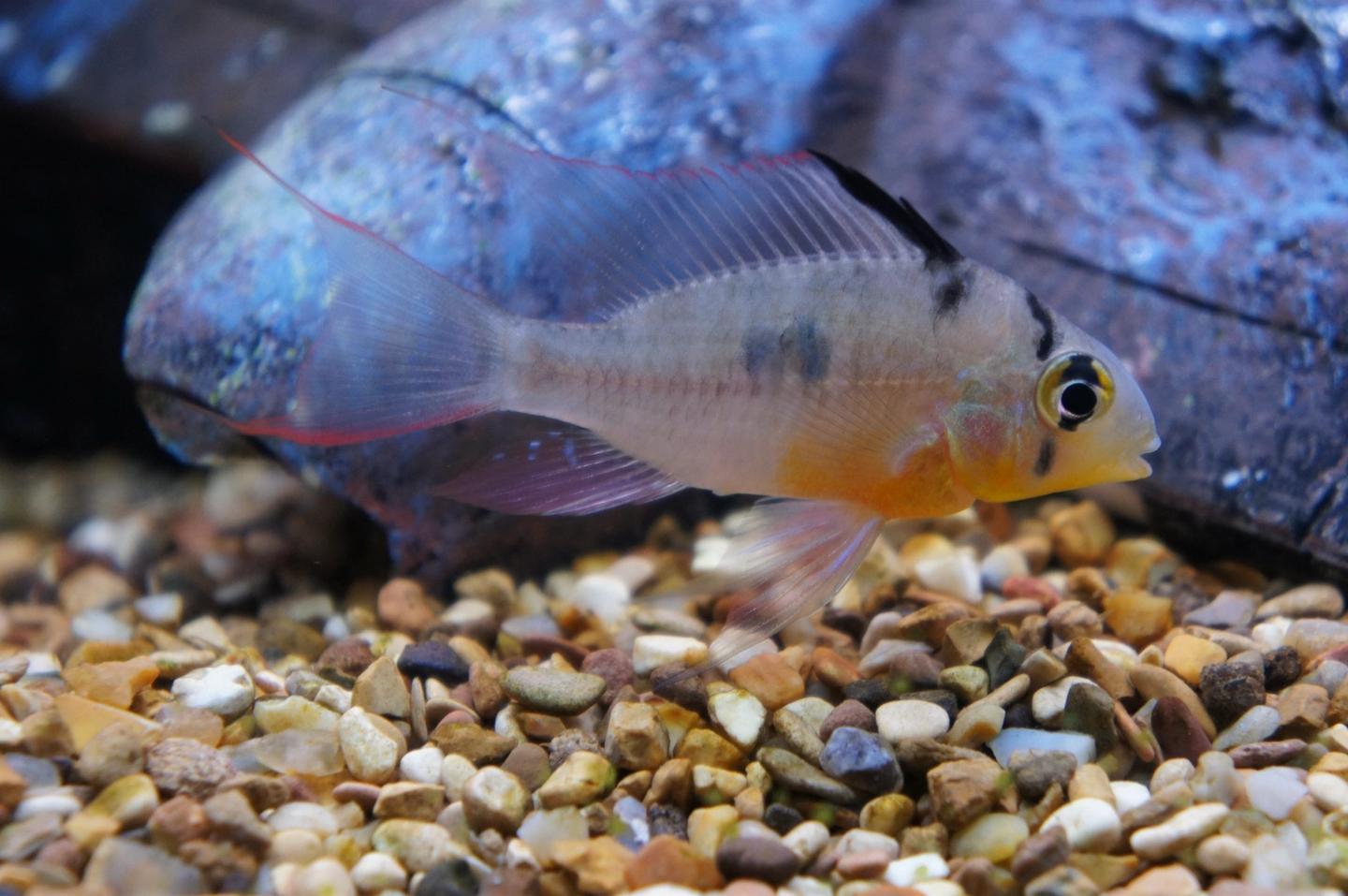
Cichlids are a family of roughly 1,800 accepted species, not one care type. Before buying, identify the exact species and source, then compare adult measurement, usable tank dimensions, social system, territory, tested water, diet and an exit plan. No family-wide minimum tank, water range or tank-mate list is safe.
Maintain these water conditions for optimal health and vibrant colors
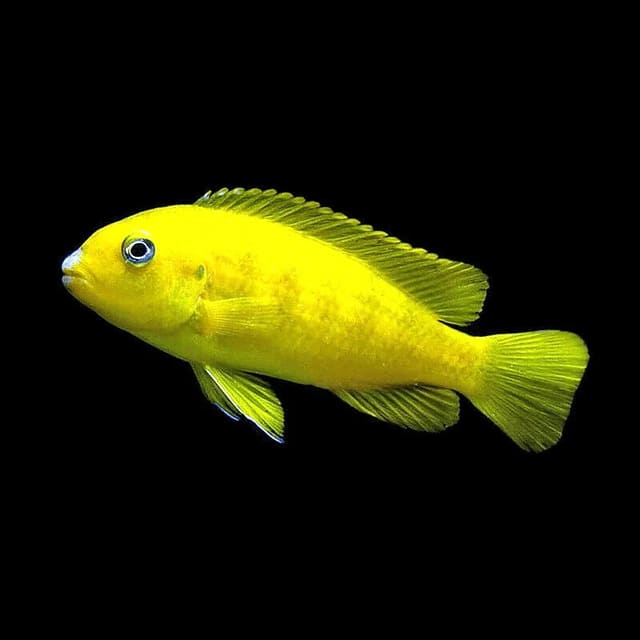
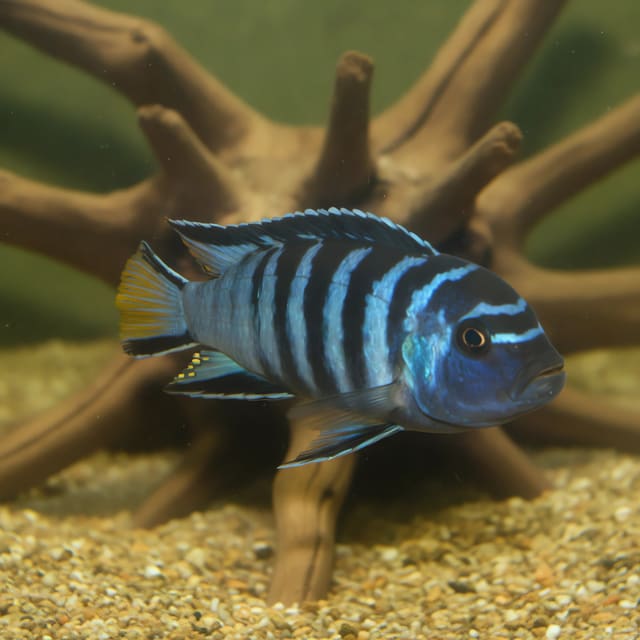
The William's Mbuna (Pseudotropheus williamsi), also called the red top williamsi, is a freshwater cichlid from the family Cichlidae. It is endemic to Lake Malawi and suits a keeper prepared to manage hard, alkaline water, substantial adult size and the aggression of a Malawi community. FishBase records a maximum length of 16.5 cm total length, so aquarium planning must be based on that adult figure rather than the smaller dispatch size.
| Suits | Not suited to |
|---|---|
| A planned Lake Malawi cichlid community | A general peaceful community aquarium |
| Hard, alkaline water within the working range | Water outside the stated temperature, pH or hardness ranges |
| A large, mature, strongly filtered aquarium | An immature or unfiltered aquarium |
| A keeper prepared to monitor and manage aggression | A stocking plan that treats it as a peaceful social fish |
Its recorded feeding behaviour is unusually important when choosing food. Wild fish feed mainly from the water column, taking plankton when present and insect larvae and other invertebrates in open water. They have also been observed feeding from the biocover on rocks. Build the diet around those recorded foods instead of assuming that every mbuna needs the same staple.
One purchase supplies one William's Mbuna in the size selected on the live selector. The choices are 4–5 cm, 5–6 cm and XL. The size you select is the size supplied, not the adult size. XL is a grade label rather than a stated centimetre range, so every choice still needs an aquarium planned around the recorded 16.5 cm maximum length.
Sex is guaranteed only when the selected option explicitly states male or female. This William's Mbuna listing has no sex-guaranteed option. OATA notes that many Malawi cichlids show differences between the sexes only once they become adults, not as juveniles, so colour, markings, dispatch size and gallery appearance should not be used to assign sex to an individual.
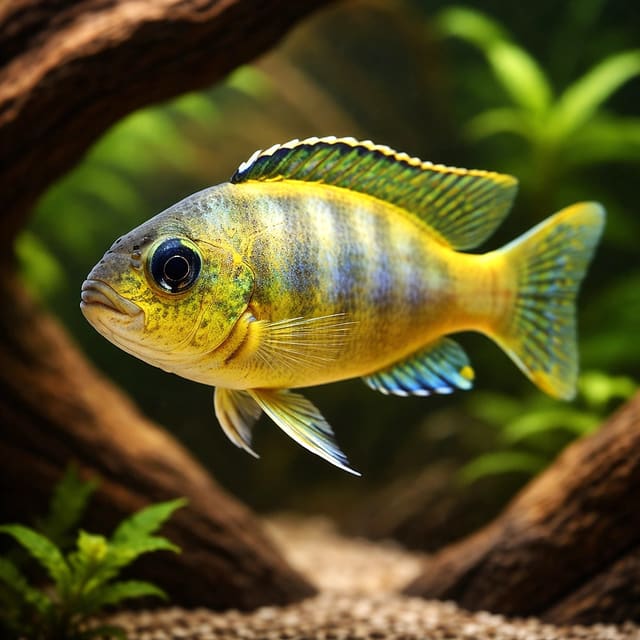
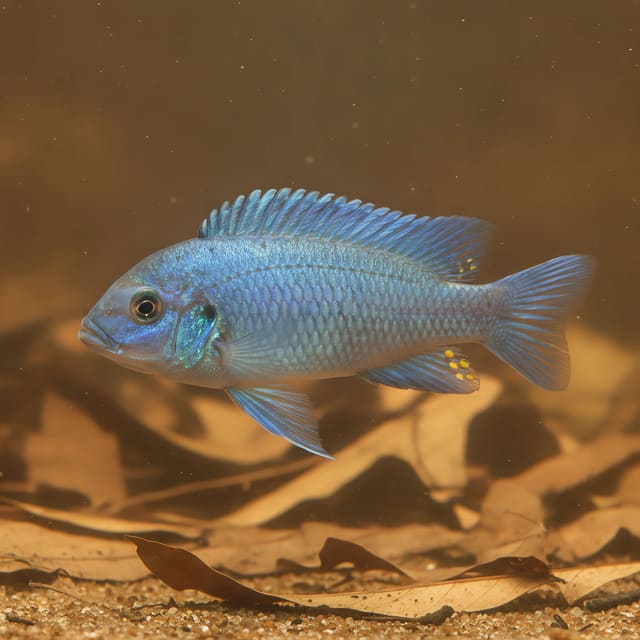
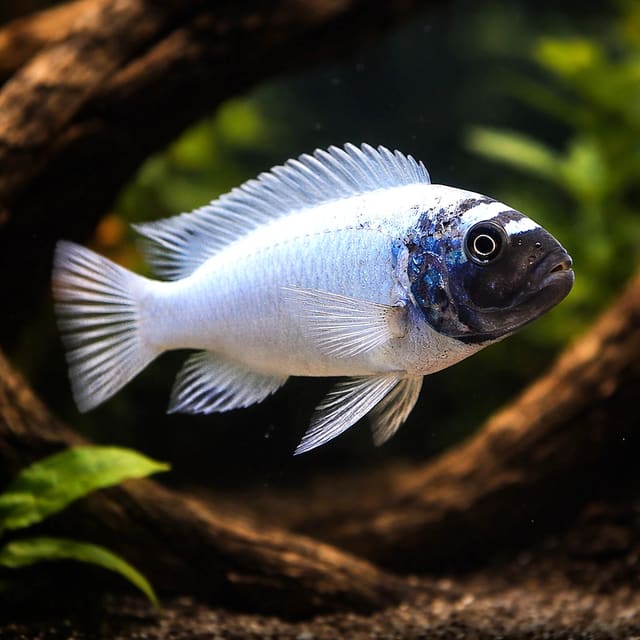
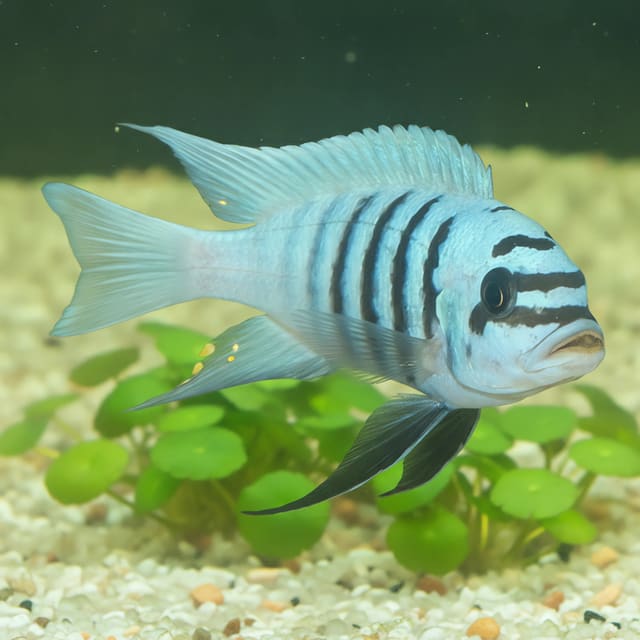
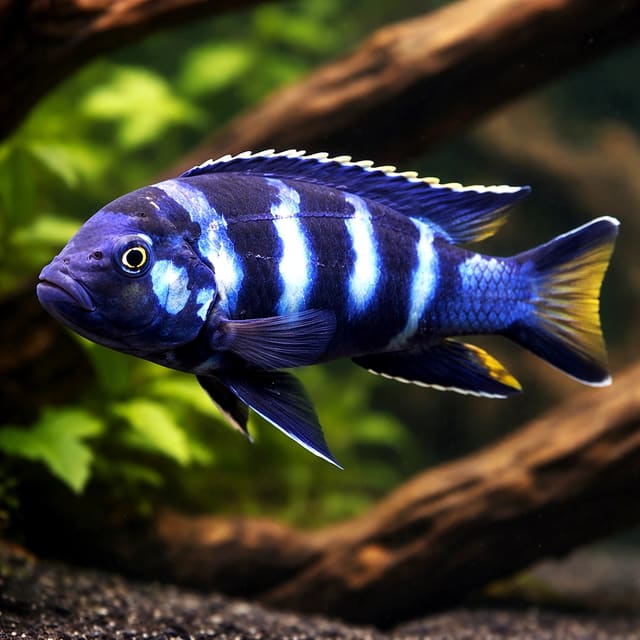
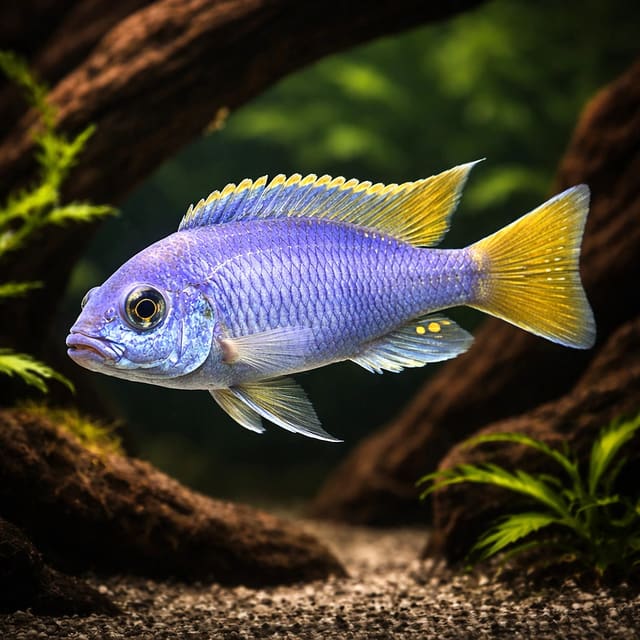
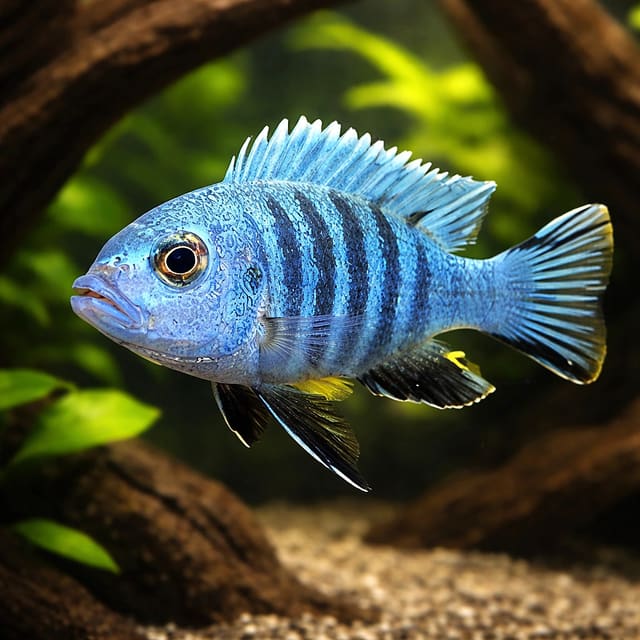
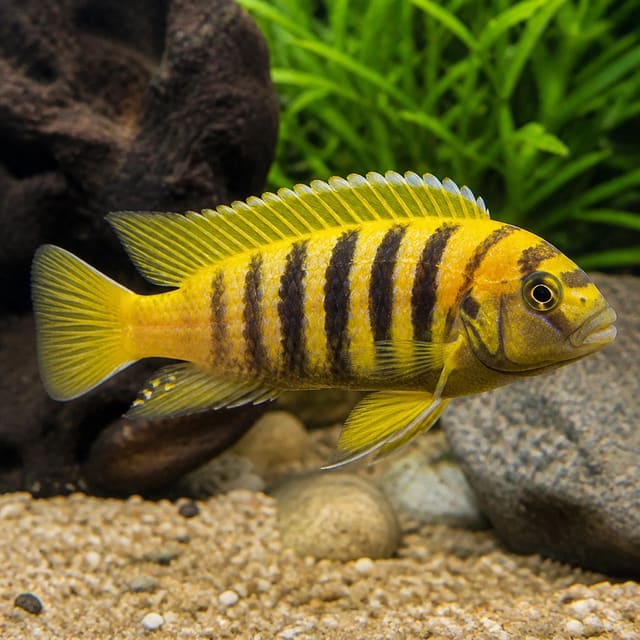
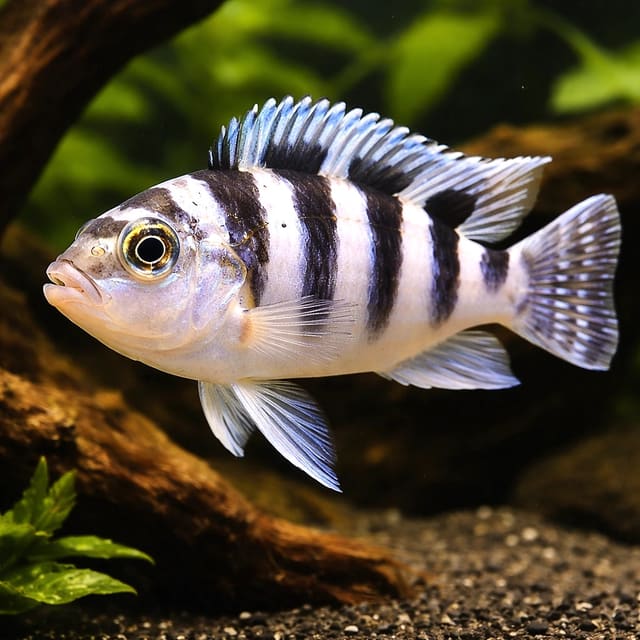
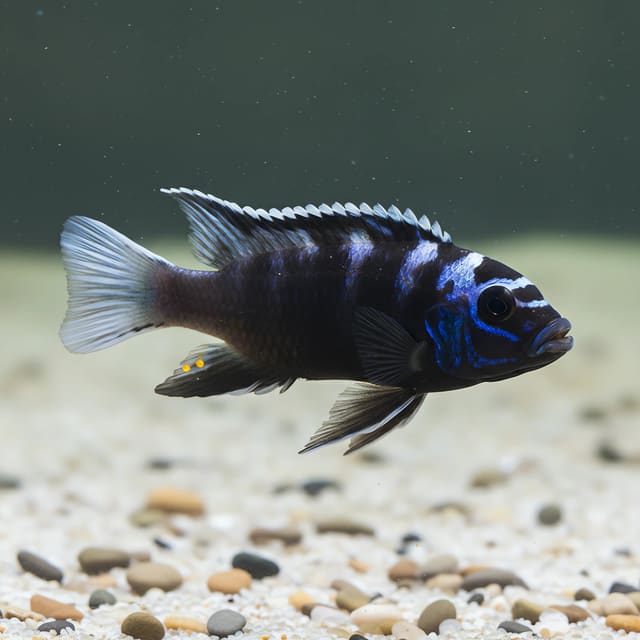
Some gallery images have been digitally enhanced to improve image quality. They show the listed type of animal rather than guaranteeing the exact markings of the individual supplied, so natural colour and pattern can vary. Use them to understand the illustrated body form and aquarium presentation, while allowing for natural variation between individual fish.
Browse the wider African cichlid collection only after screening each candidate for adult size, aggression and water requirements. A shared regional label is not enough by itself to make two fish compatible.
Keep William's Mbuna at 24–26°C, pH 8.0–8.3 and 12–18°dH. These routine targets are the overlap between FishBase's species environmental values of 24–26°C, pH 7.8–8.3 and 10–20°dH and OATA's Malawi-cichlid group guidance of 23–27°C, pH 8.0–8.6 and 12–18°dH. OATA also gives 10–15°dKH for carbonate hardness.
| Measurement | Working instruction |
|---|---|
| Temperature | Keep within 24–26°C |
| pH | Keep within 8.0–8.3 |
| General hardness | Keep within 12–18°dH |
| Carbonate hardness | Use OATA's 10–15°dKH group range |
| Ammonia | Maintain at 0 mg/l |
| Nitrite | Maintain at 0 mg/l |
| Nitrate | Keep no more than 20 mg/l above the normal tap-water level |
Test the aquarium before adding fish and at least weekly thereafter. Record the result rather than relying on the water's appearance: clear water can still contain ammonia or nitrite. Our water chemistry guide explains what the main readings mean, while the water matcher lets you compare measured values with this working range.
OATA's Malawi-cichlid guidance says the aquarium should have coral sand or a similar substrate to buffer the water. Test both the aquarium and replacement water so that each maintenance decision is based on measurements. Treat replacement tap water with conditioner before it enters the aquarium because chlorine or chloramine can harm the biological filter.
If ammonia or nitrite is detectable, pause further stocking, test the full water range and check the filter for blockage. If nitrate rises beyond the stated limit, carry out the scheduled partial water change and remove solid waste. Water quality takes priority because even small amounts of ammonia can stress Malawi cichlids.
Use at least 200 litres as OATA's planning baseline for a reasonable Malawi cichlid community, then choose as large an aquarium as practical for the intended population. This is a community figure for the group. William's Mbuna reaches 16.5 cm, so assess the final adult population, rockwork and swimming room together rather than using volume alone as proof that the aquarium is suitable.
OATA advises keeping Malawi cichlids in groups of at least 15 and notes that Malawi cichlids kept in small groups will often fight. It also states that slight overstocking is required to spread aggression evenly through the population. Support that overstocking from the start with an oversized filter, strong aeration and disciplined maintenance, and still add fish only as fast as the biological filter can handle.
In nature, this fish occupies very shallow rocky biotopes, usually at exposed sites, and is mostly found in the upper 2 metres. FishBase records populations around Deep Bay, Vua and Nkhata Bay, as well as Likoma, Chisumulu, Mbenji and Maleri Islands and the south-east arm of the lake. The red top williamsi summary on Wikipedia also places it over rocky substrates, usually at depths of less than 2 metres. Rockwork, swimming room and deliberate territory management therefore belong at the centre of the aquarium plan.
Assess usable space after the décor is in place. A nominal 200-litre aquarium crowded with poorly arranged structure can leave fewer workable territories and less swimming room than its volume suggests. Balance rocky structure with clear swimming routes because wild fish occupy rocky biotopes and feed mainly from the water column.
Before adding livestock, write down the intended adult population and compare it with the aquarium's volume, filtration and décor. Count every existing fish, not just the new William's Mbuna. This prevents a dispatch-sized fish from being treated as though it will remain small and exposes conflicts in the plan before they become aggression or water-quality problems.
Run a fully matured biological filter before adding William's Mbuna. The RSPCA explains that aquarium fish release toxic ammonia; beneficial bacteria in a working filter convert it first to nitrite, which is also toxic, and then to the safer nitrate. A filter therefore has to be established, maintained and matched to the waste produced by the whole community.
OATA recommends an oversized filter because successful Malawi communities need crowded conditions, and also recommends aggressive aeration so enough dissolved oxygen remains available. Treat filtration and aeration as separate requirements: the filter processes waste, while aeration supports the oxygen needs of the fish and biological system.
Use our first tropical aquarium guide to organise preparation and filter maturation before livestock arrives. A newly running filter is not equivalent to a mature one: its bacterial population must be able to process the aquarium's waste, and that population needs to increase when stocking and feeding increase.
Check the filter for blockages as part of weekly maintenance. If the media needs cleaning, rinse it lightly in aquarium water removed during a partial water change. Do not rinse it under the tap, because chlorine or chloramine may kill the beneficial bacteria established in the media.
After any increase in stocking or feeding, watch ammonia and nitrite especially closely. A population added too quickly can exceed the filter's current capacity and cause new tank syndrome. The correct response is to slow the stocking plan and restore safe water quality, not simply to add more fish because physical space remains.
Use an appropriately sized cichlid food that reflects the recorded plankton, insect-larva and invertebrate diet of William's Mbuna. FishBase describes wild fish feeding mainly from the water column, taking plankton when it is present and insect larvae and other invertebrates that enter open water. It has also been seen feeding from biocover on rocks.
Choose a staple with aquatic animal ingredients suited to that feeding pattern, and use suitable frozen foods such as brine shrimp in the varied rotation. OATA also names prawns and cockles among the animal-based foods used for Malawi cichlids with more predatory feeding. Match every item to the fish's mouth and offer it where the fish can take it promptly from the water.
A feeding event is also a behaviour check. Watch whether the fish enters the feeding area, takes food and maintains normal body condition. Reduced intake or a lack of interest in food is one of OATA's warning signs, so test the water whenever it appears.
Overfeeding creates two linked problems. Uneaten food breaks down and adds toxic waste to the water, while extra feeding increases the load placed on the biological filter. If food remains after a few minutes, reduce the next portion and test the water rather than assuming every individual needs more.
When comparing two foods, favour the one whose ingredients and form better match plankton and small invertebrate feeding. Biocover grazing can remain part of the fish's aquarium activity, but it does not replace measured feeding. Keep the twice-daily portions small enough for the entire Malawi community to finish promptly.
Arrange the aquarium, complete filter maturation and test the water before the fish travels. OATA advises confirming that ammonia and nitrite are 0 mg/l before adding fish. Our delivery and Live Arrival Guarantee policy explains the packing and arrival process; have someone at the address to receive the parcel, because live fish cannot be left unattended, and open it the same day it arrives.
The fish is hand-bagged in pure oxygen and placed in an insulated poly box, with a heat pack when the weather calls for it. Transport preparation does not replace aquarium preparation: temperature, pH, hardness, ammonia and nitrite should already be within their stated targets before the box is opened.
OATA advises increasing the aquarium population slowly because the beneficial bacteria established during maturation need to increase as fish and feeding are added. Adding too many fish too quickly can result in new tank syndrome, with unhealthy ammonia or nitrite levels.
Malawi cichlids should also be introduced with their social setting in mind. OATA recommends adding them in groups so one new individual does not receive all the aggression while settling. Reconcile these two instructions in the stocking plan: prepare each intended addition as a compatible group, while leaving enough time and biological capacity for the filter to respond.
Look for appropriate swimming, normal breathing, clear bright eyes, intact scales and undamaged fins. Hiding more than normal, faster or slower breathing, a darker or paler colour, or reduced feeding each calls for immediate water testing and a review of aggression. The first check is always the environment the fish has entered.
Change 25% of the water at least once every week, following OATA's Malawi-cichlid guidance. Use a siphon to remove solid waste from the substrate, especially around areas where food or waste collects. Treat all replacement tap water with conditioner before adding it to the aquarium.
Test the water at least weekly and record temperature, pH, general hardness, ammonia, nitrite and nitrate. Ammonia and nitrite must remain at 0 mg/l, while nitrate should not exceed 20 mg/l above the normal tap-water level. Testing the tap-water baseline makes that nitrate instruction usable rather than relying on an isolated aquarium reading.
Rinse filter media in the aquarium water removed during the change, never under the tap. This preserves more of the beneficial bacterial population that converts ammonia and nitrite. Avoid replacing the cleaning step with a visual check of the aquarium; clear-looking water says little about dissolved waste.
If ammonia or nitrite rises above zero, do not proceed with another planned addition. Check feeding quantity, stocking pace and filter operation, then restore safe readings. If nitrate rises too far above the tap-water baseline, combine the partial change with better solid-waste removal and review whether uneaten food is accumulating.
Stable maintenance is especially important in a Malawi community planned around at least 15 fish. The aquarium's waste load comes from the whole population, so testing and filter checks must continue even when the newest fish appears healthy.
Plan for a maximum adult length of 16.5 cm total length. Review the aquarium as the fish grows and judge space against the adult population, not its appearance at dispatch.
| What you see | What to do |
|---|---|
| Hanging at the surface, sitting on the bottom or erratic swimming | Test water quality and inspect filtration and aeration |
| Faster or slower gill-cover movement | Check water values and oxygenation promptly |
| Colour becoming markedly darker or paler | Compare behaviour, aggression and water readings |
| More hiding or a change in aggression | Review territories, stocking and the fish receiving aggression |
| White spots, fluffy growths, lost scales or damaged fins | Test the water and seek a diagnosis before choosing any treatment |
| Reduced feeding or changing body condition | Check competition, portions, water quality and other symptoms |
Healthy-fish indicators from OATA include clear bright eyes, intact scales, undamaged fins, suitable swimming and a normal feeding response. Learn the usual pattern for each individual so a change can be recognised early. One sign on its own starts an investigation; several changes together make prompt testing and assessment more urgent.
Start with ammonia, nitrite, nitrate, temperature and pH whenever behaviour changes. Then inspect aeration, the filter and signs of aggression. This order checks the shared environmental causes that can affect several fish at once.
If the readings are in range but abnormal swimming, breathing, growths, sores, fin loss or appetite changes continue, seek a diagnosis before choosing any treatment. Do not select a treatment from appearance alone, because different problems can produce similar outward signs.
Keep William's Mbuna only with other carefully assessed Malawi cichlids or with suitable species of Synodontis catfish that naturally inhabit Lake Malawi. OATA gives this rule for Malawi cichlids, which it describes as aggressive fish that need particular water parameters. It does not turn every fish in either category into an automatic tank mate.
| Candidate | Decision |
|---|---|
| Another Malawi cichlid | Assess adult size, aggression, water needs and its place in the stocking order |
| A Lake Malawi Synodontis | Confirm the species and assess its adult needs before mixing |
| A general peaceful community fish | Avoid; this is an aggressive Malawi setup |
| A fish requiring different water | Avoid; do not compromise the 24–26°C, pH 8.0–8.3 and 12–18°dH working range |
| An unidentified or poorly understood candidate | Pause the addition until its adult size, behaviour and water needs are clear |
Start with water compatibility, because every resident must live within the same measured conditions. Then compare adult size and temperament. Finally, consider how the fish uses the aquarium and whether the existing décor can create workable territories without removing too much swimming room.
Screen the whole community rather than comparing only two animals. A pair may appear workable in isolation while the combined population exceeds the aquarium's space, filter capacity or aggression-management plan. Include every adult fish in the count and remember that OATA's at-least-200-litre figure applies to a reasonable Malawi community, not to every possible species combination.
Compatibility depends on the individuals, aquarium layout and complete stocking plan. Leave out any candidate whose adult behaviour or Lake Malawi identity is unclear. Base each decision on the aquarium volume, measured water values and full fish list so it covers the actual community.
Treat William's Mbuna as an aggressive Malawi cichlid. OATA describes Malawi cichlids as non-social fish that can be highly aggressive and advises mixing them with caution. The goal is not to remove all displays or territory defence, but to prevent one fish from receiving persistent pressure, losing condition or being denied food.
Plan a Malawi community of at least 15 fish. OATA notes that Malawi cichlids kept in small groups will often fight and that slight overstocking is required to spread aggression evenly. Support that overstocking with a large aquarium, oversized filtration, aggressive aeration and weekly testing, because the extra fish add waste.
OATA recommends keeping more females than males of each species where possible so male attention is not concentrated on one female. Use that strategy only when the fish can be sexed reliably; many Malawi cichlids show sex differences only once they become adults, not as juveniles.
A short chase and continuous targeting are different management problems. Look for repeated hiding, altered colour, damaged fins, reduced food intake or weight loss alongside changes in aggression. If one fish repeatedly controls access to food or space, reassess the décor and stocking plan immediately.
Rearranging décor can reduce established territorial advantage, but it does not correct unsuitable water, inadequate filtration or an incompatible community. Test ammonia and nitrite whenever aggression changes sharply because poor water quality can add stress across the aquarium. Keep both readings at 0 mg/l while evaluating the social cause.
William's Mbuna reaches a recorded maximum of 16.5 cm total length, so plan its aquarium around 16.5 cm rather than the smaller dispatch size.
Use at least 200 litres as OATA's planning baseline for a reasonable Malawi cichlid community, then assess the adult population, rockwork, swimming room and filtration together.
OATA recommends planning the wider Malawi cichlid community as a group of at least 15 fish because small Malawi groups will often fight; screen the complete mix rather than keeping 15 of this one species by default.
William's Mbuna suits a keeper prepared to maintain hard, alkaline water and manage an aggressive group of at least 15 Malawi cichlids in at least 200 litres with oversized filtration and strong aeration.
In nature this fish feeds mainly from the water column on plankton, insect larvae and other invertebrates, and has also been seen feeding from biocover on rocks; offer a matching cichlid staple with suitable animal ingredients and small portions it finishes within a few minutes, twice daily.
Keep Pseudotropheus williamsi at 24–26°C and pH 8.0–8.3, with general hardness of 12–18°dH; this is the overlap between FishBase's species environmental values and OATA's Malawi-group guidance.
William's Mbuna is an aggressive Malawi cichlid; watch for persistent chasing, hiding, damaged fins or reduced feeding and respond by checking water, territories and the complete stocking plan.
Keep it only with carefully assessed Malawi cichlids or suitable species of Synodontis catfish that naturally inhabit Lake Malawi, after screening adult size, aggression, water needs and aquarium space.
It is hand-bagged in pure oxygen, packed in an insulated poly box with a heat pack when weather calls for it, and carried by a licensed live-animal courier. Film every delivery from the sealed parcel in one continuous take until the fish is seen still in its bag; someone must be there to receive it and open it the same day, then float the bag for 20–30 minutes and never pour bag water into the aquarium.
No reviews for this item yet. Bought one? Honest reviews only, good or bad.
What customers say about ordering from us
Easy website plenty of info on fish your buying great to pick a time slot
TRACEY DURRANT · 7 Oct 2026
Got some lovely fish thank you
Kevin Mackie · 7 Oct 2026
Reviews of our shop, collected by Judge.me, an independent third-party review collector. Newest first.