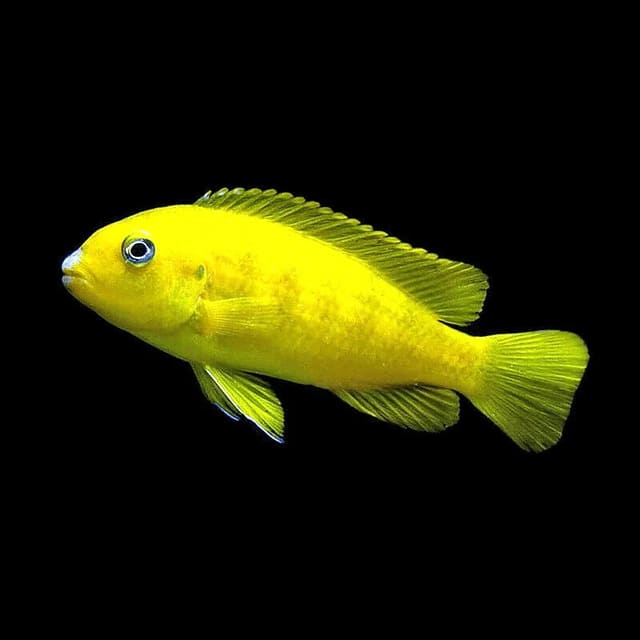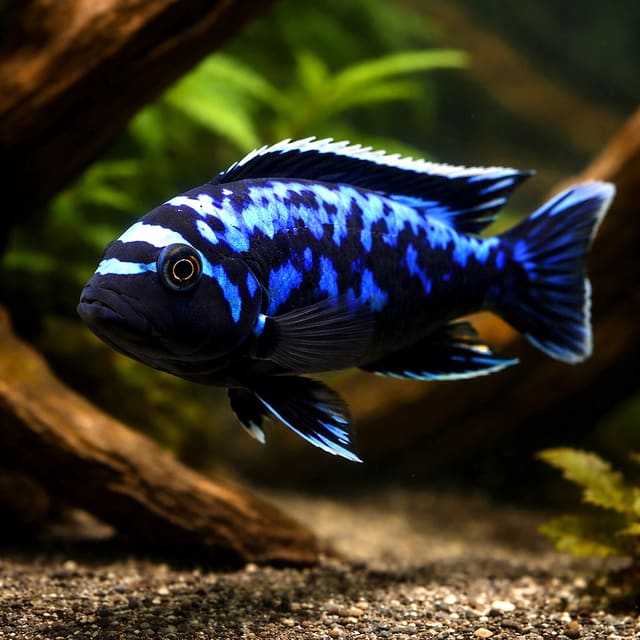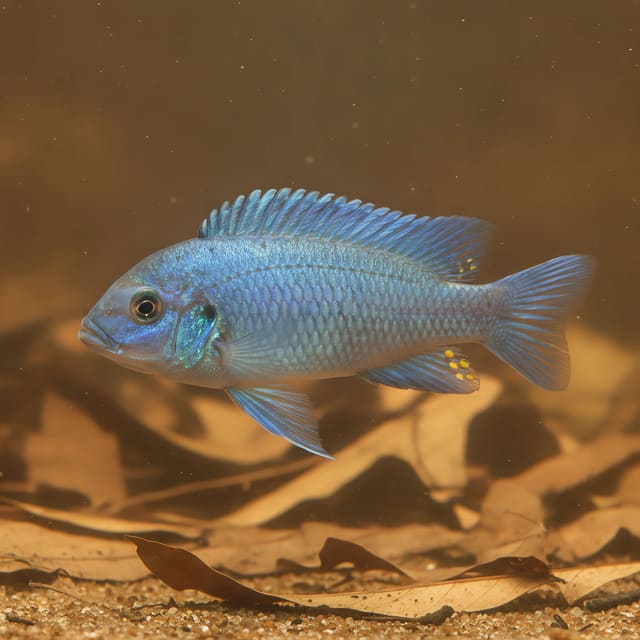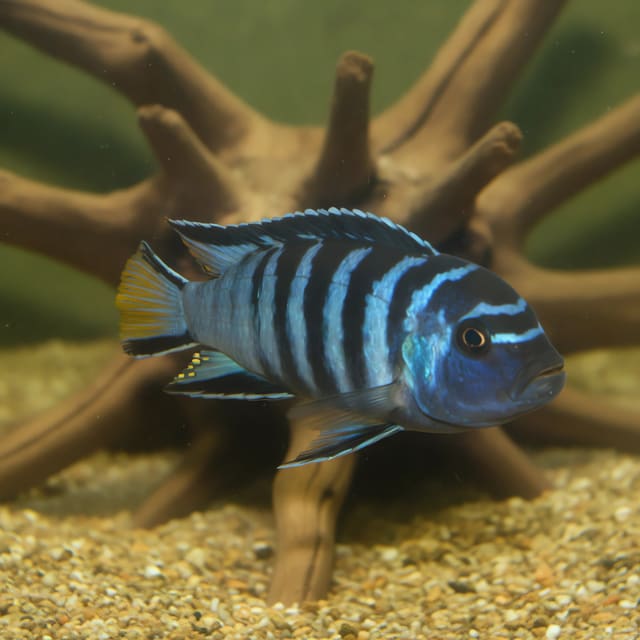
Moderate
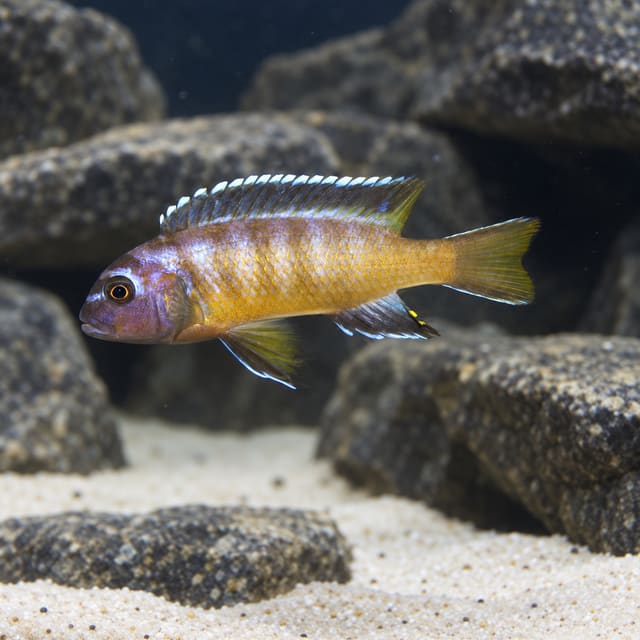
Acei Cichlid (Pseudotropheus sp. “acei”)
24–26°C · pH 7.5–8.5 · 300L
£7.99
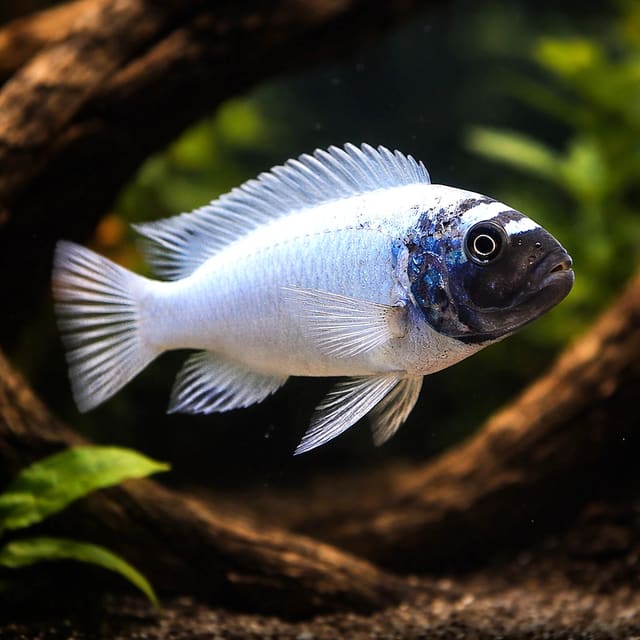
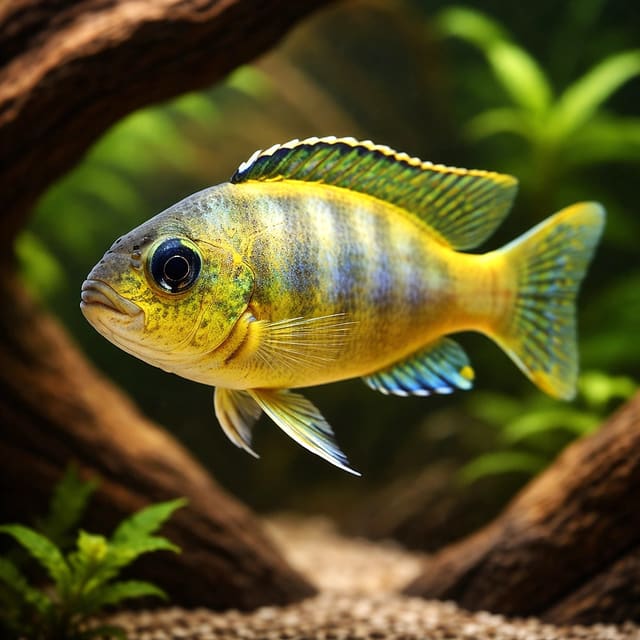
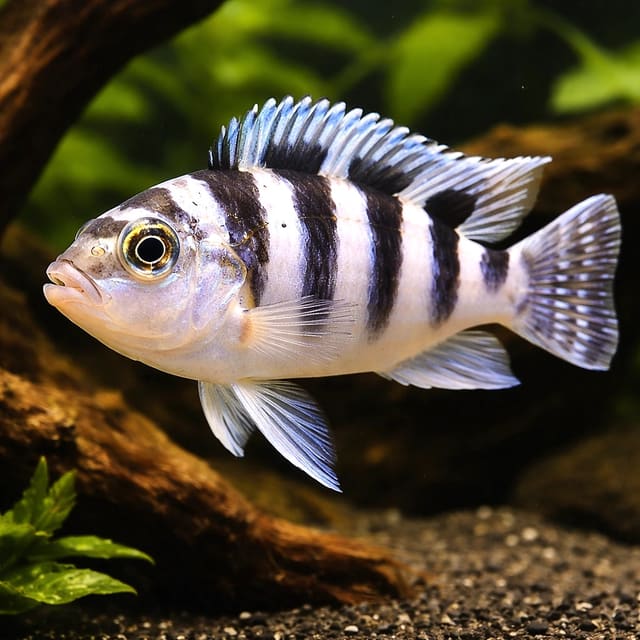
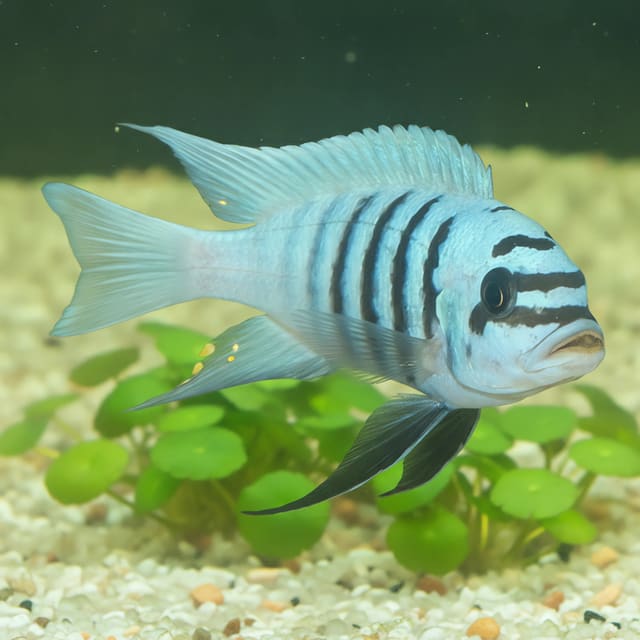
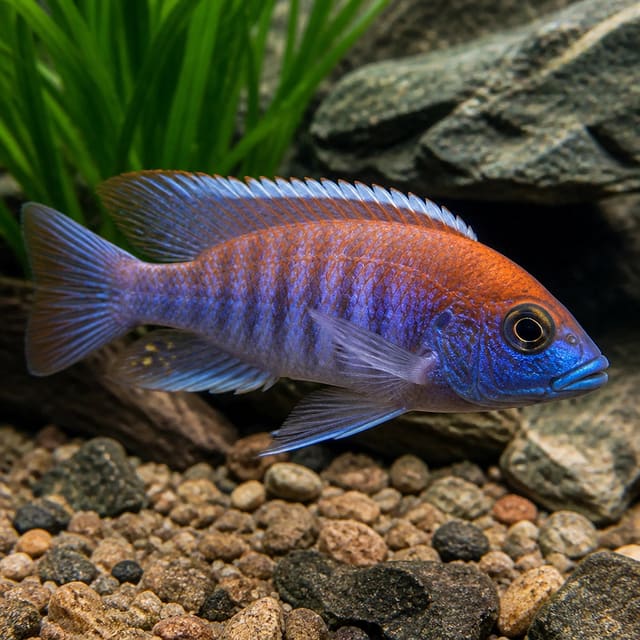
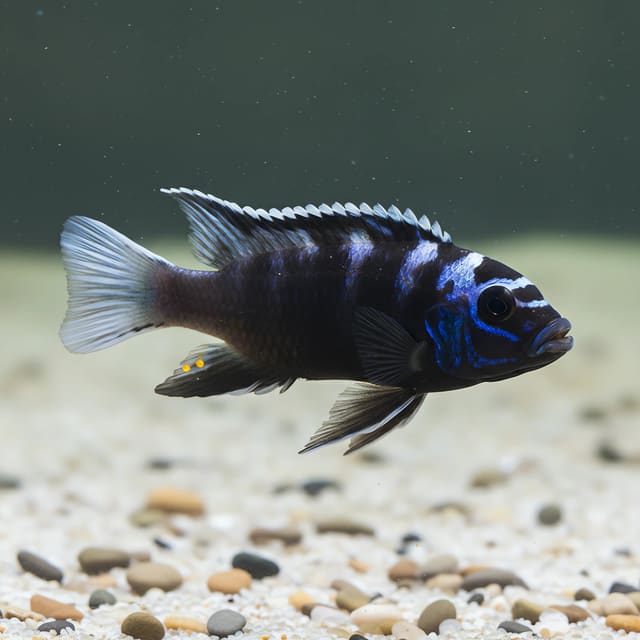
Chewere Elongatus Mbuna (Pseudotropheus elongatus) is a highly territorial Lake Malawi rock-dwelling cichlid for an advanced keeper. One purchase supplies one animal at the 4–5 cm dispatch grade; plan around a 120 × 38 cm aquarium base, 24–25°C hard water and carefully screened mbuna companions.
Adult size is the maximum length this species reaches at full maturity (scientific sources). The livestock you receive will be younger and smaller. Product-photo provenance and any image-specific limitations are stated on the listing.
Pseudotropheus elongatus
Shoaling fish: kept in a group they feel safer, stay calmer and show their best colour.
Chewere Elongatus Mbuna (Pseudotropheus elongatus) is a highly territorial Lake Malawi rock-dwelling cichlid for an advanced keeper. One purchase supplies one animal at the 4–5 cm dispatch grade; plan around a 120 × 38 cm aquarium base, 24–25°C hard water and carefully screened mbuna companions.
Adult size is the maximum length this species reaches at full maturity (scientific sources). The livestock you receive will be younger and smaller. Product-photo provenance and any image-specific limitations are stated on the listing.
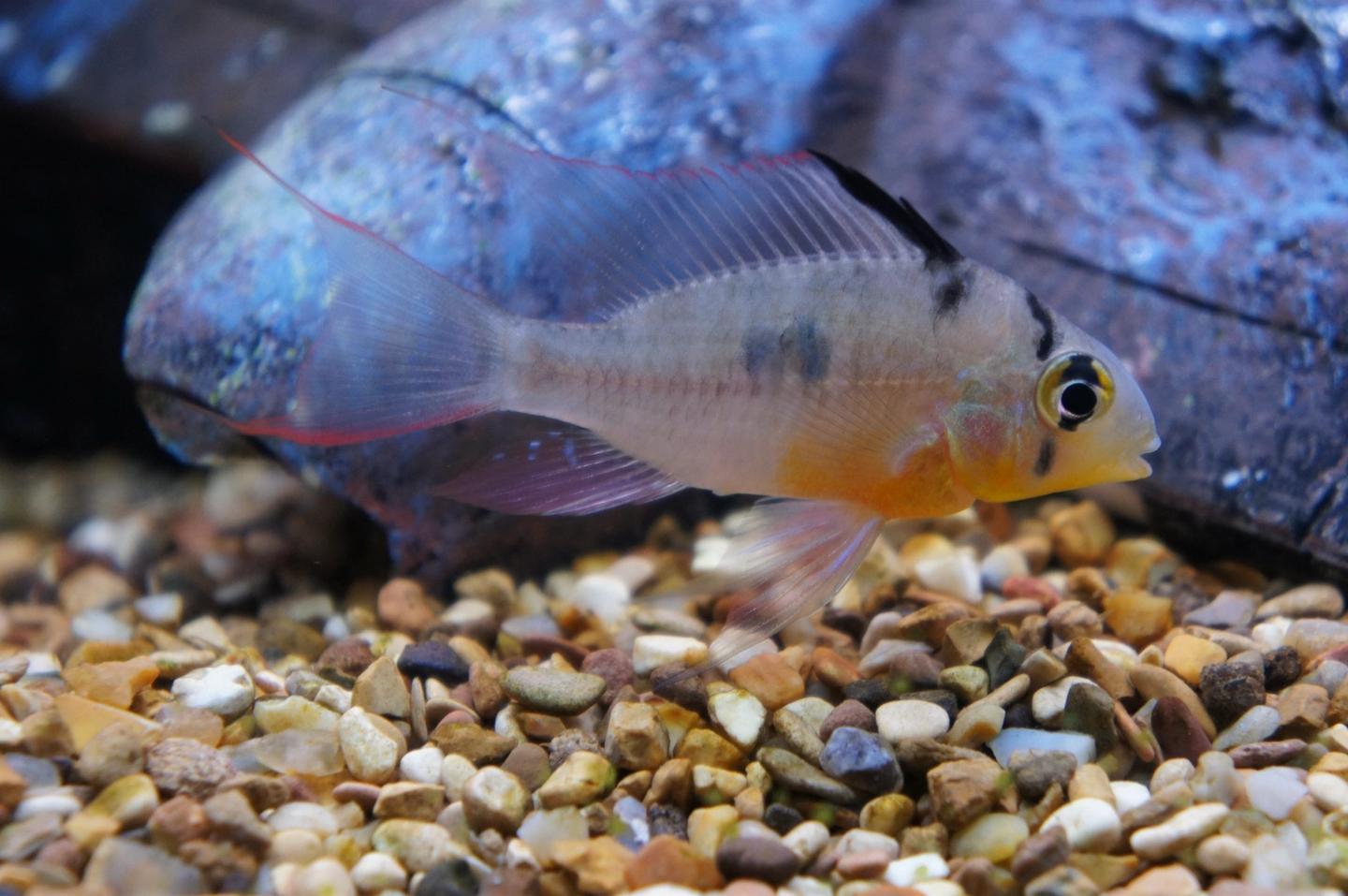
Cichlids are a family of roughly 1,800 accepted species, not one care type. Before buying, identify the exact species and source, then compare adult measurement, usable tank dimensions, social system, territory, tested water, diet and an exit plan. No family-wide minimum tank, water range or tank-mate list is safe.
Maintain these water conditions for optimal health and vibrant colors
Chewere Elongatus Mbuna is a slender, rock-dwelling Lake Malawi cichlid for a keeper who is prepared to manage strong territorial behaviour. It is a specialist territorial mbuna for an experienced Malawi keeper. Seriously Fish describes Pseudotropheus elongatus as one of the most aggressive and territorial mbuna and recommends it for the advanced aquarist rather than the beginner.
FishBase now lists it as Chindongo elongatus. It places the fish in the cichlid family, Cichlidae, and records it from shallow, sediment-free rocky areas of Lake Malawi. In nature, the fish remains around small rocks and combs loose algae from the biological covering on those surfaces. That combination of habitat, feeding method and territoriality should shape the aquarium: provide extensive rockwork, encourage useful algal growth and avoid treating open swimming space as a substitute for defensible shelters.
| Decision | Plan |
|---|---|
| Keeper experience | Advanced; active aggression management is essential |
| Aquarium footprint | At least 120 × 38 cm, with about 137 litres as the associated reference volume |
| Community scale | At least 200 litres for a reasonable Malawi community |
| Routine water | 24–25°C, pH 8.0 and 12–18 dGH |
| Adult planning length | Allow for up to 13.5 cm standard length when planning space |
| Companions | Carefully selected mbuna with dissimilar patterning and matching water needs |
The main challenge is making good stocking decisions before the fish enters the aquarium. Rock placement, line-of-sight breaks, total stocking, the order of introduction and the identity of every resident all affect whether aggression is dispersed or focused on one vulnerable fish.
One purchase quantity supplies one animal. The catalogue dispatch grade is 4–5 cm. This is the dispatch size; use the recorded adult length and full territorial plan when choosing the permanent aquarium.
Seriously Fish gives 13.5 cm standard length as its aquarium-planning reference, while FishBase records a maximum of 9.5 cm standard length for male or unsexed fish. Use the larger 13.5 cm figure when judging footprint, shelter spacing and future stocking capacity. It is a conservative planning value rather than a promise that every individual will reach that measurement.
Sex is guaranteed only when the selected option explicitly states male or female. This Chewere Elongatus Mbuna listing has no sex-guaranteed option.
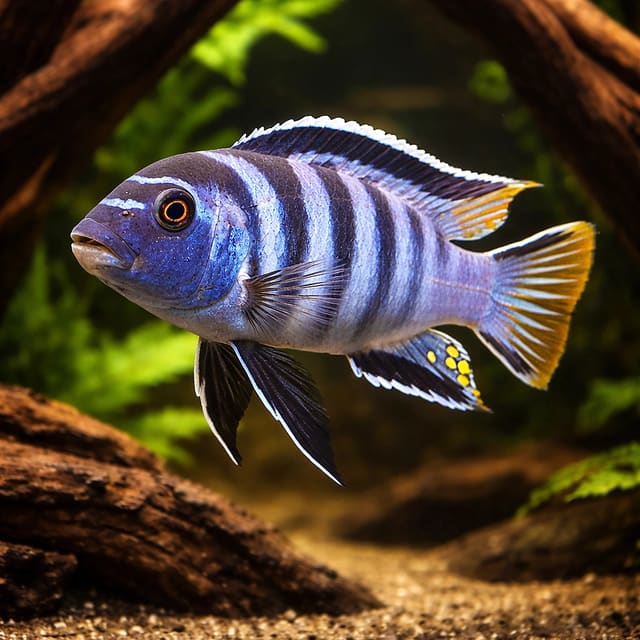
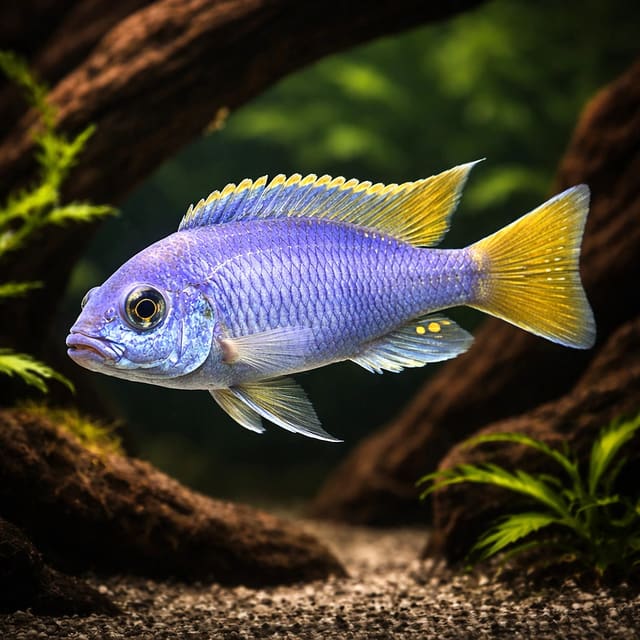
Some gallery images have been digitally enhanced to improve image quality. They show the listed type of animal rather than guaranteeing the exact markings of the individual supplied, so natural colour and pattern can vary.
Colour intensity and visible markings should not be used to infer sex, age or future dominance. Adult males are described as usually larger and as having brighter egg spots than females, but those tendencies do not turn a dispatch-size visual assessment into a guarantee. Plan the aquarium so that any individual can retreat from pressure while its behaviour becomes clear.
| Suits | Not suited to |
|---|---|
| Stable aquarium water maintained at 24–25°C and pH 8.0 | Water outside 24–25°C and pH 8.0 |
| Other mbuna with dissimilar patterning in a deliberately planned Malawi aquarium | Peace-loving Peacocks or Utaka |
Start with an aquarium base of at least 120 × 38 cm. Seriously Fish associates that footprint with a volume of about 137 litres, but the base dimensions matter because rock territories and escape routes occupy floor length and width. A taller aquarium with a shorter base does not create the same separation between territorial fish.
For a reasonable Malawi community, OATA recommends an aquarium of at least 200 litres. Treat that as the starting point for a mixed community rather than permission to add fish until the volume is nominally full. This mbuna’s aggression, the sex composition of the group, the number of territories and the behaviour of established residents can all justify substantially more room.
| Example | Decision |
|---|---|
| 120 × 38 cm base at about 137 litres | Meets the stated footprint reference; plan rockwork and stocking conservatively |
| Shorter than 120 cm but similar volume | Does not meet the stated length reference |
| At least 200 litres with a 120 cm or longer base | A more suitable starting point for a reasonable Malawi community |
| More than one male | Requires a very large aquarium and still carries a serious risk to subordinate males |
Before measuring the display area, account for any internal filter compartments, thick rock structures and inaccessible corners. The fish needs usable routes around the structure, not merely the gross dimensions printed on the aquarium. Leave enough open water for movement, but never create a long, uninterrupted view across the whole tank.
Aquarium size cannot make an unsuitable stocking combination safe by itself. It gives you more options for separated shelters and escape routes, but the fish still needs companions chosen for the same hard-water conditions and for an ability to cope with an assertive mbuna community.
Arrange piles of aquarium-safe rock to form cave-like structures, narrow passages and several hiding places. Leave open swimming areas between structures rather than building one continuous wall. Separate clusters interrupt a pursuing fish’s view and give a subordinate individual more than one direction of escape.
A sand substrate suits the species profile and accommodates the digging and rearranging typical of Malawi cichlids. Position the main rocks securely before the surrounding sand is shaped so that excavation cannot easily undermine them. Every stack should remain stable when a fish digs at its base or moves through a narrow gap.
Do not discourage every trace of algae on the rocks. The wild fish combs loose algae from the rock covering, and the aquarium profile specifically recommends allowing algal growth. Keep the viewing panes as clean as you prefer while leaving selected rock surfaces to mature.
Plants are optional rather than the basis of the shelter plan. Malawi cichlids will often dig and rearrange the substrate, which will uproot plants, so use only robust plants that can tolerate the intended hard-water conditions and physical disturbance. Rockwork must provide the essential refuges even if every plant is moved or removed.
Photograph or sketch the completed layout before the fish enters. If aggression later becomes focused, you can compare territory use with the starting arrangement and deliberately reposition several rocks instead of making small, ineffective changes to one ornament.
The published ranges differ, so use their practical overlap for routine aquarium care. FishBase records 22–25°C, pH 7.5–8.0 and 9–19 dH for the fish’s environment. Seriously Fish recommends 24–28°C, pH 7.6–8.8 and 10–25 dGH in the aquarium. OATA’s Malawi-cichlid sheet gives 23–27°C, pH 8.0–8.6 and 12–18 dGH as group guidance.
For this aquarium, target 24–25°C, pH 8.0 and 12–18 dGH. These values remain within the fish-level ranges while also fitting the narrower Malawi guidance. Aim for stability inside those limits rather than allowing routine swings from one edge to the other.
| Reading | Action |
|---|---|
| 24–25°C | Continue routine monitoring and check that the daily pattern remains steady |
| pH 8.0 | Maintain the established routine; avoid abrupt adjustment |
| 12–18 dGH | Keep replacement water close to the aquarium’s established hardness |
| Ammonia above 0 mg/l | Stop treating the result as routine and check filtration, feeding and recent stocking |
| Nitrite above 0 mg/l | Investigate immediately because the target is zero |
Measure the aquarium and tap water before selecting any adjustment method. Our water chemistry guide explains what the readings mean, while the water matcher helps compare measured values with this target.
OATA sets ammonia and nitrite at zero and says nitrate should not exceed 20 mg per litre above the normal tap-water level. Record the tap-water nitrate alongside the aquarium result so that the comparison has a meaningful baseline. Make changes gradually, then retest rather than assuming the intended adjustment produced the expected value.
Use a mature, well-maintained biological filter before adding the fish. The RSPCA explains that biological filtration supports bacteria that convert toxic ammonia to nitrite and then to the safer nitrate. A visually clear aquarium can still have dangerous ammonia or nitrite, so water testing remains essential.
For the 137-litre reference aquarium, Seriously Fish recommends turnover of four to five times the aquarium volume each hour. That produces a filter target of about 550–685 litres per hour. Use the manufacturer’s rated output as a starting comparison, then remember that media, pipework, lift height and accumulated debris may reduce real flow.
| Calculation | Planning result |
|---|---|
| 137 litres × 4 per hour | 548 lph, rounded to about 550 lph |
| 137 litres × 5 per hour | 685 lph |
| Larger aquarium | Repeat the calculation using its true operating volume |
| Flow obstructed by rockwork | Reposition outlets so debris does not settle in extensive dead areas |
OATA recommends an oversized filter and strong aeration for crowded Malawi communities. Provide visible surface movement and ensure rock structures do not isolate stagnant pockets. The fish still needs calmer refuges around and behind rocks, so distribute the circulation rather than directing one harsh jet through every shelter.
Mature the filter before livestock enters. The first tropical tank guide covers preparation and maturation, but the final test is the water: ammonia and nitrite must both read zero before the fish is introduced.
Never replace all biological media at once. If flow falls, check the intake and hoses before assuming more power is needed. Clean only enough media to restore function while preserving the bacterial population that processes the fish’s waste.
Test ammonia, nitrite and nitrate at least weekly. Ammonia and nitrite should remain at zero; compare nitrate with the tap-water baseline and keep it within 20 mg per litre above that starting level. Test temperature, pH and hardness often enough to recognise the aquarium’s normal pattern before a change becomes large.
At least once every week, change 25% of the water. Treat replacement tap water with a conditioner that removes chlorine or chloramine before it enters the aquarium. Match the replacement water closely enough to avoid an abrupt temperature or chemistry change, then refill without destabilising the rockwork.
Do not rinse biological media under the tap because chlorine or chloramine may damage the useful bacterial population. Avoid combining a deep substrate disturbance, extensive filter cleaning and a complete décor rebuild on the same day unless an urgent safety problem demands it. Preserving biological stability matters as much as removing visible dirt.
If nitrate rises faster than normal, look for a reason before simply repeating larger water changes. Check for uneaten food, a blocked filter, reduced flow, a recent increase in fish numbers or waste trapped behind rock piles. Correct the cause, restore the regular maintenance schedule and continue testing until the expected pattern returns.
Base the diet on a good Malawi-cichlid food with a high algae or vegetable content. Spirulina flakes, blanched spinach and nori are named options in the aquarium profile, reflecting the fish’s natural habit of combing algae from rock surfaces. Algal growth in the aquarium adds grazing opportunity but does not replace a measured feeding routine.
Supplement the vegetable-rich base with suitable live or frozen foods rather than making rich animal matter the main diet. Never feed beefheart or other red meat; Seriously Fish warns that it interferes with the digestive system of these fish.
OATA recommends feeding Malawi cichlids twice a day and limiting each meal to what they can eat within a few minutes. That rule prevents uneaten food from breaking down and adding toxic waste to the water. It is more useful than a fixed number of flakes because appetite, food size and competition vary.
Distribute food so that one dominant individual cannot intercept every piece at a single point. Watch each resident rather than judging success from the activity of the strongest fish. A subordinate fish that repeatedly approaches but retreats without eating needs a stocking or territory assessment, not simply more food poured into the aquarium.
Changes in appetite can be an early warning sign. If the fish loses interest, first test water quality, check temperature and observe breathing and aggression. Remove leftovers promptly and avoid trying several rich foods at once, which can conceal the underlying problem while increasing the biological load.
Prepare the aquarium before the delivery day: confirm that ammonia and nitrite are zero, temperature is 24–25°C, pH is 8.0 and general hardness is 12–18 dGH. Complete the rock layout and decide where the fish can retreat before opening the transport box.
Follow our delivery and acclimatisation policy: be present to receive the parcel and start filming while it is still sealed, before opening it. Continue in one take through opening the parcel and showing the fish inside the sealed bag. Float the bag for 20–30 minutes, acclimatise slowly and never pour transport water into the aquarium. Keep the room calm and avoid unnecessary chasing or handling during release.
| Checkpoint | What to assess |
|---|---|
| Before release | Water readings, secure rocks, clear escape routes and normal filter flow |
| First hour | Breathing, balance, swimming control and immediate pursuit by residents |
| First day | Whether the fish can leave shelter without being trapped or continuously chased |
| First week | Feeding access, fins, scales, colour, body condition and territory use |
| First month | Stable water tests, sustainable aggression levels and normal maintenance rhythm |
Some hiding after introduction can be part of settling, but continuous confinement to one corner, hanging at the surface, sitting on the bottom, erratic swimming, rapid or unusually slow gill movement, damaged fins, missing scales, white spots, fluffy growths or reduced feeding require attention. Test the water first because ammonia, nitrite, temperature or a recent stocking change may explain the behaviour.
If one fish is being pinned into a refuge, do not wait for severe injury. Interrupt the line of sight, reassess the stocking combination and, where necessary, separate the threatened fish safely. If a health change persists after checking water quality and aggression, contact us for guidance.
Build the stocking plan around Malawi cichlids rather than adding this fish to a mixed peaceful community. Seriously Fish says it should not be kept with peace-loving species such as Peacocks or Utaka. It may be combined with other mbuna only when they do not resemble it in patterning.
Use four tests for every proposed companion: compatible hard-water requirements, sufficient resilience for an assertive mbuna aquarium, clearly different body patterning and enough space for separate territories. Passing one test does not compensate for failing another.
| Candidate | Decision |
|---|---|
| Peace-loving Peacock or Utaka | Avoid; the temperament mismatch is specifically identified |
| Mbuna with closely similar bars or patterning | Avoid; resemblance may intensify territorial conflict |
| Dissimilar mbuna with matching water needs | Consider only within a complete Malawi stocking plan |
| Some Lake Malawi Synodontis | Screen the exact catfish species, adult size, water needs and space before deciding |
| General tropical community fish | Do not assume compatibility from temperature alone |
OATA advises keeping Malawi cichlids only with other Malawi cichlids or some Synodontis catfish associated with the lake. “Some” is important: it is not a blanket recommendation for every Synodontis or every aquarium. Adult size, behaviour, shelter use and the space left after rockwork still need checking.
Different geographical forms of Pseudotropheus elongatus should not be mixed because the aquarium profile warns that they hybridise freely. Similar appearance is therefore both an aggression concern and a breeding-integrity concern.
Review the whole aquarium, not just the proposed pair of species. Established territories, resident size, sex composition and introduction order can change the outcome. Browse the African cichlid collection to compare identities, then apply this screen to each candidate rather than treating collection placement as a compatibility promise.
This fish is highly territorial towards its own kind. Seriously Fish advises that more than one male needs a very large aquarium and warns that subordinate males may still be killed. For a breeding-group plan, it recommends one male with at least 4–6 females so that pursuit is not concentrated on one female.
Those ratios require known sexes and a purpose-built plan. An unsexed purchase should never be assumed to complete a safe harem. If you cannot establish the intended composition, keep one specimen as the only member of its species within a carefully screened mbuna community rather than accumulating fish and hoping the ratio becomes suitable.
OATA recommends Malawi communities of at least 15 fish and slight crowding to spread aggression, but that is a community-management approach rather than a safe group number for this particular species. It also recommends at least 200 litres for a reasonable Malawi community, an oversized filter and strong aeration. Do not apply the fish-number guideline without also meeting the filtration, water-quality, footprint and compatibility requirements.
Add more peaceful Malawi species before more aggressive ones. When introducing this mbuna to an established aquarium, rearranging several rock structures can disrupt fixed territory boundaries and reduce the advantage held by residents. Additions should still be gradual enough for the biological filter to adjust to the increased waste load.
Intervene when pursuit becomes continuous, one fish cannot feed, fins are repeatedly damaged or a resident is confined to the surface, a corner or one cave. Rebuild sightlines, verify the stocking plan and separate an endangered fish where necessary. Occasional displays are not a reason to ignore escalating physical harm.
It is a slender, highly territorial rock-dwelling cichlid from Lake Malawi. It belongs to the family Cichlidae, grazes loose algae from rocky surfaces in nature and is best suited to an advanced keeper.
One purchase quantity supplies one animal. Increase the quantity only as part of a complete stocking plan that accounts for territory, aquarium size and group composition.
The catalogue dispatch grade is 4–5 cm. This is not the adult size, so plan around the aquarium reference of up to 13.5 cm standard length.
Use at least a 120 × 38 cm aquarium base, associated with about 137 litres, plus secure rock piles, caves, broken sightlines, open swimming areas and sand. Start with at least 200 litres for a reasonable Malawi community.
One specimen can be the only member of its species in a carefully screened mbuna community. A breeding group calls for one male and at least 4–6 females; keeping more than one male requires a very large aquarium and remains risky.
Target 24–25°C, pH 8.0 and 12–18 dGH, with ammonia and nitrite at zero. Keep nitrate within 20 mg per litre above the normal tap-water level and avoid abrupt changes.
Feed an algae-rich Malawi-cichlid food with vegetable matter such as spirulina flakes, blanched spinach or nori forming a large part of the diet. Offer controlled portions twice daily and never feed beefheart or other red meat.
Start filming while the parcel is still sealed, before opening it or floating the bag. Continue in one take through opening the parcel and showing the fish inside the sealed bag. Be present to receive it, float the bag for 20–30 minutes, acclimatise slowly and release the fish without pouring transport water into the aquarium. Confirm ammonia and nitrite are zero before introduction.
Consider dissimilar-looking mbuna with matching hard-water needs in a deliberately planned Malawi aquarium. Avoid peace-loving Peacocks or Utaka, closely patterned mbuna and mixing different geographical forms of this fish.
No reviews for this item yet. Bought one? Honest reviews only, good or bad.
What customers say about ordering from us
Easy website plenty of info on fish your buying great to pick a time slot
TRACEY DURRANT · 7 Oct 2026
Got some lovely fish thank you
Kevin Mackie · 7 Oct 2026
Reviews of our shop, collected by Judge.me, an independent third-party review collector. Newest first.