Moderate
Acei Cichlid (Pseudotropheus sp. “acei”)
24–26°C · pH 7.5–8.5 · 300L
£7.99
Chailosi Elongatus Mbuna (Pseudotropheus elongatus) is a highly territorial Lake Malawi rock-dweller for experienced cichlid keepers. One purchase supplies one unsexed fish, with four dispatch sizes spanning 3–9 cm. Plan a rocky 120 × 38 cm-base aquarium, hard alkaline water and carefully chosen robust Malawi companions.
Adult size is the maximum length this species reaches at full maturity (scientific sources). The livestock you receive will be younger and smaller — pick a size above for the actual shipping size. Product-photo provenance and any image-specific limitations are stated on the listing.
Pseudotropheus elongatus
Save when buying multiple fish. Each quantity is one fish; sex and pair formation are not guaranteed unless the selected variant explicitly states them.
Chailosi Elongatus Mbuna (Pseudotropheus elongatus) is a highly territorial Lake Malawi rock-dweller for experienced cichlid keepers. One purchase supplies one unsexed fish, with four dispatch sizes spanning 3–9 cm. Plan a rocky 120 × 38 cm-base aquarium, hard alkaline water and carefully chosen robust Malawi companions.
Adult size is the maximum length this species reaches at full maturity (scientific sources). The livestock you receive will be younger and smaller — pick a size above for the actual shipping size. Product-photo provenance and any image-specific limitations are stated on the listing.

Cichlids are a family of roughly 1,800 accepted species, not one care type. Before buying, identify the exact species and source, then compare adult measurement, usable tank dimensions, social system, territory, tested water, diet and an exit plan. No family-wide minimum tank, water range or tank-mate list is safe.
Maintain these water conditions for optimal health and vibrant colors
Chailosi Elongatus Mbuna is the trade form sold here under Pseudotropheus elongatus. Current FishBase taxonomy accepts Chindongo elongatus and treats Pseudotropheus elongatus as a synonym. The product title preserves the established trade identity, while the accepted name is carried in the structured taxonomic field and explained throughout the guide. Chailosi is a locality or trade-form label rather than part of the binomial.
This is a specialised Lake Malawi rock-dwelling cichlid, not a general tropical-community fish. A species husbandry profile describes it as one of the most aggressive and territorial mbuna and advises against peaceful Peacocks or utaka. It suits an experienced keeper who can provide a mature hard-water aquarium, extensive rock structure, powerful filtration, high oxygen availability and a realistic separation plan.
One purchase supplies one live fish of the size chosen. The four genuine dispatch choices are 3–4 cm, 4–5 cm, 5–7 cm and 7–9 cm; use the live size control for the current choice rather than reading availability from this evergreen guide. The size you select is the size supplied, not the adult size. Sex is guaranteed only when the selected option explicitly states male or female. This Chailosi Elongatus Mbuna listing has no sex-guaranteed option.
| Suits | Reconsider the purchase |
|---|---|
| An experienced Malawi keeper with a 120 × 38 cm or larger base, mature filtration and hard alkaline water | A new community aquarium, soft acidic water or a plan centred on peaceful fish |
| A rocky layout with many caves, broken sight lines and open swimming areas | One decorative cave that a dominant fish can control, or fragile plants expected to remain undisturbed |
| A carefully planned mbuna community with dissimilar robust species and a removal option | Peacocks, utaka, similar-looking mbuna, another male of the same form, or any unplanned mixed stocking |
| A keeper prepared to monitor every fish during feeding and territorial changes | Choosing by colour alone and hoping crowding will automatically prevent aggression |
FishBase records the accepted species from Lake Malawi's shallow, sediment-free rocky biotope, where it is common around small rocks and combs loose algae from the biocover. That natural-history summary explains the importance of rockwork and grazing opportunities, but it does not supply a home-aquarium volume or stocking formula.
Adult-size sources differ. FishBase records 9.5 cm standard length, while the detailed aquarium profile gives 135 mm SL. For conservative space and companion planning this page carries the larger 13.5 cm SL figure, while preserving the disagreement rather than presenting it as certain growth for every fish. Standard length excludes the tail.
For the offer itself, the safest decision is to choose the dispatch size that fits the planned introduction and to judge the aquarium against adult territorial behaviour. A 3–4 cm juvenile still needs a long-term adult plan, and a 7–9 cm fish is not a guaranteed male or a finished adult. Browse the African cichlid collection for alternatives, but treat each listing as a separate care decision rather than a ready-made tank-mate recommendation.
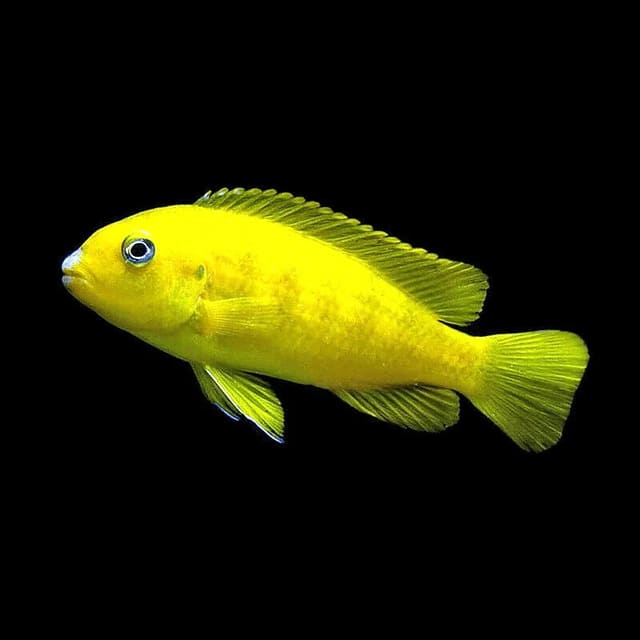
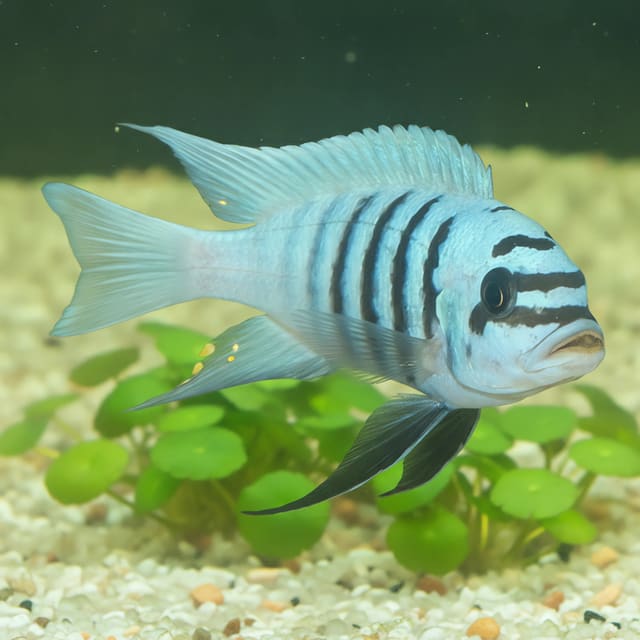
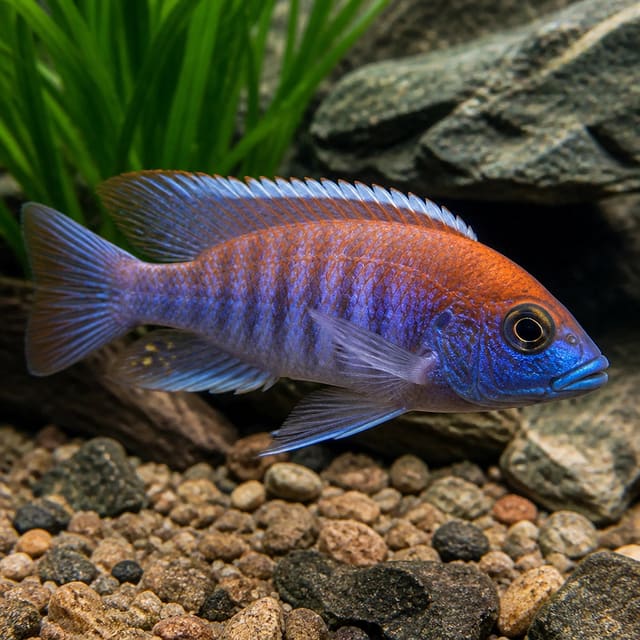
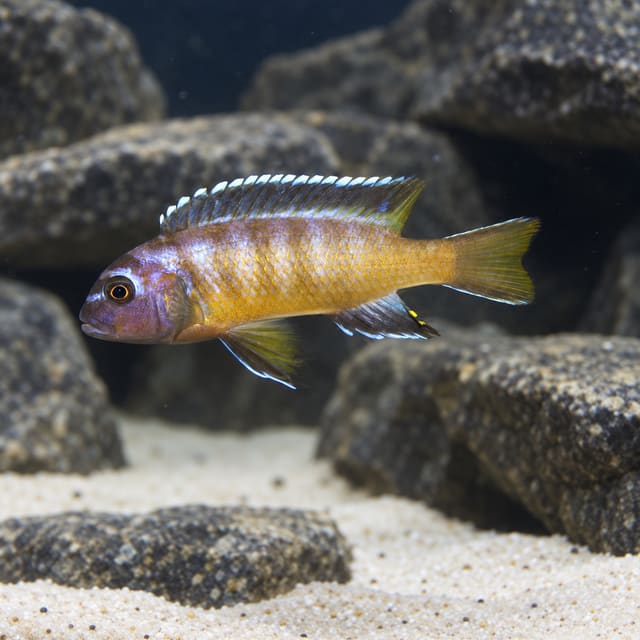
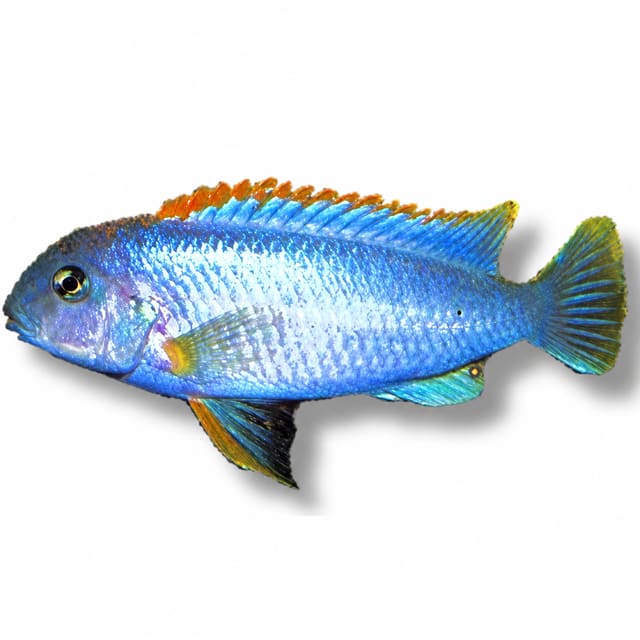
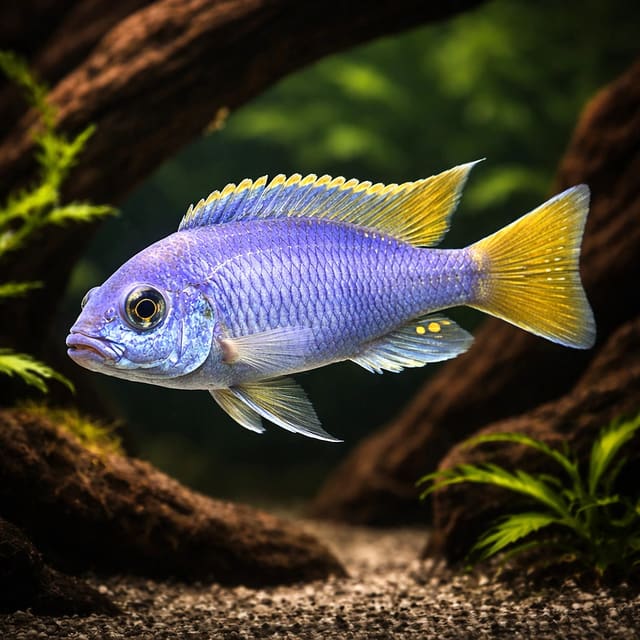
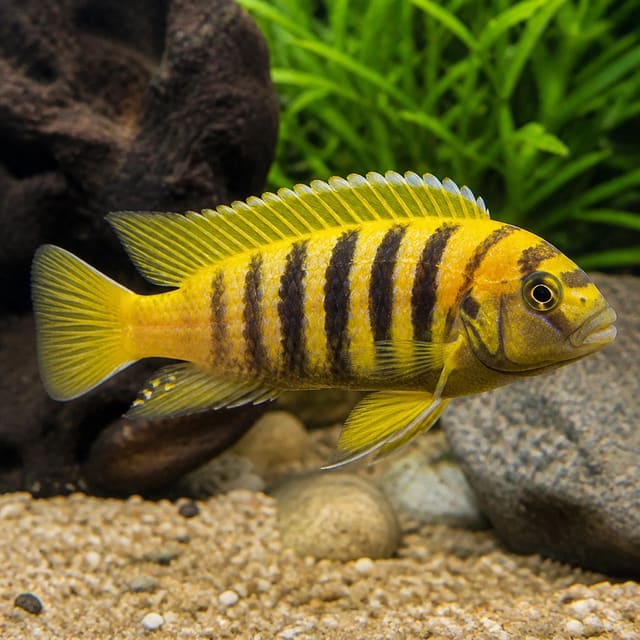
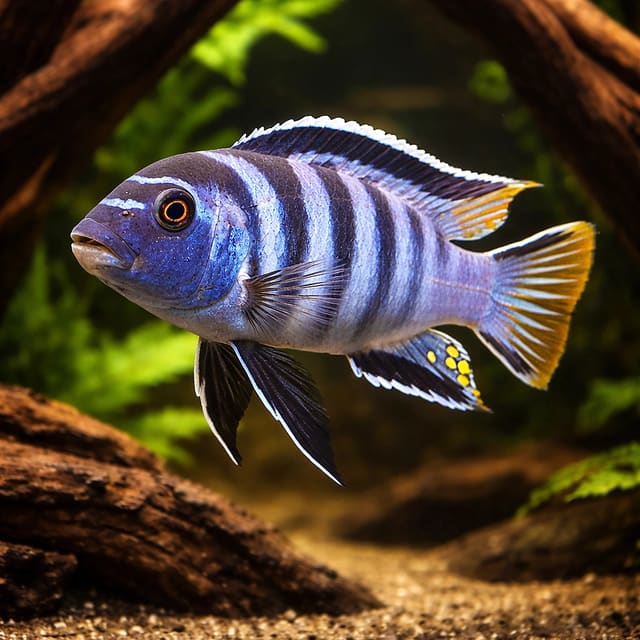
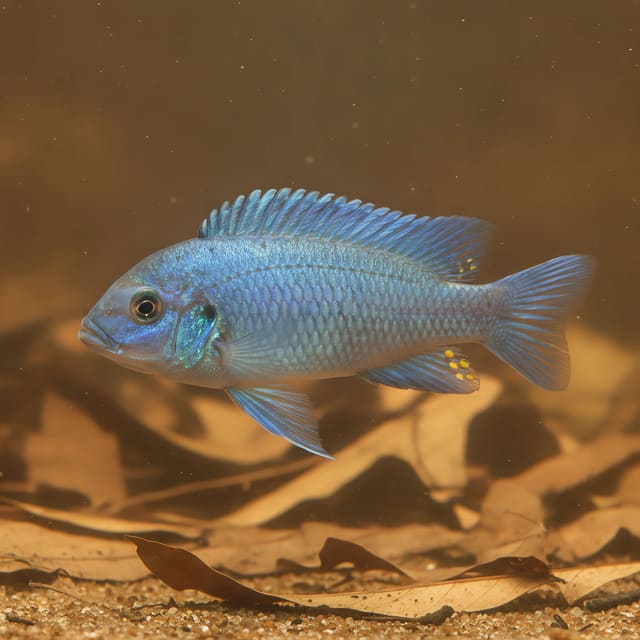
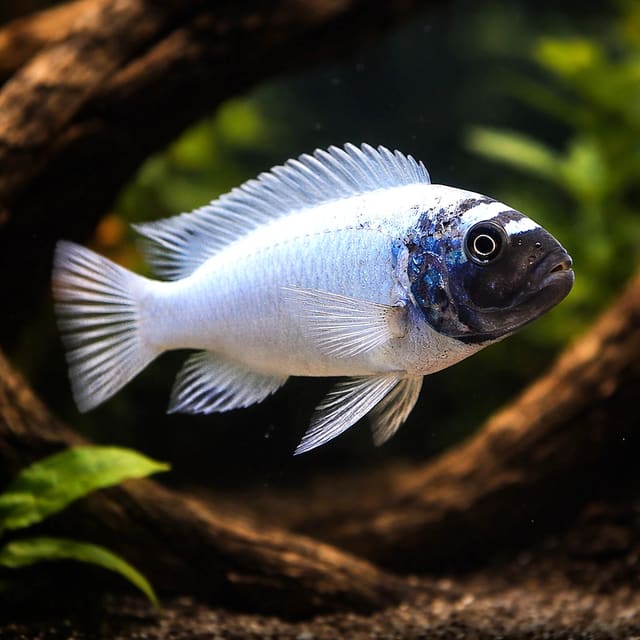
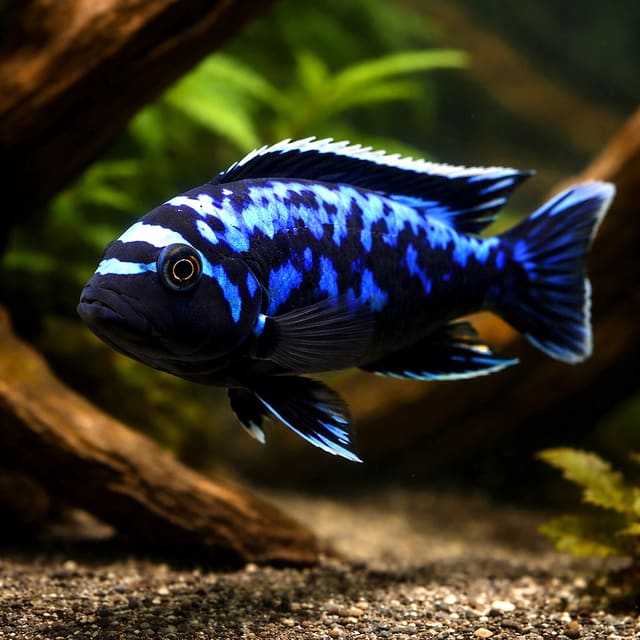
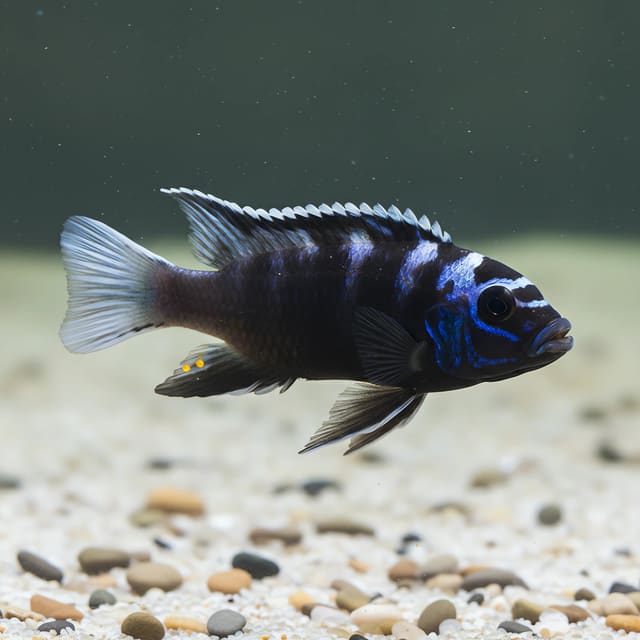
Gallery images have been digitally enhanced to improve image quality. Natural colour, pattern, size and maturity can vary between live animals.
Choose this fish for a purpose-built Malawi aquarium, not as a colourful addition to an unrelated community. Before purchase, confirm the base dimensions, mature filter, measured GH and KH, secure rockwork, existing species and emergency housing. Decide who will move if one fish controls feeding or traps another against the surface. The best plan leaves enough time and equipment to act on behaviour rather than waiting for visible injury. Colour and activity are enjoyable qualities, but the keeper's real commitment is to manage territory, water quality and the welfare of every animal sharing the aquarium through adulthood.
The species aquarium profile recommends a 120 × 38 cm base and about 137 litres for Pseudotropheus elongatus. Treat the footprint as central: territory length and the ability to get out of another fish's sight matter more than nominal volume alone. A taller aquarium with a shorter base does not offer the same territorial layout.
The 137-litre figure is a species-level minimum from one husbandry source, not permission to pack a community into that volume. More fish, more than one male, or multiple mbuna groups need a larger footprint and greater mature filter capacity. The same profile says a very large aquarium is needed for more than one male and still warns that a subordinate male may be killed. Avoid using a stocking equation as a substitute for observation and a removal plan.
OATA's broader Malawi sheet recommends at least 200 litres for a reasonable community and describes planned slight overstocking for some Malawi communities as a way to distribute aggression. That method increases waste, oxygen demand and the number of interactions. It should be used only as part of a deliberate Malawi plan with oversized mature filtration, aggressive aeration, multiple territories and the ability to remove a fish. It is not advice to add random fish to a small aquarium.
If this is a first aquarium, use the first tropical tank guide to understand cycling and testing, then gain practical hard-water cichlid experience before choosing this territorial species. The store suitability assessment is advanced because the main challenge is managing aggression and stocking, not merely keeping a hardy fish alive.
Build stable piles of aquarium-safe rock that form many cave-like shelters, narrow visual breaks and more potential territories than dominant fish. Place heavy rock securely so digging cannot undermine it; do not balance unstable structures on loose substrate. Leave open water for swimming and enough access for maintenance and observation.
A sand substrate suits the rocky Malawi layout and allows natural digging without sharp gravel edges. FishBase reports the species in shallow rocky, sediment-free areas and feeding from loose algae on the biocover. Encourage safe algal growth on selected rock faces rather than sterilising every surface. This grazing surface complements a planned diet but does not replace complete food.
Plants are not essential and will often be uprooted as mbuna dig and rearrange the substrate. If hardy attached plants are used, secure them to rock and regard them as optional structure rather than evidence that the habitat is correct. The held gallery image is not a setup instruction; use the species evidence and the fish's behaviour to plan the aquarium.
The species profile gives 24–28 °C, pH 7.6–8.8 and 10–25 dGH for aquarium care. These are species-level husbandry values and are used in the care card. FishBase reports a narrower wild environmental record of 22–25 °C, pH 7.5–8.0 and 9–19 dH. The difference shows why wild records and aquarium guidance must be labelled rather than merged into a single combined range.
OATA's broad Malawi guidance is 23–27 °C, pH 8.0–8.6, 12–18 dGH and 10–15 dKH. That group sheet also calls for zero ammonia and nitrite and nitrate no more than 20 mg/L above normal tap-water levels. Use the species profile for the main card and the OATA values as a UK group-level comparison, then match the actual source water gradually.
Test temperature, pH, GH, KH, ammonia, nitrite and nitrate with suitable equipment. The water chemistry guide explains the readings, and the water matcher can help compare measured values with the stated range. Avoid forcing pH with unmeasured additives. Hardness and alkalinity need a stable, tested plan rather than a generic teaspoon recipe copied from another water supply.
Use a thermostatically controlled heater where room conditions cannot hold the target and verify the water with an independent thermometer. Avoid abrupt changes. Ask what temperature and chemistry the fish currently occupy, and make transitions slowly within a compatible range.
Malawi setups can carry a high biological load, and territorial stocking methods can increase it further. Use an oversized mature filter, protect intakes where a smaller fish could be trapped and maintain strong surface movement. OATA recommends aggressive aeration for crowded Malawi communities. Oxygen demand rises with temperature, feeding and waste, so watch the fish and equipment rather than assuming a large filter label guarantees enough dissolved oxygen.
RSPCA aquarium guidance explains that biological filtration converts toxic ammonia first to nitrite and then to safer nitrate. Cycle the system before fish arrive and confirm zero ammonia and nitrite with repeat tests. Rockwork can trap waste, so arrange it to permit siphoning and check dead spots without destabilising the structure.
OATA strongly recommends a partial water change of 25% at least once each week for Malawi cichlids. Treat replacement water with conditioner before adding it and match temperature and chemistry closely. Test regularly, inspect the filter for reduced flow and rinse established media gently in removed aquarium water or another dechlorinated method; do not run it under the tap.
Record a normal baseline for breathing, posture, feeding and territory use. Rapid gill movement, surface hanging, loss of balance, clamped fins, wounds, white spots, unusual swelling, sustained hiding or a sudden appetite change require prompt water tests and equipment checks. Those signs are not diagnoses. Separate an injured fish into suitable mature housing and seek aquatic veterinary help when signs are severe or persist.
FishBase describes Chindongo elongatus combing loose algae from biocover. The aquarium profile advises that vegetable matter such as spirulina flake, blanched spinach or nori should form a large proportion of the diet, supplemented with suitable live or frozen variety. It specifically warns against beefheart and other red meat.
Use a quality Malawi or mbuna food with substantial algal or vegetable content as the regular base. Choose a particle size that each fish can take easily. OATA's broad Malawi sheet advises feeding only what the fish can consume within a few minutes, twice a day. Divide food across the aquarium so a dominant fish cannot control a single feeding point, and observe whether each individual eats.
Remove persistent leftovers and adjust the portion after changes in group size, temperature or filtration. Do not use garden leaves, unknown pond food or a single frozen item as a complete diet. Natural algae is useful grazing enrichment, not a balanced ration by itself. A swollen abdomen, refusal of food or abnormal waste needs water checks and informed diagnosis rather than an automatic home treatment.
This product does not guarantee sex. Adult males are often larger and may have brighter egg spots, but juveniles can be difficult to sex and appearance alone is not reliable enough to promise a male or female. The size chosen cannot be used as a sex test.
The species profile describes extreme aggression towards its own species and recommends at least four to six females per male in a breeding arrangement. That is specialist husbandry guidance, not a promise that a harem will be safe in any aquarium. It also warns that more than one male requires a very large tank and can still end with the subordinate fish killed.
Do not attempt breeding simply because the species is a maternal mouthbrooder. A breeding plan needs adequate space, carefully identified adults, multiple refuges, observation of female condition, a mature separation aquarium and responsible homes for young fish. Never move a holding female or fry into an uncycled container, and do not treat aggression as normal when a fish cannot feed or escape.
Prepare the mature aquarium and a viable separation space before dispatch. Read the current delivery and Live Arrival Guarantee policy and ensure someone is present to receive live fish. Inspect the parcel the same day. If anything appears wrong, record one continuous unboxing video beginning with the parcel still sealed, showing the outer box, opening and fish still inside the sealed bag before anything is disturbed; contact Tropical Fish Co the same day with the order number.
If the fish appears well, float the sealed bag for 20–30 minutes to equalise temperature, then transfer the fish carefully without pouring transport water into the aquarium. Do not add an unsourced lighting, chemical-dip or feeding step to that store procedure. Observe balance, breathing and swimming after release.
Territory matters during introduction. Before adding the fish, confirm that the intended companions and rock layout have a documented plan. OATA notes that adding Malawi cichlids in groups and rearranging decor can sometimes reduce focused aggression as territories form, but this does not make an incompatible combination safe. Have equipment and mature housing ready to remove a fish promptly.
A quarantine aquarium must be mature, heated and filtered for the fish it will hold, with dedicated nets and siphons. An empty emergency container is not a safe quarantine system. Observe a new fish for breathing, balance, appetite, fins, skin and waste, and keep notes so a change can be separated from its normal behaviour.
Territorial injuries need two responses at once: protect the affected fish in compatible mature water and correct the social cause. Treating torn fins while returning the fish to the same unavoidable attack does not solve the welfare problem. Reassess territory layout, sex assumptions, species combination, aquarium footprint and feeding access. Seek an aquatic vet for serious wounds, persistent swelling, buoyancy problems, repeated refusal of food or signs that continue after water and equipment issues have been corrected.
Keep a practical emergency kit ready: a tested spare heater, air pump, conditioned water, covered mature separation aquarium and dedicated equipment. Check that rock structures remain stable after digging and maintenance. A dominant fish can change territory as it grows, so repeat the full compatibility assessment rather than assuming a combination that worked with juveniles will remain settled.
Never release a Malawi cichlid, aquarium plant, snail, parasite or aquarium water into a pond, drain or natural waterway. Prevent unwanted breeding through careful stocking and arrange responsible permanent care or rehoming before numbers exceed the aquarium. The species conservation record does not turn captive ornamental fish into candidates for release.
Chailosi Elongatus Mbuna is highly territorial. The species profile says it should not be kept with peaceful Peacocks or utaka. It also reports severe aggression towards its own species and warns that a subordinate male can be killed even in a very large aquarium. Treat those cautions as the starting point rather than softening them to semi-aggressive.
Avoid small peaceful community fish, soft-water species, long-finned slow swimmers and any animal that cannot withstand or escape persistent mbuna territorial behaviour. Water incompatibility alone rules out many ordinary tropical companions before behaviour is considered.
The profile allows combination with other mbuna only when they do not resemble this fish in pattern. Select robust Lake Malawi species with compatible hard alkaline water, different patterning and enough room for every social group. Similar-looking mbuna can attract focused aggression and should be avoided. Do not present any named alternative product as a guaranteed tank mate.
OATA advises that Malawi cichlids should generally be kept with other Malawi cichlids or some Lake Malawi Synodontis catfish. The word some matters: the exact catfish species needs its own adult-size, social, dietary, substrate and water review. A catfish is not a neutral object that can be added to fill the bottom of the aquarium.
Both the species profile and OATA discuss planned crowding to spread territory formation or aggression. That approach can work only with a sufficiently large aquarium, oversized mature filtration, strong aeration, many visual breaks, careful species selection and frequent observation. It increases waste and does not guarantee that an individual will remain safe.
Never respond to a severely targeted fish by automatically adding more livestock. First identify whether the victim can feed and escape, whether the aquarium has adequate footprint and cover, and whether the species or males are fundamentally incompatible. Use the prepared separation space when required.
Additions should be planned before purchase. Record the existing species, numbers, sexes where known, adult sizes, territories and water requirements. Rework rock structure only if it can be done safely, add the fish with time to observe, and watch the entire aquarium at feeding. Aggression may change as fish grow, colour develops or breeding behaviour begins.
Warning signs include one fish remaining in a top corner, hiding continuously, breathing rapidly, missing meals, losing colour or suffering torn fins and wounds. Do not wait for a slower fish to become exhausted. Separate it into mature compatible water and reassess the stocking plan.
| Potential direction | Essential condition |
|---|---|
| Robust dissimilar mbuna | Compatible hard alkaline water, separate territories, sufficient footprint and close monitoring |
| Some Lake Malawi Synodontis | Exact species reviewed for adult size, group, substrate, diet and water needs |
| Another male Chailosi | Avoid; the profile warns of lethal subordinate-male aggression even in very large tanks |
| Peacocks or utaka | Avoid; the species profile names these peaceful groups as unsuitable |
| Similar-pattern mbuna | Avoid because resemblance can focus territorial aggression |
Write the proposed stocking plan before purchase. For every species, note adult length, group structure, water range, diet, feeding speed, normal territory and likely escape route. Then map where those territories fit around the actual rockwork. If two fish require the same cave frontage or one cannot feed without entering another fish's defended area, the combination is poor even when both come from Lake Malawi.
Plan for the aquarium after growth, not only the first week. A small fish can become the dominant aggressor or the vulnerable subordinate as size and colour develop. Regular observation at feeding and after maintenance is essential because moving rock can reset territorial boundaries.
FishBase records 9.5 cm standard length, while the aquarium profile gives 13.5 cm SL. This page uses the larger 13.5 cm figure for conservative planning and keeps the disagreement visible. Standard length excludes the tail, and no individual is promised to reach an exact size.
The species profile recommends a 120 × 38 cm base and about 137 litres. That is a starting point for the species, not a community capacity. OATA recommends at least 200 litres for a reasonable Malawi community, and more space is needed for complex or multi-male plans.
There is no safe universal count. The species profile reports extreme same-species aggression, advises four to six females per male in a specialist breeding group and warns against multiple males except in a very large aquarium. This unsexed retail offer does not guarantee that ratio.
No. The advanced store assessment reflects its severe territorial aggression, specialist hard-water setup, stocking decisions and need for a mature separation plan. A hardy appetite does not make aggression management beginner-friendly.
Use a quality Malawi or mbuna food with a large algal or vegetable component. The species grazes algae from biocover, and the aquarium profile names spirulina flake, nori and blanched spinach as useful vegetable foods with suitable live or frozen supplementation. Never feed beefheart or other red meat.
Species-level aquarium guidance is 24–28 °C, pH 7.6–8.8 and 10–25 dGH. Keep conditions stable, test the source and aquarium water and make changes gradually. FishBase's wild environmental values are narrower and should not be silently blended into a new range.
It is one of the more aggressive and territorial mbuna. The main risks are pursuit, territory defence, feeding exclusion and physical injury rather than a simple fin-nipper label. Use extensive rockwork, broken sight lines, careful stocking, close observation and a mature removal option.
Only carefully selected robust Malawi fish should be considered. Other mbuna must be dissimilar in pattern and have compatible space and water needs; some Lake Malawi Synodontis may be possible after exact-species review. Avoid Peacocks, utaka, similar-looking mbuna and peaceful community fish.
Tropical Fish Co hand-packs live fish in oxygenated bags, an insulated box and a heat pack when conditions call for it, then uses a licensed live-animal courier. Someone must receive the parcel. For a Live Arrival Guarantee claim, record one continuous video from the sealed parcel through opening to the fish still in the sealed bag, and contact the shop the same day.
The live product page defines the sold unit and size choices. Scientific and husbandry references support adult biology and care, while the current store policy alone supports packing, claims and arrival steps.
FishBase supplies the accepted name Chindongo elongatus, wild environment and 9.5 cm SL record. The aquarium profile retains the product-title synonym and gives the larger 13.5 cm SL aquarium-planning figure. Both are stated so dispatch size is not confused with adult size.
No reviews for this item yet. Bought one? Honest reviews only, good or bad.
What customers say about ordering from us
Easy website plenty of info on fish your buying great to pick a time slot
TRACEY DURRANT · 7 Oct 2026
Got some lovely fish thank you
Kevin Mackie · 7 Oct 2026
Reviews of our shop, collected by Judge.me, an independent third-party review collector. Newest first.