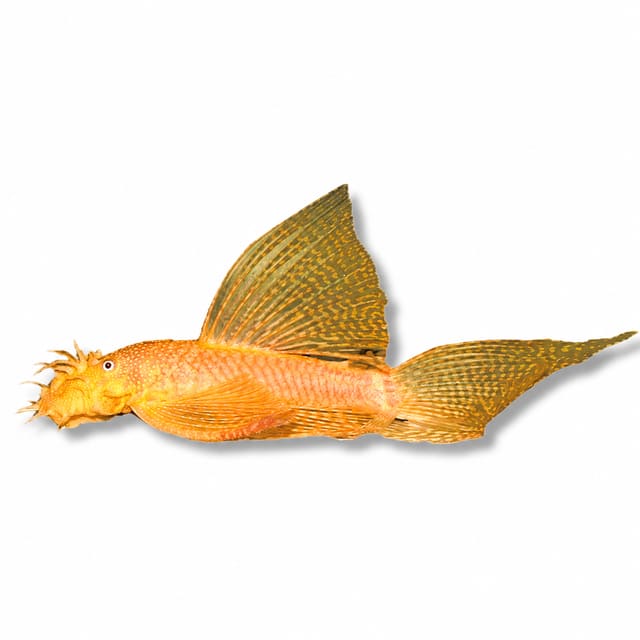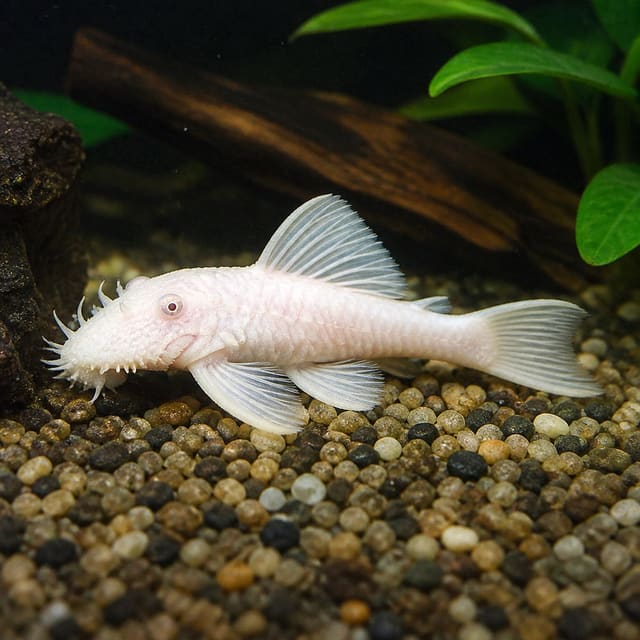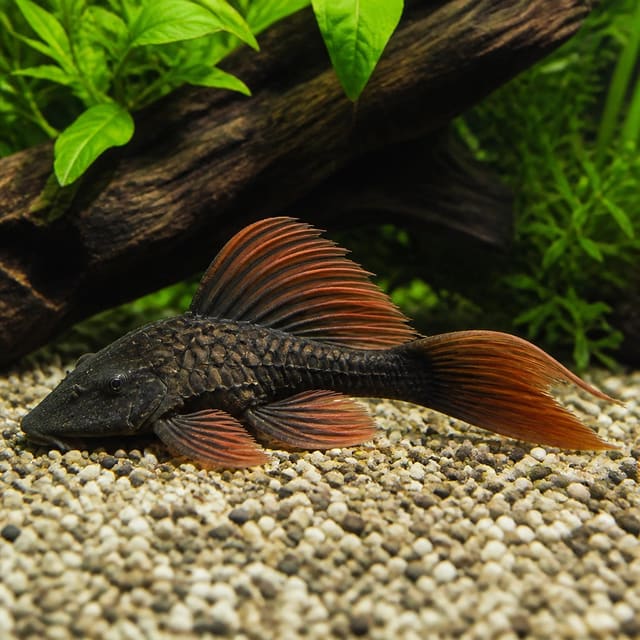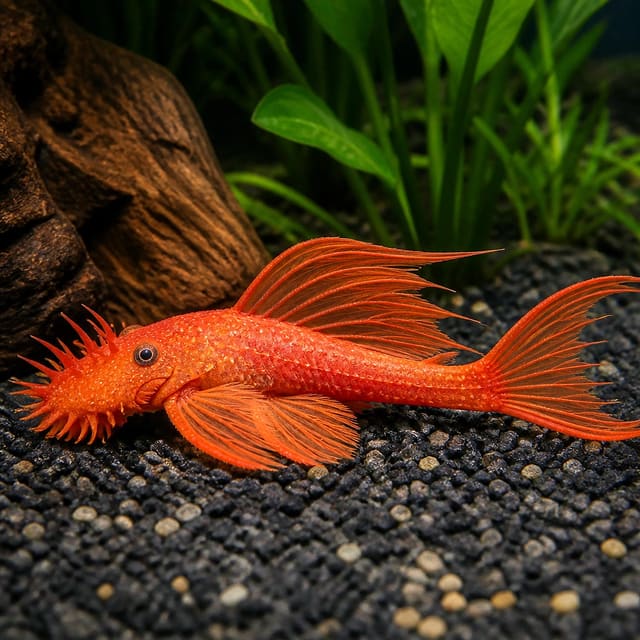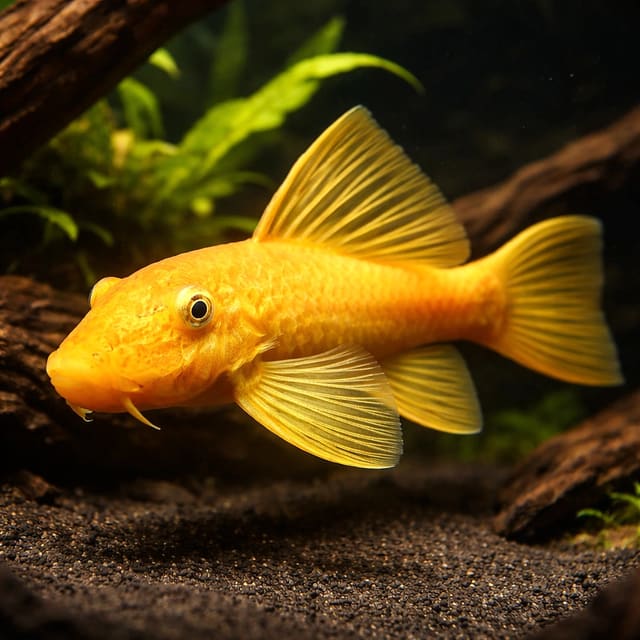
Marigold Bristlenose Pleco (Ancistrus sp.)
22–27°C · pH 6–8
From £5.21Some sizes on sale

The Bristlenose Pleco (Ancistrus sp.) is a nocturnal freshwater loricariid catfish from South America and Panama. It suits keepers with a mature filtered aquarium, wood and cover; OATA recommends 22–27°C and pH 6.0–8.0 and says bristlenose catfish can live alone, in pairs or small groups. Sold individually in dispatch sizes from 2 cm to 7 - 8 cm, with an XL male choice.
Ancistrus sp.
Minimum of 2 per order.
The Bristlenose Pleco (Ancistrus sp.) is a nocturnal freshwater loricariid catfish from South America and Panama. It suits keepers with a mature filtered aquarium, wood and cover; OATA recommends 22–27°C and pH 6.0–8.0 and says bristlenose catfish can live alone, in pairs or small groups. Sold individually in dispatch sizes from 2 cm to 7 - 8 cm, with an XL male choice.
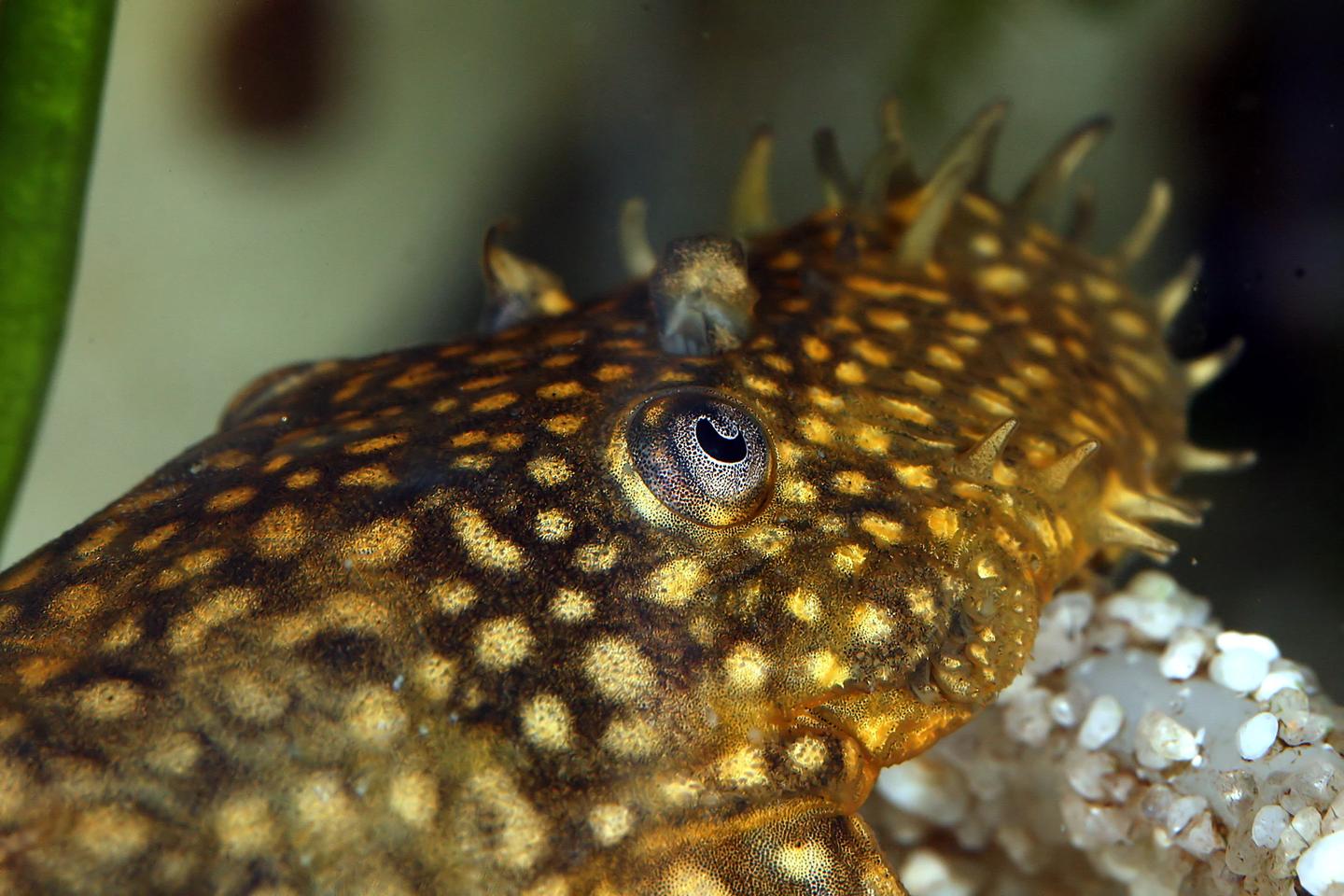
For one typical common bristlenose, start with a mature, filtered aquarium of at least 90 litres, useful floor area, wood and cover. OATA reports about 15 cm adult length, 22-27°C, pH 6-8 and 4-12 dGH. Confirm the exact trade identity before applying species-level claims.
Maintain these water conditions for optimal health and vibrant colors
The Bristlenose Pleco (Ancistrus sp.) is a nocturnal freshwater catfish in the family Loricariidae, native to South America and Panama. It suits a keeper prepared to run a mature filtered aquarium, test the water every week and provide wood and plenty of cover. Because Ancistrus sp. names a genus rather than one species, plan for a fully grown fish and never treat the selected dispatch length as its adult length.
WoRMS places Ancistrus in Loricariidae within the catfish order Siluriformes. In the wild, Ancistrus lives in freshwater habitats across South America and Panama and is active at night. In aquariums this fish is also sold as the bristlenose catfish or bushynose catfish.
The word “pleco” is widely used for loricariid catfish, but it does not make every fish carrying that nickname the same animal. Plan its aquarium, food and companions for Ancistrus, not from care advice written for other fish sold as plecos.
One purchase supplies one Bristlenose Pleco in the choice made through the live size selector. The labelled choices are 2 cm, 2,5 -3cm, 3 - 3,5 cm, 3,5 - 4 cm, 4-5 cm, 5 - 6 cm, 6 - 7 cm, 7 - 8 cm and XL male. These labels describe the fish at dispatch and do not set its final dimensions or the aquarium plan.
The size you select is the size supplied, not the adult size. Use the selector to choose the dispatch size, then prepare the aquarium for the fish’s full life rather than matching it only to the measurement on arrival. A larger dispatch choice does not alter the water-quality, filtration, cover or feeding responsibilities described below.
The exact species has not been identified, so the care advice here follows the genus Ancistrus and its care group.
Sex is guaranteed only when the selected option explicitly states male or female. On this Bristlenose Pleco listing only the XL male option guarantees sex; every other option does not.
Base any sex-dependent group plan on the wording of the selected choice, not on dispatch size, colour or the appearance of a gallery animal. One purchase still supplies one fish when the selected label refers to a male.
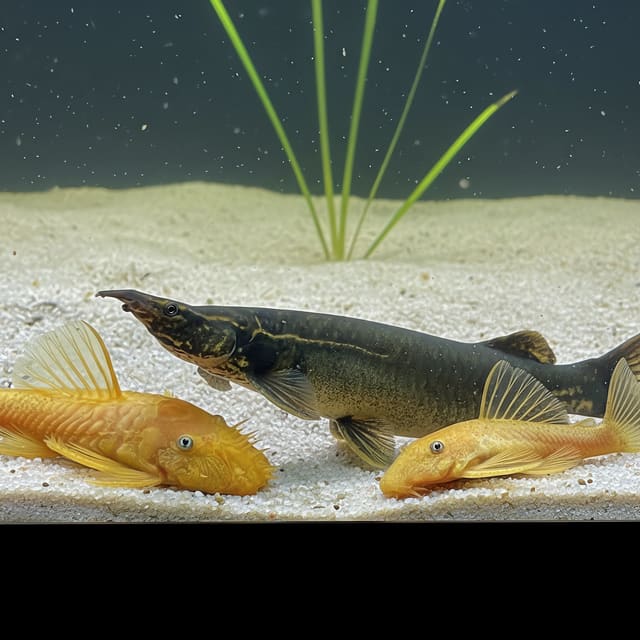
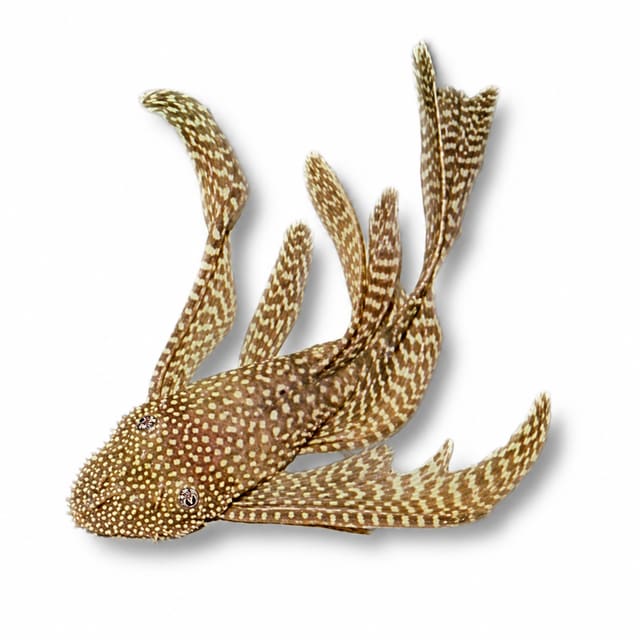
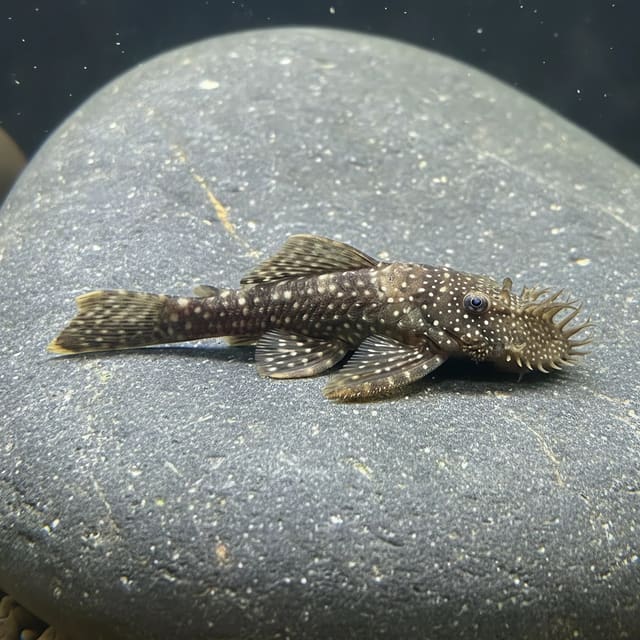
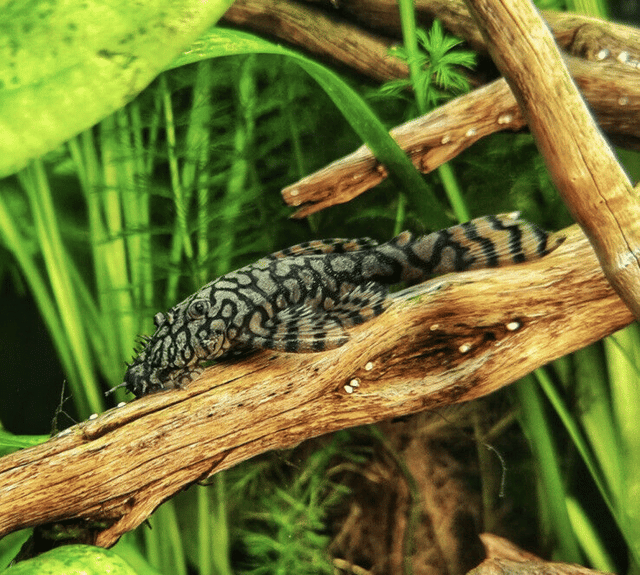
The gallery images are representative, based on reference photographs of this kind of animal, so colours can look slightly different from the live animal.
Keep this fish at 22–27°C and pH 6.0–8.0 in a mature aquarium with a working filter. OATA’s tropical algae-eater care sheet recommends these values for bristlenose catfish. OATA also says bristlenose catfish can be kept alone, in pairs or in small groups, with just one male usually best for a group.
We rate it suitable for a prepared beginner or an intermediate keeper, because success depends on established biological filtration, measured water quality, deliberate supplementary feeding and considered group planning. It must not be treated as a cleaning tool or placed into an unprepared aquarium.
| Suits | Not suited to |
|---|---|
| A mature, filtered tropical freshwater aquarium | An aquarium without a well-established working filter |
| A keeper able to maintain 22–27°C and pH 6.0–8.0 | Water that stays outside 22–27°C or pH 6.0–8.0 |
| A setup with lots of cover and at least one piece of wood | A bare setup without shelter or a grazing surface |
| Keeping one fish, a pair or a carefully planned small group | A group plan that assumes any mix of males will work |
| Aquariums where algae control still includes normal maintenance | A plan that expects the fish to replace cleaning and water-quality management |
Before choosing it, confirm the aquarium meets every point in the Suits column at the same time. Temperature alone is not enough if filtration, food, cover or stocking has been overlooked.
Use the largest practical aquarium and plan it for stable conditions rather than for the dispatch measurement alone. The larger the aquarium, the more stable its temperature and water quality will be. Choose the tank for the fully grown fish, its companions and the filter you will run, not for the size that arrives.
OATA notes that bristlenose catfish are quite secretive and will thrive with lots of cover and at least one piece of wood to graze on. Arrange sheltered areas with suitable aquarium ornaments, plant pots or model caves. The wood supplies both cover and a broad surface on which the fish can graze.
Treat the wood as cover and a grazing surface, not as a replacement for supplementary food. The practical test is whether the fish has accessible shelter and wood without the aquarium becoming too crowded to maintain.
Use aquarium gravel or sand. Live plants are ideal for providing additional cover; suitable plastic plants and aquarium ornaments can provide shelter when live plants are not used. Position each item securely and preserve access for routine inspection and maintenance.
| Setup element | Decision |
|---|---|
| Filter | Install and mature it before the fish is introduced. |
| Wood | Include at least one aquarium-safe piece for cover and grazing. |
| Shelter | Provide plenty of cover through plants, caves or suitable ornaments. |
| Substrate | Use aquarium gravel or sand. |
| Aquarium size | Choose the largest practical setup and plan beyond the dispatch size. |
Check the assembled aquarium from a maintenance perspective before adding livestock. You should be able to test the water, see whether food remains uneaten and reach the filter and substrate without dismantling every shelter.
Run this fish only in an aquarium with a well-established and maintained filter. The RSPCA explains why aquarium filtration is vital: fish release toxic ammonia, and a working biological filter supports beneficial bacteria that convert ammonia to nitrite and then to the safer compound nitrate.
The filter is therefore part of the animal’s life-support system, not an optional cleaning accessory. Water can look clear while ammonia or nitrite is unsafe, so visual clarity never replaces water testing.
If this is your first aquarium, follow our guide to preparing and maturing a first tropical tank before livestock arrives. Wait until the biological filter is operating and tests show ammonia at zero, nitrite at zero and the other care values within range.
Keep the filter running and maintain it as part of the regular aquarium routine. A loss of biological filter performance can allow toxic waste to accumulate, so investigate any ammonia or nitrite reading immediately rather than feeding normally and waiting for it to disappear.
The mature-filter requirement continues throughout the fish’s life. Adding more animals, allowing food to decay or neglecting maintenance can increase the waste load even when the aquarium was initially prepared correctly.
Keep the aquarium at 22–27°C and pH 6.0–8.0. Maintain ammonia at zero milligrams per litre, nitrite at zero milligrams per litre and nitrate at no more than 20 milligrams per litre. OATA recommends these values for bristlenose catfish.
Test at least weekly and record the results so a change is visible before it becomes a persistent problem. Use our water chemistry guide to understand what each measurement represents, then compare your measured values with the range using the water matcher.
| Measurement | Routine decision |
|---|---|
| Temperature | Keep between 22°C and 27°C. |
| pH | Keep between 6.0 and 8.0. |
| Ammonia | Keep at zero mg/L. |
| Nitrite | Keep at zero mg/L. |
| Nitrate | Do not let it exceed 20 mg/L. |
A zero ammonia or nitrite target means any detectable result needs attention. Check filter operation, feeding and the aquarium’s total stocking rather than assuming clear water is safe. Persistent algae can also indicate an underlying water-chemistry or maintenance problem.
Use the same testing method consistently so the weekly results can be compared. When a value changes, repeat the test and inspect the aquarium routine before adding another animal. Restoring suitable conditions takes priority over increasing the stocking level.
For a mixed aquarium, the Bristlenose Pleco’s range must overlap the routine requirements of every proposed companion. A fish that merely tolerates one edge of the range is not automatically a sound match for a tank routinely kept at the opposite edge.
Feed this Bristlenose Pleco deliberately even when algae are visible. OATA says algae-grazing fish still need their diet supplemented with prepared foods such as algae-based wafers or flakes, and ideally fresh vegetables such as cucumber. Algae in the aquarium is useful grazing material, but it is neither a complete feeding plan nor a substitute for appropriate stocking and maintenance.
Offer a measured portion and allow extra access time for algal foods when grazing takes longer than active feeding by other fish. Watch whether the Bristlenose Pleco reaches the food instead of assuming that placing a wafer in a community aquarium means it has eaten.
Do not overfeed. Uneaten food breaks down and releases toxic waste, increasing the burden on the filter and undermining the zero-ammonia and zero-nitrite targets. If food repeatedly remains, reduce the next portion and reassess how it is placed.
A persistent algae problem calls for water testing and a maintenance review, not another algae-eating fish or less deliberate feeding. Check nitrate, total stocking and the amount of uneaten food before changing the livestock plan.
| What you observe | What to do |
|---|---|
| Food disappears before this fish reaches it | Place its food where it can gain access and watch the feeding session. |
| Food remains after the feeding period | Reduce the portion and prevent leftovers from breaking down. |
| Algae continues to spread | Test the water and review maintenance and stocking. |
| Fresh vegetables are being used | Choose organic produce or wash it thoroughly before feeding. |
Test the aquarium at least once a week and let those readings guide the next maintenance decision. Record temperature, pH, ammonia, nitrite and nitrate together so the result describes the aquarium as a system rather than as a collection of isolated numbers.
Trust the test results over how the water or the fish looks. Algae, clear water or an active fish cannot replace chemical testing, while an unexpected test result gives you a specific reason to inspect feeding, filtration and stocking.
A biological filter processes waste produced by the aquarium’s animals and by decomposing food. Increasing the number of fish increases the importance of a realistic stocking assessment, and overfeeding adds waste without adding useful nutrition.
Algae-eating fish are not a substitute for regular maintenance and appropriate stocking levels. Keep cleaning, testing and filter care in the routine even when the fish is grazing visibly on wood, glass or other aquarium surfaces.
Expect a nocturnal fish that may make strong use of cover. Ancistrus is active at night, and bristlenose catfish are quite secretive fish that need lots of cover. A fish spending part of the day under wood, among plants or inside a suitable refuge can therefore be using the setup as intended.
Judge the aquarium by whether the fish has accessible cover, reaches supplementary food and remains in water that meets the measured targets. Do not remove shelter simply to make the animal easier to see; the cover is part of the care plan.
| Checkpoint | Useful action |
|---|---|
| It remains under cover during the day | Keep the refuge in place and observe at feeding time. |
| It does not reach prepared food | Change food placement and watch competition during the feeding period. |
| It stays exposed because cover is sparse | Add suitable plants, wood or aquarium ornaments. |
| Its routine changes alongside a water result | Address the measured water-quality issue first. |
Record the water values and observe which refuge the fish uses and whether it accesses food. Repeat the same checks rather than changing several parts of the aquarium at the same time. A consistent routine makes a later change easier to recognise.
If its condition or behaviour causes concern after the water and setup have been checked, contact us with the aquarium values, stocking and a clear description of the change. Those details make the next assessment more useful than a general description alone.
Before the parcel arrives, make sure the filter is working and a test shows 22–27°C, pH 6.0–8.0, zero ammonia and zero nitrite.
Our delivery and Live Arrival Guarantee policy explains the packing and receipt procedure. Fish are hand-bagged in pure oxygen and placed in an insulated box, with a heat pack when the weather calls for it. A licensed live-animal courier carries the parcel, and someone must be present to receive it.
Film every delivery continuously from the sealed parcel before opening it.
Open and inspect the parcel on the same day it arrives. For a Live Arrival Guarantee claim, contact us that day with the order number and the short continuous video showing the sealed parcel, the opening and the fish still in the sealed bag.
Floating the bag does not replace preparation: the aquarium must already have a mature filter and tested water before the fish goes in.
A Bristlenose Pleco can be kept alone, in a pair or in a small group. OATA says it is usually best to keep just one male per group. You do not need to keep more than one.
One fish on its own is a sensible starting plan. It still needs the full filtered setup, wood, cover, deliberate feeding and measured water quality.
A pair or small group requires the same 22–27°C and pH 6.0–8.0 range, plus a realistic assessment of total stocking and shelter. Keep plenty of cover and at least one piece of wood. For a group, plan around the recommendation that one male is usually best.
| Arrangement | Planning rule |
|---|---|
| One Bristlenose Pleco | Provide the complete setup; one fish on its own is fine. |
| A pair | Confirm the aquarium can support both fish and retain plenty of cover. |
| A small group | Assess stocking carefully and usually plan for just one male. |
| Sex-dependent group | Base the plan only on choices whose sex is explicitly stated. |
OATA says males and females may breed in a community aquarium when a suitable breeding cave or crevice is present, and free-swimming young may later be seen. If you keep males and females together with a cave or crevice, allow room in your stocking for any young fish.
Do not select a pair or group merely to increase algae grazing. Every additional fish needs deliberate food and contributes to the aquarium’s waste load; algae eaters remain part of the stocking calculation.
Build a community only when every animal can share the Bristlenose Pleco’s routine conditions. Use 22–27°C and pH 6.0–8.0 as the water screen, then assess aquarium size, total stocking, filtration and access to cover and food.
Compatibility is conditional rather than universal. A broad label such as “community fish” does not answer whether two particular animals share the same water requirements, whether the filter can process the combined waste or whether this fish will still reach its supplementary food.
| Question | Decision |
|---|---|
| Can every animal live routinely at 22–27°C? | Proceed only when their normal ranges genuinely overlap. |
| Can every animal live routinely at pH 6.0–8.0? | Choose a stable value shared by all of them. |
| Can the aquarium support the combined stocking? | Account for each animal rather than treating an algae eater as maintenance equipment. |
| Will the Bristlenose Pleco reach its food? | Plan food placement and observe the feeding period. |
| Does the setup retain wood and plenty of cover? | Do not sacrifice essential shelter to fit another animal. |
| Does the plan include several male bristlenose catfish? | Revise it towards OATA’s usual recommendation of one male per group. |
A screened tropical freshwater community can be considered, but no universal companion list can replace an animal-by-animal check. Apply the same process to fish and invertebrates, and do not infer compatibility merely because two animals eat algae.
For a stocking and compatibility assessment, ask us with the aquarium dimensions, filter, current animals, measured temperature and pH, and the proposed new companion. We can then check the whole aquarium, not just the new fish.
You receive one fish at the dispatch size you select, from 2 cm to 7 - 8 cm or XL male. Plan the aquarium for a fully grown fish, not the size that arrives.
Use the largest practical mature aquarium, with a working filter, aquarium gravel or sand, plenty of cover and at least one piece of wood. Choose it for long-term stability and total stocking rather than matching the aquarium only to the dispatch measurement.
OATA says they can be kept alone, in pairs or in small groups, and that it is usually best to keep just one male per group. One fish is therefore a valid plan; pairs and groups require a careful stocking assessment and plenty of cover.
It suits a prepared beginner or an intermediate keeper who can run a mature biological filter, test the water weekly, feed supplementary foods and provide wood, cover and considered stocking; do not buy it to solve algae in an unprepared aquarium.
Feed algae-based wafers or flakes and, ideally, fresh vegetables such as cucumber. OATA advises measured portions with extra access time for algal foods when needed; use organic vegetables or wash them thoroughly.
Keep it at 22–27°C and pH 6.0–8.0. Also keep ammonia and nitrite at zero mg/L and nitrate no higher than 20 mg/L, as OATA recommends for bristlenose catfish.
OATA says bristlenose catfish should fit into many community aquariums, but it is usually best to keep just one male per group, so check each companion, the cover and total stocking before mixing.
Consider a screened tropical freshwater community whose animals all share 22–27°C and pH 6.0–8.0 and can be supported by the aquarium’s filter, space and cover. Assess each proposed fish or invertebrate individually instead of relying on a universal companion list.
Tropical Fish Co hand-bags the fish in pure oxygen and uses an insulated box, with a heat pack when weather requires it, for carriage by a licensed live-animal courier. Be present to receive it, start a continuous video before opening the sealed parcel, show the fish in the sealed bag, then float the bag for 20–30 minutes before release.
No reviews for this item yet. Bought one? Honest reviews only, good or bad.
What customers say about ordering from us
I have a small group of long finned mountain minnows. So was delighted to be able to order ten of this variety to increase the genetics in my tank . The ones I recieved are healthy but it’s to early to give a verdict on wether they are of a long finned type since they are small currently.
Gordon Walker · 23 Sept 2026
100% success travel and "installation". Pleased with quality of purchase. The Siamese fighter a bit "shy" so have not yet seen him at his best yet but looking good. Happy customer. GG
George E Garratt · 21 Sept 2026
Reviews of our shop, collected by Judge.me, an independent third-party review collector. Newest first.