
 By Kevin
Moderate
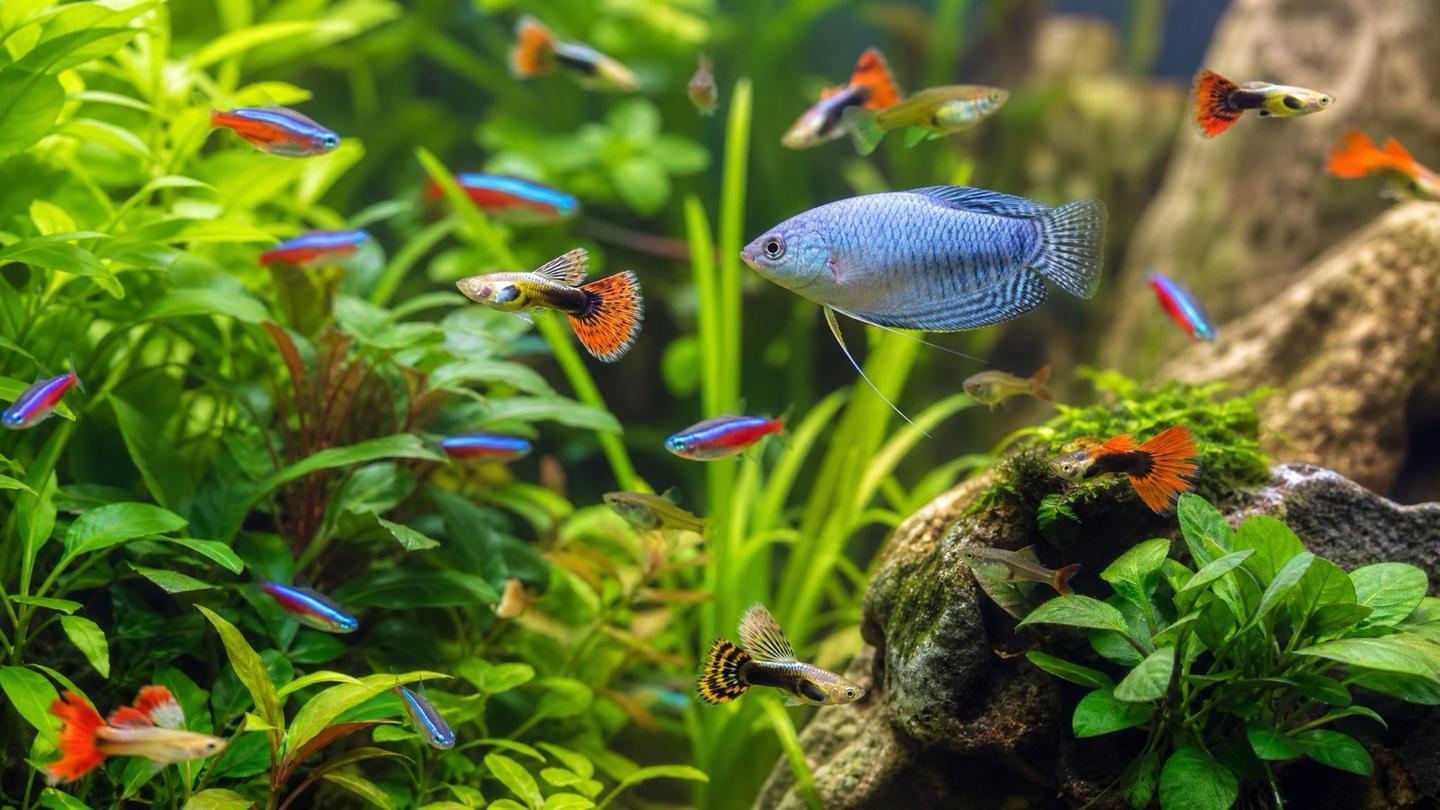
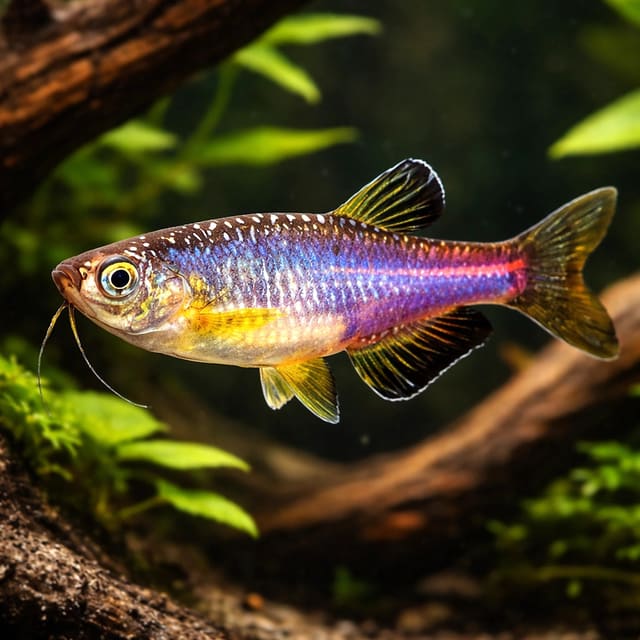
Neon Tetra (Paracheirodon innesi)
21–25°C · pH 5–7
£2.99
Tropical Fish for Sale UK · Buying Guide
Tropical fish guide for UK beginners — what they are, the easiest species to start with, tank size and water basics. Read, then shop our in-stock range.
11 products in stock today
Live prices and stock. Every fish covered by our Live Arrival Guarantee.
21–25°C · pH 5–7

22–28°C · pH 7–8 · 41L
22–25°C · pH 6–7.4

20–26°C · pH 7–8.2 · 54L
20–28°C · pH 7–8

17–27°C · pH 6.5–8

22–27°C · pH 6–8

22–27°C · pH 6–7.5
22–27°C · pH 7–8 · 108L
16–25°C · pH 6–8
22–27°C · pH 6.2–8
Our trained assistant knows this tropical fish page inside out. Ask it anything — water parameters, tank mates, how many to buy — or have it read the guide aloud while you set up your tank.
Every week we get the same message: "I want to start a tropical fish tank and I have no idea where to begin." This is the page we'd hand them. I'm Kevin, the editor here, and after years of answering "which fish first?" emails, I've learned the question behind the question is never really about fish — it's about confidence. People want to know they won't kill the thing they just bought.
So this guide does two things. First, it answers what "tropical fish" actually means, because that one word covers thousands of species and a lot of bad advice. Second, it walks you through the decision every beginner faces: which tropical fish should be your first, and what they need to thrive. If you want the deeper buying shortlist, our best beginner tropical fish guide ranks ten species in detail; this page is the wider map.
Tropical fish are warm-water freshwater species — they need a heater holding 24–26 °C. That's the line that separates them from coldwater fish (goldfish, which want 18–22 °C) and marine fish (saltwater). Most of England's tap water is hard [5], which happens to suit livebearers beautifully. You're not fighting your tap water from day one if you start with the right species.
"Tropical fish" isn't a scientific group — it's a hobby term for freshwater fish from warm parts of the world that we keep in a heated aquarium. They fall into a handful of familiar families:
The featured species further down this page deliberately span all five families, because a good first tank usually has one of each role rather than five of the same thing. If you want to browse the whole range, our tropical fish for sale hub is the full shop, and the community tank fish hub filters to species that get along.
The single most common mix-up we untangle on email is "tropical or coldwater?" — and it matters, because the equipment and the fish are not interchangeable. Here's the honest comparison:
| Tropical freshwater | Coldwater freshwater | Marine (saltwater) | |
|---|---|---|---|
| Typical temperature | 24–26 °C | 18–22 °C | 24–26 °C |
| Heater needed? | Yes | No (room temp) | Yes |
| Example fish | Guppy, tetra, corydoras | Goldfish, white cloud | Clownfish, tangs |
| Water cost | Tap water (UK water often ideal) | Tap water | RO + marine salt mix |
| Beginner cost + effort | Low–moderate | Low–moderate | High |
| Best for a first tank? | Yes | Goldfish need big tanks | No — start freshwater |
Tropical freshwater is the sweet spot for almost every first-timer: the fish are colourful and varied, the kit is affordable, and UK tap water suits the hardiest species without any treatment. Goldfish look "easy" but are messy and outgrow small tanks fast. Marine is a wonderful hobby — but it's a second or third tank, not a first.
It's tempting to put a goldfish in with tropical fish, but their temperature needs barely overlap and goldfish produce far more waste. Pick one world and build the tank around it. This page is about the tropical freshwater route — the one we'd recommend to start.
Here's the shortlist we'd actually point a first-time keeper at — a diverse spread across livebearers, schoolers, catfish and centrepieces. Every one of these is a real species we stock, and the beginner rating reflects how forgiving it is in a typical cycled UK community tank.
| Species (our name) | Type | Adult size | Temperament | Beginner rating |
|---|---|---|---|---|
| Neon Tetra | Tetra (schooler) | ~4 cm | Peaceful | Easy (mature tank) |
| Female Guppy | Livebearer | ~6 cm | Peaceful | Very easy |
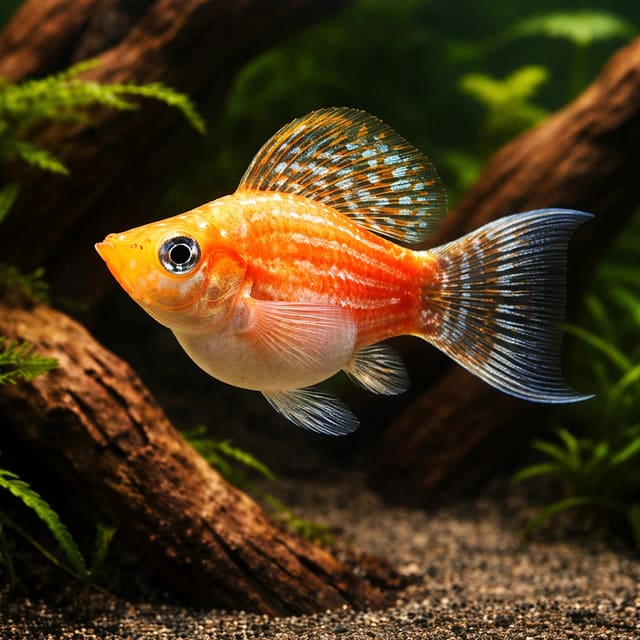
| Assorted Variatus Platy | Livebearer | 5–6 cm | Peaceful | Very easy |
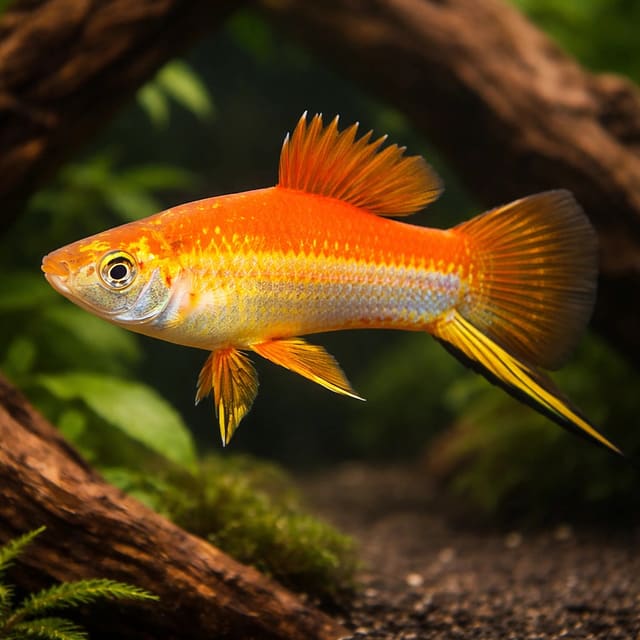
| Swordtail Marry Gold | Livebearer | ~5 cm | Semi-active | Easy |
| Assorted Balloon Molly | Livebearer | 8–10 cm | Peaceful | Easy (needs space) |
| Pearl Danio | Danio (schooler) | ~5.5 cm | Peaceful, active | Easy |
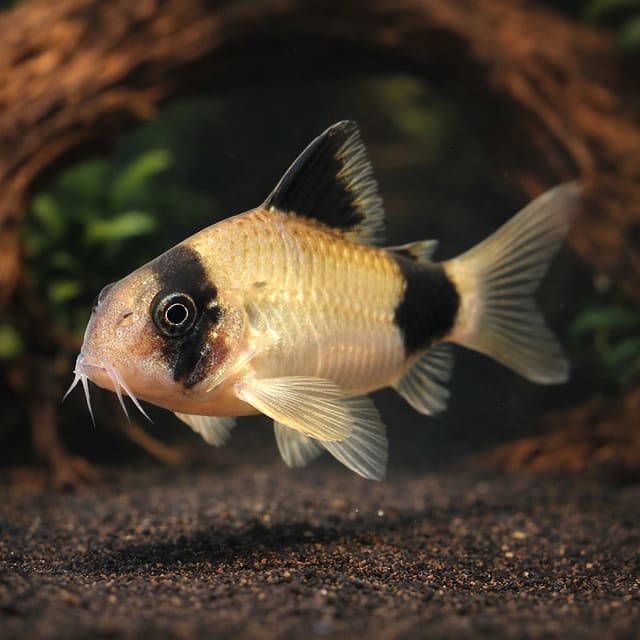
| Panda Cory | Catfish (bottom) | ~5 cm | Peaceful | Easy (keep in groups) |
| Neocaridina Shrimp | Invertebrate | ~3 cm | Peaceful | Easy (clean-up crew) |
| Bristle Nose Catfish | Catfish (algae) | up to 15 cm | Peaceful | Easy (90 L+) |
| Female Dwarf Gourami | Gourami (centrepiece) | ~9 cm | Peaceful | Easy–moderate |
| Angel Fish Small | Cichlid (centrepiece) | up to 15 cm | Semi-aggressive | Intermediate |
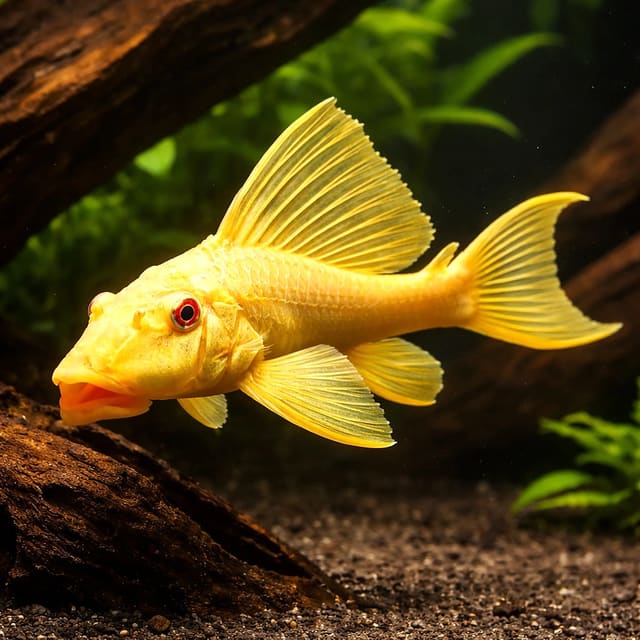
| Suckermouth Catfish Gold | Catfish (common pleco) | up to 40 cm | Peaceful | Advanced — large tank only |
Read this table top to bottom as a difficulty gradient. The livebearers and pearl danio are where a first-timer should start. The angelfish and gold suckermouth are real fish people buy as beginners and shouldn't — they're on the list so you can recognise the trap.
The mistake isn't picking the "wrong" fish — it's picking fish that don't match the tank and water you actually have. Work through these four questions in order:
A strong first community usually has: one schooling group (a danio or tetra shoal), one or two livebearer species, one bottom group (corydoras), and maybe one gentle centrepiece (a dwarf gourami). That's far easier to manage — and nicer to watch — than a tank with one of everything.
Three non-negotiables before any fish goes in:
The phrase "community tank" just means a mix of peaceful fish of similar size that live happily together [4]. The art is in the balance, not the headcount. Picture the tank in three layers:
For the detail on each species, our care guides go deep: guppy care, neon tetra care, platy care, molly care, corydoras care and honey gourami care. And before you stock anything, the water chemistry guide explains the pH and hardness numbers in the key-facts table above.
Angelfish are sold small and look easy, but they reach 15 cm, want a 150 L tank, turn territorial as adults, and will eat small tetras. The common (gold suckermouth) pleco grows to around 40 cm and needs 400 L+. Both are wonderful fish — for a second, much larger tank. Neither is a true first fish. Choose a bristlenose for algae and a dwarf gourami for a centrepiece instead.
We do stock both, and they're brilliant fish in the right home — so if you're planning a larger tank down the line, bookmark them rather than buying for a first 60 L:
Most of the species on this page are peaceful and combine freely. The few cautions are about size and temperament, not aggression for its own sake:
| Species | Mixes with | Watch out for |
|---|---|---|
| Guppy / platy / swordtail | Tetras, danios, corydoras, shrimp | Fin-nippers; very large fish |
| Neon tetra / pearl danio | Livebearers, corydoras, gourami | Big-mouthed fish that see them as food |
| Panda corydoras | Everything peaceful | Sharp gravel wears their barbels |
| Neocaridina shrimp | Small peaceful fish, snails | Larger hungry fish will eat them |
| Bristlenose catfish | Whole community | Needs driftwood; one per small tank |
| Female dwarf gourami | Calm community | Boisterous tank mates stress them |
| Angelfish (adult) | Larger peaceful fish | Eats neon-sized fish; territorial |
The pattern is simple: keep everyone roughly the same size, give schooling fish their groups, and don't house bite-sized fish with mouths big enough to swallow them. Our community tank fish hub is pre-filtered to species that follow exactly these rules.
Before you spend anything, it helps to see the setup done from scratch. This short clip shows the rhythm of a calm community tank — the end goal you're aiming at.
We ship live fish with a licensed live-animal courier, so they reach you quickly and warm. The acclimation routine is the same gentle drip for all the community species on this page — the difference is mostly patience:
Even with a fully cycled tank, add one group, wait a week or two, test the water, then add the next. The filter needs time to scale its bacteria to each jump in waste. Most "my new fish died" stories come from adding everything in a single shop.
Most beginner problems are not mysterious diseases. They're water-quality issues with a handful of recognisable signs. Almost all of them trace back to the same root cause: an immature filter, too much food, or too many fish too fast [2]. Use this as a quick triage chart:
| Symptom | Most likely cause | What to do first |
|---|---|---|
| Fish gasping at the surface | Ammonia or nitrite spike (uncycled / overfed) | Test water; 25–50% water change; stop feeding for 48 h |
| Cloudy white water in a new tank | Bacterial bloom — normal early in cycling | Don't add fish yet; keep filtering; it clears in days |
| New fish dies within days | Added to an uncycled or unstable tank | Confirm the cycle is complete before restocking |
| Fish hiding, clamped fins, dull colour | Stress from poor water or wrong parameters | Test water; check temperature is steady at 24–26 °C |
| Green water or algae on glass | Too much light + nutrients | Reduce lighting hours; add a bristlenose; less food |
| One fish chasing others relentlessly | Overstocked, or a semi-aggressive species | Re-check stocking; rehome or separate the aggressor |
Nine times out of ten, the underlying problem is the tank was stocked before it finished cycling, or it's being fed too heavily. A test kit is the cheapest insurance you can buy — knowing your ammonia, nitrite and nitrate readings turns guesswork into a clear next step. Feed only what the fish finish in a minute, twice a day, and you'll avoid most of this list entirely.
A realistic budget helps more than a wish list. Tropical fishkeeping is affordable to start and cheap to run — the fish themselves are usually the smallest line:
Because livebearers breed, a small starting group of guppies or platies often grows into more fish at no extra cost — one reason they're such good value for a first tank. Spend the money on the right tank size and a proper cycle; the fish are the easy part.
Close the loop — here's where to go next:
If you'd like a second pair of eyes on your stocking plan — tank size, species mix, water parameters — send us the details before you order. We'd far rather spend ten minutes on email than ship fish into a tank that won't suit them.
Visual route into the rest of our UK live-fish range.
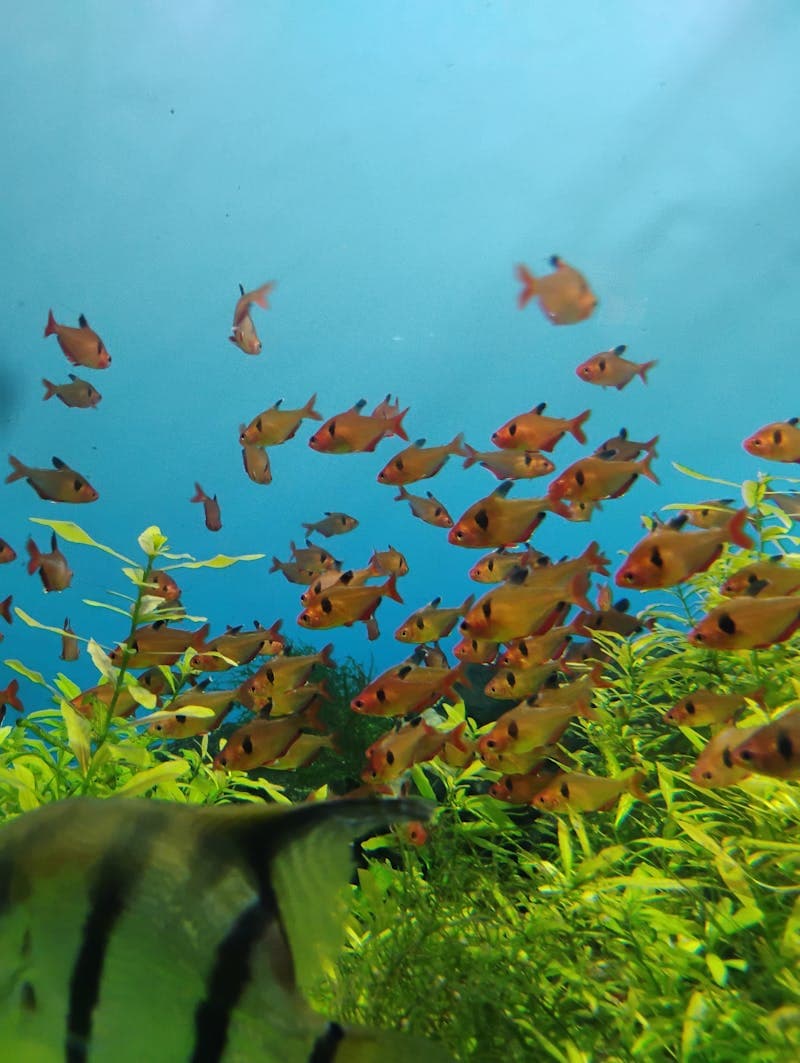
Tropical fish for sale UK — tetras, cichlids, bettas, guppies and corydoras. Specialist delivery backed by our Live Arrival Guarantee.
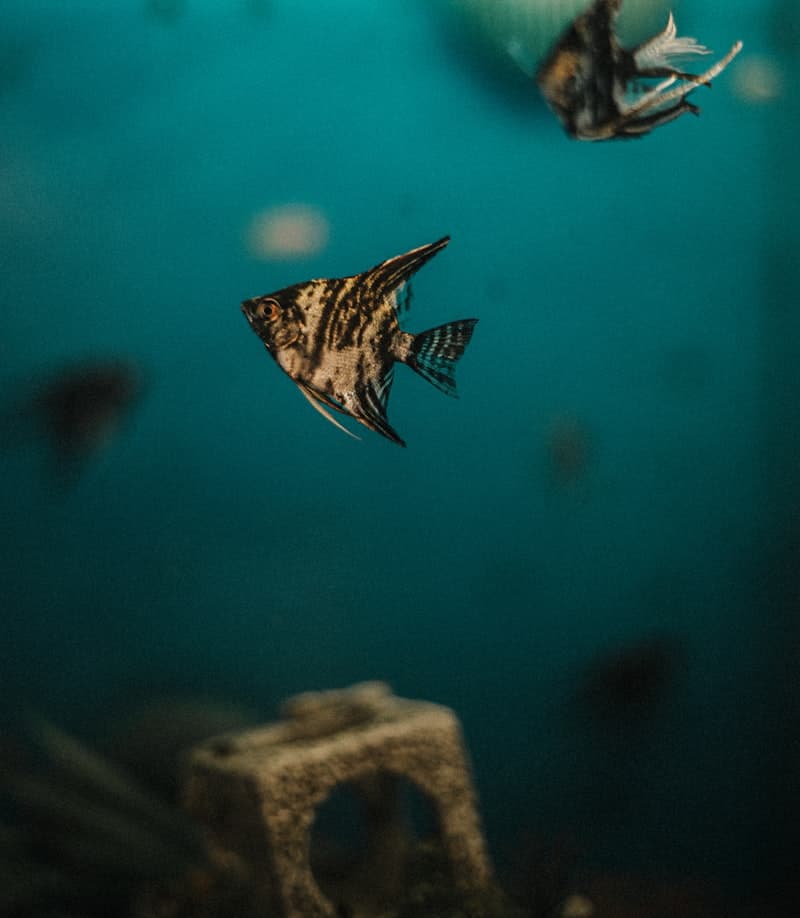
Peaceful tetras, rasboras, corydoras, platies and gouramis chosen to live together — temperament, adult size and water range per listing so the mix works.
Material factual claims cite the sources below; store policy and cautious inference are labelled in the article. Sources are grouped by type so you can judge their weight at a glance.
Peer-reviewed. Used for the nitrogen-cycle / ammonia-and-nitrite toxicity claim behind tank cycling.
Representative species. Used for temperature (20–26 °C), pH (5.0–7.0), max size and grouping guidance.
Independent hobbyist cross-check on temperature (21–25 °C) and pH (4.0–7.5) for a representative species.
UK hobbyist perspective on first-fish choice, tank size and community definition.
Beginner tank-setup walk-through — cited in the setup-basics and acclimation sections.
UK authority source confirming South-East England tap water is hard — used in the livebearers-suit-UK-water section.
Fishkeeping moves fast and we want every guide spot-on. If you think something here is wrong, out of date, or could be clearer, tell us — our team reads every message and updates the page.
Suggest an editTropical fish for sale UK — tetras, cichlids, bettas, guppies and corydoras. Specialist delivery backed by our Live Arrival Guarantee.
Peaceful tetras, rasboras, corydoras, platies and gouramis chosen to live together — temperament, adult size and water range per listing so the mix works.
Set up a tropical fish tank in 10 evidence-led steps: choose the tank, install filter and heater, cycle safely, test the water and add fish carefully.
Learn which freshwater aquarium water parameters to test, how to read ammonia, nitrite, nitrate, pH, GH and KH, and when a result needs action.
Editor & Site Owner · 15+ years in the hobby
Kevin is the editor and owner of Tropical Fish Co. He has kept freshwater tropical tanks for more than 15 years — starting with a single 60-litre planted tank and now running a rack of species tanks across his home and the shop. Every care guide on this site is written or reviewed by Kevin from first-hand experience, cross-checked against peer-reviewed sources, FishBase, and the hobby's most trusted references.