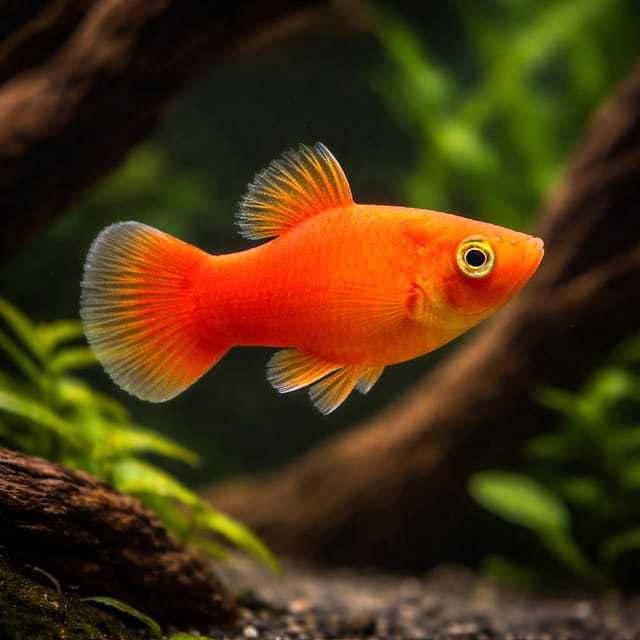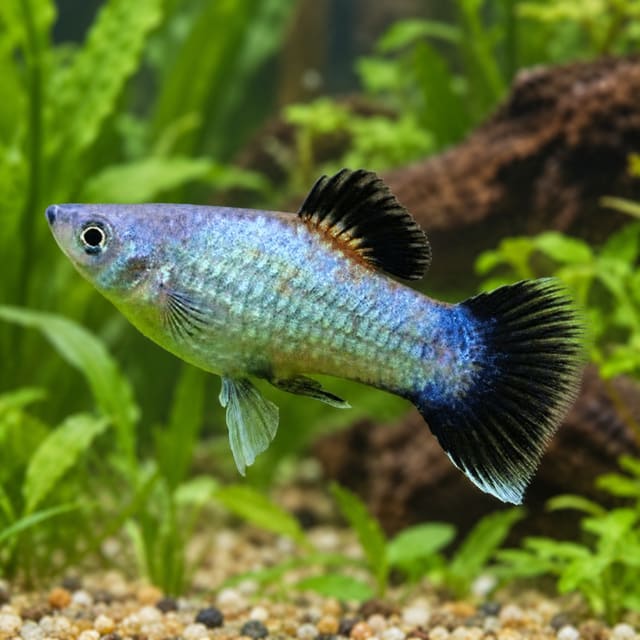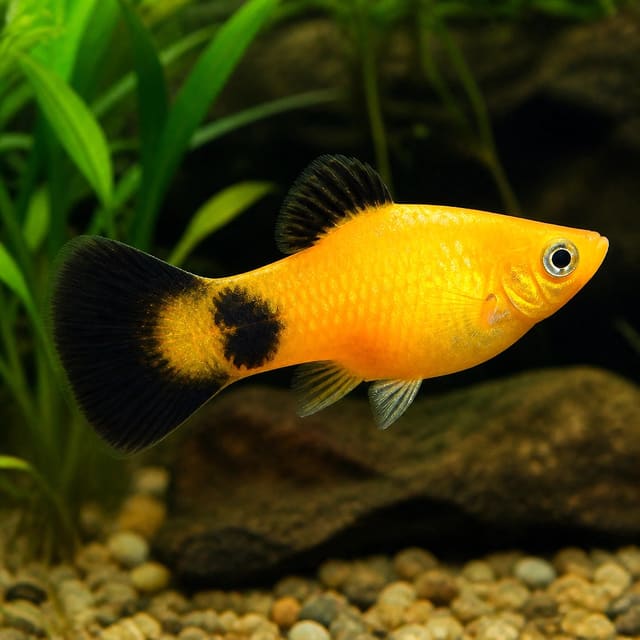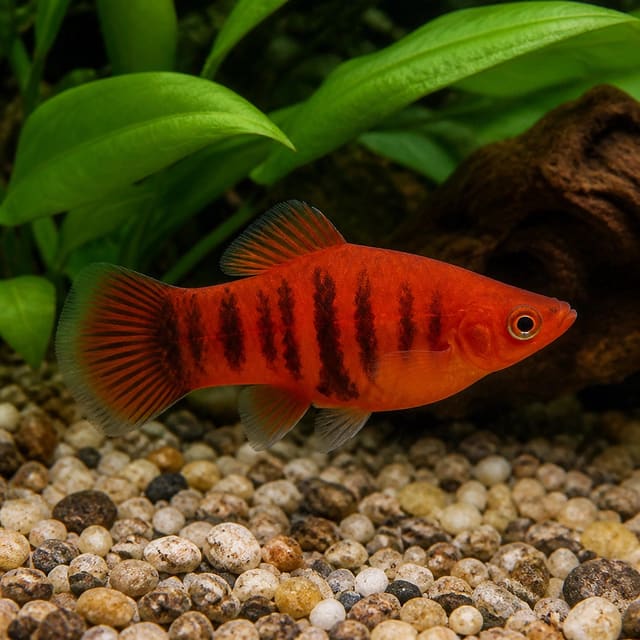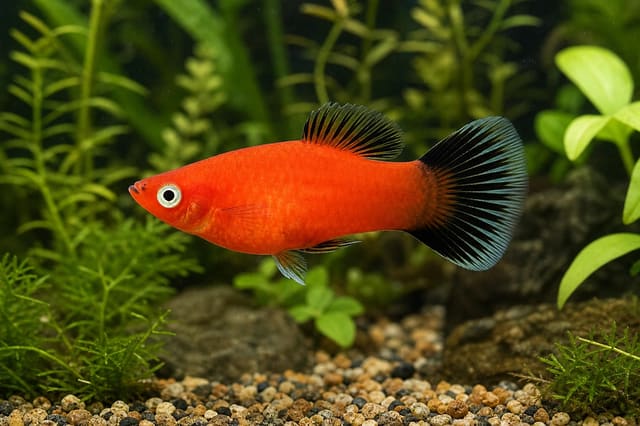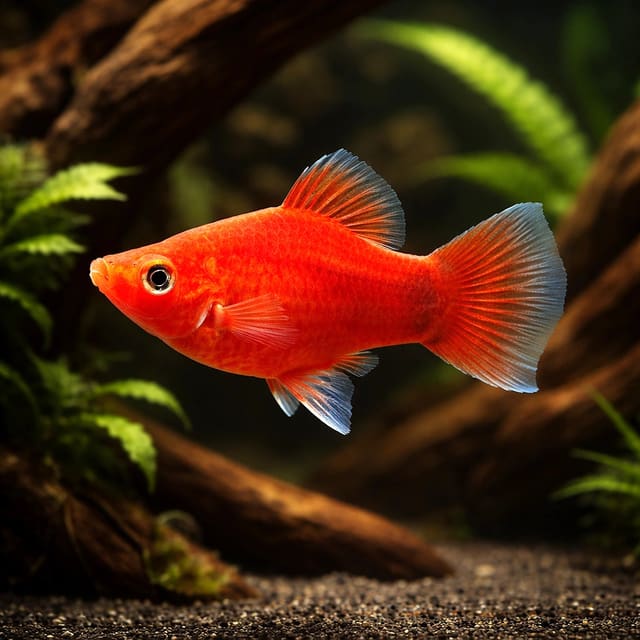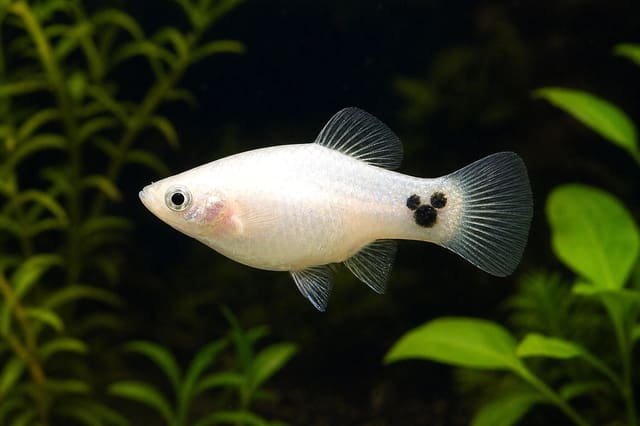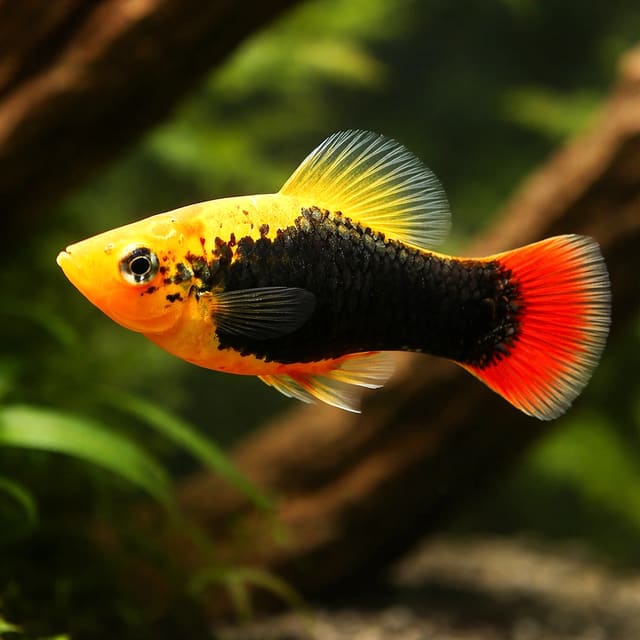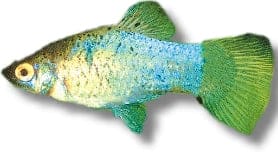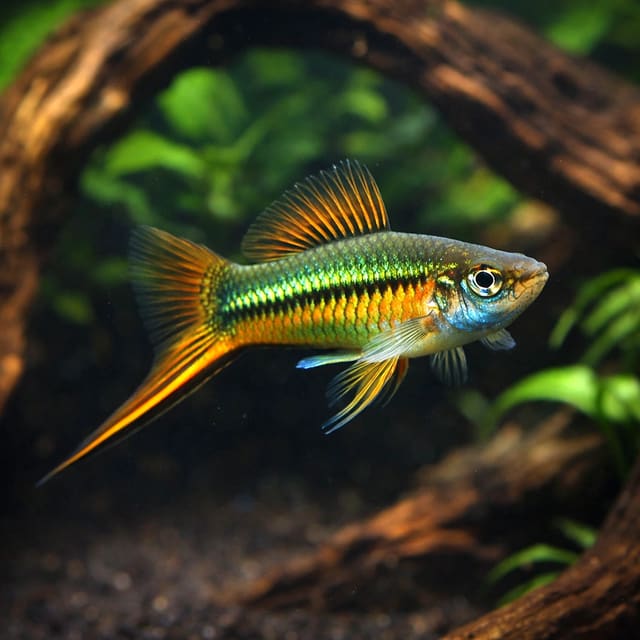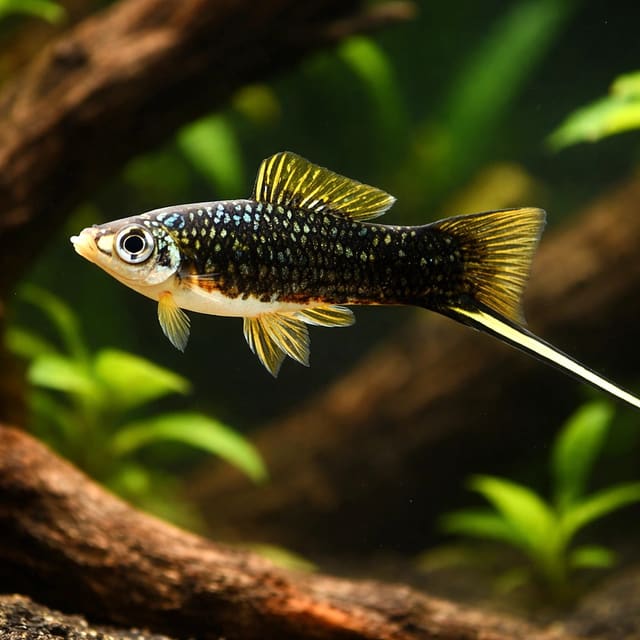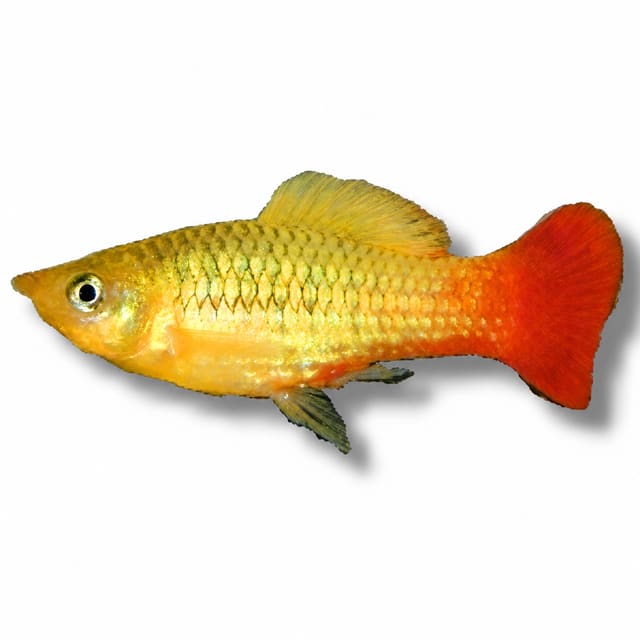
Sunset Variatus Platy (Xiphophorus variatus)
20–26°C · pH 7–8.2 · 54L
£5.99
The Assorted Variatus Platy (Xiphophorus variatus) is a peaceful livebearer species native to Mexico, reaching 7 cm total length. One purchase supplies one 3–4 cm fish; colour and pattern vary. Plan a planted aquarium with a 60 × 30 cm base, around 54 litres or more, at 20–26°C, pH 7.0–8.2 and 14–30 dGH.
Adult size is the maximum length this species reaches at full maturity (scientific sources). The livestock you receive will be younger and smaller. Product-photo provenance and any image-specific limitations are stated on the listing.
Xiphophorus variatus
Shoaling fish: kept in a group they feel safer, stay calmer and show their best colour.
Minimum of 2 per order.
The Assorted Variatus Platy (Xiphophorus variatus) is a peaceful livebearer species native to Mexico, reaching 7 cm total length. One purchase supplies one 3–4 cm fish; colour and pattern vary. Plan a planted aquarium with a 60 × 30 cm base, around 54 litres or more, at 20–26°C, pH 7.0–8.2 and 14–30 dGH.
Adult size is the maximum length this species reaches at full maturity (scientific sources). The livestock you receive will be younger and smaller. Product-photo provenance and any image-specific limitations are stated on the listing.
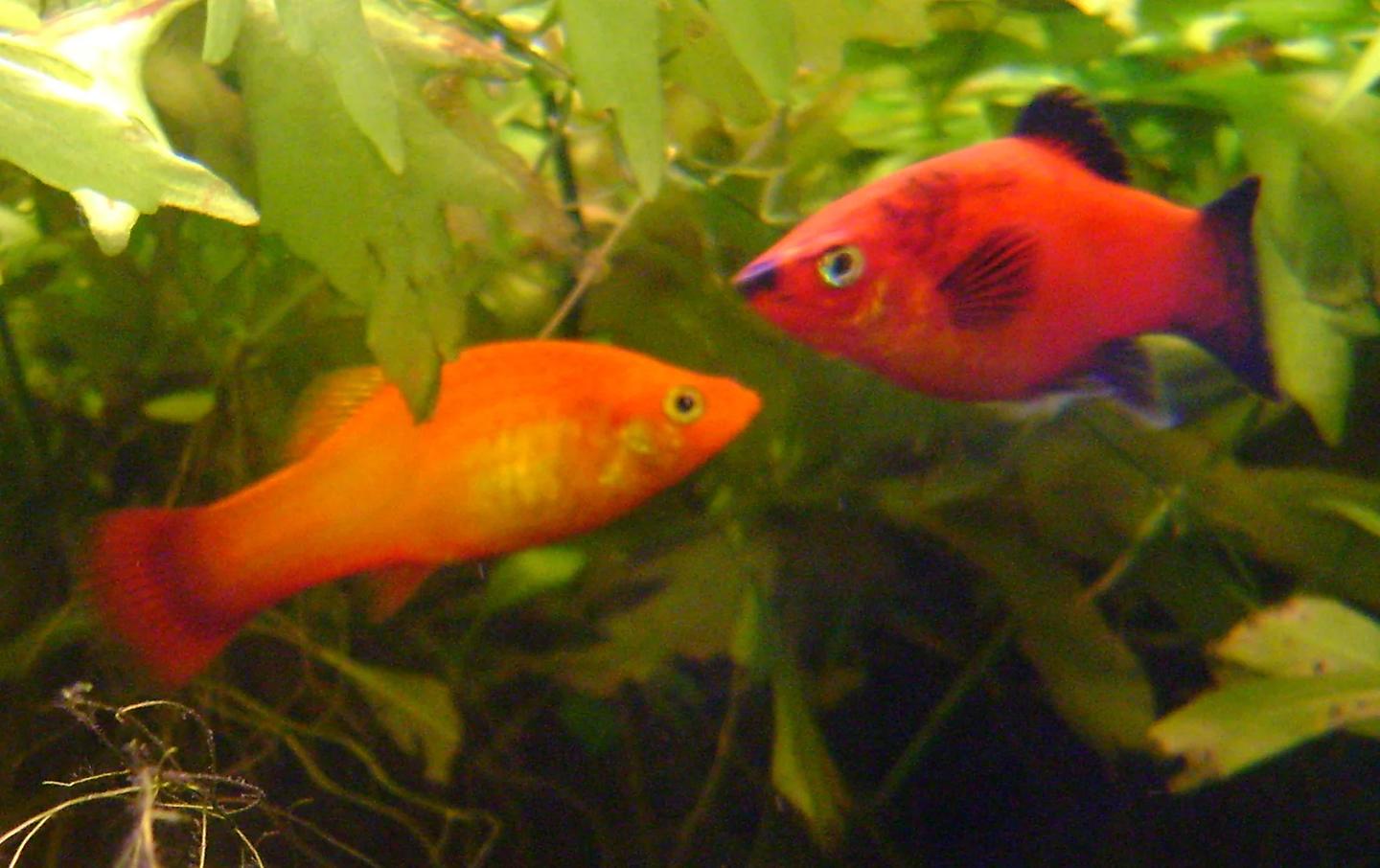
Platy is a trade name used for Xiphophorus maculatus, X. variatus and domestic forms. Start with at least three in a mature aquarium of at least 45 litres, verify the exact fish and measured water, and plan extra capacity before mixing sexes.
Maintain these water conditions for optimal health and vibrant colors
The Assorted Variatus Platy is an assorted colour selection of Xiphophorus variatus, a freshwater livebearer in the family Poeciliidae. The assorted offer can contain a wider variety of colours and markings; assorted does not promise a particular colour or pattern. You can also browse our platy fish collection when comparing this fish with other platies.
FishBase identifies Xiphophorus variatus as the Variable platyfish. Wild adults occur in warm springs, weedy canals and ditches in Mexico, where they feed on worms, crustaceans, insects and plant matter. Those natural feeding habits help explain why aquarium meals should combine an algae-rich staple with occasional small animal foods rather than relying on only one ingredient.
This is a peaceful community fish, but suitability depends on more than temperament. The aquarium must also provide moderately hard or harder water, enough swimming room for a fish that may reach 7 cm total length, access to food without competition and companions that will not chase or intimidate it. A planted layout provides useful cover while leaving open space for routine swimming.
Choose this platy when you can maintain stable, filtered water and plan for social companionship. Its manageable size should not be mistaken for permission to use a cramped or newly set-up aquarium: swimming footprint, mature filtration and a suitable group plan remain central to its welfare.
| Your aquarium | Suitability |
|---|---|
| Mature planted aquarium with moderately hard or harder water | Can suit this peaceful platy when adult space and companionship are planned |
| Newly filled tank without established filtration | Prepare and mature it before adding fish |
| Soft, acidic community aquarium | Does not meet this species’ water requirements |
| Existing fish repeatedly chase newcomers or control feeding | Resolve the community combination before adding another animal |
One purchase supplies one Assorted Variatus Platy at a 3–4 cm dispatch size. The size you select is the size supplied, not the adult size. Plan the aquarium around the species maximum of 7 cm total length, not around the animal’s size on arrival.
This is an assorted offer. Colour and pattern vary between individuals. Assorted is a colour selection, not a named colour that you can request through this offer.
Sex is guaranteed only when the selected option explicitly states male or female. This Assorted Variatus Platy listing has no sex-guaranteed option. Do not infer sex from the gallery or order a non-sexed fish on the assumption that it will complete a particular male-to-female ratio.
If the existing aquarium already contains platies, identify their sex only where it can be done reliably and consider the likely effect of another non-sexed fish. When known males and females share a tank, more females than males helps spread persistent male attention. Space and filtration must support any adjustment to the group.
If you prefer to compare a named form before deciding, see the Sunset Simpson Variatus Platy (Xiphophorus variatus). Read its own offer details alongside this assorted selection. This is a buying alternative, rather than a recommendation to combine both in one aquarium; each purchase still needs to fit the adult space, water and social plan.
A suitable aquarium is a working system: the swimming space, filter, thermometer and maintenance access all need to serve the adult fish. Decide where it will stand before buying livestock. Make sure you can reach the filter, remove water safely and inspect the fish without dismantling the planted layout. A tank that is difficult to maintain is harder to keep consistent, even when its dimensions look suitable.
Measure the water at different times, especially if the room becomes cooler overnight or warmer on sunny afternoons. A room described as warm does not establish the aquarium temperature. Use the thermometer to confirm that the water stays within 20–26°C, and choose equipment for the actual room conditions. If heating is needed, follow the equipment instructions and keep checking the water rather than treating the setting on the dial as a measured result.
The range gives you room to choose a stable temperature shared by the community. It does not mean the aquarium should move repeatedly from one end of the band to the other. Consider how changes in the room affect the water before combining animals whose requirements overlap only at a narrow boundary.
Look at filter flow and the thermometer during the same daily observation in which you watch the fish. This makes it easier to notice a stopped filter or a temperature change before it becomes a long-running problem. Keep a clear route to the intake, with plants positioned so you can inspect it, and make sure maintenance does not leave fish without functioning filtration. When equipment needs attention, check the water readings as well as the visible fault.
FishBase records a maximum length of 7 cm total length for male or unsexed Xiphophorus variatus. A separate aquarium planning figure from Seriously Fish is 5 cm standard length. These are different length measures and are not directly interchangeable. Use the 7 cm maximum when checking clearances, stocking and the scale of prospective tank mates.
Plan a base of at least 60 × 30 cm and a volume of around 54 litres or more. The footprint matters because it creates horizontal swimming room and lets you combine planted cover with open water. A taller aquarium with a smaller base does not offer the same usable layout.
| Planning decision | Figure to use |
|---|---|
| Maximum recorded length | 7 cm total length |
| Minimum aquarium base | 60 × 30 cm |
| Planning volume | About 54 litres or more |
| Routine temperature | 20–26°C |
| Routine pH | 7.0–8.2 |
| Routine hardness | 14–30 dGH |
These figures work together. A 54-litre aquarium with a 60 × 30 cm base provides a practical starting footprint, but the final volume must reflect the whole community rather than this fish alone. More fish require more space, and a larger aquarium usually changes temperature and water chemistry more slowly than a small one.
A planted aquarium suits the species well. Arrange dense planting or other cover around part of the tank, then preserve an open route across the front or centre. This gives fish somewhere to withdraw from social pressure without removing the clear swimming area they use throughout the day.
Start with an aquarium measuring at least 60 × 30 cm across the base and holding around 54 litres or more. Choose the final size by considering every adult fish that will share it, not just the Assorted Variatus Platy. A group of platies plus other community fish needs more usable space than one species planning figure can represent.
Use live plants around the back, ends or selected corners to create shelter and visual breaks. Seriously Fish notes that the species appreciates a planted aquarium, while OATA recommends plants or suitable ornaments as cover for platies. Keep a broad open area between these sheltered zones so fish can swim freely and move away from one another without becoming trapped.
A useful layout test is to follow an imaginary fish from one end of the aquarium to the other. It should be able to cross through open water, enter cover and leave that cover by another route. If every retreat has one entrance, a more assertive fish can control it. Rearranging plants to create several exits makes the same footprint more usable.
Dense planting is especially valuable if males and females share an aquarium because it can interrupt persistent attention. It may also give live young some cover, although mixed-sex platies can produce repeated batches of fry and the aquarium must not be allowed to become overcrowded.
Inspect the layout whenever fish are added or plants grow. Trim vegetation if it removes too much swimming space, and add or reposition cover if a fish repeatedly remains exposed while being chased. The aim is a balanced footprint: enough structure to reduce pressure, enough open water for normal movement and enough access for dependable maintenance.
Use 20–26°C, pH 7.0–8.2 and 14–30 dGH as the routine aquarium range. These are the species-level aquarium figures supplied by Seriously Fish. The species requires moderately hard or harder water and is unsuitable for a soft, acidic aquarium.
For broader maintenance advice, OATA’s platy and swordtail sheet covers water testing, feeding and routine care for the group. Use the species aquarium range here when choosing the water conditions for a variatus platy.
| Value | Routine target |
|---|---|
| Temperature | 20–26°C |
| pH | 7.0–8.2 |
| General hardness | 14–30 dGH |
| Ammonia | 0 mg/l |
| Nitrite | 0 mg/l |
| Nitrate | Up to 20 mg/l above tap-water level |
Test the aquarium rather than judging water by appearance. Our water chemistry guide explains what the main readings mean, and the water matcher helps compare measured values with this range. Record results so you can distinguish a stable aquarium from one that repeatedly moves between extremes.
For a worked temperature example, an aquarium consistently reading 24°C is within the routine band. A steady reading of 26°C remains inside the Seriously Fish aquarium range. Investigate any continuing rise and avoid an abrupt correction. The same principle applies to pH and hardness: stability inside the target band is preferable to repeated rapid adjustment.
Seriously Fish estimates that a roughly 54-litre aquarium in a room around 20°C may require about a 50 W heater to maintain 20–26°C. Treat that wattage as a worked example for those conditions, then confirm the actual aquarium temperature with a thermometer because room temperature, aquarium shape and equipment performance affect the result.
Add this platy only to an aquarium with a well-established biological filter. The RSPCA explains that fish release toxic ammonia; filter bacteria convert it first to nitrite, which is also toxic, and then to the safer nitrate. A filter must therefore do more than move water: it needs a living bacterial population capable of processing the waste produced by the aquarium.
Use our first tropical aquarium guide to prepare and mature the system before livestock arrives. Test ammonia and nitrite and wait until both read 0 mg/l. Clear-looking water is not a substitute for these tests because ammonia and nitrite are not reliably judged by sight.
For the roughly 54-litre setup described by Seriously Fish, a turnover of four to five times the aquarium volume per hour gives a filter rating of about 215–270 litres per hour. This is a model calculation for that volume: 54 litres multiplied by four is 216 litres per hour, while 54 multiplied by five is 270 litres per hour. Check the manufacturer’s rating and make sure plants or decorations do not obstruct the intake or outlet.
Flow should circulate the aquarium without forcing the fish to struggle constantly. Watch how the platy moves through open water and sheltered areas. If it can rest only behind equipment, adjust the outlet direction while preserving overall circulation. If waste repeatedly settles in dead areas, alter the layout or flow so debris can reach the filter or be removed during maintenance.
Every new fish and every increase in feeding adds waste. Add livestock slowly so the bacterial population can respond, then test ammonia and nitrite after the change. If either appears above 0 mg/l, stop further additions, check the filter and carry out the appropriate water-quality maintenance rather than continuing the stocking plan.
Never keep fish in an aquarium without a working filter. Check regularly for reduced flow or blockages, and keep the filter running continuously. A temporary pause for maintenance should be as brief as practical because the bacterial population depends on suitable conditions within the media.
Feed once a day and offer only what the fish can finish within a few minutes. Remove or reduce food when pieces remain uneaten, because decaying food adds waste and can drive ammonia or nitrite upwards. Portion size should follow the fish’s response rather than the amount that is easy to pour from the container.
Use a good-quality flake or granule with a high algae content as the staple. Add occasional small live or frozen foods such as daphnia, small bloodworm or tubifex for variety. Seriously Fish also describes X. variatus as an unfussy omnivore that accepts dried, live and frozen foods.
Wild adults eat worms, crustaceans, insects and plant matter, while the aquarium profile also describes zoobenthos and detritus in their diet. That combination supports a mixed feeding plan rather than an all-meat or plant-only routine. An algae-rich prepared food supplies the dependable daily base; appropriately small live or frozen items broaden the diet.
| Feeding decision | Action |
|---|---|
| Food disappears within minutes | Keep the next meal similarly modest |
| Food remains on the bottom | Reduce the next portion and remove waste |
| One fish misses the meal | Check competition, position and behaviour |
| Interest in food falls suddenly | Test water and inspect the fish |
Spread a small meal across an area where every fish can reach it. If faster companions take everything immediately, divide the portion between two points rather than increasing the total amount. This separates access from quantity and reduces the risk of solving competition by overfeeding the entire aquarium.
Watch appetite together with body condition. A fish that approaches food but repeatedly fails to eat may be experiencing competition, stress or a health change. A fish that eats eagerly can still be overfed, so the few-minutes limit and regular water testing remain important even when appetite looks strong.
OATA advises changing 25% of the aquarium water at least once every week. Use a siphon to remove solid waste from the substrate, especially around plants, wood and decorations where debris can settle. Treat replacement tap water with a suitable conditioner before it enters the aquarium so chlorine or chloramine does not harm fish or filter bacteria.
Test ammonia and nitrite at least weekly and keep both at 0 mg/l. OATA advises keeping nitrate no more than 20 mg/l above the normal tap-water level. Test the tap water as well as the aquarium when assessing nitrate, because the target is expressed relative to the starting water rather than as a single universal reading.
A worked example makes that comparison clear. If tap water measures 10 mg/l nitrate, the aquarium should not exceed 30 mg/l under the OATA limit. If tap water measures 20 mg/l, the corresponding ceiling is 40 mg/l. This calculation does not replace ammonia and nitrite tests; both of those must remain at zero.
| Weekly checkpoint | Required result or action |
|---|---|
| Ammonia | 0 mg/l |
| Nitrite | 0 mg/l |
| Nitrate | Up to 20 mg/l above tap water |
| Water change | 25% at least once every week |
| Filter flow | Check for blockage or reduction |
When the filter media needs cleaning, rinse it lightly in aquarium water removed during the water change. Do not rinse it under the tap, because chlorine or chloramine may kill beneficial bacteria. Clean only as needed to restore normal flow rather than trying to make established media look unused.
Link maintenance decisions to observations. Reduced outlet flow calls for a blockage check; rising ammonia or nitrite calls for immediate attention to stocking, feeding and filtration; persistent debris calls for better siphoning or circulation. This approach addresses the cause rather than changing water mechanically while the same problem continues.
Record the date, test readings and water-change amount. A short log reveals gradual changes that are difficult to notice from memory and helps show whether a new fish, increased feeding or filter blockage coincided with a change in water quality.
Measure the replacement water rather than assuming it matches the aquarium. Condition tap water, bring it close to the aquarium temperature and avoid a sudden change in pH or hardness. If source-water chemistry changes, investigate before making a large correction inside the aquarium. Stable conditions within the species range are safer than moving between opposite ends of it. Use the maintenance log to compare tap and aquarium results over time; this makes it easier to see whether a rising reading comes from the source water, accumulating waste or a change in routine. Re-test after any unexpected ammonia or nitrite result and pause new livestock additions while the cause is corrected.
Prepare the replacement water and equipment before you start draining the aquarium. Keep fish in view while siphoning, and work around planted cover without removing every sheltered area at once. A partial change should remove accumulating waste while leaving the fish with a familiar layout and a functioning biological filter.
Use the aquarium’s actual water volume when working out the change. For example, a quarter of 40 litres of water is 10 litres; a tank sold by its outer capacity may hold less once substrate and decoration are inside. The purpose of the calculation is to make the routine consistent. Test results and the full stocking load still determine whether the aquarium needs further attention.
If a week’s readings look unusual, write down what has changed: feeding, livestock, filter flow or the source water. That information is useful when seeking advice. It also prevents a single unexplained result from becoming a reason to change several parts of the system at once. Keep the water-quality problem and its likely cause together when deciding the next step.
Prepare the aquarium before the fish arrives: confirm that temperature is 20–26°C, pH is 7.0–8.2, hardness is 14–30 dGH, ammonia and nitrite are 0 mg/l and the filter is operating normally. Do not use arrival time to make major last-minute changes to water chemistry or the layout.
These timings follow our delivery and Live Arrival Guarantee policy, which also contains the current claim steps and delivery arrangements. Follow the policy page for any time-sensitive delivery requirement.
Check that the fish swims normally, reaches food, uses both open water and cover, and is not persistently chased. Healthy fish should have clear, bright eyes, intact scales and undamaged fins. Compare the newcomer’s behaviour at the same times each day so a genuine change is easier to separate from a brief response to a new environment.
Watch for hanging at the surface, sitting on the bottom, erratic swimming, faster or slower gill movement, unusual hiding, loss of appetite, marked colour change, white spots, fluffy growths, damaged fins or changing body condition. If any of these appear, test ammonia, nitrite, nitrate, temperature and the relevant water chemistry first. Contact us for further health guidance after recording the readings and visible signs.
By the end of the first week, confirm that feeding access and social interactions are steady. During the following weeks, continue the normal weekly water-change and testing routine. Look for gradual crowding, repeated chasing or rising nitrate as early signs that stocking, group composition or maintenance needs adjustment.
Do not add several further fish simply because the newcomer appears settled. Each addition changes biological demand and social pressure. Give the filter and existing community time to respond, then use test results and behaviour to decide whether the next planned addition is appropriate.
Xiphophorus variatus is described as peaceful and suitable for a general community aquarium. That does not make every community combination suitable. Screen each proposed companion for adult size, temperament, water requirements, feeding behaviour and the space it will occupy when fully grown.
| Compatibility check | Pass condition |
|---|---|
| Water | Comfortable at 20–26°C, pH 7.0–8.2 and 14–30 dGH |
| Temperament | Peaceful and unlikely to chase or intimidate |
| Adult size | Appropriate alongside a platy reaching up to 7 cm |
| Feeding | Allows the platy reliable access to suitable food |
| Space | Fits the aquarium after adult growth and group needs |
A species not named here is not automatically safe or unsafe. Individual behaviour, aquarium layout and stocking density affect the result, so apply all five checks and observe the actual fish after introduction. Ask us for a stocking and compatibility assessment when you can provide the aquarium dimensions, volume, water readings and full livestock list.
Do not compromise the platy’s moderately hard or harder water requirement to accommodate a soft-water community. A shared temperature alone is not enough: pH and hardness also need to overlap. Repeated chemical adjustment between incompatible targets creates an unstable compromise rather than a suitable home for either species.
Watch the first several meals after combining fish. If the platy approaches but cannot obtain food, divide the normal portion between separate feeding points. If it remains hidden because another fish controls the open area, reassess the planted cover, available space and community combination.
Use the 60 × 30 cm base and approximately 54-litre volume as a starting plan for this species, not a universal community capacity. The more groups the aquarium contains, the more space is required. Calculate the final plan around adult dimensions and social needs before adding another animal.
OATA recommends keeping at least three platies together because they require companionship. When known males and females share an aquarium, plan two females for each male; Seriously Fish likewise advises more females than males because male attention can be relentless. Apply that ratio only when the sexes of the individual fish are known.
A group of three is a social starting point rather than a complete stocking calculation. Check whether the aquarium can hold the adults, maintain water quality and still provide both planted cover and open swimming room. More platies may be kept together when space and filtration allow, but known mixed-sex groups should preserve the female-biased ratio.
Dense planting can interrupt sight lines and help fish move out of one another’s view. It does not compensate for an unsuitable group in an undersized aquarium. If chasing continues despite useful cover, the next decision concerns group composition or separation rather than adding more decoration.
Platies give birth to live young, and mixed-sex groups may produce repeated batches of fry. Treat that as a future stocking issue before combining known males and females. Fry increase feeding demand, waste production and the number of fish sharing the footprint, so monitor population growth rather than assuming the original aquarium capacity remains adequate.
Never add fish solely to achieve a theoretical ratio without checking current capacity. First confirm adult space, filter performance and water readings. Then decide whether changing the group is safer than separating fish or using another established aquarium. The correct response is the one that reduces social pressure without creating overcrowding or an abrupt rise in biological load.
Plan for a maximum of 7 cm total length; Seriously Fish separately records 5 cm standard length, a different length measure that is not directly interchangeable.
Use a mature, filtered aquarium with a base of at least 60 × 30 cm and a volume of around 54 litres or more, then add space for the rest of the community.
OATA’s broad platy guidance recommends at least three. For known mixed-sex groups it suggests two females per male; Seriously Fish also advises more females than males to spread persistent male attention.
It can suit a prepared beginner who has mature filtration, moderately hard or harder water, room for a platy group and a plan for possible live young.
Feed once daily with an algae-rich flake or granule as the staple and occasional suitably small live or frozen foods, giving only what is eaten within a few minutes.
Use the species aquarium range of 20–26°C and pH 7.0–8.2, with moderately hard or harder water at 14–30 dGH.
Assorted Variatus Platy is generally peaceful. Persistent male attention can cause problems in mixed-sex groups, so provide space and planted cover and watch for repeated chasing or damaged fins.
Choose peaceful community fish whose adult size, behaviour and water needs overlap 20–26°C, pH 7.0–8.2 and 14–30 dGH; no fish is a universal tank mate.
Tropical Fish Co packs fish in oxygenated bags inside insulated boxes, using heat packs when needed, for a licensed live-animal courier. Be present to receive the parcel, inspect it the same day and keep a continuous video of the sealed parcel being opened with the fish still in the sealed bag for any Live Arrival Guarantee claim.
No reviews for this item yet. Bought one? Honest reviews only, good or bad.
What customers say about ordering from us
Easy website plenty of info on fish your buying great to pick a time slot
TRACEY DURRANT · 7 Oct 2026
Got some lovely fish thank you
Kevin Mackie · 7 Oct 2026
Reviews of our shop, collected by Judge.me, an independent third-party review collector. Newest first.