Easy
Apple Platy (Xiphophorus maculatus)
20–25°C · pH 7–8 · 54L
£4.99

One Red Tuxedo Platy (Xiphophorus maculatus) per purchase, with 2–2.5 cm, 3–4 cm and XL size choices and no sex guarantee. A peaceful, active livebearer for a mature planted aquarium with moderately hard or harder water and room for a social group.
Xiphophorus maculatus
Save when buying multiple fish. Each quantity is one fish; sex and pair formation are not guaranteed unless the selected variant explicitly states them.
Minimum of 2 per order.
One Red Tuxedo Platy (Xiphophorus maculatus) per purchase, with 2–2.5 cm, 3–4 cm and XL size choices and no sex guarantee. A peaceful, active livebearer for a mature planted aquarium with moderately hard or harder water and room for a social group.
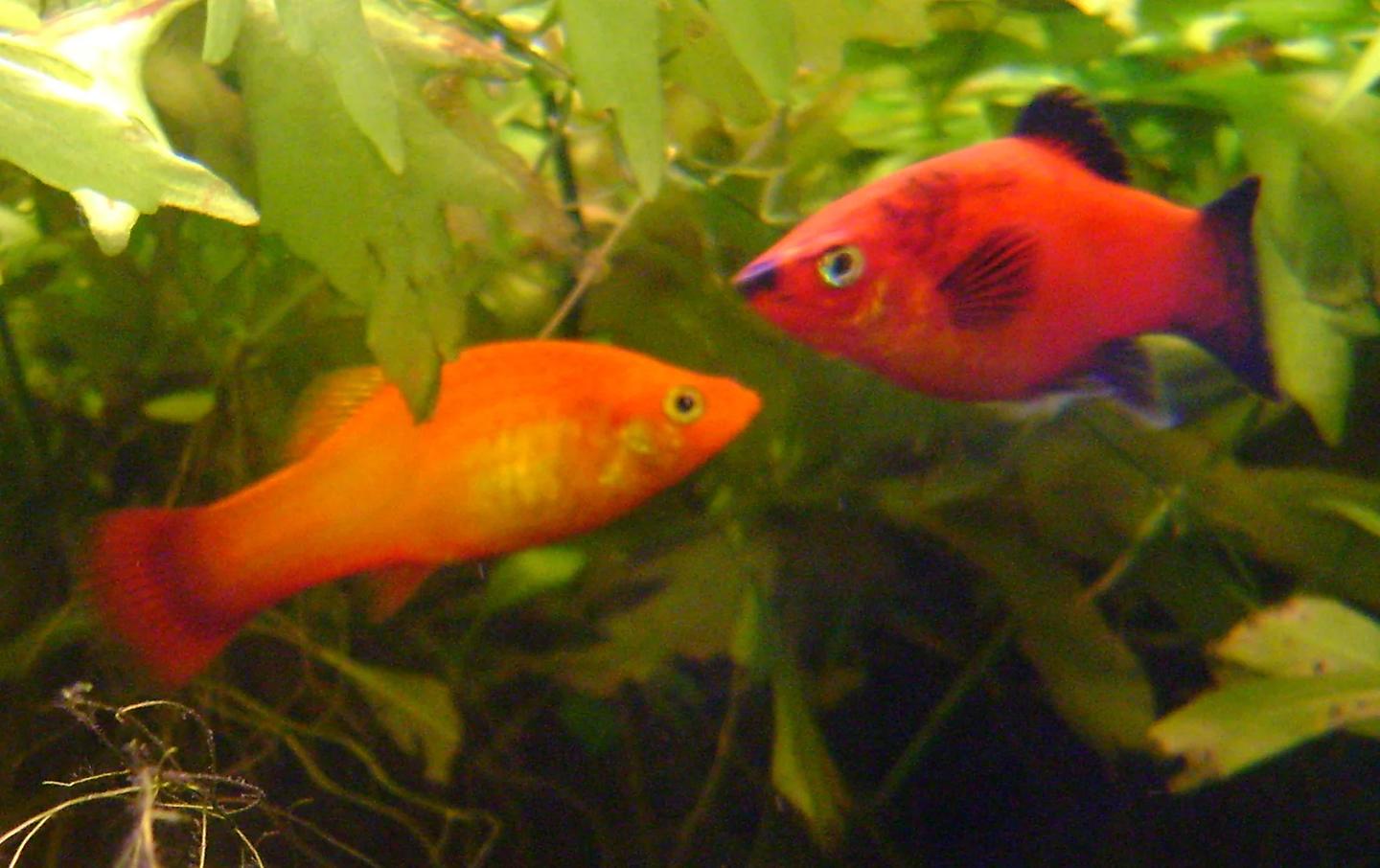
Platy is a trade name used for Xiphophorus maculatus, X. variatus and domestic forms. Start with at least three in a mature aquarium of at least 45 litres, verify the exact fish and measured water, and plan extra capacity before mixing sexes.
Maintain these water conditions for optimal health and vibrant colors
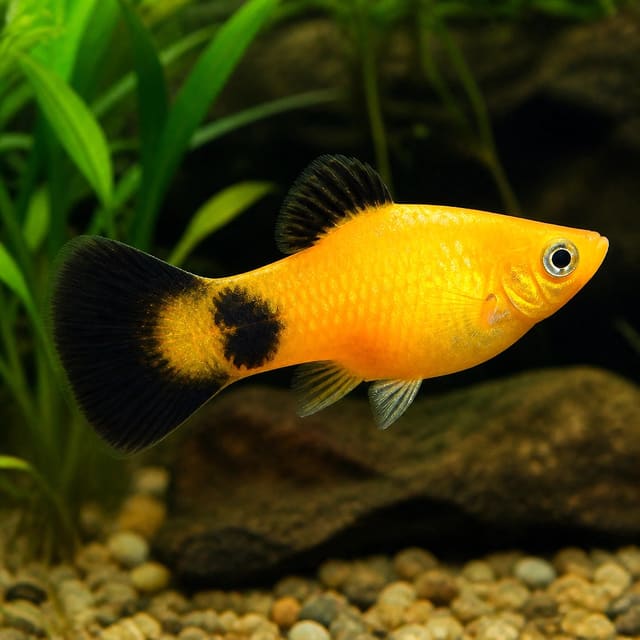
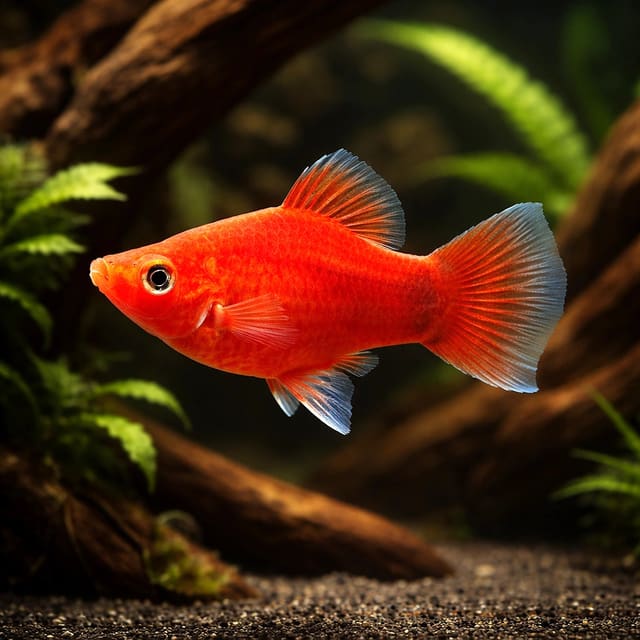
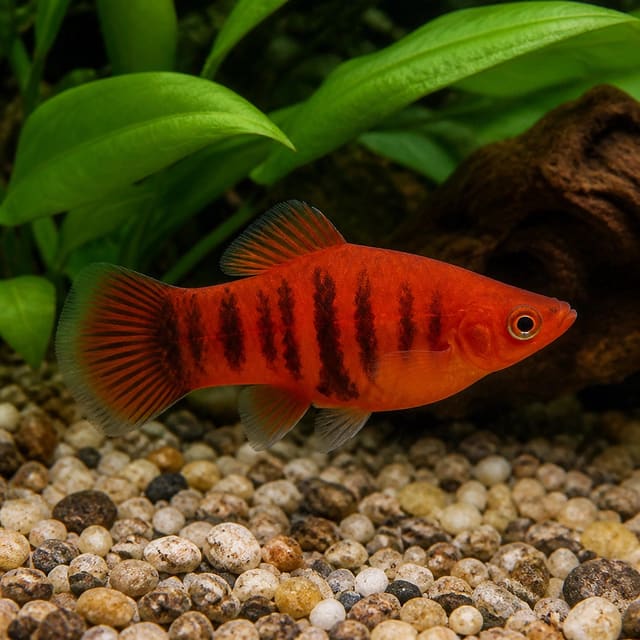
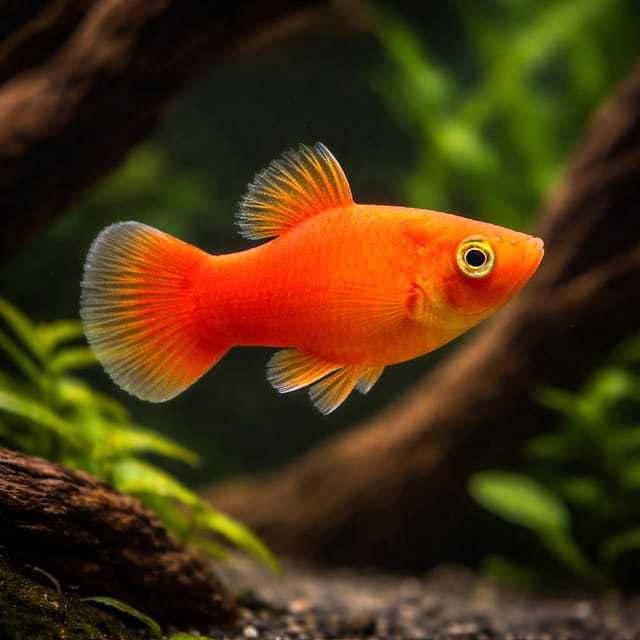
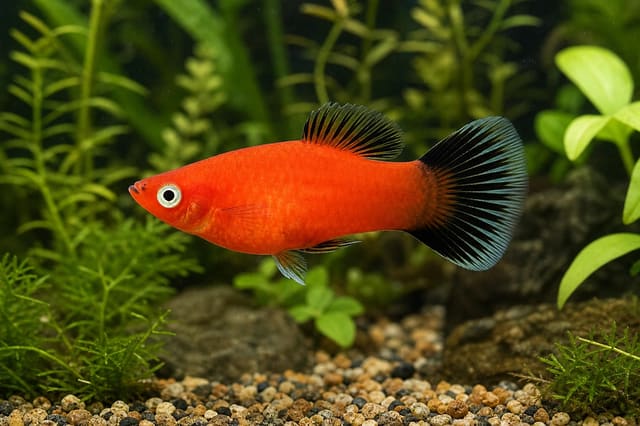
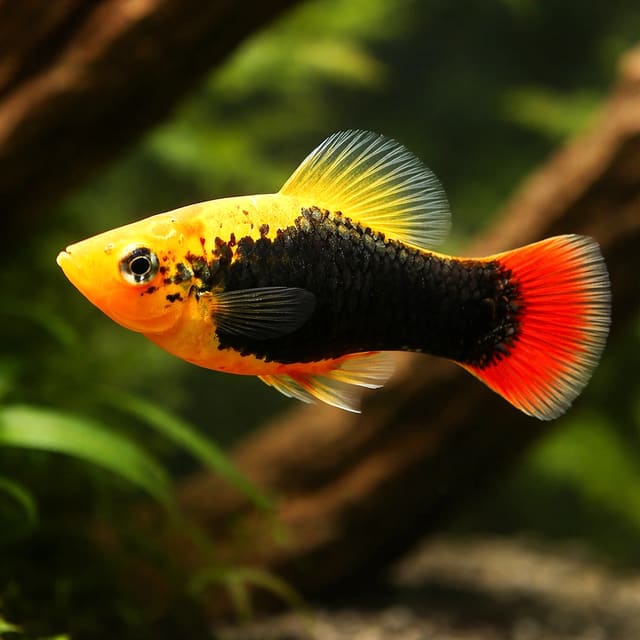
The Red Tuxedo Platy is a domestic colour form of Xiphophorus maculatus, the common platy. Its bright red-to-orange front and darker flank pattern give the tuxedo effect; that pattern name describes the ornamental appearance rather than a separate species. It is an active, generally peaceful livebearer for a mature community aquarium with plant cover, open swimming room and moderately hard or harder water.
One purchase supplies one live fish in the selected size choice. The listed choices are 2–2.5 cm, 3–4 cm and XL. The size you select is the size supplied, not the adult size. Availability belongs to the live selector and can change, so this description does not promise that every choice is available at every moment.
Sex is guaranteed only when the selected option explicitly states male or female. This Red Tuxedo Platy listing has no sex-guaranteed option. Do not buy an unlabelled size choice expecting it to produce a requested male-to-female ratio. Sex may become clearer as fish mature, but this offer does not turn that biological possibility into a guarantee.
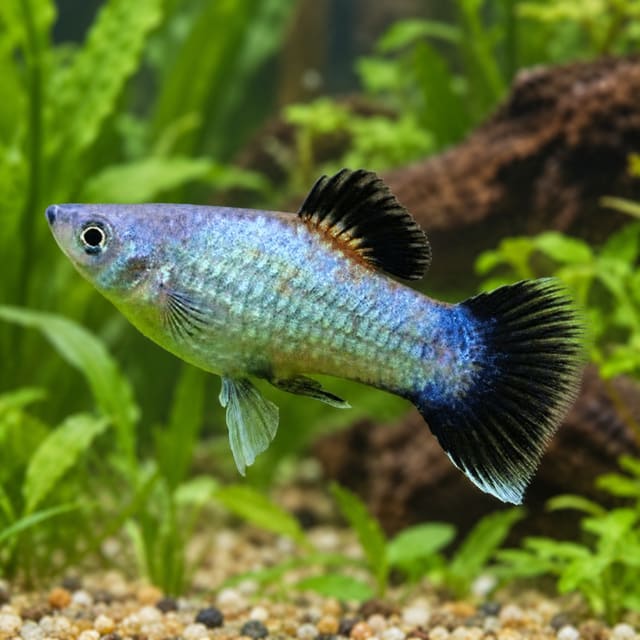
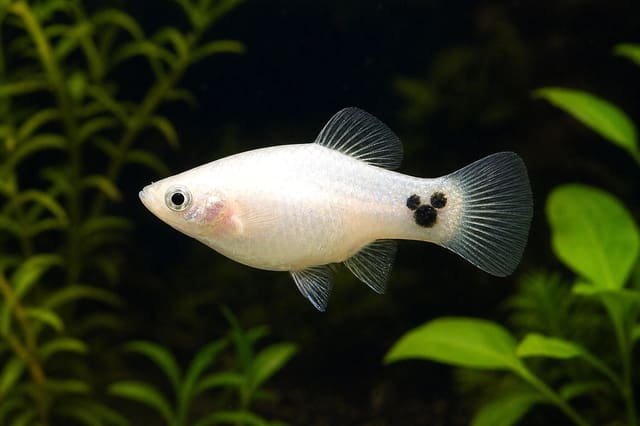
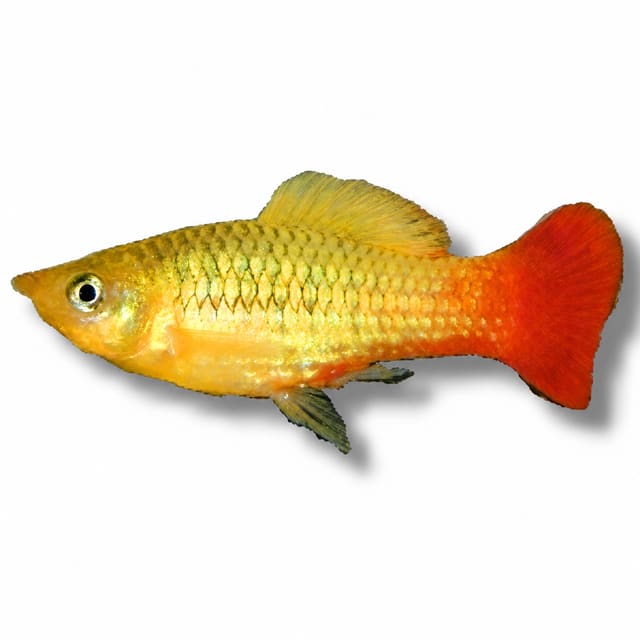
Gallery images have been digitally enhanced to improve image quality. Natural colour, pattern, size and maturity can vary between live animals. The images show the intended red/orange and dark tuxedo pattern in several aquarium scenes. Individual pattern edges, shade, fin colour, body depth and proportions can vary naturally.
| Identity | Domestic Red Tuxedo form of Xiphophorus maculatus |
|---|---|
| Sold unit | One live fish in the chosen size |
| Size choices | 2–2.5 cm, 3–4 cm and XL |
| Sex | No male or female guarantee |
| Adult-size evidence | FishBase records 4 cm TL for male/unsexed fish; Seriously Fish reports 5 cm SL, which excludes the tail |
| Routine aquarium range | 20–26 °C, pH 7.0–8.2 and 10–30 dGH from species-level husbandry guidance |
| Starting aquarium | 60 × 30 cm base, about 54 litres, before allowing for the final group and tank mates |
| Store care assessment | Easy when the aquarium is mature and the water is not soft or acidic |
The two adult-size records use different measurements and populations. Total length includes the tail; standard length does not. A 5 cm standard-length fish is not smaller than a 4 cm total-length record simply because the number looks close. Keep those labels attached and plan the aquarium around the larger adult context, not the smallest dispatch grade.
This platy suits a keeper who can provide stable neutral-to-alkaline water, a functioning biological filter and a group plan. It is often a good first livebearer after the aquarium is genuinely cycled, but “easy” does not mean suitable for an unfiltered bowl or a newly filled tank. Use the first tropical tank guide if the setup is still being prepared, and browse the platy fish collection when comparing colour forms.
Confirm the aquarium’s real dimensions, current stock, temperature, pH and hardness. Make sure ammonia and nitrite are zero and that existing fish share the same water. Choose the dispatch size for the present community without mistaking it for the adult size. A small juvenile should not be placed with fish large enough to swallow it, while an XL fish still needs the same long-term group and water planning.
Colour is not a compatibility rule. The Red Tuxedo pattern can sit comfortably in a well-planned hard-water community, but only when companions are peaceful, appropriately sized and able to share space without preventing the platy from feeding. Aquarium stability matters more than matching decorative themes.
Xiphophorus maculatus is a poeciliid native from the Veracruz area of Mexico to northern Belize. FishBase describes adults in warm springs, canals, ditches, creeks and swamps, often with slow-moving water, silt and weedy margins. Red Tuxedo is one of many selected domestic patterns. The colour form does not create a new species or a separate set of water requirements.
Domestic platies can have ancestry shaped by line breeding and, in some forms, crossing with related Xiphophorus. That history is a reason to avoid overclaiming lineage from appearance. For practical care, the verified X. maculatus identity and the exact sold-unit record are the useful anchors.
FishBase records a maximum of 4.0 cm total length for male/unsexed X. maculatus. Seriously Fish reports 50 mm standard length. These are not interchangeable measurements: total length includes the tail, while standard length stops where the tail begins. The OATA group sheet gives a broader 6–8 cm general statement for platies, not a species-specific maximum.
Because the records differ in method and scope, this page does not flatten them into a single unqualified adult-size card. Plan from the 5 cm standard-length species guidance, allow additional tail length and observe the actual fish as it matures. None of the three dispatch choices is a dwarf-adult promise.
Species-level aquarium guidance gives 20–26 °C, pH 7.0–8.2 and 10–30 dGH. FishBase records 18–25 °C, pH 7.0–8.0 and 9–19 dH as wild environmental data. The two sources answer different questions. Use the aquarium range for daily care and keep the wild figures labelled as natural-history context rather than blending them into a supposedly precise optimum.
| Measure | Routine aquarium guidance |
|---|---|
| Temperature | 20–26 °C, kept steady with adequate oxygenation |
| pH | 7.0–8.2; avoid soft acidic conditions and rapid chemical correction |
| General hardness | 10–30 dGH according to the species husbandry source |
| Ammonia | 0 mg/l in a mature, working biological filter |
| Nitrite | 0 mg/l; any detectable reading needs prompt investigation |
| Nitrate | Track against tap water and control through stocking, feeding and regular maintenance |
Platies may be described casually as adaptable, but adaptation is not permission for constant swings. Test the source water and aquarium with a reliable kit. If the tap supply is soft, choose livestock that fits it or use a measured remineralisation routine that can be repeated consistently. Do not create a compromise aquarium that is too hard for one group and too soft for another.
The aquarium water chemistry guide explains GH, KH, pH and nitrogen-cycle readings. Use the water matcher to compare measured values with the stated range. Those tools support a decision; they do not replace testing or knowledge of the exact tank mates.
Seriously Fish gives a 60 × 30 cm base and a volume of about 54 litres for the species. This is a useful starting footprint, not a universal capacity promise. The final number of platies, sex ratio, companions, plants, filter and swimming space all matter. OATA’s broader group sheet suggests at least 45 litres for a small group of platies, but the species-level 60 cm footprint is the more useful planning guide here.
Choose a tank with a secure lid, mature filter and gentle-to-moderate circulation. Platies are active but do not need to spend the day pushing against a jet. Aim the outlet to move waste and ripple the surface without turning the whole aquarium into a fast channel.
Plant around the rear and sides, then leave an open middle route. Fine-leaved stems and floating roots can provide cover for a pressured adult or newly born fry. Broad plants and wood help break sight lines. Avoid filling every centimetre with decor: cover is useful only when fish can also swim, feed and move away from one another.
Sand or smooth gravel can both work. The choice should suit the plants and maintenance routine. Remove trapped debris from exposed areas while leaving rooted sections intact, and make sure ornaments do not have sharp edges or gaps that could trap a fish.
A filter is not optional. The RSPCA explains that fish release toxic ammonia; a mature biological filter supports bacteria that convert ammonia to nitrite and then to the less harmful nitrate. Clear water can still contain ammonia or nitrite, so a new aquarium should be cycled and tested before fish are added.
Add livestock gradually. Every new fish and every extra meal increases the waste that the filter must process. When a tank is newly stocked or disturbed, test more often and watch breathing and activity. If the filter needs cleaning, do not run the media under the tap. Rinse it lightly in removed aquarium water, and do not replace all mature biological media at once.
Platies are social fish. OATA’s broad platy-and-swordtail guidance recommends at least three, arranged as two females to one male where sexes are known. Seriously Fish likewise advises several females per male because male attention can be relentless. This listing does not guarantee sex, so the exact ratio cannot be selected from the size options.
Observe the group rather than relying only on the intended ratio. A fish that is continuously chased, excluded from food or forced into a corner needs action. Add sight-line breaks, review space and identify whether one male is focusing on a single female. More fish can spread attention only when the aquarium has genuine capacity; in a crowded tank, adding animals can make the problem worse.
X. maculatus gives birth to free-swimming young. Mixed-sex groups can reproduce readily, and batches of fry can continue. This page does not promise sex, pregnancy or a breeding outcome. It simply warns that a community containing mature males and females needs a plan for population growth.
Dense planting may give fry hiding places, but it does not create unlimited capacity. Decide in advance whether young can remain, be rehomed responsibly or be managed through a securely sexed group later. Do not use a very small permanent trap as routine housing for an adult female.
FishBase records worms, crustaceans, insects and plant matter in the wild diet. Aquarium sources describe platies as unfussy omnivores that take dried, live and frozen foods. A complete small flake or granule makes a sensible staple, with algae or vegetable content and occasional appropriately sized frozen or live foods for variety.
| Food | Use |
|---|---|
| Complete small flake or granule | Regular staple; crush it for the smallest 2–2.5 cm fish if needed. |
| Algae-rich or vegetable-containing food | Include regularly rather than feeding only rich animal foods. |
| Daphnia, brine shrimp or similar small foods | Offer modestly for variety and natural feeding interest. |
| Blanched vegetable | Use occasionally and remove leftovers before they spoil. |
| Biofilm and soft algae | Useful grazing, but not a complete diet or a substitute for feeding. |
Feed small portions the group clears promptly. Watch the smallest fish reach food and use several feeding points if larger companions dominate. Overfeeding is not kindness: uneaten food increases waste and can turn an easy-to-keep fish into a water-quality problem.
Look at the fish before feeding. A settled platy should swim with control, show steady breathing, hold its fins normally and respond to its surroundings. Investigate gasping, erratic swimming, prolonged hiding, clamped fins, white spots, cotton-like growth, sores, rapid weight loss or a sudden loss of appetite.
| Observation | Useful first response |
|---|---|
| Several fish distressed | Test temperature, ammonia, nitrite, pH and oxygenation at once. |
| One fish persistently chased | Review sex ratio, cover, swimming space and access to food. |
| Fish gathering at the surface | Check oxygenation, temperature, flow and nitrogen-cycle readings. |
| Food left after feeding | Reduce the portion, remove leftovers and review whether the food size suits the fish. |
| Slow change in activity | Compare maintenance records and re-test water before reaching for a treatment. |
Avoid combining medicines or dosing salt without a diagnosis. Water-quality failure, social stress, injury and disease can overlap. Correct an urgent environmental problem first and seek a qualified aquatic veterinarian or experienced aquatic professional when signs persist.
Prepare replacement water before it enters the aquarium. Dechlorinate it, bring it close to the tank temperature and reproduce any remineralisation recipe accurately. Test the tap occasionally because supplies can change. If a reading is surprising, repeat the test before making a large correction.
Keep a short record of temperature, pH, GH, water changes and any ammonia or nitrite result when the aquarium behaves differently. Trends are more informative than one isolated number. They also prevent several people from making separate corrections to the same tank.
The smallest numeric choice can suit a grow-on plan, but it also needs food small enough to swallow and companions that will not intimidate or eat it. The 3–4 cm choice may be easier to assess in an established community, while XL describes a trade size without a supplied centimetre band. None of these choices changes the species’ adult care. Select for the aquarium the fish will enter today, then keep planning for full growth.
\nDo not use size as a substitute for sex. Males are generally smaller and develop a gonopodium, but age, condition and individual variation can make a juvenile difficult to assess. The product options make no male or female promise. If a single-sex group is essential, use an offer that explicitly guarantees sex rather than assuming a larger or smaller platy will meet the requirement.
\nA heater setting is not the same as a measured aquarium temperature. Use a separate thermometer and check it during unusually warm or cold weather. At the upper end of the range, warm water holds less oxygen, so keep the surface moving and make sure floating plants do not seal it completely. Gasping or a sudden cluster around the outlet deserves an immediate temperature, oxygen and water-quality check.
\nDuring a power interruption, avoid feeding heavily while circulation and biological filtration are stopped. Restore safe aeration and flow as soon as practical, then confirm temperature and nitrogen-cycle readings. A simple plan for outages is more useful than reacting after an active livebearer is already struggling.
\nMaintenance volume and frequency should respond to measured waste, feeding and stocking rather than a ritual number copied from another aquarium. The goal is stable clean water without abrupt shifts. If nitrate rises steadily or debris returns quickly, review stocking and feeding as well as increasing maintenance.
\nCompare each fish with its own normal appearance and behaviour. A rounded female is not automatically pregnant, and a colour change under different lighting is not automatically illness. Look for several clues together: appetite, breathing, fin position, swimming control, social place and body condition along the back. Record a brief video when the fish is settled if that helps you notice a later change.
\nWhen only one fish is affected, still test the water before assuming an individual disease. Then look at injury, competition and physical signs. When several fish change together, environmental causes become especially urgent. This order of checks prevents avoidable medication and makes any professional advice more useful.
\nHave the aquarium ready before dispatch day. Confirm the filter, heater, temperature and water values, and make sure the chosen fish cannot be swallowed by an established companion. Float the sealed bag for 20–30 minutes, then transfer the fish without adding shipping water to the aquarium where practical. Keep handling brief and observe breathing and balance after release.
Read the current delivery and Live Arrival Guarantee policy before the parcel is due. Someone must be present to receive live fish. If there is an arrival concern, contact Tropical Fish Co the same day with the order number and one continuous unboxing video showing the sealed parcel, the box being opened and the fish still in its sealed bag. The video is evidence for a claim, not a care procedure.
During the first week, check that the newcomer feeds and is not being pursued. Test water if behaviour changes. Quarantine is valuable when a suitable mature quarantine aquarium is available; a bare, uncycled container is not automatically safer.
Seriously Fish describes X. maculatus as very peaceful and suitable for many community settings, while OATA also describes platies as generally peaceful. Neither statement makes every community fish compatible. Begin with temperature, pH and hardness, then check adult size, activity, feeding style and the space each species uses.
The clearest match is a peaceful, similarly sized fish that thrives in neutral-to-alkaline, moderately hard or harder water. Avoid choosing companions that need soft acidic conditions just because they are also sold as peaceful. One group should not have to live at the edge of its healthy range to accommodate another.
| Companion type | Assessment |
|---|---|
| Other suitable platies | Often workable when the aquarium has room and the sex ratio and fry plan are managed. |
| Peaceful community species sharing the same water | Potentially suitable after exact adult size, temperature, hardness and feeding speed are checked. |
| Other livebearers | Possible in a well-sized hard-water aquarium, but compare adult activity and allow for population growth. |
| Very small fish | Use caution with an XL platy or any companion large enough to reverse the predator relationship. |
| Fin nippers or aggressive fish | Avoid persistent harassment even though the platy itself is generally peaceful. |
| Soft-water specialists | Avoid a chemistry compromise that leaves either species outside its suitable conditions. |
The tuxedo pattern says nothing about personality or sex. Individual fish can be bolder, more food-focused or more persistent in courtship. Watch the real group. Short chases with room to disengage are different from one animal being pinned, prevented from eating or kept in hiding.
Males may tolerate one another, but mixed groups still need more females than males where sexes are known. Because this offer is not sex-guaranteed, plan enough room and planting to adapt. If the aquarium cannot absorb fry or persistent courtship, do not rely on wishful thinking about which sex a juvenile will become.
A 2–2.5 cm fish can be vulnerable beside a much larger tank mate even when both species are normally peaceful. A larger fish may also outcompete very small residents at feeding time. Choose the offered size with the current aquarium in mind, while remembering that every choice still represents the same species and needs adult space.
At feeding time, spread small food over more than one point if necessary. Compatibility has failed if one fish can never eat, even when no fins are torn. Solve competition through stocking, food size and distribution rather than simply adding more food to the water.
If you want a brighter red fish without the tuxedo flank pattern, compare the Coral Red Platy. It is a same-species colour-form alternative, not a claim that adding another livebearer is automatically suitable for the current aquarium.
\nChoose peaceful, non-predatory companions that share 20–26 °C, neutral-to-alkaline water and a moderately hard or harder range. Confirm adult size and feeding access for the exact species, provide cover and open swimming space, and reassess the group as juveniles grow. Do not treat a shop category or a colour name as a universal tank-mate approval.
FishBase records 4 cm total length for male/unsexed Xiphophorus maculatus, while Seriously Fish reports 5 cm standard length, which excludes the tail. Because those records use different measurements, plan from the larger adult context and do not treat a dispatch size as the final size.
Species-level husbandry guidance gives a 60 × 30 cm base and about 54 litres. Treat that as a starting point and allow more room for a larger group, active companions or a growing population.
OATA’s broad platy guidance recommends at least three, with two females to one male where sexes are known. This listing does not guarantee sex, so provide enough space and cover to manage the group that develops.
We class it as easy in a mature aquarium with suitable neutral-to-alkaline, moderately hard or harder water. It is not suitable for an uncycled bowl, and “easy” still requires testing, filtration and regular maintenance.
Offer a complete small flake or granule as the staple, include algae or vegetable content and add modest portions of appropriately sized frozen or live foods such as daphnia or brine shrimp for variety.
Use the species-level aquarium range of 20–26 °C and pH 7.0–8.2, with hardness of 10–30 dGH. Keep the values stable and avoid soft acidic conditions.
It is generally peaceful, and males can tolerate one another, but male courtship may be relentless when too few females are present. Avoid persistent fin nippers and intervene if any fish is cornered or excluded from food.
Consider peaceful community fish and other livebearers only when the exact species shares its hard, neutral-to-alkaline water, temperature, adult-size and feeding needs. No broad category is a universal approval.
Tropical Fish Co hand-packs livestock with oxygen and insulation as conditions require and uses a licensed live-animal courier. Someone must receive the parcel; for a Live Arrival Guarantee claim, contact the store the same day with the order number and one continuous video showing the sealed parcel opened and the fish still in its sealed bag.
Identity, distribution, wild habitat, diet and the 4 cm total-length record were checked against FishBase: Xiphophorus maculatus. Species-level aquarium dimensions, 5 cm standard length, water values and behaviour were checked against Seriously Fish: Xiphophorus maculatus. Broader UK group care was cross-checked with the OATA platy and swordtail care sheet, and filtration context with the RSPCA aquarium environment guidance.
The 4 cm TL and 5 cm SL records are deliberately left separate because TL includes the tail and SL does not. Water figures from the wild record remain natural-history context; routine targets use the species-level aquarium source.
No reviews for this item yet. Bought one? Honest reviews only, good or bad.
What customers say about ordering from us
I have a small group of long finned mountain minnows. So was delighted to be able to order ten of this variety to increase the genetics in my tank . The ones I recieved are healthy but it’s to early to give a verdict on wether they are of a long finned type since they are small currently.
Gordon Walker · 23 Sept 2026
100% success travel and "installation". Pleased with quality of purchase. The Siamese fighter a bit "shy" so have not yet seen him at his best yet but looking good. Happy customer. GG
George E Garratt · 21 Sept 2026
Reviews of our shop, collected by Judge.me, an independent third-party review collector. Newest first.