Easy
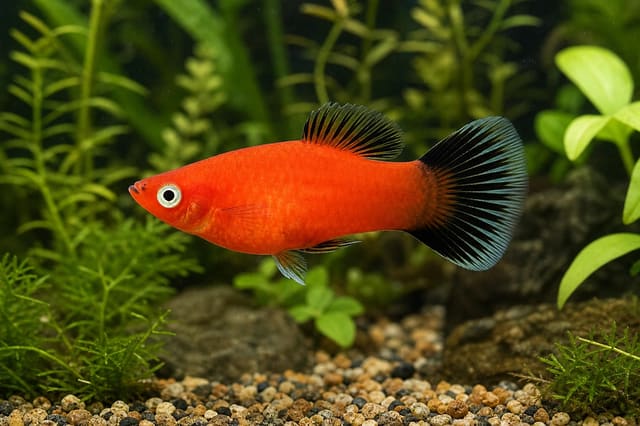
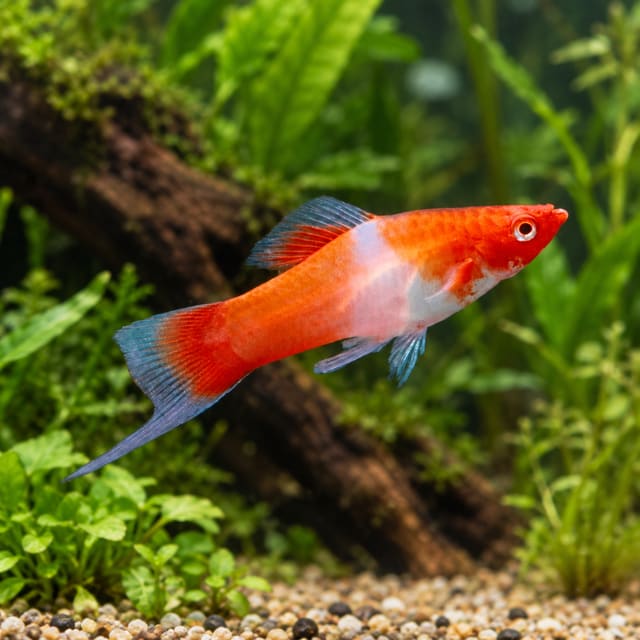
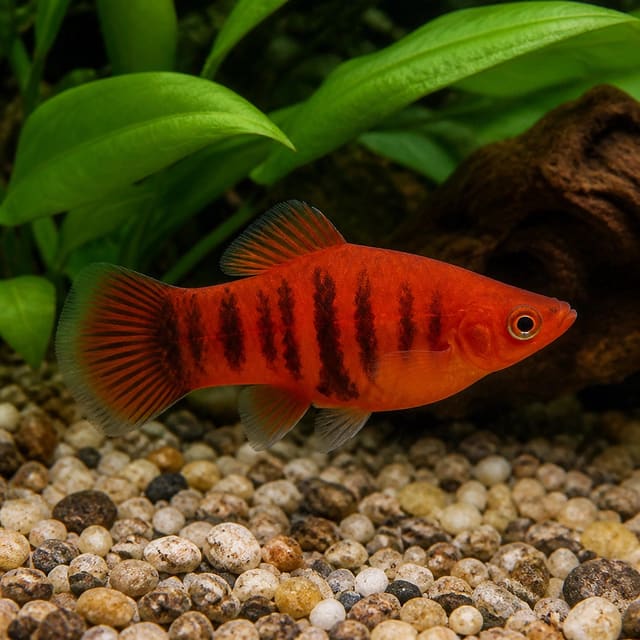
Xiphophorus maculatus red tiger
20–25°C · pH 7–8 · 54L
£3.99
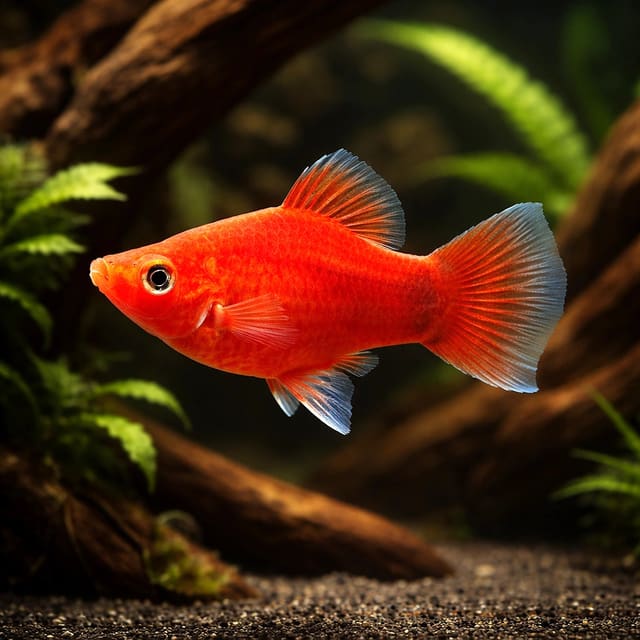
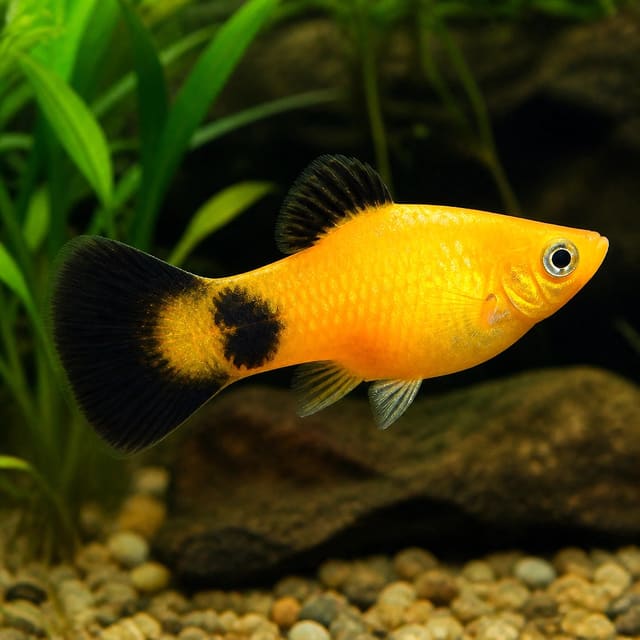
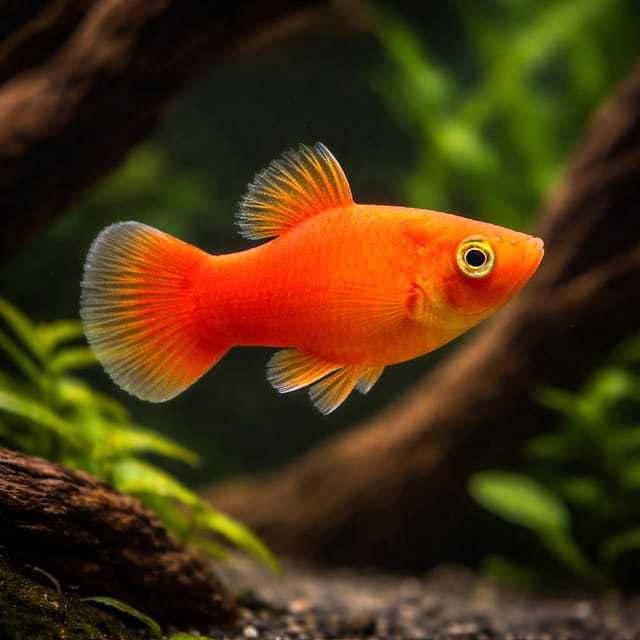
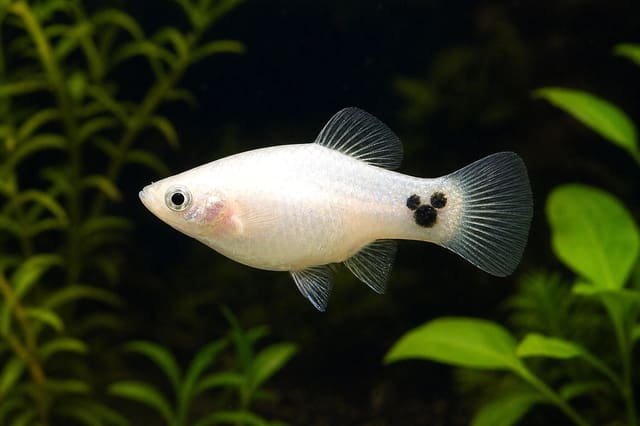
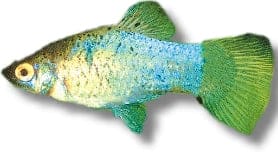
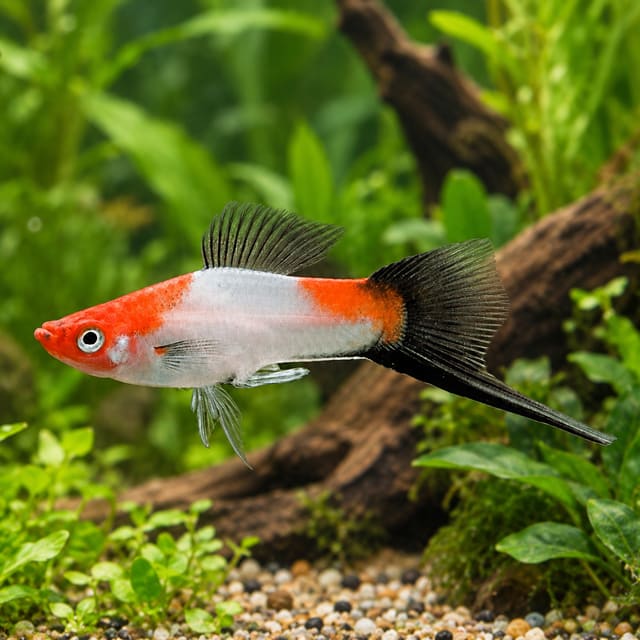
Blue Wagtail Platy (Xiphophorus maculatus) is a peaceful blue colour variety for mature, moderately hard, neutral-to-alkaline community aquariums. One purchase supplies one fish at 3–4 cm; this listing does not guarantee sex.
Xiphophorus maculatus
Shoaling fish: kept in a group they feel safer, stay calmer and show their best colour.
Blue Wagtail Platy (Xiphophorus maculatus) is a peaceful blue colour variety for mature, moderately hard, neutral-to-alkaline community aquariums. One purchase supplies one fish at 3–4 cm; this listing does not guarantee sex.
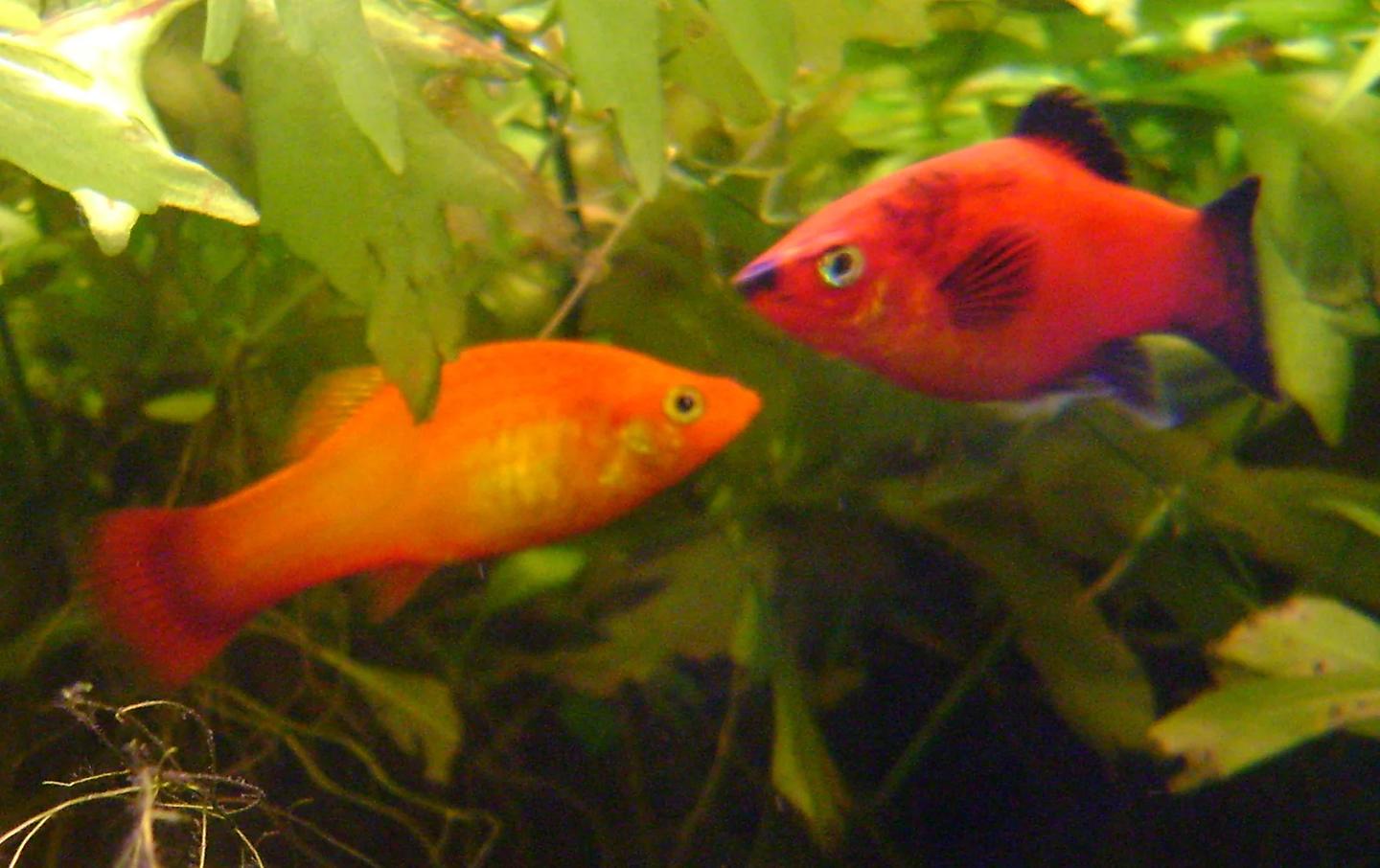
Platy is a trade name used for Xiphophorus maculatus, X. variatus and domestic forms. Start with at least three in a mature aquarium of at least 45 litres, verify the exact fish and measured water, and plan extra capacity before mixing sexes.
Maintain these water conditions for optimal health and vibrant colors
The Blue Wagtail Platy is a selectively bred colour variety of Xiphophorus maculatus, a small freshwater livebearer in the family Poeciliidae. Its useful appeal is not simply the blue-and-dark contrast suggested by the trade name: it is also an active, generally peaceful community fish that can work well for a newer keeper whose tap water and aquarium suit the species. One purchase supplies one live fish at the supplier's recurring 3–4 cm dispatch grade. That is the size at dispatch, not an adult-size promise.
This listing has one sold form and does not guarantee male or female. Do not plan a mixed-sex ratio on the assumption that a particular sex will arrive. If a carefully controlled ratio is essential, establish the sex of the fish you already keep and ask for practical help before expanding the group. Platies are livebearers and mixed-sex groups can reproduce readily, so capacity for future fry matters even when breeding is not the purpose of the aquarium.
| Suits | A mature, filtered freshwater aquarium with moderately hard or harder water, a neutral-to-alkaline pH, plants or other cover and room for open swimming. |
|---|---|
| Less suitable for | Soft, acidic aquariums; uncycled tanks; communities built around aggressive or predatory fish; or households that cannot accommodate possible fry from a mixed-sex group. |
| Temperament | Generally very peaceful. Males of this species usually tolerate one another, although persistent courtship can place pressure on females. |
| Practical starting point | The species profile gives a 60 × 30 cm base, about 54 litres, while UK group guidance advises at least 45 litres for a small group of platies. Use the larger footprint when stocking, filtration or future fry make that the safer choice. |
| Routine aquarium range | 20–26°C, pH 7.0–8.2 and 10–30 dGH from species-level aquarium guidance. Stability and a suitable mineral content matter more than chasing a single ideal number. |
The most useful first decision is whether your source water is naturally suitable. This species is a poor choice for a very soft, acidic setup simply because it is colourful or labelled beginner-friendly. In water that is moderately hard, above neutral and stable, it is far more straightforward. Measure your aquarium rather than relying on its model name, test the water that will actually be used for water changes, and account for every existing fish before adding another.
Published records use different length conventions and should remain separate. FishBase reports a maximum of 4.0 cm total length for a male or unsexed record. Total length includes the tail. Seriously Fish lists 50 mm standard length; standard length stops at the base of the tail. The two figures are not interchangeable and do not justify a converted or unqualified maximum. For buying purposes, the firm offer fact is the 3–4 cm dispatch grade; for long-term planning, allow space around the aquarium footprint and the fish's active social behaviour rather than treating either published measurement as a guarantee for every individual.
If you are starting a new aquarium, the first tropical tank guide explains the order in which to set up, mature and test it. If the aquarium is already established, compare the information below with its actual footprint, temperature, pH, hardness, stocking and maintenance routine. A calm purchase decision now is much easier than trying to change unsuitable water chemistry or solve crowding after the fish has arrived.
Sex is guaranteed only when the selected option explicitly states male or female. This Blue Wagtail Platy listing has no sex-guaranteed option.
Blue Wagtail Platies are often described as easy fish, but that label only makes sense when their basic conditions are already present. The store suitability assessment is easy because the species accepts common prepared, frozen and live foods, is generally peaceful and has well-established aquarium guidance. It does not mean that cycling, water chemistry, stocking or routine maintenance can be skipped.
Seriously Fish gives a base of 60 × 30 cm and an approximate volume of 54 litres for Xiphophorus maculatus. OATA's broader UK guidance for platies and swordtails recommends at least 45 litres for a small group of platies and notes that larger aquariums offer more stable conditions. Those figures answer slightly different questions. The species profile provides a concrete base and volume for this fish; the trade-body sheet supplies a minimum for a small platy group. A 60 × 30 cm footprint is the more useful planning baseline because swimming room, planting and social spacing all depend on floor length and width as well as nominal litres.
Increase the aquarium size when the community already contains other fish, when several livebearers will share the tank, or when fry may be retained. Gross volume printed on a box is not the same as usable water after substrate, décor and an air gap are included. Long tanks generally give small active fish more usable horizontal space than tall tanks of the same volume. Leave open swimming room while providing planted or otherwise sheltered areas where a fish can step away from activity.
The species is associated in the wild with warm springs, canals, ditches, creeks and swamps, including slow-moving water with silt and weedy banks. That natural-history record is useful context, not a recipe to make the aquarium muddy. In a home setup, clean sand or gravel, established plants, gentle shelter and open water create a practical balance. Plants are particularly useful because they break up lines of sight and give smaller fish and any fry places to withdraw, while an uncluttered feeding area lets you confirm that each fish is eating.
For routine aquarium keeping, the species profile gives 20–26°C, pH 7.0–8.2 and 10–30 dGH. It also states that the species should be kept in moderately hard or harder water and will not thrive in soft, acidic conditions. FishBase records a wild environmental range of 18–25°C, pH 7.0–8.0 and 9–19 dH. The wild record and the aquarium range have different purposes: use the aquarium figures for day-to-day husbandry and retain the FishBase values as habitat context rather than blending the two into a new range.
Choose a stable point inside the aquarium range that also suits the other residents. A steady 24°C is more useful than repeated movement between the published endpoints. Likewise, do not chase pH with sudden chemical adjustments. If tap water is substantially softer or more acidic than the species needs, it is usually better to choose livestock suited to that water or adopt a properly planned mineral-management routine than to make reactive corrections after every test.
Use the aquarium water-chemistry guide to understand ammonia, nitrite, nitrate, pH and hardness, then record results in a simple log. The water matcher can help compare measured values with the range on this page. Treat test results as a pattern. A single unusual result should prompt a repeat test and a check of equipment, recent feeding and maintenance before any major change is made.
A working biological filter is essential. Fish waste produces ammonia; beneficial bacteria in established filter media convert it first to nitrite and then to the safer nitrate. Ammonia and nitrite should both remain at zero. A new aquarium can look clear while still lacking the bacterial population needed to process waste, so appearance is not evidence that a tank is ready.
Seriously Fish's worked example for an aquarium of about 54 litres suggests a filter turnover of four to five times the aquarium volume per hour, equivalent to roughly 215–270 litres per hour for that example. Treat this as a starting point rather than a command to create a strong jet. Actual performance changes with media, head height, maintenance and the way flow is distributed. The goal is efficient biological and mechanical filtration with movement throughout the aquarium, without pinning small fish against the current.
Check the filter regularly for reduced flow. When media needs cleaning, do not run it under the tap, because chlorine or chloramine can damage the bacterial population; rinse it lightly in water removed from the aquarium. Do not replace all established biological media at the same time. If a filter is upgraded, running the old and new media together for a period can help preserve biological capacity.
OATA recommends a partial water change of 25% at least weekly for platies and swordtails, together with regular testing. This frequency is a sensible baseline, but the aquarium's nitrate trend, feeding, stocking and plant growth still need observation. Condition replacement tap water to deal with chlorine or chloramine, match temperature reasonably closely, and avoid exposing fish to abrupt changes in pH or hardness.
Healthy routines are deliberately uneventful. Large corrective interventions are more stressful than small, regular maintenance. If several fish breathe rapidly, hang at the surface, clamp their fins or stop feeding at the same time, test water and temperature first. Do not begin a disease treatment simply from one general sign, and never add medication without checking that the diagnosis, dosage and other tank inhabitants are compatible.
Xiphophorus maculatus is an omnivore. FishBase reports worms, crustaceans, insects and plant matter in the diet. Aquarium guidance describes the species as unfussy and accepting dried, frozen and live foods, while OATA recommends a good-quality flake or granule with a high algae content plus small live or frozen items such as daphnia, small bloodworm or tubifex.
Offer a varied diet in portions that can be eaten within a few minutes. OATA's group guidance is once daily. Watch the fish eat: a portion that is appropriate for a lightly stocked aquarium may be excessive in another, while dominant fish can intercept food before quieter individuals receive any. Use more than one feeding point when necessary, and remove obvious uneaten food before it decomposes.
Variety serves two practical purposes. It broadens the nutrient profile and lets fish use different feeding behaviours. Rotate a dependable staple food with suitable frozen or live foods rather than adding every food at once. There is no need to promise that a particular ingredient will intensify the blue colour. Natural colour and pattern vary, and clear water, appropriate nutrition and low stress are more meaningful goals than trying to force a photographic appearance.
Arrange to be present for delivery. If you may need to make a Live Arrival Guarantee claim, keep the parcel sealed and record one continuous unboxing video showing the outer box, the parcel being opened and the fish still in its sealed bag. Contact Tropical Fish Co the same day with the order number and video. After the arrival condition has been recorded, float the sealed bag for 20–30 minutes and acclimatise slowly. Do not pour transport water into the aquarium.
Prepare the destination aquarium before the parcel arrives: confirm temperature, filter flow and water tests, and make sure the lid and equipment are secure. Avoid combining arrival day with a major water change, rescape or filter replacement. The full delivery and Live Arrival Guarantee policy explains the current packing, receipt and claim requirements.
A useful routine combines test results with observation. Record the normal temperature at the same time of day, learn the usual feeding response and notice where each fish rests and swims. That baseline makes a real change easier to spot. One fish hanging back at a meal may be losing competition; several fish breathing hard together can point to water quality, temperature or oxygen rather than a problem unique to one animal.
Look at the whole pattern before reacting. Test ammonia and nitrite, check the heater and filter, review the most recent water change and consider whether any livestock or food was added. Correct an obvious environmental problem steadily. Sudden attempts to force pH or temperature can create another stress. If signs persist or a fish has a specific lesion, seek advice with clear photographs, recent test values and an accurate timeline instead of treating the aquarium at random.
Population growth deserves the same forward planning. Livebearers can turn spare capacity into crowding quickly. Count fish, watch growth and decide in advance how fry would be managed. Extra plants may provide refuge, but they do not increase filter capacity or water volume. Keeping fewer fish in appropriate water is a better welfare choice than filling every visible space and depending on emergency maintenance later.
Quarantine arrangements, where available, reduce the chance that a new arrival introduces a problem to an established community. A separate setup must itself be cycled, heated and filtered appropriately; an empty container is not a safe quarantine tank. Use dedicated equipment where practical, and observe the new fish's breathing, appetite, waste and movement before mixing it with long-term residents.
This platy is generally very peaceful, and the species profile says it can be kept with most community fish. Compatibility still depends on overlapping water requirements, adult behaviour, feeding speed, available space and the individual animals involved. A community label is a useful starting point, not permission to combine any fish that happens to be described as peaceful.
The most important dividing line is water chemistry. Blue Wagtail Platies require neutral-to-alkaline, moderately hard or harder water. A soft-water species may be peaceful yet still be a poor companion because meeting one animal's needs would compromise the other's. Start with measured pH and hardness, shortlist fish that share the same practical range, then compare temperature, adult size, swimming level and temperament.
Peaceful community fish with overlapping water needs are the strongest candidates. Avoid large predatory fish and animals likely to harass, injure or consume a small livebearer. Very timid fish can also struggle beside active feeders even when there is no overt aggression. Observe meals and resting behaviour after any addition, because competition may show up as weight loss or hiding rather than chasing.
OATA's group guidance suggests keeping at least three platies, using two females to each male when the sexes are mixed. Seriously Fish likewise recommends several females for every male because male attention can be relentless. The listing does not guarantee sex, so use those ratios as a social-planning rule rather than a promise about the fish supplied. If the existing group needs a precise sex, confirm the plan before ordering.
Males of Xiphophorus maculatus generally tolerate one another. A male-only group can reduce the chance of fry, but it still needs sufficient space and observation. A mixed group may produce repeated batches of young. Consider where fry would go, whether the filter intake is safe for them, and whether the aquarium has the biological capacity for a growing population. Never release unwanted aquarium fish into the wild.
A planted setup is appreciated and shows the fish well. Use planting or décor to create several visual breaks while preserving open swimming space. Dense areas can give females and smaller fish a pause from persistent attention. Floating or fine-leaved cover may also shelter fry, which is helpful only when keeping young is part of the plan. If population control is the priority, plan the sexes rather than relying on other fish to eat fry.
Keep sight lines and feeding areas in mind when arranging décor. A fish that can withdraw without being trapped has more options than one forced into an exposed corner. At the same time, excessive clutter can collect waste or make it difficult to inspect fish. Aim for cover that is easy to maintain and stable enough not to topple during routine cleaning.
The platy collection is useful when comparing other colour varieties of the same general aquarium fish, but colour is not a compatibility rule. Different platy varieties can interbreed, and every addition still increases waste and social pressure. Choose the group for welfare and capacity first, then decide which colours you enjoy.
Two species records use different measurements: FishBase reports 4.0 cm total length for a male or unsexed record, while Seriously Fish lists 5 cm standard length. Total length includes the tail and standard length excludes it, so the figures should not be converted into one unqualified maximum. The fish sold here is supplied at the recurring 3–4 cm dispatch grade.
Species-level guidance gives a 60 × 30 cm base and about 54 litres. Broader UK group guidance gives at least 45 litres for a small group of platies. Use the 60 × 30 cm footprint as a practical baseline and choose more space for a stocked community or when fry may be retained.
UK group guidance suggests at least three platies. When males and females are mixed, plan roughly two females for each male to spread persistent male attention. This listing does not guarantee sex, so confirm the makeup of the existing group before relying on that ratio.
It can suit a beginner who has a mature, filtered aquarium and naturally suitable water. Species guidance regards it as a good beginner fish when pH remains above neutral, but it should not be placed in soft, acidic water or an uncycled tank simply because its store care label is easy.
It is omnivorous and accepts good-quality dried, frozen and live foods. A flake or granule with algae content can be the staple, varied with appropriately sized live or frozen foods. Feed a portion the fish can finish within a few minutes and remove obvious leftovers.
Species-level aquarium guidance gives 20–26°C, pH 7.0–8.2 and 10–30 dGH. Keep the values stable and use moderately hard or harder water; soft, acidic conditions are unsuitable. Test the aquarium rather than adjusting from appearance alone.
The species is generally very peaceful, and even males usually tolerate one another. Mixed-sex groups need enough females and space because male courtship can be persistent. Any individual that repeatedly chases or excludes another fish needs prompt observation and a practical stocking response.
Peaceful community fish with overlapping temperature, pH and hardness are the best candidates. Avoid aggressive or predatory fish and do not combine it with soft-water species merely because both are described as peaceful. Check adult size, feeding speed and available space before adding any companion.
Tropical Fish Co uses a licensed live-animal courier and suitable insulated packing. Be present to receive the parcel. For any Live Arrival Guarantee claim, record the sealed parcel being opened in one continuous video with the fish still in its sealed bag, then contact the store the same day with the order number and video.
Identity and natural-history information comes from the FishBase profile for Xiphophorus maculatus. It supports the accepted species, family, native distribution, wild environmental record, diet observations and its scoped total-length record. Wild values are kept distinct from routine aquarium guidance.
The detailed aquarium range, 60 × 30 cm base, approximate 54-litre volume, standard-length record, diet and social guidance come from the Seriously Fish species profile. The OATA platy and swordtail care sheet provides broader UK group guidance on group size, maintenance, food and water testing. The RSPCA aquarium environment advice supports the general explanation of biological filtration and aquarium maturation.
Gallery images have been digitally enhanced to improve image quality. Natural colour, pattern, size and maturity can vary between live animals.
Use these distinctions to make a practical choice: check the aquarium's measured water, allow adequate footprint and filtration, and plan the social group before ordering. They are more useful than a promise about exact adult appearance, sex or colour intensity that the offer does not make.
No reviews for this item yet. Bought one? Honest reviews only, good or bad.
What customers say about ordering from us
Easy website plenty of info on fish your buying great to pick a time slot
TRACEY DURRANT · 7 Oct 2026
Got some lovely fish thank you
Kevin Mackie · 7 Oct 2026
Reviews of our shop, collected by Judge.me, an independent third-party review collector. Newest first.