Easy
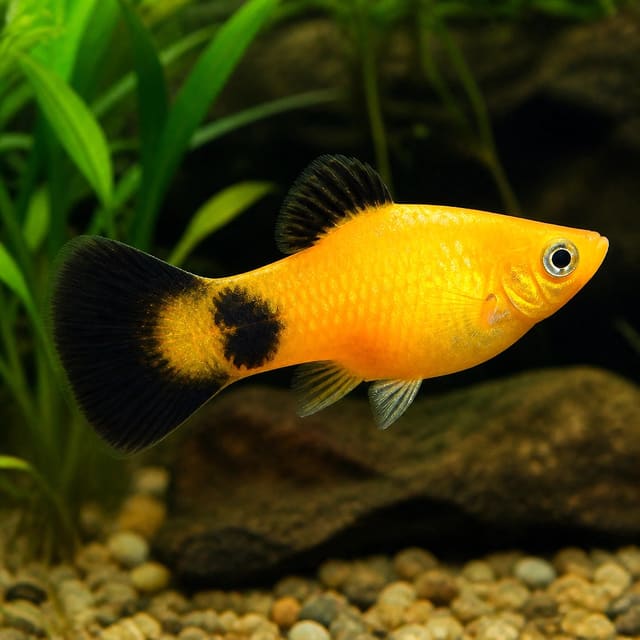
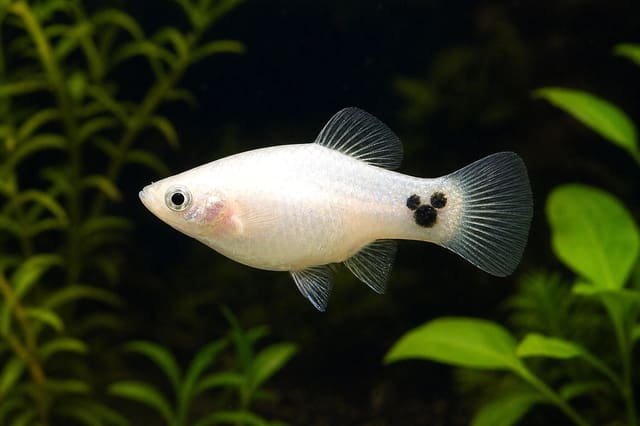
White Mickey Mouse Platy (Xiphophorus maculatus)
20–25°C · pH 7–8 · 54L
£5.99
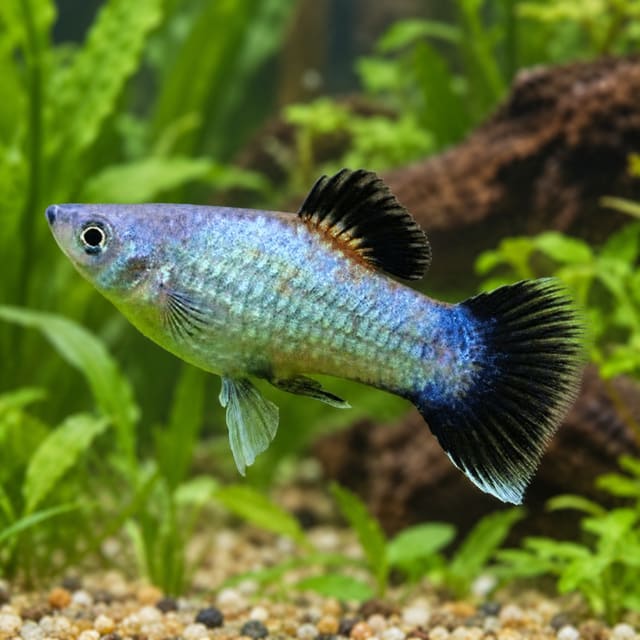
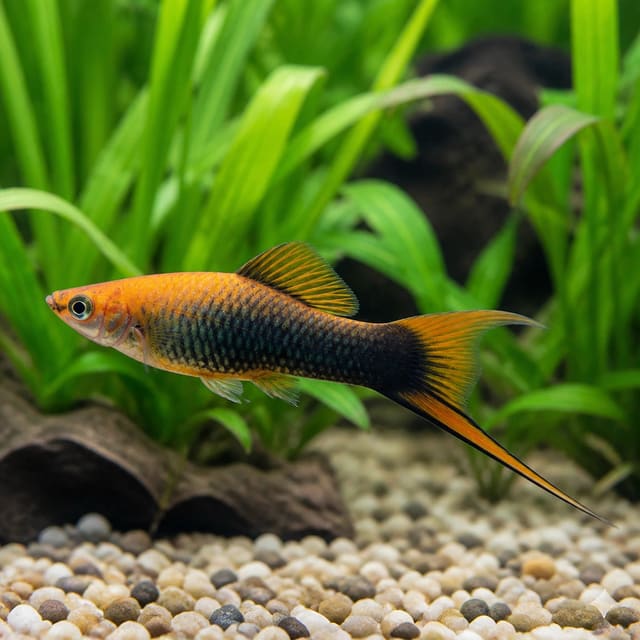
The Platy Blue Tuxedo (Xiphophorus maculatus) is a peaceful freshwater livebearer from Mexico to northern Belize that reaches 4 cm. It suits beginners who can provide a 60 × 30 cm, about 54-litre aquarium; FishBase and Seriously Fish ranges overlap at 20–25°C, pH 7.0–8.0 and 10–19 dGH, while OATA group guidance suggests keeping at least three. Sold individually as one live fish per purchase.
Adult size is the maximum length this species reaches at full maturity (scientific sources). The livestock you receive will be younger and smaller. Product-photo provenance and any image-specific limitations are stated on the listing.
Xiphophorus maculatus
Save when buying multiple fish. Each quantity is one fish; sex and pair formation are not guaranteed unless the selected variant explicitly states them.
Minimum of 2 per order.
The Platy Blue Tuxedo (Xiphophorus maculatus) is a peaceful freshwater livebearer from Mexico to northern Belize that reaches 4 cm. It suits beginners who can provide a 60 × 30 cm, about 54-litre aquarium; FishBase and Seriously Fish ranges overlap at 20–25°C, pH 7.0–8.0 and 10–19 dGH, while OATA group guidance suggests keeping at least three. Sold individually as one live fish per purchase.
Adult size is the maximum length this species reaches at full maturity (scientific sources). The livestock you receive will be younger and smaller. Product-photo provenance and any image-specific limitations are stated on the listing.
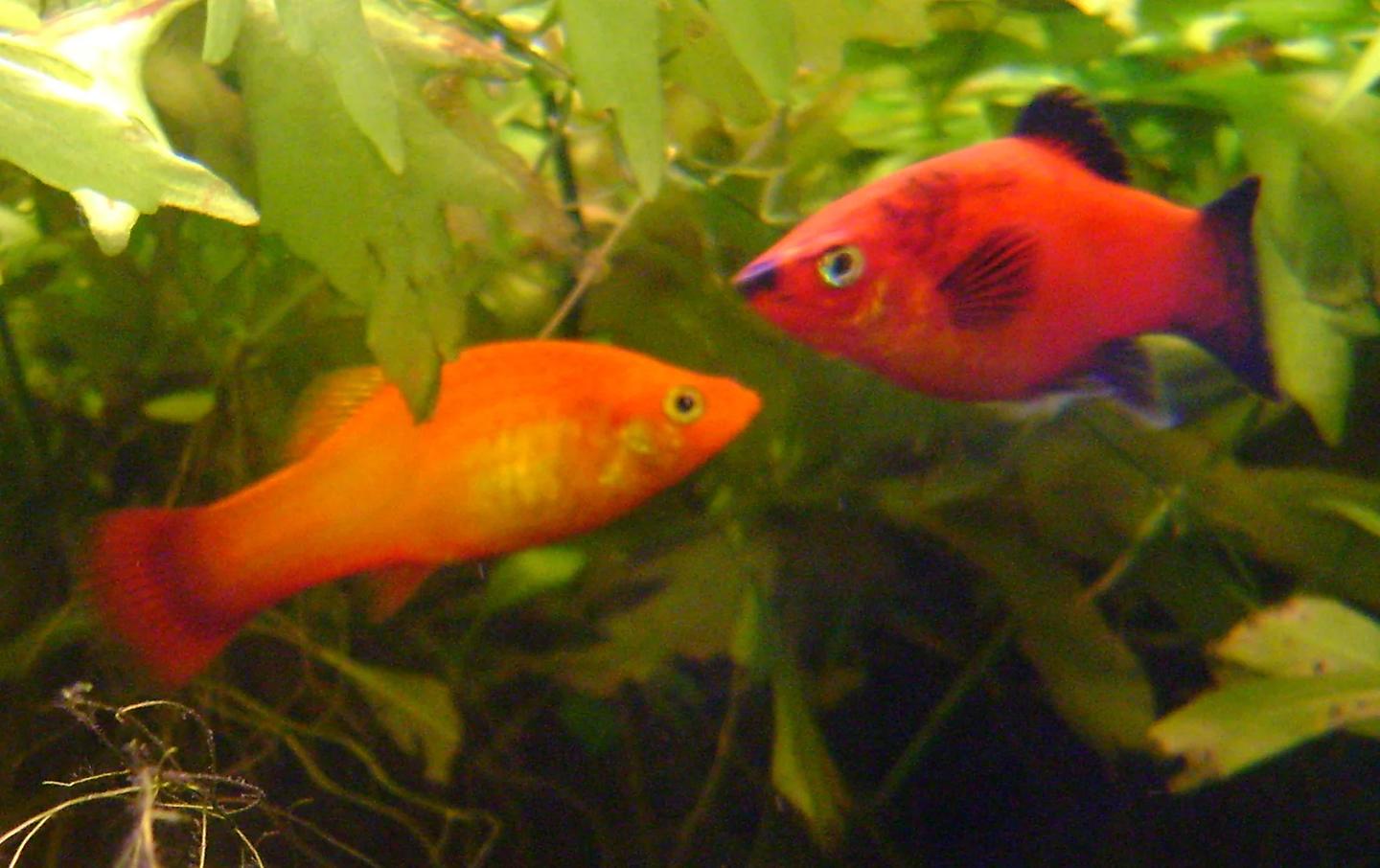
Platy is a trade name used for Xiphophorus maculatus, X. variatus and domestic forms. Start with at least three in a mature aquarium of at least 45 litres, verify the exact fish and measured water, and plan extra capacity before mixing sexes.
Maintain these water conditions for optimal health and vibrant colors
The Platy Blue Tuxedo is a selectively bred aquarium variety of Xiphophorus maculatus, a peaceful freshwater livebearer in the Poeciliidae family. “Blue Tuxedo” identifies the variety rather than a separate species. FishBase places the species in Poeciliidae, records an adult maximum of 4.0 cm total length for male or unsexed fish and gives its natural distribution as North and Central America, from Veracruz in Mexico to northern Belize. That natural range describes the species, not the origin of an individual aquarium fish.
This platy suits beginners and experienced keepers prepared to provide moderately hard or harder water, a mature biological filter and enough room for a small social group. FishBase’s recorded environmental values and the Seriously Fish aquarium ranges overlap at 20–25°C, pH 7.0–8.0 and 10–19 dGH. Plan around a base of at least 60 × 30 cm and about 54 litres.
| Suits | Not suited to |
|---|---|
| Peaceful freshwater communities with compatible water | Soft, acidic aquariums |
| Keepers prepared to maintain a mature biological filter | Unfiltered or biologically immature aquariums |
| A planted aquarium with open swimming room | Aquariums below the 60 × 30 cm planning footprint |
| A planned social group with sufficient space | Plans that ignore group size or total stocking load |
One purchase supplies one animal.
Sex is guaranteed only when the selected option explicitly states male or female. This Platy Blue Tuxedo listing has no sex-guaranteed option.
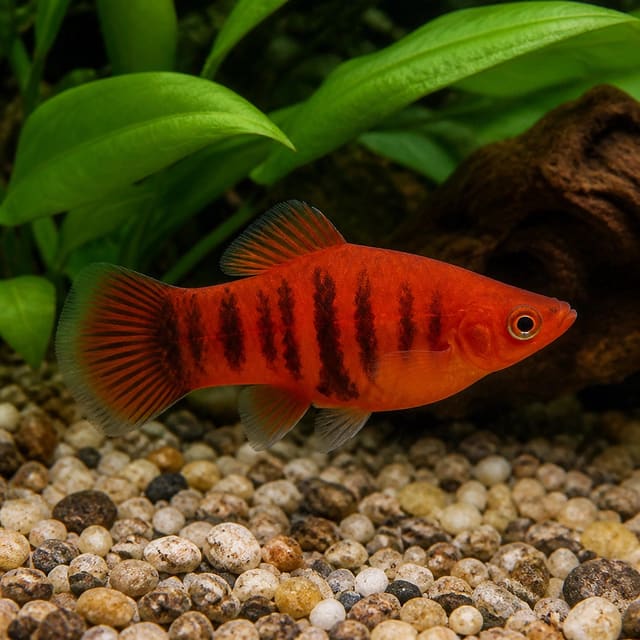
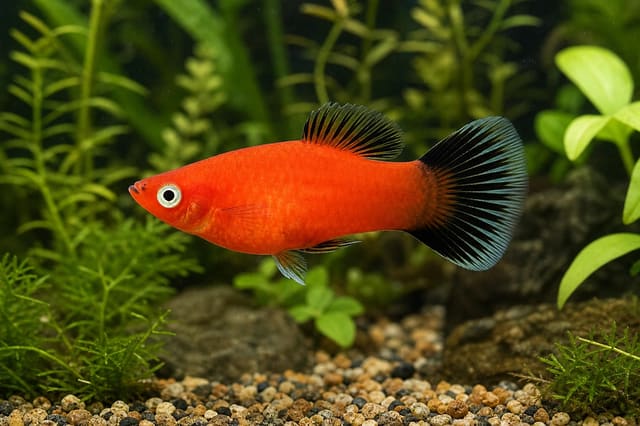
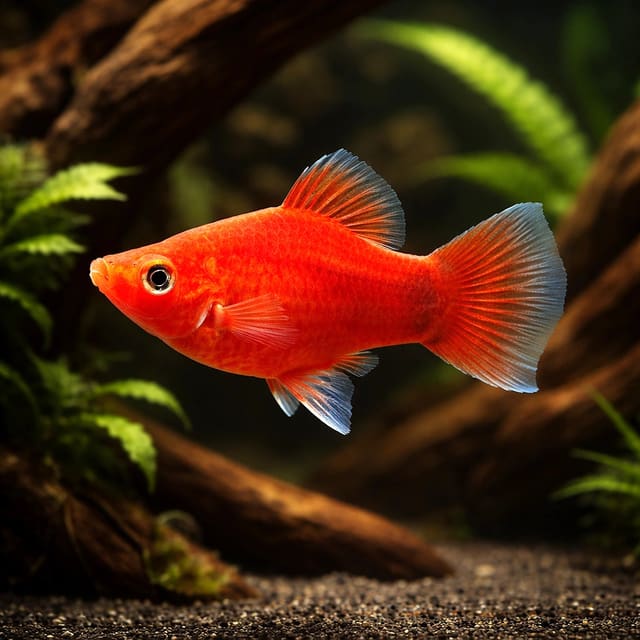
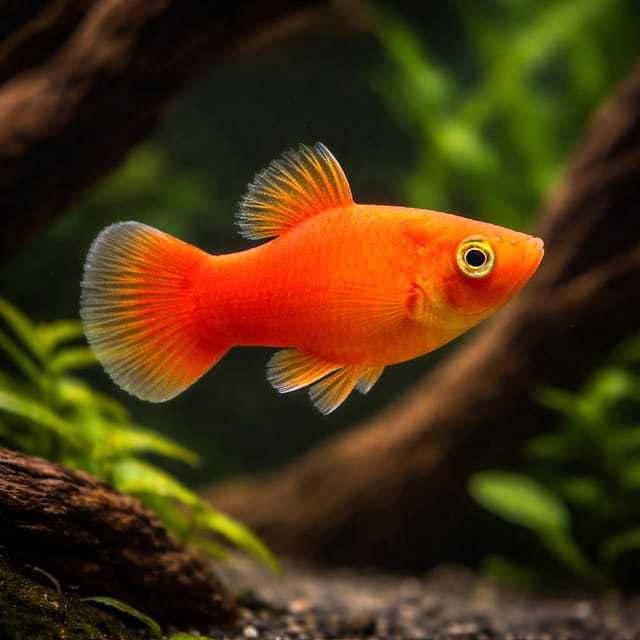
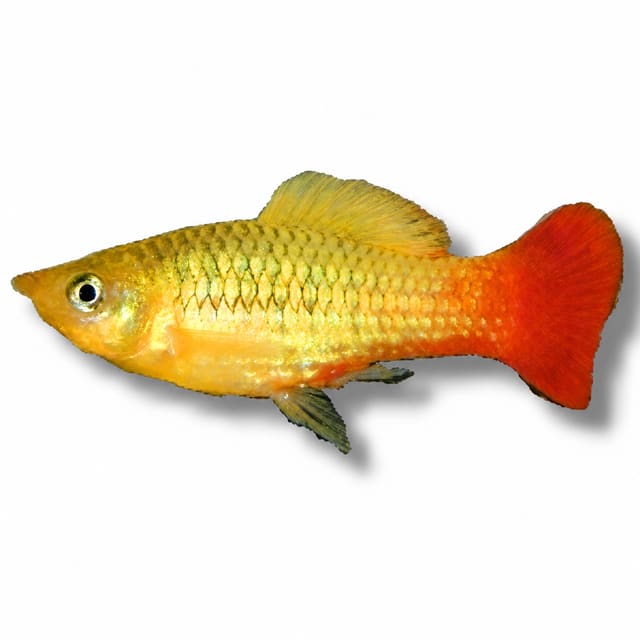
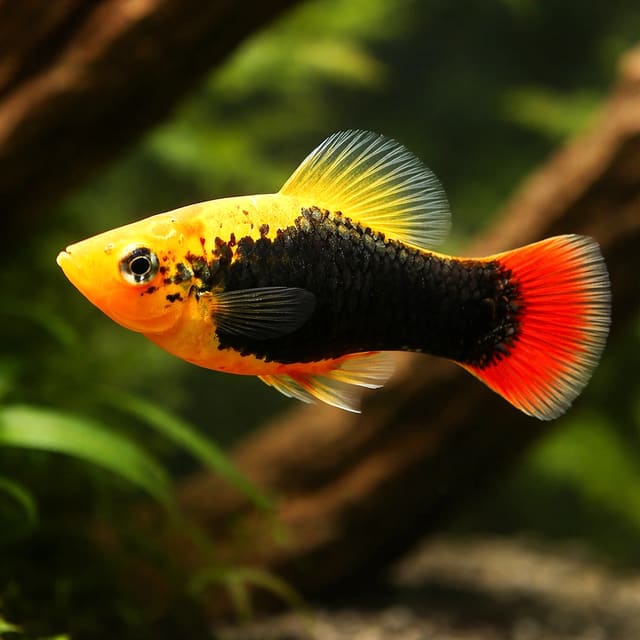
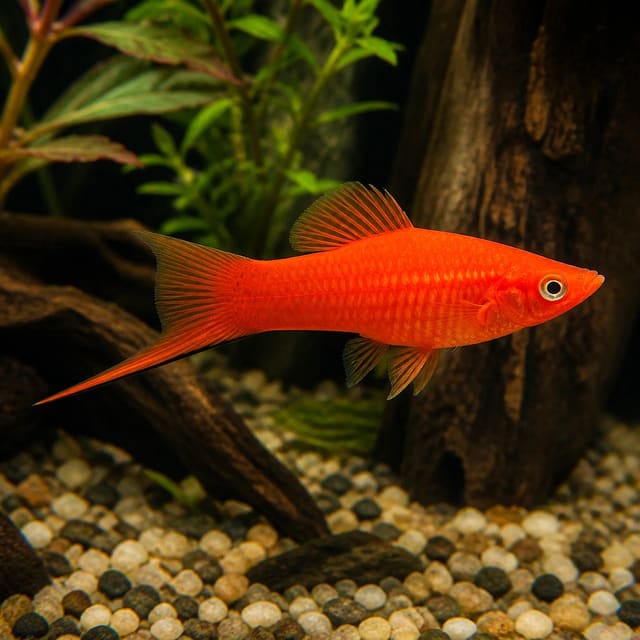
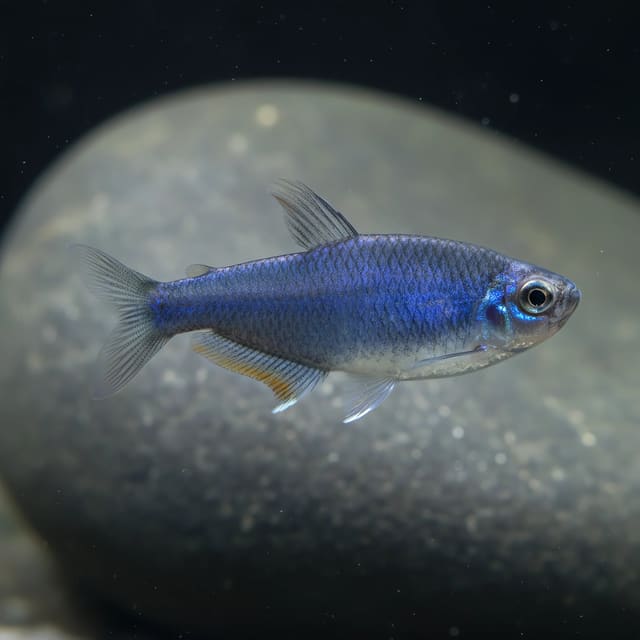
The gallery images are representative of this type of animal rather than photographs of the exact animal supplied, so colours can look slightly different from the live animal.
We classify its care level as easy because its diet is straightforward and recognised platy guidance describes the group as generally undemanding, but that label still depends on testing the aquarium and maintaining stable conditions. Delivery dates, dispatch arrangements and claim steps remain on our delivery and Live Arrival Guarantee policy.
Use FishBase’s maximum of 4.0 cm total length for male or unsexed fish as the adult-size figure throughout this care plan. Seriously Fish separately profiles Xiphophorus maculatus at 50 mm standard length, while OATA describes platies generally as 6–8 cm. Plan the aquarium around the species profile’s 60 × 30 cm base and volume of about 54 litres rather than treating any supplied length as the eventual adult size.
| Planning point | Figure to use |
|---|---|
| Adult-size figure | 4.0 cm total length, male or unsexed |
| Recommended base | 60 × 30 cm |
| Recommended volume | About 54 litres |
| Routine temperature | 20–25°C |
| Routine pH | 7.0–8.0 |
| Routine hardness | 10–19 dGH |
OATA’s platy-and-swordtail sheet gives at least three platies and at least 45 litres for a small group; these are group-level figures rather than a species-specific optimum. The more conservative species profile of about 54 litres and a 60 × 30 cm base is the better starting point for this animal, especially when other fish will share the aquarium.
A 54-litre tank is not permission to fill every remaining space. Count the intended platy group, every existing fish and each animal’s eventual size before adding anything. A larger aquarium offers more room for the group and generally gives more stable environmental conditions, but it still needs appropriate filtration and regular maintenance.
A tank passes the first space check when it provides the recommended base and volume. It passes the water check when temperature, pH and hardness sit within 20–25°C, pH 7.0–8.0 and 10–19 dGH. It passes the social check when there is room for at least three platies without crowding the existing community. If any one of those checks fails, change the aquarium or stocking plan before purchase.
Start with an aquarium measuring at least 60 × 30 cm across its base and holding about 54 litres. The footprint matters because it creates usable room for a small group, planting and an open swimming area. If the aquarium will contain a wider community, move beyond this starting point according to the combined adult sizes and group needs of every resident.
Xiphophorus maculatus appreciates a planted aquarium. Place live plants so they provide shelter without filling the whole swimming area. OATA also recommends aquarium gravel or sand and says plastic plants or suitable ornaments can provide cover when live plants are not used. Plant pots, model caves and similar aquarium-safe furnishings can create additional shelter.
Dense planting has an extra planning value when males and females share the aquarium because mixed-sex groups may produce fry. Planting does not remove the need to plan for population growth, but it gives fish places to withdraw from persistent attention within the group.
Measure the aquarium base itself rather than estimating space from its litre label. Then review the layout after the substrate, plants, ornaments and filter are positioned. A 60 × 30 cm base should still contain a clear swimming route and accessible shelter; if furnishings divide the aquarium into cramped pockets, simplify the arrangement before fish enter.
Use cover to create choices rather than one crowded refuge. Plants or suitable ornaments can break up exposed areas, while the retained open section gives the group room to move through the aquarium. Check that the filter remains unobstructed and that solid waste can be reached with a siphon during weekly maintenance.
When comparing two aquariums with similar volume, favour the one that meets or exceeds the recommended 60 × 30 cm base and accommodates the intended furnishings without sacrificing open room. Volume, footprint and layout work together; none should be assessed alone.
A new aquarium needs time for its biological filter to mature. Follow our first tropical aquarium guide before adding fish, then confirm that ammonia and nitrite are both 0 mg/l. An aquarium that has the correct dimensions but an immature filter is not ready for a platy group.
Choose the larger aquarium when deciding between two suitable footprints. OATA notes that larger volumes generally provide more stable temperature and water quality. Extra volume does not replace water changes, testing or filter care, but it gives the keeper more room to accommodate the intended group responsibly.
Keep this platy at 20–25°C, pH 7.0–8.0 and 10–19 dGH. These routine values are the overlap between FishBase’s recorded environmental range and the Seriously Fish aquarium range. Seriously Fish states that Xiphophorus maculatus should be maintained in moderately hard or harder water and will not thrive in soft, acidic conditions. Measure the aquarium rather than relying on a regional description such as “hard-water area”.
| Value | Routine aquarium range |
|---|---|
| Temperature | 20–25°C |
| pH | 7.0–8.0 |
| General hardness | 10–19 dGH |
| Ammonia | 0 mg/l |
| Nitrite | 0 mg/l |
A reading of 24°C, pH 7.5 and 15 dGH sits inside all three ranges. A tank at 24°C and pH 7.5 still fails the complete screen if hardness is 6 dGH. Likewise, hardness of 15 dGH does not compensate for acidic water below pH 7.0. Use our water chemistry guide to understand what each measurement means, then enter measured values in the water matcher to compare them with the care range.
Aim for a stable point within the overlap rather than moving repeatedly between the minimum and maximum. Test the aquarium and the normal tap-water supply used for changes, because the replacement water becomes part of the fish’s environment. Treat tap water with a conditioner that removes chlorine or chloramine before it enters the aquarium.
For a roughly 54-litre aquarium in a room around 20°C, the species profile uses approximately 50 W as a heater-planning figure for its 20–26°C range. Heater choice still begins with the aquarium’s actual volume and room conditions. Check the aquarium temperature with an appropriate thermometer instead of treating the heater setting as the measured water temperature.
A working biological filter is essential. The RSPCA explains that fish release toxic ammonia; filter bacteria convert it to nitrite, which is also toxic, and then to the safer nitrate. Maturing the filter builds the bacterial population needed to process the waste created by the intended fish community.
For a tank of about 54 litres, the species profile recommends turnover of four to five times the aquarium volume per hour. Multiplying 54 litres by four gives 216 litres per hour, while multiplying by five gives 270 litres per hour. That creates a practical filter-rating range of about 215–270 lph for this example.
| Filter decision | Action |
|---|---|
| Before fish enter | Mature the biological filter. |
| Ammonia result | Proceed only at 0 mg/l. |
| Nitrite result | Proceed only at 0 mg/l. |
| Rated turnover for 54 litres | About 215–270 lph. |
| Adding more fish | Increase the population slowly. |
Adding fish and increasing food raises the load placed on the biological filter. OATA advises increasing aquarium populations slowly because the established bacteria need to grow as waste production rises. Stocking too quickly can lead to unhealthy ammonia and nitrite levels associated with new tank syndrome.
Do not treat clear-looking water as a substitute for testing. Ammonia and nitrite cannot be managed by appearance alone, and both targets are 0 mg/l. Check the filter for blockages as part of the weekly routine, and preserve its bacterial population when cleaning the media.
Plan filtration from the aquarium’s full community rather than from this single purchase. One animal may be the retail unit, but the filter ultimately supports the combined waste from the planned platy group and every compatible resident.
Platies are omnivorous and accept dried, frozen and live foods. FishBase records worms, crustaceans, insects and plant matter in the wild diet. Use a good-quality flake or granule with a high algae content as the regular aquarium food. Small live or frozen items such as daphnia, small bloodworm or tubifex can add variety without replacing the staple diet.
| Feeding choice | Instruction |
|---|---|
| Staple | Quality flake or granule with high algae content |
| Variety | Small daphnia, bloodworm or tubifex |
| Schedule | Once a day |
| Portion limit | Only what is eaten within a few minutes |
Begin with an amount the group can finish within a few minutes. If food remains after that feeding window, reduce the next portion. One daily feed is not an invitation to add a large meal: excess food breaks down and releases waste into the aquarium.
Watch the whole group while feeding. Each fish should have the opportunity to take suitably small food, and reduced interest in food can be an early sign that something has changed. Combine that observation with checks of swimming, breathing, appearance and water quality rather than responding by adding more food.
A varied diet can alternate the accepted dried staple with the listed frozen or live foods. Make changes deliberately and continue applying the same few-minute portion limit.
Overfeeding affects more than body condition. Uneaten food adds to the waste the filter must process, which can contribute to harmful water-quality changes. A measured daily meal therefore supports both nutrition and the zero-ammonia, zero-nitrite targets.
Introduction begins before the fish reaches the aquarium. Confirm a mature biological filter, at least a 60 × 30 cm base, about 54 litres and water within 20–25°C, pH 7.0–8.0 and 10–19 dGH. Test ammonia and nitrite and proceed only when both read 0 mg/l.
Add to the aquarium population slowly. The biological filter’s bacteria need to increase when more fish and food raise waste production. A large change in stocking at one time can overwhelm that capacity even when the aquarium was mature beforehand.
Watch swimming behaviour, colour, temperament, breathing, appearance, body condition and feeding. Warning changes include hanging at the surface, sitting on the bottom, erratic swimming, becoming darker or paler, hiding more than usual, altered aggression, unusually slow or fast gill movement, white spots, fluffy growths, loss of fins or scales, a marked change in condition or reduced interest in food.
If a health change appears, test water quality first and contact us for further guidance. Ammonia and nitrite results are particularly important because even small amounts can stress platies. Keep treatment decisions separate until the aquarium conditions and observed signs have been assessed.
Healthy-fish indicators in OATA’s guidance include clear, bright eyes, undamaged fins, intact scales and the absence of ulcerations or bumps. Use those points alongside the individual fish’s normal behaviour; a change from its usual pattern is often more informative than one isolated movement.
At least once each week, carry out a partial water change of 25%. A siphon can remove solid waste from the gravel while water is taken out. Treat replacement tap water with conditioner to remove chlorine or chloramine before adding it to the aquarium.
| Weekly checkpoint | Target or action |
|---|---|
| Partial water change | 25%, at least once a week |
| Ammonia | 0 mg/l |
| Nitrite | 0 mg/l |
| Nitrate | Up to 20 mg/l above normal tap-water level |
| Filter | Check for blockages |
When the filter media needs cleaning, rinse it lightly in aquarium water removed during the partial change. Do not rinse it under the tap, because chlorine or chloramine may kill beneficial bacteria established in the media. The purpose is to clear debris while limiting the loss of the bacterial population.
For an aquarium containing about 54 litres, a 25% change is approximately 13.5 litres. Treat that as a worked example rather than assuming the displayed tank volume equals the actual water present after substrate and furnishings are added. Base the calculation on the aquarium’s real water volume and keep the frequency at least once each week.
Read the nitrate target against the normal tap-water result. If the tap water measures 10 mg/l nitrate, the OATA ceiling is 30 mg/l in the aquarium because it is up to 20 mg/l above that baseline. If the tap-water reading changes, recalculate the ceiling instead of continuing to use the old figure.
Test before maintenance often enough to reveal what happened during the week, then record the result and the action taken. This creates a useful comparison for the next check and shows whether the established routine is keeping ammonia and nitrite at 0 mg/l.
Record temperature, pH, hardness, ammonia, nitrite and nitrate so changes are noticed early. The routine aquarium targets remain 20–25°C, pH 7.0–8.0 and 10–19 dGH, with ammonia and nitrite at 0 mg/l. Nitrate should not exceed 20 mg/l above the normal level in the tap water used for changes.
Link maintenance decisions to the readings. A blockage needs attention because the filter must keep operating, while measurable ammonia or nitrite means the aquarium is outside its required water-quality targets. Pause further stocking while restoring appropriate conditions.
Keep the weekly routine consistent after the fish settle. Easy care means the necessary actions are clear; it does not mean the aquarium can run without water changes, testing and filter checks.
Platies require companionship. Use at least three as the planning minimum rather than treating one purchase as a complete social group. OATA recommends two females to each male when sexes are mixed, and more fish can follow the same ratio when the aquarium has sufficient volume and filtration.
One purchase supplies one animal, so a planned group of three means three purchase units. Before increasing quantity, check the 60 × 30 cm base, the approximately 54-litre starting volume, the existing community and the biological filter’s capacity. A social minimum does not override the aquarium’s total stocking limit.
Seriously Fish describes this species as peaceful and notes that males tolerate one another. It also warns that male attention towards females can be relentless. Keeping more females spreads that attention, while plants and shelter give fish places to withdraw.
Do not infer a chosen ratio from dispatch size, colour or gallery appearance. Use the offer disclosure when deciding whether this particular purchasing route can meet a sex-specific group plan.
Xiphophorus maculatus is a livebearer, and mixed-sex groups may produce continual batches of fry. Treat that as a stocking decision before combining sexes. The aquarium must have room for the existing adults, the wider community and any increase in fish numbers.
If fry appear, reassess stocking capacity before adding more fish. Greater fish numbers and feeding place a greater load on the biological filter, whose bacterial population must grow to process the additional waste. Continue the weekly water-quality targets and make any increase in stocking gradual.
This planning approach keeps reproduction from becoming an accidental overcrowding problem. It also preserves the central care priorities: companionship, enough space, stable hard water and a mature filter.
The Platy Blue Tuxedo is very peaceful and can live with many community species. That broad temperament description is only the first compatibility check. A named companion is never an automatic match because water ranges, adult space, group needs and the complete stocking load must also align.
Compare the proposed companion’s requirements with 20–25°C, pH 7.0–8.0 and 10–19 dGH. All three ranges need a workable overlap. A candidate requiring acidic water below pH 7.0 does not pass this screen, even if it is described as peaceful. A candidate with matching pH and hardness still fails if its temperature begins above 25°C.
Next, calculate around the 60 × 30 cm base, approximately 54 litres, the intended group of at least three platies and every existing resident. Apply each companion’s own adult-size and group requirements. The aquarium must support the whole community rather than meeting the platy figures in isolation.
Males generally tolerate one another, but males may direct persistent attention towards females. Where sexes are mixed, more females are recommended to spread that attention. Planting and shelter support the layout, but they do not replace an appropriate group plan or enough aquarium space.
Write down the proposed shared temperature, pH and hardness before comparing behaviour. If there is no point that sits inside both animals’ ranges, stop there rather than relying on peaceful temperament. When the water overlaps, add the complete adult group for each species to the space calculation instead of comparing single fish.
Then assess how the community changes feeding and filtration demand. Every added animal contributes waste, and each social species may require several individuals rather than one. A plan that fits on a name list may therefore exceed the aquarium’s usable footprint or the mature filter’s capacity once full groups are counted.
Finally, check that planting and cover leave open room after all furnishings are installed. Cover can help fish withdraw from attention, but it cannot turn an undersized or overcrowded aquarium into a suitable community. Keep the combination conditional until water, group size, adult space and filtration all pass together.
For a stocking and compatibility assessment, contact us with the aquarium dimensions, volume, measured temperature, pH and hardness, plus the species and numbers already present. Those details allow the proposed combination to be assessed as one community rather than as a list of names.
Use a fixed sequence for every proposed companion: water, temperament, adult space, social group and filter capacity. Passing one step does not cancel a failure at another. The following examples show how to apply the Platy Blue Tuxedo’s figures without turning a peaceful label into a universal compatibility promise.
The aquarium is 24°C and 15 dGH, but its pH is maintained below 7.0 for the existing community. Temperature and hardness fit the platy range, while pH does not. Keep the established water plan or the platy plan rather than forcing animals with incompatible requirements into the same aquarium.
A smaller aquarium measures below 60 × 30 cm but tests at 24°C, pH 7.5 and 15 dGH. The water passes, but the recommended base and approximately 54-litre planning volume do not. Choose an aquarium that meets the spatial guidance before calculating a social group.
A mature 60 × 30 cm aquarium already contains two platies and has water within all three routine ranges. One further purchase would make the OATA planning minimum of three because one purchase supplies one animal. The decision still depends on other residents, the sex balance and the filter’s capacity; the arithmetic alone does not approve the addition.
A proposed community species is peaceful, shares an overlap within 20–25°C, pH 7.0–8.0 and 10–19 dGH, and its own adult size and group requirements fit the aquarium after the platy group is counted. That combination passes the initial screen. Introduce fish gradually and continue weekly testing because a larger population increases biological-filter demand.
This sequence keeps compatibility conditional and practical. It replaces generic tank-mate lists with measurements and stocking decisions that apply to the actual aquarium.
FishBase records a maximum adult size of 4.0 cm total length for male or unsexed Xiphophorus maculatus; plan its space around a 60 × 30 cm aquarium base rather than a supplied length.
Plan an aquarium with at least a 60 × 30 cm base and about 54 litres, using plants or suitable artificial cover while retaining open swimming room.
OATA’s group guidance for platies suggests keeping at least three. Count the entire aquarium community because the recommended 60 × 30 cm base and about 54 litres must accommodate every resident.
Yes. We classify it as easy for a beginner who can maintain a mature filter, 20–25°C, pH 7.0–8.0, 10–19 dGH, and ammonia and nitrite at 0 mg/l.
Feed good-quality flake or granules with high algae content once daily, offering only what is eaten within a few minutes; small daphnia, bloodworm or tubifex can provide variety.
Keep this fish at 20–25°C, pH 7.0–8.0 and 10–19 dGH, the overlap between FishBase’s recorded environmental range and the Seriously Fish aquarium range.
Seriously Fish describes it as very peaceful and says even males tolerate one another. Males may direct relentless attention towards females, so mixed-sex groups should contain more females.
Screen peaceful community fish for an overlap within 20–25°C, pH 7.0–8.0 and 10–19 dGH, then check adult space, group requirements and total biological-filter capacity.
If practical, film the delivery continuously from the sealed parcel as you open it, keeping the fish visible inside the sealed bag. Someone must be present to receive the parcel; float the bag for 20–30 minutes before releasing the fish, and never pour the bag water into the aquarium. We strongly recommend an unboxing video when practical: it helps us investigate arrival concerns faster, resolve them with less back-and-forth and understand packing or transit issues so we can reduce recurrence. Video is optional and clear photos are accepted. Never delay necessary animal care to record evidence.
No reviews for this item yet. Bought one? Honest reviews only, good or bad.
What customers say about ordering from us
Easy website plenty of info on fish your buying great to pick a time slot
TRACEY DURRANT · 7 Oct 2026
Got some lovely fish thank you
Kevin Mackie · 7 Oct 2026
Reviews of our shop, collected by Judge.me, an independent third-party review collector. Newest first.