−12%
Easy
Bumblebee Platy (Xiphophorus maculatus)
20–25°C · pH 7–8 · 54L
£6.15£6.99
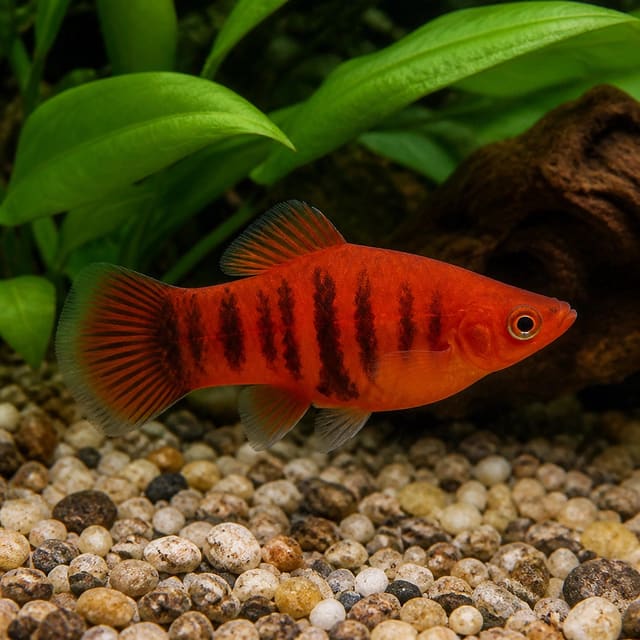
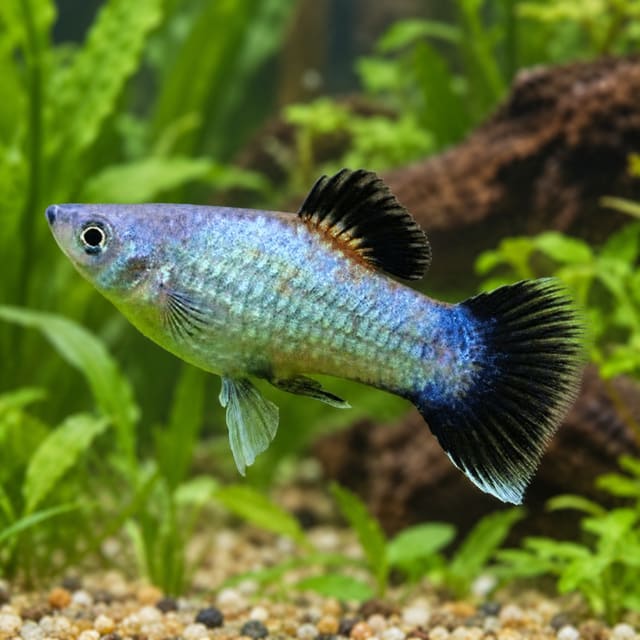
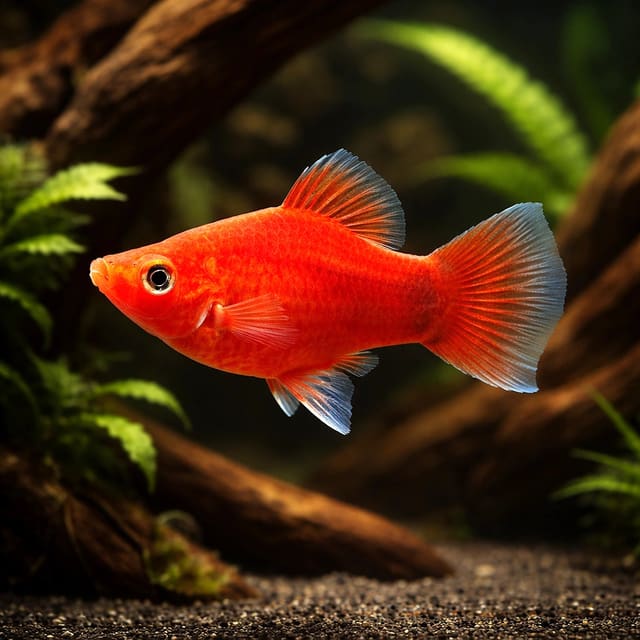
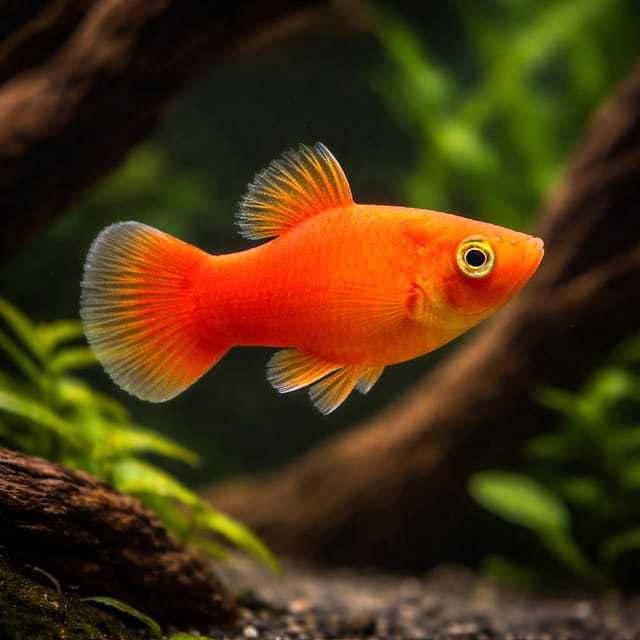
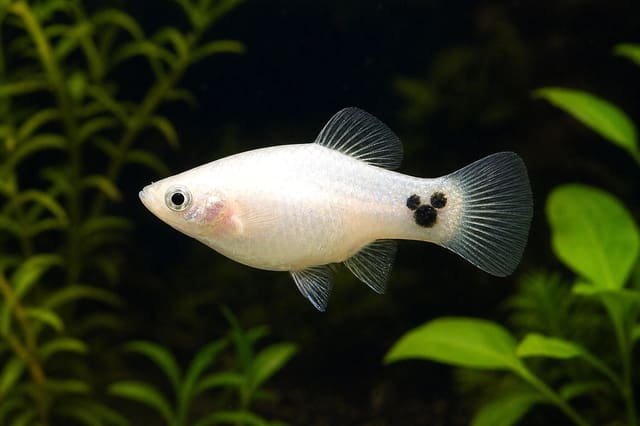
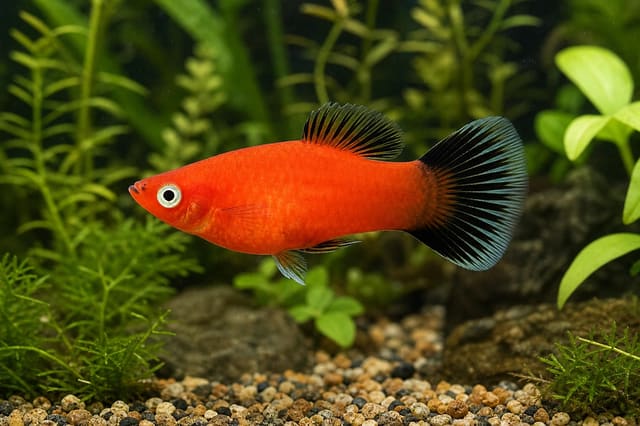
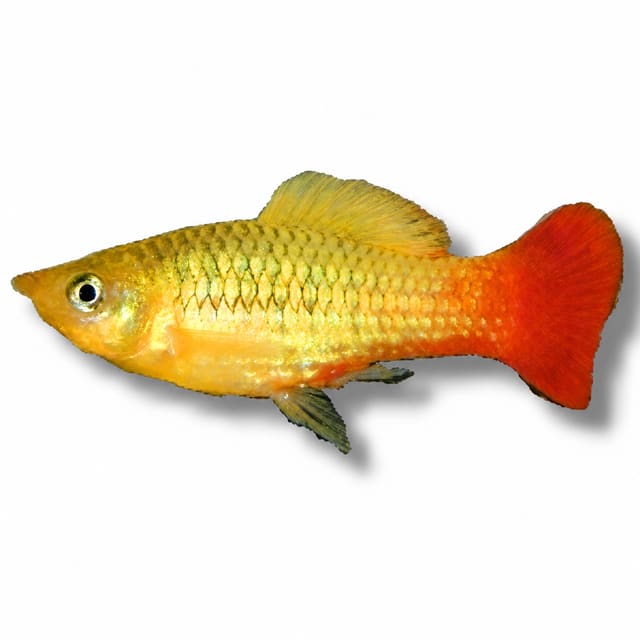
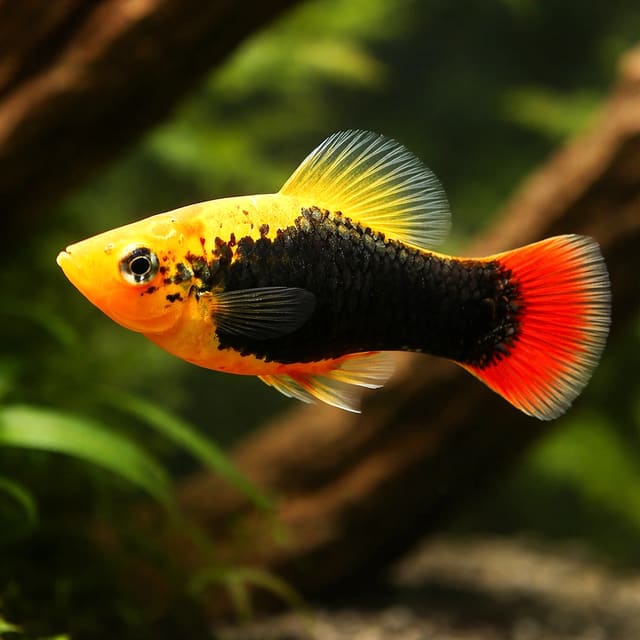
Golden Mickey Mouse Platy (Xiphophorus maculatus) is supplied as one unsexed fish per quantity. Keep it in a mature planted aquarium with suitable harder water and a planned social group.
Adult size is the maximum length this species reaches at full maturity (scientific sources). The livestock you receive will be younger and smaller. Product-photo provenance and any image-specific limitations are stated on the listing.
Xiphophorus maculatus
Shoaling fish: kept in a group they feel safer, stay calmer and show their best colour.
Minimum of 2 per order.
Golden Mickey Mouse Platy (Xiphophorus maculatus) is supplied as one unsexed fish per quantity. Keep it in a mature planted aquarium with suitable harder water and a planned social group.
Adult size is the maximum length this species reaches at full maturity (scientific sources). The livestock you receive will be younger and smaller. Product-photo provenance and any image-specific limitations are stated on the listing.
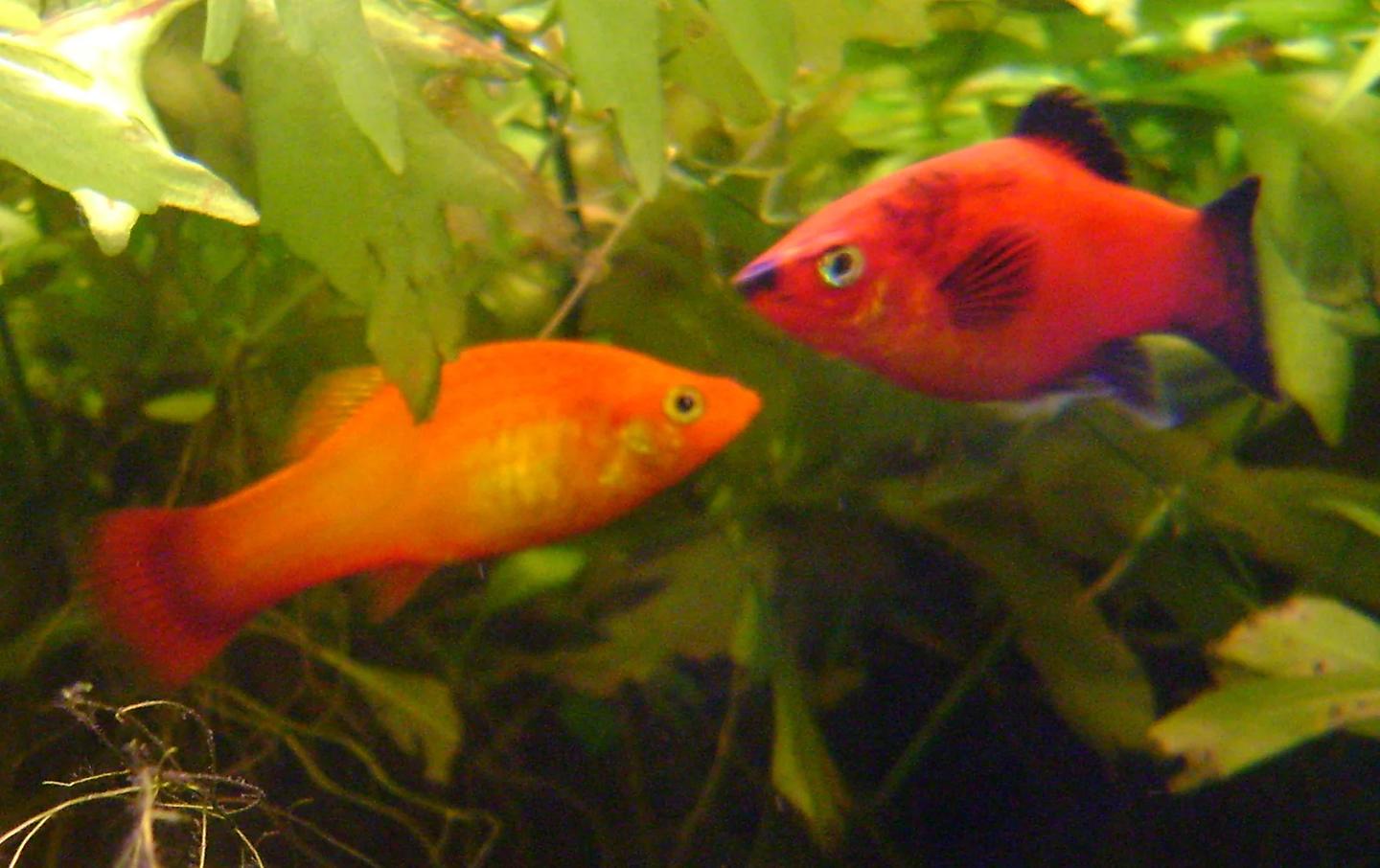
Platy is a trade name used for Xiphophorus maculatus, X. variatus and domestic forms. Start with at least three in a mature aquarium of at least 45 litres, verify the exact fish and measured water, and plan extra capacity before mixing sexes.
Maintain these water conditions for optimal health and vibrant colors
The Golden Mickey Mouse Platy (Xiphophorus maculatus) is a domestic colour form of the peaceful platy livebearer. This listing supplies one live fish per purchase quantity. Its Golden Mickey trade name distinguishes the colour form within the platy range; it is not a different scientific species or a promise that every individual has identical markings. A mature aquarium with planted cover, open swimming room and suitably hard, near-neutral to alkaline water will let the fish behave naturally.
The supplier's recurring grade is 3 - 4 cm. That describes a dispatch grade, not an adult limit. FishBase records 4 cm total length, while Seriously Fish gives 5 cm standard length; the latter measurement excludes the tail. Those different published values are not interchangeable, and neither should be applied as an exact measurement of the fish you receive. Plan space for an adult rather than judging the aquarium by the sale grade.
One purchase is one fish, not a pack. The product does not offer a male or female selection. Do not infer sex from the photograph, the colour name or the price. Platies are livebearers, and a mixed-sex group can reproduce readily. If you need a particular sex ratio, the unsexed offer does not supply that guarantee. Plan the social group and the possibility of young before adding fish to an aquarium already near its stocking limit.
Seriously Fish places X. maculatus in the family Poeciliidae and recommends a planted aquarium with moderately hard or harder water. It describes this species as very peaceful and able to join suitable community aquaria. The word suitable matters: companions need compatible water and room to feed and swim. A platy may be modest in size, but it still depends on an established filter, clean water and reliable maintenance.
FishBase records the wild species across parts of Mexico to northern Belize, including warm springs, creeks, canals and slow waters with weedy banks. Golden Mickey is a domestic colour form, so the wild-range record describes the species rather than the origin of the fish supplied.
For a keeper comparing platy varieties, this form offers the same species-level husbandry planning as other X. maculatus forms. The correct question is whether your aquarium has suitable water, adult space and a manageable group plan. The name of a colour form does not change the need for biological filtration or make a companion automatically safe.
| Suits | A mature planted community aquarium with stable, moderately hard or harder water and a social plan. |
|---|---|
| Not suitable for | Very soft acidic water, an uncycled tank, or a purchase that depends on guaranteed male or female selection. |
| Food | Good-quality prepared food with small appropriate live or frozen items as variety. |
| Group planning | Platies appreciate company; account for mixed-sex breeding and the needs of every animal. |
The platy collection helps compare the shop's platy forms. A different colour page is an alternative purchase, not evidence that combining several forms is right for a particular aquarium. Choose on the basis of adult care, water compatibility and the number of fish the established system can support.
Sex is guaranteed only when the selected option explicitly states male or female. This Golden Mickey Mouse Platy listing has no sex-guaranteed option.
Seriously Fish describes an aquarium base of 60 × 30 cm, approximately 54 litres in its example, for Xiphophorus maculatus. FishBase gives a 60 cm minimum aquarium size without a volume. A long base offers swimming space and a planted structure that a small bare container cannot provide. Start with the species-level footprint and then consider the full community, rather than treating one platy as a reason to choose the smallest possible aquarium.
The litre number alone does not show whether the tank can support a group or other species. Substrate, wood, plants and filter equipment reduce actual water volume. The number of adults, their feeding and the filter's maturity affect the workload. More fish require more space and more biological capacity. When planning a new aquarium, choose a layout that can be maintained and observed, not one so densely furnished that waste is invisible and swimming paths disappear.
Seriously Fish says platies appreciate a planted environment. Use living plants or safe planted structure to create refuge, including areas where a fish can avoid the main activity. Keep open swimming room as well. Plants can help define spaces but do not replace filtration or water changes. The aquarium should offer places to investigate and withdraw without becoming a maze with no accessible area for a siphon.
Watch how the fish use the finished layout. One individual may spend more time behind cover after introduction, while a settled fish may range widely. Persistent hiding, inability to reach food or chasing that confines a fish to a corner needs attention. A photograph of an attractive planted tank cannot tell you whether the particular fish are able to feed and move normally. Observe the complete group over time.
Seriously Fish gives species-level aquarium guidance of 20–26°C, pH 7.0–8.2 and 10–30 dGH. It specifically warns that X. maculatus will not thrive in soft, acidic water and should have moderately hard or harder conditions. This is an important distinction from a generic idea that all peaceful tropical fish like the same water. The fish's colour form does not remove the species' water requirements.
FishBase's environmental record gives 18–25°C, pH 7.0–8.0 and hardness 9–19 dH. OATA's platy and swordtail sheet gives 17–27°C, pH 7.0–8.0 and 4–12 dGH for the broad group. These sources have different purposes. In particular, OATA's softer group range should not be taken alone to overrule Seriously Fish's species-specific warning against soft acidic water. Use measured, stable water that suits the fish and the actual community.
The aquarium water-parameters guide explains why temperature, pH and hardness need to be considered together. Test the aquarium rather than relying on a town-level description of tap water. Supplies can vary, and water passing through a domestic softener may differ substantially from the main supply. If your existing tank is very soft and acidic, choose a different fish or make a carefully planned long-term water strategy before purchasing platies.
The Water Parameter Matcher provides an initial comparison between measured aquarium water and stated guidance. It is useful when the actual readings are entered, not when the keeper guesses a general water type. Review the species-specific warnings and the requirements of every proposed companion as well. A numerical overlap on one parameter does not automatically make the whole aquarium suitable.
Use a thermostatic heater where room temperature cannot maintain the selected stable range. Check with a separate thermometer. OATA's 17°C lower end is broad group guidance and should not be taken as the target for a specific Golden Mickey aquarium without reviewing the species profile and established fish conditions. Avoid fast corrections, especially those made to force the water towards a copied midpoint. Stability and careful matching are more valuable than a transient ideal figure.
A biological filter is essential even for a peaceful fish sold individually. Fish release ammonia; beneficial filter organisms convert it through toxic nitrite towards nitrate. The RSPCA's fish-environment guidance explains why a clear-looking aquarium can still contain harmful waste. Complete filter maturation before the platy arrives, and test the water rather than assuming that running a pump for a few days is enough.
The first tropical tank guide explains the preparation sequence. For a planned introduction, ammonia and nitrite should be zero. Continue testing after new fish are added, since the filter must adjust to more waste. Add stock gradually and keep the feeding routine controlled. If results change unexpectedly, check the test and the system before adding more animals.
OATA's broad platy and swordtail sheet calls for regular testing and a 25% partial water change at least once each week. This is a useful starting routine, adjusted to the actual stocking and readings. It gives a nitrate benchmark of no more than 20 mg per litre above normal tap-water levels. Compare tank and supply water rather than treating a single reading as meaningful without its starting point.
Remove waste from accessible substrate areas and trim dead plant material. Check that water circulates around the whole aquarium and that the filter has not become obstructed. During cleaning, OATA advises rinsing media lightly in removed aquarium water rather than under tap water, preserving the useful biological population. Follow equipment instructions and avoid changing all established filter media at once.
Replacement water should be prepared for fish use, including conditioner where chlorine or chloramine is present. Consider temperature and chemistry before it enters the tank. Many small changes are easier to manage than letting a problem accumulate and then making an abrupt correction. Keep a short record of tests, feeding and maintenance so that a change in fish behaviour can be considered alongside recent work.
FishBase records worms, crustaceans, insects and plant matter in the wild diet. Seriously Fish describes the aquarium species as accepting dried, live or frozen foods. OATA's broad platy guidance recommends quality flake or granules with substantial algae content, with suitably sized live or frozen foods as variety. A good prepared food can form the basis while additions provide interest and nutritional variety.
Offer food sized for the actual fish. The supplier's 3 - 4 cm grade is small enough that large items may be awkward to take; a tiny particle can also disappear unnoticed into plants. Observe feeding rather than assuming that food placed in the tank has been eaten. A fish that continually hangs back may be excluded by a boisterous companion, even when the total quantity offered seems ample.
Use measured portions. OATA's group guidance suggests one daily feed consumed within a few minutes and warns that excess food decays into water-quality problems. Feeding more often is not a cure for a fish that cannot reach the food. Check the social arrangement, vary locations where appropriate and remove leftovers. If several people care for the aquarium, agree the schedule so a responsive fish is not fed repeatedly by accident.
Platies may pick at surfaces, but they are not a substitute for maintenance or an invitation to leave algae unmanaged. No animal cleans an aquarium without producing waste. Keep feeding complete, maintain the filter and remove excess nutrients through ordinary husbandry. Treat a fish's willingness to eat many foods as flexibility within a balanced plan, not as permission to offer kitchen scraps or to skip the staple diet.
OATA's platy and swordtail guidance suggests at least three together as broad group advice, with more females than males in mixed-sex groups to reduce stress on females. Seriously Fish similarly advises several females per male when both sexes are housed together and notes that males can repeatedly pursue females. The exact sex mix of this unsexed offer is not guaranteed, so do not promise that any three purchases will create the suggested ratio.
The species is a livebearer. A mixed-sex group can reproduce readily, and fry may appear even where breeding was not the keeper's aim. Plan ahead for the extra animals and their care rather than assuming that the first group count will remain fixed. Dense planting can provide refuge, but it is not a controlled population plan. Anyone who specifically requires male-only stocking should select an explicitly sexed offer elsewhere rather than assuming this product can provide it.
Social needs and total stocking must be considered together. Company can be beneficial, but an already crowded tank will not become suitable simply because several new fish meet a group suggestion. Review adult size, current filtration, feeding competition and the needs of all inhabitants. Add slowly enough to monitor the filter and the group's behaviour. The aquarium should serve the fish as adults, not only when they arrive.
Be present for delivery and have the mature aquarium ready. Tropical Fish Co's delivery and Live Arrival Guarantee policy describes oxygen-filled bags, insulated packing and licensed live-animal courier carriage. Check temperature, filtration and water results before the fish arrives. A warm bag cannot compensate for an uncycled or unsuitable destination aquarium.
Inspect the parcel on arrival. A Live Arrival Guarantee claim calls for the order number and a continuous video showing the still-sealed parcel, its opening and the fish still in its sealed bag. Contact the store the same day if something is wrong. Complete this evidence step promptly, then give the live animal calm attention; the video is claim evidence rather than an acclimatisation method.
The store advises floating the sealed bag for 20–30 minutes to bring temperature closer, then acclimatising slowly. Transfer the fish without pouring bag water into the aquarium. Keep the receiving area organised and use a gentle, controlled transfer. Once introduced, allow access to cover and observe feeding and swimming over the following days without repeatedly disturbing the layout.
Look for the fish's own pattern of behaviour, not only a general idea of what a platy should do. Persistent isolation, rapid breathing, lack of food access or a new injury calls for water checks and a review of tankmates. OATA advises seeking experienced guidance when health changes appear. A water-quality problem may require prompt correction, but a single symptom does not identify a disease or justify an improvised treatment.
Before buying, make sure regular testing, feeding and water changes fit the household schedule. Keep conditioner, tests and maintenance equipment ready. A competent carer should know the ordinary food amount and where to find the thermometer and filter if the main keeper is away. Stable care is an everyday practice, not a one-time setup achievement.
Review the aquarium after plants grow and after the social group changes. Leaves can block flow, and new inhabitants can compete for feeding room. The goal is a calm, functional planted home where fish have company, safe movement and clean water. Keep the care plan responsive to actual measurements and observations rather than replacing it with a generic 'easy fish' label.
A Golden Mickey Platy should have access to both shelter and ordinary swimming space. Spend a few minutes watching the whole group without feeding it. A fish can appear eager at the front when food is expected and still be chased away at other times. Check whether each individual moves through the planted areas, reaches food and returns to a comfortable position without persistent pursuit. Direct observation can reveal a stocking problem before damaged fins or weight loss become obvious.
Behaviour should be considered alongside measurements. A fish breathing rapidly may be reacting to water quality, temperature, social stress or another cause; appearance alone does not establish which. Test the aquarium and review any recent additions, maintenance, feeding or equipment change. Seek experienced guidance if signs persist or are severe. Avoid choosing a medicine from a single symptom and overlooking the filter or a bullying tank mate.
If fry appear, decide promptly how their needs fit with the adult community. A newly born fish is not simply an extra decoration in the aquarium. Review feeding particle size, safe cover, filter-intake safety and the capacity of the system. Do not assume every young fish will survive or that the tank can accept unlimited growth. The most considerate plan begins before breeding occurs, particularly when the sex of the purchased fish has not been guaranteed.
Seriously Fish describes Xiphophorus maculatus as very peaceful and suitable for many community aquaria. That is an encouraging starting point, but every combination still needs matching adult water conditions and enough space. A fish preferring moderately hard or harder water should not be added to a soft acidic setup simply because its proposed companions are also peaceful.
Compare temperature, pH and hardness as measured in the actual aquarium. Check adult size, activity and feeding position too. A large predatory fish may eat a small platy without being generally aggressive; a boisterous fish can prevent a peaceful one from feeding. The first hours after introduction are useful to watch, but the group can change as animals mature or breeding begins.
Male and female platies can be kept together, but persistent pursuit can stress females. OATA's broad group recommendation of at least three, with more females than males, is an aid to planning rather than a guarantee for this unsexed product. Seriously Fish likewise suggests several females per male when a mixed-sex group is intended. Ask whether you can accommodate possible young and whether the current aquarium has room for adult additions later.
If you need a particular sex composition, choose an offer that explicitly states it. A photograph, body size or colour marking cannot guarantee the sex of the fish supplied here. An unsexed purchase might still be a good addition to a well-planned group, but the exact mix is uncertain. Make that uncertainty part of the plan instead of describing a fixed ratio as something the shop is promising.
Other peaceful species may be considered when their water and behaviour fit. There is no universal list of suitable tank mates for every aquarium containing this domestic form. Avoid treating an aggressive cichlid, a fish that can swallow a platy or one needing soft acidic water as a safe addition by default. Assess each actual species and the full aquarium rather than choosing from a generic 'community' label.
Other platy colour forms are available as alternative purchases. They share species-level care information, but combining forms can lead to breeding and offspring with mixed appearances. That may be welcome or unwanted. The Golden Mickey product should be chosen for its own trade form and care requirements, not because another form's colour or product image suggests a guaranteed outcome in a mixed tank.
A practical compatibility plan includes a way to respond if a fish is harassed or excluded from food. Observe the group at feeding and in quieter periods. A backup aquarium should be suitable for the animal placed in it; a cup or temporary jar is not a permanent separation plan. When water or stocking constraints make a proposed combination doubtful, leave the aquarium as it is rather than testing the fish to find out.
Platies tend to use open water as well as planted shelter, and they may move across several areas of a tank. Watch whether all fish have room to swim and can reach food. Changes in behaviour after a new addition should trigger a check of the group, water and furnishings. Compatibility is a continuing condition, not an approval earned by a peaceful first day.
The strongest reason to choose this fish is a good fit between its modest adult size, appropriate harder water and a stable group plan. A well-kept aquarium can show the colour form without promising an identical mark on every fish. Water and behaviour remain more important than selecting companions to create a particular display palette.
FishBase records 4 cm total length for Xiphophorus maculatus; Seriously Fish gives 5 cm standard length. These use different measurements and sources. The supplier's 3 - 4 cm grade is a dispatch description, so plan the aquarium around adult care.
Seriously Fish describes a 60 × 30 cm base, approximately 54 litres, for Xiphophorus maculatus. Consider the full group and every companion when selecting the actual aquarium; usable swimming space and mature filtration matter as well as litres.
OATA's broad platy guidance suggests at least three with more females than males in a mixed-sex group. This listing supplies one unsexed fish per quantity and cannot guarantee a ratio. Plan for possible breeding and the space the group will need.
A careful beginner can keep platies in a mature, planted aquarium with stable measured water. The Golden Mickey Mouse Platy is a poor fit for soft acidic water or a newly filled tank; test hardness and complete filter maturation first.
Use good-quality flake or small granules, including algae-containing prepared food, with suitably sized live or frozen items for variety. Feed measured amounts that are eaten promptly and remove leftovers.
Seriously Fish gives 20–26°C, pH 7.0–8.2 and 10–30 dGH for Xiphophorus maculatus and warns against soft acidic water. OATA's broader platy and swordtail guidance has a different scope. Keep measured conditions stable.
A mixed-sex platy group can breed readily. Xiphophorus maculatus is generally peaceful, but males may repeatedly pursue females and all companions need matching water, adult space and feeding access. No tank-mate combination is guaranteed.
Tropical Fish Co uses oxygen-filled bags, insulated packing and a licensed live-animal courier. Be present for delivery and inspect the parcel the same day. For a Live Arrival Guarantee claim, keep the order number and continuous video showing the sealed parcel being opened with the fish still in its sealed bag; contact the store that day.
FishBase records species identity, wild range and total-length information. Seriously Fish supplies species-level aquarium dimensions, water guidance and social observations. The OATA platy and swordtail sheet gives broad UK group guidance for maintenance and social planning. These sources answer different questions; the species-specific warning about soft acidic water has particular relevance to this form.
The RSPCA explains the biological role of filtration, while the store's delivery page governs packing and Live Arrival Guarantee claims. None of these sources can establish the exact sex, colour pattern, lifespan or health of an individual unseen fish. Use the aquarium's measured conditions, live offer and direct observation for those decisions.
No reviews for this item yet. Bought one? Honest reviews only, good or bad.
What customers say about ordering from us
Easy website plenty of info on fish your buying great to pick a time slot
TRACEY DURRANT · 7 Oct 2026
Got some lovely fish thank you
Kevin Mackie · 7 Oct 2026
Reviews of our shop, collected by Judge.me, an independent third-party review collector. Newest first.