Easy
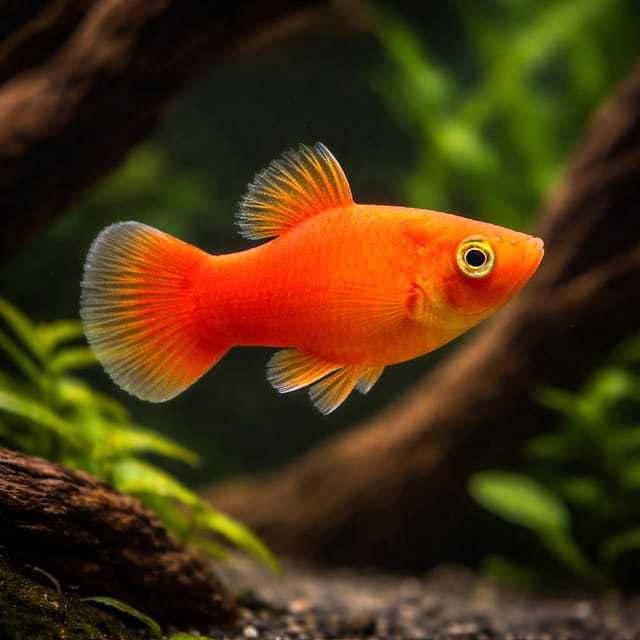
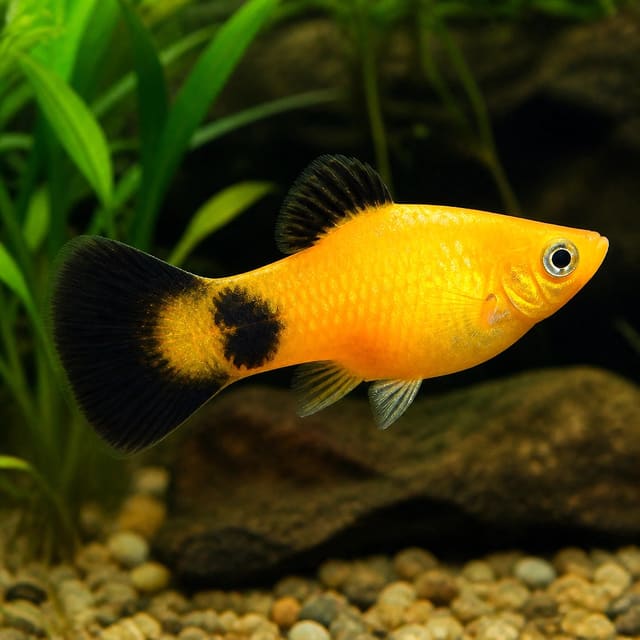
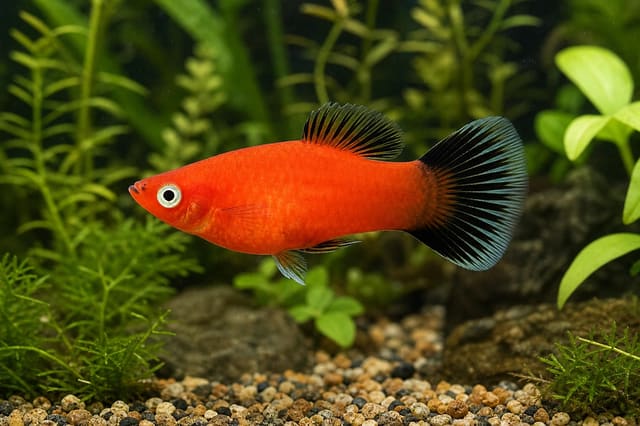
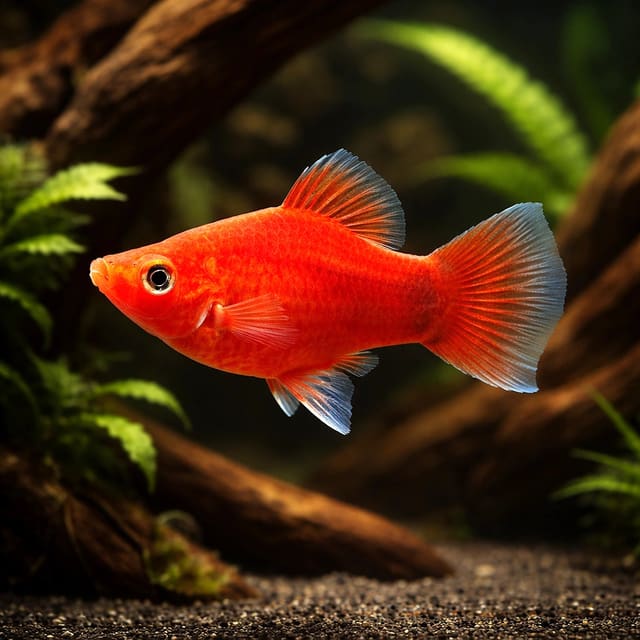
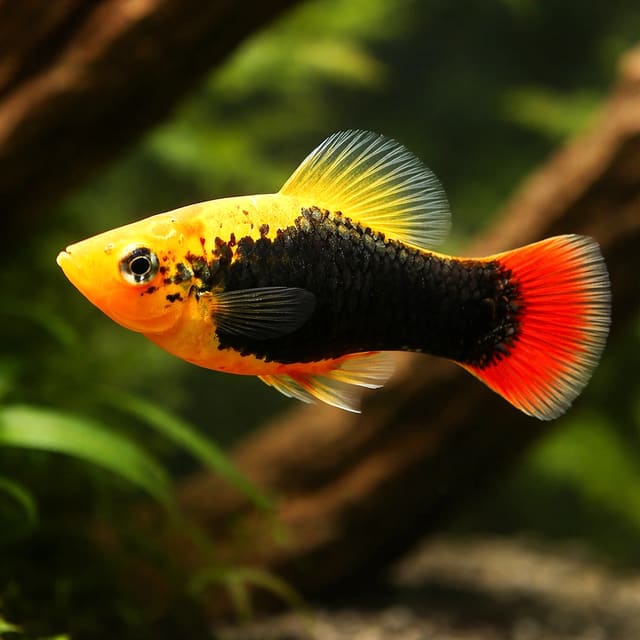
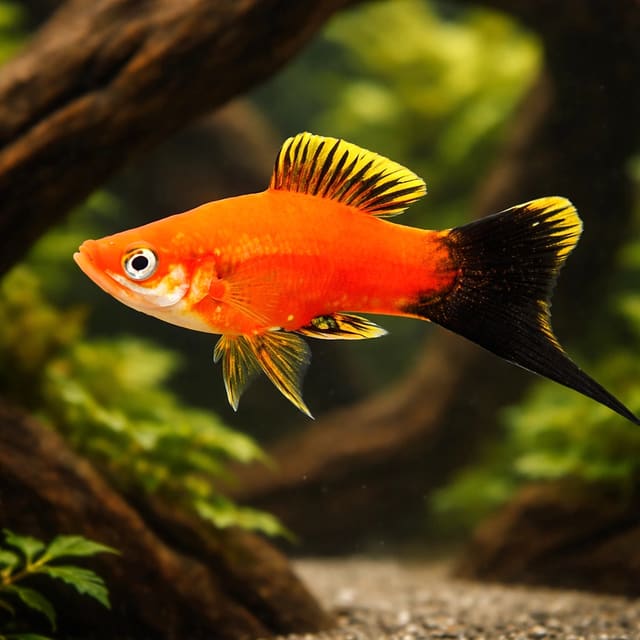
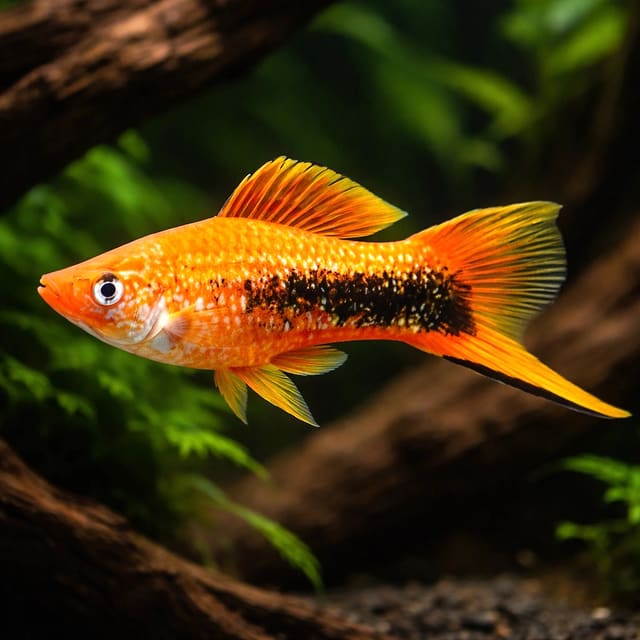
Orange Gold Variatus Platy (Xiphophorus variatus)
20–25°C · pH 7–8 · 54L
£4.99

Sunset Variatus Platy (Xiphophorus variatus) is a Mexican livebearer for mature planted aquariums with moderately hard to hard water. One purchase supplies one live fish in the selected 3-4 cm or 4-4.5 cm size. Plan companionship and future population growth; sex is not guaranteed.
Adult size is the maximum length this species reaches at full maturity (scientific sources). The livestock you receive will be younger and smaller. Product-photo provenance and any image-specific limitations are stated on the listing.
Shoaling fish: kept in a group they feel safer, stay calmer and show their best colour.
Sunset Variatus Platy (Xiphophorus variatus) is a Mexican livebearer for mature planted aquariums with moderately hard to hard water. One purchase supplies one live fish in the selected 3-4 cm or 4-4.5 cm size. Plan companionship and future population growth; sex is not guaranteed.
Adult size is the maximum length this species reaches at full maturity (scientific sources). The livestock you receive will be younger and smaller. Product-photo provenance and any image-specific limitations are stated on the listing.
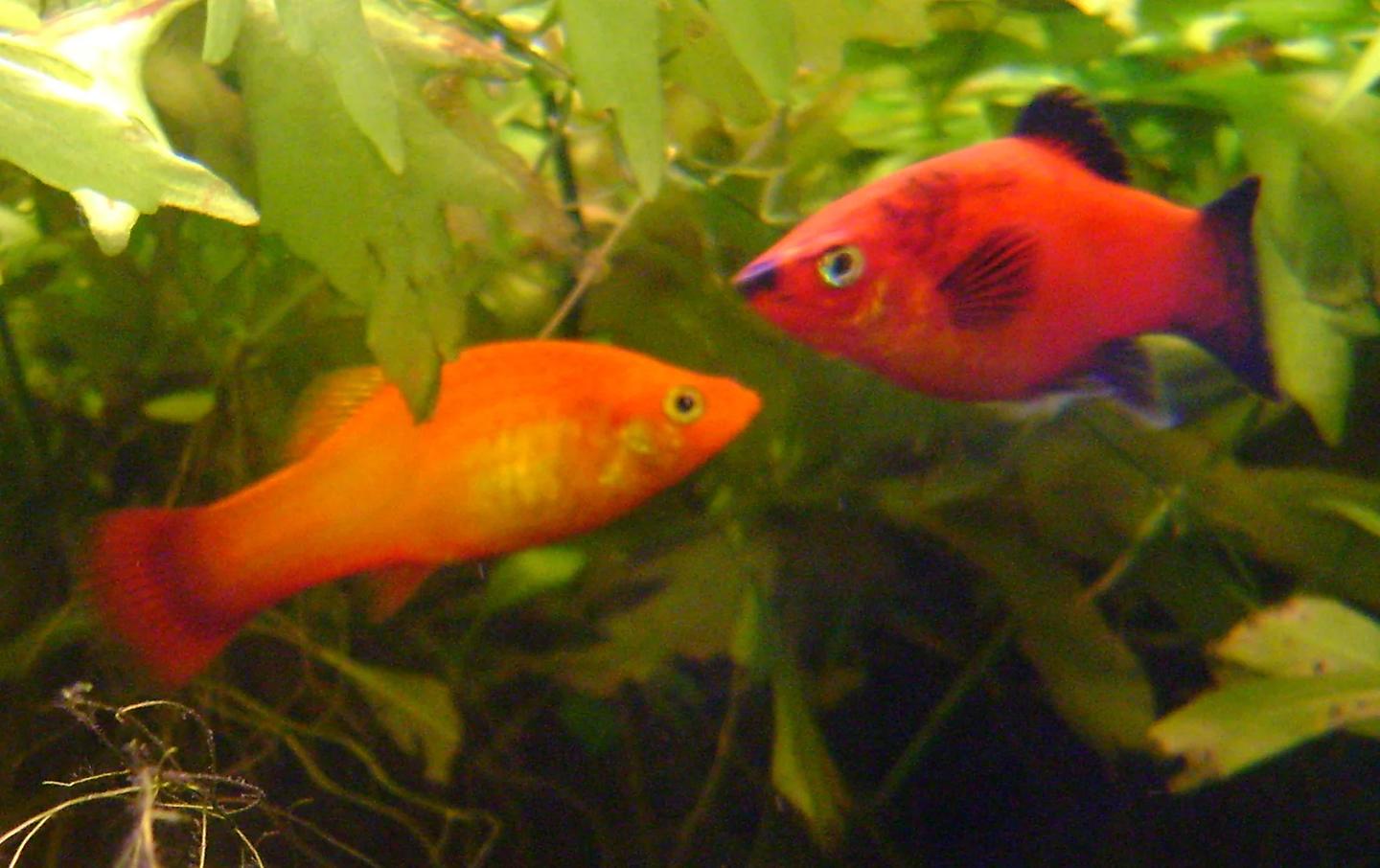
Platy is a trade name used for Xiphophorus maculatus, X. variatus and domestic forms. Start with at least three in a mature aquarium of at least 45 litres, verify the exact fish and measured water, and plan extra capacity before mixing sexes.
Maintain these water conditions for optimal health and vibrant colors
Sunset Variatus Platy, Xiphophorus variatus, is a freshwater livebearer belonging to Poeciliidae. The species is native to Mexico, from southern Tamaulipas to northern Veracruz, where records include warm springs, weedy canals and ditches. In an aquarium its practical appeal is a combination of active swimming, a broad diet and suitability for a carefully chosen peaceful community. A planted arrangement with open swimming space is a good starting point, but water chemistry and social planning deserve just as much attention as the display.
One purchase from Tropical Fish Co supplies one live fish. The fish is supplied at 3-4 cm. That is the size supplied, not the adult size; availability is shown by the live selector. Neither choice specifies sex. Sex is guaranteed only when the selected option explicitly states male or female. This Sunset Variatus Platy listing has no sex-guaranteed option. A larger fish is not automatically female, and a group ordered without a sexed option cannot be assumed to arrive in a particular male-to-female ratio.
Sunset is the trade offer name here, rather than a separate scientific species. Care should be planned for Xiphophorus variatus. Colour and trade names do not establish a special water requirement, a distinct temperament or a guaranteed fin shape. Choose the fish for the aquarium conditions you can maintain and the character of a planted livebearer display, without assuming a particular pedigree, breeding history or specialist form feature.
FishBase records a maximum of 7 cm total length for male or unsexed Xiphophorus variatus. Total length includes the tail fin. Seriously Fish gives a standard-length figure of about 5 cm, measured without the tail. These are different measurement conventions, so they should not be treated as competing descriptions of the dispatch sizes. Use the 7 cm recorded total length to allow for adult space, while recognising that individuals vary and size choices describe the fish being supplied.
The species aquarium profile recommends a base of 60 × 30 cm, described as an aquarium of approximately 54 litres. This is a starting footprint, not an automatic allowance for a busy mixed community or a population that grows through breeding. OATA's general platy guidance suggests companionship, with at least three fish and two females per male; the species profile recommends more females than males in mixed groups to spread male attention. Because this offer is unsexed, discuss group planning and be prepared to reassess relationships as fish mature.
Seriously Fish recommends 20–26 °C, pH 7.0–8.2 and general hardness of 14–30 dGH. It states that the species must be maintained in moderately hard or harder water and will not thrive in soft, acidic conditions. Check your actual aquarium and replacement water before purchase. A soft-water community that suits other attractive fish may be a poor home for this platy, even if the temperature appears to overlap.
Keep a mature filter, zero ammonia and zero nitrite, varied appropriately sized food and a manageable maintenance routine. Planting offers shelter, particularly when one fish wants to move out of another's attention, while open areas allow comfortable swimming. If males and females are present, repeated births can increase numbers. Plan where additional fish can live before the aquarium becomes crowded. Long-term suitability depends on that plan as well as the appearance of the group on the first day.
For a keeper with suitable water and an established tank, this can be an engaging community fish. The buying decision is strongest when you know the dimensions, current inhabitants, water measurements and capacity for future additions. Browse the platy fish collection to compare offers, then consider the requirements of the species behind each name. A similar colour is not a reason to treat different platies as biologically identical.
Livebearers give birth to live young, and a mixed-sex group can change the population of an aquarium over time. Seriously Fish describes continual batches of fry when males and females share a tank. This is a practical stocking issue even if breeding is not your aim. Before adding the first fish, decide how you would accommodate or responsibly rehome additional animals. A tank that comfortably houses the initial group may become unsuitable when a growing population shares the same filter, food and swimming space.
Think beyond the number of fish you order. Your plan should include the space remaining amongst existing residents and your ability to maintain water quality if numbers increase. Repeatedly increasing food to support more fish also increases waste. A dependable routine should make it possible to notice that change before ammonia, nitrite or deteriorating body condition becomes a problem. Reserve capacity for growth rather than using every apparent spare litre at the outset.
OATA's companionship suggestion is at least three platies, with two females per male. This is broad platy guidance, not an exact species-specific group requirement proven for every situation. Seriously Fish recommends more females than males because male attention can be relentless. The shared practical message is to avoid a mixed group in which one female receives all the attention, and to provide room and shelter so fish can move apart.
This product supplies unsexed fish, so ordering three does not guarantee the suggested ratio. Watch developing fish and seek help with sex identification when required. Avoid adding more animals simply to reach a ratio without first confirming space and filtration. The welfare of the fish already present matters more than satisfying a numerical plan that the aquarium cannot support. If persistent pursuit prevents rest or feeding, have a suitable way to separate the affected fish.
The species-specific husbandry range used here is 20–26 °C, pH 7.0–8.2 and 14–30 dGH. These figures describe moderately hard to hard water with neutral to alkaline pH. In the Seriously Fish species profile, the need for moderately hard or harder water is explicit: Xiphophorus variatus will not thrive in soft, acidic water. This is an essential suitability point when comparing it with soft-water fish sold for other types of community.
Measure hardness as well as pH. A pH result alone does not tell you the mineral content of the water, and a satisfactory temperature cannot compensate for unsuitable chemistry. Test the aquarium and the water used for changes. If they differ substantially, routine maintenance may be altering conditions even though the tank seems stable on days between changes. Establish a reliable preparation routine before introducing fish, rather than trying to correct the water around newly arrived animals.
FishBase records environmental values of 15–25 °C, pH 7.0–8.0 and 9–19 dH for the species. These describe environmental records, not a routine aquarium target assembled for this exact offer. They overlap some of the specialist aquarium guidance, but the categories serve different purposes. In particular, the lower environmental temperature is not a reason to put the fish into any unheated room without measuring how that aquarium behaves over time.
OATA's sheet covers platies and swordtails broadly and gives different group ranges, including 17–27 °C for platies and 4–12 °dH general hardness. That wider care sheet supplies valuable maintenance advice, but the group hardness figures should not replace the more specific requirement in the variatus profile. Keep the distinction clear when discussing your aquarium with a retailer: ask about this species, rather than assuming that every livebearer shares one universal water recipe.
Use the aquarium water parameters guide to understand what the tests measure, and the Water Parameter Matcher to compare measured water with stated guidance. Tools are aids to planning; the fish's requirements and the conditions you can sustain remain the decision. Where you need to change the water supply, seek advice on a consistent method before purchase.
Seriously Fish notes that the species appreciates a planted aquarium. Plants give the fish places to explore and ways to move away from attention, while open swimming areas preserve space for normal activity. Arrange the aquarium so that shelter does not take up the entire usable footprint. A heavily decorated tank can look generous but leave only a narrow route where fish repeatedly encounter one another.
The species profile describes a 60 × 30 × 30 cm aquarium, approximately 54 litres. Consider the base dimensions when choosing a tank. Height can add water volume, but it does not extend the horizontal route available to a swimming fish. For a community, larger group or potential fry population, plan more room than the smallest species example. An adequate starting aquarium is not a guarantee that every future stocking combination will fit.
OATA's broad platy guidance mentions a 45-litre aquarium for a small group and recommends larger aquaria as groups increase. Use that as context for the value of space, rather than lowering the species planning footprint here. A mature planted aquarium with more room is easier to organise into sheltered and open areas. It also gives you greater flexibility when the social pattern changes or when an existing resident proves more active than expected.
Sand or aquarium gravel can support the layout. Choose materials that allow practical maintenance and are suitable for aquarium use. Plants and appropriate ornaments provide shelter if live planting is not possible. Keep equipment accessible so that caring for the filter or removing waste does not require a major disturbance every time. An arrangement you can look after consistently is more useful than a display that becomes difficult to clean.
Dense planting can help reduce the pressure of male attention by giving fish places to move out of view. It supports management but does not excuse persistent harassment. Observe where each fish spends its time and whether the same animal is always confined to the plants. Cover is serving its purpose when fish can choose it and leave again, rather than being forced to hide continuously from an unsuitable relationship.
Biological filtration protects the aquarium from the waste produced by fish and uneaten food. RSPCA explains that ammonia is converted by established bacteria to nitrite and then nitrate. Ammonia and nitrite are toxic; both should test at zero before introducing livestock. A filter running in clear water is not automatically mature, and a newly filled aquarium is not ready simply because its appearance is attractive.
The tropical tank setup guide is useful when preparing a first aquarium. Complete maturation and testing before ordering the fish. Know where the filter media is and how it will be maintained. Replacing all biological media at once or cleaning it in unsuitable water can damage the bacterial population you have spent time establishing. Consistent filter care is part of ongoing fish care.
OATA advises increasing fish numbers slowly so that beneficial bacteria can respond to the increased waste. Introduce additions gradually, observing the fish and testing water afterwards. More fish often means more feeding; both changes affect the biological load. Do not assume that a filter label by itself proves spare capacity for a rapidly expanding livebearer population. Its actual performance is shown by the aquarium and its measured water quality.
Place outlets so that the aquarium circulates effectively while fish can use the planting and feed comfortably. The specialist profile includes equipment examples for its stated tank size, but an example rating is not a universal setting for every layout. Check for blockages and confirm that the filter is working normally. Arrange the intake and planting so that routine inspection is straightforward and debris is not hidden indefinitely.
Maintain a reliable thermometer and inspect heating performance where a heater is used. The seasonal behaviour of a room matters, especially if you are considering whether a heater is necessary. A species with relatively cool environmental records still needs suitable, stable aquarium conditions. Make that decision using measurements, your intended aquarium range and the conditions through the year rather than a single warm day's reading.
Xiphophorus variatus is omnivorous. FishBase describes worms, crustaceans, insects and plant matter in the diet, while Seriously Fish notes acceptance of live, frozen and dried foods. OATA recommends a good-quality flake or granule with a high algae content for platies and swordtails, supplemented with small live or frozen foods. This gives a useful basis for a varied aquarium menu with both animal and plant components.
Select food that the fish can take comfortably at its current size. A suitable prepared food can form the regular base of feeding, with small foods such as Daphnia offered as variety. Avoid equating appetite with unlimited need. Active platies may return to a feeding area repeatedly, and it is easy to add another portion because they still appear interested. Observe consumption and body condition rather than allowing their activity to determine an open-ended ration.
OATA's broad advice is to feed only what can be eaten within a few minutes, once a day. Use that as general adult feeding guidance and adjust thoughtfully to the actual animals and waste produced. If food remains amongst plants or on the substrate, remove it rather than leaving it to break down. Excess feeding can undermine good water quality even where the fish finish much of the visible food.
Watch individuals, not only the group. One fish may feed well while another is diverted by pursuit or crowded out by faster companions. Present food in a way that allows fair access, and note whether each fish is swallowing it. A fish that is thin or reluctant to eat needs an examination of water quality and social pressure before you simply put more food into the aquarium.
Young fish and breeding populations can need a separate management plan. This page does not prescribe a detailed fry-rearing schedule. If you intend to raise young, establish suitable space and advice in advance, including how their additional feeding will be managed. Avoid allowing tiny temporary containers to become permanent accommodation simply because the fish were born smaller than the adults.
OATA strongly recommends a partial water change of 25% at least once every week, together with water testing at least weekly. This is general platy-and-swordtail maintenance guidance. Use it as the starting routine and respond to measured conditions and the actual population. The need for attention can increase as numbers and feeding increase; a fixed habit should not stop you noticing when the aquarium's load has changed.
Prepare replacement water so that it is appropriate for the aquarium. Treat tap water to remove chlorine or chloramine where applicable, and pay attention to temperature and chemistry. Consistency helps fish cope with routine maintenance. Large differences between the replacement water and the aquarium are worth resolving as part of water preparation, rather than repeating them each week and hoping the fish will tolerate them.
Remove solid waste with a siphon from areas where it accumulates. Check behind ornaments and around dense planting without unnecessarily disturbing the entire aquarium. Keep open swimming routes clear as plants grow. Maintenance offers a useful opportunity to see whether shelter has become too dense or whether one fish is being restricted to a small area as the social arrangement changes.
OATA advises rinsing filter media lightly in aquarium water removed during a partial change if cleaning is needed. Do not rinse filter media under the tap because chlorine or chloramine may kill the beneficial bacteria. Rinse it lightly in aquarium water removed during a partial water change instead. Follow the filter's instructions and clean to maintain its function. Keeping the bacteria healthy is more important than making all media look new.
Observe breathing, appetite, body condition, swimming and appearance during routine care. OATA highlights changes in these features as signs to investigate. If you see an unusual pattern, test water first and seek advice where needed. Colour alone can vary between fish and circumstances, so consider it alongside behaviour and condition. Keep a brief note of unusual observations, additions and maintenance to help you identify trends.
Read the current delivery and Live Arrival Guarantee policy and arrange for someone to receive the parcel. Tropical Fish Co hand-bags fish in oxygen, uses insulated packaging and a heat pack when conditions call for it, and sends livestock by licensed live-animal courier. Have the aquarium ready before delivery, including shelter, dependable filtration and suitable tested water.
Inspect and open the parcel the day it arrives. If a Live Arrival Guarantee claim is needed, the policy requires a continuous unboxing video showing the sealed parcel being opened and the fish still inside its sealed bag. Contact the shop the same day with your order number and the video if there is a problem. Arrival evidence and subsequent acclimatisation serve different purposes, so prepare to manage both calmly.
The supplied store guidance advises floating the bag for 20–30 minutes and acclimatising slowly. Follow the arrival instructions and do not pour transport water into the aquarium. Introduce the fish without simultaneously performing major maintenance or rearranging everything. A settled environment makes it easier to observe the new fish and gives it places to withdraw while it becomes familiar with its surroundings.
After release, watch breathing and swimming, then observe access to food as normal feeding resumes. Check water quality as part of the introduction routine. Look for persistent attention from residents as well as obvious aggression. If the newcomer is kept away from food or cannot rest, address the relationship and use a suitable separation option where required. Adding more fish immediately is not a substitute for understanding the cause.
The Sunset Variatus Platy can be a peaceful community fish where the water and stocking suit it. Begin with the moderately hard to hard conditions described for Xiphophorus variatus. Consider each proposed companion's needs individually. A fish requiring soft, acidic water is a poor choice for this aquarium even if it is peaceful and swims in a different area. Shared temperature alone is not a complete compatibility assessment.
Seriously Fish describes the species as peaceful and hardy, but a favourable general description does not remove the need for a mature aquarium, appropriate water or observation of individuals. Domestic livebearers differ in condition, and this offer does not guarantee a lineage or a particular history. Plan for the fish you receive and the aquarium you have, with good maintenance and space for behaviour to vary.
Check how the community uses feeding areas and swimming routes. Faster or more forceful animals can monopolise food without causing obvious injury. If your platy keeps away from normal activity or feeds only after everyone else has finished, reassess competition and cover. The goal is a community in which each animal can feed and rest, rather than one that appears peaceful because a subordinate fish remains hidden.
OATA notes that large swordtails can be boisterous and chase timid tank mates. That makes swordtails a conditional consideration rather than an automatic addition simply because they share a care sheet with platies. Judge the actual animals, aquarium size and arrangement. A bigger tank offers more possibilities but still needs a sensible balance of inhabitants and enough unobstructed space.
Mixed-sex variatus groups deserve their own observation even without other species present. Male attention can be relentless, so more females than males and adequate planting are advised by the specialist account. Avoid making a single female the focus of multiple males. If the initial unsexed purchases develop an unsuitable balance, seek help with identification and a workable plan rather than assuming the aquarium must remain as it was stocked.
Keep the future population in the compatibility decision. Repeated births can change density, feeding competition and filtration demand, even where every species was suitable at first. Review the aquarium as fish grow. Responsible rehoming or a properly prepared additional aquarium may be necessary. Preventing overcrowding is part of keeping a peaceful community, not a separate concern that begins only after water quality deteriorates.
If you are comparing similarly named fish, Sunset Platy (Xiphophorus maculatus) is a separate buying comparison, rather than an automatic tank-mate recommendation. The names share a colour word while referring to different species identities. Compare the care information and exact offer on each page, and choose according to the aquarium you can maintain. The Sunset name by itself does not determine biology.
Before a new addition, write down the existing fish, water measurements and usable tank dimensions. Discuss that combination if you are uncertain. A specific description of the aquarium gives much better grounds for advice than a request for any peaceful fish. Keep a practical separation arrangement ready for an animal that is harassed or ill; it should itself have suitable water and filtration, rather than being an improvised container used indefinitely.
FishBase records Xiphophorus variatus at up to 7 cm total length for male or unsexed fish. Total length includes the tail. Seriously Fish gives about 5 cm standard length, which excludes it. These adult figures use different measurement conventions and are separate from the size of fish supplied.
The species profile describes a 60 × 30 cm base, in an aquarium of approximately 54 litres. Treat this as a starting footprint. A larger community or growing livebearer population needs additional room, dependable filtration and a layout balancing plants with open swimming space.
OATA's general platy guidance suggests at least three, with two females per male. The species profile advises more females than males in mixed groups because male attention can be relentless. This is a social plan to assess against aquarium space; unsexed purchases do not guarantee a particular ratio.
It can suit a beginner who has completed aquarium maturation and can maintain moderately hard to hard water, test water regularly and manage a social group. Consider future births when planning space. A new untested aquarium or a soft, acidic community is an unsuitable starting point.
The species is omnivorous and accepts suitable live, frozen and dried foods. Use a good-quality flake or granule with a plant or algae component, alongside small live or frozen foods. Offer manageable portions, observe each fish eating and remove leftovers to protect water quality.
Seriously Fish recommends 20–26 °C, pH 7.0–8.2 and 14–30 dGH. The species must have moderately hard or harder water and will not thrive in soft, acidic conditions. These are aquarium planning values; the environmental ranges recorded by FishBase have a different scope.
It is generally peaceful, but males can pursue females persistently. More females than males in mixed groups and planting help spread attention. Watch individuals for loss of feeding access or constant hiding, and arrange suitable separation where persistent harassment compromises rest or condition.
Consider peaceful companions whose water requirements match the moderately hard to hard aquarium. Assess feeding competition and swimming space individually. OATA cautions that large swordtails can be boisterous and chase timid fish, so sharing a broad care group does not make every combination suitable.
Tropical Fish Co hand-bags fish in oxygen, uses insulated packaging and a heat pack when conditions require it, and sends them by licensed live-animal courier. Someone must receive the parcel. The Live Arrival Guarantee requires same-day inspection and continuous unboxing video showing the sealed parcel being opened and the fish still in its sealed bag; read the delivery policy for full conditions.
FishBase: Xiphophorus variatus covers Mexican distribution, identity, environmental records and the recorded maximum total length. The species aquarium profile at Seriously Fish supplies the water and footprint guidance used above. OATA's platy and swordtail care sheet provides broad group advice on feeding, companionship and maintenance. RSPCA aquarium environment guidance explains the role of biological filtration. Use group advice with its scope intact when making species-specific decisions.
Independently collected by Judge.me from customers who bought this item. All reviews are shown.
these fish settled in after one day and are doing very well
Reply from Tropical Fish Co
<p>Thank you George. Settling inside a day is exactly what we want to hear - it usually means the acclimation went right at your end as much as the packing did at ours. Variatus platies are hardy and they'll breed readily if you have both sexes in there, so keep an eye out for fry hiding in the plants. - Tropical Fish Co</p>