Easy
Assorted Platy (Xiphophorus maculatus) – 1–6cm & XL Size Grades
20–25°C · pH 7–8 · 54L
£2.99

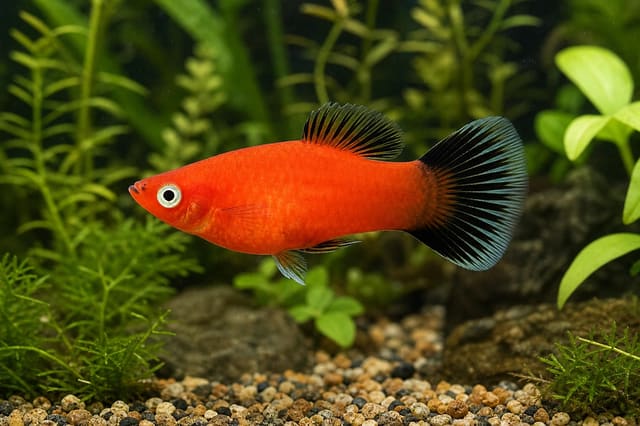
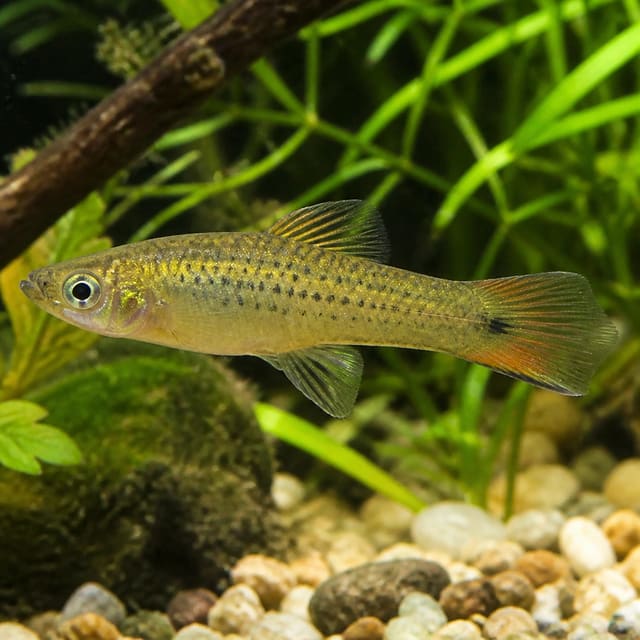
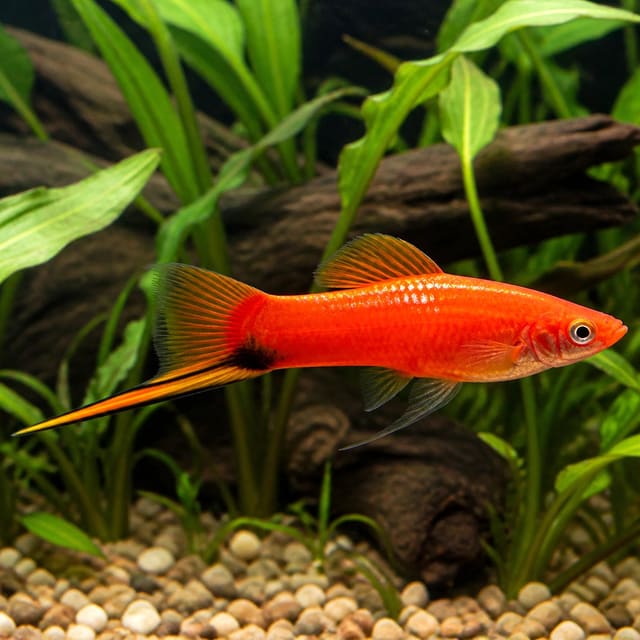
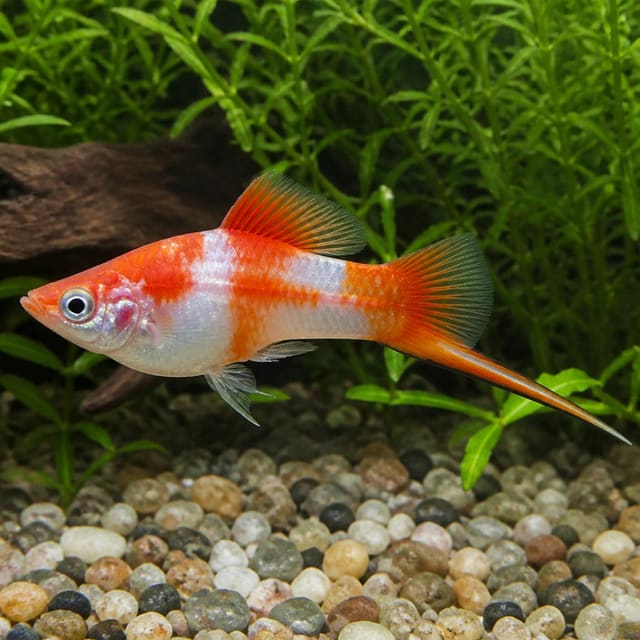
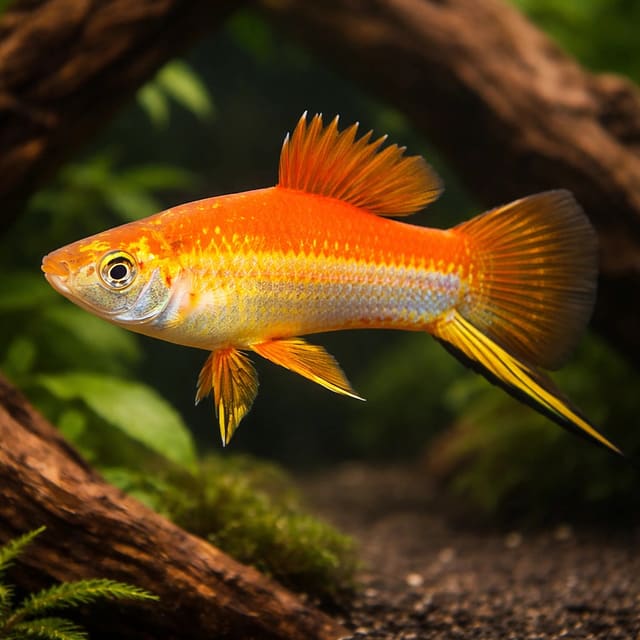
Four young platies (Xiphophorus maculatus), about 2–2.5 cm, netted from our assorted tank without choosing colours or sexes. A peaceful, easy-going livebearer group for a planted 60 cm aquarium with hard, alkaline water at 20–26 °C.
Adult size is the maximum length this species reaches at full maturity (scientific sources). The livestock you receive will be younger and smaller. Product-photo provenance and any image-specific limitations are stated on the listing.
Xiphophorus maculatus
Four young platies (Xiphophorus maculatus), about 2–2.5 cm, netted from our assorted tank without choosing colours or sexes. A peaceful, easy-going livebearer group for a planted 60 cm aquarium with hard, alkaline water at 20–26 °C.
Adult size is the maximum length this species reaches at full maturity (scientific sources). The livestock you receive will be younger and smaller. Product-photo provenance and any image-specific limitations are stated on the listing.
Platy is a trade name used for Xiphophorus maculatus, X. variatus and domestic forms. Start with at least three in a mature aquarium of at least 45 litres, verify the exact fish and measured water, and plan extra capacity before mixing sexes.
Maintain these water conditions for optimal health and vibrant colors
This order is four platies, Xiphophorus maculatus, travelling together in one parcel. They come from the same assorted tank as our single Assorted Platy. Buying four at once simply means you start with a small group instead of building one up a fish at a time.
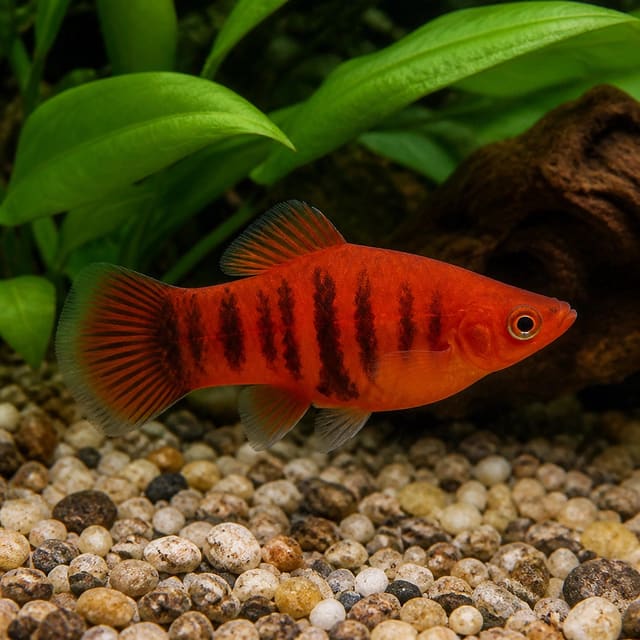
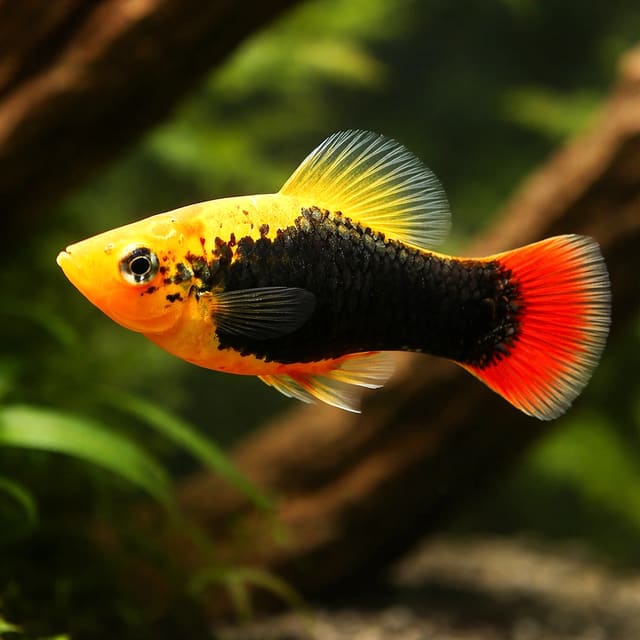
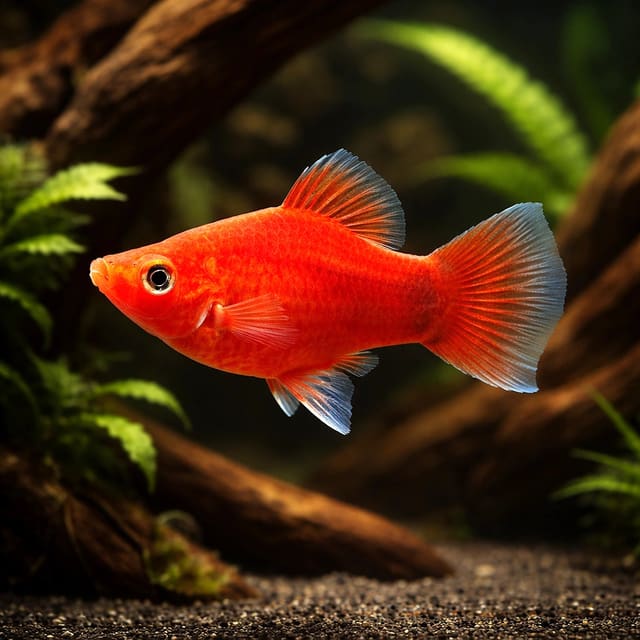
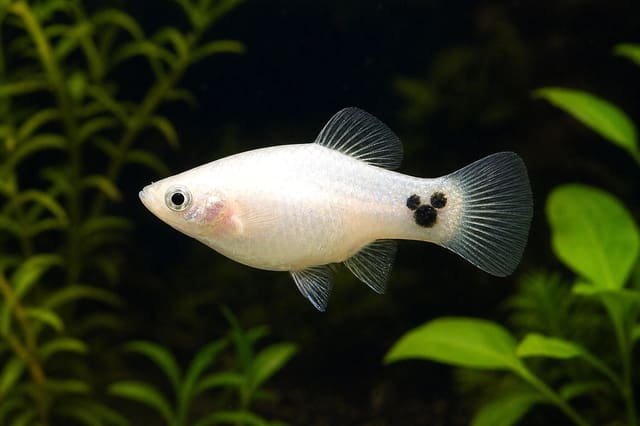
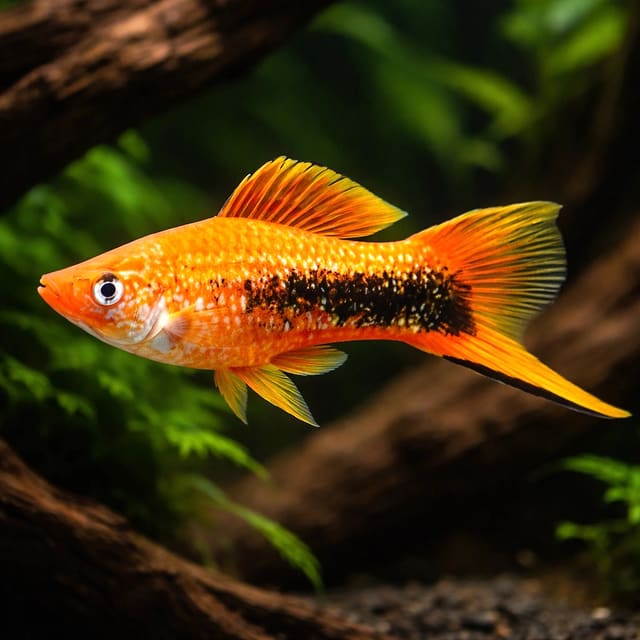
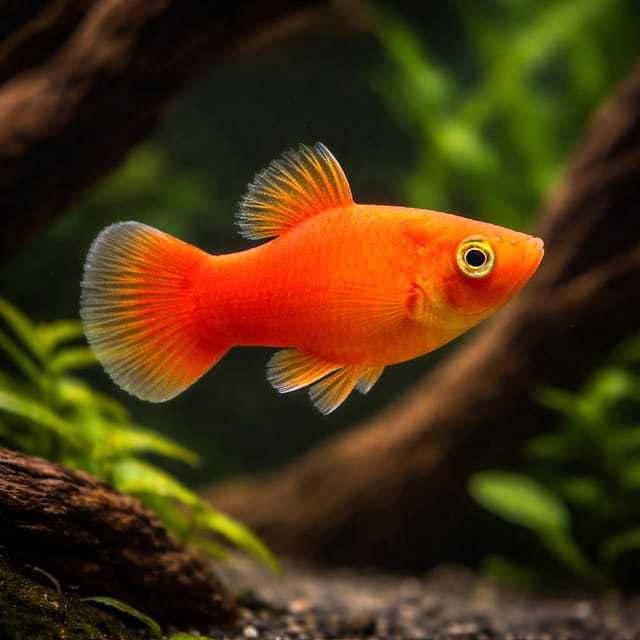
The word "assorted" is doing real work in the title, so here is exactly what it means. When we net your four, we don't select for colour and we don't select for sex. You might open the bag to four quite different colour forms, or to a group where one colour dominates. You might get a mix of males and females, or a group that is all one sex. We can't take requests on either point for this listing. If one particular look matters to you, the named colour forms, such as the Red Wagtail Platy, are listed on their own pages and are the better buy.
Our stock records give a dispatch size of roughly 2–2.5 cm per fish. That is a youngster, not an adult. FishBase lists the maximum total length of the species as 4.0 cm for males and 6.0 cm for females, so these fish still have some growing to do. Seriously Fish describes males as the smaller sex, so if your four turn out to include both, expect the females to end up the larger fish.
Four suits a particular kind of buyer: someone with a modest aquarium, often a first one, who wants a few peaceful, colourful fish that are easy to keep and won't bully anything. It is enough fish to read as a group in a 60 cm tank without crowding it. It is a light first load for a filter that has only just matured. And it leaves room to add more platies, or other peaceful species, once you've watched how the first ones settle.
The rest of this guide is written around that situation: a small group, a small-to-medium tank and a keeper who wants to get the basics right first time. The facts about the fish come from FishBase, Seriously Fish and Wikipedia, all linked at the bottom of the page, and where those sources disagree we say so rather than picking whichever number sounds best.
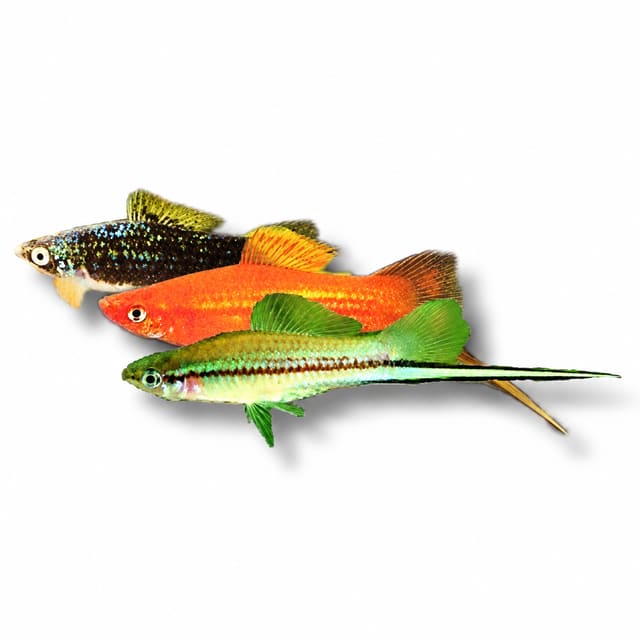
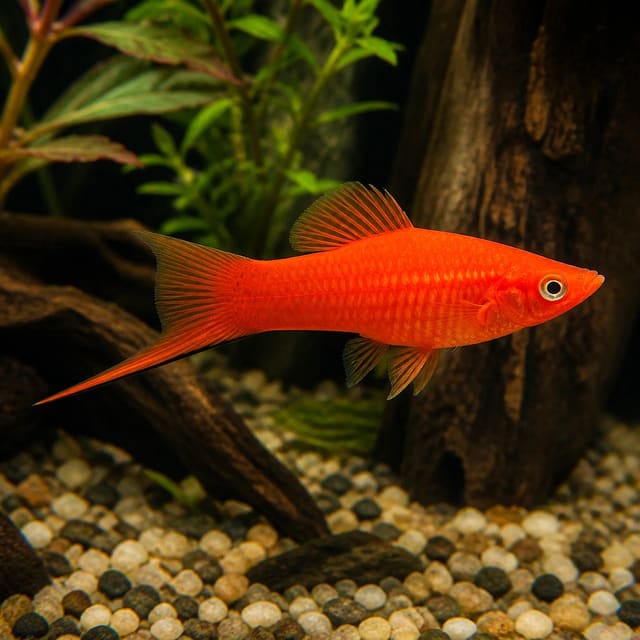
Platies belong to Xiphophorus, a genus of livebearing fish in the family Poeciliidae. Wikipedia, citing FishBase, puts the genus at 28 recognised species, and the swordtails sit in it too. Telling the two apart is easy with adult males: a male swordtail grows a long extension on its tail fin, the "sword", and a male platy has none.
The common name is a leftover. According to Wikipedia, "platy" comes from Platypoecilus, the genus the species was originally placed in, and the short name stuck long after the fish were moved. Xiphophorus itself is built from Greek words for "sword" and "bearing", and Wikipedia says the name refers to the gonopodium of the males.
A platy is a compact fish with a fairly deep body, a single dorsal fin and a rounded tail with no extension. Wild southern platyfish are plain fish; Wikipedia describes them as drab and lacking the dark stripe along the side that many of their relatives carry. Every bright platy in the hobby is the product of selective breeding. Wikipedia lists orange, red, yellow, red-and-black and black-and-white varieties, and Seriously Fish names mickey mouse, wagtail, tuxedo, moon, blue, red, comet and hi-fin among dozens of named forms.
It's worth knowing what's behind those colours. Seriously Fish notes that some platy strains were produced by crossing with swordtails or with the variatus platy, and Wikipedia goes further, saying that the platy usually sold in shops is not a pure strain at all but a hybrid between X. maculatus and the green swordtail, X. hellerii. The hobby still sells them under the platy's name, and so do we, but it explains why some domestic platies look a little different from the textbook fish.
Platies are not only aquarium fish. Wikipedia notes that Xiphophorus has been used since the 1920s as a model for understanding what happens when species hybridise, especially in melanoma research, where a well-known cross between two species produces offspring that develop melanoma spontaneously. Wikipedia also records that the genome of X. maculatus was sequenced in 2013, which supports its use in genetic research. None of that changes how you keep four of them in a 60 cm tank, but it explains why such a small fish turns up in science as well as in fish shops.
Look at the fin on the underside, just behind the belly. In a female it is an ordinary fan-shaped anal fin. In a male it has become the gonopodium, a narrow, rod-like organ used for mating, and that is the reliable sign. Males are also the smaller sex according to Seriously Fish, and Wikipedia mentions that the male's tail fin is a little more pointed. That last difference is subtle, so trust the anal fin.
At 2–2.5 cm, one or two of your four may be hard to call. Don't worry if you can't sort them on the first evening. Look again over the following weeks as they grow, ideally at feeding time when they hang still near the front glass for a second or two. Jot down what you see, because the balance of males and females in a group of four matters more than people expect, and there is a whole section on it further down this page.
FishBase gives the natural range of Xiphophorus maculatus as North and Central America, from Ciudad Veracruz in Mexico to northern Belize. Seriously Fish describes a wider spread across the Atlantic coastal plain of Mexico, Guatemala, Belize and Nicaragua. The two disagree about how far south the species reaches, so we treat the FishBase line as the conservative one: these are lowland fish of the Atlantic side of Mexico and its near neighbours.
The FishBase habitat note is short and useful. Platies live in warm springs, canals and ditches, usually with slow-moving water, silty bottoms and weedy banks. Seriously Fish adds streams and rivers to the list. FishBase classes the species as benthopelagic, meaning it lives and feeds near the bottom as well as higher up in the water.
Put those notes together and you have a fish used to gentle flow, soft bottoms, plenty of plant growth along the margins and water that is warm without being hot. It isn't a fish from a fast mountain stream, and it isn't suited to a bare tank with a pump blasting from one end to the other. That picture drives most of the advice in the set-up and water sections below.
Seriously Fish says wild platies are almost never seen in the hobby. The fish you buy today, from us or anyone else, are domestic stock bred over many generations for colour, and as covered above, often carrying swordtail or variatus genes as well. FishBase notes that several colour varieties are popular aquarium fish and that the species reaches sexual maturity in three to four months.
FishBase lists the southern platyfish as Data Deficient on the IUCN Red List, assessed in 2018, which means there wasn't enough information for a full assessment. Wikipedia adds that NatureServe rates it Secure.
The bigger issue is platies turning up where they don't belong. Wikipedia lists introduced populations in several US states and in Puerto Rico, and records that platies and other introduced livebearers have been implicated in the decline of native damselflies on Oahu in Hawaii. FishBase says at least one country reports adverse ecological impact after introduction. For a UK keeper the rule is simple: never put platies or their fry into a pond, stream, river or canal. Surplus fish go to another keeper, a local aquarium club or a shop.
Seriously Fish recommends an aquarium with a footprint of at least 60 × 30 cm, which it puts at about 54 litres, and FishBase gives 60 cm as the minimum aquarium size. For a group of four on its own, that is the tank to plan around. In a first aquarium of that size, four platies are a sensible number to begin with.
Treat 60 cm as a floor rather than a target. If you already know you want other fish in with the platies, or you're happy to let some fry grow on, a longer tank buys you room and time. A larger volume of water also changes more slowly when something goes wrong, such as a heater sticking or a missed water change, and that margin is valuable while you're learning.
Fish produce ammonia, and a new filter hasn't yet grown the bacteria that convert ammonia into nitrite and then into the far less harmful nitrate. Set the tank up, run the filter, and test the water over the following weeks. Order your platies once ammonia and nitrite both read zero and nitrate is starting to show. Our arrival policy asks for this anyway: filter running, water tested and temperature matched before the parcel arrives. Four small fish are a gentle first load for a newly matured filter, which is one more reason a small group is a sensible way to begin.
Seriously Fish says platies appreciate a planted aquarium and are seen at their best in one. Planting the back and sides echoes the weedy banks of their wild habitat and gives a female somewhere to get out of a male's way. Keep the front and centre fairly open so you can see the fish and they have room to swim. In a small tank, fast-growing stem plants and a few floating plants earn their place because they take up nitrate between water changes and give shade at the surface.
A fine gravel or sand suits both the fish and most plants. A piece or two of wood or smooth stone breaks up the view without stealing much swimming space. Skip anything with sharp edges.
If one part of platy keeping deserves extra attention, it's this. Seriously Fish states that X. maculatus must be kept in moderately hard or harder water and does not do well in soft, acidic conditions. Whenever platies look off colour or unsettled, water that doesn't suit them is the first thing to rule out.
| Parameter | What to aim for | What the sources give |
|---|---|---|
| Temperature | 20–26 °C | Seriously Fish 20–26 °C; FishBase and Wikipedia 18–25 °C |
| pH | 7.0–8.2 | Seriously Fish 7.0–8.2; FishBase and Wikipedia 7.0–8.0 |
| General hardness | 10–30 °dGH | Seriously Fish 10–30 dGH; FishBase and Wikipedia 9–19 dH |
| Ammonia and nitrite | Zero | Standard aquarium practice |
| Nitrate | Kept low by water changes | Standard aquarium practice |
The sources overlap rather than match exactly. FishBase and Wikipedia sit a touch cooler at 18–25 °C, while Seriously Fish gives 20–26 °C for aquarium keeping. Setting the heater somewhere around 22–24 °C keeps you comfortably inside every one of them. On hardness, FishBase's 9–19 dH is the narrower band and Seriously Fish allows up to 30 dGH, so tap water anywhere from about 10 to 19 dGH satisfies both.
Hardness and pH vary a lot from one area to another, so don't guess. Test your tap water for pH and GH, or look up the hardness figure your water company publishes, before ordering. If your water turns out to be soft and acidic, platies aren't the right fish for that tank unless you're prepared to manage the chemistry every time you change water. Ask us first; it's far easier than fighting the water for years.
Platies tolerate a range, but they don't like being swung around inside it. Small, regular partial water changes are kinder than occasional big ones. A common routine is to change a quarter of the water each week, treated with conditioner and roughly matched for temperature. Test nitrate as well as ammonia and nitrite; with four platies, live plants and a sensible feeding routine, it should stay low.
Keep the test kit handy for the first couple of months in particular. A new tank's numbers can wobble as the filter settles under a real fish load, and catching a rise in ammonia or nitrite early is the difference between a quick water change and losing fish.
In the wild, FishBase says platies eat worms, crustaceans, insects and plant matter, and Wikipedia describes the species as omnivorous in the same terms. In the aquarium, Seriously Fish calls them unfussy, taking frozen, live and dried foods alike, and recommends a good-quality dried food as the base of the diet.
That gives a straightforward menu for four platies:
Portion size matters more than brand in a small tank. Offer what the group clears in about two minutes, once or twice a day. Uneaten food sinks, rots and pushes up ammonia, and with four fish in around 54 litres it doesn't take much to tip the balance. If food is still drifting about after a few minutes, the next meal should be smaller.
Young fish grow on what you give them. Seriously Fish notes that platy fry grow very quickly when fed two or three times a day. Yours are past the fry stage when they arrive, but the principle carries over: little and often suits a growing fish better than one large meal. Once they've filled out to adult size you can settle into a once- or twice-daily routine.
In a mixed-sex group, a keen male can spend mealtimes following a female instead of feeding, and a shy fish can be crowded out by bolder ones. Spread food across the surface rather than dropping it in one spot, and watch for a fish that never seems to get any. A platy that hangs back at every meal for several days is worth a closer look, as the health notes further down explain.
This is the part of buying an assorted group that needs a bit of thought. Seriously Fish says male platies tolerate one another without aggression, but that when both sexes share a tank there should be more females than males, because a male's attention towards females can be relentless. A female who is the only target for one or more males spends her day being followed, and that is no life for her.
With four fish netted without regard to sex, any split is possible. Once you can sex them, here's how each outcome tends to play out and what we'd suggest.
| What you end up with | What to expect | What to do |
|---|---|---|
| One male, three females | The balance Seriously Fish describes: the male's attention is shared between three. | Nothing, apart from planning for fry. |
| Two males, two females | Workable, but each female gets more attention. | Give plenty of planting. Watch for a female that hides all day or stops feeding, and add more platies over time. |
| Three males, one female | Every male's attention lands on one fish. | Act early: dense planting, then either add more fish or rehome surplus males. |
| Four males | Males tolerate each other, according to Seriously Fish. No breeding. | A perfectly good display group if you don't want fry. |
| Four females | No males chasing anyone. | A calm group. Adding a male later will start breeding. |
Because the assorted platy listings aren't sexed either, buying more from us won't let you pick out females. What extra fish do is shift the odds: the larger the group, the more likely the numbers even out, and the more fish a male has to divide his attention between. The other route is to rehome surplus males through a local aquarium club, another keeper or a shop.
People sometimes worry when four males turn up, but Seriously Fish states plainly that males get along without aggression. A tank of male platies is a reasonable display in its own right, and it is the simplest way of all to have platies without a steady supply of fry.
Fish that have just travelled behave differently from fish that have settled for a fortnight, and young platies at 2–2.5 cm can be hard to sex at all. Don't rearrange anything in the first week. Watch, note what you see, and only act once you're confident who is who. The one exception is a single female being chased hard by several males, which is worth easing quickly with extra plant cover or a divider while you sort out a longer-term answer.
Seriously Fish rates platies as very peaceful and suitable for most community aquariums. In practice the limits on tank mates come from two directions: what the water has to be, and how big the tank is.
Platies need moderately hard, alkaline water, so the best companions are fish that want the same. Species that need soft, acidic water are a poor match. They wouldn't fight with platies, but one of the two would always be kept outside its comfortable range, and in a small tank there's no corner where the chemistry is different.
Your platies arrive at around 2–2.5 cm. Anything with a mouth big enough to swallow a fish that size is out, however calm it looks in the shop. Persistent fin-nippers are also best avoided, because a peaceful fish can't escape them in a 60 cm tank. Good candidates are small, peaceful species that share the platy's taste for harder water and won't outgrow the tank.
Platies will cross with close relatives. Wikipedia says the southern platyfish can interbreed with the green swordtail, and Seriously Fish notes that some platy strains were produced by crossing with swordtails or with X. variatus. If you keep platies alongside swordtails, such as our Assorted Swordtail, or alongside variatus platies like the Assorted Variatus Platy, which is a separate species, mixed fry are a real possibility once both sexes are present. That may suit you, but make it a deliberate choice. If you'd rather keep each line pure, keep them in separate tanks.
In a 60 cm tank already holding four platies, keep any extra stocking modest and add it in stages, letting the filter catch up after each addition. Test the water a few days after every new arrival. And if your four include both sexes, remember that fry will add to the population without you buying anything at all, so leave some headroom.
Platies are livebearers. FishBase lists the species as viviparous: the young are born live rather than hatching from eggs. If your four turn out to include both sexes, expect babies sooner rather than later.
The sources give slightly different figures for timing and brood size:
FishBase and Wikipedia both say the young reach maturity in three to four months. Put those numbers side by side and the arithmetic is clear. One female can produce a brood every four to six weeks or so, and her daughters can be breeding within a season. A 60 cm tank that comfortably holds four adults will not hold the results of a year of unchecked breeding.
Seriously Fish describes breeding as very easy in a community tank. It says the fry are large enough to take brine shrimp nauplii or powdered flake straight away, and grow very quickly when fed two or three times a day. A thick mat of fine-leaved or floating plants gives newborns somewhere to shelter, and a separate small tank for growing them on gives you control over how many you keep.
The honest options are an all-male tank, or a plan for where the young will go before they arrive: another keeper, a local aquarium club or a shop. Releasing platies into the wild is never acceptable, for the reasons given in the habitat section above.
Because your four are assorted, any fry will come from whichever colours happen to pair up, and as covered above, domestic platies often carry mixed ancestry. Some keepers enjoy seeing what turns up. If your aim is to breed one particular colour form, though, an assorted group is the wrong starting point.
Before you order, read our delivery and live-arrival information, have the tank running with the water tested and the temperature right, and make sure someone will be at the address to take the parcel in. Live fish can't be left unattended on a doorstep. We email you the confirmed delivery date and tracking.
Your four platies travel in an oxygen-filled bag inside insulated packaging, with heat packs when the weather calls for them, carried by a tracked courier licensed to carry live animals.
Start a continuous video while the box is still sealed, keep recording as you open it, and show the fish in the still-sealed bag in the same take. If a fish arrives dead, dying or clearly compromised, email hello@tropicalfishco.co.uk on the day of delivery with your order number and that video. Photos alone don't meet the policy. Subject to the guarantee terms, we'll then either replace the affected fish with your next order or refund them.
Keep the lights low for the rest of the first day and let the fish find their way around. A small first feed the following day is plenty. Over the first week, keep an eye on three things: breathing, appetite and behaviour. You want to see fish exploring, coming up for food and swimming with fins held open. Things worth acting on include gasping at the surface, fins held clamped against the body, refusing food for more than a day or two, white spots on the body or fins, or a fish hanging alone in a corner. Test the water at the first sign of trouble, since water quality is the first thing to rule out and the quickest to fix.
There's one more reason to watch closely. Seriously Fish warns that many commercially bred platies are not very hardy because of inbreeding and over-production, and can be prone to disease and early death. Good, stable water and a calm first week give your four the best start. If you're adding them to a tank that already holds fish, a separate quarantine tank for a couple of weeks is the careful way to do it, so that any problem shows up before it can spread.
These are the sources we used for the fish facts on this page. Each one is worth reading in full if you want to know more.
No reviews for this item yet. Bought one? Honest reviews only, good or bad.
What customers say about ordering from us
I have a small group of long finned mountain minnows. So was delighted to be able to order ten of this variety to increase the genetics in my tank . The ones I recieved are healthy but it’s to early to give a verdict on wether they are of a long finned type since they are small currently.
Gordon Walker · 23 Sept 2026
100% success travel and "installation". Pleased with quality of purchase. The Siamese fighter a bit "shy" so have not yet seen him at his best yet but looking good. Happy customer. GG
George E Garratt · 21 Sept 2026
Reviews of our shop, collected by Judge.me, an independent third-party review collector. Newest first.