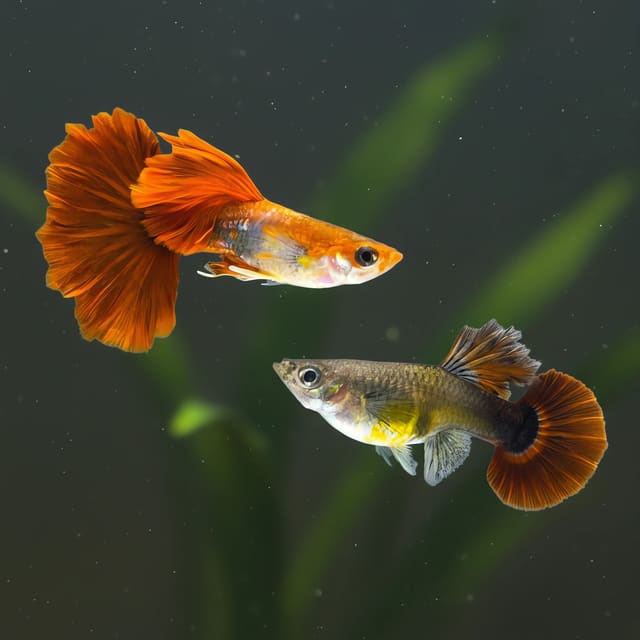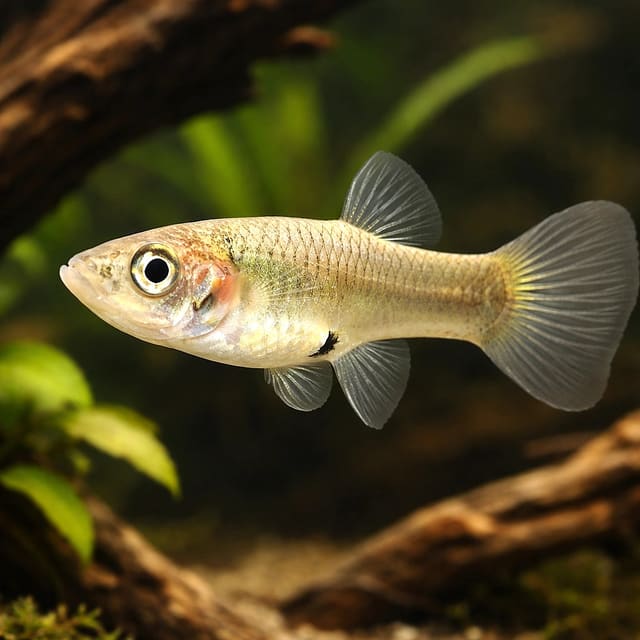
Easy
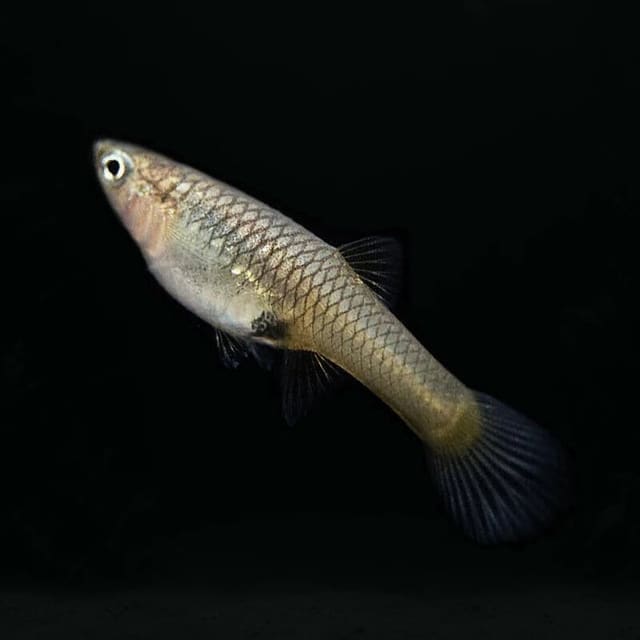
Female Endler Guppy (Poecilia wingei)
20–28°C · pH 7–8
£6.29

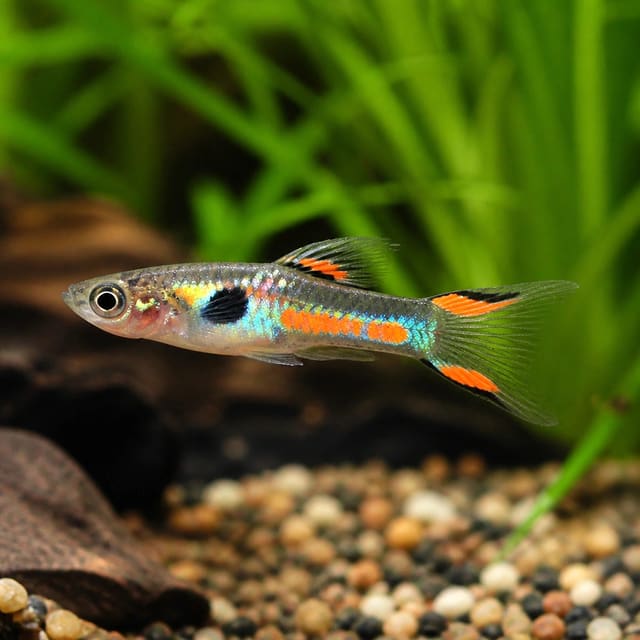
Supercolour Male Endler Guppy (Poecilia endler) is a small, active male livebearer sold singly at a supplier dispatch grade of 1.5–2 cm. The stock label anchors the offer; the accepted species name is Poecilia wingei. Plan a mature, moderately hard or harder aquarium for a social group, with open swimming room, cover and no common guppies.
Poecilia endler (accepted name Poecilia wingei)
Shoaling fish: kept in a group they feel safer, stay calmer and show their best colour.
Minimum of 2 per order.
Supercolour Male Endler Guppy (Poecilia endler) is a small, active male livebearer sold singly at a supplier dispatch grade of 1.5–2 cm. The stock label anchors the offer; the accepted species name is Poecilia wingei. Plan a mature, moderately hard or harder aquarium for a social group, with open swimming room, cover and no common guppies.
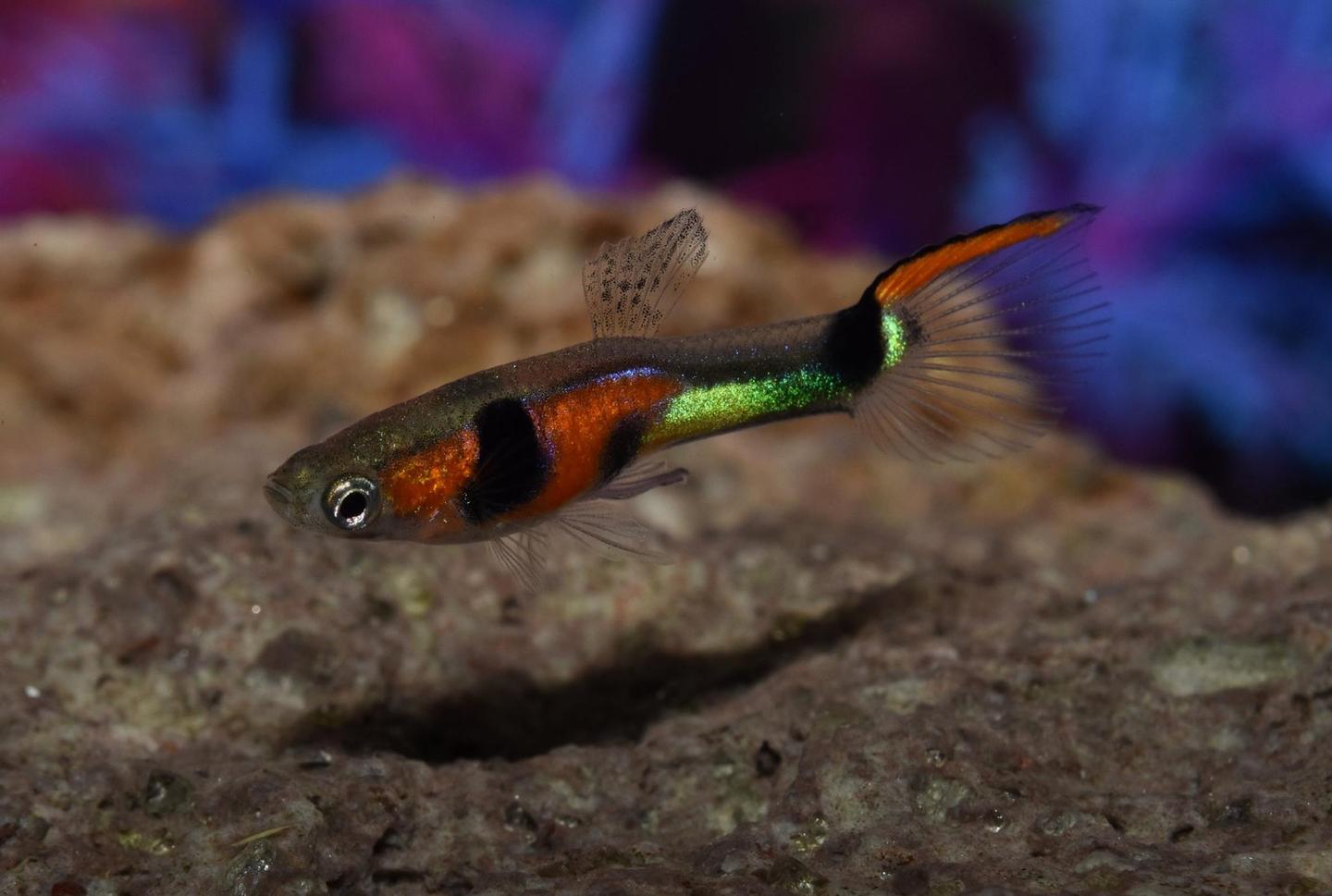
Endler's livebearer is a small, social, rapidly reproducing Venezuelan fish. Start with a mature filtered aquarium, a deliberate sex and population plan, stable tested medium-hard water, open swimming room and cover. Our conservative house screen is an aquarium at least 60 cm long and a group of five or more where capacity allows.
Maintain these water conditions for optimal health and vibrant colors
The Supercolour Male Endler Guppy is a tiny, quick-moving livebearer for keepers who enjoy an active group rather than a single centrepiece fish. Each quantity buys one male fish. The supplier dispatch grade is 1.5–2 cm, which describes the size expected when the fish is supplied and must not be confused with a universal adult length. This listing is explicitly male, so the sale does provide sex certainty; it does not promise an exact colour layout, maturity or individual shown in the photographs.
The stock arrives under the trade label Poecilia endler / supercolor male. That label remains the anchor connecting this offer to the wholesaler's line. In current taxonomy, Endler's livebearer is accepted as Poecilia wingei, a member of the family Poeciliidae. The name bridge matters: it lets a buyer recognise the exact commercial line while finding reliable information under the accepted species name. It is not a pedigree certificate. Domestic Endler-type fish and common guppies will crossbreed, appearance overlaps, and the listing has no documented collection-line ancestry, so a keeper who needs a demonstrably pure line should seek traceable breeder records rather than judge from colour alone.
This is a male-only offer, which makes it useful for a display where new mixed-sex breeding is not wanted. Male-only does not mean solitary, motionless or free from social friction. Endlers are social, males display and pursue, and an individual that is constantly excluded at feeding time needs attention. Tropical Fish Co's conservative house plan is a mature aquarium at least 60 cm long with five or more Endlers where filtration, existing livestock and behaviour allow. The species profile from Seriously Fish gives a smaller 45 × 30 cm base and about 41 litres for a substantial colony; the longer house screen leaves more usable swimming length and flexibility for a real household aquarium.
| What one quantity buys | One male Supercolour Endler at the supplier's 1.5–2 cm dispatch grade |
|---|---|
| Identity | Trade stock label Poecilia endler; accepted species name Poecilia wingei |
| Suits | A keeper with a mature, filtered, moderately hard or harder aquarium and room for a monitored social group |
| Reconsider if | The aquarium is uncycled, very soft and acidic, too short for a group, or already contains common guppies |
| Care character | Small and approachable, but still dependent on stable water, careful feeding and social observation |
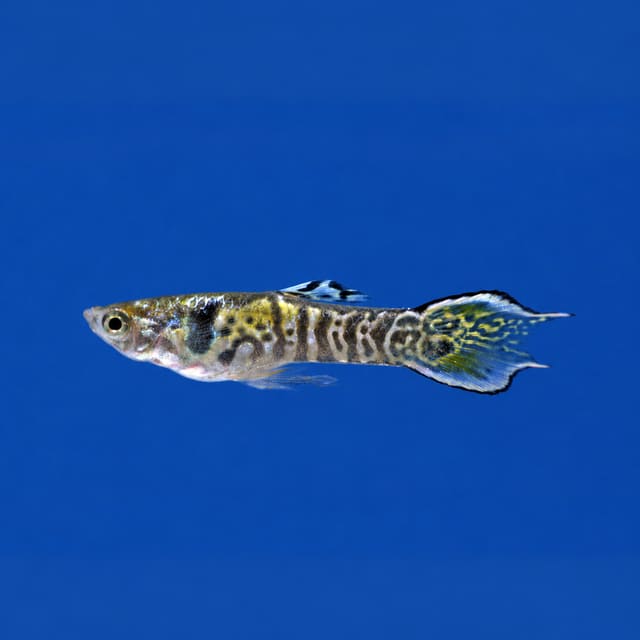
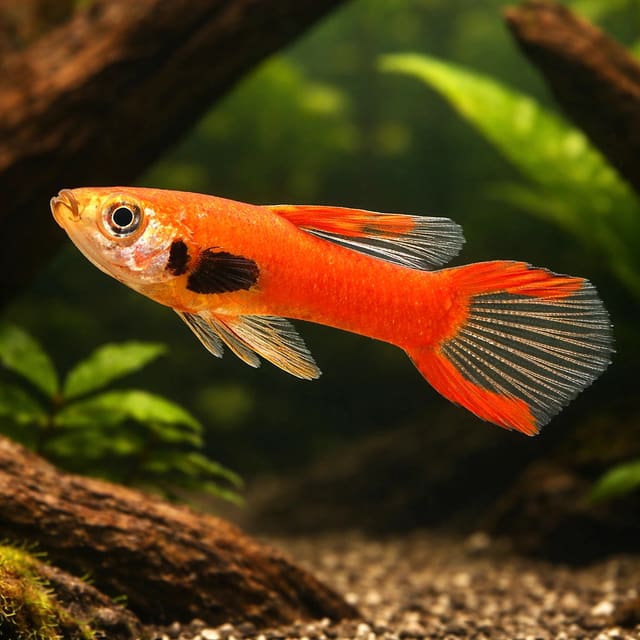
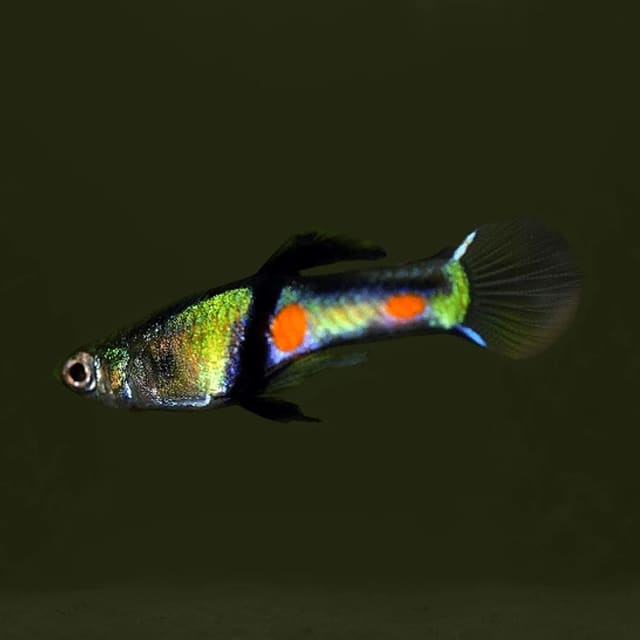
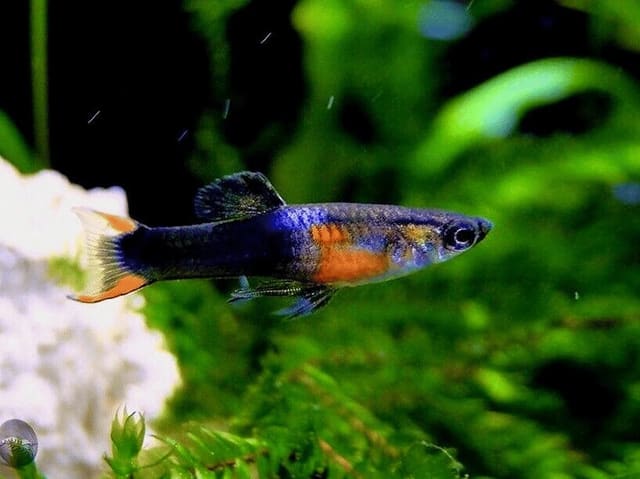
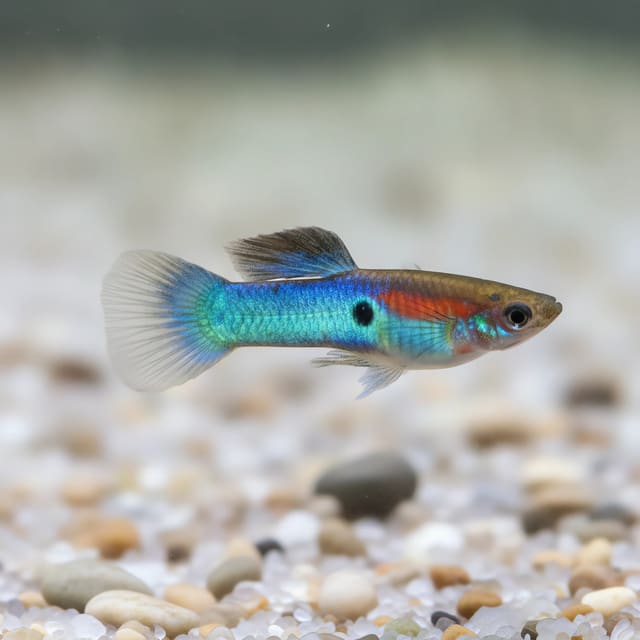
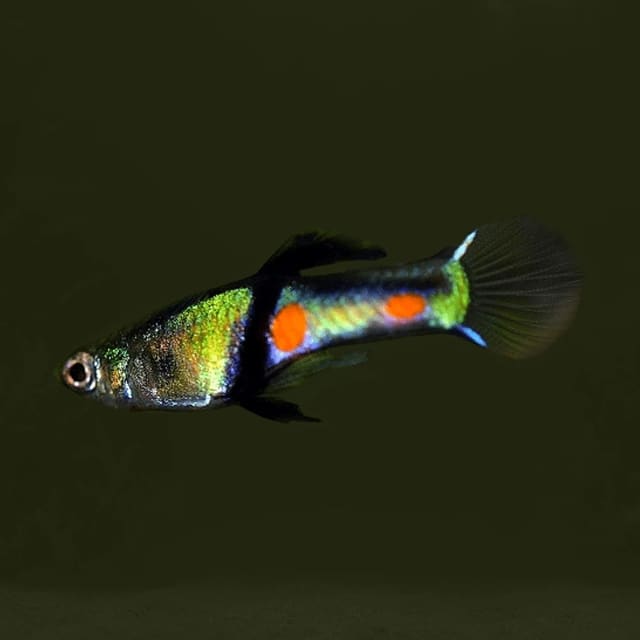
The Supercolour trade name refers to a colourful selected line, and the gallery shows orange, yellow and black markings on small fish. Colour and pattern vary naturally, especially with age, lighting, condition and transport. A healthy fish may look subdued while settling and brighten later, but colour alone cannot establish health, sex or ancestry. Look instead at steady swimming, normal breathing, open fins, interest in food and the ability to move freely within the group.
These fish suit a planted display when the plants leave clear swimming lanes. Floating growth and taller stems can give cover, while open front and middle water make behaviour easy to watch. The goal is a balanced layout, not a thicket that hides persistent pursuit or prevents every fish reaching food. A secure lid, mature biological filter, independent thermometer and routine water tests are more important than decorative style.
Read the complete Endler guppy care guide for deeper background on identity, group planning and reproduction. The Endler guppy collection is the useful place to compare separately named offers; a related product name is a shopping alternative, not evidence that two fish should share an aquarium.
Gallery images have been digitally enhanced to improve image quality. Natural colour, pattern, size and maturity can vary between live animals.
Successful Endler care begins with a mature aquarium and a realistic group plan. Their small body size does not make an unfiltered bowl suitable, and it does not remove the need for swimming length, oxygen, stable temperature or biological capacity. If this is your first aquarium, work through the first tropical tank guide before livestock is ordered. Cycle the filter, learn the normal readings for the aquarium and confirm that ammonia and nitrite remain at zero before adding a group.
Seriously Fish gives a species-level aquarium base of 45 × 30 cm, about 41 litres, and describes that space as enough for a substantial colony. OATA's combined guppy-and-molly sheet recommends at least 45 litres for a small group of the smaller guppy species. Tropical Fish Co applies a more conservative home screen of at least 60 cm aquarium length and five or more Endlers where the sex plan, filtration, water tests and other residents allow. Those figures answer different questions: the species profile supplies a practical base, the UK sheet gives group-level guidance, and the store screen adds extra swimming length.
A headline volume never tells the whole story. Substrate, wood and rocks reduce usable water; a tall narrow aquarium can hold litres without offering much horizontal movement; and every companion adds waste and competition. Start with the adult plan, not the arrival size. Count the existing animals, consider the filter's demonstrated capacity and leave room for behaviour management. A fish that cannot escape repeated pursuit or reach a feeding area needs action even if a calculator says the litres are adequate.
For this male-only offer, keep a social display rather than one isolated male. The store's starting point is five or more where capacity allows. Watch the actual group after introduction. Short displays and brief chases can occur, but repeated cornering, torn fins, missed meals or one fish spending most of the day hidden are reasons to change the layout, reassess stocking or use a mature separation aquarium. A spare uncycled container is not a safe emergency home.
The species profile at Seriously Fish gives 24–30 °C, pH 7.0–8.5 and 15–35 dGH for Poecilia wingei, and describes it as a moderately hard-water fish that should be maintained in moderately hard or harder water for the long term. OATA's broader UK guppy-and-molly sheet gives 20–28 °C, pH 7.0–8.0 and 8–18 dGH. The species profile and the group sheet are not identical, so do not invent a supposed overlap that excludes part of either record. Use the species profile as the specific starting reference, learn the water in which the exact fish are being held, and make changes gradually.
Water values should be measured, not guessed from a postcode or the words hard-water area. Test pH and general hardness in the tap supply and aquarium. The water chemistry guide explains the main readings, and the water matcher can help compare measured values with the published guidance. Avoid rapid pH chasing. If the source water is unsuitable, use a consistent, measured preparation method that you can repeat during water changes.
| Measure | Practical reading of the evidence |
|---|---|
| Temperature | 24–30 °C in the species profile; 20–28 °C in OATA's combined group sheet |
| pH | 7.0–8.5 in the species profile; 7.0–8.0 in the group sheet |
| General hardness | 15–35 dGH in the species profile; 8–18 dGH in the group sheet |
| Ammonia and nitrite | Zero according to the UK group-care guidance |
| Nitrate | OATA advises no more than 20 mg/l above the normal tap-water level |
A heater may be needed to maintain a stable chosen temperature through the year. Use an independent thermometer rather than trusting the heater dial. Keep the aquarium away from direct sun, cold draughts and sudden sources of heat. Temperature that swings quickly can be more stressful than a small stable difference within a suitable range.
A working biological filter is essential. Beneficial microorganisms convert toxic ammonia to nitrite and then nitrate, but the process needs time to establish and can be overwhelmed by abrupt stocking or heavy feeding. Provide useful surface movement without forcing these small fish to fight a powerful current continuously. Protect an intake if its openings could trap a small fish, and check that plants have not blocked the outlet.
OATA strongly recommends a partial water change of about 25% at least once a week, alongside regular testing. Treat replacement tap water for chlorine or chloramine and bring it reasonably close to the aquarium temperature. When filter material needs cleaning, rinse it gently in removed aquarium water rather than under the tap. Do not replace every mature filter component together, because that can remove much of the biological community at once.
Maintenance should respond to measured conditions. Rising nitrate, accumulating waste, reduced flow or a larger group may require more frequent attention. Clear water can still contain ammonia or nitrite, and plants do not replace filtration. Keep a simple log of test results, water changes and unusual behaviour so a trend is visible before it becomes an emergency.
A planted aquarium is strongly recommended in the species profile. Use plants, wood or other smooth structures to give cover while retaining open space for constant swimming. Floating plants can soften bright light and help nervous arrivals settle. Leave the surface sufficiently open for gas exchange and make sure the fish can reach food without squeezing through dense growth.
A secure lid is sensible for active livebearers. Check around cables and filter pipes for gaps. Choose smooth decor and avoid sharp artificial plants that could catch fins. Dark substrate or background may make colour easier to see, but it is an aesthetic choice rather than a treatment. The fish's steady movement and condition are more useful health indicators than the intensity of orange or black markings on a particular day.
Poecilia wingei is omnivorous. Seriously Fish describes wild feeding on zoobenthos and detritus and advises including vegetation in the aquarium diet. OATA recommends a good-quality flake or granule with a high algae content, with suitably small live or frozen foods as variety; it notes that Endlers may need small items such as cyclops.
Use an appropriately small complete flake, crumb or micro-granule as the staple. Particles should enter the mouth easily rather than being repeatedly spat out. Offer a modest amount and watch all males, spreading food over more than one spot if confident fish crowd the surface. Small frozen foods can add variety, while a plant-rich component helps keep the menu balanced. Visible algae and biofilm are useful grazing opportunities but are not a complete diet.
OATA suggests feeding what can be eaten within a few minutes once daily for its guppy-and-molly group guidance. Different complete foods and individual conditions vary, so body condition, feeding response and water tests should shape the portion. A fish that stops eating, loses weight or cannot compete needs investigation, not simply more food tipped into the aquarium.
A settled fish should swim steadily, breathe regularly, hold its fins normally and show interest in food. Warning signs include surface gasping, loss of balance, persistent hiding, clamped or damaged fins, spots, wounds, unusual swelling or an abrupt appetite change. These signs do not identify one disease. Test ammonia, nitrite, nitrate, pH and temperature first, then review recent additions, heater operation, filter flow, food and social behaviour.
Do not select salt, heat or medication from one symptom. Separate equipment between aquariums, and use a mature quarantine system for new or recovering fish when possible. Seek an aquatic vet or experienced specialist when signs are severe, persistent or spreading. The RSPCA's pet fish health guidance provides a useful UK welfare overview.
FishBase reports 2.0 cm standard length, while the original species description includes a separate female sample reaching 30.4 mm standard length. Standard length excludes the tail. The different sex and sample scopes must remain attached to those figures, so neither should be turned into one universal promised adult size. Likewise, available care sources support only the broad statement that these fish may live several years in good conditions; age at purchase, lineage and husbandry vary too much for an exact lifespan promise.
Sex is guaranteed only when the exact product or selected option explicitly states male or female. This Supercolour Male Endler Guppy listing is sold as male. Decide how many males the mature aquarium can support, identify a safe backup aquarium or separation route, and check that every existing resident fits the same water and space plan. A male-only display avoids new mixed-sex mating within that group, but it still needs social room and observation.
Test the aquarium over several days rather than taking one reassuring reading. Confirm zero ammonia and nitrite, note the normal nitrate level, compare the measured pH and hardness with the species profile, and check temperature at different times of day. Make sure the filter continues to move the surface after plants and decor are in place. Look for gaps around the lid, exposed heater surfaces and an intake opening that could catch a small fish.
Choose a time when the aquarium can be watched without constant disturbance. Check that every male can hold position, move into cover and reach food. Record which fish feeds confidently and which hangs back; a small animal can lose condition quickly when the boldest fish take every particle. Keep portions modest while watching water quality, and resist adding more livestock until the group is feeding and behaving normally.
Colour is a poor shortcut for this assessment. A vivid male can still be under pressure, while a subdued new arrival may simply be unsettled. Use breathing, balance, fin position, feeding and social access together. If one fish is repeatedly pinned into a corner or excluded, respond by checking water, adjusting cover and preparing a mature alternative home rather than hoping the problem disappears.
Plants grow, filters collect debris and group dynamics change. Recheck swimming lanes during maintenance, trim only enough vegetation to preserve both cover and open water, and verify that the outlet still creates surface movement. Review the group again after any new companion is introduced. A setup that worked for five small livebearers may no longer work after another social species is added, even when the water readings remain acceptable.
Compatibility is a screening process, not a list of guaranteed friends. Begin with water chemistry and temperature, then compare adult size, mouth size, swimming speed, feeding style, social needs and the space required by every group. These Endlers are very small, so predation and feeding competition matter even in an aquarium that looks peaceful.
The species profile names dwarf Corydoras, small rainbowfish such as Iriatherina werneri or Pseudomugil species, and peaceful tetras as examples. Each still needs its own assessment. A Corydoras group needs suitable bottom area and substrate; a rainbowfish group needs swimming room; a tetra species may require water outside the Endler range. The shared aquarium must satisfy both animals without forcing either to the edge of its needs.
Small peaceful community fish can be considered when their adult mouth size is safe, their water values overlap, they will not monopolise food and the aquarium accommodates all required group sizes. Never use the Endler's present dispatch size to judge predation risk. Compare the largest expected companion and the smallest vulnerable fish.
| Screen | Question to answer |
|---|---|
| Water | Can both animals live long term in the same temperature, pH and hardness? |
| Adult size | Could either animal swallow, injure or continually intimidate the other? |
| Food | Can every fish reach correctly sized food before it is gone? |
| Space | Does the aquarium provide the footprint and group size needed by both species? |
| Behaviour | Are there retreat routes, and can a keeper separate persistent aggressors? |
OATA says Endlers should not be kept with fish large enough to eat them. Avoid predatory or substantially larger species, persistent fin nippers and aggressive residents. Very slow long-finned fish can also be a poor match with quick feeding livebearers. A companion that requires very soft, acidic water should not be forced into the harder conditions suited to Endlers.
Seriously Fish says Poecilia wingei should not be kept with common guppies because the two will crossbreed. That advice is especially important for honest future labelling: offspring may be fertile, and appearance cannot reliably certify ancestry. Keep common guppies and Endlers in separate aquariums rather than relying on colour differences.
This product is sold as male, so a group made entirely from this offer avoids new mixed-sex breeding in that aquarium. It does not remove display behaviour or competition. Watch for one male being repeatedly displaced from food or cover. Use multiple feeding points and enough usable length, and have a mature alternative ready if behaviour does not settle.
If females are later added from another listing, the plan changes immediately. Courtship, fry capacity and rehoming become central. OATA's two-females-per-male suggestion is broad group guidance intended to reduce pressure; it is not a guarantee that all individuals will behave well. Dense planting may increase fry survival, so layout and population planning must be considered together.
Do not advertise this fish as shrimp-safe. Adult Amano shrimp or robust adult Neocaridina may coexist in some well-planned aquariums, but small shrimp and shrimplets can be eaten. Feeding competition is also possible. Cover can reduce exposure without guaranteeing survival. Compare the invertebrate's temperature and mineral needs, and never add shrimp as a substitute for cleaning or maintenance.
Check compatibility at calm times and during feeding. A fish may swim openly when food is absent but be excluded at every meal. Look for damaged fins, repeated hiding, weight loss, gasping or a fish held in one corner. Intervene early by testing water, reviewing the layout and reducing conflict; waiting for visible injury makes recovery harder.
Never release Endlers, hybrids, fry, plants, snails or aquarium water into a pond, drain or natural waterway. Captive stock is not a conservation release, even though wild Poecilia wingei is listed as Endangered. Plan permanent care or responsible rehoming through a reputable retailer, aquarium society or experienced keeper.
Published records have different scopes. FishBase reports 2.0 cm standard length, while a separate female sample in the original species description reached 30.4 mm standard length. Standard length excludes the tail, and neither figure is a promise for every male in this colour line.
Seriously Fish gives a 45 × 30 cm base and about 41 litres for a substantial colony. Tropical Fish Co uses a more conservative house screen of at least 60 cm length for an adult group, with mature filtration, open swimming room and capacity for all other residents.
They are social fish. Our house starting point is five or more where aquarium capacity and behaviour allow; OATA's broader guppy guidance gives at least three. Watch the actual group for feeding exclusion or persistent pursuit.
It can suit a prepared beginner with a cycled, filtered aquarium and measured hard-enough water. The small size is forgiving of neither ammonia nor social crowding, so easy care still involves testing, maintenance and observation.
Use an appropriately small complete flake, crumb or micro-granule with a plant or algae component, then add small suitable frozen or live foods such as cyclops for variety. Feed a measured portion and make sure every male gets some.
Seriously Fish gives species guidance of 24–30 °C, pH 7.0–8.5 and 15–35 dGH. OATA's combined guppy-and-molly sheet gives a different broad range of 20–28 °C, pH 7.0–8.0 and 8–18 dGH. Test the actual water and make any change gradually.
Males are generally peaceful but display and pursue, and competition can exclude a weaker fish. Provide swimming length, cover and more than one feeding point, then act if one individual is repeatedly cornered, injured or losing weight.
Seriously Fish names dwarf Corydoras, small rainbowfish and peaceful tetras as possibilities, but each species needs its own water, adult-size and space check. Avoid predators, fish large enough to eat an Endler, persistent fin nippers and common guppies.
Tropical Fish Co hand-bags fish in pure oxygen, uses an insulated box and a heat pack when conditions call for it, and sends them with a licensed live-animal courier. For a Live Arrival Guarantee claim, keep a continuous unboxing video from the sealed parcel through opening to the fish still in the sealed bag, and contact the store the same day.
Identity and biology were checked against FishBase, Eschmeyer's Catalog of Fishes and the original description of Poecilia wingei. These sources preserve the accepted name, locality and measurement scope. The original description's larger separate sample and FishBase's smaller maximum should be read as distinct records, not blended into one convenient number.
Aquarium husbandry uses the species profile from Seriously Fish and the OATA guppy-and-molly care sheet. The RSPCA's aquarium environment guidance supports the need for a mature working filter. Species-level values and broad group guidance are labelled separately throughout.
Review the current delivery and Live Arrival Guarantee policy before ordering. Be present for the parcel. If a guarantee claim may be needed, the evidence must begin with the parcel still sealed: keep one continuous unboxing video through opening to the fish still inside the sealed bag, then contact Tropical Fish Co the same day with the order number. Follow the current arrival directions and introduce the fish only to a prepared, tested aquarium.
After arrival, observe breathing, balance and fins before feeding. Transport colour can change, but pale colour should not be used to dismiss abnormal behaviour. Keep the aquarium quiet, verify its temperature and water quality, and use the current customer-support route promptly if condition causes concern.
Independently collected by Judge.me from customers who bought this item. All reviews are shown.
The stars are for the packaging and pricing. However I ordered Endlers, and messaged the store to see if they where genuine, but was sent hybrids and not pure endlers
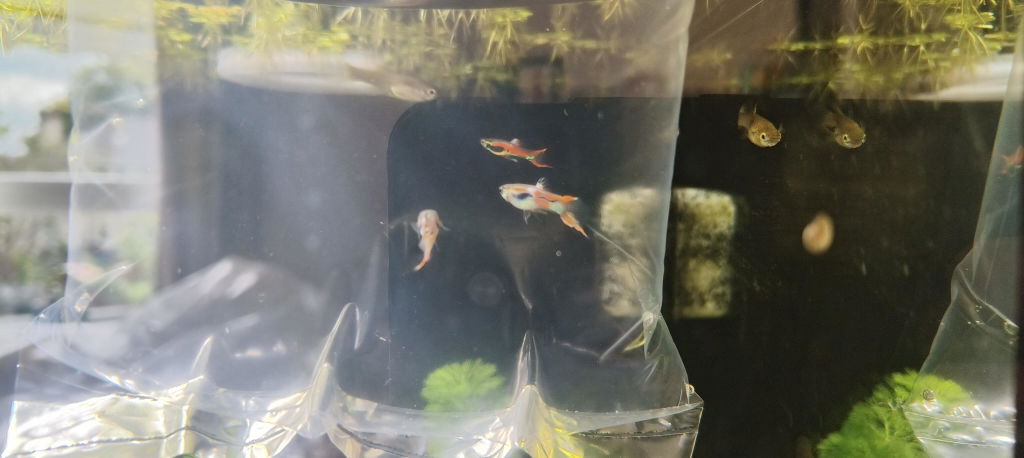
Reply from Tropical Fish Co
<p>Thanks for being fair about the packing and the price Gary, and you're right to push on the rest. Pure Endler versus Endler-guppy hybrid is a real distinction and it matters to anyone keeping a line properly, so if what arrived doesn't match the listing then that's ours to fix rather than argue about. Please send your order number and that photo to <a target="_blank" rel="nofollow noopener" href="mailto:hello@tropicalfishco.co.uk">hello@tropicalfishco.co.uk</a> and we'll sort it out with you - and we'll go back over how that line is described on the site so the next person isn't caught the same way. - Reza, Tropical Fish Co</p>