
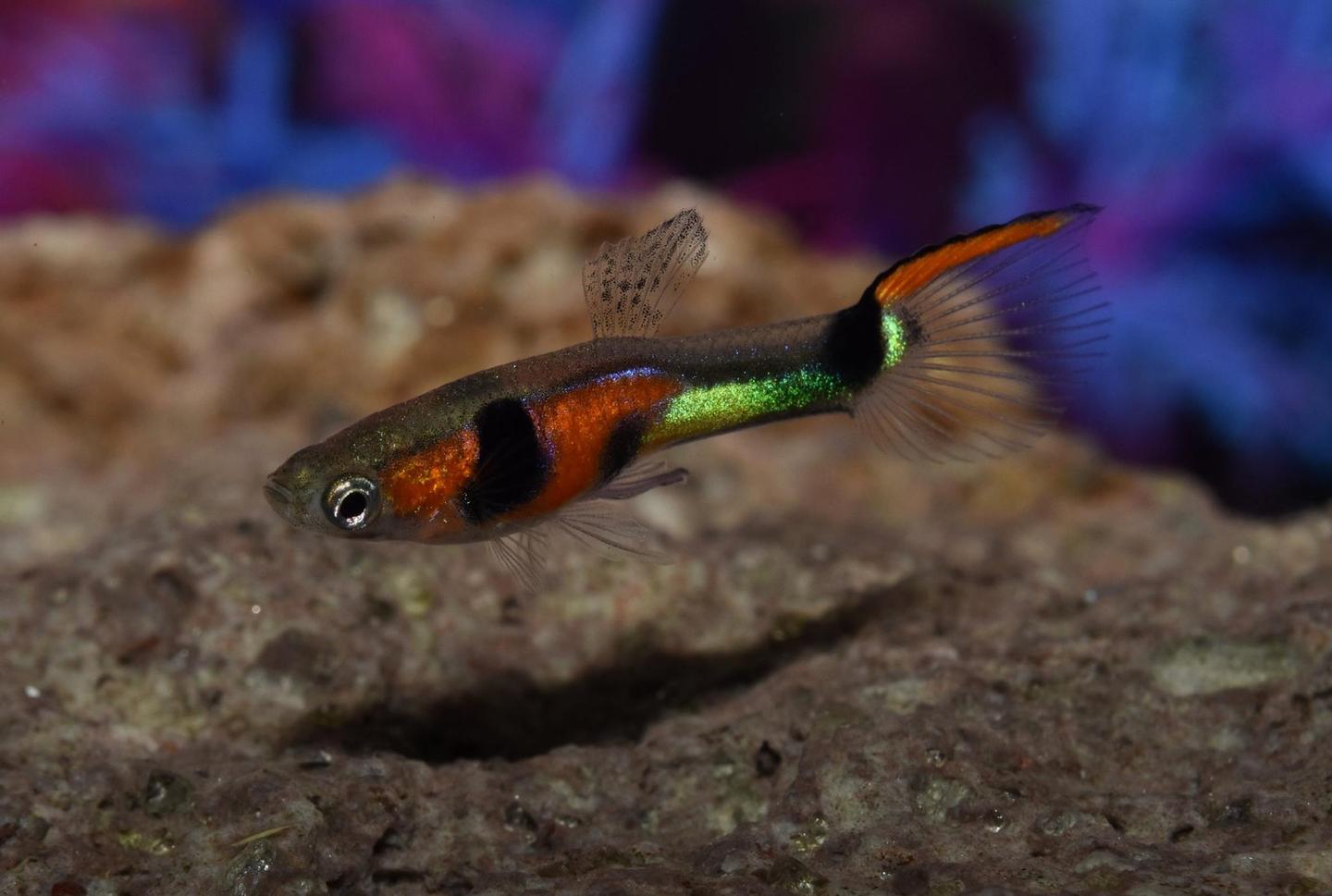
Endler Guppy Care Guide: Poecilia wingei

The common name points to John Endler, but the scientific name Poecilia wingei honours Danish geneticist Øjvind Winge. The original description also places the type locality between Laguna Buena Vista and Laguna Campoma—not simply at Laguna de Patos, as many care pages repeat.
Original 2005 species descriptionThe 20–28 °C, pH 7–8 and 8–18 dGH ranges come from OATA's UK guppy-and-molly care sheet, which explicitly includes Poecilia wingei but is not a species-specific tolerance trial. OATA gives 45 L for a small group of the smaller species and at least three fish; Tropical Fish Co uses a more conservative 60 cm aquarium and group of 5+ policy where sex planning, filtration, tests and other livestock allow.
Live stock
Endler Guppy for sale — see live stock & today’s prices
Endler guppy care begins with identity and population planning, not a nano-tank slogan. Poecilia wingei is a small social livebearer, but small size does not make unstable water, an uncycled bowl or an unplanned mixed-sex group safe.
Tropical Fish Co sells live fish, so our commercial interest is explicit. Current Endler availability, price, sex and sale unit belong on the live shop page; this guide keeps care evidence separate from changing stock. A product image, colour name or supplier label cannot by itself prove a pure locality line.
- Start with a mature, filtered aquarium and zero detectable ammonia and nitrite.
- OATA gives 45 litres for a small group of the smaller guppy species; our more conservative adult-group screen also requires at least 60 cm length.
- Our house recommendation is five or more where space, sex planning and other livestock allow.
- Use 20–28 °C, pH 7–8 and 8–18 dGH as labelled UK husbandry guidance, then match the actual supplier and aquarium water gradually.
- Decide between a single-sex display and a mixed group only after planning for courtship, fry, spare capacity and responsible rehoming.
Is an Endler guppy right for your aquarium?
This species can suit a prepared beginner who wants a small, active livebearer and is willing to test water and manage social behaviour. “Easy” does not mean maintenance-free. A suitable setup needs mature biological filtration, a heater where room conditions cannot maintain the target, an independent thermometer, regular tests and enough usable swimming length.
| A reasonable starting plan | Reconsider or change the plan |
|---|---|
| Mature filtered aquarium at least 60 cm long | Bowl, vase or uncycled “nano” aquarium |
| Planned group of five or more under our house policy | One fish, a pair, or fish added only to fill litres |
| Sex and fry plan chosen before ordering | Mixed sexes with no spare capacity or rehoming route |
| Open swimming room plus monitored cover | Dense decor that hides persistent pursuit or blocks movement |
| Tested source and aquarium water | Assuming all UK tap water is the same |
OATA's UK sheet gives a 45-litre minimum for a small group of the smaller guppy species, requires filtration and says at least three guppies should be kept together[10]. Tropical Fish Co applies a more conservative screen: at least 60 cm of aquarium length and five or more fish where the sex plan, filtration, water tests and other occupants allow. That is a disclosed retail policy—not a controlled welfare threshold or permission to calculate a maximum from litres.
Identity, origin and the Endler name
The accepted name is Poecilia wingei Poeser, Kempkes & Isbrücker, 2005, in family Poeciliidae[1]. The scientific name honours Danish biologist and geneticist Øjvind Winge; it was not named for John Endler[2][4]. The familiar common name “Endler's livebearer” is associated with John Endler, which explains the frequent mix-up.
The type locality in the original description is the bridge between Laguna Buena Vista and Laguna Campoma, about 3 km north of Cariaco in Venezuela[2]. FishBase summarises the distribution as the Campoma and Buena Vista lagoon systems and reports the current global conservation record as Endangered, assessed 8 March 2021[4]. Captive abundance does not cancel the conservation importance of documented wild populations.
Size needs a measurement label. FishBase records 2.0 cm standard length for a female, while the original description reports a separate stream sample with males of 18.8–21.3 mm and females of 26.9–30.4 mm standard length[2][4]. Standard length stops at the base of the tail. We therefore show 3.0 cm SL (30.4 mm before rounding) as the largest value in that original material, not a promised adult length for every retail fish.
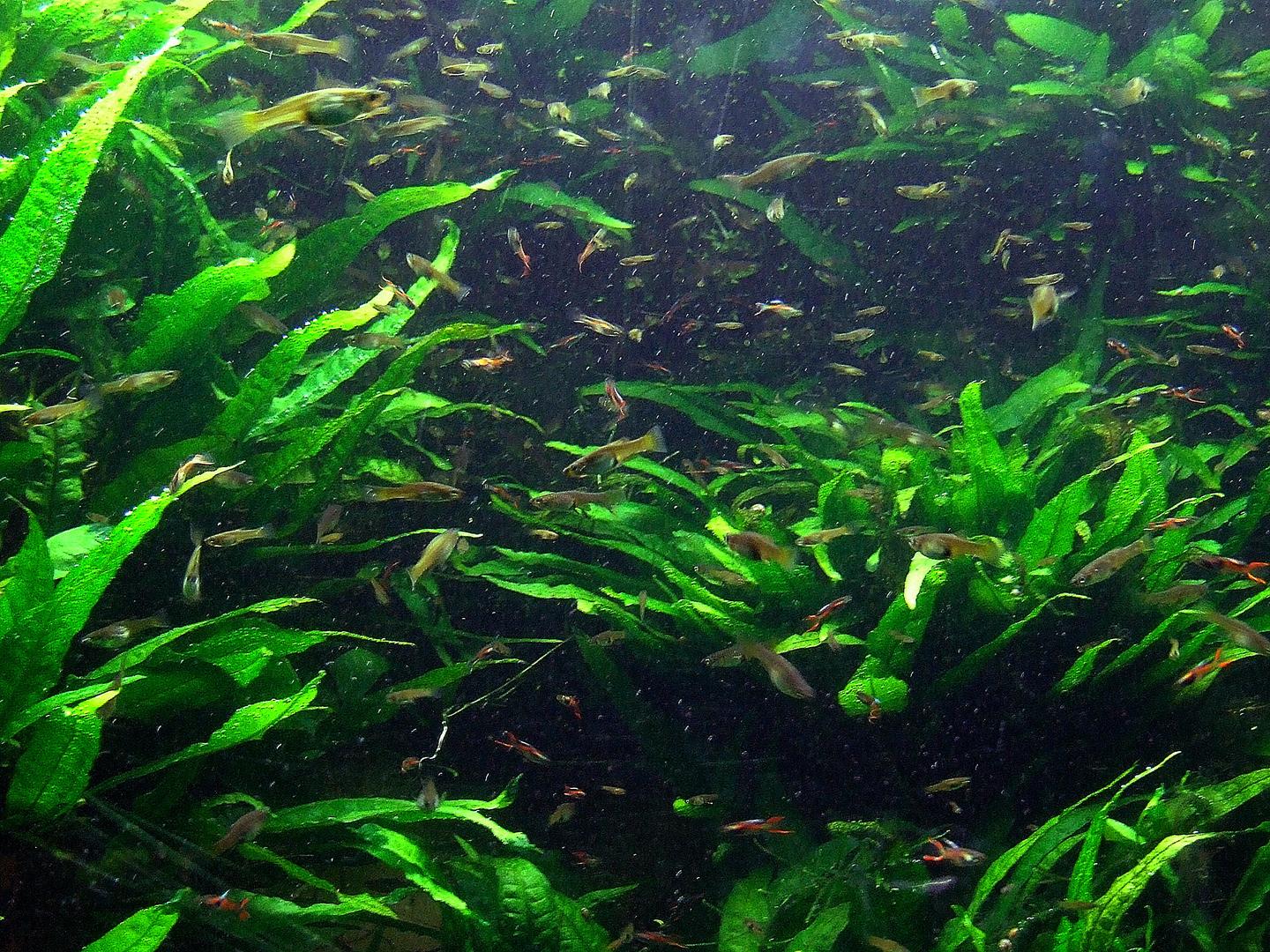
One field site in the description was a clear stream around 1.5 m deep and 1.8–3 m wide, with bank vegetation but no submerged plants[2]. That single observation corrects the repeated claim that the species is universally a “shallow planted lagoon fish”; it does not prescribe a bare home aquarium.
Endler vs guppy: hybrids and trade labels
Endler's livebearer and the common guppy are close relatives, but P. wingei and P. reticulata are currently recognised as separate species. The original description and later morphological and molecular comparison support that distinction[2][3].
They can nevertheless hybridise. A 2022 laboratory study produced reciprocal F1 and F2 hybrids between the two species[5]. This proves biological possibility under the experiment; it does not prove that every colourful “Endler guppy” sold in the UK is a hybrid.
Appearance is not a pedigree test. The later comparison found overlapping morphology, and domestic selection can alter colour and fins[3]. Labels such as Black Bar, Campoma, Tiger, Lime, N-class, P-class or K-class may communicate a breeder's claim or hobby convention, but they do not replace traceable records. If lineage matters:
- ask for the scientific identity and collection-line documentation;
- record the breeder and chain of custody;
- keep documented P. wingei apart from P. reticulata and known hybrids; and
- describe offspring honestly when ancestry is uncertain.
For a display aquarium, an attractive known hybrid can still be a valid choice when labelled accurately. The welfare needs of the actual fish matter more than using “pure” as a marketing adjective.
Tank size and group planning
OATA recommends at least 45 litres for a small group of the smaller species in its sheet covering both guppy species and mollies[10]. Volume is a useful first filter, but it cannot describe aquarium length, mature filter capacity, oxygen, courtship pressure, other animals or the number of fry that may arrive.
Our conservative house plan for an adult Endler group is:
- a mature aquarium at least 60 cm long;
- five or more fish where sex planning and capacity allow;
- zero detectable ammonia and nitrite before stocking;
- open horizontal swimming space plus cover and sight breaks; and
- a cycled separation option and responsible rehoming route.
OATA's own social floor is three, not five[10]. Our higher group recommendation is a retail welfare policy, not a claim that research found five to be a magic number. A 2026 exact-species experiment showed that P. wingei responds to social information, but its same-sex groups of four were experimental treatments, not home-aquarium stocking trials[6].
Do not translate 45 litres into “eight to ten fish fit.” Start conservatively, count every existing animal, and monitor whether each Endler can feed, swim normally and move out of another's path. Persistent hiding, cornering, missed feeding or fin damage means the plan needs intervention, not another fish.
Water, heater and temperature
OATA gives 20–28 °C, pH 7–8 and 8–18 dGH, with zero ammonia and nitrite, for its guppy-and-molly sheet[10]. The sheet explicitly identifies P. wingei, but it is still combined trade-body husbandry guidance rather than an exact-species tolerance experiment.
Two P. wingei studies illustrate why laboratory conditions must not be relabelled as tolerance limits. The 2026 social-information work maintained a colony at 26–27 °C and pH 7.8–8.2[6]. A limited life-history study used 27–28 °C and pH 7–7.5[9]. Those fish were housed successfully for those experiments; neither study tested the full safe range.
Use the OATA values as a practical UK screening range, ask what water the exact fish currently occupy and make changes gradually. Test tap and aquarium water rather than relying on postcode stereotypes: UK supplies vary and can be blended. Do not chase pH with unmeasured additives or assume a fixed tap/RO recipe produces the same GH and KH in every home.
OATA says a heater is required to maintain suitable year-round temperature, while RSPCA guidance recommends a suitable heater and an independent thermometer[10][11]. In practice, control the water, not the room label or heater dial. Avoid direct sun, draughts and abrupt temperature changes.
Male or female: social planning
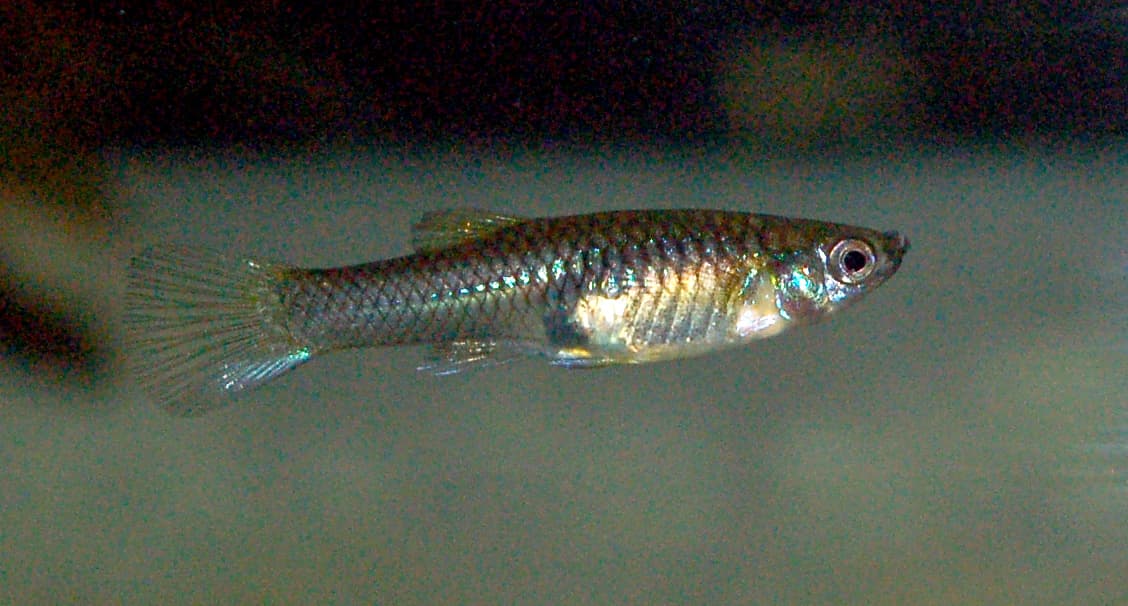
Mature males have a narrow modified anal fin called a gonopodium; females have a broader triangular anal fin[10]. Males are often smaller and more conspicuously patterned, while females are usually plainer and deeper-bodied. Use anal-fin shape as the main visible check: colour, size, a dark abdominal area or a rounded belly alone cannot prove sex or pregnancy.
| Group choice | Main benefit | What still needs watching |
|---|---|---|
| Male-only | Avoids new mixed-sex mating in that aquarium | Pursuit, display competition, feeding exclusion and fin damage can still occur |
| Female-only | Avoids new mating inside a correctly sexed group | Sexing errors and social competition still need monitoring |
| Mixed sex | Allows courtship and likely reproduction | Repeated pursuit, female condition, fry capacity and rehoming become central |
OATA suggests two females per male to reduce pressure[10]. Treat that as trade-body guidance, not a guarantee. Exact-species research shows male mating tactics change with prior social environment, so behaviour is responsive rather than fixed[7]. No ratio makes an undersized tank safe or removes the need to observe individuals.
An all-male display can be a responsible choice when fry are unwanted, but “males never fight” is too absolute. Provide usable length and sight breaks, watch the whole group at feeding time, and keep a mature backup aquarium or divider plan for persistent pursuit or injury.
Layout, filtration and flow
Give the group open water for continuous swimming and structured areas where a fish can break another's line of sight. Live plants can supply cover, but they are not mandatory evidence of a correct habitat and must not fill every usable centimetre. A secure lid reduces escape risk, while a dark background can improve viewing without being presented as a health treatment.
Filtration is essential. Size it for the whole aquarium, maintain useful surface movement and choose a flow the fish can hold position against without constant effort. Protect an intake where a small fish or fry could be trapped. Rinse mature filter media only in removed aquarium water or another dechlorinated method that protects the biological community; do not replace all media on a calendar.
Cycle the aquarium before fish arrive and confirm the result with repeated tests. OATA specifies zero ammonia and nitrite and recommends nitrate no more than 20 mg/L above the normal tap-water level[10]. A planted tank can still be uncycled, overstocked or oxygen-poor. Plants complement filtration and husbandry; they do not prove either.
Cover can also increase fry survival. That may be desirable in a planned breeding setup, but it can accelerate crowding. Choose the layout together with the population plan rather than adding dense moss and discovering later that every brood has nowhere to go.
Feeding small livebearers
OATA describes guppies and mollies as omnivorous and recommends a good-quality flake or granule with algal content, plus suitably small live or frozen variety; it specifically notes that Endlers may need smaller items such as cyclops[10]. Use an appropriately small complete food as the nutritional base rather than treating one frozen food as a complete diet.
A practical feeding check is more reliable than a rigid recipe:
- choose particles the smallest fish can take without repeated spitting;
- distribute food so slower individuals receive some;
- watch body condition and feeding response across the group;
- remove food that repeatedly remains; and
- adjust the portion after changes in group size, temperature or filtration.
The OATA sheet suggests one daily portion consumed within a few minutes[10]. That is general household guidance, not a controlled P. wingei feeding-frequency trial. Fry, ill fish and different complete diets may need a plan from a knowledgeable retailer or aquatic vet.
Do not collect live food from an unknown pond, and do not assume visible algae supplies a balanced diet. Store dry and frozen foods safely, avoid thaw-and-refreeze cycles, and remove decaying leftovers before they become a water-quality problem.
Tank mates and shrimp
No static list can guarantee compatibility. Screen every proposed companion for overlapping temperature and chemistry, adult size, predation risk, fin-nipping or territorial behaviour, feeding speed and the combined space required by all social groups.
OATA specifically warns against keeping Endlers with a species large enough to eat them[10]. Small peaceful livebearers, Corydoradinae or other community fish may work only when the exact species passes the water, footprint and behaviour checks. Read the companion's own reviewed guide and provide a ready separation option.
Avoid common guppies when preserving a documented P. wingei line because laboratory research confirms hybridisation[5]. If lineage is irrelevant and a mixed-species aquarium is still considered, hybrid offspring and honest future labelling remain part of the decision.
Do not promise “shrimp-safe.” Adult Neocaridina or Amano shrimp may coexist in a suitable aquarium, but small shrimp and shrimplets can be eaten and feeding competition can occur. Dense moss or other cover reduces exposure; it cannot guarantee survival. Check the shrimp's own temperature, mineral and social requirements, and never use shrimp as a cleanup substitute for maintenance.
Reproduction and population planning
Poecilia wingei is a livebearer, and mixed-sex groups can reproduce readily. That makes a population plan part of basic care, not an optional breeding chapter. Decide before purchase whether you have mature spare capacity, suitable food and filtration for young fish, and a responsible route to separate or rehome them.
Avoid exact countdowns and brood promises. A 2021 exact-species paper examined only ten litters and 122 fry under one laboratory breeding regime[9]. Its observations are useful evidence that reproduction and early life can be measured, but they cannot establish what every purchased female will produce or when. OATA's broader guppy-and-molly brood figures are also combined guidance, not a P. wingei guarantee[10].
If fry appear unexpectedly:
- test water and reassess biological filter capacity immediately;
- do not move fish into an uncycled container;
- use safe, appropriately sized complete food;
- separate sexes only with confident identification and adequate mature housing; and
- contact reputable retailers, clubs or experienced keepers early about responsible rehoming.
Predation by adults or larger tank mates is not a population-control plan, and deliberate culling advice does not belong in a general retail guide. Prevent unmanaged reproduction where possible and plan humane expert-supported outcomes for every fish already present.
Health, quarantine and lifespan
A settled Endler should swim steadily, breathe regularly, hold its fins normally and feed consistently. Surface gasping, loss of balance, persistent hiding, clamped or damaged fins, spots, wounds, unusual swelling or a sudden appetite change are warning signs—not diagnoses[12].
Test ammonia, nitrite, nitrate, pH and temperature first. Check the heater, filter, recent maintenance, new animals, food and social behaviour. Photograph changes over time and seek a fish vet through OATA's UK directory when signs persist or are severe[14]. Do not select salt, heat or medication from one symptom, and use UK-authorised products and veterinary direction where relevant[15].
Quarantine should use a separate mature system and dedicated equipment. The MSD Veterinary Manual recommends at least 30 days and longer where indicated[13]. This is professional US veterinary guidance; it does not justify copying drug doses into a UK retail article.
One study found 22 spinal deformities among 600 fish from a single captive line, with several possible genetic, nutritional, environmental or traumatic contributors[8]. That result is not a species-wide disease rate and a curved body is not proof of inbreeding. Do not breed an affected fish or diagnose the cause from appearance alone; seek expert assessment.
OATA says these small fish may live several years in a mature setup with good water quality[10]. No exact-species source here supports a fixed lifespan promise. Age at purchase, lineage, previous exposure and husbandry vary.
Buying identity, delivery and arrival
Use the live Endler shop page to confirm current stock, price, sex, size and sale unit. Dynamic product cards—not this care article—own availability. A quantity of two is not automatically a pair, and a representative group photograph does not promise a particular colour or sex.
Before ordering, ask:
- Is the scientific identity recorded as Poecilia wingei, P. reticulata or a hybrid?
- Does the colour or locality name have traceable records, or is it an appearance label?
- What sex and number does the exact sale unit contain?
- What temperature, pH and hardness are the fish currently held in?
- What is the current delivery, live-arrival and reporting procedure?
Use the current delivery information for postcode coverage, packing, dispatch timing, guarantee terms and arrival instructions. Prepare and test the aquarium before dispatch. Follow the supplied arrival directions rather than a fixed timer copied from a generic guide; the appropriate method depends on the journey and the water on both sides.
Pale colour after transport can have several causes and should not be dismissed automatically as “normal stress.” Observe swimming, breathing, balance and fins, test the aquarium, keep evidence and use the current reporting route promptly if condition causes concern.
Never release aquarium life or water outdoors
Never release Endlers, hybrids, fry, plants, snails, pathogens or aquarium water outdoors, into a pond, drain or natural waterway. OATA warns that aquarium animals and plants can harm native countryside and says contaminated water and substrate must be disposed of so non-native organisms cannot enter natural watercourses[10].
UK government guidance explains the legal controls on releasing non-native animals into the wild[16]. Responsible alternatives are prevention, permanent suitable care or planned rehoming through a reputable retailer, aquarium society or experienced keeper. Do not use the conservation status of wild P. wingei as a reason to release captive fish: undocumented, selected or hybrid aquarium stock is not a conservation reintroduction programme.
Endler's livebearer group and female
Frequently asked questions
Shop Endler Guppy & related
From this care guide straight into our UK live-fish catalogue.
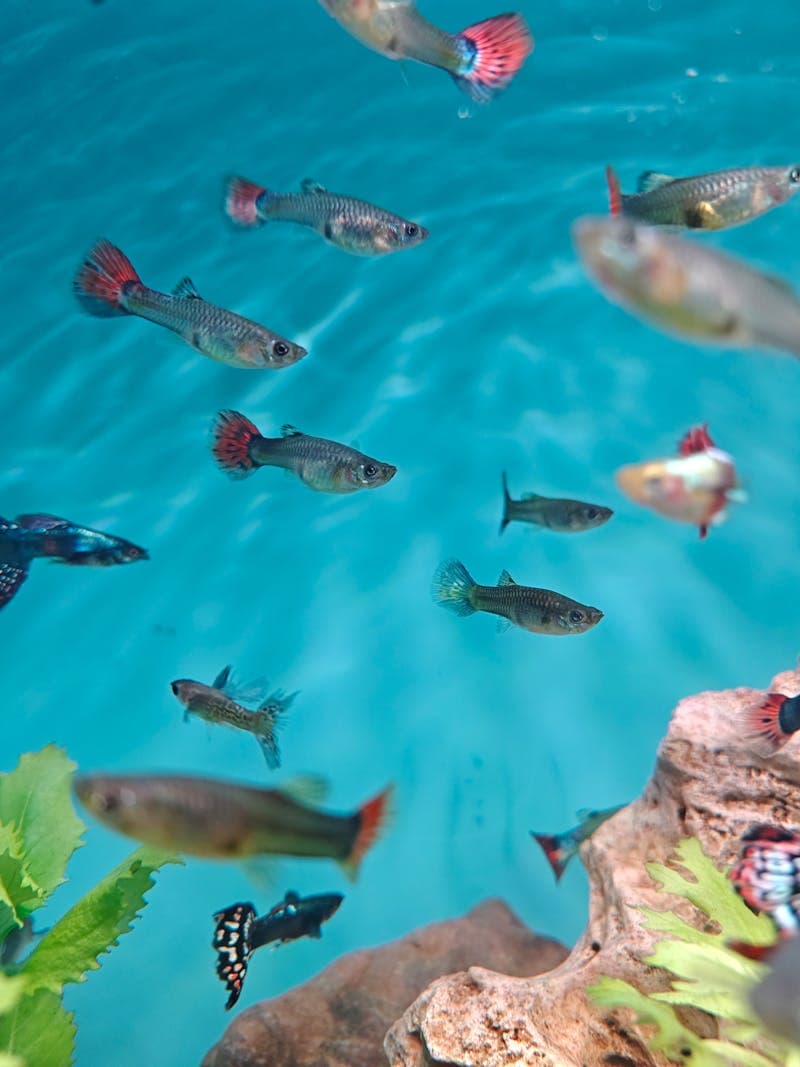
Livebearers
Livebearer fish for sale UK — Guppies, Mollies, Platies, Swordtails, Endlers, Limias. Easy-breeding community favourites.
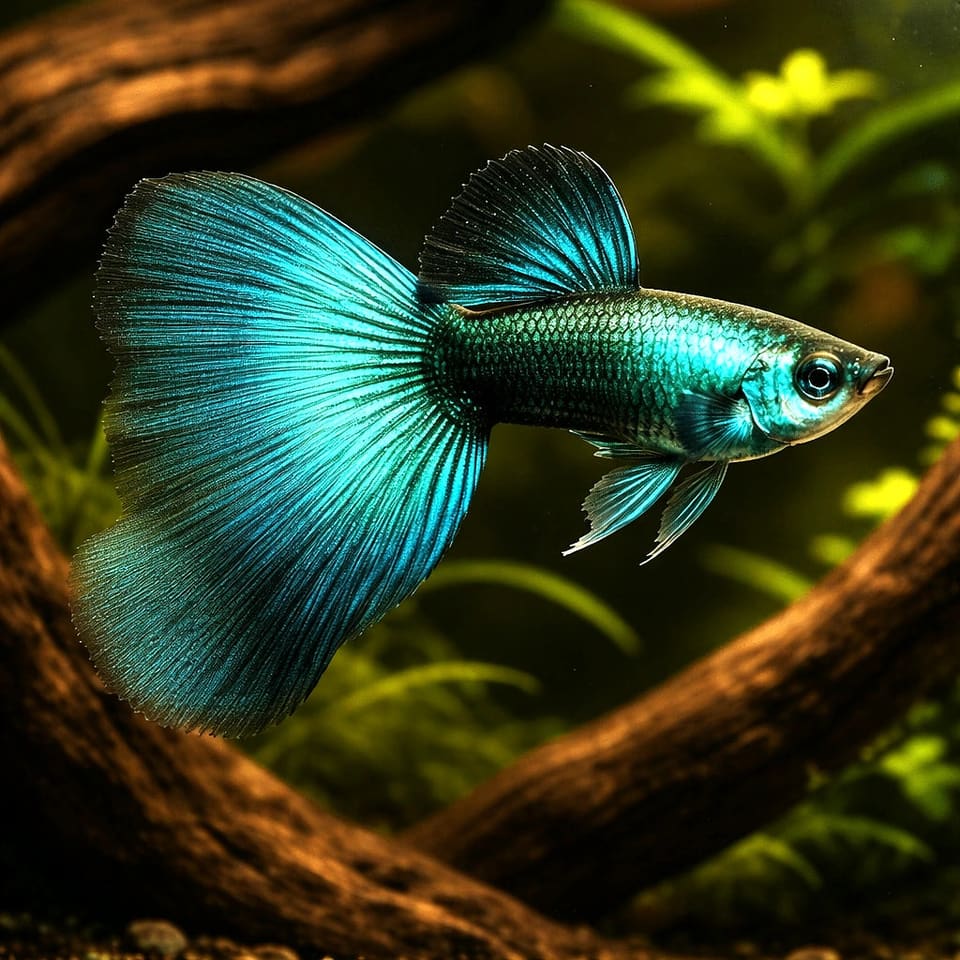
Guppy
Fancy guppies including Moscow, Cobra and Dumbo ear forms. Browse Endlers separately. Match listing water needs to your tank water.
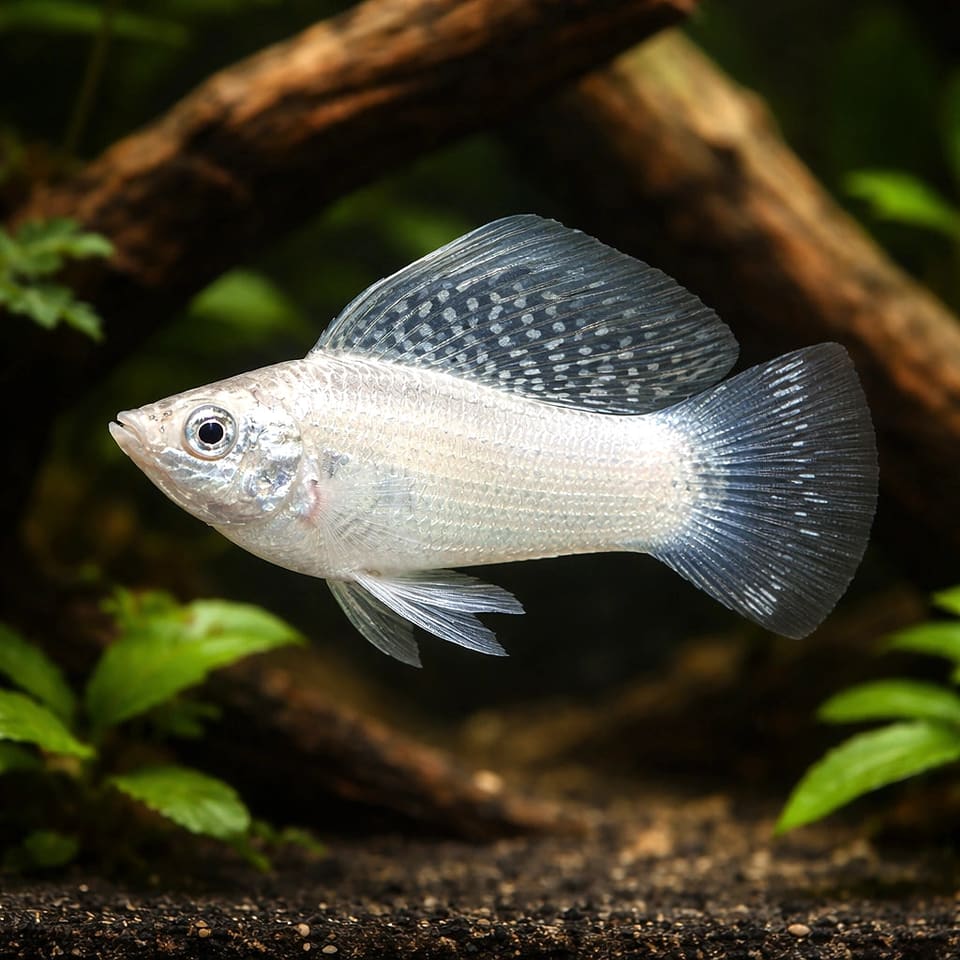
Molly Fish
Black, gold, marble and sailfin mollies, plus balloon and lyretail forms: peaceful livebearers that prefer harder water. Price, size and sex on every listing.
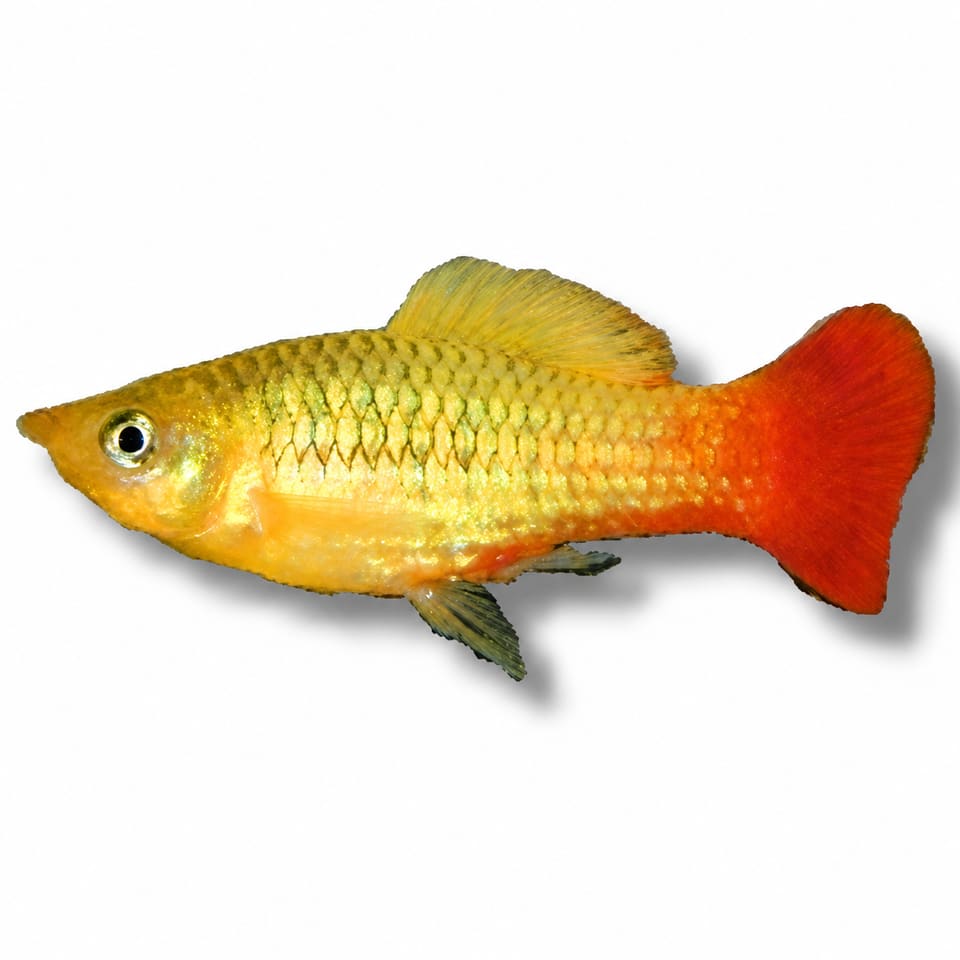
Platy Fish
Compare platy colours, forms and supplied sizes. Check the selected sale unit and price, with practical care and group-planning advice.
Sources & further reading
Material factual claims cite the sources below; store policy and cautious inference are labelled in the article. Sources are grouped by type so you can judge their weight at a glance.
Peer-reviewed study (7)
- [2]Poeser, F. N., Kempkes, M. & Isbrücker, I. J. H. (2005). Description of Poecilia (Acanthophacelus) wingei n. sp. from the Paría Peninsula, Venezuela, including notes on Acanthophacelus Eigenmann, 1907 and other subgenera of Poecilia Bloch and Schneider, 1801 (Teleostei, Cyprinodontiformes, Poeciliidae). Contributions to Zoology. DOI: 10.1163/18759866-0740102007. View source
Original description, type locality, etymology, measured material, habitat observation and diagnostic comparison. Its field observation is not a universal aquarium-care prescription.
- [3]Schories, S., Meyer, M. K. & Schartl, M. (2009). Description of Poecilia (Acanthophacelus) obscura n. sp., a new guppy species from western Trinidad, with remarks on P. wingei and the status of the Endler's guppy. Zootaxa. DOI: 10.11646/zootaxa.2266.1.2. View source
Morphological and molecular comparison supporting P. wingei as distinct while showing that appearance measurements overlap; appearance alone cannot certify pedigree.
- [5]Vila-Pouca, C., De Waele, H. & Kotrschal, A. (2022). The effect of experimental hybridization on cognition and brain anatomy: Limited phenotypic variation and transgression in Poeciliidae. Evolution. DOI: 10.1111/evo.14644. View source
Laboratory reciprocal P. reticulata × P. wingei F1 and F2 hybridisation; not evidence that any named retail strain is pure or hybrid.
- [6]McCarthy, J. R., St. John, M. E. & Stein, L. R. (2026). Trust myself or trust my friends? Exploring the effect of sex on social information use in Poecilia wingei. Behavioral Ecology and Sociobiology. DOI: 10.1007/s00265-025-03692-3. View source
Exact-species social-information experiment using same-sex groups and one laboratory husbandry regime; it is not a home-aquarium minimum-group or water-tolerance trial.
- [7]Řežucha, R. & Reichard, M. (2014). The effect of social environment on alternative mating tactics in male Endler's guppy, Poecilia wingei. Animal Behaviour. DOI: 10.1016/j.anbehav.2013.12.010. View source
Exact-species evidence that male mating behaviour responds to social context; it does not establish one safe household sex ratio.
- [8]Arbuatti, A., Della Salda, L. & Romanucci, M. (2013). Spinal deformities in a wild line of Poecilia wingei bred in captivity: report of cases and review of the literature. Asian Pacific Journal of Tropical Biomedicine. DOI: 10.1016/S2221-1691(13)60047-7. View source
One captive line: 22 spinal deformities among 600 observed fish under documented conditions. This is not a population-wide disease rate or proof of one cause.
- [9]Hernández-López, M. & Luna-Vivaldo, I. (2021). Life history traits of Endler's fish (Poecilia wingei). AACL Bioflux. View source
A limited laboratory study of ten litters and 122 fry under one breeding regime. Its output, maturity and water values are observations from that experiment, not universal promises.
Scientific database (2)
- [1]Fricke, R., Eschmeyer, W. N. & Van der Laan, R. (eds.). Eschmeyer's Catalog of Fishes: Poecilia wingei. California Academy of Sciences. View source
Current valid name, family placement, authorship and original-description record; dynamic database checked 14 August 2026.
- [4]Froese, R. & Pauly, D. (eds.). FishBase: Poecilia wingei. FishBase. View source
Accepted name, classification, Campoma and Buena Vista distribution, 2.0 cm female standard-length entry, sexual dimorphism and current Endangered record. It provides no captive tolerance or lifespan evidence. Checked 14 August 2026.
Veterinary reference (1)
- [13]MSD Veterinary Manual. Management of aquarium fish. MSD Veterinary Manual. View source
Professional US veterinary guidance on biosecurity, water-quality-led investigation and quarantine. Drug doses are not reproduced for UK shoppers.
Animal-welfare charity (2)
- [11]Royal Society for the Prevention of Cruelty to Animals. Choosing an aquarium for pet fish. RSPCA. View source
Current UK welfare guidance on mature filtration, heaters, independent thermometers, testing and aquarium environment.
- [12]Royal Society for the Prevention of Cruelty to Animals. Pet fish health. RSPCA. View source
Current UK welfare guidance on normal and concerning signs, water-quality-first checks and veterinary escalation.
Trade-body guidance (2)
- [10]Ornamental Aquatic Trade Association. How to look after guppies and mollies. OATA. View source
Current UK trade-body sheet explicitly distinguishing P. wingei and P. reticulata. It is endorsed by veterinary professionals but combines guppies and mollies and is not a species-specific tolerance or capacity experiment.
- [14]Ornamental Aquatic Trade Association. Find a fish vet. OATA. View source
UK fish-vet directory for qualified diagnosis and treatment advice.
Government / regulatory (2)
- [15]Veterinary Medicines Directorate. Exemption from authorisation for medicines for small pet animals. GOV.UK. View source
UK legal context for small-pet medicines; not a diagnosis or dosing source.
- [16]Department for Environment, Food & Rural Affairs. Guidance on section 14 of the Wildlife and Countryside Act. GOV.UK. View source
UK legal and environmental context for preventing release of non-native animals, plants and associated organisms.
Spotted something that needs a fix?
Fishkeeping moves fast and we want every guide spot-on. If you think something here is wrong, out of date, or could be clearer, tell us — our team reads every message and updates the page.
Suggest an edit
Tropical Fish Co Editorial Team
Evidence-led aquarium editorial team
The Tropical Fish Co editorial team compiles care guidance from the sources cited on each page, separates published evidence from practical husbandry policy, and checks retail links against the current catalogue. First-hand experience is included only when a named contributor and the observation have been verified.
Keep exploring
Shop related
- Livebearers
Livebearer fish for sale UK — Guppies, Mollies, Platies, Swordtails, Endlers, Limias. Easy-breeding community favourites.
- Guppy
Fancy guppies including Moscow, Cobra and Dumbo ear forms. Browse Endlers separately. Match listing water needs to your tank water.
- Molly Fish
Black, gold, marble and sailfin mollies, plus balloon and lyretail forms: peaceful livebearers that prefer harder water. Price, size and sex on every listing.
- Platy Fish
Compare platy colours, forms and supplied sizes. Check the selected sale unit and price, with practical care and group-planning advice.
Care guides
- Guppy Care Guide: Poecilia reticulata
Evidence-checked guppy care for UK aquariums: tank size, social and sex planning, water, feeding, tank mates, health, breeding and buying.
- Platy Fish Care: Tank Size, Temperature & Types
Platy fish care for UK keepers: compare platy types, tank size, temperature, water, lifespan, groups, male vs female, pregnancy and tank mates.
- Molly Fish Care: Tank Size, Temperature & Types
Molly fish care for UK keepers: compare common and sailfin types, tank sizes, temperature, hard-water needs, groups, feeding and tank mates.
Related care guides
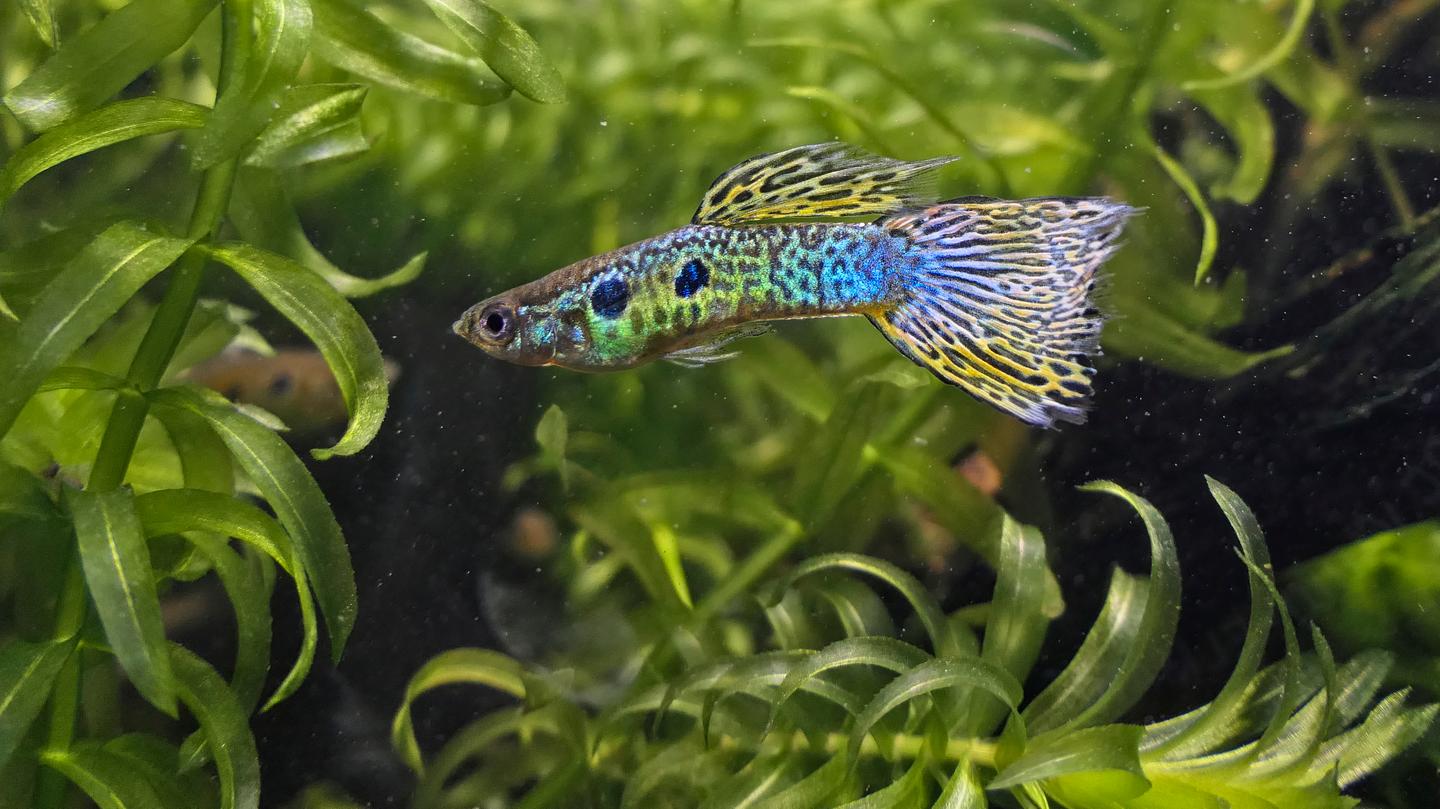
Guppy Care Guide: Poecilia reticulata
Guppies are social livebearers suited to a prepared beginner, not a fish-per-litre formula. Use a mature filtered aquarium, tested neutral-to-alkaline mineral-bearing water, deliberate sex and population planning, open swimming room, cover and a separation option.
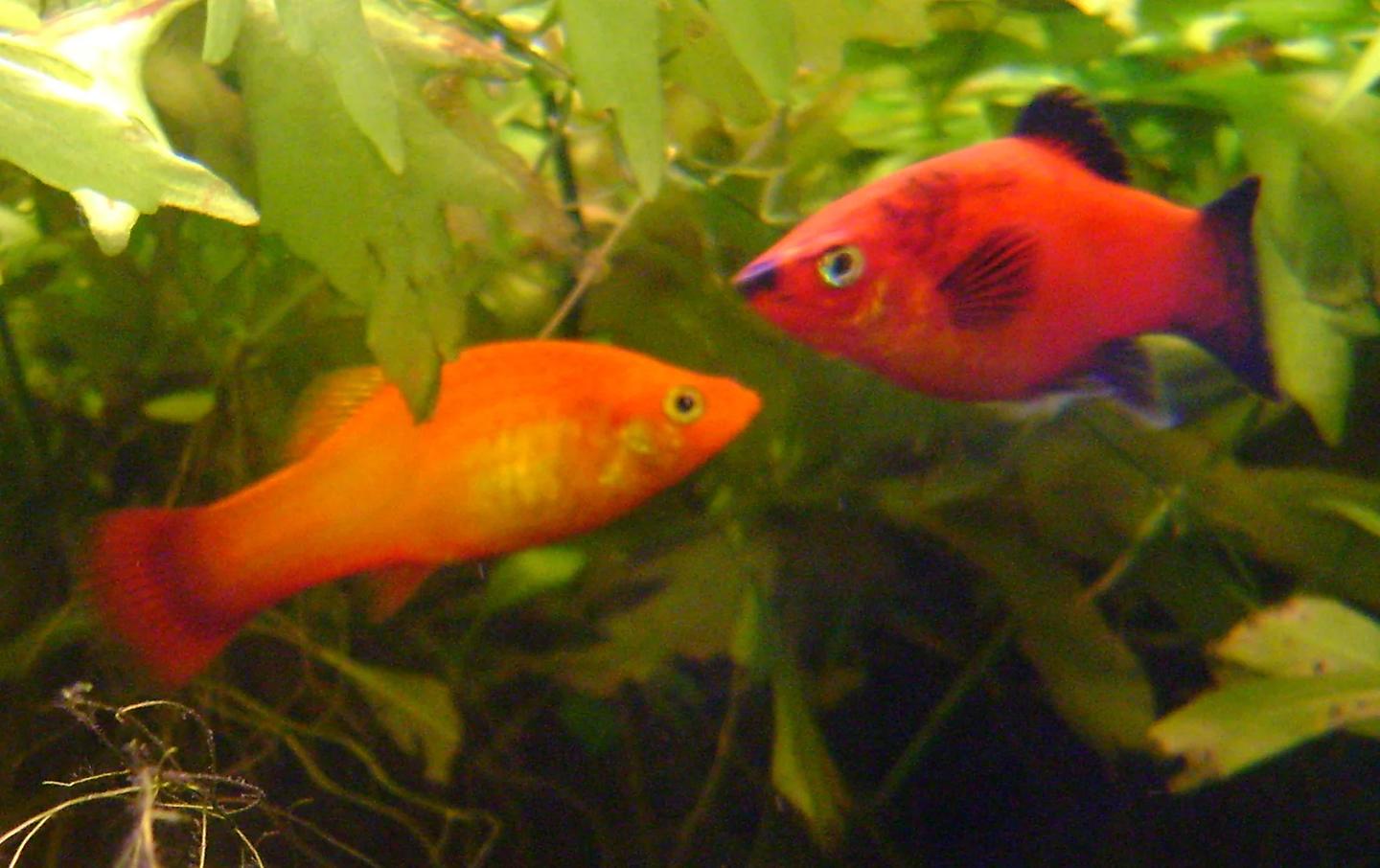
Platy Fish Care: Tank Size, Temperature & Types
Platy is a trade name used for Xiphophorus maculatus, X. variatus and domestic forms. Start with at least three in a mature aquarium of at least 45 litres, verify the exact fish and measured water, and plan extra capacity before mixing sexes.
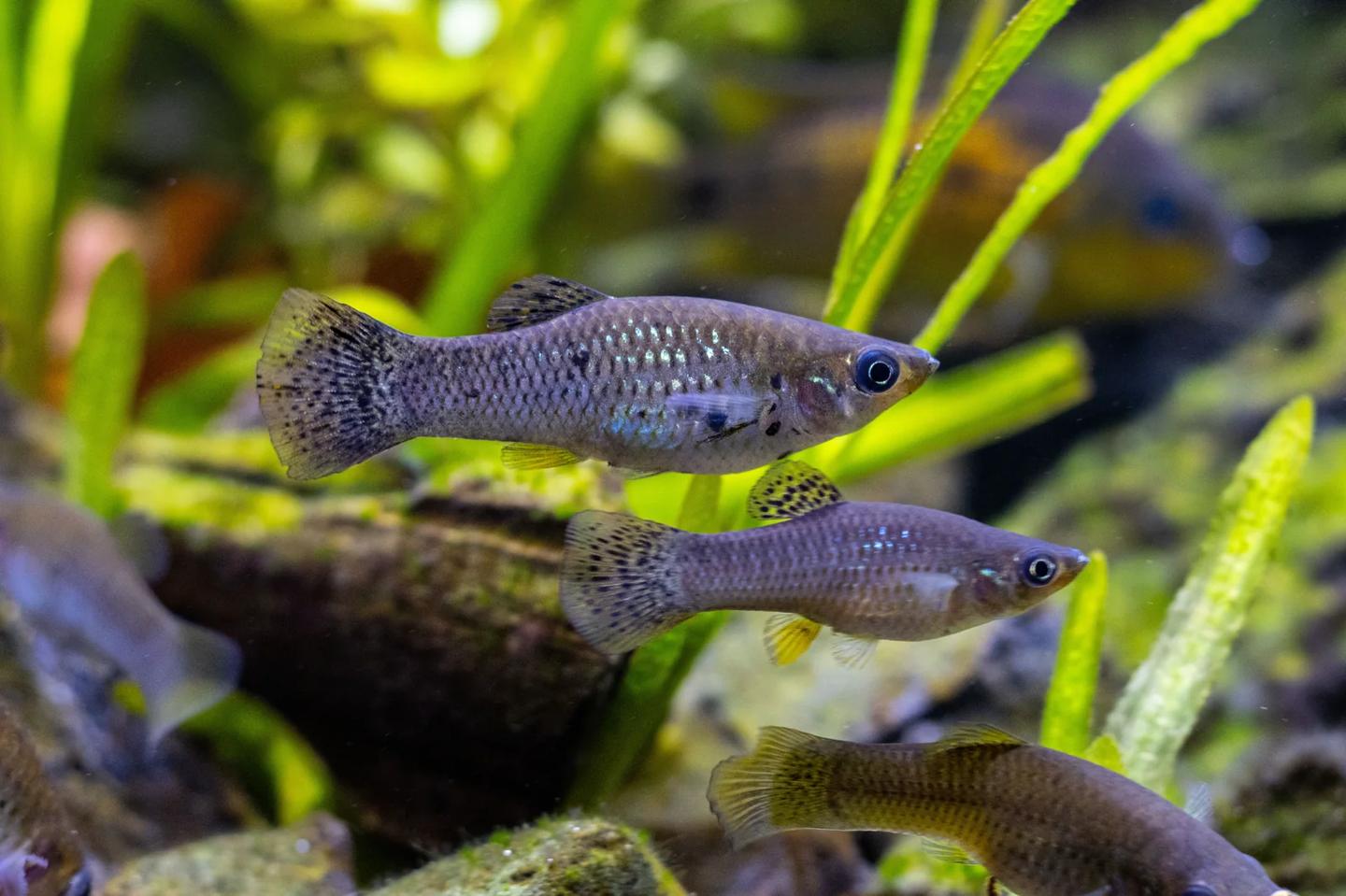
Molly Fish Care: Tank Size, Temperature & Types
Mollies are social livebearers sold under a broad trade name. Identify the species or domestic form first; plan at least 45 litres for a small group of smaller mollies or 80 litres for sailfins, then verify adult size, water, sex ratio and the complete community.