Easy
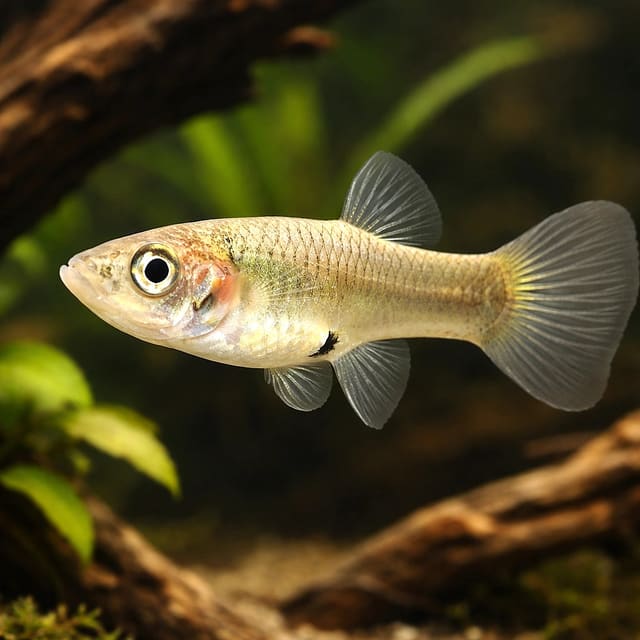
Female Endler Guppy (Poecilia wingei)
20–28°C · pH 7–8
£5.99

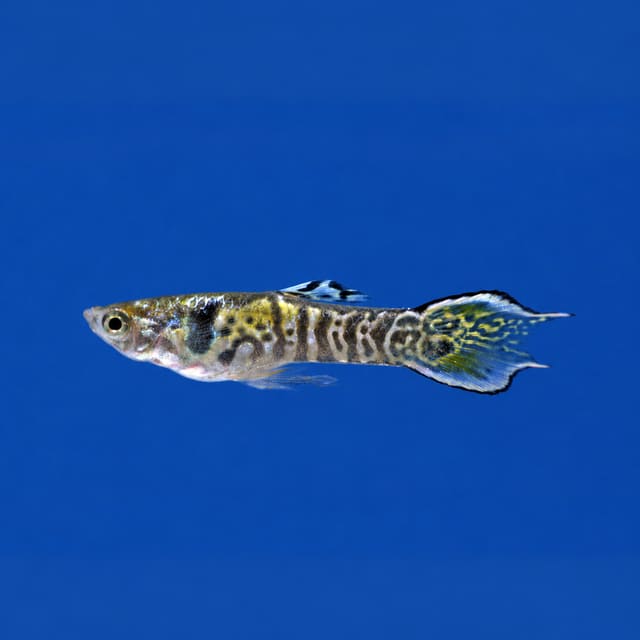
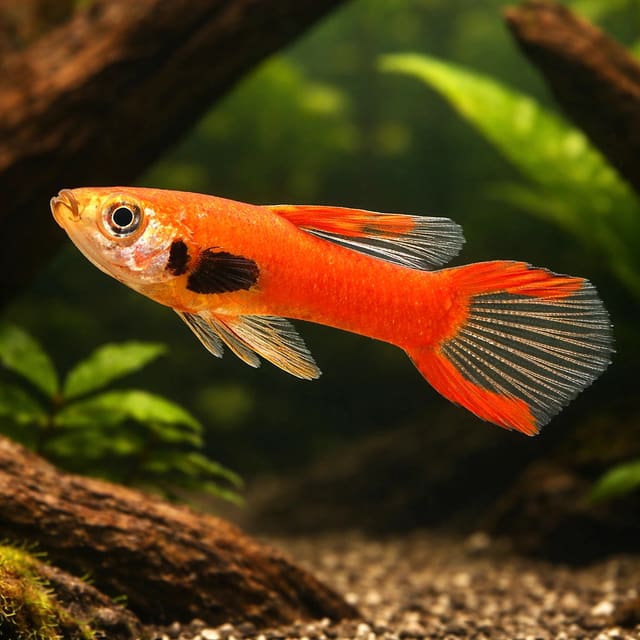
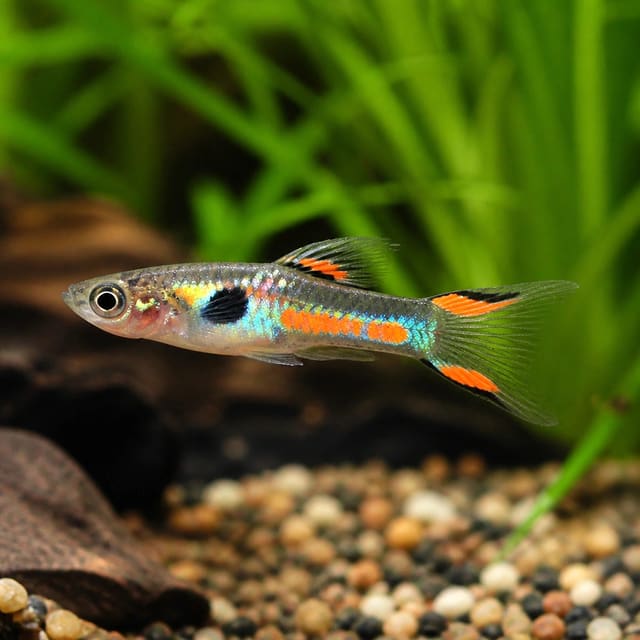
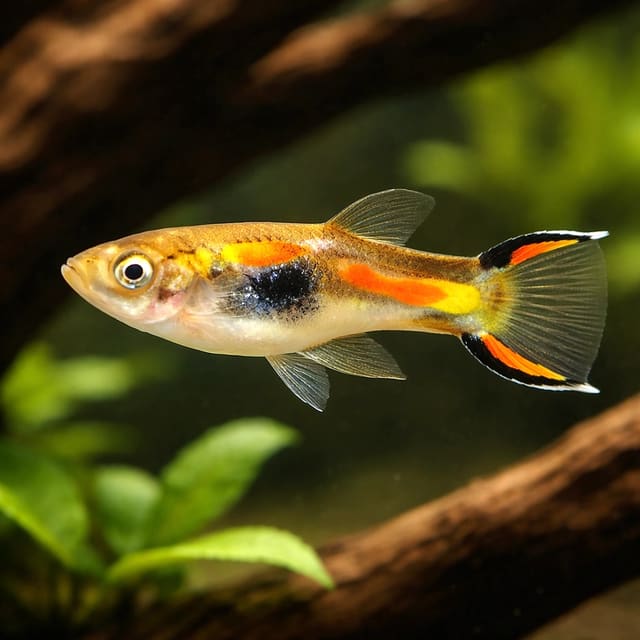
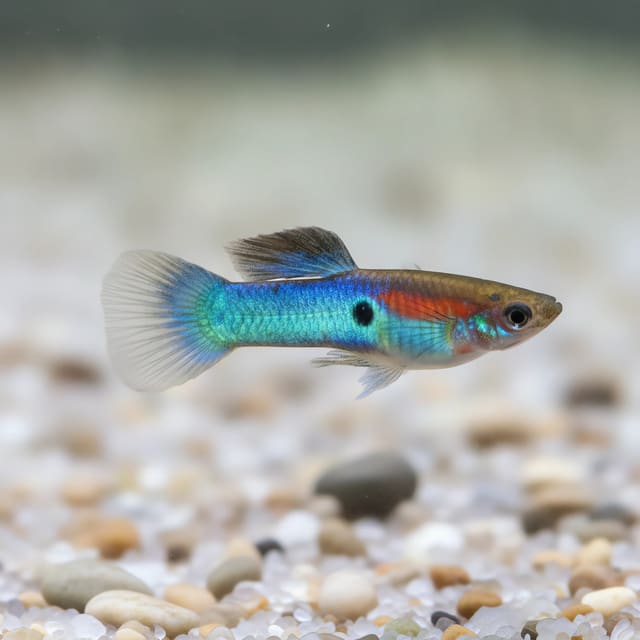
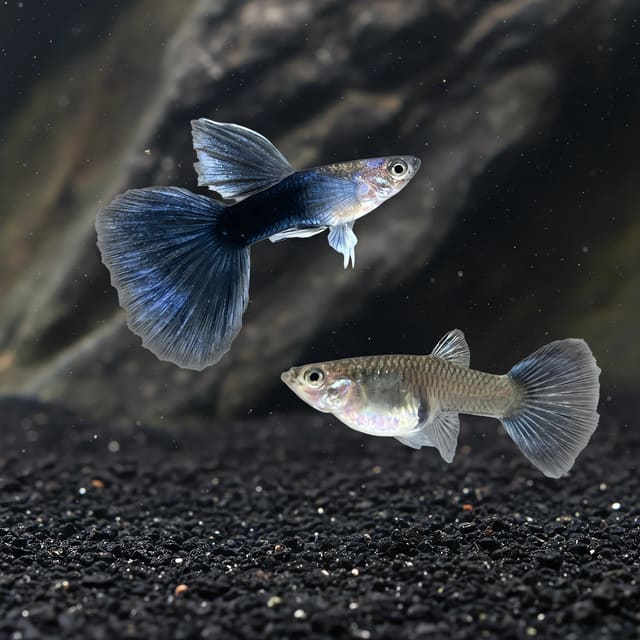
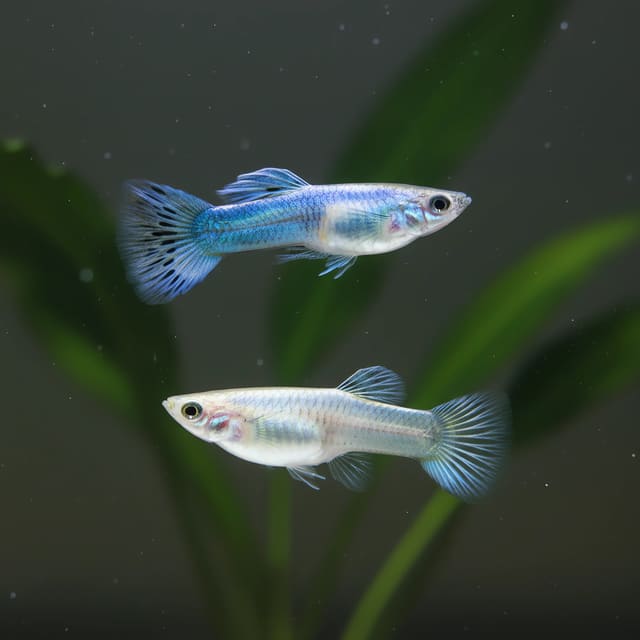
The Black Fire Endler (Poecilia wingei) is a tiny livebearer about 2.5 cm long; males are dark with fiery orange-red markings, females plain silver-olive. Sold as one unsexed fish per quantity (about 1.5–2 cm) for a mature planted aquarium at 24–28°C, pH 7.0–8.0 and 15–18 dGH.
Adult size is the maximum length this species reaches at full maturity (scientific sources). The livestock you receive will be younger and smaller. Product-photo provenance and any image-specific limitations are stated on the listing.
Poecilia wingei
Shoaling fish: kept in a group they feel safer, stay calmer and show their best colour.
The Black Fire Endler (Poecilia wingei) is a tiny livebearer about 2.5 cm long; males are dark with fiery orange-red markings, females plain silver-olive. Sold as one unsexed fish per quantity (about 1.5–2 cm) for a mature planted aquarium at 24–28°C, pH 7.0–8.0 and 15–18 dGH.
Adult size is the maximum length this species reaches at full maturity (scientific sources). The livestock you receive will be younger and smaller. Product-photo provenance and any image-specific limitations are stated on the listing.
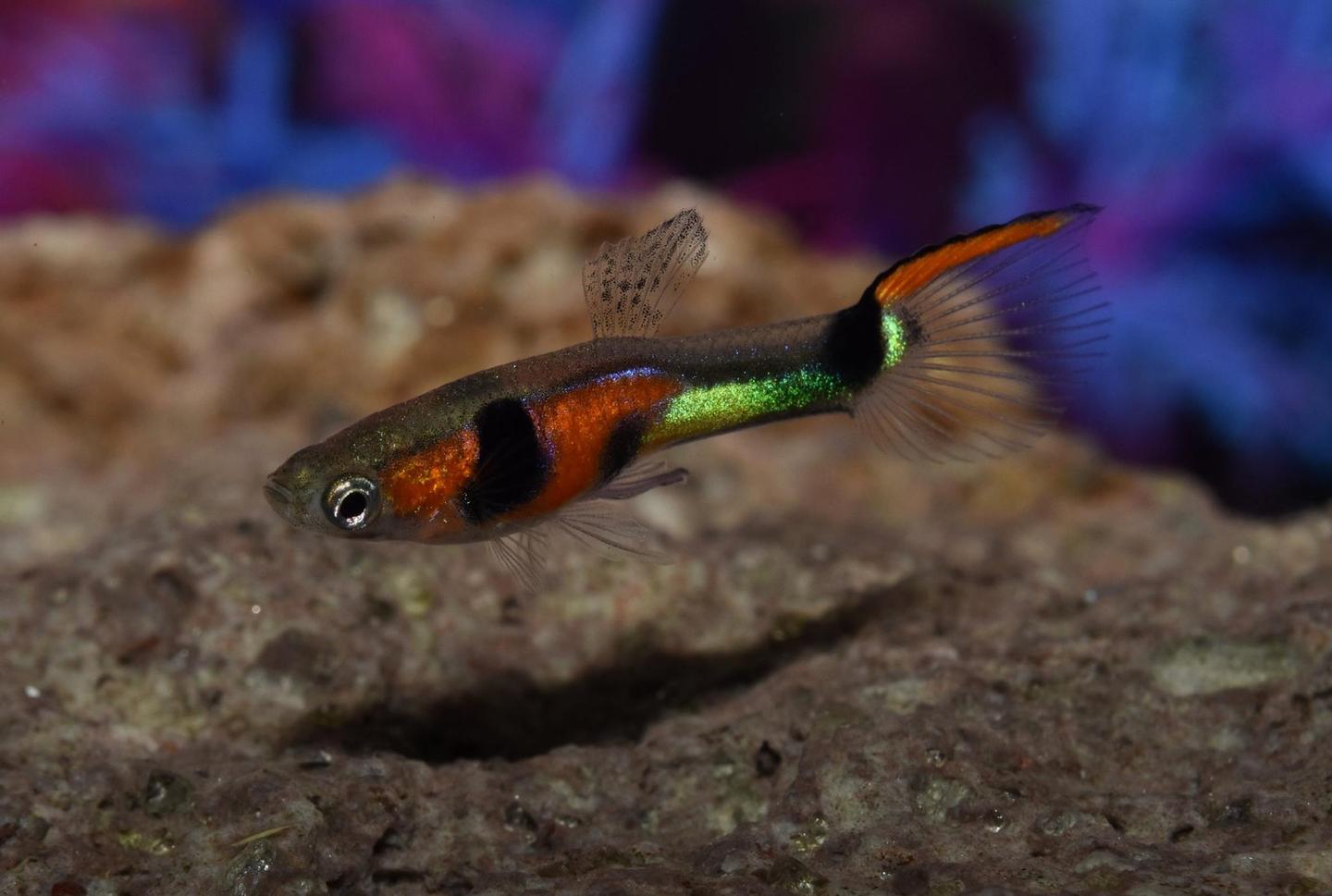
Endler's livebearer is a small, social, rapidly reproducing Venezuelan fish. Start with a mature filtered aquarium, a deliberate sex and population plan, stable tested medium-hard water, open swimming room and cover. Our conservative house screen is an aquarium at least 60 cm long and a group of five or more where capacity allows.
Maintain these water conditions for optimal health and vibrant colors
The Endler (Poecilia wingei) is a small livebearer from the coastal lagoons of north-eastern Venezuela, closely related to the guppy. The Black Fire is an aquarium-bred colour form: males are dark with fiery orange-red markings and flashes of iridescent colour. Females are plain silver-olive and a little larger.
This listing sells single, unsexed fish: the strain is not sorted by sex, so a fish may be a colourful male or a plain female.
| Scientific name | Poecilia wingei (Black Fire form) |
|---|---|
| Family | Poeciliidae (livebearers) |
| Origin of the species | Coastal lagoons of north-eastern Venezuela |
| Adult size | About 2.5 cm |
| Temperature | 24–28°C |
| pH | 7.0–8.0 |
| Hardness | 15–18 dGH |
| Aquarium | About 41 litres or more |
| Sold as | One unsexed fish per quantity, about 1.5–2 cm |
One quantity is one live Black Fire Endler of about 1.5–2 cm, unsexed. Set the quantity to the number of fish you want; Endlers are happiest in a small group. Photos show males — females are plain silver-olive.
A mature, planted aquarium of about 41 litres or more suits a small group, with gentle flow and fine-leaved or floating plants. Endlers prefer harder, slightly alkaline water: 24–28°C, pH 7.0–8.0 and 15–18 dGH, the overlap of Seriously Fish and OATA guidance. Keep nitrate low with regular partial water changes.
Feed a fine flake or micro-pellet once or twice a day, with small frozen or live foods such as Daphnia and baby brine shrimp a few times a week.
Peaceful and best with other small, calm fish that like similar water — small rasboras, Corydoras, Otocinclus and shrimp. Avoid fin-nippers and fish large enough to eat them. Endlers readily cross with guppies, so keep them apart if strain purity matters.
Tropical Fish Co’s delivery and Live Arrival Guarantee policy explains the packing and arrival procedure. Livestock is hand-bagged in pure oxygen and placed in an insulated poly box, with a heat pack when the weather calls for it. Someone must be at the address to receive the parcel because live animals cannot be left unattended.
If a Live Arrival Guarantee claim is required, contact us on the same day with the order number and the continuous unboxing video. Before the parcel arrives, confirm that ammonia and nitrite read zero and that the aquarium matches the water values on this page.
No. One quantity is one unsexed fish; the strain is not sorted by sex, so you may receive males or females.
About 2.5 cm; females are a little larger than males.
24–28°C, pH 7.0–8.0 and 15–18 dGH in a mature, planted aquarium.
Yes, Endlers and guppies interbreed readily; keep them apart if you want to keep the strain pure.
No reviews for this item yet. Bought one? Honest reviews only, good or bad.
What customers say about ordering from us
I have a small group of long finned mountain minnows. So was delighted to be able to order ten of this variety to increase the genetics in my tank . The ones I recieved are healthy but it’s to early to give a verdict on wether they are of a long finned type since they are small currently.
Gordon Walker · 23 Sept 2026
100% success travel and "installation". Pleased with quality of purchase. The Siamese fighter a bit "shy" so have not yet seen him at his best yet but looking good. Happy customer. GG
George E Garratt · 21 Sept 2026
Reviews of our shop, collected by Judge.me, an independent third-party review collector. Newest first.