Easy
Female Endler Guppy (Poecilia wingei)
20–28°C · pH 7–8
£6.29
Poecilia endler supercolor (Poecilia wingei) is a small Poeciliidae livebearer from Venezuela’s Campoma and Buena Vista lagoon systems that reaches 3 cm standard length. It suits prepared beginners who can keep five or more in a mature 60 cm aquarium; the overlap between Seriously Fish and OATA is 24–28°C, pH 7.0–8.0 and 15–18 dGH. Sold individually at a dispatch size of 1.5–2 cm.
Adult size is the maximum length this species reaches at full maturity (scientific sources). The livestock you receive will be younger and smaller. Product-photo provenance and any image-specific limitations are stated on the listing.
Poecilia wingei
Shoaling fish: kept in a group they feel safer, stay calmer and show their best colour.
Minimum of 2 per order.
Poecilia endler supercolor (Poecilia wingei) is a small Poeciliidae livebearer from Venezuela’s Campoma and Buena Vista lagoon systems that reaches 3 cm standard length. It suits prepared beginners who can keep five or more in a mature 60 cm aquarium; the overlap between Seriously Fish and OATA is 24–28°C, pH 7.0–8.0 and 15–18 dGH. Sold individually at a dispatch size of 1.5–2 cm.
Adult size is the maximum length this species reaches at full maturity (scientific sources). The livestock you receive will be younger and smaller. Product-photo provenance and any image-specific limitations are stated on the listing.
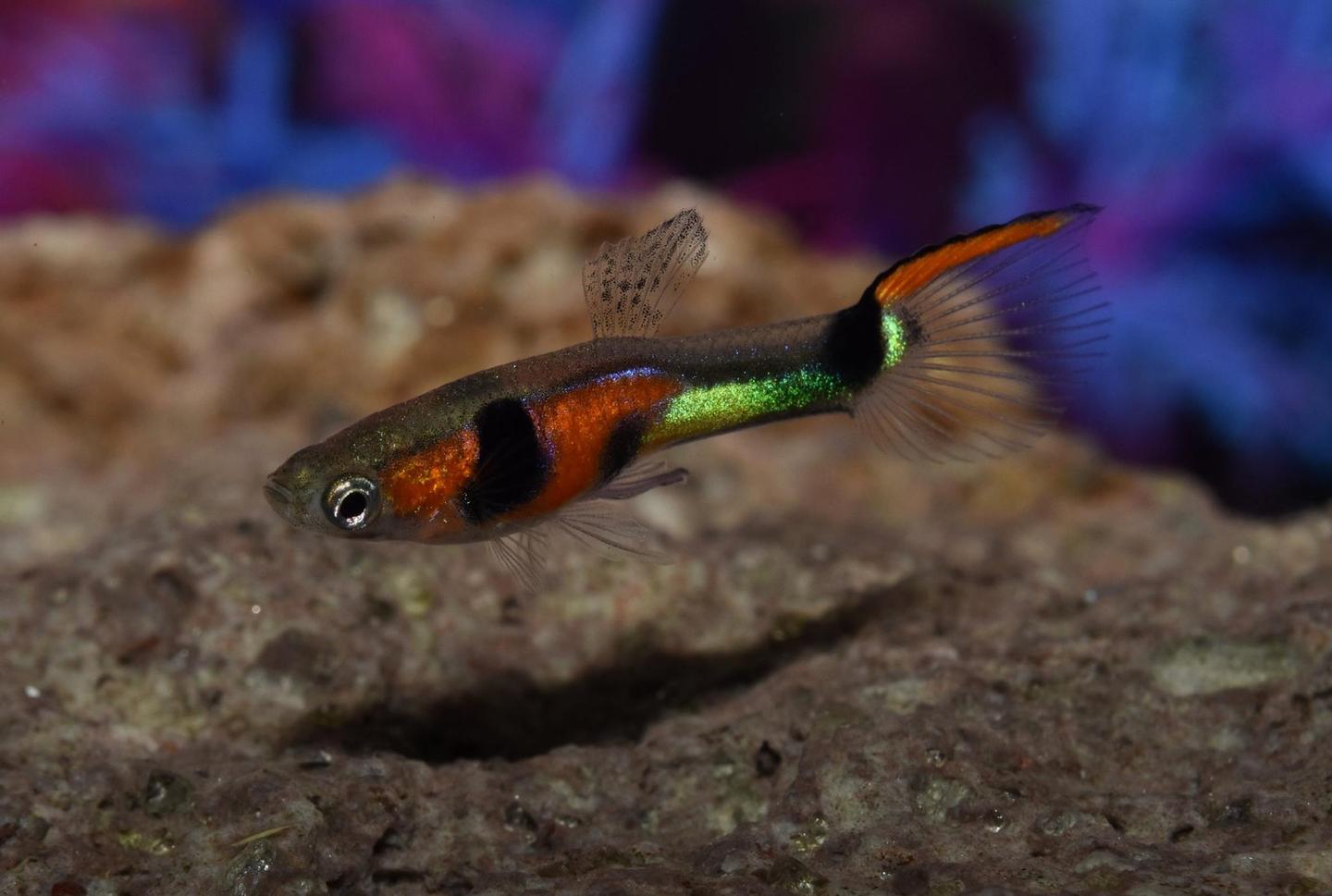
Endler's livebearer is a small, social, rapidly reproducing Venezuelan fish. Start with a mature filtered aquarium, a deliberate sex and population plan, stable tested medium-hard water, open swimming room and cover. Our conservative house screen is an aquarium at least 60 cm long and a group of five or more where capacity allows.
Maintain these water conditions for optimal health and vibrant colors
The supercolour Endler (Poecilia wingei) is a small freshwater livebearer in the Poeciliidae family from Venezuela’s Campoma and Buena Vista lagoon systems. Plan for an adult size of 3 cm standard length, measured to the base of the tail. This active social fish can suit a prepared beginner who will provide mature filtration, tested water, enough swimming length and a deliberate plan for group composition and reproduction.
FishBase places the species in Poeciliidae and lists its wild distribution in the Campoma and Buena Vista lagoons. Eschmeyer’s Catalog of Fishes treats Poecilia wingei as the current valid name. “Poecilia endler supercolor” is the trade presentation for this colourful Endler; colour and a trade label should not be used as proof of a particular locality line or pedigree.
Use a mature aquarium holding at least 45 litres and measuring at least 60 cm long for the adult group. Our house recommendation is five or more fish where the aquarium’s capacity, sex plan and other inhabitants allow. The volume is a starting screen rather than permission to add fish until a numerical limit is reached: usable swimming length, filter capacity, behaviour and the possibility of fry all matter.
Keep the aquarium at 24–28°C, pH 7.0–8.0 and 15–18 dGH. These values are the overlap between the Seriously Fish species guidance of 24–30°C, pH 7.0–8.5 and 15–35 dGH and OATA’s guppy-and-molly group guidance of 20–28°C, pH 7.0–8.0 and 8–18 dGH. Maintain zero detectable ammonia and nitrite, and make any change in temperature or chemistry gradually.
The store care assessment is easy, but that means approachable for a prepared keeper rather than maintenance-free. A beginner should be ready to test water weekly, feed appropriately small foods, observe social behaviour and act before reproduction creates crowding. The complete Endler Guppy Care Guide explains the store’s conservative planning approach in more depth.
This animal is sold individually at a dispatch size of 1.5–2 cm. Dispatch size describes the fish when supplied; it is not an adult-size claim. Plan the permanent aquarium around the 3 cm standard-length figure and around the needs of the complete social group, not around the small body arriving on the day.
Sex is guaranteed only when the selected option explicitly states male or female. This Poecilia endler supercolor listing has no sex-guaranteed option. Do not use the dispatch measurement, colour intensity or gallery appearance to predict the sex of the fish supplied.
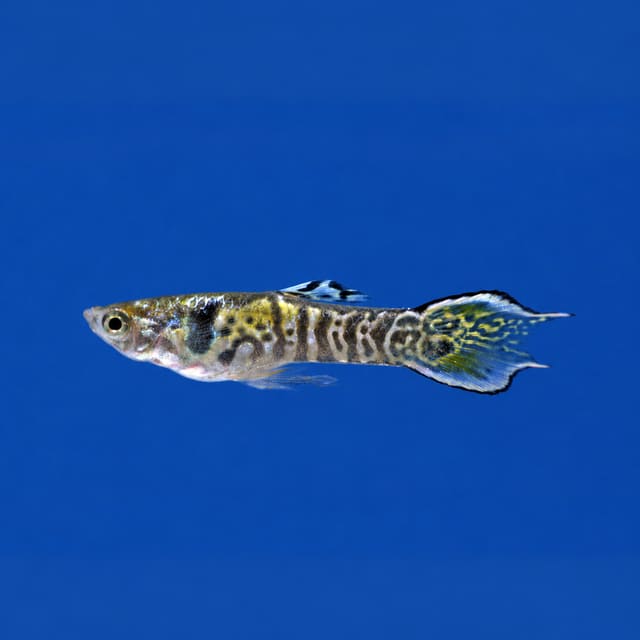
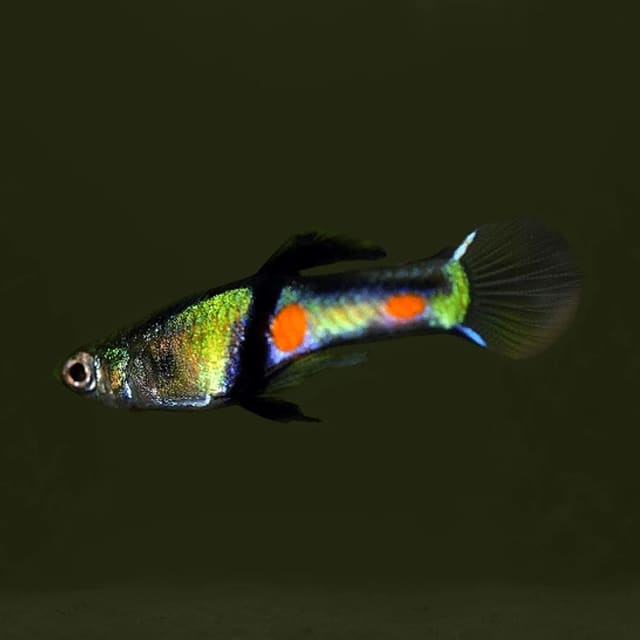
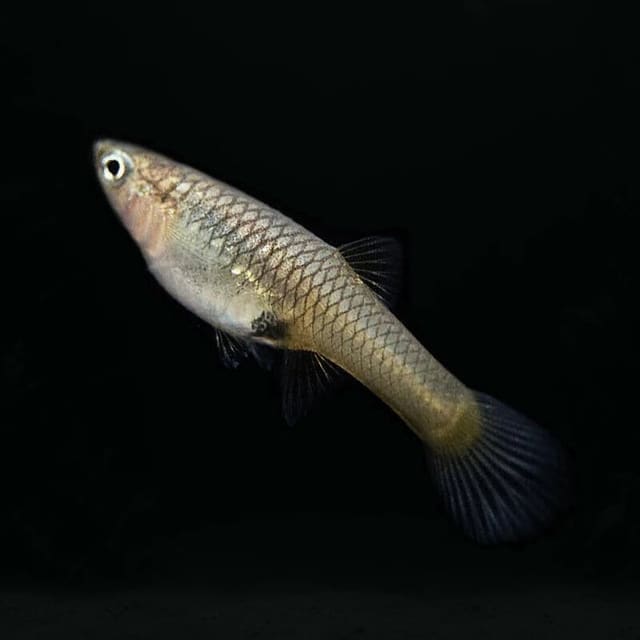
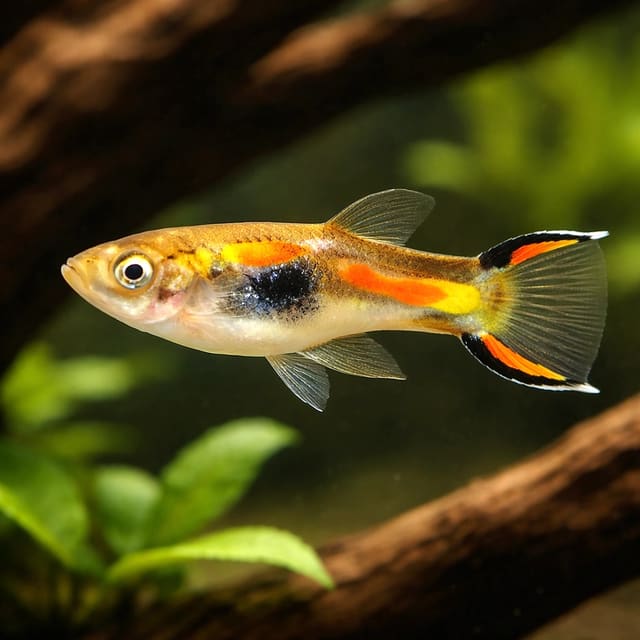
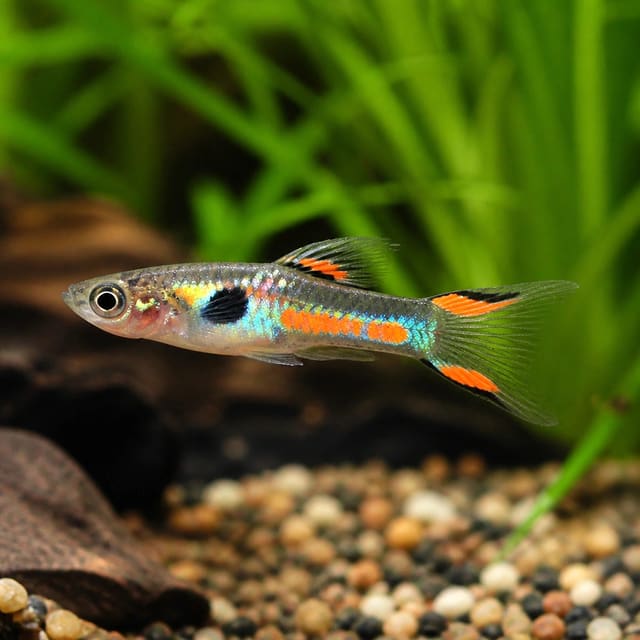
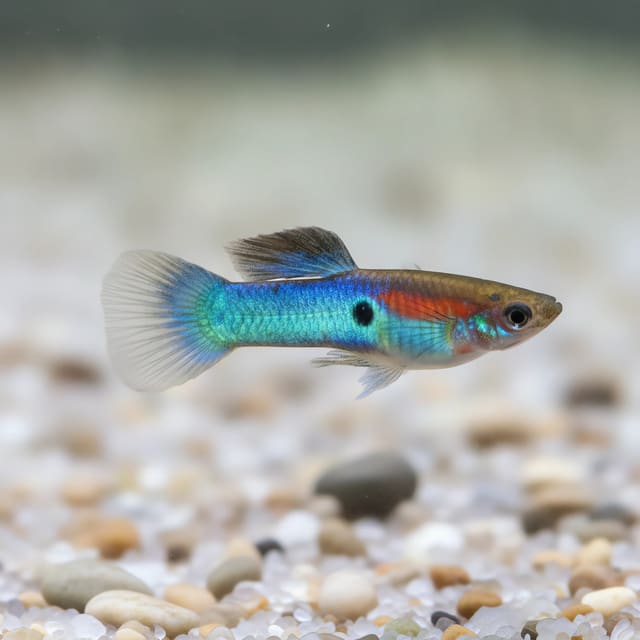
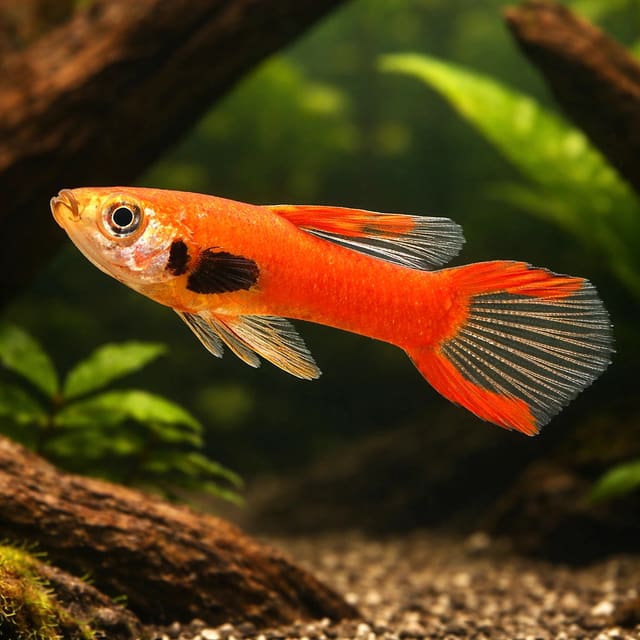
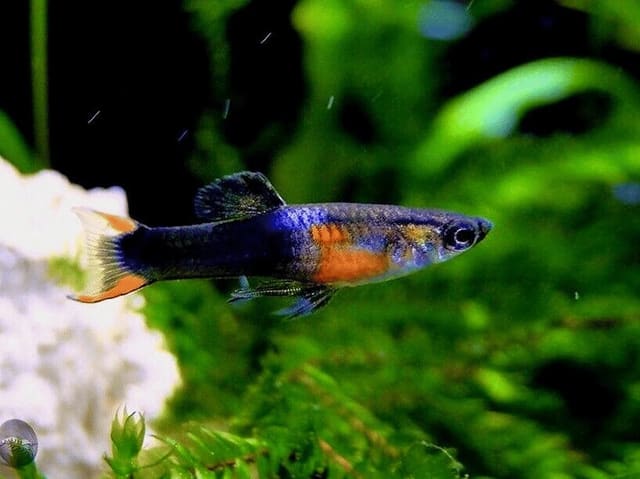
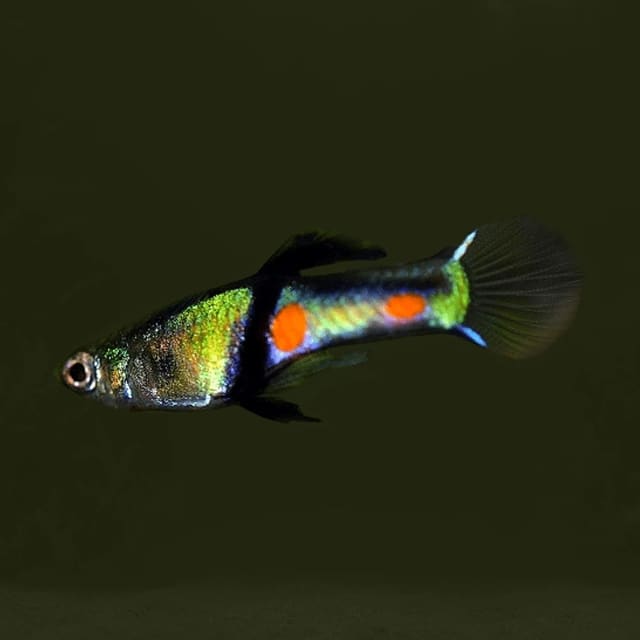
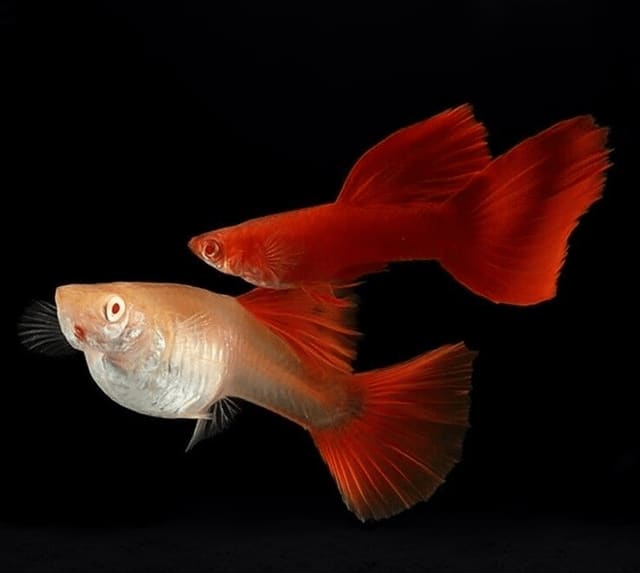
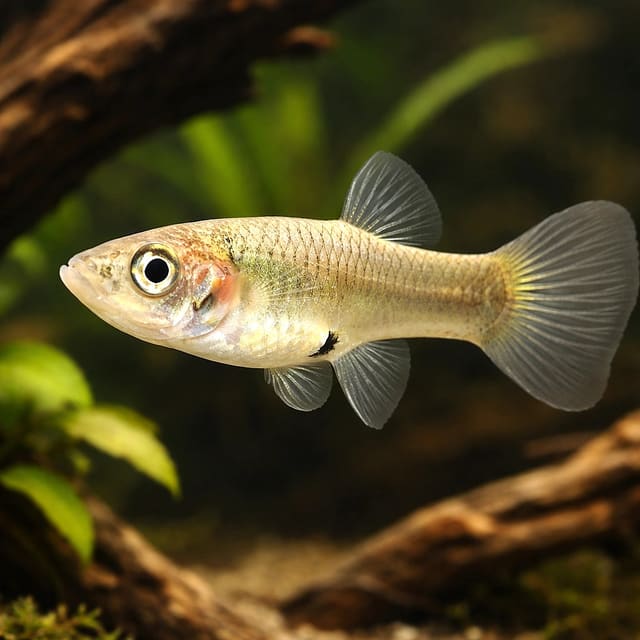
The gallery images are representative of this type of animal rather than photographs of the exact animal supplied, so colours can look slightly different from the live animal. The pictured orange, blue-green and black pattern illustrates the supercolour appearance, but each live fish may differ in the placement and intensity of its markings.
| Suits | Not suited to |
|---|---|
| A mature, filtered aquarium at least 60 cm long | A bowl, vase or uncycled aquarium |
| A planned group of five or more where capacity allows | A lone fish or an unplanned pair |
| Stable water at 24–28°C, pH 7.0–8.0 and 15–18 dGH | Rapid changes in temperature or chemistry |
| Small peaceful companions that cannot eat or nip the fish | Predators, fin-nippers or a general community chosen without screening |
| A keeper with a sex, fry and spare-capacity plan | Mixed sexes where additional fish cannot be housed responsibly |
One purchase supplies one fish, so compare the intended total group with the aquarium’s present inhabitants before ordering. Count existing fish, allow for each companion species’ own social requirements and reserve room for changes in behaviour. If the aquarium already contains Endlers, check whether the new total supports the five-or-more house plan without exceeding filtration or swimming-space capacity.
If appearance or a guaranteed sex is central to the plan, treat those as separate purchasing decisions rather than assumptions about this offer. You can browse the Endler guppy collection to compare clearly labelled offers while keeping each product’s sold unit and identity separate.
Plan for 3 cm standard length and provide an adult-group aquarium of at least 45 litres and at least 60 cm in length. The length creates continuous swimming room and more opportunities for a pursued fish to move away, while the volume gives greater stability than a very small container. Neither measurement replaces a mature filter, water tests or a population plan.
The original description of Poecilia wingei includes females up to 30.4 mm standard length in a separate stream sample, which is rounded to 3 cm for conservative planning. FishBase lists 2.0 cm standard length, while Seriously Fish gives 2.5 cm standard length. The 3 cm figure is used throughout this page so the space plan is based on the largest of these published measurements. Standard length excludes the tail, so do not compare it directly with an informal nose-to-tail estimate.
Seriously Fish describes a 45 × 30 × 30 cm aquarium of about 41 litres and says the fish should not be kept in anything smaller than that suggested footprint. OATA recommends at least 45 litres for a small group of the smaller guppy species. Tropical Fish Co adds a 60 cm minimum-length screen for an adult group, giving the fish more horizontal room and providing a conservative basis for social management.
A 45-litre aquarium does not create a fixed entitlement to a particular number of fish. Adult size, body shape, feeding competition, courtship, fry, oxygen demand, filter maturity and the needs of other inhabitants alter the result. Start with the planned group, observe whether every individual feeds and moves normally, and treat persistent hiding, cornering or fin damage as a reason to intervene rather than add more fish.
Keep the water at 24–28°C, pH 7.0–8.0 and 15–18 dGH, with zero detectable ammonia and nitrite. The temperature, pH and hardness values sit within both the Seriously Fish figures for Poecilia wingei and OATA’s combined guppy-and-molly values. This shared range gives a practical target without extending beyond either set of guidance.
Test the aquarium and tap water rather than judging chemistry by postcode, clarity or fish behaviour alone. The aquarium water chemistry guide explains what temperature, pH, GH, KH, ammonia, nitrite and nitrate measurements mean. You can then use the water matcher to compare measured aquarium values with the target range.
Where a reading falls outside the range, establish whether the result is stable and repeat the test before changing anything. Rapid correction can create a second problem, particularly when temperature or pH moves suddenly. Match replacement water carefully during routine maintenance and use tap-water conditioner before treated water enters the aquarium.
Use a thermostatically controlled aquarium heater where room conditions cannot hold 24–28°C throughout the year, and verify the result with an independent thermometer. Check the actual water temperature rather than relying only on the heater dial. A reading near either end of the range is acceptable when stable; there is no benefit in repeatedly chasing the midpoint.
Ammonia and nitrite should remain at zero. OATA also recommends keeping nitrate no more than 20 mg/l above the normal tap-water level. If ammonia or nitrite appears, reduce the immediate waste burden with an appropriate partial water change using conditioned, temperature-matched water, check the filter for interrupted flow and pause further livestock additions while biological filtration recovers.
Do not use pH-adjusting chemicals, mineral products or a tap-and-purified-water recipe without measuring the effect on pH, GH and KH. The aim is stable medium-hard to hard water inside the stated range, reached gradually and maintained consistently.
Use a fully matured biological filter before the fish enters the aquarium. The RSPCA explains that biological filtration supports bacteria that convert toxic ammonia to nitrite and then to safer nitrate. Clear water does not demonstrate that this process is working, so confirm zero ammonia and nitrite with tests.
If this is your first aquarium, follow the first tropical aquarium guide and complete the maturation process before livestock arrives. Add fish gradually because every increase in livestock and feeding requires the bacterial population to process more waste.
Seriously Fish describes Endlers as active and says water flow is not a problem for them. Provide useful surface movement and circulation, but arrange the outlet so every fish can hold position, feed and rest without constant effort. Protect the intake if a small fish or fry could be trapped against it.
Check filter flow during every maintenance session. When media needs cleaning, rinse filter media in water removed from the aquarium, never under the tap. Do not replace all mature media at once, because removing the established bacterial community can weaken biological filtration.
A planted layout is strongly recommended, including floating plants where they suit the aquarium. Plants and other smooth furnishings can break lines of sight and give a pursued fish somewhere to move out of view. Keep an open route for continuous swimming rather than filling the entire aquarium with dense growth.
Plants complement filtration but do not replace it. A heavily planted aquarium can still accumulate ammonia, nitrite or excess food, and dense cover can conceal persistent bullying. Arrange the layout so the fish remain visible enough for daily checks.
Feed an appropriately small complete flake or granule as the nutritional base, with some vegetation in the diet and suitably small live or frozen variety. Seriously Fish describes Poecilia wingei as an omnivore that feeds on zoobenthos and detritus in nature and says vegetation should form part of its aquarium diet. Particle size matters because a food that repeatedly has to be spat out is not a practical meal for a fish of this size.
OATA recommends one daily portion that the group can finish within a few minutes. Suitable variety named in its guppy-and-molly guidance includes daphnia, small bloodworm and tubifex, while Endlers may need smaller frozen foods such as cyclops. Use these as compatible variety rather than treating one frozen food as a complete diet.
Overfeeding creates uneaten organic matter and more fish waste, increasing the work required from the filter. A fish showing interest in movement near the aquarium does not automatically need another meal. Use body condition, feeding access and the amount left behind to guide adjustments.
Choose complete dry food labelled for small tropical fish and break larger flakes into manageable pieces. Store dry food sealed and dry, and handle frozen food so it is not repeatedly thawed and refrozen. Do not collect live foods from unknown outdoor water, where contaminants or unwanted organisms may be introduced.
Visible algae and naturally occurring material in a mature aquarium can provide foraging opportunities, but they do not form a complete feeding plan. Continue the measured daily portion and maintain water quality rather than adding food simply because the fish remain active.
Change about 25% of the water at least once each week, using conditioned replacement water matched closely for temperature. Test ammonia and nitrite at least weekly and keep both at zero. Check nitrate, pH and temperature at the same time so trends are noticed before they become abrupt changes.
A stable aquarium should not require every component to be cleaned on the same day. Avoid replacing all filter media or deeply disturbing every part of the substrate at once. Preserve the biological filter while removing enough waste to keep water quality within the target.
A settled Endler should swim steadily, breathe regularly, hold its fins normally and take food consistently. RSPCA fish-health guidance identifies changes in swimming, breathing, appetite, colour, body condition, fins and skin as reasons for closer attention. Watch the whole group because one fish may be excluded from food or cover while the others appear normal.
If you see surface gasping, loss of balance, persistent hiding, clamped or damaged fins, spots, wounds, unusual swelling or a sudden appetite change, test ammonia, nitrite, nitrate, pH and temperature first. Check recent maintenance, new livestock, filter flow, heating and social pursuit. Seek veterinary help when signs are severe or persist; a symptom alone should not be used to choose salt, heat or medication.
A study of spinal deformities in one captive Poecilia wingei line found several possible genetic, nutritional, environmental or traumatic contributors. A curved body should therefore prompt careful assessment rather than a diagnosis based on appearance alone, and an affected fish should not be selected for breeding.
Have the mature, filtered aquarium tested and inside the target range before the fish travels. Someone must be present to receive the parcel because live fish cannot be left unattended. Tropical Fish Co hand-bags fish in pure oxygen, uses an insulated poly box and adds a heat pack when weather conditions call for it.
Keep the reporting requirements accessible before the parcel arrives. The current delivery and Live Arrival Guarantee policy explains packing, attendance, acclimatisation and the short unboxing video needed for a claim.
OATA advises checking water quality as livestock is introduced. Confirm that the new fish can swim without being pinned by the filter flow, reach food and move away from other inhabitants. Check ammonia and nitrite after the livestock increase because the biological filter must process the additional waste. If either becomes detectable, carry out an appropriate partial water change with conditioned, temperature-matched water and inspect filter operation.
Look for steady breathing, normal balance and intact fins rather than judging the fish only by colour immediately after travel. Pale or altered colour can have several causes. Test the aquarium and assess the fish’s movement, respiration and social position before drawing a conclusion.
Continue weekly tests and 25% water changes, and note whether the fish consistently feeds. Reassess the group if there is prolonged pursuit, repeated hiding, missed meals or fin damage. Where mixed sexes are present, watch for an increase in population and act before the filter or swimming space becomes overburdened.
Do not add several further animals simply because the first fish appears settled. Increase livestock slowly and repeat the same water, feeding and behaviour checks after each change.
Poecilia wingei is a livebearer, and a mixed-sex group can reproduce readily. Decide in advance whether the aquarium has mature spare capacity, appropriately small food for young fish and a responsible route for long-term housing or rehoming. Fry should not be treated as a surprise maintenance detail because each additional fish increases feeding and filtration demand.
Brood timing and size vary, so build the plan around spare capacity rather than a promised interval or number. A life-history study of Endler’s fish examined ten litters and 122 fry under one laboratory regime. Those observations demonstrate reproductive potential but should not be converted into a countdown for every aquarium.
A mature male has a narrow modified anal fin called a gonopodium, while a mature female has a broader triangular anal fin. Males are often smaller and more conspicuously patterned, but colour, body size or a rounded abdomen alone should not be used to determine sex. Recheck the group as fish develop rather than relying on an early visual impression.
| Group plan | Main management decision |
|---|---|
| Male-only | Avoids new mixed-sex breeding in that aquarium, but pursuit and feeding exclusion still need monitoring |
| Female-only | Avoids new mating within a correctly sexed group, while social competition and sexing errors remain possible |
| Mixed sex | Requires space for courtship, fry and responsible long-term population control |
OATA suggests two females for each male to reduce pressure on females, while the store’s overall recommendation remains five or more fish where capacity allows. A ratio cannot make an undersized aquarium safe or guarantee calm behaviour. Provide swimming length, sight breaks and a mature separation option for persistent pursuit or injury.
Test water and reassess the filter’s capacity immediately. Keep young fish in mature, stable water and use appropriately small complete food. Do not move adults or fry into an uncycled container. Separate sexes only when identification is confident and both groups have suitable mature housing.
Never release fish, fry, aquarium plants, snails or aquarium water outdoors, into a drain, pond or natural waterway. Prevent unmanaged reproduction where possible and arrange responsible permanent care or rehoming for every fish already present.
Choose only small peaceful companions that share 24–28°C, pH 7.0–8.0 and 15–18 dGH, cannot swallow an adult Endler and will not exclude it from food. Compatibility remains conditional on aquarium length, mature filtration, the number required by every social species and the behaviour of the individuals involved.
A companion described as peaceful can still be too large, too fast at feeding or unsuitable for the same water. Check adult size rather than shop size, and include the companion’s future social group in the space calculation.
Seriously Fish names dwarf corydoras, small peaceful rainbowfish such as Iratherina werneri or Pseudomugil species, and peaceful tetras as possible companions. These are conditional examples, not universal matches. The exact species must pass the water, footprint, feeding and behaviour checks before it is combined with an Endler group.
When breeding is the aim, Seriously Fish recommends a species setup. Keeping other fish out of the aquarium reduces predation and mixed-species competition, but the Endler group still needs mature filtration, suitable space and a fry plan.
A morphological and molecular comparison supports Poecilia wingei as a distinct species, while appearance can overlap with related guppies. Keep a documented line apart from common guppies and known hybrids if identity matters. Colour, tail shape and the word “Endler” alone are not a pedigree test.
Watch feeding access, pursuit, hiding and fin condition across the whole group. Seriously Fish describes males as peaceful towards one another but says females may act territorially, while the store guide advises monitoring male courtship and competition. Individual behaviour can therefore change the outcome even when the overall temperament is described as peaceful.
| What you see | What to do |
|---|---|
| Brief display with every fish still feeding | Continue observing and retain open swimming room and sight breaks |
| One fish repeatedly misses food | Distribute food across several points and reassess group pressure |
| Persistent cornering or hiding | Change sight lines and use a mature separation option if pursuit continues |
| Clamped or damaged fins | Test water, identify the aggressor or fin-nipper and separate where necessary |
Do not add more fish automatically in response to aggression. Although a suitable group can distribute social attention, another animal also increases waste, feeding competition and pressure on swimming space. First check whether the aquarium meets the 45-litre and 60 cm screens and whether the group composition is appropriate.
No fish is guaranteed shrimp-safe. Adult Neocaridina or Amano shrimp may coexist in a suitable aquarium, but small shrimp and young can be eaten, and feeding competition can occur. Dense cover can reduce exposure but cannot guarantee survival. Check that the shrimp’s own temperature and mineral requirements overlap before combining them.
Do not use shrimp as a substitute for maintenance. Uneaten food, fish waste and rising nitrate still require controlled feeding, filtration, testing and water changes. If preserving every shrimplet is the goal, a fish-free shrimp aquarium is the clearer plan.
A divider or spare aquarium is useful only when it provides mature filtration, stable temperature and enough space. An uncycled container is not a safe response to pursuit, injury or unexpected fry. Prepare the separation option before introducing a new social group, then use observation at feeding time to decide whether intervention is needed.
Plan for 3 cm standard length. Standard length is measured to the base of the tail, so it is shorter than an informal nose-to-tail measurement. Use the 3 cm figure consistently when planning permanent aquarium space.
Use a mature filtered aquarium of at least 45 litres and at least 60 cm long for an adult group. OATA gives at least 45 litres for a small group of smaller guppies, and Tropical Fish Co adds the 60 cm house screen. Count all inhabitants and allow spare capacity for fry.
Tropical Fish Co’s house recommendation is five or more where aquarium capacity and the sex plan allow. OATA advises at least three guppies. Keep the larger planned group only when every fish can feed, swim and move away from pursuit without overloading the filter.
It can suit a prepared beginner and carries the store’s easy care assessment. It still needs a mature filtered aquarium, weekly water tests, stable medium-hard water, appropriately small food and a plan for social behaviour and possible fry.
Feed an appropriately small complete flake or granule with some vegetation, plus compatible live or frozen variety such as daphnia, small bloodworm, tubifex or cyclops. OATA advises one daily portion that the group finishes within a few minutes.
Keep it at 24–28°C, pH 7.0–8.0 and 15–18 dGH. This is the overlap between the Seriously Fish values for the species and OATA’s guppy-and-molly guidance. Maintain zero detectable ammonia and nitrite.
Seriously Fish describes males as peaceful towards one another but says females may be territorial. The main fin risk runs the other way: OATA advises avoiding fin-nipping species such as barbs. Monitor prolonged pursuit, feeding access and fin condition.
Seriously Fish names dwarf corydoras, small peaceful rainbowfish such as Iratherina werneri or Pseudomugil species, and peaceful tetras as possibilities when water and space needs overlap. Avoid common guppies where line identity matters. Adult shrimp may coexist, but small shrimp and young can be eaten.
Start a short unboxing video before opening the parcel and show the sealed parcel, the continuous opening and the fish still in the bag. The fish is hand-bagged in pure oxygen and placed in an insulated poly box, with a heat pack when weather conditions call for it. Someone must receive the parcel. Float the bag for 20–30 minutes, then release the fish without pouring transport water into the aquarium.
No reviews for this item yet. Bought one? Honest reviews only, good or bad.
What customers say about ordering from us
Easy website plenty of info on fish your buying great to pick a time slot
TRACEY DURRANT · 7 Oct 2026
Got some lovely fish thank you
Kevin Mackie · 7 Oct 2026
Reviews of our shop, collected by Judge.me, an independent third-party review collector. Newest first.