Easy
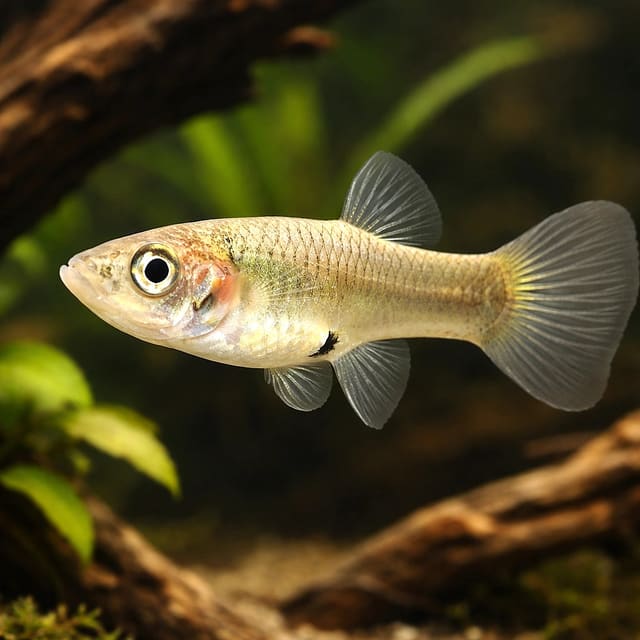
Female Endler Guppy (Poecilia wingei)
20–28°C · pH 7–8
£6.29
Red Endler Guppy (Poecilia endler) is a tiny, active Venezuelan livebearer sold as one unsexed fish per purchase. Plan a mature filtered aquarium at least 60 cm long and a group of five or more under Tropical Fish Co's house policy. OATA's broad guppy guidance is 20–28 °C, pH 7–8 and 8–18 dGH.
Adult size is the maximum length this species reaches at full maturity (scientific sources). The livestock you receive will be younger and smaller. Product-photo provenance and any image-specific limitations are stated on the listing.
Poecilia endler
Shoaling fish: kept in a group they feel safer, stay calmer and show their best colour.
Red Endler Guppy (Poecilia endler) is a tiny, active Venezuelan livebearer sold as one unsexed fish per purchase. Plan a mature filtered aquarium at least 60 cm long and a group of five or more under Tropical Fish Co's house policy. OATA's broad guppy guidance is 20–28 °C, pH 7–8 and 8–18 dGH.
Adult size is the maximum length this species reaches at full maturity (scientific sources). The livestock you receive will be younger and smaller. Product-photo provenance and any image-specific limitations are stated on the listing.
Endler's livebearer is a small, social, rapidly reproducing Venezuelan fish. Start with a mature filtered aquarium, a deliberate sex and population plan, stable tested medium-hard water, open swimming room and cover. Our conservative house screen is an aquarium at least 60 cm long and a group of five or more where capacity allows.
Maintain these water conditions for optimal health and vibrant colors
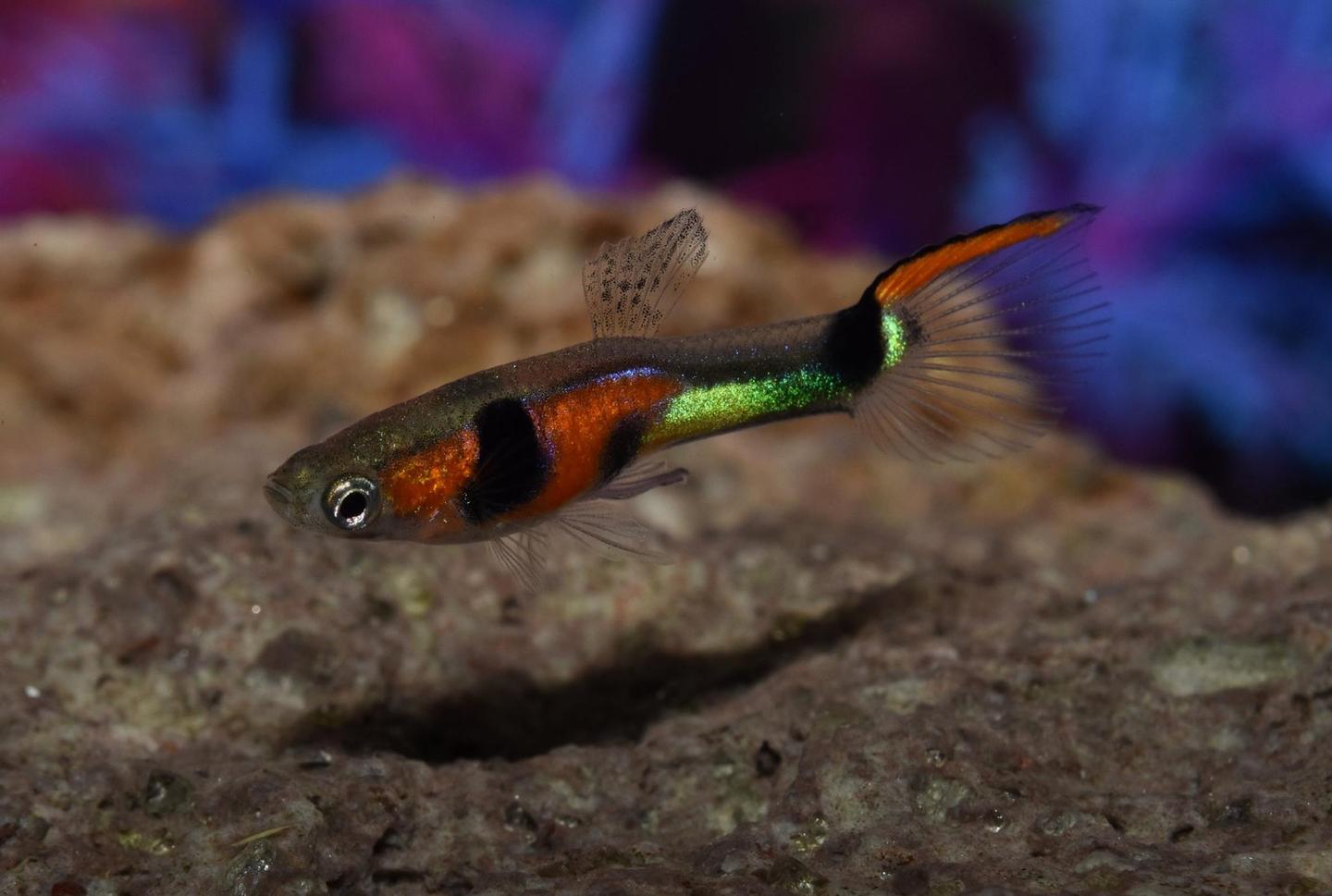
The Red Endler Guppy sold here is a small, quick-moving livebearer from the trade line labelled Poecilia endler. Current taxonomy accepts Poecilia wingei for Endler's livebearer, so you will see both names explained on this page: the product title preserves the established trade identity, while the biological care information follows the accepted species name. The red label describes the ornamental colour form; it does not prove a collection locality, pure lineage or sex.
One purchase supplies one live fish. The exact supplier grade is 1–2 cm at dispatch, which is a supplied juvenile size rather than an adult-size promise. Sex is guaranteed only when the selected option explicitly states male or female. This Red Endler Guppy listing has no sex-guaranteed option. A purchase must not be treated as a male, female, pair or breeding group. If the sex balance matters to your aquarium, plan enough space and a mature separation option in case the fish develops differently from your expectation.
| Suits | Needs careful planning |
|---|---|
| A keeper with a mature filtered tropical aquarium, measured medium-hard water and time to watch social behaviour | An uncycled bowl, a single-fish plan, very soft acidic water or a tank containing predators and persistent fin-nippers |
| A deliberate group and population plan, with open swimming room and cover | Mixed sexes without capacity for fry, or a documented P. wingei line housed with common guppies |
| Small peaceful companions whose adult size, water needs and feeding speed have been checked individually | Buying from colour alone and assuming an exact sex, pedigree or future pattern |
Tropical Fish Co's conservative house screen is a mature aquarium at least 60 cm long and a group of five or more where filtration, measured water, sex planning and the other occupants allow. OATA's broader UK sheet recommends at least 45 litres for a small group of the smaller guppy species and at least three guppies. Those are planning starting points, not a litres-per-fish formula. Usable length, biological filter capacity, oxygen, social pressure and likely reproduction still decide what the aquarium can responsibly support.
For water planning, OATA's broad guidance for guppies and mollies is 20–28 °C, pH 7–8 and 8–18 dGH, with zero detectable ammonia and nitrite. The combined sheet explicitly includes P. wingei, but these values remain group-level UK husbandry guidance rather than experimentally established limits for every Endler. Test the source water and aquarium water, ask about the fish's current holding conditions, and make any change gradually.
The species is social and active. Mature males often show stronger colour and have a narrow modified anal fin called a gonopodium; females usually have a broader triangular anal fin. Colour, body depth, size or a rounded abdomen alone cannot prove sex or pregnancy. An all-male display can avoid new mixed-sex breeding inside the aquarium, but it still needs space, sight breaks and monitoring because courtship-like display and pursuit can occur between individuals.
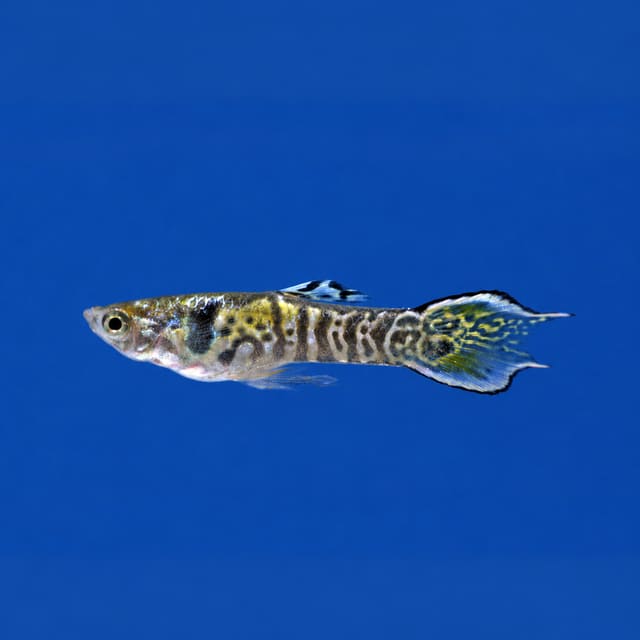
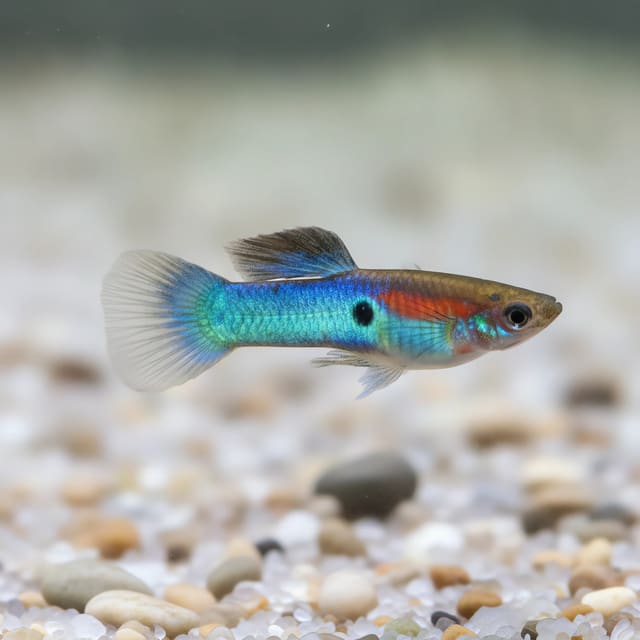
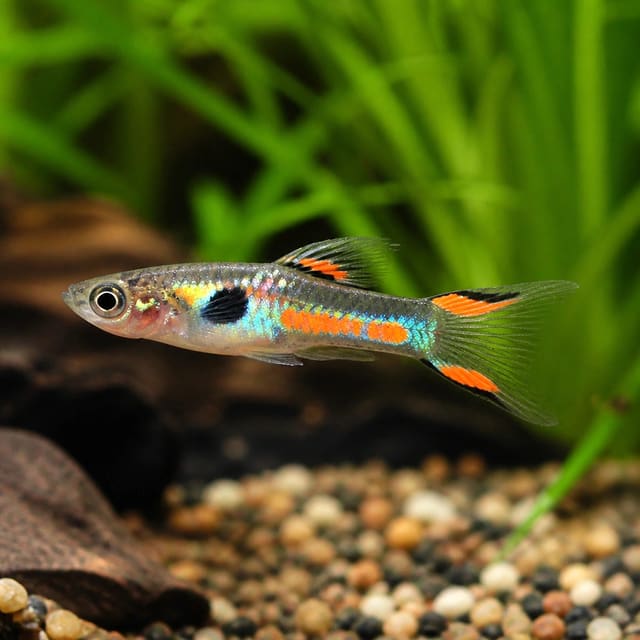
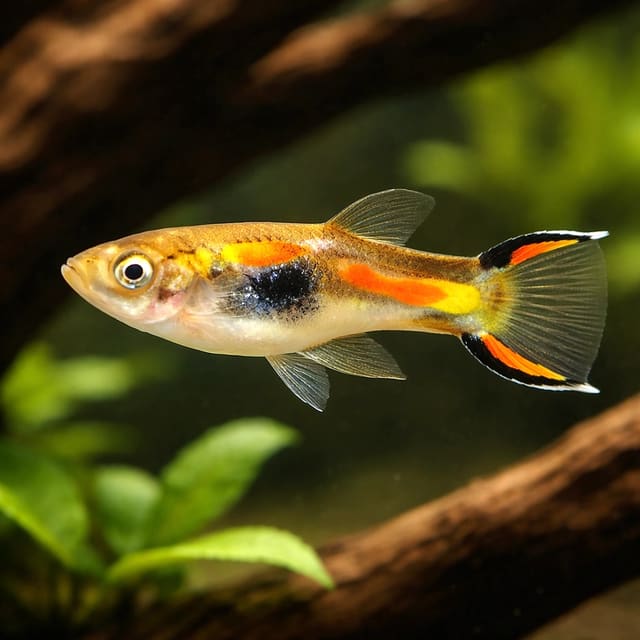
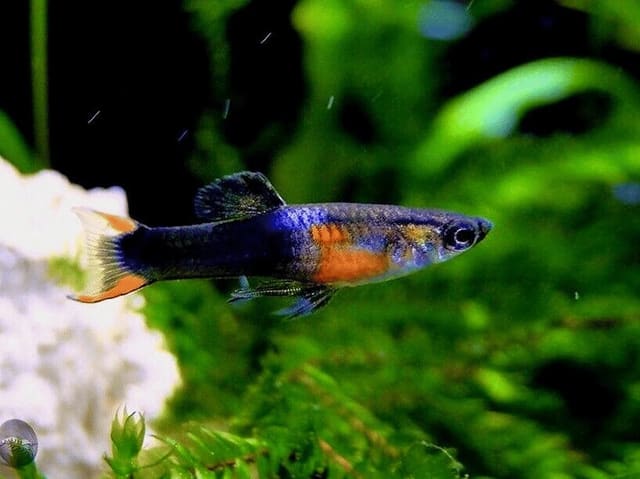
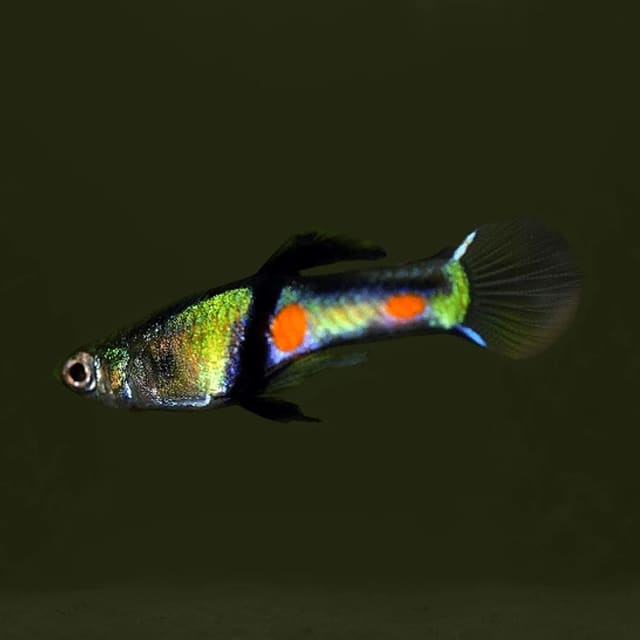
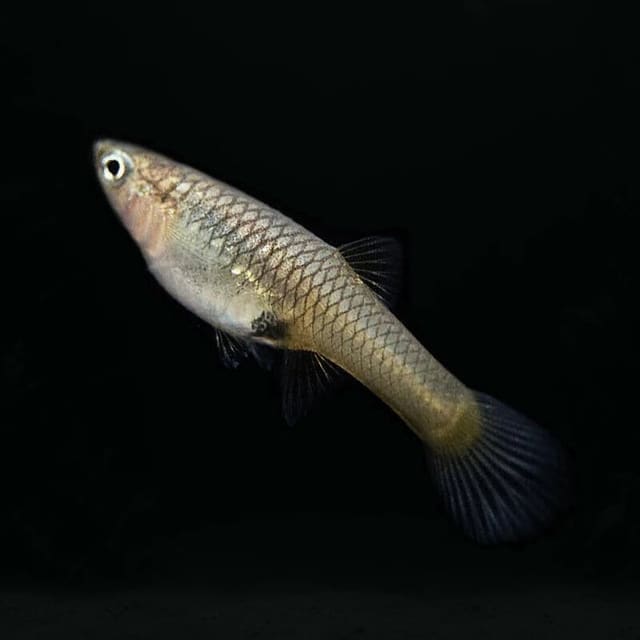
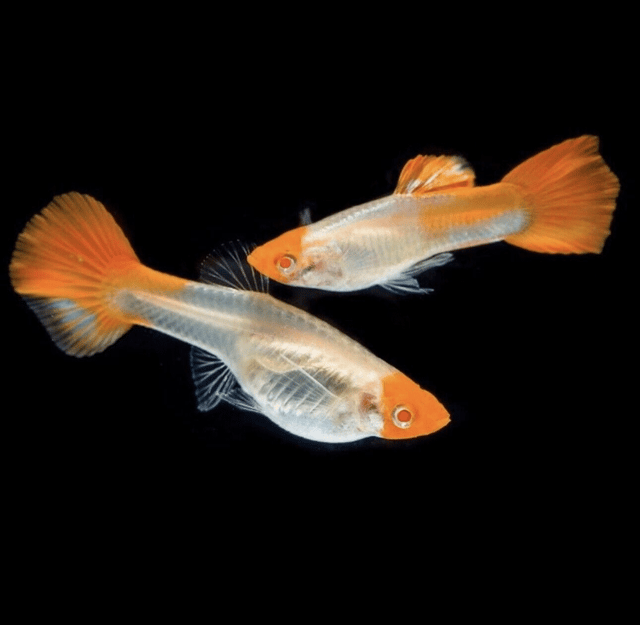
Before ordering, read the full Endler Guppy care guide and compare the plan with the livestock already present. The Endler Guppy collection is the appropriate place to compare other Endler listings without assuming that similarly named fish are interchangeable or compatible. Gallery images have been digitally enhanced to improve image quality. Natural colour, pattern, size and maturity can vary between live animals.
The accepted species name is Poecilia wingei, a member of the family Poeciliidae. FishBase records the species from the Campoma and Buena Vista lagoon systems in Venezuela and lists a 2.0 cm female maximum in standard length. The original description reports another sampled population in which females reached 30.4 mm standard length, so this page uses 3 cm SL as the largest recorded figure in that material. Standard length ends at the base of the tail and is not the same measurement as total length.
The title spelling Poecilia endler is retained as the product's established trade identity, while P. wingei is used when discussing accepted taxonomy. The familiar name Endler's livebearer is associated with John Endler, but the scientific name honours geneticist Øjvind Winge. A red ornamental fish may be attractive and suitable for a display without its colour proving wild locality, pedigree or purity. Request traceable breeder and chain-of-custody information for a documented line. Keep documented P. wingei separate from common guppies and known hybrids.
A stable aquarium is more important than a fashionable nano label. Tropical Fish Co's house recommendation is at least 60 cm of aquarium length and five or more Endlers where the sex plan, mature filtration, tests and other animals allow. OATA's combined guppy-and-molly sheet gives at least 45 litres for a small group of the smaller species and advises at least three guppies. The extra house margin creates more usable swimming length and room to respond to pursuit or unexpected fry; it is not a claim that five is a scientifically proven magic number.
Work from the whole stocking plan. Count every fish already present, consider the adult size and social needs of each species, and allow for the filter's established capacity. A tall but narrow aquarium can hold the same nominal volume as a longer tank while offering less horizontal room. Likewise, a bare volume figure says nothing about oxygen exchange, territories, feeding competition or whether a chased fish can move away.
Prepare a mature backup aquarium or safe divider plan before it is needed. Persistent hiding, cornering, missed meals, damaged fins or one fish being repeatedly driven away are reasons to intervene. Adding more animals is not an automatic cure. If you are preparing your first aquarium, use the first tropical tank guide to plan cycling, filtration and tests before livestock arrives.
Use 20–28 °C, pH 7–8 and 8–18 dGH as OATA's broad guppy-and-molly guidance. The OATA care sheet also calls for zero ammonia and nitrite and recommends keeping nitrate no more than 20 mg/L above the normal tap-water level. These values are useful for screening a UK setup, but the range is not a licence to move a fish rapidly from one end to the other.
Measure rather than guess. Tap supplies differ between towns and may be blended seasonally. Test temperature, pH, general hardness, ammonia, nitrite and nitrate, and record results so a trend is visible. The water chemistry guide explains what the readings mean, while the water matcher can help compare measured aquarium values with the stated care range. Avoid trying to force pH with an unmeasured additive or copying another keeper's fixed tap-and-RO recipe.
A thermostatically controlled aquarium heater may be needed in a UK home to hold a stable temperature through day and night. Verify the water with a separate thermometer rather than trusting the heater dial alone. Keep the aquarium away from direct sun and strong draughts, and investigate unexpected changes before adjusting equipment. A stable reading within the appropriate range is more useful than repeatedly chasing a precise number.
Every Endler aquarium needs mature biological filtration. RSPCA aquarium guidance explains that fish release toxic ammonia and that an established biological filter converts ammonia to nitrite and then to safer nitrate. Cycle the aquarium before stocking and confirm the result with repeat tests. A planted aquarium can still be uncycled or overloaded, so plants complement rather than replace filtration and water testing.
Choose a filter that maintains useful surface movement without forcing the fish to swim hard continuously. Protect an intake where a small fish or fry could be trapped. Check for blockages and reduced flow during maintenance. When established media needs cleaning, rinse it gently in removed aquarium water or another dechlorinated method that protects the beneficial bacteria; do not sterilise or replace every piece of media at once.
Provide a mix of open horizontal swimming room and structured cover. Live plants, floating plants and fine-leaved areas can help fish move out of one another's sight and can support a planned fry setup. Keep enough open water to observe every individual and make sure dense growth does not hide persistent pursuit. A secure lid reduces escape risk. Smooth decor is preferable to sharp edges that can damage fins.
Poecilia wingei is an omnivore. Use an appropriately small complete flake or granule as the nutritional base, with safe small live or frozen variety where suitable. OATA notes that Endlers may need small items such as cyclops. Particle size matters: a food that is nutritionally appropriate but repeatedly spat out is not being eaten effectively.
Offer a modest daily portion that the group can finish within a few minutes, as stated in the OATA sheet, and adjust by observation rather than habit. Spread food across more than one spot so a dominant or faster fish cannot take everything. Watch that the smallest and quietest animals feed, remove persistent leftovers, and reassess the portion after a change in group size, temperature or biological load.
Algal or vegetable material can form part of the diet, but visible aquarium algae is not a complete ration. Do not collect live food from an unknown pond, and do not repeatedly thaw and refreeze frozen food. Fry or an ill animal may need a more specific plan from a knowledgeable aquatic professional or fish vet. Good feeding is measured by steady behaviour and body condition, not by trying to intensify red colour quickly.
OATA strongly recommends a partial water change of 25% at least once each week for guppies and mollies. Treat replacement water with a suitable conditioner before it enters the aquarium and bring it close to the aquarium temperature. Siphon accumulated waste without stripping every surface clean, then retest if the readings or fish behaviour differ from normal.
Check temperature and equipment daily, and observe swimming, breathing, appetite, fins and social access. Test ammonia and nitrite promptly after adding fish, after a filter interruption or whenever behaviour changes. Surface gasping, loss of balance, clamped fins, spots, wounds, swelling, unusual hiding or a sudden refusal of food are warning signs, not a diagnosis. Test the water and inspect equipment first, document the change, then seek an aquatic vet when signs are severe or persist.
A fixed lifespan should not be promised. OATA says small guppies can live several years in a mature setup with good water quality, but age at purchase, genetics, prior exposure and husbandry vary. Quarantine is safest in a separate mature system with dedicated equipment. Do not move a new fish into an uncycled container simply to call it quarantine, and do not choose salt, heat or medication from one symptom alone.
Mature male Endlers have a narrow gonopodium, while mature females have a broader triangular anal fin. Males are often smaller and more strongly patterned, but colour and body shape alone are unreliable. This product is not sold with a sex guarantee, and a juvenile may not show mature features clearly at dispatch.
A male-only display can avoid new mixed-sex breeding in that aquarium, but it still needs social monitoring. A mixed group is likely to reproduce, so arrange mature spare capacity and a responsible rehoming route before purchase. OATA suggests two females per male to reduce pressure, but no ratio makes inadequate space safe. Watch female condition, feeding access and repeated pursuit, and separate fish safely if welfare is compromised.
Avoid promising a fixed birth interval or brood count. Exact-species work has observed reproduction under defined laboratory conditions, but a small laboratory sample cannot tell you what every purchased female will produce. If fry appear, test water and reassess filter capacity, use appropriately small complete food, and avoid moving them to an uncycled container. Dense cover can improve fry survival, which is helpful only when the extra population has been planned.
Have the aquarium mature, heated where needed and tested before the parcel is due, and make sure someone is present to receive live fish. Read the current delivery and Live Arrival Guarantee policy before dispatch. When the parcel arrives, inspect it the same day. If anything appears wrong, record a continuous unboxing video beginning with the parcel still sealed, showing the outer box, the opening and the fish still inside the sealed bag before anything is disturbed; keep the order number ready and contact Tropical Fish Co the same day.
If the fish appears well, follow the supplied aquatic arrival steps: float the sealed bag for 20–30 minutes to equalise temperature, then transfer the fish carefully without pouring transport water into the aquarium. Avoid mixing this store procedure with an improvised chemical or medicated dip. After release, observe balance, breathing and swimming without assuming pale colour alone proves either good health or a serious problem.
Never release Endlers, hybrids, fry, plants, snails or aquarium water into a pond, drain or natural waterway. Preventing unplanned breeding and arranging responsible permanent care or rehoming are part of ownership. Captive fish are not a conservation release programme, even though wild P. wingei has conservation significance.
Compatibility begins within the Red Endler group. These fish are small and social, but individual pursuit, display and feeding competition still matter. Plan the group, sex balance and available cover together. A fish that is repeatedly cornered or excluded from food is not benefiting simply because the species is generally described as peaceful.
Keep open water for continuous swimming and use plants or decor to break long sight lines. Observe the whole group during feeding rather than judging from a single calm moment. Have a mature separation plan ready, because adding more fish or more decor after injuries appear may not solve the immediate welfare problem.
A species husbandry profile names dwarf Corydoras, small peaceful tetras and small rainbowfish such as Iriatherina werneri or Pseudomugil species as possible companions. Each choice remains conditional: the exact companion must overlap in temperature and chemistry, have adequate floor or swimming space for its own social group, and be unable to swallow or relentlessly outcompete an Endler.
Bottom-dwelling fish do not become space-free because they use another level. A proper Corydoras group needs suitable substrate and floor area. Small rainbowfish and tetras need their own group and swimming length. Count all of those requirements before treating the aquarium as a community. Snails may be considered where their species-specific water, food and mineral needs fit, but they are living animals rather than maintenance tools.
Introduce companions only after the aquarium is stable and the available space has been calculated for all groups at adult size. Watch breathing, swimming, feeding order and resting positions over several days. A fish that feeds on the first evening may still be crowded away later, and a juvenile companion may become a predator as it matures. Rearrange shelter only when that can be done without destabilising the aquarium, and move the aggressor or vulnerable fish to mature housing when observation shows the combination is failing.
OATA warns against housing Endlers with any species large enough to eat them and advises against known fin-nippers such as barbs. Avoid large predatory fish, persistent fin-nippers and aggressive or territorial species capable of trapping a small livebearer. Also be cautious with very fast feeders: a companion need not attack an Endler to leave it underfed.
Do not rely on a generic peaceful label. Compare adult size, mouth size, normal social group, water requirements, feeding position and likely territorial behaviour for the exact species. Provide a separation option and watch introductions closely. Compatibility can change as fish mature, a territory forms, breeding begins or the layout is altered.
Poecilia wingei and the common guppy Poecilia reticulata are recognised as distinct species, yet laboratory research has produced reciprocal F1 and F2 hybrids. Keep the two species apart. Any offspring from mixed ancestry still need responsible care and honest future labelling.
Pattern, tail shape and hobby class are not genetic tests. A red trade label cannot establish that a fish is pure, and an attractive hybrid is not a welfare failure when it is described honestly. The practical issue is to avoid accidental reproduction that creates more animals than the keeper can house or obscures a line that was meant to remain documented.
No fish should be sold as completely shrimp-safe. Adult Amano or Neocaridina shrimp may coexist in a suitably planned aquarium, but small shrimp and shrimplets can be eaten and feeding competition can occur. Dense moss or fine cover can reduce exposure without guaranteeing survival. Check the shrimp's own hardness, temperature, mineral, social and feeding requirements before combining them.
| Lower-risk direction | Main caution |
|---|---|
| Small peaceful fish with overlapping water needs and enough room for every required group | Predation, fin-nipping, territorial pursuit and unequal feeding |
| Documented P. wingei kept without common guppies | Hybridisation and loss of traceable identity |
| Adult shrimp in a mature, well-covered aquarium after their own needs are checked | Young shrimp may be eaten; cover does not guarantee survival |
| Snails whose mineral and feeding needs fit the water | They do not replace cleaning, testing or water changes |
The largest figure used here is 3 cm standard length from measured material in the original species description; FishBase lists a 2.0 cm female maximum. Standard length excludes the tail, and an individual is not promised to reach exactly either figure.
OATA recommends at least 45 litres for a small group of the smaller guppy species. Tropical Fish Co uses a more conservative house screen of at least 60 cm aquarium length for an adult group, with mature filtration, zero detectable ammonia and nitrite, swimming room and a population plan.
OATA advises at least three guppies. Tropical Fish Co's house recommendation is five or more where the aquarium, sex plan, filtration and other livestock allow. Monitor pursuit and feeding access rather than treating either number as a stocking formula.
It can suit a prepared beginner with a cycled, filtered and tested aquarium. The easy store care label still requires stable temperature, measured water, an appropriate group, small complete food, routine maintenance and a plan for courtship or fry.
Use an appropriately small complete flake or granule as the staple, with safe small live or frozen variety where suitable. OATA notes that Endlers may need small foods such as cyclops. Spread food so every fish can feed and remove persistent leftovers.
OATA's broad guppy-and-molly guidance is 20–28 °C, pH 7–8 and 8–18 dGH, with zero ammonia and nitrite. Test both source and aquarium water, maintain stable conditions and make changes gradually rather than chasing one exact number.
They are generally small social fish rather than predators, but males may display and pursue, and individual competition can still cause stress. Provide swimming room and sight breaks, watch feeding access and separate any fish that is persistently cornered or injured.
Possible companions include dwarf Corydoras, small peaceful tetras and small peaceful rainbowfish where water, space and group needs overlap. Avoid fish large enough to eat them and persistent fin-nippers. Shrimp young may be eaten, and common guppies can hybridise with Poecilia wingei.
Tropical Fish Co hand-packs live fish in oxygenated bags, an insulated box and a heat pack when conditions call for it, then uses a licensed live-animal courier. Someone must receive the parcel. For a Live Arrival Guarantee claim, record one continuous video from the sealed parcel through opening to the fish still in the sealed bag, and contact the shop the same day.
These references separate trade identity, scientific taxonomy, species observations, broad UK husbandry guidance and store policy. Aquarium recommendations are kept within the scope of the source that supports them.
Use the linked care, water and delivery pages above for practical preparation. Scientific databases describe identity and recorded biology; they do not replace testing the actual aquarium or observing the individual fish.
No reviews for this item yet. Bought one? Honest reviews only, good or bad.
What customers say about ordering from us
Easy website plenty of info on fish your buying great to pick a time slot
TRACEY DURRANT · 7 Oct 2026
Got some lovely fish thank you
Kevin Mackie · 7 Oct 2026
Reviews of our shop, collected by Judge.me, an independent third-party review collector. Newest first.