Easy
Female Endler Guppy (Poecilia wingei)
20–28°C · pH 7–8
£6.29
Japan Blue Endler Guppy is a small, active livebearer sold as one fish at a 1–2 cm dispatch size. It suits a mature planted aquarium with a deliberate group and population plan, stable medium-hard water and companions too small and calm to threaten it.
Poecilia endler; accepted name Poecilia wingei
Shoaling fish: kept in a group they feel safer, stay calmer and show their best colour.
Japan Blue Endler Guppy is a small, active livebearer sold as one fish at a 1–2 cm dispatch size. It suits a mature planted aquarium with a deliberate group and population plan, stable medium-hard water and companions too small and calm to threaten it.
Endler's livebearer is a small, social, rapidly reproducing Venezuelan fish. Start with a mature filtered aquarium, a deliberate sex and population plan, stable tested medium-hard water, open swimming room and cover. Our conservative house screen is an aquarium at least 60 cm long and a group of five or more where capacity allows.
Maintain these water conditions for optimal health and vibrant colors
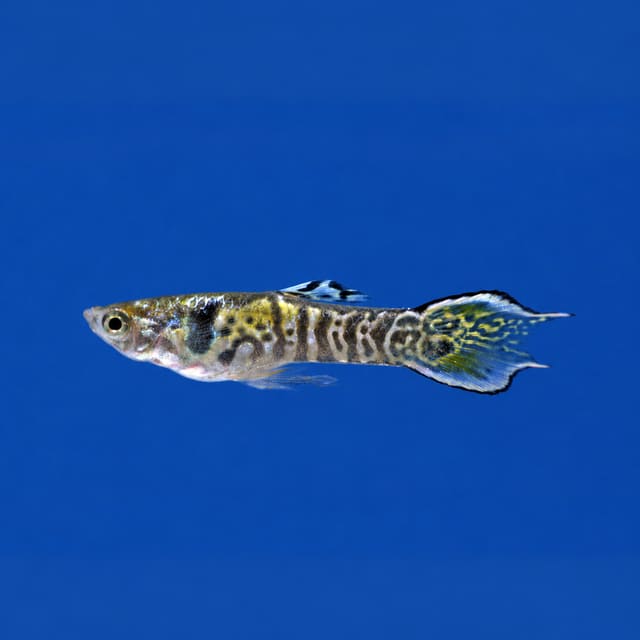
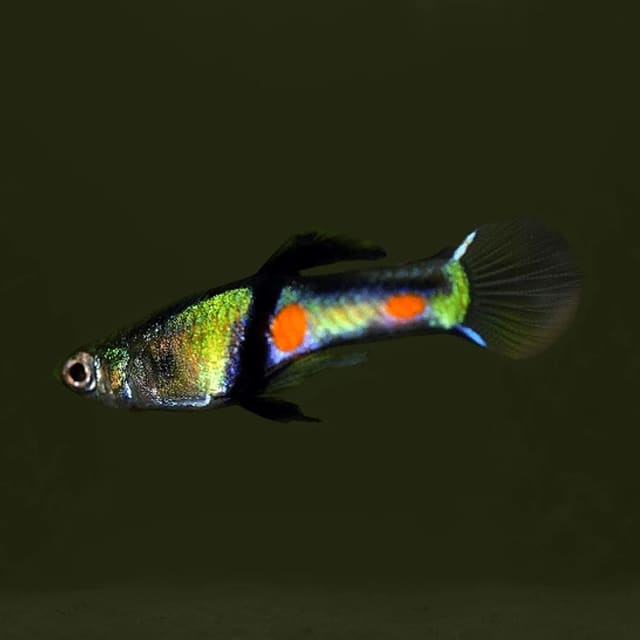
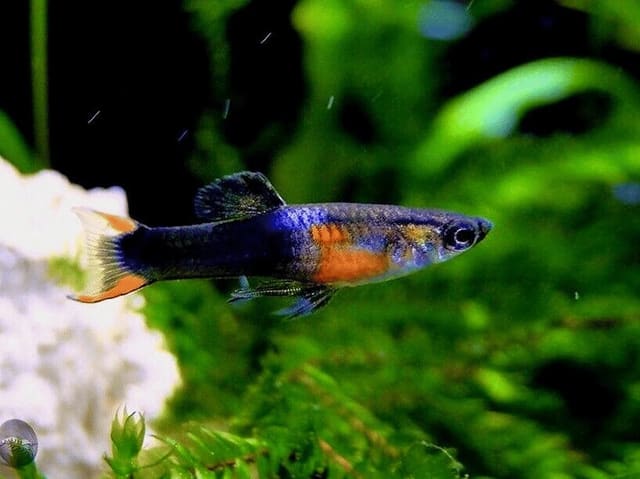
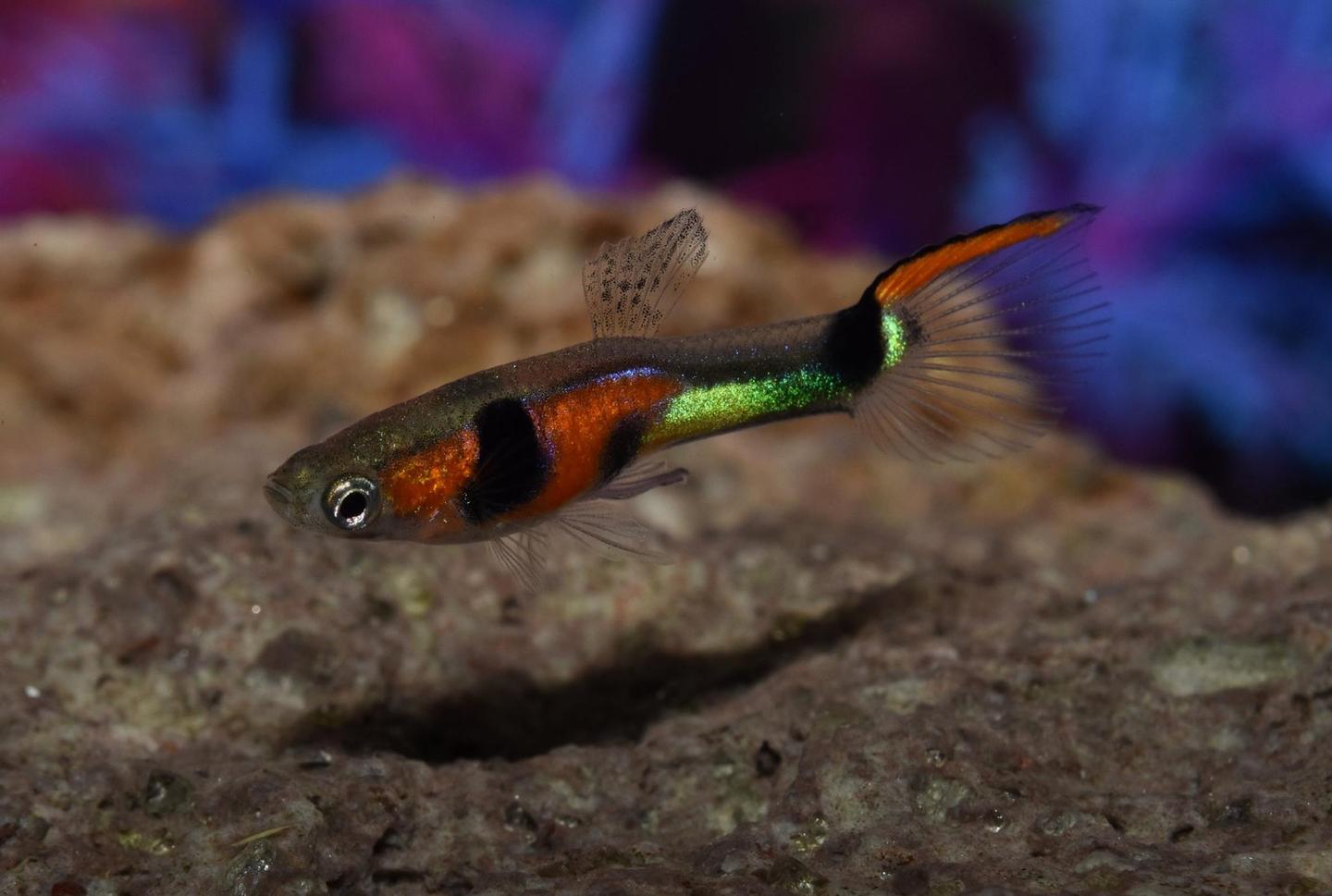
The Japan Blue Endler Guppy is a tiny, quick-moving livebearer whose metallic turquoise-blue colour can make a planted aquarium feel much more animated. The supplier identity for this colour line is Poecilia endler. Current taxonomic references accept the underlying Endler species as Poecilia wingei, so both names are explained here rather than silently swapping the identity attached to the fish. Japan Blue is the aquarium trade colour name; it is not a separate wild species.
One purchase supplies one live fish at a dispatch size of 1–2 cm. That is the size sent, not a promise of adult length. The only live choice is the fish itself rather than a selectable sex or size band. Sex is guaranteed only when the selected option explicitly states male or female. This Japan Blue Endler Guppy listing has no sex-guaranteed option.
This is a social, busy fish for a keeper prepared to manage three things from the outset: stable mineral-bearing water, suitable company and the reproductive potential of livebearers. A mature planted aquarium gives the fish cover without taking away the open swimming area it uses throughout the day. It is a poor match for an unfiltered bowl, a newly filled aquarium, a very soft acidic setup or a community containing animals large enough to swallow it.
| Suits | A keeper with a mature filtered aquarium, tested medium-hard or harder water, planting, swimming space and a population plan |
|---|---|
| One purchase | One Japan Blue Endler Guppy at 1–2 cm dispatch size |
| Identity | Supplier name Poecilia endler; accepted species name Poecilia wingei |
| Adult-length context | 2.0 cm standard length in FishBase, 2.5 cm standard length in a specialist aquarium profile, and 3.0 cm standard length in a separately scoped paratype sample |
| Social plan | Tropical Fish Co uses a group of five or more where capacity and the sex plan allow |
| Water plan | Stable, tested, moderately hard or harder freshwater; keep the chosen range tied to its source and purpose |
| Main compatibility rule | Avoid predators, persistent fin nippers and guppies where hybridisation matters |
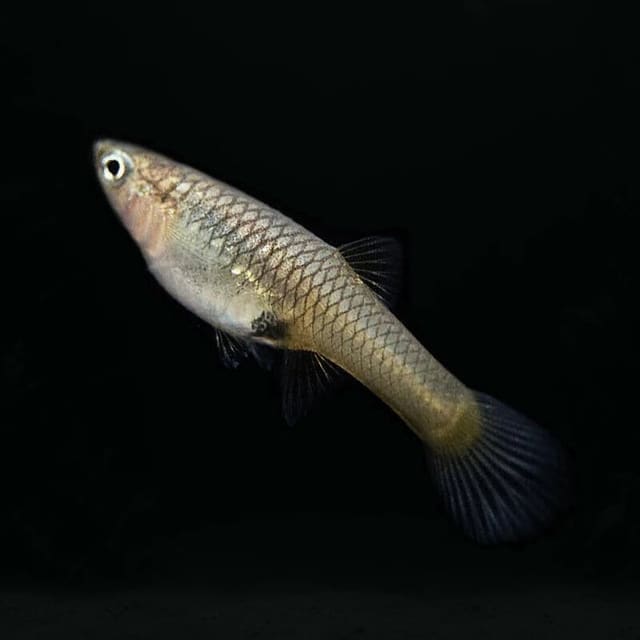
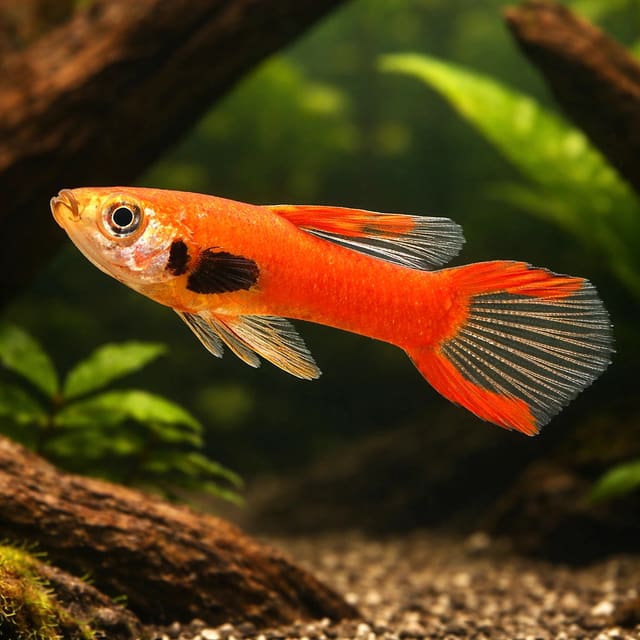
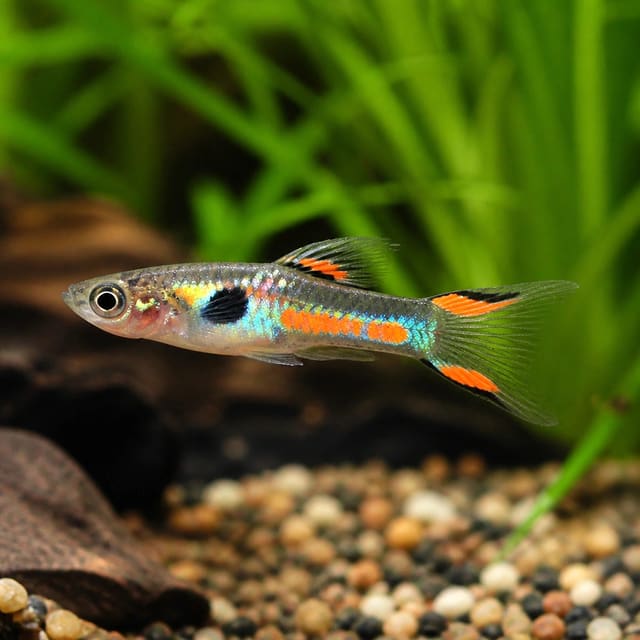
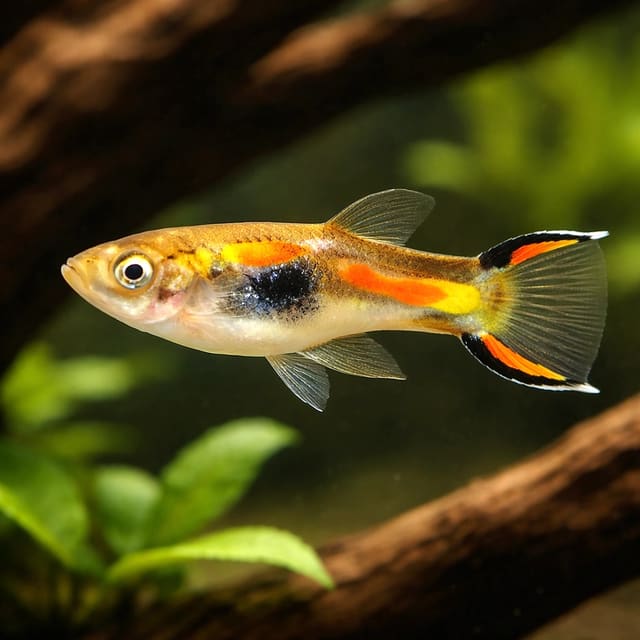
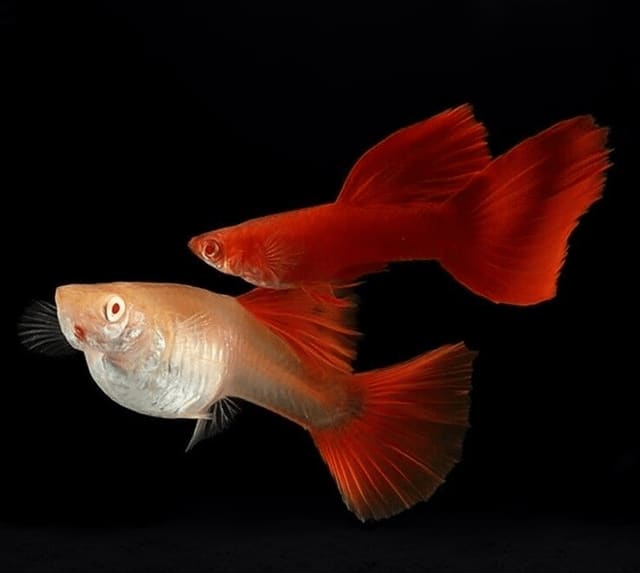
Colour and pattern are living traits, not a paint code. Maturity, diet, lighting, background and individual genetics all affect what the eye sees. The gallery provides a close visual guide to the trade form, while the practical decision should rest on the fish's identity, needs and the conditions in the aquarium.
Gallery images have been digitally enhanced to improve image quality. Natural colour, pattern, size and maturity can vary between live animals.
The product keeps Poecilia endler as its supplier identity anchor. FishBase and the Catalog of Fishes use Poecilia wingei for the valid Endler species, and the original species description established that binomial in 2005. Later molecular and morphological work continued to support P. wingei as distinct, while also showing why appearance alone cannot certify ancestry. That matters with ornamental livebearers because a blue body or a familiar spot pattern does not, by itself, prove a pure wild lineage.
For the home aquarist, the useful conclusion is simple: treat this as the named Japan Blue Endler line, preserve the identity under which it is supplied, and use P. wingei species husbandry as the care bridge. Do not use colour alone to make pedigree claims. If maintaining a line matters, avoid housing it with common guppies or other lines able to crossbreed.
For a wider view of the fish currently grouped under this trade type, browse the Endler guppy collection. That collection is useful for comparing identities and sold forms; it does not mean every Endler belongs in the same aquarium.
Good Endler care is mostly the quiet work done before the fish arrives: maturing the filter, learning the water, planning the group and leaving enough space for movement and population change. Their small bodies make them look suitable for almost any container, but a small fish still needs stable water, oxygen, a working biological filter and room to behave normally.
Three useful published length records have distinct scopes, and they should not be flattened into one unqualified maximum. FishBase lists a maximum of 2.0 cm standard length. The specialist aquarium profile at Seriously Fish gives 25 mm standard length, or 2.5 cm. The store's reviewed care guide also records 3.0 cm standard length from a separate paratype stream sample in the original species description. Standard length excludes the tail fin, so none of these figures should be presented as total length.
These records describe different samples or reporting contexts. They are retained because each helps the keeper understand how compact the species is, but they do not justify the old 4–5 cm female claim. The dispatch size of 1–2 cm is a fourth, entirely different measurement: it describes the fish supplied, not the adult endpoint. Plan around the fish's activity and social group rather than treating a body-length number as a stocking formula.
The species profile gives a 45 × 30 cm base and an aquarium around 41 litres for a substantial colony. OATA's broader guppy-and-molly sheet recommends at least 45 litres for a small group of the smaller species. Tropical Fish Co applies a more conservative house screen of at least 60 cm aquarium length for an adult group, with a group of five or more where capacity, filtration, sex balance and other livestock allow. Those are different kinds of advice: the first is species-focused, the second covers a wider trade group, and the third is a store planning policy.
Use the 60 cm screen as the straightforward buying decision. Length matters because these fish are active horizontal swimmers. Volume still matters because it buffers temperature and waste, but two aquariums of equal litres can offer very different swimming room. A long, planted aquarium with open central water is generally more useful than a tall, narrow vessel.
Start the setup before choosing livestock. The first tropical aquarium guide explains the sequence from equipment and dechlorination to establishing biological filtration. A filter is essential: fish release ammonia, beneficial bacteria convert it first to nitrite and then to the less harmful nitrate, and both ammonia and nitrite should be zero when the group is introduced.
A planted layout suits this species well. Use fine-leaved plants, floating growth and sheltered edges, but retain a clear lane for swimming and feeding. Floating plants soften bright light and create cover near the surface. Dense areas also give smaller or pursued fish somewhere to pause, although planting should not be treated as a substitute for correcting an unsuitable sex ratio or removing an aggressor.
The species profile describes these fish as active and says water flow is not itself a problem. Aim for circulation that keeps the aquarium oxygenated and moves waste towards the filter without pinning a 1–2 cm newcomer against an intake or making every feeding a struggle. Cover an unsafe intake with an appropriate guard or sponge and check it regularly. Keep a secure lid because small active fish can reach gaps around cables and filter fittings.
Choose smooth, aquarium-safe decor. A dark substrate can make blue and orange pigments appear more conspicuous, but that is a visual choice rather than a care requirement. More important is leaving the fish a simple route between open water and cover. Observe the group in normal room activity; fish that remain compressed into one corner are giving useful feedback about flow, light or social pressure.
The specialist species profile gives 24–30 °C, pH 7.0–8.5 and 15–35 dGH. OATA's wider guidance for guppies and mollies gives 20–28 °C, pH 7.0–8.0 and 8–18 dGH, and the store care guide retains that second range explicitly as broad group guidance rather than a species-specific optimum. These are separate scopes, not overlapping figures to be averaged into a new range.
For this listing's structured care card, the species-level profile is the clearest single set: 24–30 °C, pH 7.0–8.5 and 15–35 dGH. In practice, the keeper should first measure the established aquarium and the source water, then choose a stable point within suitable guidance rather than chasing a perfect number. The aquarium water-parameter guide explains pH, general hardness, carbonate hardness, ammonia, nitrite and nitrate, while the water matcher helps compare actual readings with the stated ranges.
Stability does not excuse an unsuitable baseline. A chronically very soft, acidic aquarium is a poor long-term plan for a fish whose specialist profile calls for moderately hard or harder, alkaline water. Equally, a suitable pH does not cancel ammonia or nitrite. Test after changes in stocking or feeding, and investigate a behavioural change alongside the water results.
Use a thermostatically controlled aquarium heater where the room cannot hold the chosen temperature throughout the year, and check the water with a separate thermometer. Position the heater where circulation distributes warmth rather than creating a hot corner. Avoid rapid corrections: if a reading is outside the plan, confirm the test and equipment before making a large adjustment.
Warmer water holds less dissolved oxygen and can increase biological activity, so temperature, stocking, surface movement and maintenance must be considered together. The upper edge of a published range is not a target to pursue. Pick a steady routine suitable for all occupants and monitor summer heat as carefully as winter cooling.
Poecilia wingei is omnivorous. The species profile records wild feeding on zoobenthos and detritus and advises including vegetation; OATA recommends a quality flake or granule with algae content plus suitably small live or frozen foods, noting that Endlers may need smaller items such as cyclops. The practical requirement is particle size: a food can be nutritionally appropriate yet unusable if the fish cannot take it cleanly.
Offer a complete staple in particles small enough for the smallest fish, with compatible variety rather than a long menu of treats. OATA's group guidance is once daily and only what is eaten within a few minutes. Watch the group from the side as well as above. Fast fish should not monopolise everything while quieter individuals drift behind. Break up or distribute the ration when necessary, then remove obvious excess before it breaks down.
Do not use stronger colour as the measure of whether a diet works. Look for steady body condition, active feeding, normal waste and good water results. Sudden loss of appetite can be an early warning of stress or illness and deserves a water check before more food is added.
OATA strongly recommends a partial water change of 25% at least once every week for this broad fish group. Treat replacement water with a suitable conditioner for chlorine or chloramine and bring it close to aquarium temperature. Siphon accumulated waste without stripping every planted surface bare, because a mature aquarium is an ecosystem rather than a display to sterilise.
Check the filter for reduced flow. If filter media needs cleaning, rinse it lightly in water removed from the aquarium; never run it under the tap, because chlorine or chloramine can kill the beneficial bacterial population. Keep a simple log of temperature, ammonia, nitrite, nitrate, pH and hardness, especially after adding fish or seeing a change in behaviour.
Be present on the confirmed delivery date. Before opening the parcel, start a continuous unboxing video showing the sealed parcel, then the fish still in its sealed bag; that video is evidence for any Live Arrival Guarantee claim. Inspect the fish and contact Tropical Fish Co the same day if something has gone wrong. After that evidence is secured, follow the current acclimatisation instructions on the delivery and Live Arrival Guarantee page.
During the first days, observe breathing, posture, colour, feeding and swimming position without repeatedly disturbing the aquarium. A new fish may take time to settle, but gasping, clamped fins, erratic swimming, white spots, fluffy growths or rapid decline should prompt immediate water testing and appropriate help. The RSPCA advises looking first at changes from the animal's normal behaviour and condition; serious or persistent problems merit advice from an aquatic veterinary professional.
A useful care routine is predictable enough to reveal change. Check the fish before food enters the aquarium: note where the group swims, whether every fish is upright and responsive, and whether anyone is isolated. Then feed and watch who actually eats. This takes only a few minutes, but it gives better information than waiting for a dramatic symptom.
When a result changes, consider what changed immediately beforehand. New livestock, extra feeding, a stopped filter, a dead plant, medication or a missed water change can all alter the biological load. Re-test an unexpected value with a clean vial and an in-date kit, then respond to the confirmed result. Ammonia or nitrite above zero needs prompt action because both are toxic; do not mask the cause by adding more fish or food.
Hardness and pH deserve the same disciplined approach. General hardness measures dissolved calcium and magnesium ions, while carbonate hardness helps describe buffering. A stable pH can shift when buffering is weak, and mineral-bearing water can differ greatly between neighbouring homes. Record the tap reading and aquarium reading together. If they diverge, investigate substrate, rocks, water-change frequency and any water treatment before making a sudden correction.
Nitrate is the end product commonly measured in the biological cycle, but a low nitrate result is not proof that every other condition is safe. Plants may use nitrate, a test may be performed incorrectly, and oxygen or temperature can still be unsuitable. Look at the complete pattern: fish behaviour, filter performance, temperature, ammonia, nitrite, nitrate, pH and hardness.
Prepare replacement water before disturbing the aquarium. Dose conditioner for the volume being added, check its temperature, and make sure the heater and filter can be operated safely during the change. OATA's wording is a partial water change of 25% at least once every week. That is a frequency and proportion for this broad group, not permission to make a much larger change without considering the difference between tap and aquarium water.
Use the siphon to remove loose waste from accessible areas while leaving fish secure and planted roots undisturbed. Refill steadily, restart any equipment that was switched off and confirm normal flow. Count the group once the water clears. A written tick for the date, changed volume and test results prevents the common problem of a routine becoming less regular than memory suggests.
UK rooms can move through a wide temperature range over a year. In winter, confirm that the heater reaches the chosen setting without remaining continuously on; in summer, watch the daily high and preserve surface movement. Keep the aquarium away from direct sun and cold draughts. Never use a rapid temperature swing as a fix. Changes that seem modest to a person can happen quickly in a small body of water.
Power interruptions also deserve a plan. Know how long the filter has been still, keep its media wet and restore circulation safely. After an extended interruption, watch the fish and test the water rather than assuming the biological filter is unchanged. A battery air pump can be useful where outages are a known risk, but it does not replace checking the main system afterwards.
A healthy group should show clear eyes, intact fins, controlled swimming and interest in food. Compare each fish with its own recent norm. Hanging at the surface, sitting unusually low, rapid gill movement, clamped or damaged fins, erratic swimming, darkening, paling, white spots, fluffy growths or a sustained loss of appetite all justify a water check and closer assessment.
Do not diagnose from colour alone. Blue and orange intensity can change with angle, lighting, background, maturity and stress. Begin with measurable conditions and the whole behavioural picture. If a serious sign persists despite safe water, isolate only where that can be done in a mature suitable system and seek qualified aquatic-health advice. Medication chosen by guesswork can harm fish and biological filtration.
Recalculate capacity before each addition. A five-fish planning group is not a permanent entitlement to keep adding Endlers whenever juveniles grow or fry survive. More fish mean more oxygen demand, food, waste and social contact. The mature size of every other species and its likely feeding speed belong in that calculation.
Quarantine in a separate mature system can reduce the chance that a new arrival introduces disease to an established group. Equipment used between aquariums should be managed carefully. Even without a dedicated quarantine aquarium, buy deliberately, avoid repeated rapid additions and observe new livestock closely before expanding the community again.
Compatibility begins with the Endler's very small size. A tank mate can be peaceful in temperament and still be unsafe if an adult can swallow a 1–2 cm fish. The next checks are water overlap, feeding pace, fin-nipping risk and whether both species have enough room to use their normal swimming zones.
OATA advises at least three guppies and a ratio of two females to each male in a mixed group. Tropical Fish Co uses a more conservative planning group of five or more where aquarium capacity and the sex plan allow. The exact fish count is not a substitute for observation: group size, sex mix, planting and aquarium footprint all influence how pursuit is distributed.
Because this product does not sell a guaranteed sex, do not build a precise ratio assumption around a single order. If the aim is a controlled mixed group, use separately sexed stock where the product explicitly guarantees sex. If the aim is to avoid fry, a genuinely male-only group requires animals sold and confirmed as males, not a guess from a gallery picture.
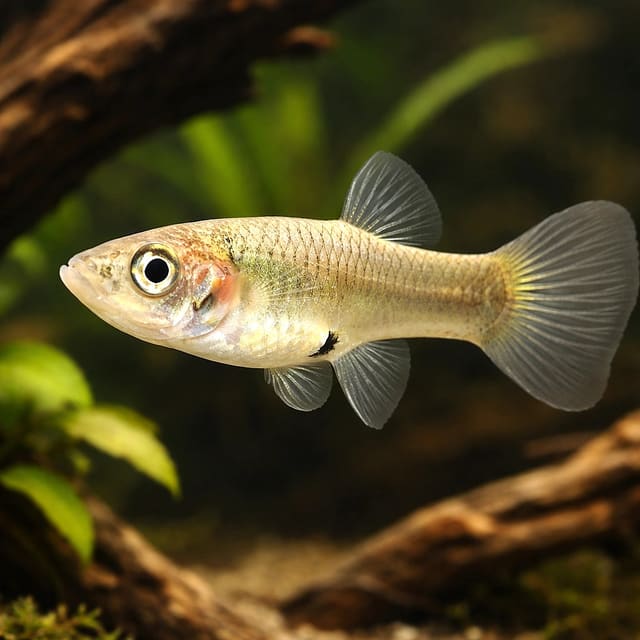
Mature males are generally smaller and more colourful, while mature females are fuller-bodied and have a broader triangular anal fin. Those features can help with aquarium observation, but age and maturity matter. They do not change what this listing guarantees at purchase.
The species profile names dwarf corydoras, small rainbowfish such as threadfin and blue-eye types, and peaceful tetras as possible companions. OATA's broader rule is to avoid any fish large enough to eat an Endler and species likely to nip fins, such as barbs. Treat every named kind as conditional rather than universally safe: confirm adult size, water, stocking, layout and individual behaviour for the actual combination.
| Usually worth considering | Small peaceful fish whose adult mouth size, water needs and feeding style genuinely overlap; the species profile specifically mentions dwarf corydoras, small rainbowfish and peaceful tetras |
|---|---|
| Needs caution | Fast feeders, boisterous livebearers, shrimp colonies containing very small young, or any community where the Endlers would be the smallest moving food-sized animal |
| Avoid | Predatory fish, animals large enough to swallow them, persistent fin nippers and aggressive territorial species |
| Keep separate for line integrity | Common guppies and other compatible Poecilia lines capable of hybridising |
Introduce one planned group at a time and watch the aquarium at feeding, in open water and around cover. Problems often appear as repeated chasing, blocked access to food, hiding that does not resolve or a fish held at the surface or bottom. Correct the cause rather than waiting for a small fish to become visibly thin.
Endlers give birth to live young and can reproduce readily when mature males and females are together. Dense planting may allow some fry to survive. That can be welcome in a species-focused colony, but in a community it can quickly change stocking pressure, feeding demand and maintenance needs.
Decide before purchase what will happen if fry appear. The ethical options are extra suitable capacity, responsibly rehoming surplus fish or using an intentionally single-sex setup built from sex-guaranteed stock. Do not rely on predation as a population-control plan. If preserving the Japan Blue line matters, keep it apart from guppies because the species profile notes that they can hybridise and produce fertile offspring.
Males display frequently, and females may also behave territorially. Provide planted edges and multiple routes through the aquarium, then watch individuals rather than assuming a generally peaceful label settles every interaction. Several females can help distribute male attention in a mixed group, but only when the aquarium is large enough and the sexes are actually known.
Move quickly when one fish is relentlessly pursued, excluded from food or losing condition. A spare mature aquarium or safe separation arrangement is more useful than adding decorations after the animal is already exhausted. Any sudden aggression should also trigger checks for crowding, temperature change, illness and altered stocking.
The reviewed records use standard length, which excludes the tail, and have different scopes: FishBase lists 2.0 cm SL, Seriously Fish lists 2.5 cm SL, and a separate paratype stream sample in the original species description reached 3.0 cm SL. Keep those records labelled rather than turning them into one unqualified maximum.
Seriously Fish gives a 45 × 30 cm base and about 41 litres for a substantial colony, while OATA broadly recommends at least 45 litres for a small group of the smaller guppy species. Tropical Fish Co uses a more conservative 60 cm minimum-length screen for an adult group, with mature filtration, swimming space and a fry plan.
OATA advises at least three guppies; Tropical Fish Co recommends five or more where aquarium capacity and the sex plan allow. A group still needs suitable sex management, planting, open swimming room and close observation for pursuit.
It can suit a prepared beginner who has a mature filtered aquarium, zero detectable ammonia and nitrite, tested medium-hard water and a clear population plan. It is not a shortcut around cycling, water testing or group management.
Use an appropriately small complete flake or granule as the staple, with some vegetable content and safe small live or frozen variety such as cyclops. OATA's broad guidance is to feed once daily and only what the fish consume within a few minutes.
The Seriously Fish species profile gives 24–30 °C, pH 7.0–8.5 and 15–35 dGH. OATA's broader guppy-and-molly guidance is 20–28 °C, pH 7.0–8.0 and 8–18 dGH. Use one clearly scoped plan and prioritise stable, tested water rather than averaging the ranges.
They are active social fish rather than routine fin nippers, but courtship and competition can produce persistent pursuit. Give them suitable group structure, space and planting, and separate any fish that is being continually harassed or excluded.
Seriously Fish names dwarf corydoras, small rainbowfish and peaceful tetras as possible companions. Each match remains conditional on adult size, water, space and feeding. Avoid predators, fish large enough to swallow an Endler, persistent fin nippers and guppies where hybridisation matters.
Tropical Fish Co hand-packs live fish in oxygenated bags inside an insulated poly box, adding a heat pack when conditions call for it, and uses a licensed live-animal courier. Be present to receive the parcel. Before opening, start a continuous unboxing video showing the sealed parcel and then the fish still in the sealed bag; this is required evidence for any Live Arrival Guarantee claim.
The main identity bridge comes from FishBase's Poecilia wingei summary, the Catalog of Fishes record and the original species description. These establish accepted identity, distribution and measured specimens; they are not substitutes for aquarium-care guidance.
The species-level aquarium figures for footprint, water, diet and compatibility come from the Seriously Fish Endler profile. The OATA guppy and molly care sheet provides broader UK group guidance, while the RSPCA aquarium environment guidance supports the filtration and water-quality essentials.
For a longer practical treatment of the different size records, group policy, sex planning and health observations, read the Endler Guppy Care Guide.
No reviews for this item yet. Bought one? Honest reviews only, good or bad.
What customers say about ordering from us
Easy website plenty of info on fish your buying great to pick a time slot
TRACEY DURRANT · 7 Oct 2026
Got some lovely fish thank you
Kevin Mackie · 7 Oct 2026
Reviews of our shop, collected by Judge.me, an independent third-party review collector. Newest first.