Easy
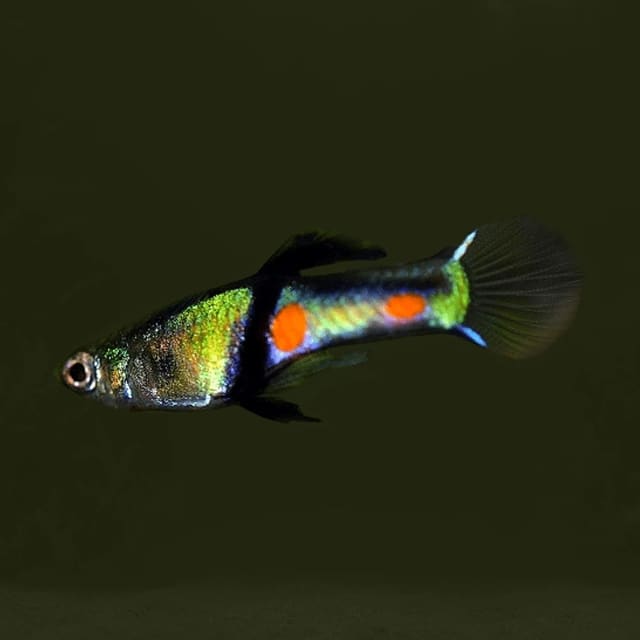
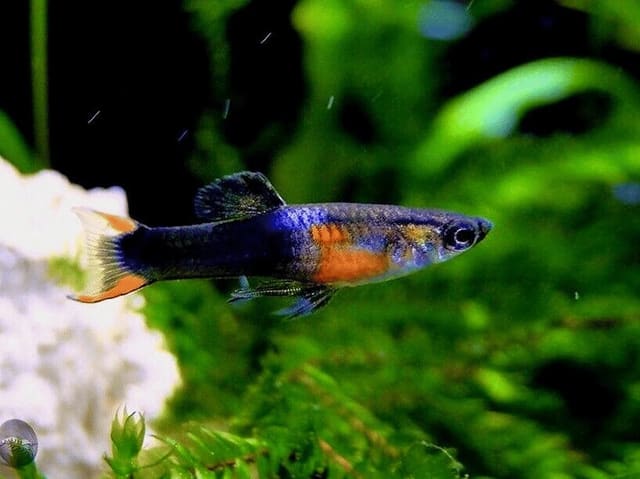
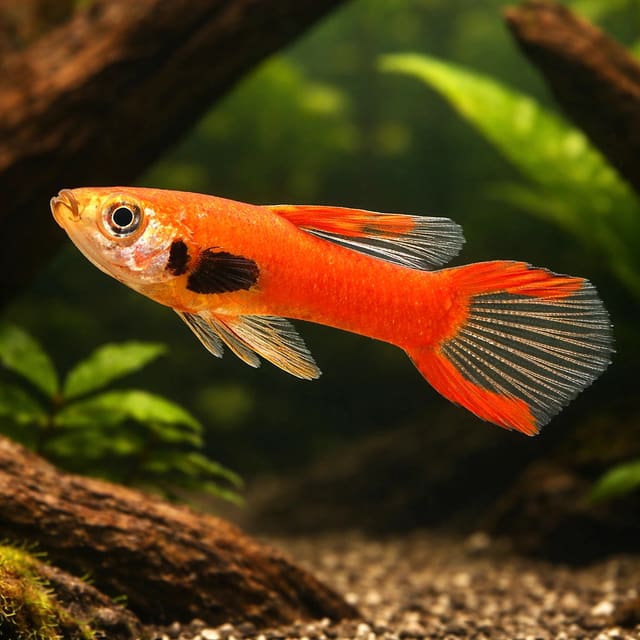
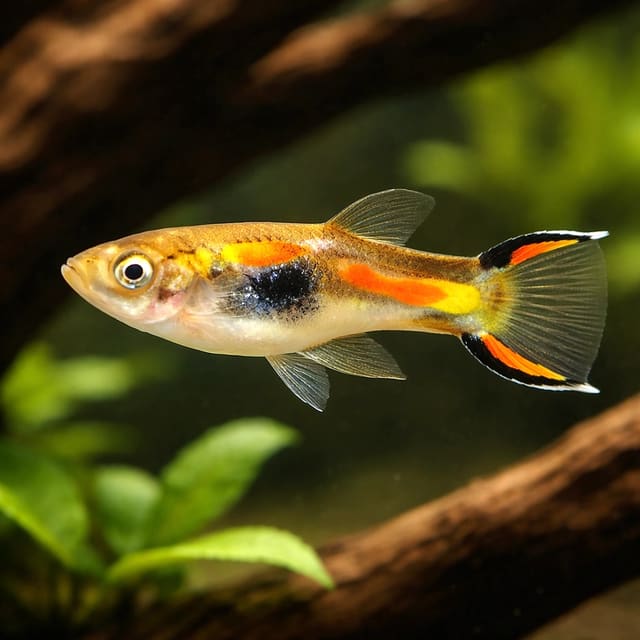
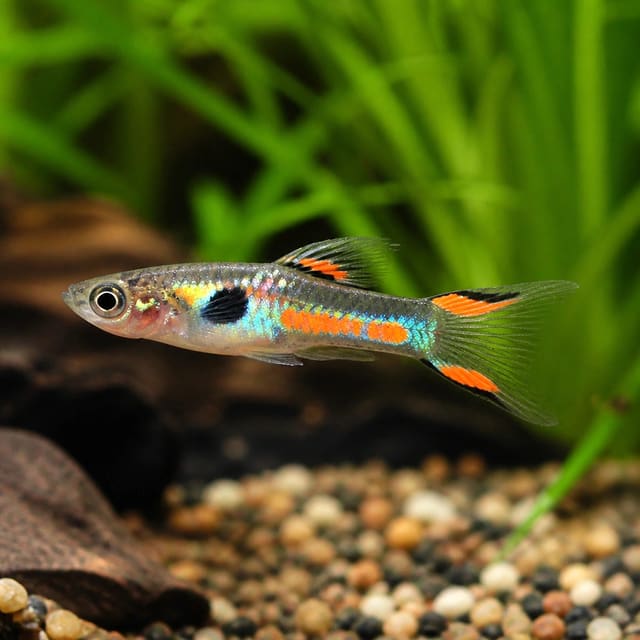
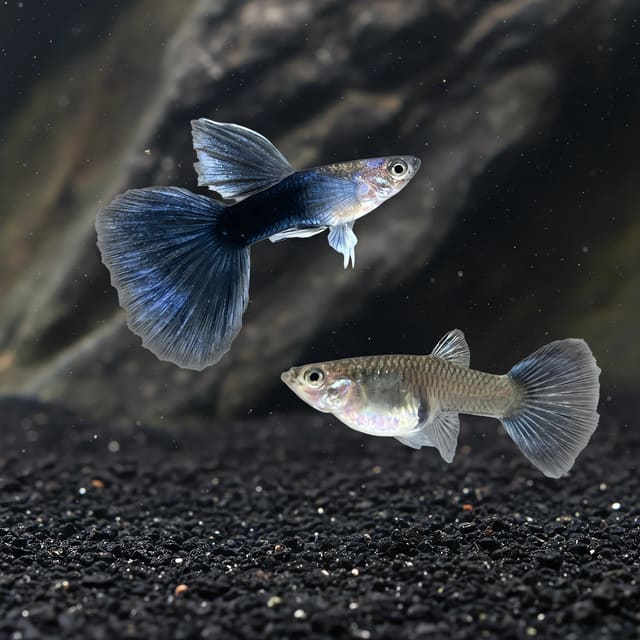
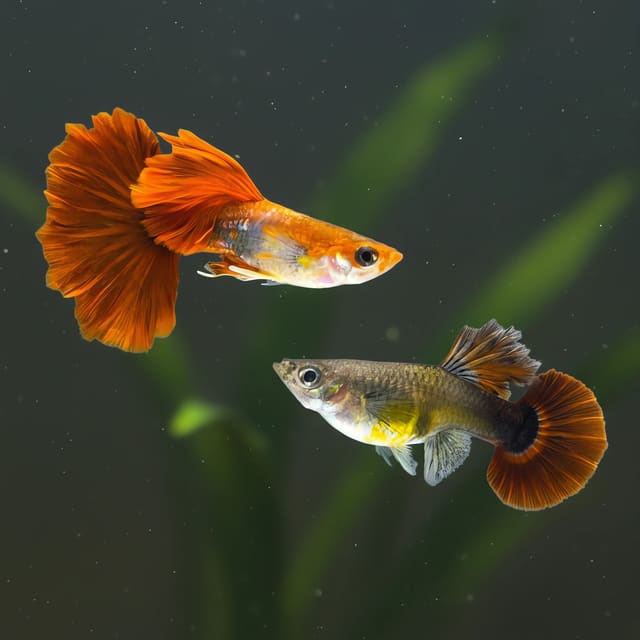
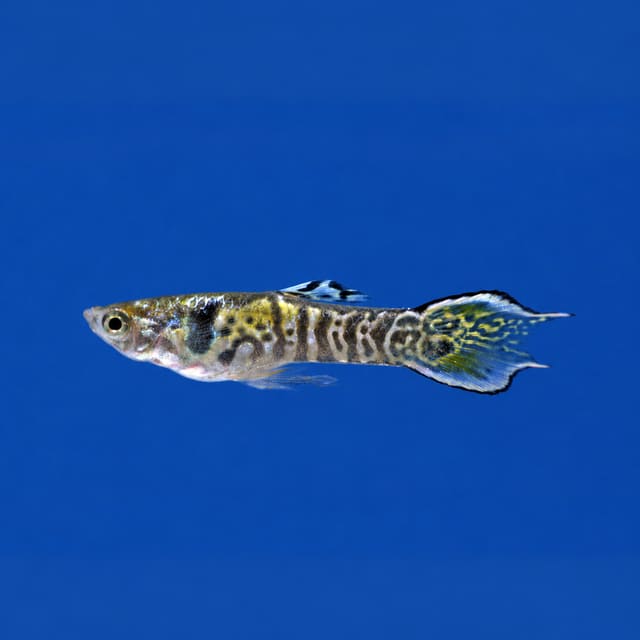
El Tigre Endler Male (Poecilia wingei)
24–30°C · pH 7–8.5 · 41L
£6.99

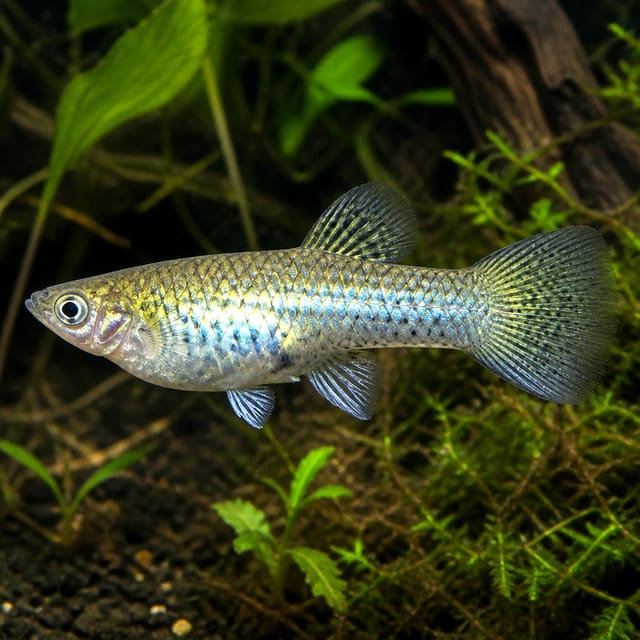
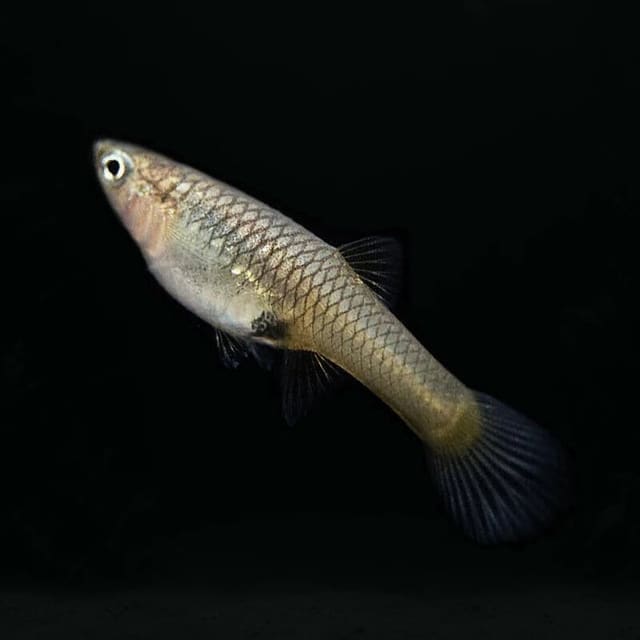
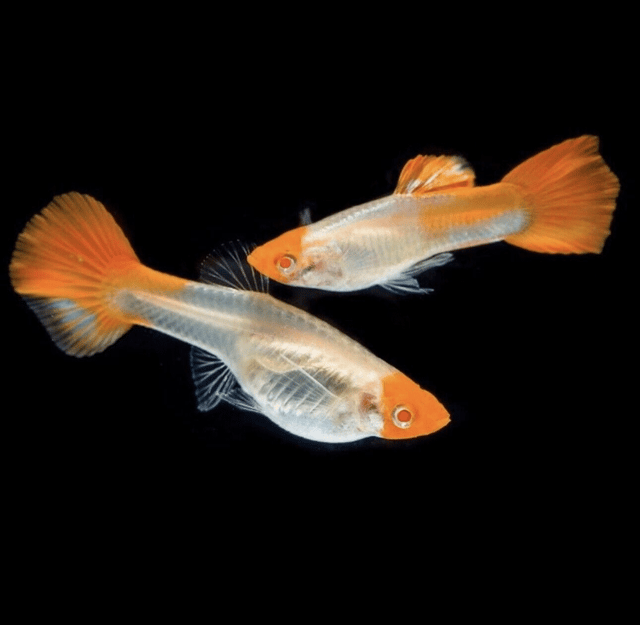
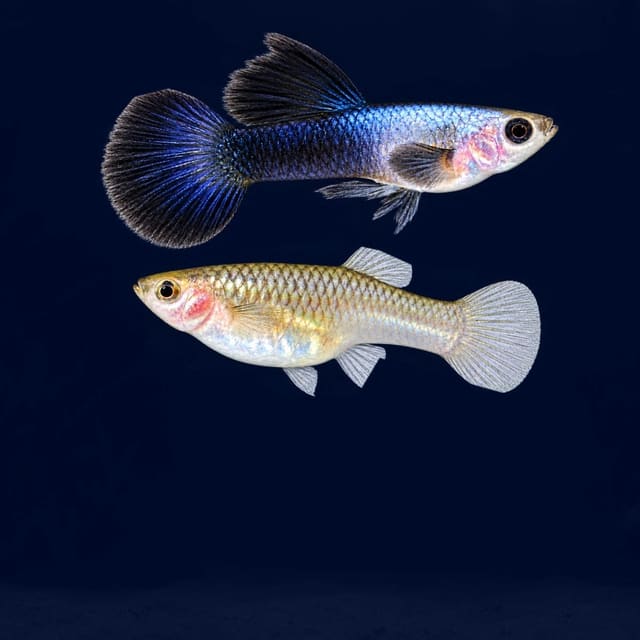
Female Endler Guppy (Poecilia wingei), supplied as one female fish, for a mature 60 cm aquarium with a planned social group, stable medium-hard water and space for any fry.
Adult size is the maximum length this species reaches at full maturity (scientific sources). The livestock you receive will be younger and smaller. Product-photo provenance and any image-specific limitations are stated on the listing.
Poecilia wingei
Shoaling fish: kept in a group they feel safer, stay calmer and show their best colour.
Female Endler Guppy (Poecilia wingei), supplied as one female fish, for a mature 60 cm aquarium with a planned social group, stable medium-hard water and space for any fry.
Adult size is the maximum length this species reaches at full maturity (scientific sources). The livestock you receive will be younger and smaller. Product-photo provenance and any image-specific limitations are stated on the listing.
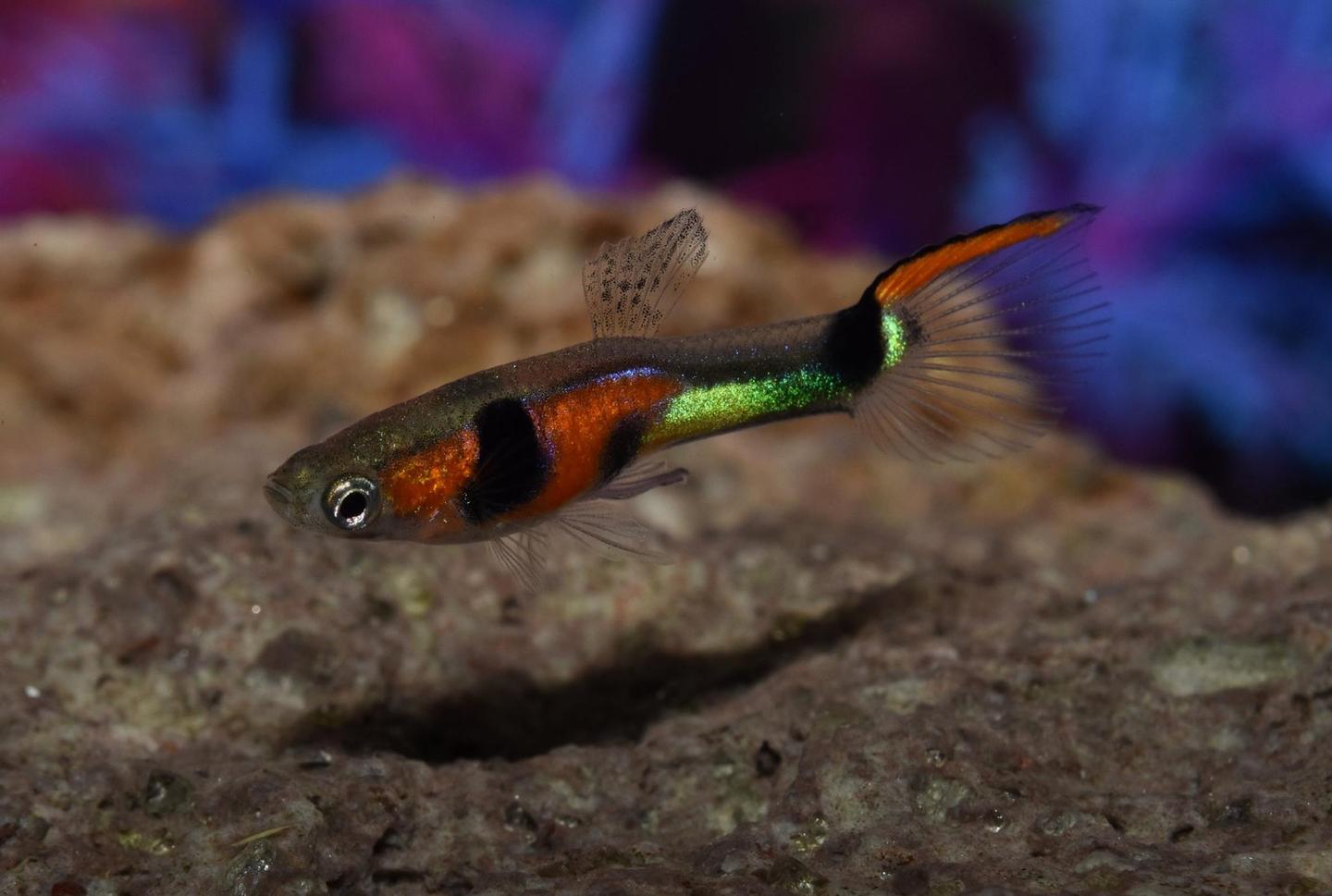
Endler's livebearer is a small, social, rapidly reproducing Venezuelan fish. Start with a mature filtered aquarium, a deliberate sex and population plan, stable tested medium-hard water, open swimming room and cover. Our conservative house screen is an aquarium at least 60 cm long and a group of five or more where capacity allows.
Maintain these water conditions for optimal health and vibrant colors
This listing is for one female Endler guppy, Poecilia wingei, per purchase. Fish are supplied at a 2.5–3.5 cm dispatch grade. That is the size supplied, not a guarantee of an individual's eventual length. The sex is part of this exact offer: Sex is guaranteed only when the exact product or selected option explicitly states male or female. This Female Endler Guppy listing is sold as female.
A female Endler can be useful when a keeper is building a deliberately planned female-only display or balancing a mixed group. It is not a token “extra fish” for an aquarium that already lacks space. Endlers are active, social livebearers, so the purchase decision should account for the whole group, the sexes already present, filter capacity and what will happen if fry appear. One purchased female is still one animal; the photograph count does not alter the sale unit.
| Good preparation | Reason to pause |
|---|---|
| A mature filtered aquarium at least 60 cm long under our house plan | A bowl, vase or newly filled aquarium |
| A social group and sex plan chosen before ordering | Adding one fish simply because the aquarium looks empty |
| Measured medium-hard water with stable temperature | Trying to correct pH or hardness suddenly after arrival |
| Open swimming room, cover and a separation option | No response if pursuit, crowding or fry become a problem |
OATA's UK guidance for guppies and mollies recommends at least 45 litres for a small group of the smaller species and at least three guppies. Tropical Fish Co uses a more conservative adult-group screen of at least 60 cm aquarium length and five or more fish where capacity and the sex plan allow. Neither number is a litres-per-fish formula. The useful question is whether every fish can feed, swim and move out of another's path while water quality remains stable.
Poecilia wingei is an accepted species in the family Poeciliidae, with documented origins in the Campoma and Buena Vista lagoon systems of Venezuela. Published records do not give one interchangeable length figure. FishBase lists a 2.0 cm female maximum in standard length, while the original description includes females up to about 3.0 cm standard length in separate material. Standard length stops at the base of the tail, so it should not be compared directly with an informal nose-to-tail retail measurement.
That distinction matters here because a dispatch grade can exceed a recorded standard-length figure without proving that the species identity is wrong. Use about 3 cm SL as a conservative planning reference from published species records, not as a promise that every fish will finish at precisely that length. The deeper Endler guppy care guide explains the identity, measurement and population-planning evidence in more detail.
Female-only groups avoid new mating inside a correctly sexed aquarium, but sexing errors and social competition still require observation. Mixed-sex groups can reproduce readily, and a newly purchased female may already have a reproductive history that is not visible from a photograph. Plan mature spare capacity and responsible rehoming before adding females to a male group. If you are comparing sex or colour offers, use the current Endler collection to understand the exact animal each separate listing supplies; related products are alternatives, not automatic companions.
Gallery images have been digitally enhanced to improve image quality. Natural colour, pattern, size and maturity can vary between live animals.
Prepare the aquarium before the fish is dispatched. A biological filter needs time and an ammonia source to establish the bacteria that convert toxic ammonia first to nitrite and then to nitrate. A tank is not mature merely because the water looks clear. Confirm zero detectable ammonia and nitrite repeatedly, record nitrate and temperature, and know how the aquarium responds after feeding. If this is your first setup, follow the first tropical tank guide through cycling and testing before livestock is ordered.
Give Endlers useful horizontal swimming room rather than judging the setup by volume alone. Our 60 cm screen adds a footprint requirement to OATA's 45-litre group minimum. Keep an open route across the front or centre and provide planted or structured cover around it. Floating plants and fine-leaved cover can help a fish leave another's line of sight, but a solid wall of plants that hides constant pursuit is not an answer. Check the whole aquarium at feeding time, when competition is easiest to see.
Use a secure lid, a protected filter intake and steady surface movement. Small fish and fry can be drawn against an unguarded intake. Flow should circulate oxygen and waste without making every fish work continuously to hold position. Rinse mature filter media in removed aquarium water or another dechlorinated method that protects the bacterial community; replacing every piece of media at once can remove much of the biological capacity.
For practical UK husbandry, OATA's combined guppy-and-molly sheet gives 20–28 °C, pH 7–8 and 8–18 dGH, with zero ammonia and nitrite. These values explicitly include Endlers, but they remain broad group-level guidance rather than a controlled species-specific optimum. A specialist species profile gives a warmer, harder range of 24–30 °C, pH 7.0–8.5 and 15–35 dGH. The store's recommendation uses the OATA range as a household screening band and then asks the keeper to match actual source water gradually.
Test rather than assuming that a UK postcode has one fixed chemistry. Record temperature, pH, GH and, where relevant, KH in both the source and destination water. The aquarium water guide explains what the measurements mean, and the water matcher can help compare measured values with stated care ranges. Stability matters, but stability outside a suitable range is not automatically safe; make any correction with measured, staged changes.
A thermostatically controlled aquarium heater is normally needed in a UK home unless the water can remain within the chosen range year-round without one. Confirm the actual water with an independent thermometer rather than relying on the heater dial. Keep the aquarium away from direct sun, radiators and cold draughts. Large day-to-night swings and abrupt water-change differences are more avoidable than chasing a single “perfect” number.
OATA strongly recommends a 25% partial water change at least weekly for guppies and mollies. Treat that as a starting routine, then use measured nitrate, stocking, feeding and waste accumulation to decide whether the aquarium needs more frequent attention. Condition replacement tap water for chlorine or chloramine and bring its temperature close enough to avoid a rapid swing. Siphon visible debris while leaving some undisturbed cover and biofilm for a stable system.
Do not wash biological filter media under the tap. Clean impellers and blocked intakes when flow falls, but avoid turning routine maintenance into a complete strip-down. A consistent record makes it much easier to recognise whether a change followed overfeeding, a new fish, lost filter flow or a large alteration to the aquarium.
Use the same short sequence each week so changes are easier to notice. First watch the fish before food is added: confirm that every female can use open water, that no individual is pinned behind equipment and that breathing looks even. Then check the thermometer, test ammonia and nitrite, record nitrate, and compare the result with the previous entry. Inspect filter flow and the water surface before carrying out the partial water change. This order matters because cleaning first can hide a developing problem.
After the change, confirm that replacement water has not caused a sharp temperature or chemistry shift. Look again at swimming, balance and breathing once the aquarium has settled. The purpose of a log is not to create paperwork; it is to show direction. A nitrate result that rises week after week, a steadily weaker filter return or one female repeatedly missing food deserves action even when a single reading still looks ordinary.
Poecilia wingei is omnivorous. OATA recommends a good-quality flake or granule with algal content, supplemented with suitably small live or frozen variety; it specifically notes that Endlers may need smaller items such as cyclops. Use an appropriately small complete food as the staple. A varied menu is useful only when the particles can be swallowed and the ration does not leave waste to decay.
OATA's household guidance suggests feeding what the fish clear within a few minutes once daily. Use that observation, not a fixed pinch copied from another aquarium. Spread the portion so less assertive females can feed. Watch body condition across the group, not only the first fish at the surface. Fry, illness or a different complete diet may need an adjusted plan, but increasing frequency without measuring waste can overwhelm a small system.
Female Endlers are often less conspicuously coloured than males, but they are not inert background fish. Several females may compete, and a mixed group adds male courtship pressure. Provide enough space and cover for a fish to leave the immediate view of another without disappearing permanently from observation. Persistent hiding, repeated cornering, torn fins, weight loss or missed feeding require intervention.
In a mixed group, OATA suggests two females per male to reduce pressure. This is broad trade-body guidance, not a guarantee that one ratio prevents harassment. A ratio cannot compensate for an undersized aquarium, a dominant individual or inadequate cover. Keep a mature separation option ready and do not wait for serious injury before using it.
Sex should be assessed from the anal fin in mature fish: males have a narrow modified anal fin called a gonopodium, while females have a broader triangular anal fin. Colour, body depth or a rounded abdomen alone cannot prove sex or pregnancy. This exact product is sold as female, but the social plan still needs observation after arrival.
Endlers are livebearers and mixed-sex groups can reproduce readily. Avoid exact countdowns and brood promises. One exact-species laboratory study covered only ten litters and 122 fry under one experimental regime, so its numbers are observations from that experiment rather than a schedule for every purchased female. The responsible decision is to assume fry are possible and prepare before they appear.
A fry plan includes mature filtered space, food small enough for young fish, intake protection and a route for responsible long-term housing or rehoming. Dense cover can increase fry survival, which is useful only if capacity has been planned. Adding a predator to control numbers transfers the problem into welfare risk. Never move young fish into an uncycled container simply because the display becomes crowded.
Write down the aquarium's realistic capacity before purchase and count all fish already using it. If the intention is a female-only group, inspect the sex plan for every addition instead of assuming that one labelled female settles the matter permanently. If males are present, decide where fry can be raised, which mature filtered space could be used temporarily and how responsible homes would be found. Waiting until young fish are visible leaves fewer welfare-safe choices.
A useful contingency is specific. It names the mature aquarium or divider that can separate a harassed fish, the spare intake guard needed for fry, and the person who will make a rehoming decision before crowding affects water quality. An empty bucket, an uncycled ornament tank or a promise to “sort something out” after pursuit begins is not a workable plan. Capacity includes filtration, floor and swimming area, feeding access and the keeper's ability to observe every animal.
A settled Endler should swim steadily, breathe regularly, hold its fins normally and show a consistent feeding response. Surface gasping, loss of balance, clamped or damaged fins, spots, wounds, sudden swelling, persistent isolation or appetite loss are warning signs rather than diagnoses. Test the water first, confirm heat and filter flow, and review recent maintenance, food and new livestock.
Use a separate mature quarantine system with dedicated nets and siphons when practical. Avoid choosing salt, heat or medication from one visible symptom. Different problems can look similar, and an unnecessary treatment can add stress or damage the biological filter. Seek an aquatic vet or experienced aquatic professional when signs are severe, spreading or persistent.
One captive-line study reported spinal deformities in 22 of 600 observed fish under its documented conditions. It did not establish a population-wide rate or one universal cause. A curved body is not enough to diagnose genetics or husbandry history from appearance. Do not breed an affected animal and seek informed assessment.
Read the current delivery and Live Arrival Guarantee policy before dispatch. Be at the delivery address because live fish cannot be left unattended. For every delivery, begin one continuous unboxing video while the parcel is still sealed; keep the outer box visible, record the opening and show the fish still inside the sealed bag before anything is disturbed.
After release, keep observation calm and practical. Check balance, breathing and swimming, then make sure the fish can withdraw and feed without being chased. Transport colour can change, but pale colour alone should not be dismissed automatically; consider the complete condition and measured water.
Female Endlers are small and can work in a carefully planned community, but no static list creates guaranteed compatibility. Compare temperature, pH and hardness first, then adult size, predation risk, fin-nipping, feeding speed, social group needs and usable space. The combined stocking plan must leave enough filter capacity and escape routes for every animal.
OATA specifically warns against keeping Endlers with fish large enough to eat them and against fin-nipping species. Small peaceful fish such as dwarf Corydoradinae, small rainbowfish or peaceful tetras are named by a specialist profile as possible companions, but each exact species still needs its own assessment. A soft-water animal is not made suitable merely because it is peaceful.
Poecilia wingei and the common guppy, Poecilia reticulata, are recognised as separate species, yet laboratory research confirms that they can hybridise. Keep documented lines apart when identity matters. Colour, tail shape and informal grade names are not pedigree records, so describe any offspring honestly when ancestry is uncertain.
A mixed Endler-and-guppy display may still be kept where hybridisation is understood and lineage preservation is not the goal, but population capacity remains essential. Do not sell or rehome uncertain descendants as a documented pure line. The welfare of the actual fish matters more than attaching a prestige label.
Check the proposed community at three different moments: before feeding, while food is distributed and after the aquarium settles. A fish that looks calm at rest may still be excluded when faster companions take every particle. A female that feeds well may still spend the rest of the day evading pursuit. Record repeated patterns rather than waiting for torn fins, weight loss or a fish confined to one corner.
When pressure appears, identify the cause before changing several things at once. Compare the number and sexes of livebearers, the location of cover, the open swimming route and each species' feeding speed. Remove a known predator or fin-nipper from the plan; decor cannot make that mismatch safe. For less clear social pressure, add genuinely usable sight breaks, distribute food more evenly and prepare mature separation accommodation. Recheck water quality as well, because poor conditions reduce every fish's ability to cope.
No fish should be advertised as completely shrimp-safe. Adult Neocaridina or Amano shrimp may coexist in an aquarium with compatible chemistry and enough structure, while shrimplets and very small shrimp can be eaten. Cover reduces exposure but does not guarantee survival, and food competition can leave a shy invertebrate underfed.
Compatibility is an ongoing observation, not a label earned on the day fish are introduced. Keep notes on behaviour and water values, and act while the first signs are still reversible.
Female Endler Guppy size records need a measurement label: FishBase gives 2.0 cm standard length for a female, while original species material includes females up to about 3.0 cm standard length. Standard length excludes the tail, and neither figure promises the exact final size of an individual fish.
OATA recommends at least 45 litres for a small group of the smaller guppy species. Tropical Fish Co uses a more conservative planning screen of at least 60 cm aquarium length for an adult Endler group, with mature filtration, zero detectable ammonia and nitrite, open swimming room and a fry plan.
OATA advises at least three guppies, while our conservative house plan is five or more where capacity, the sex plan and other occupants allow. This listing supplies one female, so count the fish already present and watch feeding access, pursuit and hiding rather than treating the number as a stocking formula.
It can suit a prepared beginner, but not an uncycled bowl. Success depends on a mature filtered aquarium, measured water, an appropriate social plan, small complete food and a realistic response to courtship, fry or illness. The store's easy label is a suitability assessment, not a promise of maintenance-free care.
Use an appropriately small complete flake or granule as the staple and include suitable variety with some vegetable content. OATA notes that Endlers may need very small foods such as cyclops. Portion food so every fish can take it and remove repeated leftovers before they affect water quality.
OATA's UK guppy-and-molly guidance gives 20–28 °C, pH 7–8 and 8–18 dGH. Those are broad group-level husbandry values rather than a species-specific optimum. Test both source and aquarium water, use an independent thermometer and make any necessary change gradually.
Endlers are small social fish, but individual pressure still matters. Females may compete, males may pursue females, and cramped layouts can prevent a fish from withdrawing. Avoid predators and known fin-nippers, provide swimming room and sight breaks, and intervene if one fish is cornered, injured or excluded from food.
Small peaceful companions may work only when their temperature, hardness, adult size, feeding style and space needs overlap. Keep Endlers away from fish large enough to eat them. No fish is guaranteed shrimp-safe: adults may coexist in a suitable setup, while shrimplets can be eaten and competition can occur.
Tropical Fish Co uses a licensed live-animal courier. Be at the delivery address and, before opening the parcel, start one continuous unboxing video showing the sealed parcel, the opening and the fish still in its sealed bag. Inspect it the same day, float the sealed bag for 20–30 minutes before release, and report any concern promptly with the order number and video.
Water figures from a group care sheet are presented with that scope. Laboratory, wild and captive-line observations are not converted into universal aquarium limits, disease rates or breeding promises.
No reviews for this item yet. Bought one? Honest reviews only, good or bad.
What customers say about ordering from us
I have a small group of long finned mountain minnows. So was delighted to be able to order ten of this variety to increase the genetics in my tank . The ones I recieved are healthy but it’s to early to give a verdict on wether they are of a long finned type since they are small currently.
Gordon Walker · 23 Sept 2026
100% success travel and "installation". Pleased with quality of purchase. The Siamese fighter a bit "shy" so have not yet seen him at his best yet but looking good. Happy customer. GG
George E Garratt · 21 Sept 2026
Reviews of our shop, collected by Judge.me, an independent third-party review collector. Newest first.