Easy
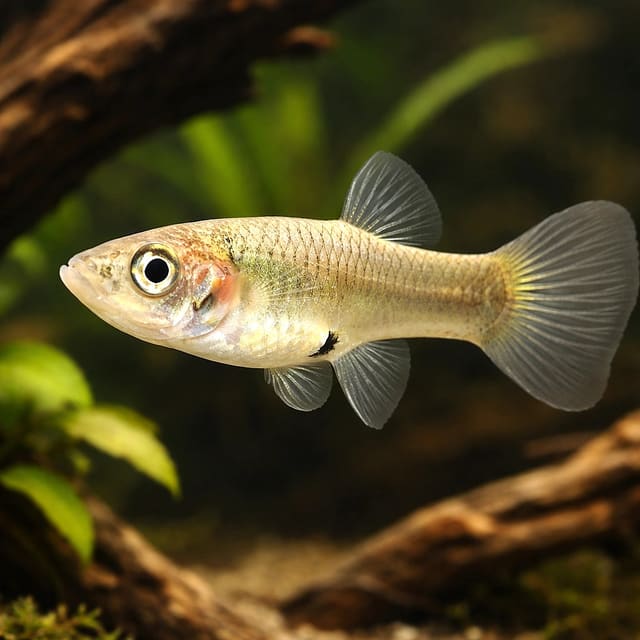
Female Endler Guppy (Poecilia wingei)
20–28°C · pH 7–8
£6.29
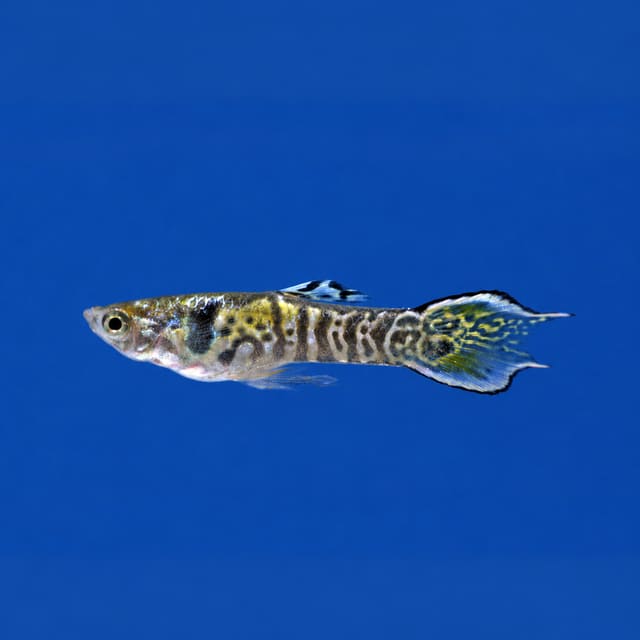
Campoma El Tigre Endler (Poecilia wingei) is a small Venezuelan livebearer supplied as one 2.5–4 cm fish per purchase. Sex is not guaranteed. It suits a mature, filtered aquarium at least 60 cm long, with stable medium-hard water, a planned group and space for the population to grow if males and females are mixed.
Adult size is the maximum length this species reaches at full maturity (scientific sources). The livestock you receive will be younger and smaller. Product-photo provenance and any image-specific limitations are stated on the listing.
Poecilia wingei
Shoaling fish: kept in a group they feel safer, stay calmer and show their best colour.
Campoma El Tigre Endler (Poecilia wingei) is a small Venezuelan livebearer supplied as one 2.5–4 cm fish per purchase. Sex is not guaranteed. It suits a mature, filtered aquarium at least 60 cm long, with stable medium-hard water, a planned group and space for the population to grow if males and females are mixed.
Adult size is the maximum length this species reaches at full maturity (scientific sources). The livestock you receive will be younger and smaller. Product-photo provenance and any image-specific limitations are stated on the listing.
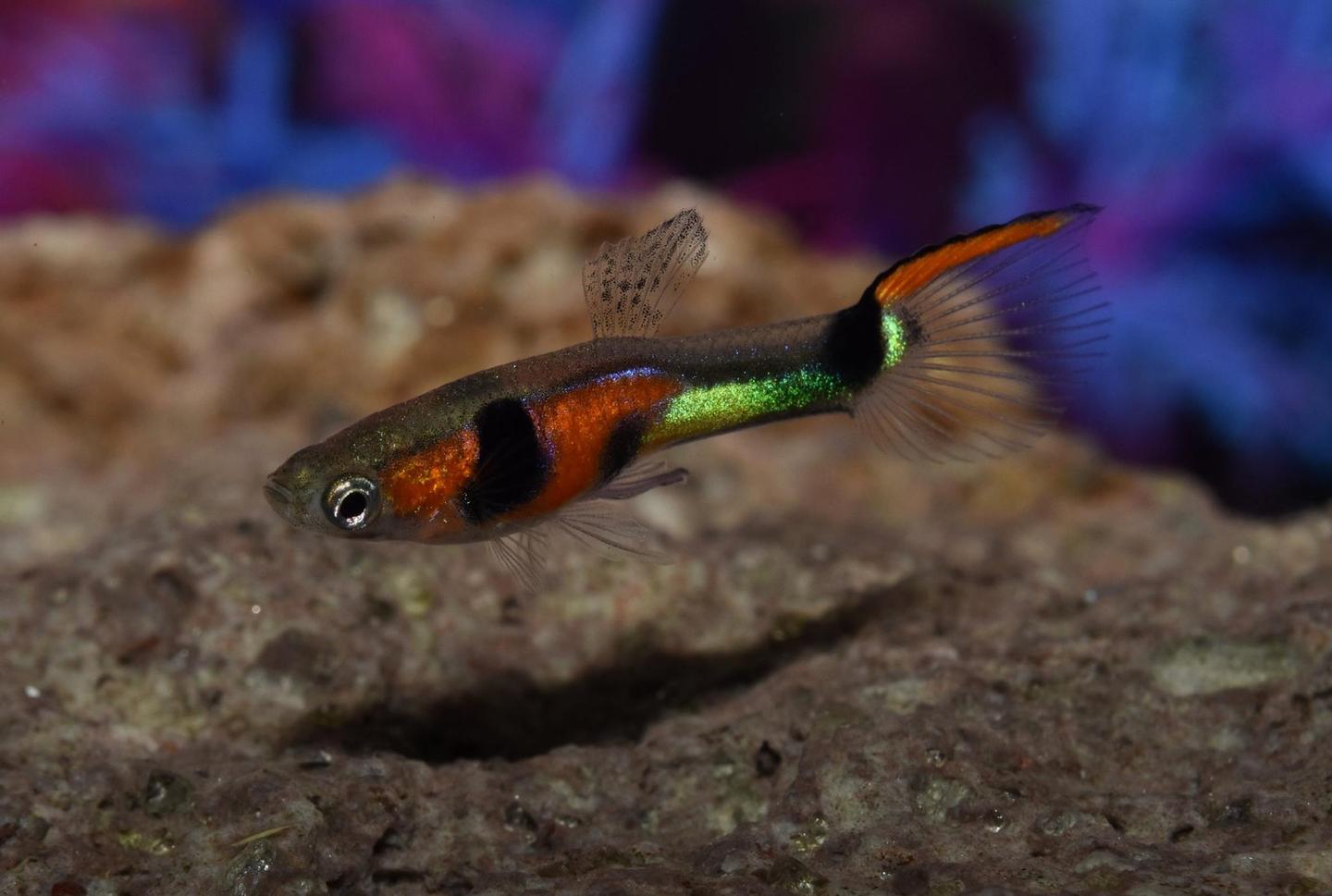
Endler's livebearer is a small, social, rapidly reproducing Venezuelan fish. Start with a mature filtered aquarium, a deliberate sex and population plan, stable tested medium-hard water, open swimming room and cover. Our conservative house screen is an aquarium at least 60 cm long and a group of five or more where capacity allows.
Maintain these water conditions for optimal health and vibrant colors
This listing is for one Campoma El Tigre Endler, Poecilia wingei. The supplier dispatch grade is 2.5–4 cm. That is the size band used to prepare the fish for sale, not a promise that every individual has the same body length or maturity. Sex is guaranteed only when the selected option explicitly states male or female. This Campoma El Tigre Endler listing has no sex-guaranteed option. If sex selection matters to the aquarium plan, use a listing that explicitly sells a sexed fish rather than trying to judge this one from colour, size or a photograph.
Campoma El Tigre is a trade and locality-style name attached to this Endler offer. The accepted species name is Poecilia wingei, a small poeciliid from the Campoma and Buena Vista lagoon systems of Venezuela. The scientific record uses standard length, which stops at the base of the tail. FishBase records 2.0 cm SL for a female, while material discussed in the original description reached about 3.0 cm SL. Those figures are not directly interchangeable with a supplier dispatch grade that may use a different measuring convention and includes the condition of live trade fish.
| Suits | A keeper with a mature filtered aquarium, tested medium-hard water, at least 60 cm of usable length under Tropical Fish Co's conservative house screen, and a deliberate plan for group size, sex and possible fry. |
|---|---|
| Reconsider if | The aquarium is uncycled, very soft and acidic, too small for a social group, shared with predators or persistent fin-nippers, or has no spare capacity if a mixed-sex group reproduces. |
| Temperament | Small and generally peaceful, but active courtship, pursuit and competition still need observation. Peaceful does not mean that every group manages itself. |
| Feeding style | Omnivorous; offer an appropriately small complete flake or granule, with safe small live or frozen variety where useful. |
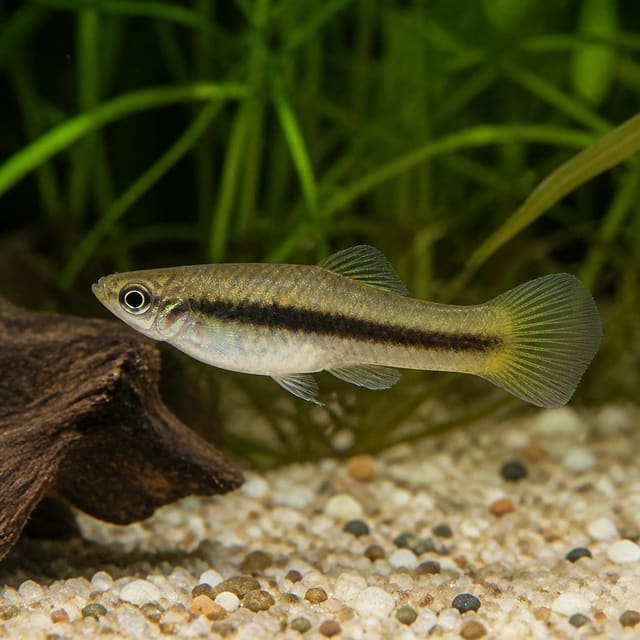
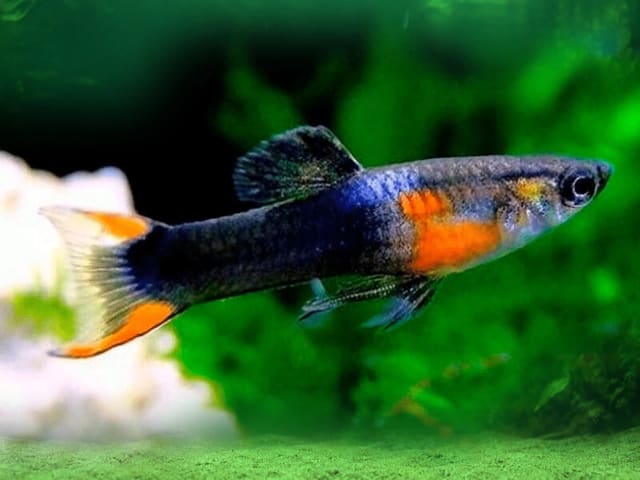
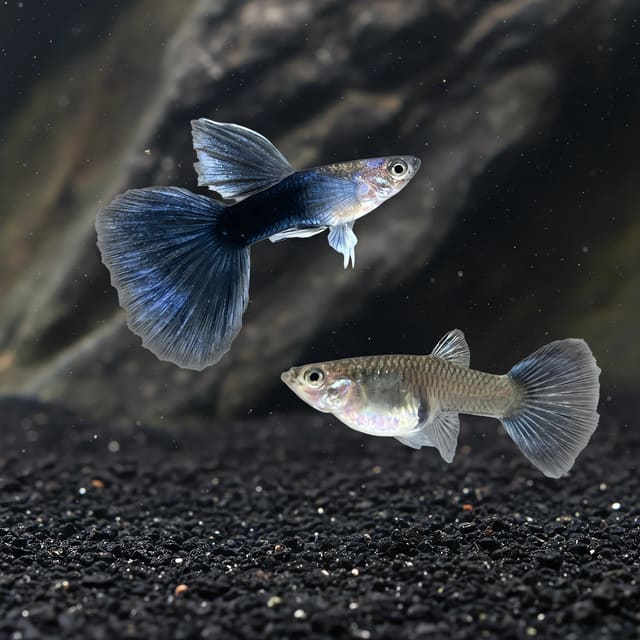
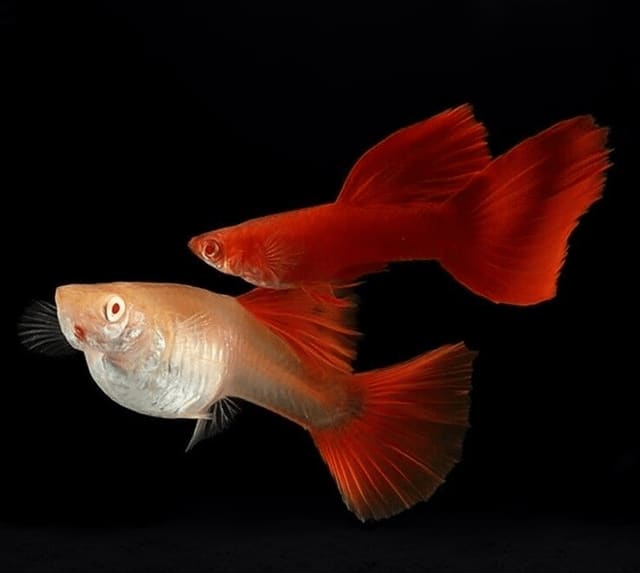
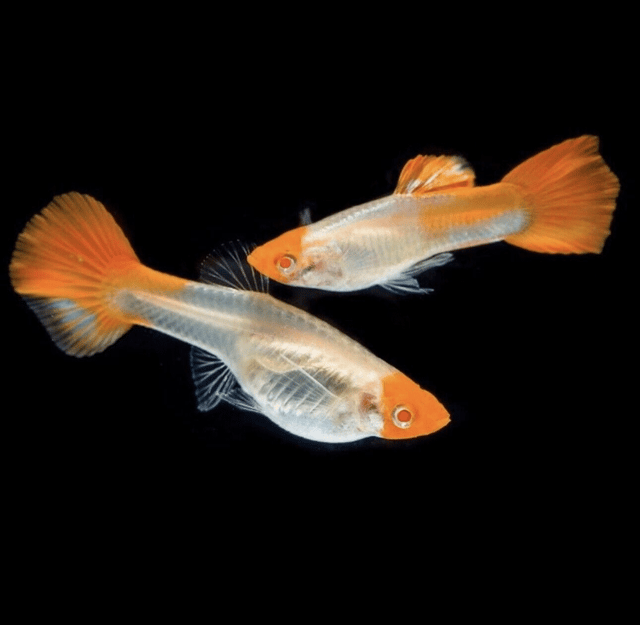
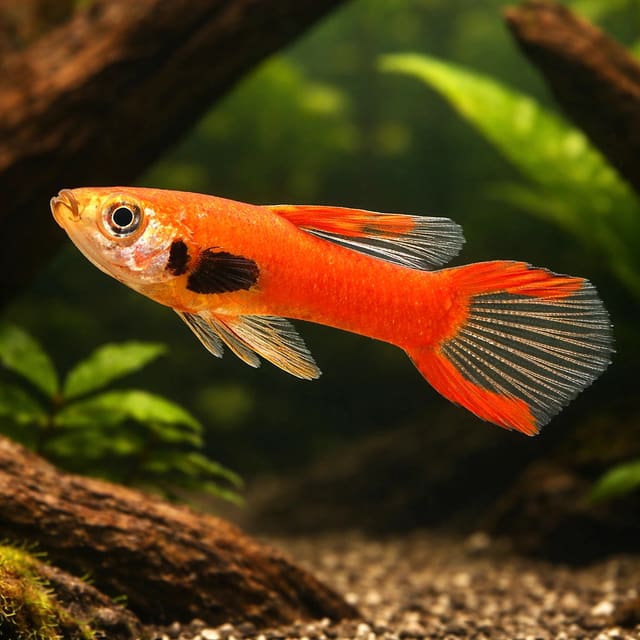
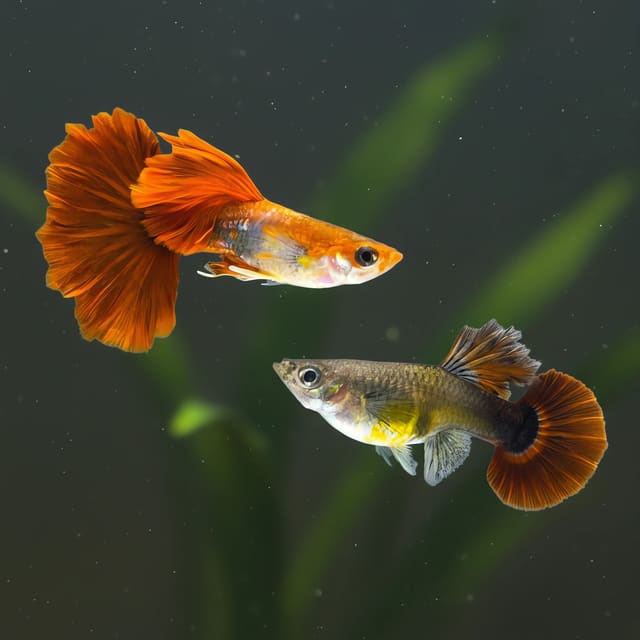
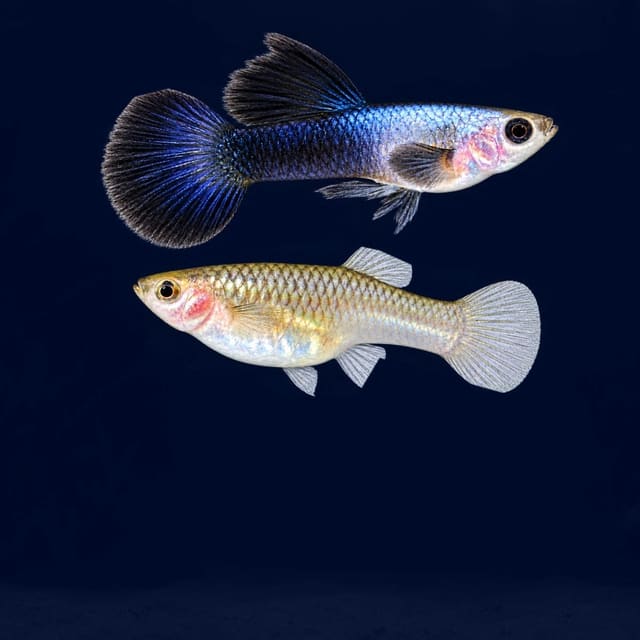
Colour and pattern develop with sex, age, genetics, condition and lighting, so the gallery is a guide to the named form rather than a promise that one live fish will reproduce every visible marking. Choose the offer for its recorded identity and care fit first. The Campoma wording does not turn a representative appearance into proof of a documented wild lineage; keep breeder records when line history matters.
A prepared beginner can keep Endlers well, but “easy” describes relative suitability, not permission to skip cycling, water tests or population planning. Begin with the full Endler guppy care guide if this is a new species for you. For other sale units and explicitly sexed choices, the Endler collection is the clearer place to compare offers.
Gallery images have been digitally enhanced to improve image quality. Natural colour, pattern, size and maturity can vary between live animals.
Poecilia wingei is the accepted species in family Poeciliidae. The original description placed its type locality near Cariaco in Venezuela, around the connection between Laguna Buena Vista and Laguna Campoma. That geographic history is useful context for the Campoma wording, but a retail trade name or colour pattern on its own is not a chain-of-custody document. Keep documented lines separate from common guppies if ancestry matters, and describe any future offspring honestly.
The species is distinct from the common guppy, Poecilia reticulata, even though the two can hybridise and produce fertile descendants. The practical consequence is simple: do not combine them when preserving a documented P. wingei line. Appearance is a poor substitute for records because body proportions and pattern can overlap, and domestic selection can change fins and colour.
The largest figure used in the store's reviewed species guide is 3 cm standard length, rounded from material in the original description. Standard length excludes the tail fin. FishBase's 2.0 cm maximum record and the roughly 3.0 cm figure from separate measured material describe different records, not a guaranteed finishing size for every individual. The 2.5–4 cm supplier grade on this offer is a dispatch band. Keep those roles separate when checking whether a fish will fit a net, breeder box or existing community.
Small body size should not be translated into a bowl-sized home. Endlers are active, social fish whose usable swimming length, filter capacity, oxygen, group composition and future fry matter more than a simple litres-per-fish calculation. Tropical Fish Co uses a conservative screen of at least 60 cm aquarium length for an adult group. OATA's broad guppy-and-molly sheet gives at least 45 litres for a small group of the smaller species. These are planning screens for a group, not a maximum stocking formula.
Set up and mature the aquarium before livestock is ordered. A working biological filter converts toxic ammonia through nitrite to the less harmful nitrate, but the process must be established and confirmed with tests. Ammonia and nitrite should both be zero before the Endler arrives. If this is a first setup, follow the first tropical aquarium guide through cycling and testing rather than relying on elapsed time alone.
Choose a filter for the whole stocking plan, not only this one small fish. Maintain surface movement for gas exchange and make sure the fish can hold position without fighting the current continuously. If fry are possible, protect the intake so very small fish cannot be drawn in. Rinse mature media in removed aquarium water or another dechlorinated method that protects the bacteria; replacing every piece of media together can destabilise the system.
OATA's combined UK guidance for guppies and mollies gives 20–28 °C, pH 7.0–8.0 and 8–18 dGH, with zero ammonia and nitrite. It explicitly includes Poecilia wingei, but the range is broad group-level husbandry guidance rather than a species-specific tolerance experiment. Seriously Fish gives a warmer and harder species profile of 24–30 °C, pH 7.0–8.5 and 15–35 dGH. For a new fish, stability and a gradual match to its present holding water are more useful than chasing an extreme from either range.
Test the tap supply and aquarium. GH measures dissolved calcium and magnesium, while KH describes buffering against rapid pH change; they are related but not interchangeable. The water chemistry guide explains what each reading means, and the water matcher can help compare measured values with the labelled guidance. Make changes in small, measured steps. Sudden swings in temperature, pH or mineral content can be harder on a fish than a stable value within the appropriate working range.
Measure at consistent times when comparing trends. Temperature can vary across the day, and pH can move in planted aquariums as carbon dioxide changes. A single surprising reading deserves a careful repeat with an in-date test before a large correction. Record both the value and the action taken; this makes gradual drift easier to distinguish from a testing error.
Keep open horizontal swimming room alongside planted or structured cover. Floating plants and fine-leaved growth can break sight lines and shelter fry, while open water lets active fish feed and display normally. Cover should help a pursued fish move away; it should not turn persistent harassment into something the keeper simply cannot see. Smooth decor reduces snagging risk, and a secure lid protects an active small fish from escaping through a gap.
Dense planting can improve shelter but does not replace filtration or water changes. It can also allow more fry to survive, which may be helpful in a planned breeding aquarium and awkward in an already full community. Decide how much nursery cover to provide as part of the population plan rather than treating every extra plant as neutral.
Poecilia wingei is omnivorous. Use an appropriately small, complete flake or granule as the staple and add safe variety rather than depending on one treat. OATA notes that Endlers may need smaller frozen foods such as cyclops. Daphnia and other suitably sized live or frozen items can add variety, but the particle size and nutritional completeness matter more than a long menu.
Watch the whole group eat. Distribute food across more than one spot so a bold fish cannot monopolise every mouthful, and check that smaller or quieter individuals swallow rather than repeatedly spit particles. OATA's broad household guidance is one daily portion consumed within a few minutes. Adjust the amount to the actual group, food and temperature, removing recurring leftovers before they break down. Young fish or animals under veterinary care may need a different plan.
OATA recommends a partial water change of 25% at least once every week for guppies and mollies. Treat that as a starting routine and use test results, stocking and feeding to refine it. Condition replacement tap water for chlorine or chloramine and bring it close to aquarium temperature before adding it. Siphon debris from open substrate without stripping every sheltered area at once.
A mature aquarium is not a permanently finished aquarium. Adding fish, overfeeding, losing filter flow or cleaning too aggressively can increase the load faster than the bacterial community responds. If ammonia or nitrite appears, pause stocking, test again with a reliable kit and correct the cause while protecting the fish from further exposure.
A settled Endler should swim steadily, breathe regularly, hold its fins normally and show a consistent feeding response. Gasping, loss of balance, persistent hiding, clamped or damaged fins, spots, wounds, unusual swelling or a sudden loss of appetite are reasons to investigate promptly. Begin with water tests and equipment checks because poor water or temperature can produce broad signs that resemble disease.
Review recent additions, maintenance, food and social pressure. Photograph a change over time and isolate equipment used for any separate aquarium. Avoid choosing salt, heat or medication from one symptom alone. Where signs are severe or persistent, seek an aquatic vet or experienced professional using the current UK route rather than combining treatments speculatively.
Establish a baseline soon after arrival: note where the fish swims, its breathing rate at rest, whether both sides of the body and fins look intact, and how it responds to a small feed. Recheck at the same time of day so lighting and feeding do not create false differences. A fish that hides briefly after travel can still be monitored without repeated netting or chasing.
If behaviour changes, test temperature, ammonia and nitrite before assuming a social or infectious cause. Then check flow, oxygenation, recent cleaning and interactions at food. One fish missing every feed may be excluded even when no dramatic chase is visible. A fish repeatedly at the surface may be responding to water or oxygen rather than asking for more food.
A separate observation aquarium is useful only when it is mature, heated, filtered and equipped with its own nets and siphon. Moving a fish into fresh, uncycled water swaps one concern for an immediate water-quality risk. Keep written readings and photographs for a vet or experienced adviser, and use UK-authorised products only for a defined reason.
In mature fish, the anal fin is the more useful visible distinction: males have a narrow modified anal fin called a gonopodium, while females have a broader, triangular anal fin. Males are often smaller and more conspicuously patterned, but colour, body size or a rounded abdomen is not enough on its own. This product is not sold with a sex guarantee, so plan for either sex.
For an all-male display, monitor pursuit, feeding access and fin condition; removing females does not remove every social problem. A female-only plan depends on accurate sexing and still needs adequate space and observation. A mixed-sex group requires spare mature capacity because Endlers are livebearers and can reproduce readily.
Mixed groups should only be assembled when every resulting fish has a responsible route. Keep a mature separation option, suitably small complete food and a rehoming plan. Avoid promising a fixed brood size or interval: individual age, condition and husbandry change the outcome, and limited studies under one laboratory regime are not a timetable for every home aquarium.
If fry appear, test water and reassess filter capacity immediately. Do not move them into an uncycled container simply to create space. Separate sexes only when identification is confident and both groups have suitable mature accommodation. Population control is most humane when it begins with the original stocking decision.
Any fish large enough to swallow an Endler is unsuitable. Persistent fin-nippers and forceful feeders can also be a poor match even when their temperature range overlaps. Screen every companion for adult size, predatory behaviour, feeding speed, water chemistry and the space needed by all social groups together.
Seriously Fish describes small peaceful species such as dwarf Corydoras, small rainbowfish and peaceful tetras as possible companions. These are categories to investigate, not automatic approvals. The exact species still needs compatible temperature and hardness, enough aquarium footprint, and behaviour that lets every fish feed and rest. Introduce carefully and keep a separation option ready.
Common guppies should be avoided when preserving a documented Poecilia wingei line because the species can hybridise. If ancestry is not the aim of the aquarium, the keeper still needs to consider future offspring and label them honestly. An informal colour name, a photograph or a tail shape cannot establish purity.
Other Endlers may be socially relevant, but adding fish just to reach a number is not a remedy for inadequate space or unstable water. Tropical Fish Co's house plan is five or more where capacity and sex planning allow. Observe individuals: repeated cornering, missed feeds, fin damage or one fish constantly leaving open water calls for intervention.
No livebearer should be marketed as completely shrimp-safe. Adult shrimp may coexist in a well-planned aquarium, while shrimplets and small individuals can be eaten. Dense cover reduces exposure but cannot guarantee survival, and feeding competition still matters. Check the shrimp's own mineral, temperature and group requirements before combining them.
Snails are less likely to be treated as prey, but species-specific water needs, food availability and total bioload still apply. Never add an animal as a “clean-up solution” for overfeeding or delayed maintenance. The useful compatibility rule is conditional: choose small peaceful companions with overlapping water needs, adequate shared space and no credible predation or fin-nipping risk.
Test the aquarium, confirm filter and heater operation, and decide where this fish will enter the social plan before the order travels. Someone must be at the address to receive live fish. Tropical Fish Co hand-bags livestock in oxygen, uses an insulated box and adds a heat pack when weather requires it. A licensed live-animal courier carries the parcel.
For the Live Arrival Guarantee, begin one continuous unboxing video while the parcel is still sealed. Show the outer box, opening and the fish still inside the sealed bag before anything is disturbed. Inspect the fish on arrival and contact the store the same day with the order number and video if condition causes concern. The current delivery and Live Arrival Guarantee policy owns the full terms and reporting route.
Keep the bag closed until the required evidence has been recorded and the condition checked. Follow the instructions supplied for the journey and compare the bag and aquarium water carefully. Do not pour transport water into the aquarium. Introduce the fish gently, then watch breathing, balance and swimming without crowding the tank.
Transport colour can change, but paleness should not be dismissed automatically. Combine appearance with breathing, posture and balance, retain the arrival evidence and report a concern promptly. Once the fish is settled, keep feeding light enough to observe appetite without adding unnecessary waste to a system adjusting to a new animal.
The store's reviewed species guide uses 3 cm standard length as a conservative maximum from measured material in the original description; standard length excludes the tail. FishBase records a 2.0 cm female maximum from a different record. The 2.5–4 cm figure on this offer is the dispatch grade and should not be confused with a single adult standard-length promise.
OATA recommends at least 45 litres for a small group of the smaller guppy species. Tropical Fish Co adds a conservative house screen of at least 60 cm aquarium length for an adult group, with mature filtration, zero ammonia and nitrite, open swimming room and cover. Neither figure is a litres-per-fish stocking formula.
OATA's broad guppy guidance starts at three. Tropical Fish Co recommends five or more where aquarium capacity, sex planning and other occupants allow. Build the group deliberately rather than buying one fish at a time to solve chasing, and keep a separation plan for any individual that cannot feed or escape pursuit.
Yes, it can suit a prepared beginner with a cycled, filtered aquarium, reliable water tests and a plan for social behaviour and fry. The “easy” store label is relative: it does not make an uncycled bowl, unstable temperature or unplanned mixed-sex group suitable.
It is omnivorous. Use an appropriately small complete flake or granule as the staple, then add safe small live or frozen variety such as cyclops where useful. Spread food so every fish can feed, and adjust portions when recurring leftovers or declining body condition show the routine needs changing.
OATA's broad group-level guppy-and-molly guidance gives 20–28 °C, pH 7.0–8.0 and 8–18 dGH. Test the source and aquarium water, keep the aquarium stable and make any adjustment gradually. These values are practical group guidance, not a species-specific tolerance boundary.
It is generally peaceful, but males may display and pursue, and females can compete socially. Watch feeding access, persistent chasing and fin condition. Avoid known fin-nippers and predators, and use open swimming room with cover that allows a fish to leave another's line of sight.
Consider small peaceful species with overlapping water needs and no credible predation or fin-nipping risk; Seriously Fish names dwarf Corydoras, small rainbowfish and peaceful tetras as examples. Check the exact companion rather than treating a category as guaranteed. Keep common guppies separate when preserving a documented Endler line, and treat shrimp as potentially vulnerable.
Tropical Fish Co hand-bags the fish in oxygen, packs it in an insulated box with a heat pack when weather requires, and uses a licensed live-animal courier. Someone must receive the parcel. For the Live Arrival Guarantee, start one continuous video with the parcel still sealed, show it being opened and the fish still in the sealed bag, then report any concern the same day with the order number.
Identity, distribution and recorded size are anchored in FishBase, the Catalog of Fishes and the original species description. The later morphological and molecular comparison supports the species distinction while explaining why appearance alone is not a pedigree test.
Practical aquarium guidance comes from the Seriously Fish species profile and OATA's UK guppy-and-molly care sheet. OATA's water and maintenance values are labelled as broad group guidance. General filtration and welfare checks are supported by the RSPCA pages on aquarium environment and fish health.
The captive-line health paper and limited life-history study are used only for their stated observations, not as population-wide rates or household promises.
No reviews for this item yet. Bought one? Honest reviews only, good or bad.
What customers say about ordering from us
Easy website plenty of info on fish your buying great to pick a time slot
TRACEY DURRANT · 7 Oct 2026
Got some lovely fish thank you
Kevin Mackie · 7 Oct 2026
Reviews of our shop, collected by Judge.me, an independent third-party review collector. Newest first.