Easy
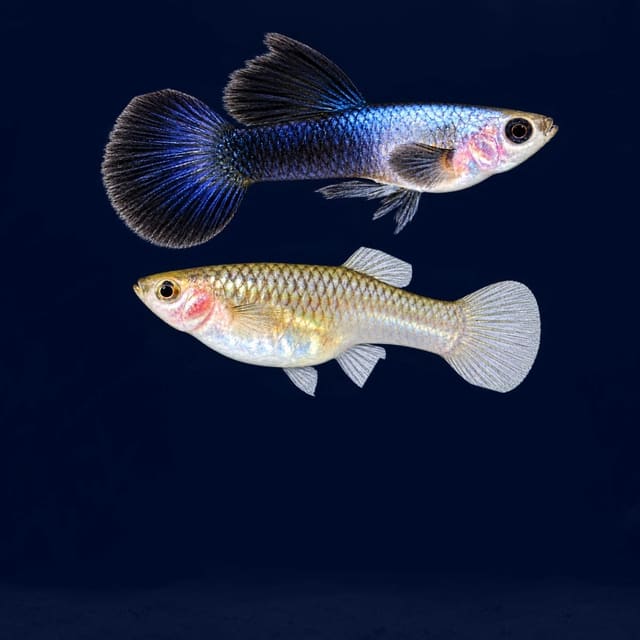
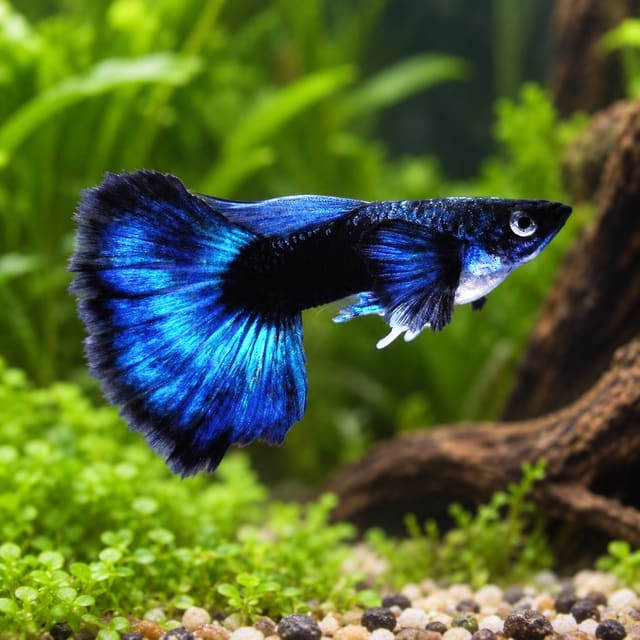
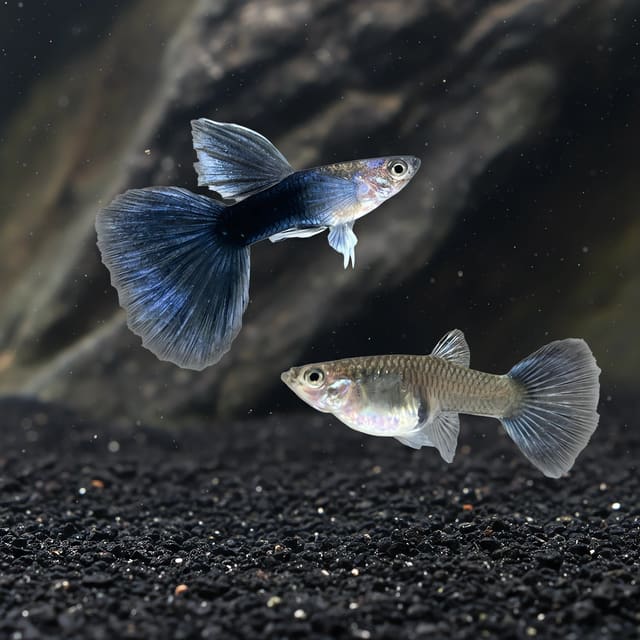
Half Black Blue Big Tail Guppy Pair (Poecilia reticulata)
£18.99
Albino Koi Glassbelly Guppy Pair (Poecilia reticulata) supplies two live fish per purchase. Their sex composition is not guaranteed. Plan a mature, filtered aquarium with mineral-bearing water, gentle flow, cover and a suitable social group; a pair alone is not the long-term group plan.
Adult size is the maximum length this species reaches at full maturity (scientific sources). The livestock you receive will be younger and smaller. Product-photo provenance and any image-specific limitations are stated on the listing.
Poecilia reticulata
Each quantity is one pair containing 2 fish. Discounts count pairs. Selected: 1 pair (2 fish).
Albino Koi Glassbelly Guppy Pair (Poecilia reticulata) supplies two live fish per purchase. Their sex composition is not guaranteed. Plan a mature, filtered aquarium with mineral-bearing water, gentle flow, cover and a suitable social group; a pair alone is not the long-term group plan.
Adult size is the maximum length this species reaches at full maturity (scientific sources). The livestock you receive will be younger and smaller. Product-photo provenance and any image-specific limitations are stated on the listing.
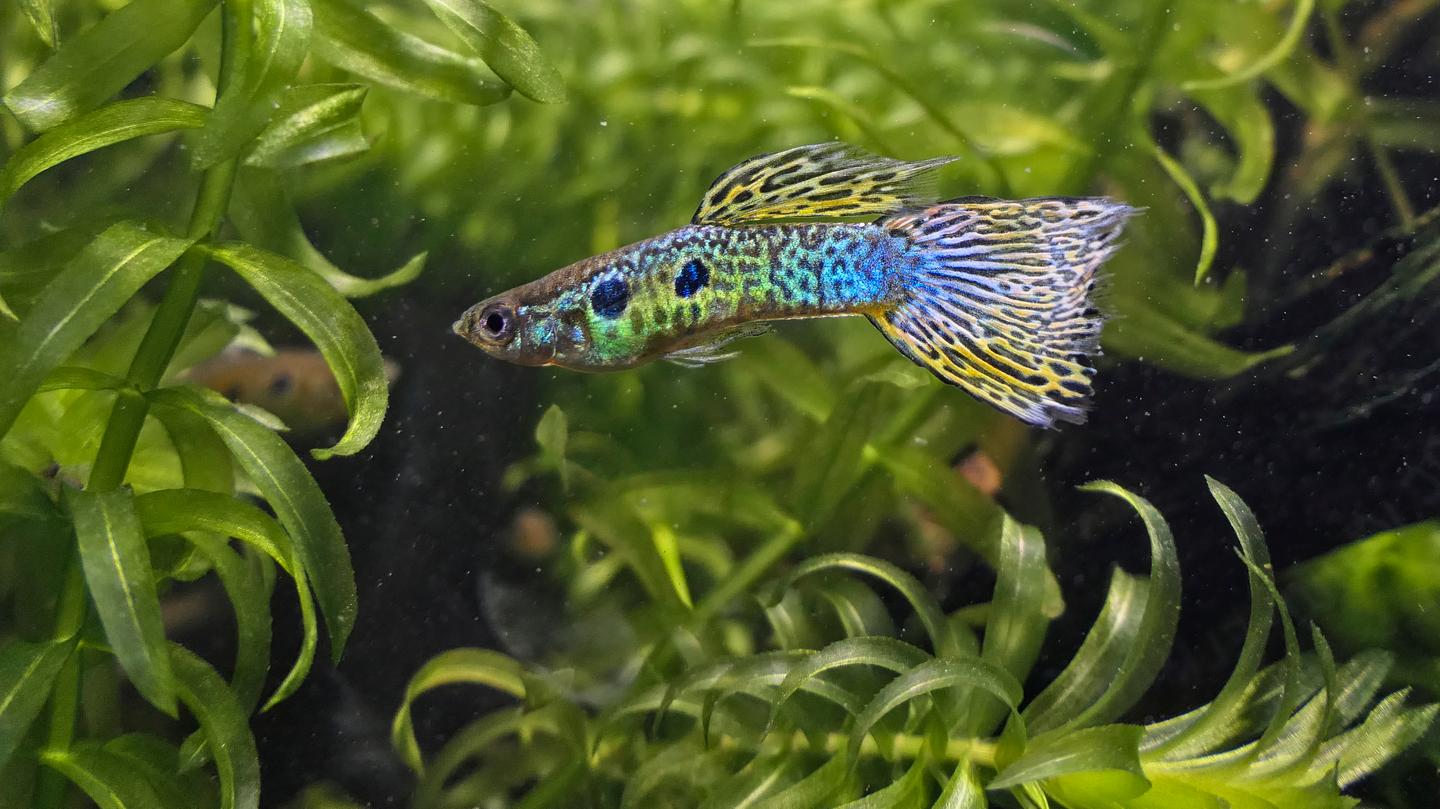
Guppies are social livebearers suited to a prepared beginner, not a fish-per-litre formula. Use a mature filtered aquarium, tested neutral-to-alkaline mineral-bearing water, deliberate sex and population planning, open swimming room, cover and a separation option.
Maintain these water conditions for optimal health and vibrant colors
Albino Koi Glassbelly Guppy Pair is a trade form of the guppy, Poecilia reticulata. One purchase supplies one pair: two live fish. The name describes the form and the sale unit, not a promise that the two fish will be one male and one female. Sex is guaranteed only when the selected option explicitly states male or female. This Albino Koi Glassbelly Guppy Pair listing has no sex-guaranteed option. If a particular sex mix matters to your aquarium or breeding plans, neither the pair label nor the gallery photograph confirms it.
Guppies are small, active livebearers of the Poeciliidae family. They spend much of their time exploring the open water, feeding and interacting with their group. Their appeal is easy to see, but their small size can hide a substantial husbandry decision: they need an established, filtered aquarium, stable water that suits guppies and enough companions. Two new fish may join a suitable existing group; buying this pair alone does not create the recommended long-term group of five or more. Check the fish you already keep, the available swimming room and the likely sex balance before ordering.
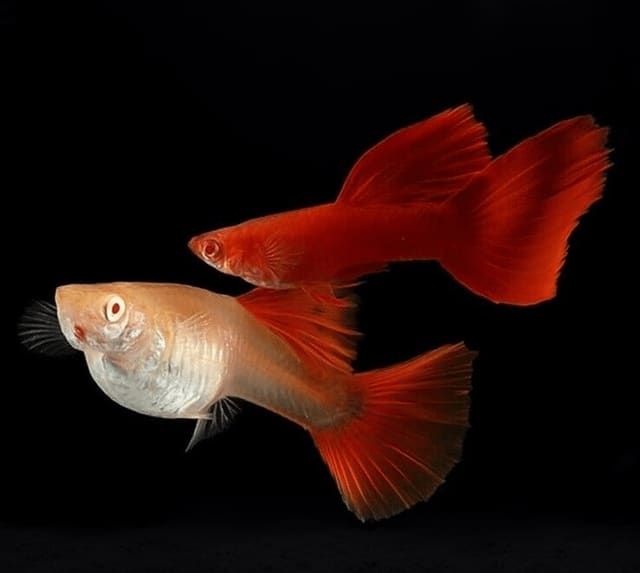
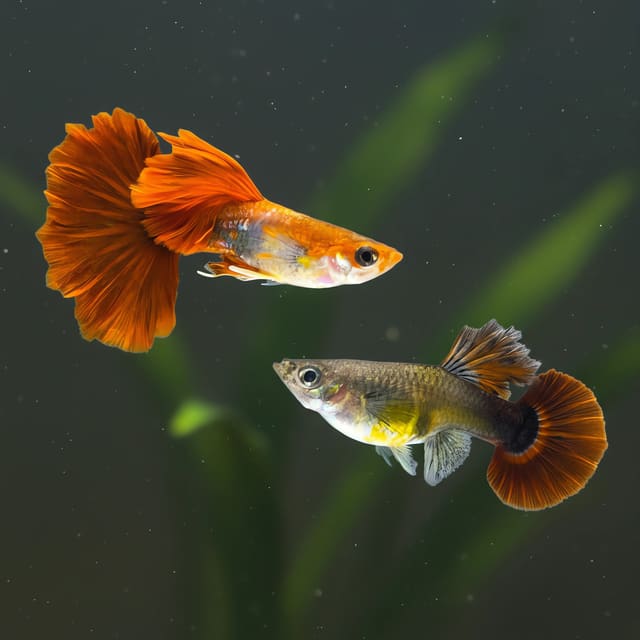
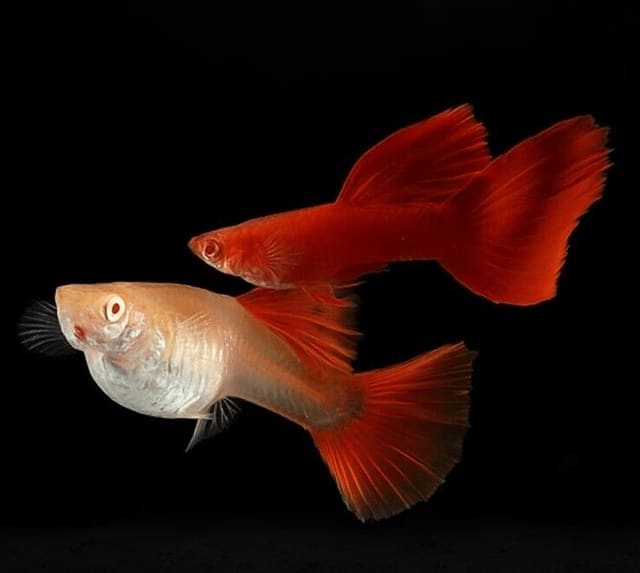
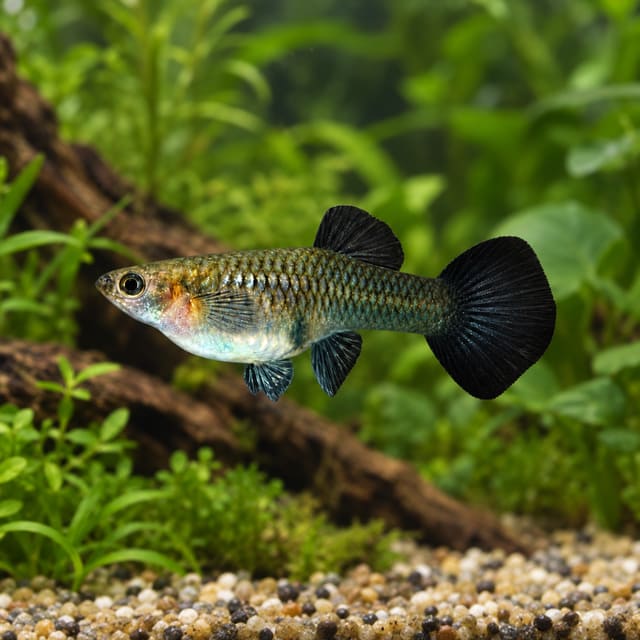
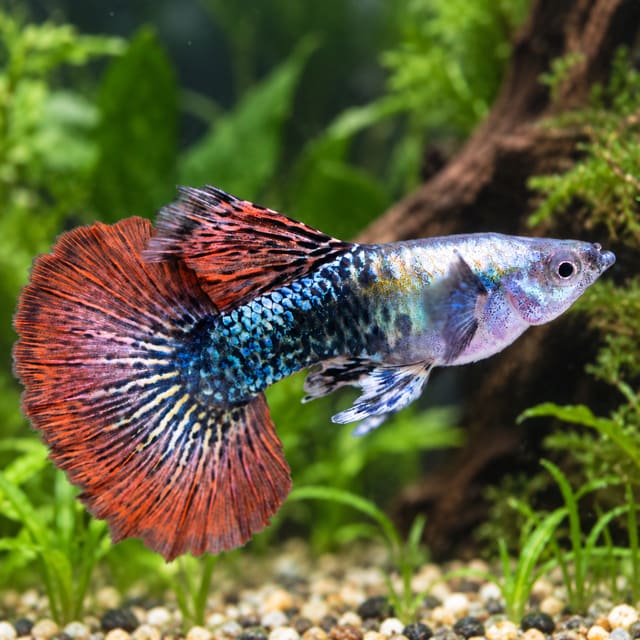
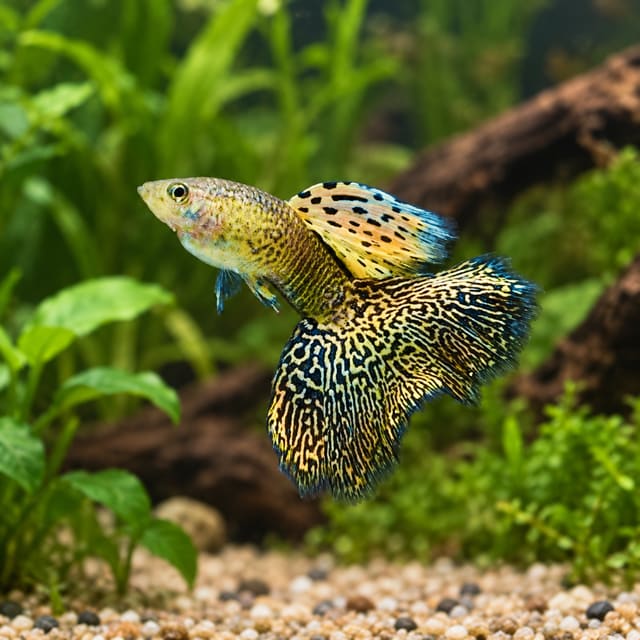
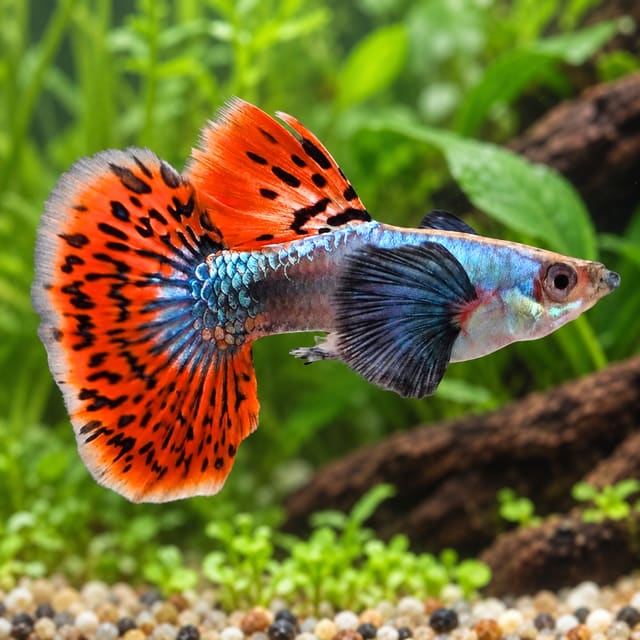
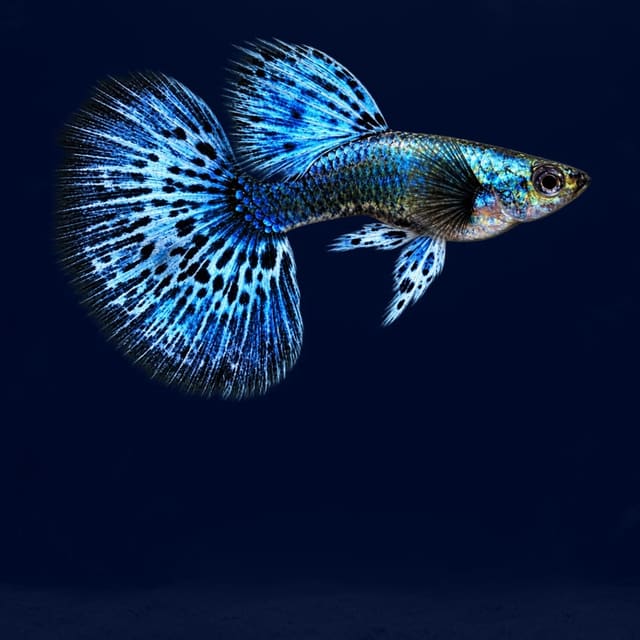
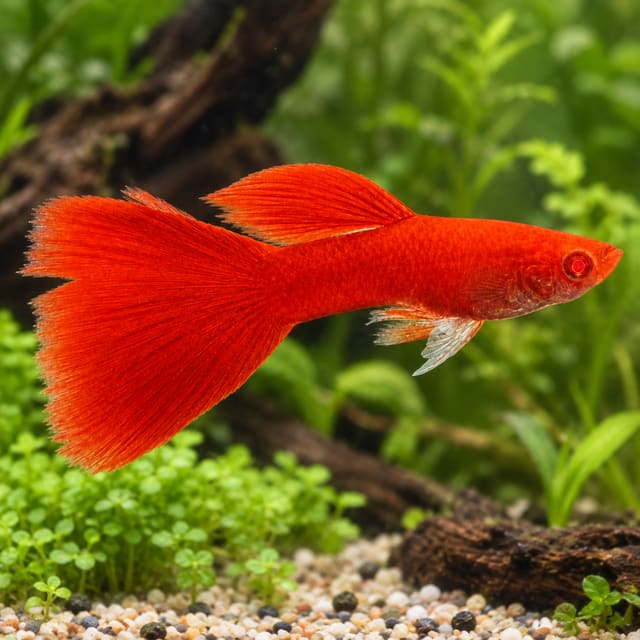
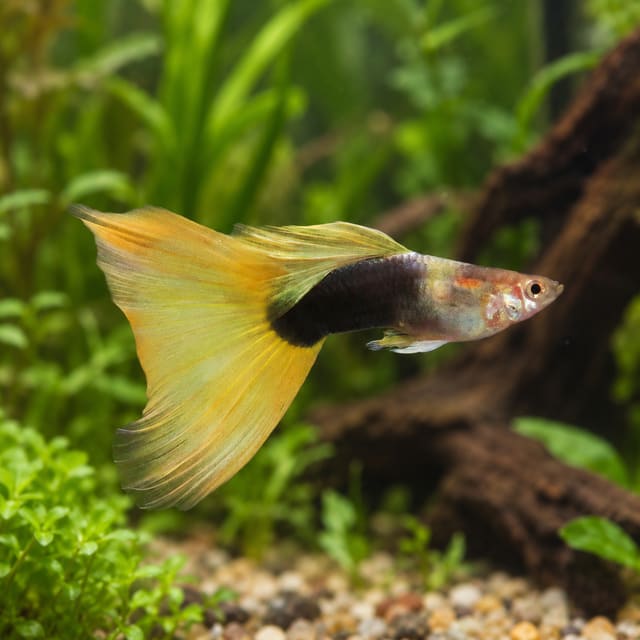
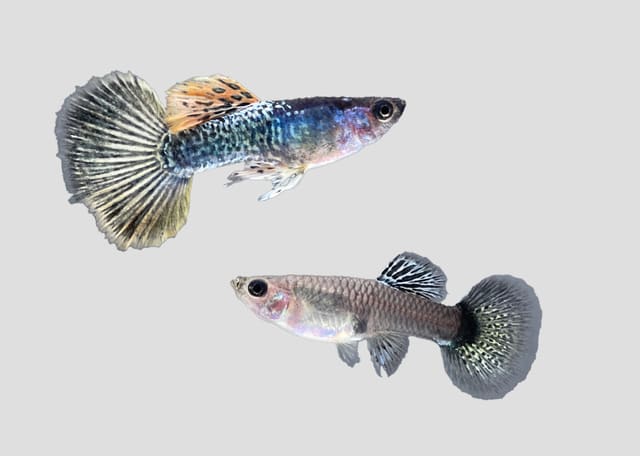
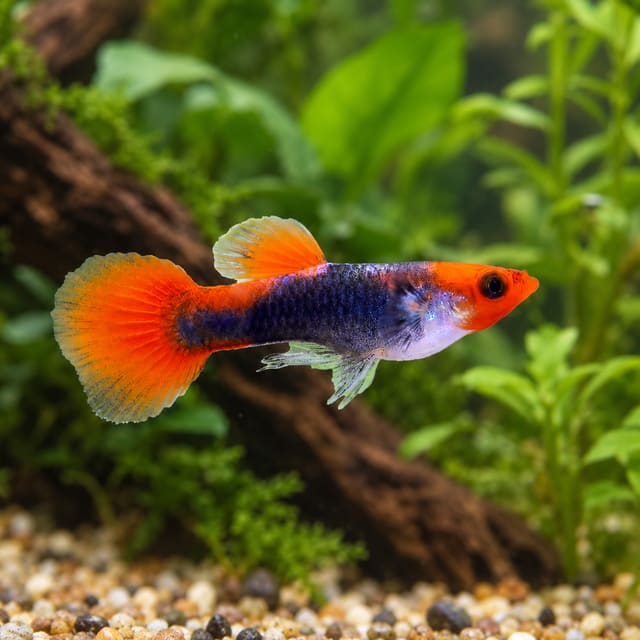
The orange and silver colours pictured are a useful visual guide to this trade form, although live fish can vary in pattern, size and maturity. The photograph does not establish which individual fish will be supplied or the sex of either fish. Adult size should also be distinguished from dispatch size. No fixed dispatch-length choice is offered here, so plan for adult guppies and allow each arrival to develop at its own pace.
This pair is most at home with a keeper who can maintain a mature aquarium with a working biological filter, tested water and a deliberate social plan. Tropical Fish Co's guppy guide recommends a tank at least 60 cm long for a group of five or more, provided the sex mix, filtration, water tests and other livestock make that stocking sensible. Tank length creates room for these active fish to move and withdraw from one another; it is not a licence to stock five fish into any 60 cm tank regardless of its volume or maturity. The guide's group figure is a planning policy, and a pair may be the right addition to an established group if the whole aquarium remains suitable.
For routine display, aim for a stable 22–28°C, pH 7–8 and moderately hard water around 8–18 dGH, with ammonia and nitrite at zero. The temperature is the store's routine guppy guidance; the pH and hardness figures come from broad guppy-and-molly care guidance rather than a claimed optimum for this colour form. If your tap water or current aquarium differs markedly, test it and plan a suitable livestock choice instead of making abrupt adjustments around new arrivals. The water matcher can help compare measured values with the guidance.
A peaceful community with compatible water and no fin nippers may work well. Large predatory fish, persistent chasers and animals that need very different water are poor choices. The compatibility section gives the checks that matter more than a generic list of tank mates.
Poecilia reticulata is the accepted scientific name for this guppy. FishBase places it in Poeciliidae and records a native range including Venezuela, Barbados, Trinidad, northern Brazil and the Guianas. It also records the species in freshwater and brackish habitats. Those are observations about the species in nature, not instructions to add salt to a home aquarium. The fish offered here should be housed in an appropriate freshwater setup unless a qualified, case-specific reason calls for something else.
FishBase records 5 cm standard length for male or unsexed fish, while the Tropical Fish Co guppy guide notes a female record of 6 cm standard length. Standard length stops at the base of the tail; an ornamental tail can make total visual length look different. Neither figure says how long the two fish in this purchase will be on arrival. It is more useful to allow space for mature fish and their movement than to plan equipment around a photographed or imagined dispatch size.
Albino, koi and glassbelly are trade descriptors of appearance. They do not create a different species with a different water chemistry, temperament or feeding requirement. Likewise, an Endler's livebearer is Poecilia wingei, a separately recognised species, not another name for this pair. These distinctions matter when comparing care pages or keeping documented breeding lines.
Have the aquarium running, matured and tested before livestock is dispatched. A new filter does not become biologically ready merely because the water is clear. Confirm that ammonia and nitrite read zero, the heater holds a steady temperature and there is capacity for two additional fish without crowding the aquarium or overwhelming the filter. Our first tropical tank guide explains the preparation if this is your first setup.
Think through what happens after these two join the tank. Guppies are social, and FishBase's aquarium note recommends groups of five or more. Existing fish may already form a suitable group, but the number alone is only a starting point. Check whether any fish is being chased, whether timid individuals can rest, whether you can manage possible livebearer fry and whether you have room or a separation plan if behaviour changes. It is better to settle those questions before the parcel arrives than to improvise while acclimating live animals.
Use the current delivery and Live Arrival Guarantee terms for the shop's packing, receiving and claim instructions. Arrange for someone to receive and inspect the parcel on arrival. Delivery terms are separate from the husbandry guidance on this page, and the live-arrival policy has specific evidence requirements if something is wrong.
Start with the adult group, not the two fish in the bag. Guppies use open water and benefit from enough horizontal space to move away from a busy neighbour. The store's conservative planning recommendation is an aquarium at least 60 cm long for five or more guppies, with the final stocking judged against water quality, filtration, sex balance and other inhabitants. FishBase also gives a 60 cm aquarium note and a group of five or more. A different specialist profile describes a smaller base for the species, while OATA gives 45 litres for a small group of smaller livebearers as broad group guidance. These measures describe different aspects of a tank; none replaces checking the complete setup.
Do not try to calculate a safe group from a simple fish-per-litre rule. A tall narrow tank and a longer shallow tank can have similar volume but very different swimming space and gas exchange. Decor, plants, filter capacity, the size of existing fish and maintenance habits also change what can be supported. If the aquarium is close to its present limit, adding a pair is not harmless because the fish are small. Confirm stable test results over time and add livestock gradually so the biological filter can respond to the extra waste.
Arrange plants and open water together. Live plants, floating cover or safe artificial shelter give shy fish a place to pause and help break up sight lines. Keep a clear swimming lane rather than filling every inch with hard ornaments. Check that decorations have no sharp edges that could damage ornamental fins. A secure lid helps contain active fish and makes the top of the tank a predictable, calm space during feeding and maintenance.
For everyday display, use the store's 22–28°C guppy range and keep temperature steady within it. OATA's UK sheet for guppies and mollies gives pH 7–8 and general hardness 8–18 dGH as broad group guidance. Guppies are usually better suited to neutral-to-alkaline, mineral-bearing water than chronically soft, acidic conditions. A number taken from a wild-species record or a wider tolerance profile is not automatically a good target for these domestic fish. Stability, the needs of the whole aquarium and gradual adjustment matter as much as the number itself.
Test the water you have rather than assuming that a clear tank is safe. A working biological filter turns toxic ammonia into nitrite and then nitrate, but that process can fail after overstocking, overfeeding, a water change using tap water without conditioner or a filter interruption. OATA recommends zero ammonia and zero nitrite for guppies and mollies, with nitrate kept in check relative to the source water. Record temperature, pH and hardness as well as the nitrogen readings when setting up or investigating a problem. The water chemistry guide explains what those tests mean.
Match replacement water to the aquarium as closely as practical and use an appropriate conditioner for chlorine or chloramine. Sudden swings can be more stressful than a stable value near one edge of the reviewed range. Never change several water variables at once to chase a printed target. If your source water is very different from the guidance, seek a coherent plan before ordering rather than treating a fish's arrival as an experiment in rapid chemistry changes.
Keep an appropriately sized filter operating continuously. Its biological media houses bacteria that process fish waste; the filter also moves water so oxygen can reach the aquarium. The RSPCA advises that fish need a well set up, maintained filter. Guppies can swim actively, but a strong current across the entire tank leaves little resting space, especially for fish with broad ornamental tails. Position the outlet or use planting so there is both circulation and a calmer area. Watch how the fish actually hold position; a fish constantly fighting the flow is giving useful feedback about the layout.
Do not rely on an equipment wattage or a printed turnover number alone. Filter performance changes with media, clogging, the tank's shape and the number of fish. A flow rate that looks impressive on a box can be uncomfortable in a small open tank, while weak circulation can leave stagnant areas. Keep the surface gently moving without turning the aquarium into a torrent. If fish repeatedly gasp at the surface or gather at an outlet, check water quality, temperature, oxygenation and the filter promptly rather than assuming they simply prefer that spot.
During maintenance, preserve the established bacteria. OATA advises that if a filter needs cleaning, it should not be run under the tap because chlorine or chloramine may kill beneficial bacteria in its media. Rinse the media lightly in tank water removed during a partial water change, and check the filter for blockages. If power or filtration stops, monitor the fish and test the water while restoring a safe system. This is also why a new aquarium should mature before the pair arrives: a filter's presence is not proof that its biological capacity is ready.
A balanced layout lets guppies choose between open swimming space and shelter. Plants can soften the view across the tank and create quieter areas; floating vegetation is particularly appreciated in the specialist species account. Gravel or sand can both work when kept clean and appropriate for the other inhabitants. The guppies do not require a special colour of substrate to match their trade form. Choose decorations for safe surfaces and simple maintenance, and leave access to the filter and heater so both can be checked without dismantling the habitat.
Give the fish a regular light and dark rhythm instead of leaving the aquarium lit around the clock. Observe them at calm times as well as feeding time. A healthy group will not be motionless, but each fish should be able to swim, feed and rest without constant harassment. Look for an individual that always hides, struggles at the surface or is displaced from food. Such behaviour is a reason to inspect the whole setup, including companions and water tests, before adding more fish.
In a mixed community, cover is more than decoration. It gives a smaller or newly introduced fish routes out of sight, although plants cannot make a fundamentally incompatible predator safe. Avoid a layout that traps a pursued fish against glass or in one corner. Leave enough room to net or observe an animal if it becomes ill. A modest, well maintained planting scheme often serves these needs better than a crowded display that looks elaborate but is difficult to clean.
Offer a good quality complete flake or fine granule suitable for small livebearers as the staple. OATA's guppy-and-molly guidance favours a product with plant material and allows small compatible live or frozen foods for variety. A portion should be small enough for these fish to eat without leaving a cloud of fragments drifting into the filter or substrate. Watch that both new fish can reach food; the boldest guppy reaching the surface first does not prove that the quieter one has eaten.
Wild guppies eat a range of small animals and detritus, and a specialist profile notes that today's domestic aquarium fish readily take prepared foods. That context explains why variety can be useful, but it does not mean a home aquarium needs to imitate every wild food item. Choose foods of an appropriate particle size, thaw frozen portions safely and remove obvious leftovers. OATA suggests feeding only what the group consumes within a few minutes once a day; adjust the amount to the fish and avoid turning that guidance into an excuse to overfeed.
Excess food becomes waste and can degrade water quality, especially in a new or heavily stocked aquarium. If feeding is refused, check behaviour and water conditions rather than repeatedly adding more food. A temporary change after transport is different from persistent loss of appetite combined with gasping, clamped fins or unusual swimming. Keep a note of what was offered and what was eaten so any later health discussion starts with observations rather than guesses.
These two guppies need a social plan. FishBase's aquarium note suggests five or more, and Tropical Fish Co adopts that as its conservative group recommendation when the tank can support it. OATA's broader guppy-and-molly sheet suggests at least three and discusses a female-heavy sex balance to reduce pressure on females. The figures are not instructions to add fish blindly: aquarium size, filtration, existing livestock and the actual sexes all matter. This product is a pair by count, with no male/female guarantee, so do not build a precise sex ratio on assumptions about the order.
Guppies are livebearers and may produce fry when males and females are kept together. If you have no space or plan for more fish, consider that possibility before adding the pair to a mixed-sex group. A female may also have mated before purchase, so a later birth cannot be used to prove the sex composition supplied with this pair. The presence of fry does not tell you that the aquarium has room to raise them. Plan humane rehoming or a suitable separate setup rather than allowing numbers to grow past the filter's capacity.
Watch social behaviour after introduction. Short interactions and displays are different from one fish being chased relentlessly or shut out of food. More companions can sometimes diffuse attention, but adding fish to an unsuitable tank can worsen water quality. First check the environment, available cover and which individual is causing the pressure. If you cannot house a suitable group, a solitary pair is not a shortcut around this species' social needs.
Set a routine you can actually keep. OATA recommends at least a weekly partial water change of about 25% for guppies and mollies, alongside regular testing, filter checks and removal of accumulated waste. The exact maintenance workload depends on tank size, stocking and feeding. Record results often enough to notice a trend before fish show distress. Nitrate, temperature and pH readings have more meaning alongside the source-water reading and the history of the tank than as isolated numbers.
Use conditioned replacement water and avoid a sudden temperature change. Siphon visible debris without stripping all the beneficial surfaces at once. If the filter needs cleaning, do not run it under the tap: chlorine or chloramine can harm the beneficial bacteria in its media. Rinse the media lightly in tank water removed during a partial water change, and avoid replacing every medium simultaneously. Check that the heater and filter resume normal operation before leaving the aquarium. A calm routine reduces the temptation to make dramatic changes after one unexpected test result.
Observe the fish during maintenance. Look for clear eyes, intact fins, normal balance, steady breathing, interest in food and the ability to choose where to swim. Colour and activity naturally change with light, age and social setting, so a single photograph is a poor health test. A persistent change in several signs, especially with poor water results, calls for prompt investigation. It is useful to keep dates, test values and photographs so a retailer or fish vet can understand what changed.
Arrange to receive the live parcel and have the prepared aquarium ready before it arrives. Open and inspect it promptly, following the current delivery instructions. If anything appears wrong on arrival, the shop's Live Arrival Guarantee requires an email on the day of arrival with the order number and a continuous unboxing video beginning with the still-sealed parcel and showing the fish in the sealed bag. Those steps protect the evidence for a claim; they are separate from how to care for healthy fish after inspection.
For a normal introduction, keep the room calm, dim the tank light if practical and follow the supplied acclimation directions. The current delivery guide advises floating the sealed bag for around 20–30 minutes to help equalise temperature, then introducing the fish slowly. Do not pour transport bag water into the aquarium. Avoid leaving fish waiting in the bag longer than needed while you rearrange decorations or finish testing. A mature, measured setup should already be ready for them.
After release, give the pair time to find cover and watch from a distance. Check breathing, swimming and interaction with existing fish. Resume feeding modestly rather than offering an unusually large welcome meal. New arrivals can be quieter at first, but persistent gasping, loss of balance, injury or harassment is not something to dismiss as travel stress. Test water and seek appropriate advice promptly if a problem develops. Consider a suitable quarantine arrangement before mixing newcomers with valuable established stock, especially when a separate maintained system and equipment are available.
The most useful first response to a worrying sign is careful observation and water testing. Clamped or damaged fins, surface gasping, unusual balance, spots, wounds, persistent hiding or loss of appetite can have several causes. Check ammonia, nitrite, nitrate, pH and temperature, and inspect the filter, heater, recent maintenance, food and any new livestock. Note when the sign first appeared and whether more than one fish is affected. This is more informative than assuming a diagnosis from a single mark or colour change.
Do not choose salt, heat or medication on the basis of one symptom. A treatment that suits one condition can be harmful in another, or unsuitable for tank mates. The RSPCA's fish health guidance favours checking the environment and obtaining qualified advice when fish are unwell. If safe isolation is needed, use a properly filtered, tested separate system; an uncycled container can create a new water-quality problem. The MSD Veterinary Manual recommends dedicated quarantine equipment and a minimum isolation period of 30 days.
If concern continues, contact a knowledgeable aquatic retailer or a qualified fish vet with your observations and test record. The OATA directory can help locate a UK fish vet. Keep the other fish under observation too, since a shared water problem can affect the whole aquarium. Prompt, measured action usually gives a clearer path than changing water chemistry and adding several treatments at once.
A colourful, small fish still needs ongoing space, food, water testing and a plan for group changes. As guppies mature, an initially quiet tank may become busier. Reassess whether every fish can feed and rest, whether fry are increasing the stocking load and whether the filter is keeping ammonia and nitrite at zero. If you are adding this pair to an existing community, observe the established fish as carefully as the arrivals. A group that was balanced before the addition may need more cover, space or a different social arrangement afterward.
The trade-form name does not establish a lifespan or health guarantee. Quality of water, genetics, age and individual condition all influence outcomes, and none can be read accurately from a product photograph. Avoid treating a published maximum length as a promise about either supplied animal. Good care consists of repeated small checks: stable temperature, clean conditioned water, complete food in sensible amounts, a functioning filter and behaviour that allows all fish to thrive.
Never release unwanted guppies, fry, plants or aquarium water into a pond or natural waterway. FishBase notes that guppies have been introduced beyond their native range and can affect ecosystems; the store's care guide also advises responsible rehoming. If your group produces more fish than you can house, arrange appropriate rehoming in advance. A sustainable aquarium plan includes the animals you may have later, not just the two arriving now.
Guppies are generally peaceful, but a peaceful label does not make every community safe. Start by comparing water chemistry, temperature, adult size and feeding style. A companion needing consistently soft acidic water is a poor match for the moderately hard, neutral-to-alkaline conditions planned here. A large fish that can swallow a guppy is unsuitable even if it seldom chases other animals. Equally, a small but persistent fin nipper can damage ornamental tails and prevent the guppies from feeding or resting normally.
A specialist species profile describes quiet communities with other suitable livebearers, rasboras, corydoras, small loricariids and tetras. These are examples to investigate, not universal approvals for every member of those broad groups. Check the exact species, water requirements and temperament before combining them. The same profile warns against known fin nippers such as tiger barbs and serpae tetras. OATA likewise cautions against species likely to nip guppy fins. Space, numbers and individual behaviour can change the result even when a pairing looks plausible on paper.
Give the guppies open swimming room and places to withdraw. Feed in a way that allows slower individuals access, and watch for one fish occupying the entire feeding area. If a fish is chased continually, consider a safe separation or redesign rather than expecting it to adapt. The welfare of the existing community matters as much as that of the new pair.
Guppies may coexist with other peaceful livebearers when their water needs and available space agree, but adding more livebearers can change the social pressure and future population. A male may pursue females persistently; a crowded group can leave individuals no quiet place to recover. The OATA sheet discusses keeping more females than males to reduce that pressure, yet this retail pair has no guaranteed sex composition. Confirm what is actually in your aquarium rather than assuming that a purchased pair balances it.
Consider whether you want fry and whether there is room to house or rehome them. Plants and floating cover may give small fish refuge, but cover is not a population-control plan. A female can store sperm, so separating sexes after a purchase does not necessarily prevent future young. Avoid turning this general biological fact into a promise about the two animals supplied. If preserving a documented species line matters, remember that Poecilia wingei is distinct from P. reticulata and hybridisation is possible; house documented lines separately.
Do not use another product's appearance as a tank-mate recommendation. Compatibility depends on species, water, size and behaviour in the tank, not on two items appearing in the same catalogue category. A deliberate, observed community is more reliable than a long list of supposedly safe companions.
Pause this addition if the tank is still cycling, ammonia or nitrite is detectable, temperature fluctuates, existing fish are ill or there is no room for a proper social group. A pair is not a suitable substitute for making an undersized aquarium appear occupied. Likewise, do not add delicate guppies to a tank where a fish already nips fins, chases newcomers or is large enough to regard them as prey. Give water and behaviour time to stabilise before introducing more livestock.
After introduction, look for more than the absence of obvious fighting. Can both fish get food? Do they explore and rest normally? Are tails remaining intact? Is an established fish being displaced? If the answer changes, retest water and review the social arrangement. Plants can reduce exposure, but they cannot reconcile incompatible chemistry or a predator. A temporary separation may be needed while you resolve the cause.
For a new keeper, these checks are a reason to prepare, not a reason to fear guppies. The store rates guppy care as easy for a keeper who can maintain a mature filtered tank and test its water. That label does not mean the fish thrive in an uncycled bowl or that all community choices work. Good decisions about the complete aquarium are what make this pair a rewarding addition.
FishBase records 5 cm standard length for male or unsexed guppies; the Tropical Fish Co guppy guide notes a 6 cm female standard-length record. Standard length excludes the tail, and neither figure states the size of the two fish on arrival.
Tropical Fish Co recommends a mature, filtered aquarium at least 60 cm long for a group of five or more, provided water tests, filtration and other livestock support that group. Tank length alone does not establish safe stocking; leave open swimming room and cover.
Plan for five or more guppies when the aquarium can support them. This purchase supplies two fish, so they should join a suitable existing group or form part of a carefully planned one. Their sex composition is not guaranteed.
Yes, for a prepared beginner with a mature filtered aquarium, stable tested water and a suitable social group. The store's easy care rating does not mean they can be put into an uncycled bowl or kept without regular maintenance.
Offer a suitable complete small flake or granule as the staple, with modest compatible variety such as appropriately sized live or frozen food. Feed a portion the fish can finish without leftovers and watch that both newcomers can eat.
The store's routine guppy display guidance is a stable 22–28°C. Broad OATA guppy-and-molly guidance gives pH 7–8 and general hardness 8–18 dGH. Keep ammonia and nitrite at zero, and avoid sudden chemistry changes.
Guppies are generally peaceful. Their own ornamental fins can be vulnerable to persistent nippers, and social chasing can still be stressful. Watch the actual group, especially after adding new fish.
A quiet community may include suitable livebearers, rasboras, corydoras, small loricariids or tetras when the exact species share their water needs and have enough room. Avoid predators and known fin nippers such as tiger barbs and serpae tetras; no broad group is universally compatible.
Follow Tropical Fish Co's current live-animal delivery and receiving policy. Be present to receive and inspect the parcel. If something is wrong, the Live Arrival Guarantee requires a same-day email with your order number and a continuous unboxing video beginning with the sealed parcel and showing the fish in the sealed bag.
For a fuller account of aquarium planning, read the Tropical Fish Co Guppy Care Guide. The guidance here also draws on FishBase's species account for identity, distribution and labelled length records; the Seriously Fish profile for species husbandry and behaviour; and OATA's guppy-and-molly care sheet for broad UK aquarium guidance. Wild observations, wider tolerance records and broad group advice have different scopes from the store's routine display recommendation.
FishBase lists the species as Least Concern on the IUCN Red List. That conservation category concerns the species and says nothing about the origin, condition or individual identity of the two retail fish. Revisit the live shop policy for current delivery terms, and seek qualified advice for a sick fish rather than using general care text as a diagnosis.
No reviews for this item yet. Bought one? Honest reviews only, good or bad.
What customers say about ordering from us
Easy website plenty of info on fish your buying great to pick a time slot
TRACEY DURRANT · 7 Oct 2026
Got some lovely fish thank you
Kevin Mackie · 7 Oct 2026
Reviews of our shop, collected by Judge.me, an independent third-party review collector. Newest first.