Easy
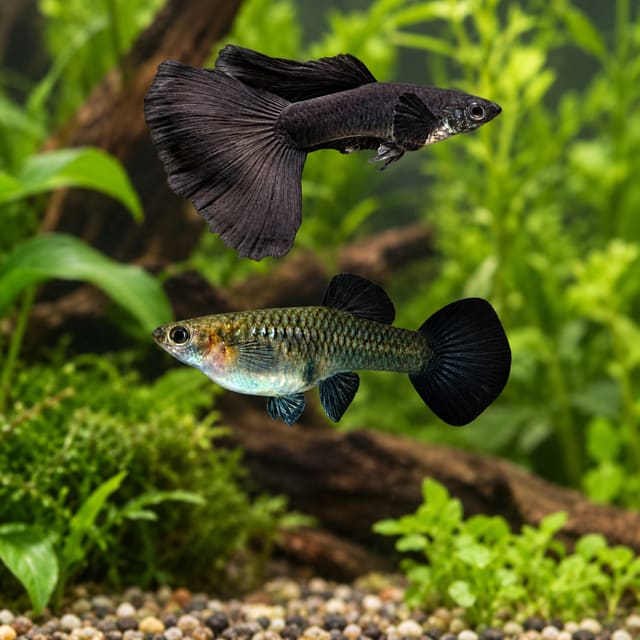
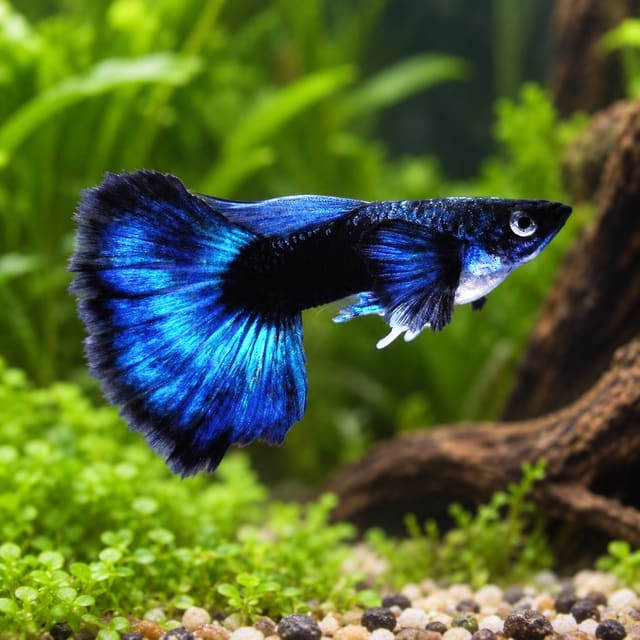
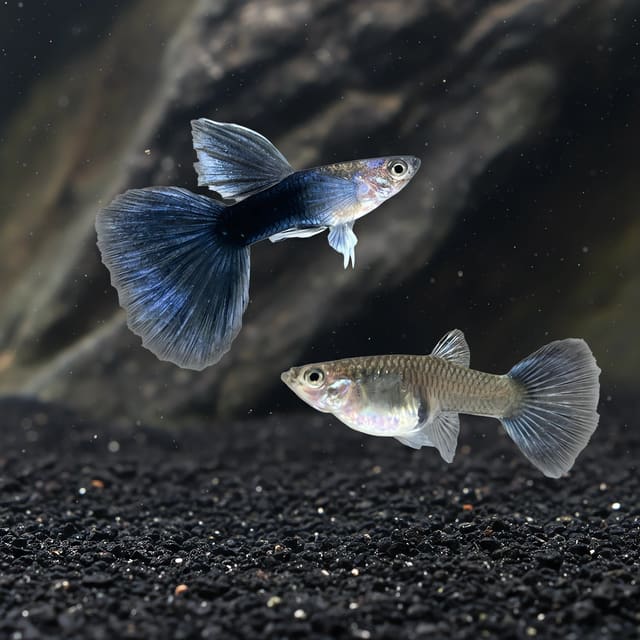
Half Black Blue Big Tail Guppy Pair (Poecilia reticulata)
£18.99
Photo coming soon
The size, price and care details on this page are for this listing.
One Blond Cobra male guppy (Poecilia reticulata) per cart quantity. This peaceful livebearer suits a mature, filtered aquarium with mineral-bearing water, a planned social group and no fin-nipping tank mates. The six-fish shoal tier is care guidance, not a compulsory order minimum.
Adult size is the maximum length this species reaches at full maturity (scientific sources). The livestock you receive will be younger and smaller. Product-photo provenance and any image-specific limitations are stated on the listing.
Poecilia reticulata
Shoaling fish: kept in a group they feel safer, stay calmer and show their best colour.
One Blond Cobra male guppy (Poecilia reticulata) per cart quantity. This peaceful livebearer suits a mature, filtered aquarium with mineral-bearing water, a planned social group and no fin-nipping tank mates. The six-fish shoal tier is care guidance, not a compulsory order minimum.
Adult size is the maximum length this species reaches at full maturity (scientific sources). The livestock you receive will be younger and smaller. Product-photo provenance and any image-specific limitations are stated on the listing.
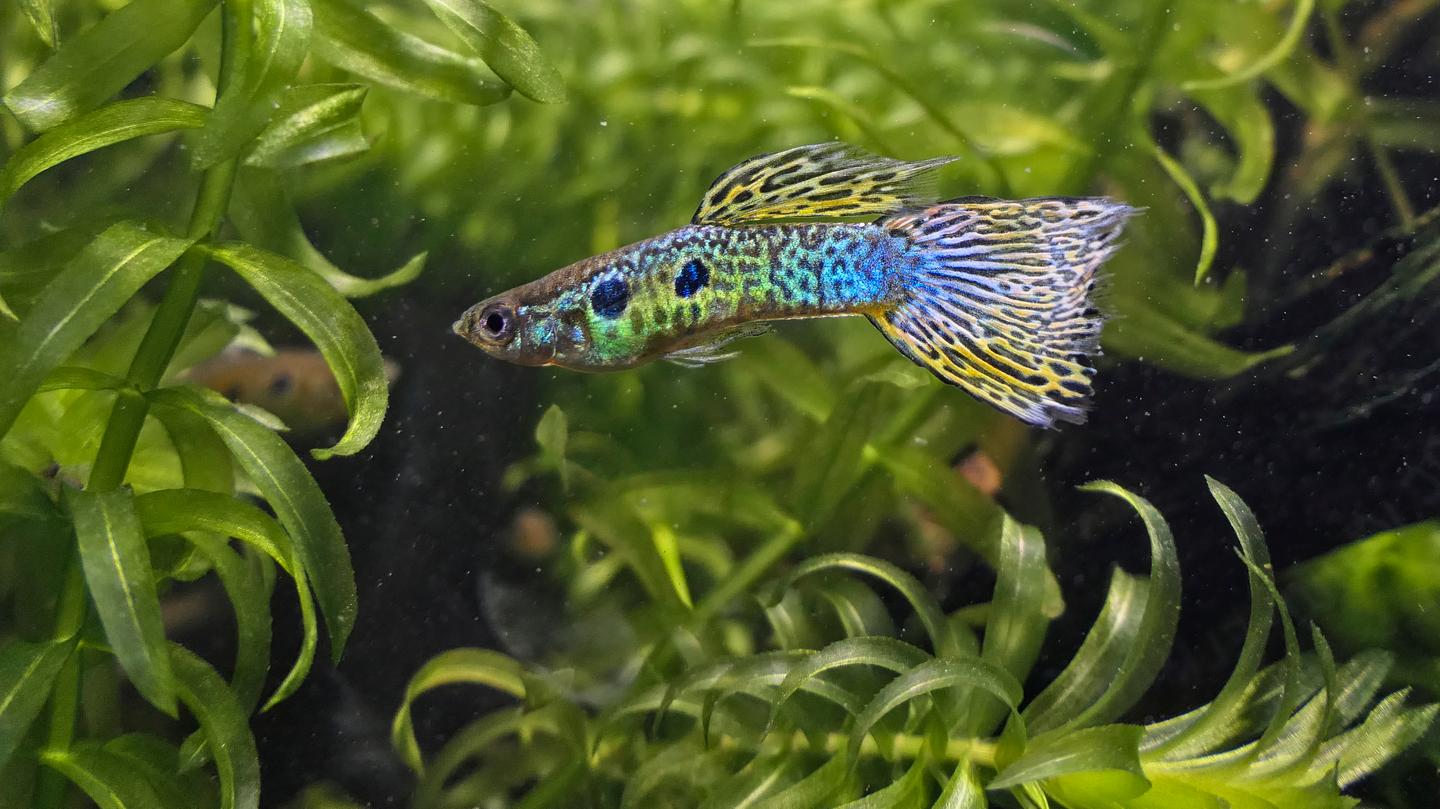
Guppies are social livebearers suited to a prepared beginner, not a fish-per-litre formula. Use a mature filtered aquarium, tested neutral-to-alkaline mineral-bearing water, deliberate sex and population planning, open swimming room, cover and a separation option.
Maintain these water conditions for optimal health and vibrant colors
The Blond Cobra Male Guppy is a male form of Poecilia reticulata, the familiar guppy. One cart quantity supplies one live male fish. You can select one fish; the six-fish shoal tier on this page expresses social care advice and is not a compulsory checkout minimum. A single male is best considered in the context of the guppies already living in your aquarium, or the group you are preparing to keep. The fish is a peaceful, active livebearer, but its social needs, water chemistry and flowing fins deserve more thought than its small body might suggest.
Blond cobra describes the trade colour and pattern, not a separate species or a promise that every individual will have identical markings. Poecilia reticulata belongs to the livebearer family Poeciliidae. FishBase records the species from northern South America and nearby islands and describes a wide range of natural habitats. Those wild records explain the guppy's adaptability; they are not a reason to move a domestic aquarium between extremes of temperature, acidity or salinity. For routine keeping, start with a stable, cycled freshwater aquarium, tested neutral to alkaline water with useful mineral hardness, open swimming room and planted cover.
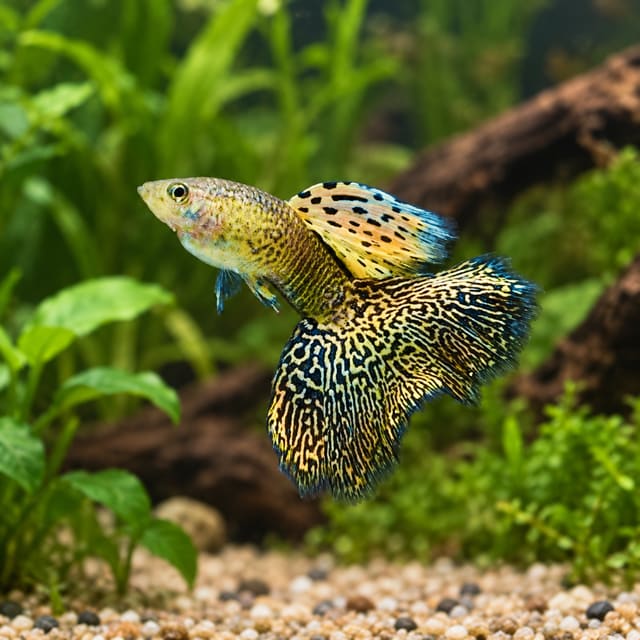
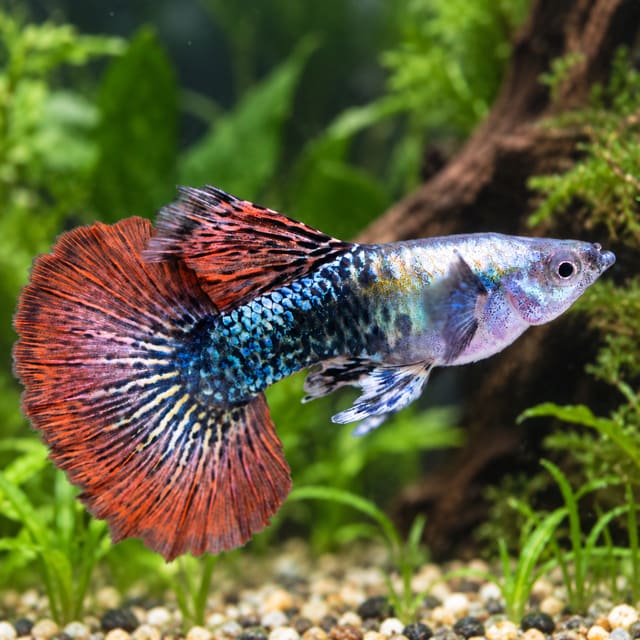
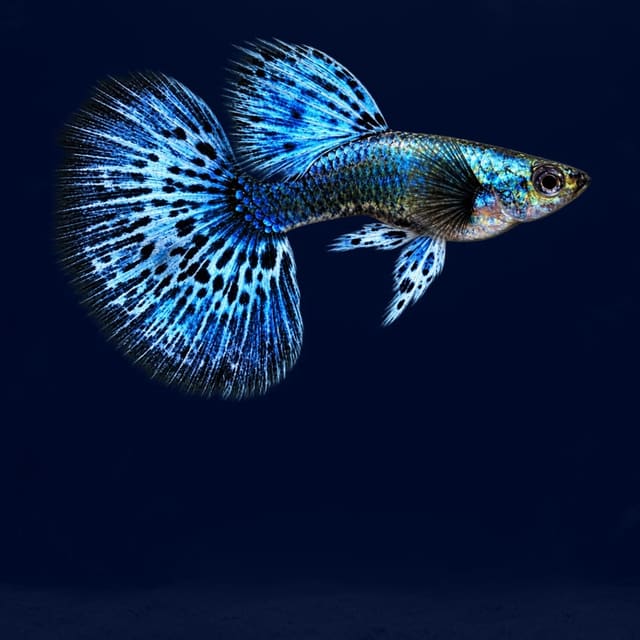
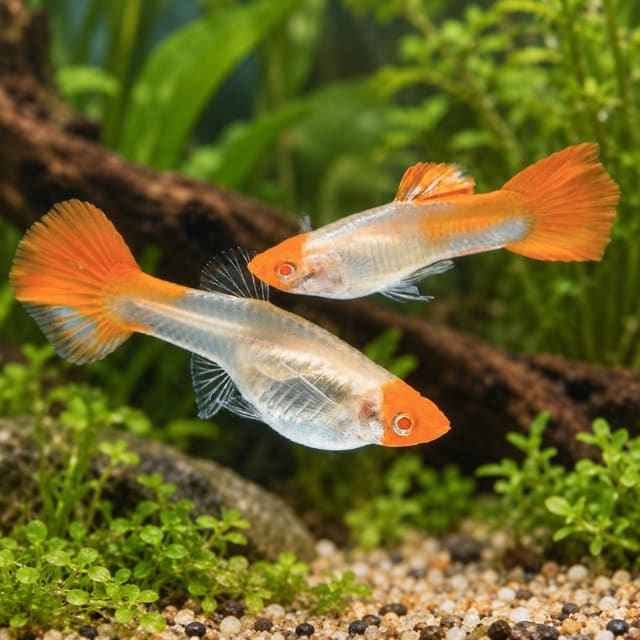
Sex is guaranteed only when the exact product or selected option explicitly states male or female. This Blond Cobra Male Guppy listing is sold as male. Colour and fin shape do not establish sex for other guppy products. No gallery image is attached to this product, so choose on the named form and care requirements rather than an imagined exact specimen. Live fish naturally differ in colour, pattern, fin development, size and maturity. The size of a live individual can vary, so plan space for its adult body and tail rather than an assumed dispatch measurement.
A good first decision is whether your tank is ready for a small social group. Tropical Fish Co recommends a mature, filtered aquarium at least 60 cm long and five or more guppies where the tank's capacity, existing residents and sex plan allow. That is a conservative shop planning rule, not a claim that five fish fit every 60 cm aquarium. The visible six-fish tier is consistent with group care, while the cart still counts one fish at a time. If you already keep suitable guppies, one male may be an addition to that group; if starting from scratch, plan the group and aquarium together rather than buying a lone fish on impulse.
The Guppy Care Guide gives the same conservative 60 cm and five-plus group planning baseline.
Seriously Fish lists Poecilia reticulata at 60 mm (6 cm) standard length as a species profile figure. FishBase records a more specific maximum of 5 cm standard length for male or unsexed fish. Standard length measures from the snout to the base of the tail; a domestic male's ornamental tail can extend beyond it. For this male offer, the 5 cm FishBase figure is the directly scoped body-length record. Allow room for the broader 6 cm species planning figure and the tail when arranging the aquarium. Neither figure promises the size of the individual supplied.
This is a guppy, not an Endler guppy. The names are easily confused in casual trade, yet Poecilia wingei is recognised separately from Poecilia reticulata. Nor does blond cobra name a distinct wild population. It identifies the selected aquarium form being offered. This named male is P. reticulata, so plan its aquarium around guppy care. Avoid choosing companions or water conditions by a colour name alone.
Guppies are livebearers: females can produce live young after mating. A male-only group avoids a deliberate mixed-sex breeding plan, though it still needs space, observation and places to move away from persistent attention. Adding this male to females can lead to breeding and persistent courtship. If you do not want fry, do not assume a small aquarium or casual separation will prevent them. Decide what will happen to any young before mixing sexes. A female can also retain sperm from an earlier mating, so the reproductive history of an existing female cannot be inferred simply from when this male is added.
The species is listed by FishBase as Least Concern, but conservation status does not describe how this particular stock was bred, collected or transported. This page makes no origin or lineage promise for the individual supplied. The practical question for your order is whether a known male guppy, one fish per quantity, fits your established water, existing guppy group and longer-term population plan.
Start with a mature aquarium rather than a newly filled container. A biological filter needs time to establish the bacteria that process the ammonia released by fish waste. Those bacteria convert ammonia into nitrite and then nitrate; ammonia and nitrite remain dangerous even if the water looks clear. Test the water before livestock is added and after changes to stocking or feeding. The RSPCA explains why an established, maintained filter is fundamental to aquarium welfare. The UK's OATA guppy-and-molly sheet advises zero measurable ammonia and nitrite. If either appears, investigate and correct the cause rather than assuming that a hardy reputation protects the fish.
For a small guppy group, Tropical Fish Co's conservative starting point is a filtered aquarium at least 60 cm long. OATA gives 45 litres as a broad minimum for a small group of smaller livebearers; FishBase's aquarium note gives 60 cm length and a group of five or more. Length, usable swimming space, water volume, filter capacity and the number of existing fish all matter. A tank that meets one number can still be unsuitable if it is crowded or unstable. A longer aquarium gives males room to swim and retreat from one another while a greater water volume usually makes changes in waste concentration and temperature less abrupt.
Choose a layout with a clear swimming area and sheltered edges. Live plants, including floating growth, are useful where they suit the rest of the setup. If you use artificial plants or ornaments, favour smooth surfaces that will not snag a guppy's tail. Sand or aquarium gravel can work; the choice matters less than clean, safe material and a layout that allows normal movement. Keep the filter running and maintain adequate surface movement for gas exchange without turning the whole aquarium into a strong current. Seriously Fish describes guppies as appreciative of planting and advises against strong currents. Watch how the actual fish swims: a male repeatedly pushed around by flow needs more refuge or a gentler arrangement.
A secure lid is sensible for a small active fish, while leaving the equipment and surface movement needed for normal gas exchange. Keep equipment accessible so maintenance can be regular, not an emergency intervention. Mature the filter and verify zero ammonia and nitrite before adding fish. The first tropical tank guide shows the setup sequence. A cycled tank is the foundation for this male guppy; adding fish to make a new tank cycle puts the animal at risk.
The routine Tropical Fish Co display recommendation for guppies is 22–28 °C in neutral to alkaline, mineral-bearing water. The OATA sheet for guppies and mollies gives pH 7.0–8.0 and general hardness 8–18 dGH as broad group guidance. These are useful planning ranges, not a claim that every point within them is equally ideal for every individual. Seriously Fish describes P. reticulata as a hard-water fish for long-term care, even though it may survive in softer or more acidic conditions. A stable prepared tank that matches the fish's needs is preferable to chasing a number with abrupt chemical adjustments.
FishBase lists 18–28 °C, pH 7.0–8.0 and 9–19 dGH for the species. Its temperature span is an environmental record, not an instruction to keep a shop guppy at the cool edge as routine husbandry. Seriously Fish gives a wider species profile of 17–28 °C, pH 7.0–8.5 and 8–30 dGH. These sources have different scopes. This page uses the shop's narrower routine temperature and OATA's group-level pH and hardness guidance for ordinary aquarium decisions. Never move a fish abruptly to an extreme because a species profile records tolerance there.
Test your tap water and mature aquarium before selecting fish. General hardness (GH) describes dissolved calcium and magnesium; carbonate hardness (KH) helps explain buffering and the stability of pH. A pH reading without hardness gives only part of the picture. If your local water is naturally soft, plan whether you can provide a stable mineral-bearing setup before ordering rather than making repeated day-to-day corrections. Measure GH and KH alongside pH, then compare your results with these ranges using the water matcher. The water chemistry guide describes why GH and KH matter. Use your own test results and the needs of all livestock in the aquarium.
Freshwater care is the normal recommendation here. FishBase records the species in both freshwater and brackish environments, but that ecological range does not mean this particular aquarium fish needs salt added. Adding salt can affect plants and tank mates and can disguise an unresolved water-quality problem. Keep the intended freshwater setup stable and ask for species-specific advice if a health issue arises. Check the heater and thermometer periodically, especially after room-temperature changes, and measure water before and after maintenance rather than relying on a setting printed on a heater dial.
Guppies take a varied diet. FishBase records wild P. reticulata feeding on zooplankton, small insects and detritus; that ecological description is useful background rather than a recipe to reproduce literally in an aquarium. Seriously Fish notes that today's domestic fish accept many aquarium foods. OATA recommends a good-quality flake or granule staple for guppies and mollies, with suitable small live or frozen foods for variety. Choose food that this male can actually take into its mouth, rather than assuming that a larger community food suits every small fish.
Offer an appropriately sized complete staple in a modest amount and watch the animal eat. Small portions help you see whether food reaches the guppy before faster residents take it. A little safe variety can support a more rounded diet without turning each feeding into a large mixture of leftovers. If a food remains in the tank after the fish have stopped eating, reduce the next portion. Uneaten food breaks down and increases the load on the biological filter. OATA suggests feeding what the fish can eat within a few minutes once a day as broad group guidance; adjust observation and amount to the fish and the established aquarium rather than following a rigid pinch measurement.
Do not use appetite alone as a health test. A fish that eats may still be stressed by poor water quality or unsuitable companions. Conversely, a newly introduced fish may take time to settle. Watch its position in the water, breathing, swimming, fins and willingness to feed over the next few days. If a change persists, test ammonia and nitrite first, check temperature and compare the current situation with its normal behaviour. More food is not a remedy for an environmental problem.
Feeding and stocking are linked. Every extra fish and every extra portion increases waste production. When building a group, allow the mature filter and your test results to guide the pace of additions. A social recommendation does not justify placing six fish into a tank that cannot process their waste. If the group is being added to an established community, include the existing animals in the capacity assessment. Good water quality is a continuous practice, not a one-time box ticked before delivery.
Set aside a regular time to observe the fish, test water and clean the aquarium. OATA recommends at least one partial water change of about 25% weekly for guppies and mollies, together with regular ammonia and nitrite tests. The amount and timing may need adjustment for the actual stocking, filtration and water readings. Treat replacement tap water with an appropriate conditioner before it enters the aquarium, and keep its temperature reasonably close to the tank. Sudden changes in temperature or chemistry can stress a small livebearer even when the final reading looks acceptable.
Remove waste gently from accessible substrate during a water change, especially where food settles. Check that the filter is flowing normally and that its intake has not become blocked by plant matter. Preserve the beneficial bacteria in filter media: OATA advises rinsing dirty media lightly in removed aquarium water, not washing it under tap water. Avoid replacing all filter media at once merely because it looks discoloured. A clean-looking tank without a functioning biological filter can quickly become unsafe.
Make a brief note of test results if you are still learning how the aquarium behaves. A trend is more useful than a single isolated number. Rising nitrate, repeated ammonia or nitrite, unusual pH movement, or a filter that needs frequent rescue all suggest something needs attention. Review feeding, stocking, maintenance and equipment before buying more fish. OATA's broad sheet advises nitrate no more than 20 mg per litre above normal tap-water levels; compare the tank with its source water rather than assuming a universal single reading covers every situation.
Observe the male guppy as an individual within the group. Normal activity includes moving through open water and using cover; unusually persistent hiding, erratic swimming, clamped or damaged fins, altered breathing, visible spots or growths, and reduced appetite warrant attention. The RSPCA's fish-health guidance starts with water quality and prompt investigation of concerning signs. These signs are not diagnoses. Avoid guessing a medicine or dose from a product page. If water correction does not resolve the concern or the fish is deteriorating, seek knowledgeable aquatic veterinary help; the OATA fish-vet directory is one route to that support.
Prepare the aquarium before the delivery day: verify temperature, ammonia and nitrite, confirm the planned group has room, and make sure someone can receive the live parcel. Tropical Fish Co's current delivery policy explains its tracked licensed live-animal courier, confirmed delivery arrangements and Live Arrival Guarantee conditions. It calls for the parcel to be received rather than left unattended, opened and inspected on arrival. For a live-arrival claim, record one continuous unboxing video from the sealed outer parcel through opening to the fish still in its sealed bag, and contact the team on the day it arrives with your order number. Those evidence steps protect a claim; they do not replace careful fish introduction.
Once the fish is safely received, keep the lights low and avoid unnecessary handling. The store's delivery guidance says to float the sealed bag for about 20–30 minutes before release. Compare the bag and aquarium conditions, acclimatise slowly, and do not pour transport water into the established tank. Use a clean net or other safe transfer method that keeps the fish supported and limits injury to fins. A bag floated in a new or uncycled aquarium still leads to an unsafe introduction, so finish setup and testing in advance.
New arrivals may carry health risks to an established collection. A separate, prepared quarantine aquarium is useful where feasible, particularly when protecting a valued group; it needs its own mature filtration, appropriate water and observation. Veterinary guidance from MSD discusses biosecure isolation and at least 30 days' quarantine. Do not place a fish into an uncycled small container and call it quarantine. If isolation is impossible, minimise shared equipment between systems and observe the new arrival carefully. If distress or disease signs persist, isolate safely where possible and contact an aquatic veterinarian promptly.
After introduction, watch that the male can swim and feed without being chased or pushed into a strong current. Test the main tank during the following days, as new livestock increases waste. Avoid rearranging the tank repeatedly to fix every brief social interaction; intervene when one fish cannot escape harassment or when fins are being damaged. Keep a suitable separation option ready before a problem occurs. A calm first day gives you a better baseline for judging the fish's later behaviour.
Guppies are social fish. OATA's broad guppy-and-molly guidance suggests at least three together; FishBase's aquarium note mentions five or more, and Tropical Fish Co adopts five or more as a conservative house recommendation where space and other livestock permit. These figures are group-planning guidance, not a compulsory number to add to every tank today. A buyer with an existing appropriate group may need only this one male. A buyer starting a new aquarium should plan enough tank length, biological capacity and fish to meet the social need over time. Buying a lone male for permanent isolation does not follow the normal group guidance.
A male-only group can be a sensible way to avoid deliberately breeding guppies, provided the aquarium has room and shelter and the fish can get away from one another. Watch actual behaviour rather than assuming every male group will settle identically. If keeping males with females, plan for persistent courtship and potential fry. Seriously Fish advises several females per male in mixed groups because males may pursue females vigorously. OATA also discusses female-to-male ratios for its broader guppy-and-molly advice. Neither ratio turns this male-only offer into a mixed pack; the cart supplies only the male fish named on this page.
Do not solve harassment by adding more animals without checking capacity first. If one fish is repeatedly cornered, unable to feed or showing fin damage, provide separation and reassess group composition and layout. Planting and visual breaks can give fish space to withdraw; they do not make an undersized tank large enough. A group plan must account for adult size, existing residents, feeding competition and the possibility of young if females are present. Keep population control humane and deliberate.
If you already own guppies, assess them before ordering. Check the sex mix, age and condition of the group, whether a new male can be introduced without overwhelming it, and whether your water remains stable at the intended stocking. The blond cobra pattern is an appearance choice; it does not establish a different temperament or special water chemistry. The most useful match is between this fish's species needs and the real conditions in your aquarium.
Seriously Fish describes Poecilia reticulata as peaceful and suitable for a quiet community with certain other livebearers, rasboras, corydoras, small loricariids and tetras. That is a list of possible kinds, not a guarantee for every species or individual in those groups. Check each proposed companion's adult size, water chemistry, temperature, activity, food and temperament. A fish that prefers very soft acidic water is not automatically a good long-term match for a guppy kept in mineral-bearing neutral to alkaline water, even if neither animal is aggressive.
Fin-nipping fish are a clear concern for a male guppy with ornamental fins. Seriously Fish names tiger barbs and serpae tetras as examples to avoid; OATA also warns against barbs that nip guppy fins. Large fish that can swallow a guppy are unsuitable, and vigorous residents that monopolise food or push a male into constant hiding can be poor companions even without visible attacks. Watch behaviour after any introduction. Torn fins, repeated chasing or a guppy confined to one corner call for a change in stocking or safe separation, not simply a longer list of theoretical compatible species.
Other livebearers can share some husbandry needs, but their numbers and breeding potential need a plan. Bottom-dwelling fish may use different aquarium space, yet they still add to total waste and have their own requirements for substrate, food and water. A peaceful community can fail if the filter is immature or the tank is crowded. Conversely, a well-managed species group can be more predictable for a first-time guppy keeper than a collection of unrelated small fish chosen by colour.
Evaluate your aquarium as a whole before using any compatibility suggestion. Note the actual measured GH, pH and temperature; count adult fish rather than current juveniles; consider where each animal feeds; and check whether there is space for normal behaviour at every level. Add stock gradually and test after additions. The strongest compatibility rule is simple: choose peaceful fish that genuinely share the water conditions and will neither nip nor eat this male guppy.
Seriously Fish lists Poecilia reticulata at 6 cm standard length for the species; FishBase records up to 5 cm standard length for male or unsexed fish. This product supplies a male. Both figures exclude the tail, which can add visible length, and neither promises a dispatch size. Allow space for the broader species figure when planning the aquarium.
For a small guppy group, Tropical Fish Co recommends a mature filtered aquarium at least 60 cm long. OATA's broader guppy-and-molly sheet gives 45 litres for a small group of smaller livebearers. Assess usable space, filtration, existing fish and test results together; a litre figure alone cannot set a safe stocking limit.
Guppies are social. The shop's conservative guidance is five or more guppies where tank capacity and sex plan allow. One cart quantity here supplies one male; the six-fish shoal tier is a care prompt, not a compulsory order minimum. A male can join an existing suitable group.
It can suit a prepared beginner with a mature, filtered aquarium and tested mineral-bearing water. Plan the group and population before buying, maintain stable conditions and check the needs of existing tank mates. It is not a suitable shortcut for cycling a new tank.
Use a small, good-quality complete flake or granule as a staple, with appropriately sized safe variety such as small live or frozen food. Feed modestly and remove leftovers so they do not foul the water.
The shop's routine guppy display range is 22–28 °C. OATA's broad guppy-and-molly guidance gives pH 7.0–8.0 and general hardness 8–18 dGH. Keep stable, tested, mineral-bearing water; wild tolerance ranges are not routine targets.
Poecilia reticulata is generally peaceful, but a male may pursue females and individuals can compete within a group. Give them room and cover, watch for persistent chasing and avoid tank mates that nip the guppy's fins.
Possible quiet-community companions include suitable livebearers, rasboras, corydoras, small loricariids and tetras, but check each exact species for matching water, temperature, size and behaviour. Avoid known fin nippers such as tiger barbs and serpae tetras.
Tropical Fish Co's current delivery policy describes careful packing, a tracked licensed live-animal courier and a Live Arrival Guarantee with conditions. Someone must receive the parcel. Inspect it on arrival; if there is a problem, contact the team that day with your order number and a continuous video showing the sealed parcel being opened and the fish still in its bag.
Identity and recorded size: FishBase, Poecilia reticulata, and Eschmeyer's Catalog of Fishes. Aquarium husbandry: Seriously Fish species profile and OATA guppy and molly care sheet. The OATA sheet covers a group, so its water and tank figures are broad guidance rather than a measured optimum for this exact male form.
General aquarium welfare is covered by the RSPCA's aquarium environment advice and fish health guidance. For serious concerns, the OATA fish-vet directory helps locate qualified advice. The store's delivery policy requires someone to receive the parcel and same-day continuous unboxing evidence for a live-arrival claim. Scientific records and care sheets may cover different populations or measurement methods; match their scope to the aquarium decision you are making.
No reviews for this item yet. Bought one? Honest reviews only, good or bad.
What customers say about ordering from us
Easy website plenty of info on fish your buying great to pick a time slot
TRACEY DURRANT · 7 Oct 2026
Got some lovely fish thank you
Kevin Mackie · 7 Oct 2026
Reviews of our shop, collected by Judge.me, an independent third-party review collector. Newest first.