Easy
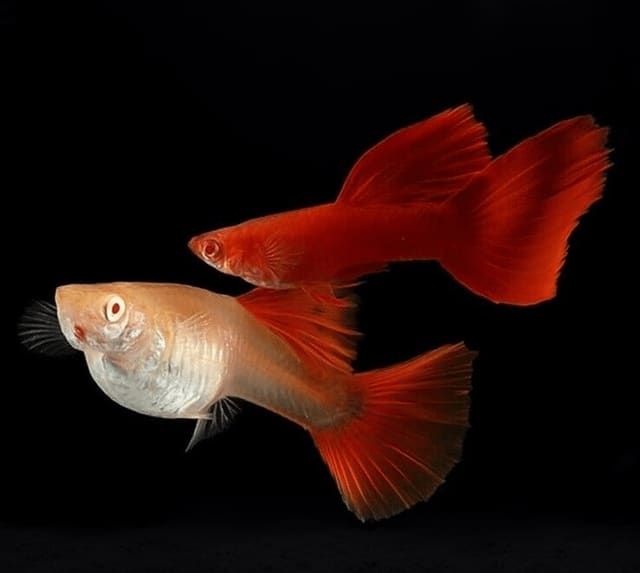
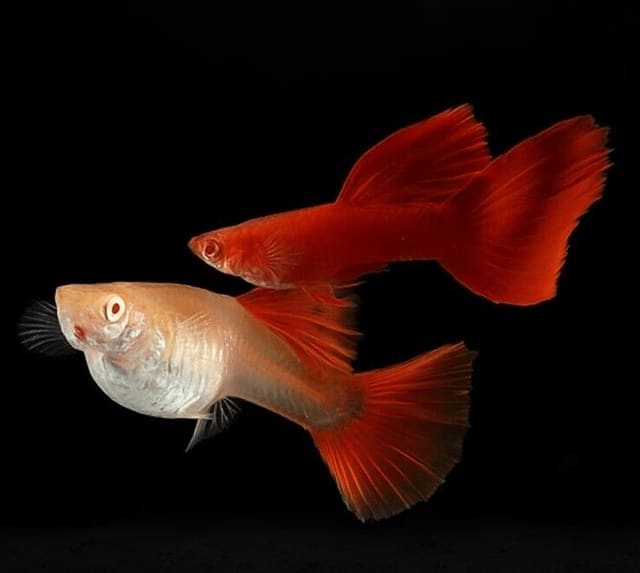
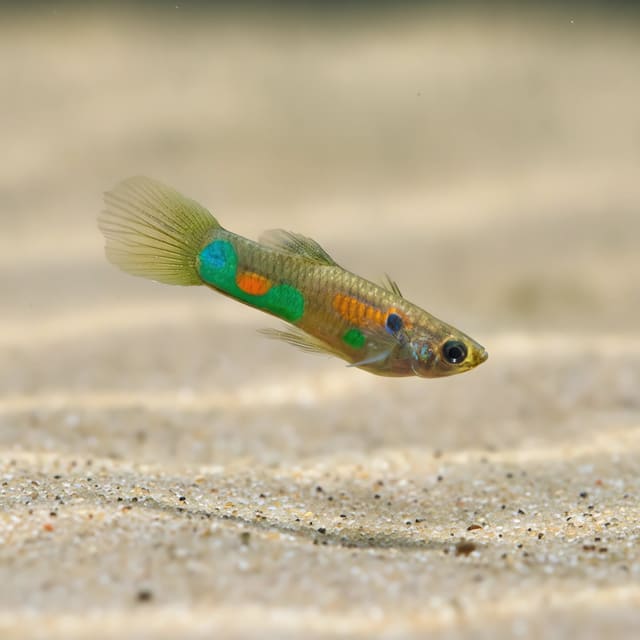
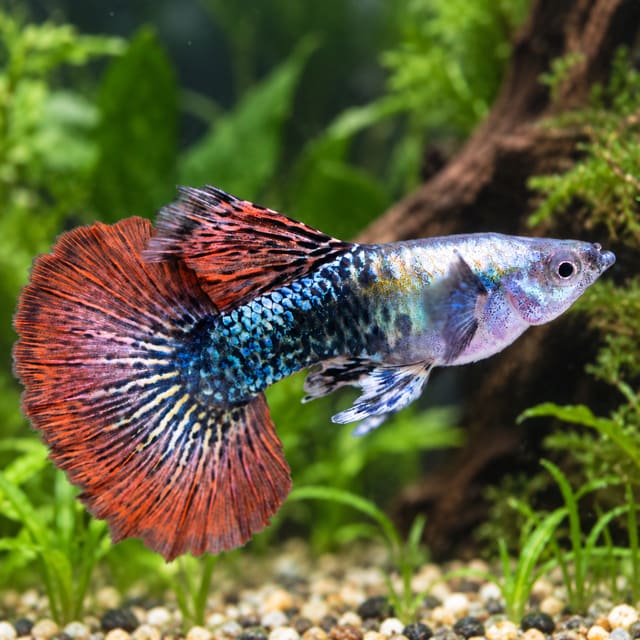
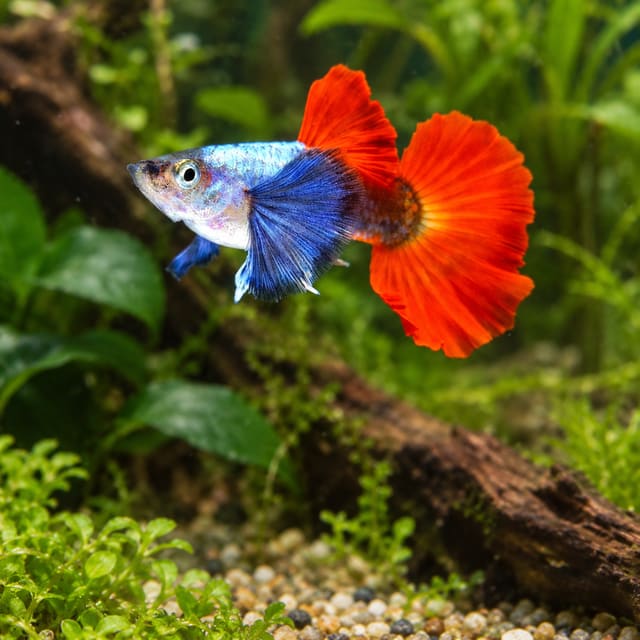
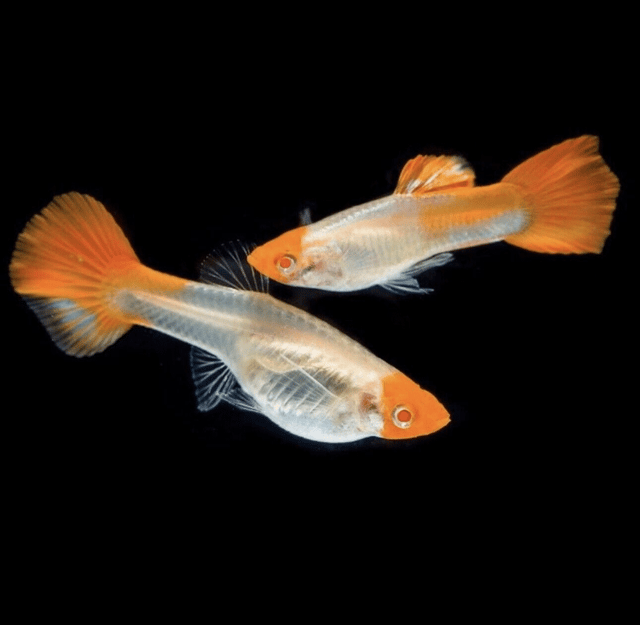
Albino Koi Glassbelly Guppy Pair (Poecilia reticulata)
22–28°C · pH 7–8
£18.99
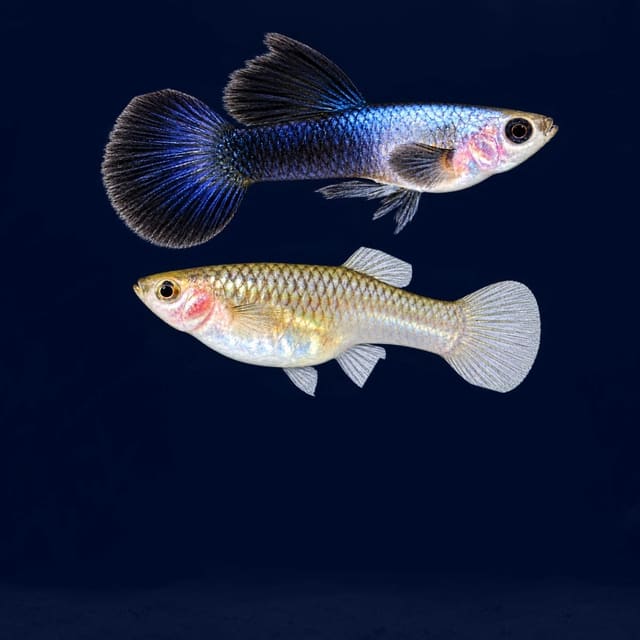
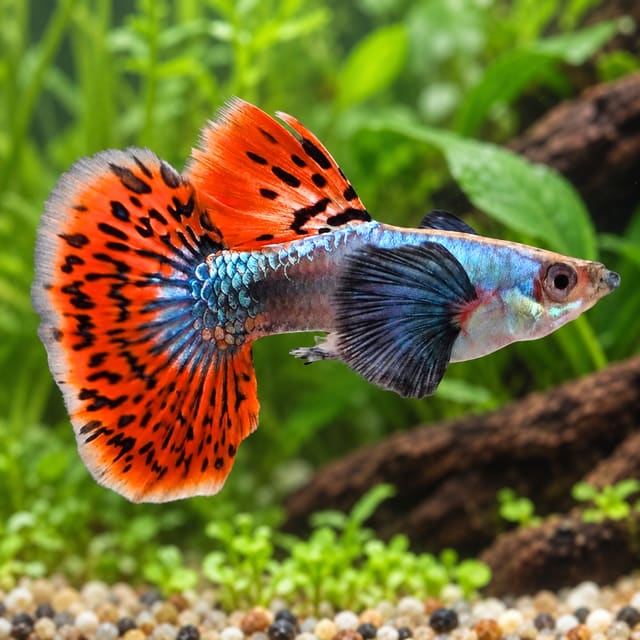
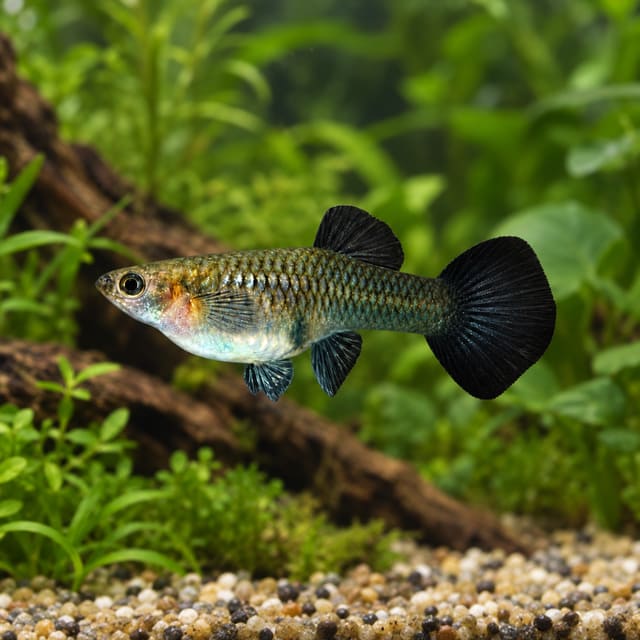
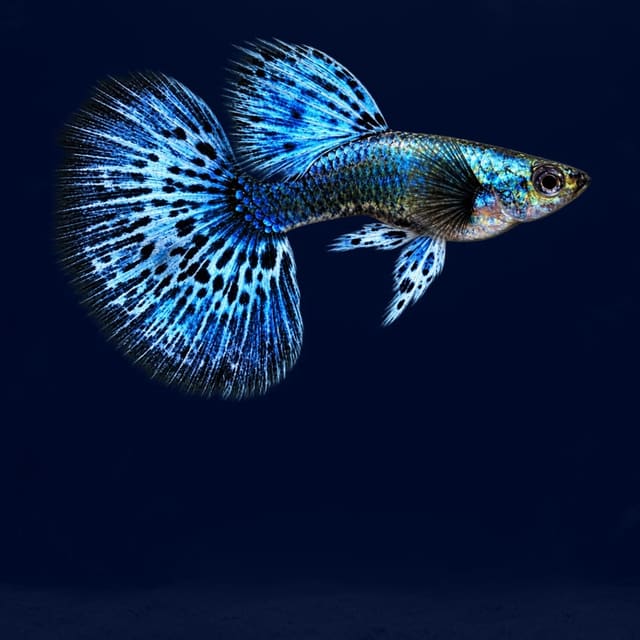
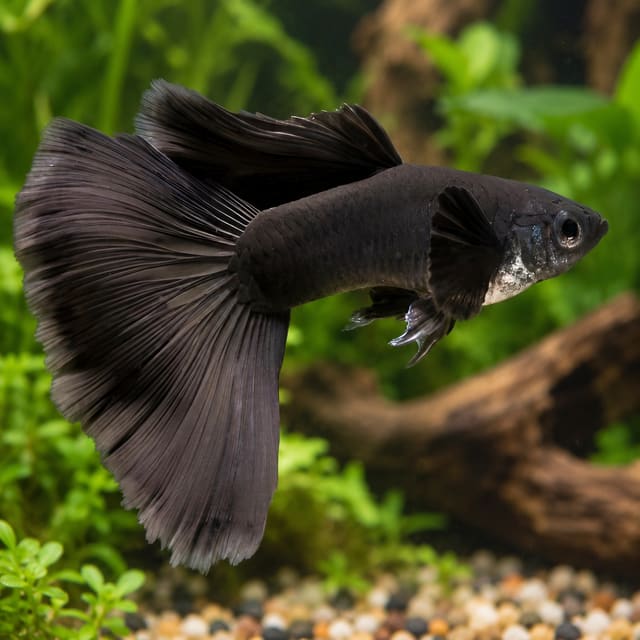
Two live Half Black Blue Big Tail Guppies (Poecilia reticulata) supplied as one pair. Their sex mix is not guaranteed. Prepare a mature, filtered aquarium at least 60 cm long and plan a wider guppy group with room for every fish.
Poecilia reticulata
Each quantity is one pair containing 2 fish. Discounts count pairs.
Shoaling fish: kept in a group they feel safer, stay calmer and show their best colour.
Two live Half Black Blue Big Tail Guppies (Poecilia reticulata) supplied as one pair. Their sex mix is not guaranteed. Prepare a mature, filtered aquarium at least 60 cm long and plan a wider guppy group with room for every fish.
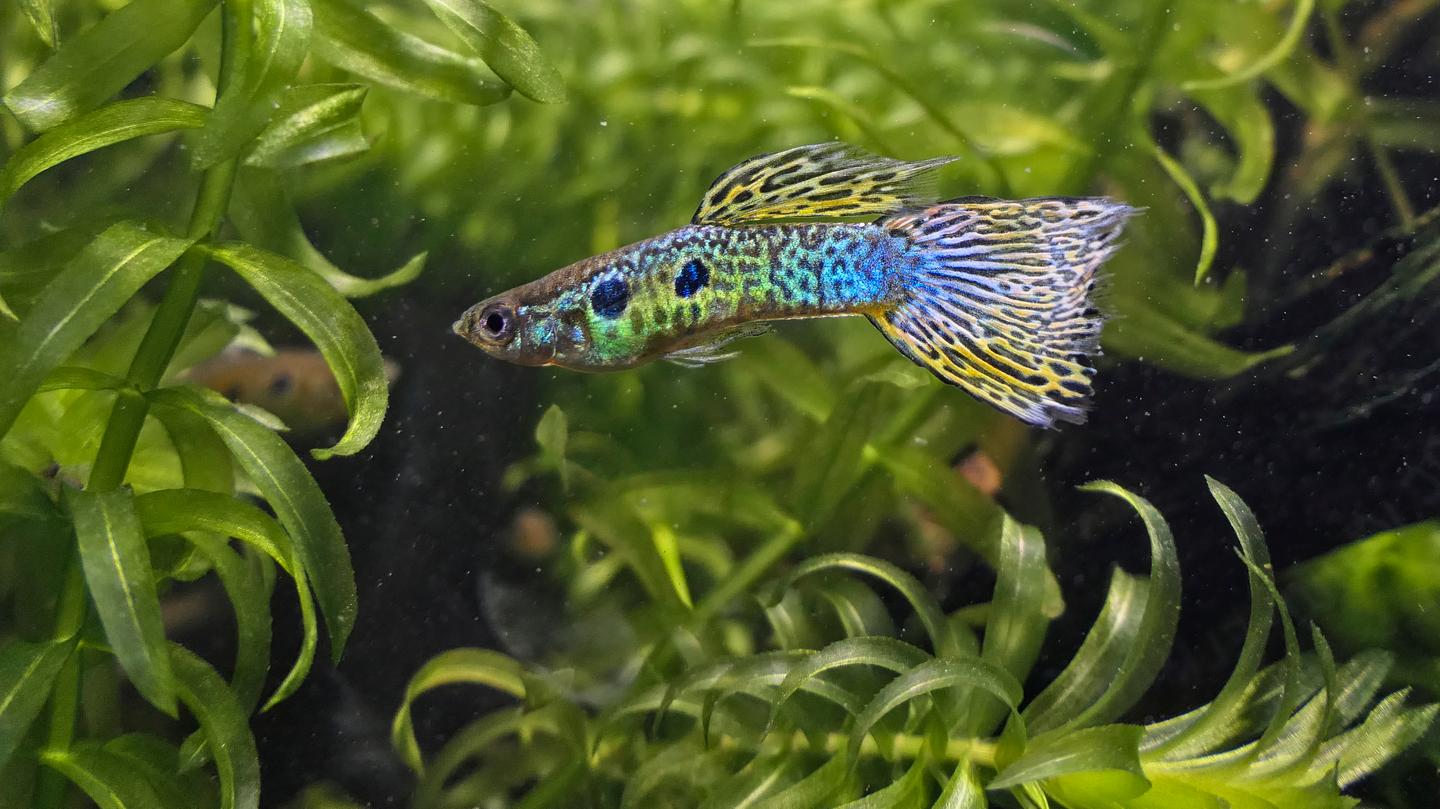
Guppies are social livebearers suited to a prepared beginner, not a fish-per-litre formula. Use a mature filtered aquarium, tested neutral-to-alkaline mineral-bearing water, deliberate sex and population planning, open swimming room, cover and a separation option.
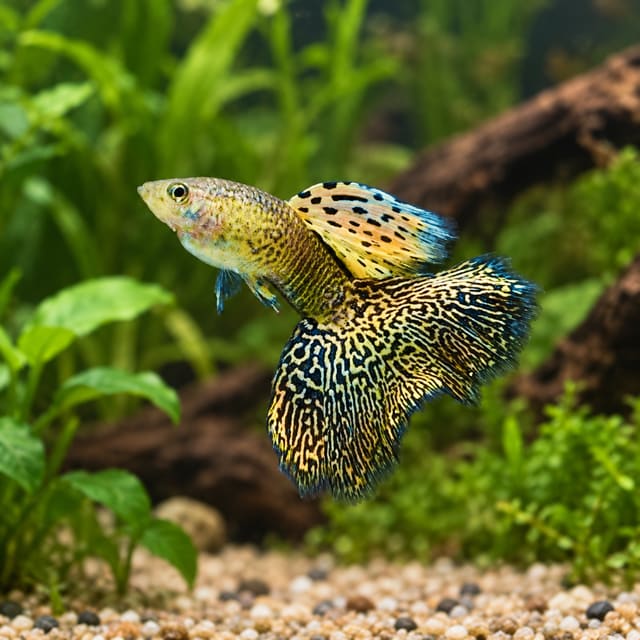
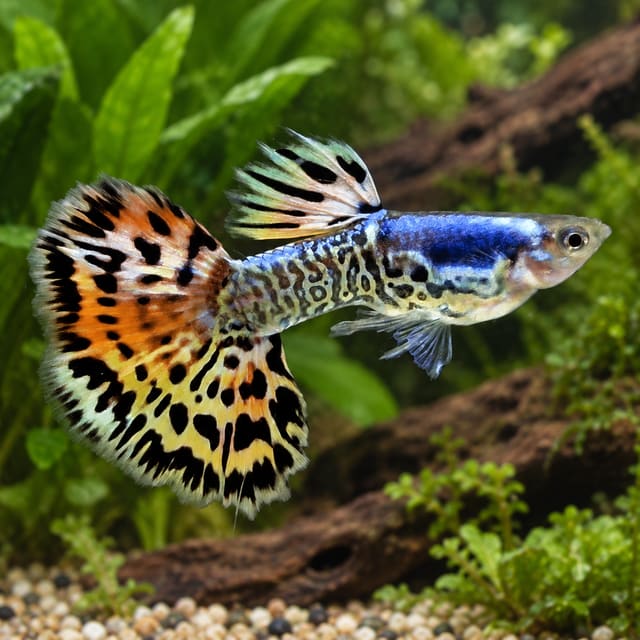
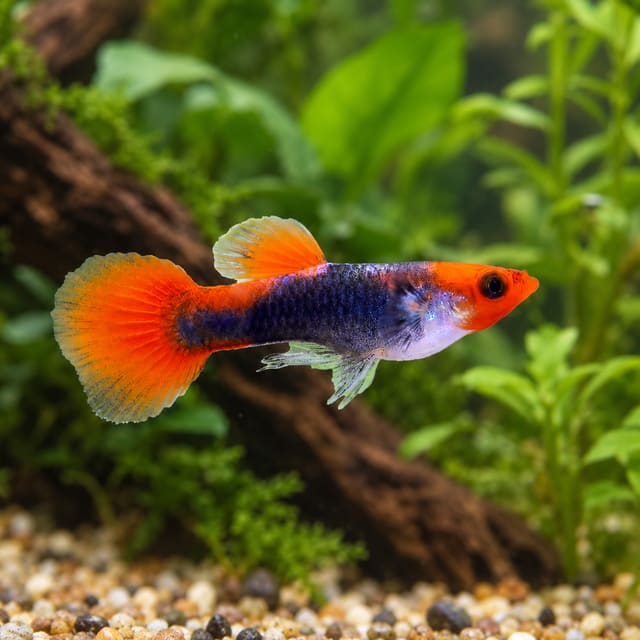
The Half Black Blue Big Tail Guppy Pair is two live guppies of the trade form named in this title. The species is Poecilia reticulata, a livebearer in the family Poeciliidae. One purchase supplies one pair, meaning two animals; it does not promise one male and one female. Sex is guaranteed only when the selected option explicitly states male or female. This Half Black Blue Big Tail Guppy Pair listing has no sex-guaranteed option. If the sex composition is central to your plan, please do not assume it from the word ‘pair’, the tail shape or the gallery. Colour and finnage vary naturally between individual fish.
| This pair can suit | Prepare first if |
|---|---|
| A keeper with a mature, tested 60 cm or longer aquarium and a deliberate plan for a wider guppy group. | The aquarium is still cycling, has no reliable water tests, or was chosen by litres without checking swimming length. |
| Someone able to observe sex mix, behaviour and any fry, then adjust space and care as the group develops. | A guaranteed male-and-female pair or an exact match to the pictured fish is essential to the project. |
This form suits a keeper who can prepare a mature, filtered aquarium, test the water and make a considered social-group plan before adding fish. Guppies are often described as beginner friendly, but their modest body size does not make an uncycled bowl or an improvised two-fish setup suitable. Tropical Fish Co's conservative planning screen is an aquarium at least 60 cm long with a group of five or more guppies where capacity, sex mix, filtration and other livestock allow. This retail pair can contribute to such a group; it is not a complete group by itself. FishBase also notes five or more individuals and a 60 cm minimum aquarium length for the species. The length is a physical dimension, not 60 litres or a promise that every 60 cm tank can hold the same population. FishBase's guppy account gives the species context, while our Guppy Care Guide explains the store's fuller group policy.
The tail and half-black, blue trade wording describe the selected appearance, not a separate species or guaranteed pedigree. The term ‘big tail’ should not be converted into a body-size claim. One unqualified 5 cm adult maximum would be too blunt: FishBase labels its 5 cm figure as standard length for male or unsexed fish, while our Guppy Care Guide records a larger female standard-length figure. Standard length ends before the tail fin, and domestic finnage varies. Plan space for adult guppies and their group rather than estimating adult size from the photograph or from the length of a large tail.
Poecilia reticulata occurs naturally in fresh and brackish habitats, but that ecological record does not say where these particular fish were bred, that aquarium salt is necessary or that every brackish setting is appropriate for a home community. The species has become widespread far beyond its native range. FishBase lists its conservation status as Least Concern; this is a species-level assessment, not a certification of the stock offered here. The useful buying question is whether your actual aquarium can provide stable water, enough swimming room, suitable company and a plan for any young fish.
Before ordering, check the current aquarium rather than a future intention to upgrade it. A working biological filter should already be established, ammonia and nitrite should test at zero, and temperature, pH and hardness should be measured in the water the fish will enter. Have a secure cover, open swimming space, planted or equivalent refuge, and a way to separate a fish if chasing or illness appears. The existing first tropical tank guide is a practical starting point if the aquarium is still being prepared. Current price and availability appear with the product; this guide describes the enduring care and the two-fish offer.
Start with the intended adult group, not just the two fish arriving in this purchase. Our planning policy asks for at least 60 cm of usable aquarium length for a small group of five or more guppies, subject to the aquarium's actual water volume, mature filtration, test results and other occupants. FishBase's secondary aquarium note supports the 60 cm and five-or-more figures; OATA's broader guppy-and-molly sheet gives a smaller group minimum and a 45 litre starting point for smaller livebearers. We use the more conservative length and group screen because it gives a clearer starting question for this offer. Neither source creates a universal ‘fish per litre’ allowance, and the 45 litre group figure should not be silently turned into a species-specific optimum.
Measure the usable inside length and footprint as well as the nominal capacity. Tall, narrow water volume may hold the same litres as a longer aquarium but provide less horizontal room. Leave a clear swimming lane and enough space for fish to turn and pass each other without being forced through a dominant individual's territory. The filter must cope with the biological load of the full group and any tank mates; a label on the box cannot replace evidence from water tests. A 60 cm aquarium containing an established group, many other fish or rapidly growing fry may need fewer additions or a larger home. If the aquarium is shorter than 60 cm, the considered choice is to prepare a suitable one before keeping this pair as part of an adult group.
Set up the aquarium and establish its biological filter before adding livestock. Fish release ammonia; beneficial bacteria in the filter convert it through nitrite to nitrate. Ammonia and nitrite are both toxic and should be undetectable in a stocked, mature aquarium. Test repeatedly during maturation rather than counting a fixed number of weeks and assuming the filter is ready. New fish and increased feeding add waste, so introduce livestock gradually and continue testing after any change. The RSPCA explains why a maintained filter is essential, and OATA specifically warns against adding guppies faster than the filter can support. If a test result is unsafe, address water quality and stocking before treating behaviour as a species problem.
Give the fish a secure lid or cover, open water, and plants or suitable ornaments that provide shelter and break lines of sight. The cover should not obstruct routine access or make the aquarium hard to maintain. Long fins can catch on sharp ornaments or rough artificial plants, so examine decorations by hand before use. A substrate of aquarium sand or gravel is suitable when kept clean and safe for the other animals in the tank. Floating vegetation and planted edges may provide cover without filling every swimming route. Cover can also shelter young, so think ahead about the population consequences if the pair or wider group includes females that have previously mated.
Provide steady movement and oxygenation without a current that pins the fish against the glass or makes them struggle constantly. The species profile at Seriously Fish describes guppies as appreciating vegetation and advises against strong currents. A filter outlet can be positioned so there is a calmer area while surface movement remains adequate. Watch the actual fish: a guppy should be able to swim, feed and rest without repeatedly being swept away. If one individual monopolises the calm area, adjust the layout and consider whether the group needs more space. An intake guard may be appropriate where fry or small tank mates could be drawn in. Good equipment is judged by water tests and the fish's behaviour, not by a generic wattage or turnover recipe copied from a different aquarium.
For everyday display planning, the Tropical Fish Co guppy guide recommends 22–28°C. Check the aquarium itself with a reliable thermometer and aim for stability within a suitable part of that range rather than letting the water swing between its endpoints. OATA's combined guppy-and-molly sheet recommends pH 7–8 and general hardness 8–18 dGH as broad UK group guidance. Those are useful routine planning values, but they are not a laboratory-defined optimum for every guppy or a command to chase one exact reading. Test the source water and the aquarium; check what the other planned animals and plants need before making adjustments.
FishBase lists wider environmental observations for the species, including 18–28°C and 9–19 dH. Those fields describe recorded occurrence and should not be copied into an unqualified home-care card. Keep recorded wild values separate from routine aquarium guidance. Likewise, guppies occurring in brackish water does not establish a salt requirement for these fish. Adding salt or mineral products without a measured purpose can create new problems for plants and tank mates. If local tap water is unusually soft or acidic, investigate its actual chemistry and obtain species-aware advice before purchase. Our water chemistry guide explains the tests and units, and the water matcher can help compare measured water with the stated planning range.
A settled routine is more valuable than frequent attempts to force a number. Measure temperature, pH and hardness before the fish arrive, then keep a record alongside ammonia, nitrite and nitrate. Recheck after new fish, a filter change, heavy feeding, illness or an unexplained behaviour change. OATA advises zero ammonia and nitrite and regular testing, and recommends a partial weekly water change of around a quarter of the aquarium. Treat replacement tap water to remove chlorine or chloramine and avoid abrupt temperature or chemistry differences. Do not run biological filter media under the tap. During a partial water change, rinse it lightly in the removed tank water when cleaning is needed so fewer beneficial bacteria are lost.
Nitrate requires context. OATA's combined sheet advises that it should not rise more than 20 mg per litre above normal tap-water levels. The tap-water baseline differs by address, so record it rather than assuming a single absolute number fits every home. Siphon uneaten food and debris from the substrate as needed, but preserve useful biological filtration and avoid stripping every surface clean at once. Filter maintenance, modest feeding and appropriately paced stocking work together. If ammonia or nitrite appears, test again, check the filter and recent changes, and seek competent help promptly. A water problem can make peaceful guppies hide, gasp or stop feeding; rearranging tank mates alone will not fix it.
Observe the fish as well as the readings. Normal activity includes steady swimming, regular breathing and a reliable response to food. Persistent surface gasping, clamped or frayed fins, unusual stillness, repeated hiding or an inability to hold position can signal a welfare issue. Compare all animals in the aquarium, because a single bullied fish and a whole tank with water-quality trouble call for different responses. Test first, inspect equipment and social behaviour, and seek advice from a qualified fish professional when signs continue. Avoid choosing heat, salt or medication from one symptom without a diagnosis; those interventions can harm fish or the filter if misapplied.
Offer an appropriately sized, nutritionally complete guppy or omnivore flake or granule as the staple. Add safe variety suitable for the fish's mouths, such as small prepared invertebrate foods or appropriate plant-based components. OATA's guppy-and-molly guidance supports a good-quality staple and small live or frozen additions; the store guide similarly recommends a complete staple with compatible variety. Use commercially prepared, biosecure foods rather than collecting insects or detritus from outdoors. FishBase records zooplankton, small insects and detritus in wild diets, but that ecological description does not prescribe one captive menu or feeding timetable.
Portion for the animals actually present and watch that each can feed. A shy fish can miss meals even while food remains in the tank, particularly if a faster companion or another species occupies the surface. Floating and sinking foods may be useful in a mixed aquarium, provided they suit every occupant and do not simply double the total food. Break a large flake into suitable pieces; a dramatic tail does not mean the fish can manage large pellets. Remove obvious uneaten food so it does not decay and burden the biological filter. OATA suggests feeding only what the fish consume within a few minutes, but adjust the method to the food, age and group rather than treating one clock setting as proof that the diet is adequate.
Keep food dry or frozen as its manufacturer directs, check dates and avoid cross-contaminating containers or equipment between aquariums. If a fish suddenly refuses a familiar food, ask whether water quality, temperature, stress, bullying or illness has changed before trying a succession of rich treats. A varied menu does not compensate for unstable chemistry or an unsuitable social arrangement. For deliberate fry rearing, food must be small enough for young mouths and the nursery must have mature filtration and close water-quality monitoring. Raising young requires a separate capacity plan; it should not be improvised in a tiny uncycled container.
Guppies are social fish, and this sale unit contains only two. The store's conservative group plan is five or more guppies in a suitable mature aquarium, with the number adjusted for sex mix, water tests and other livestock. Do not buy this pair as the entire social plan because its sex composition is not guaranteed. Equally, do not add three more fish automatically if the aquarium cannot support them. Decide on the complete group and its space first, then use the current live listings to see what can actually be selected. A companion purchased under a different title must be evaluated as a live animal with its own welfare needs, not just as a way to reach a numerical target.
Sex matters because guppies are livebearers and a mixed group can produce young. OATA's combined sheet suggests more females than males to reduce pressure on females, but that guidance is a management starting point, not a guarantee against chasing, stress or fry. Males may pursue females persistently; males may also display or compete with one another. Individual behaviour, cover, group makeup and aquarium space all matter. Watch for one fish repeatedly being chased, prevented from feeding, held in a corner or left with damaged fins. Provide sight breaks and a cycled separation option rather than dismissing sustained distress as normal courtship.
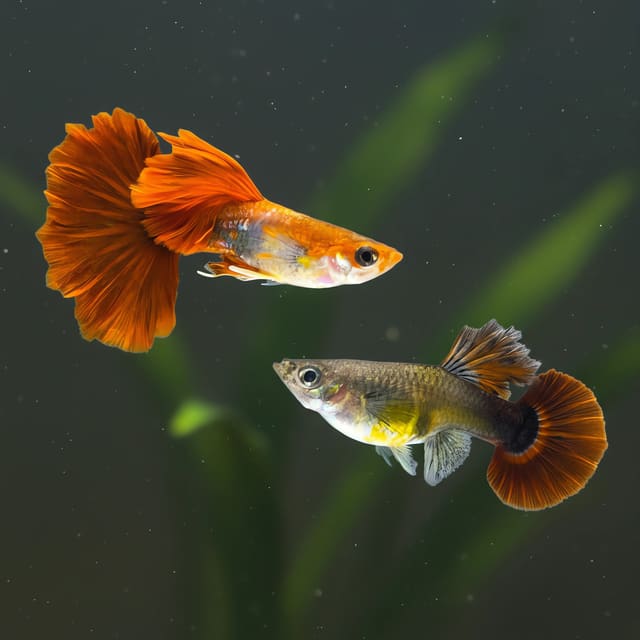
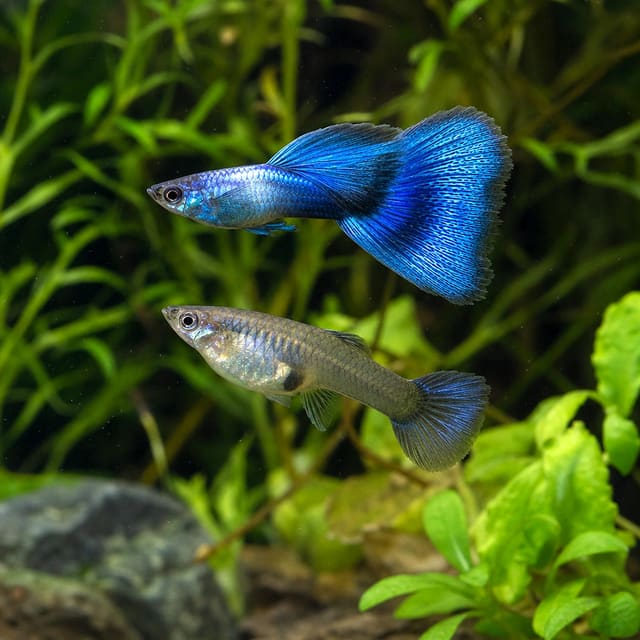
Colour, tail size and a gallery photograph cannot establish the sex of the animals that will be sent. Mature males have a modified, narrow anal fin called a gonopodium; females generally have a broader anal fin, but external features may be difficult to assess in young fish and do not change what this unsexed offer promises. The trade form does not carry a breeding, pedigree or exact-pattern guarantee. A female can also produce fry after previous mating, so a female-only arrangement does not necessarily prevent an initial brood. Do not make a rehoming plan only after young fish have appeared.
Before keeping a mixed-sex group, decide where fry could be housed, whether the filter can support extra waste and how any surplus fish could be placed responsibly. Dense plants can increase fry survival, which may be welcome in a deliberately planned breeding aquarium but creates greater demand for space and maintenance. Adults or tank mates eating fry should not be treated as a welfare or population-control plan. If breeding is not wanted, discuss a sex-controlled group from an explicitly sexed offer and retain a contingency for previously mated females. This listing offers a pair without that guarantee, so it is unsuitable as the sole basis for a carefully controlled sex-specific project.
Observe the social group through daily routines, not just for a few minutes after introduction. Check that every fish comes out, uses the whole aquarium and feeds. Change one element at a time if a problem develops: reduce crowding, create better visual breaks, review flow and water quality, or separate an aggressor or vulnerable fish in a suitable established system. A peaceful species label describes a general tendency. It cannot override repeated evidence that an individual is stressed in a particular tank. The goal is steady, ordinary behaviour and good body condition for each fish rather than a perfect looking group photograph.
Prepare the mature aquarium before delivery and arrange for someone to be at the address to receive the live parcel. The current delivery and Live Arrival Guarantee policy gives coverage, timing, packing and claim requirements. On arrival, inspect the parcel the same day. If a fish has arrived in poor condition, the policy requires an order number and a continuous unboxing video showing the still-sealed parcel, the opening and the fish in the sealed bag. Record that evidence before the bag is disturbed and contact the store on the day of arrival. These requirements describe a claim process; they are not a reason to leave fish waiting in their shipping bag unnecessarily when welfare needs attention.
For healthy arrivals, follow the current supplied introduction guidance and compare the bag and aquarium conditions. The delivery page's practical advice includes allowing the sealed bag to float for about 20–30 minutes and avoiding pouring shipping water into the aquarium. Keep lights subdued, open the bag carefully and transfer the fish without adding that water. Water chemistry and journey conditions can differ, so seek current store guidance when circumstances are unusual instead of applying a rigid recipe from another species. Do not release fish into an untested or unsuitable tank merely because a timer has ended.
Watch breathing, balance and swimming once introduced. Provide cover and avoid crowding the fish with repeated netting or bright light. Check that they begin to use the aquarium and can reach food, while recognising that a short settling period can look different from their established behaviour. If distress continues, test ammonia, nitrite and temperature promptly and inspect flow and tank-mate interactions. A fish at the surface may be coping with poor oxygenation or water quality, not asking for more food. Frayed fins may reflect aggression, sharp decor or a health problem; look at the whole setting before assuming one cause.
Quarantine is valuable when there is a separate, mature, tested system with dedicated equipment and a clear observation plan. A spare uncycled container is not a safe substitute. The MSD Veterinary Manual discusses at least 30 days of isolation in professional aquarium-fish management, with longer periods where indicated. Use that as a reason to plan biosecurity, not as a promise that every condition becomes visible on day 30. If white spots, wounds, unusual breathing or persistent loss of appetite appear, record signs and test the water. The RSPCA's fish-health guidance and OATA's UK fish-vet directory can help you find appropriate next advice; avoid copying drug doses or treating a symptom blindly.
Continue the same observations after the initial introduction. A weekly maintenance routine makes subtle changes easier to see: note body condition, fin edges, feeding and whether any fish is excluded from shelter. Recheck water values after adding more guppies or tank mates and clean equipment without destroying the biological filter. The pair is only one part of a living aquarium, so good welfare depends on the keeper's continuing adjustments as the group, plants and filter develop.
Guppies are generally peaceful, but a label such as ‘community fish’ is only the start of a compatibility decision. This Half Black Blue Big Tail form can carry conspicuous finnage, so avoid known fin-nippers and fish large enough to injure or swallow a guppy. Seriously Fish specifically cautions against fin-nipping species, including tiger barbs and serpae tetras. OATA's guppy-and-molly sheet gives the same general warning about fin nippers. Do not assume that an individual fish will behave exactly like a species description: observe the actual group and have somewhere safe to move a fish if conflict appears.
Consider each proposed companion in four passes. First, compare routine temperature, pH and hardness; overlap near the extreme edge of two published ranges is a weak basis for long-term housing. Second, account for adult size, mouth size, fin shape and the risk of active nipping or persistent pursuit. Third, count every species' social requirements and the space they consume, rather than treating the guppy group's 60 cm planning screen as spare room for unlimited additions. Fourth, watch feeding and refuge. A compatible label means little if a bottom-dwelling fish cannot feed or a guppy is excluded from the calmer water.
Seriously Fish lists some other livebearers, rasboras, corydoras, small loricariids and tetras as possible community companions in suitable conditions. Those are broad kinds, not universal endorsements of every species within them. A peaceful tetra and a known fin-nipping tetra are not the same choice. Corydoras need their own group, substrate and feeding plan. Other livebearers may increase population pressure or bring different adult size and water requirements. Check the exact animal's care before adding it, and leave room for the guppies' own group and any fry. An alternative product appearing in a shop carousel is not evidence that it belongs in this aquarium.
Invertebrates also need individual evaluation. A large adult may coexist in some setups while small shrimp or young can be eaten; conversely, a large or territorial companion can injure fish. Avoid promises based on a broad label such as ‘shrimp safe’. A betta and a long-finned guppy can provoke display or territorial interactions, so that mix should not be treated as a default. If you intend to combine them despite the risk, use experienced, case-specific advice and have a ready separation plan. Guppies that hide, miss food or develop torn fins are telling you that the arrangement needs a change even if the water tests are good.
Introduce new animals gradually so the filter can respond to extra waste. Observe at several times of day, including feeding and lights-out transitions, because aggression may not happen while you are standing in front of the glass. Rearranging decor can sometimes help with sight lines, but it will not create physical length or filtration capacity. Where two species need incompatible water, a separate aquarium is kinder than forcing a compromise. The final test of compatibility is stable health and ordinary behaviour for every animal in the actual mature tank.
Plan for an adult guppy, not the dispatch size or the length of its tail. FishBase records 5 cm standard length for male or unsexed fish; our guppy guide notes a larger female record. Standard length excludes the tail fin, and domestic finnage varies.
Our conservative plan is a mature, filtered aquarium at least 60 cm long for a small guppy group, subject to water tests, sex mix and other livestock. That is a length, not a 60 litre formula, and the two fish in this pair are not the whole group.
Plan for five or more guppies where the aquarium and sex plan allow. FishBase gives a five-or-more aquarium note; this pair supplies two animals and does not guarantee their sexes.
It can suit a prepared beginner with a mature filtered aquarium, tested water and a group plan. An uncycled bowl or an aquarium chosen only by litres is not an appropriate shortcut.
Use an appropriately sized complete omnivore flake or granule as the staple, with safe compatible variety. Watch that both fish can feed and remove uneaten food before it degrades the water.
Our routine guppy display guidance is 22–28°C. OATA's broader guppy-and-molly guidance gives pH 7–8 and 8–18 dGH. Test your aquarium and source water and keep conditions stable.
Guppies are generally peaceful, but individuals can chase and persistent pursuit is a welfare concern. They are more often at risk from fin-nipping tank mates, especially long-finned forms; observe every fish.
Some other livebearers, rasboras, corydoras, small loricariids or peaceful tetras may suit a sufficiently sized tank. Check each exact species' water, group, adult size and feeding needs; avoid known fin-nippers.
Tropical Fish Co uses protective live-fish packing and a tracked licensed live-animal courier under its current delivery policy. Be at the address to receive and inspect the parcel; the Live Arrival Guarantee has same-day reporting and continuous sealed-parcel unboxing-video conditions.
The species identity, natural habitats, aquarium-group note and conservation context are drawn from FishBase: Poecilia reticulata. The account's environmental extremes are not routine aquarium targets. Practical behaviour, feeding and fin-nipping guidance is informed by the Seriously Fish species profile. The OATA guppy-and-molly care sheet supplies broader UK group guidance for water, maintenance and introduction; its ranges are labelled accordingly in this guide.
For biological filtration and everyday welfare, see the RSPCA aquarium environment guidance. The store's own guppy guide states its conservative 60 cm, five-or-more planning policy and 22–28°C routine display range. Delivery and Live Arrival Guarantee details are governed by the current store delivery page, which should be checked when ordering. These references help a keeper evaluate the aquarium; they do not identify the sex, ancestry or exact pattern of the two individual fish supplied.
No reviews for this item yet. Bought one? Honest reviews only, good or bad.
What customers say about ordering from us
Easy website plenty of info on fish your buying great to pick a time slot
TRACEY DURRANT · 7 Oct 2026
Got some lovely fish thank you
Kevin Mackie · 7 Oct 2026
Reviews of our shop, collected by Judge.me, an independent third-party review collector. Newest first.