Easy
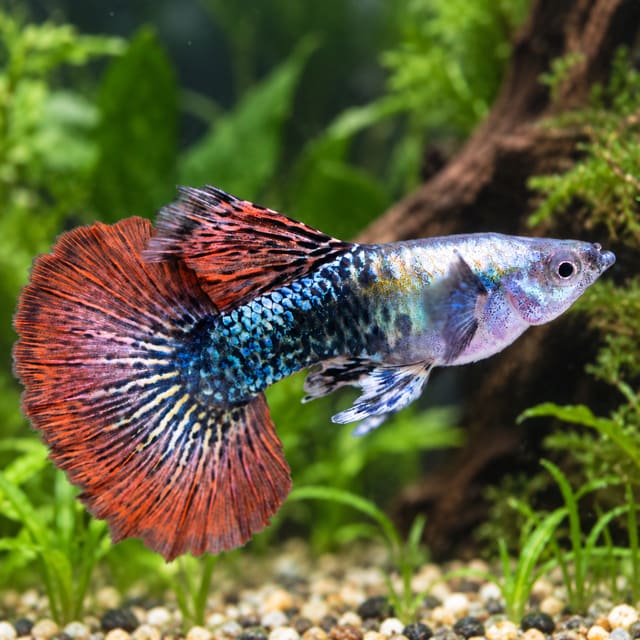
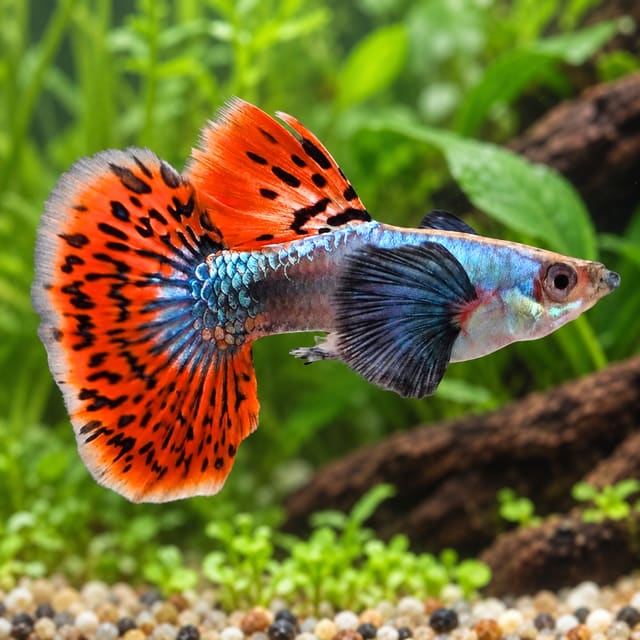
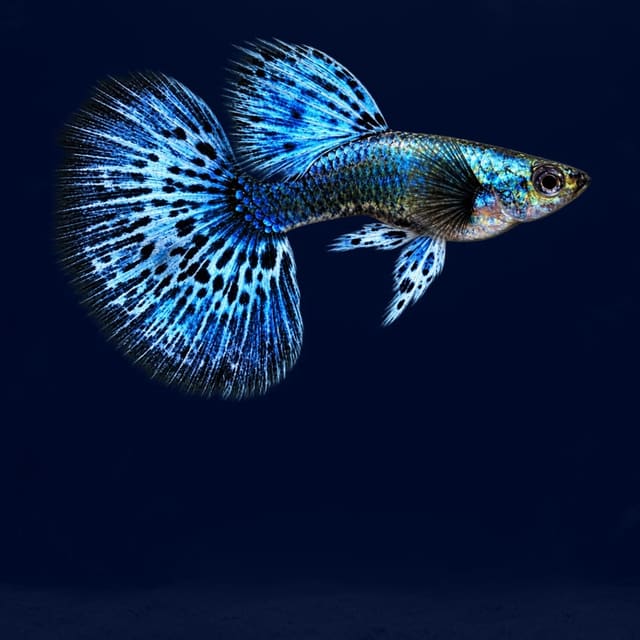
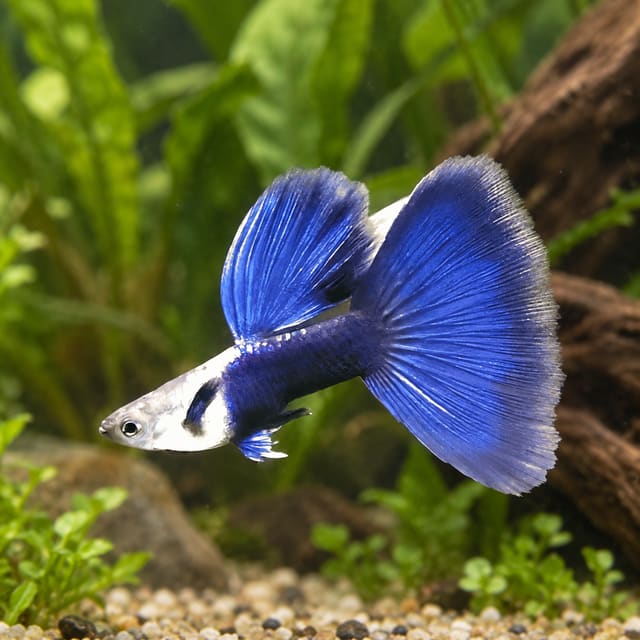
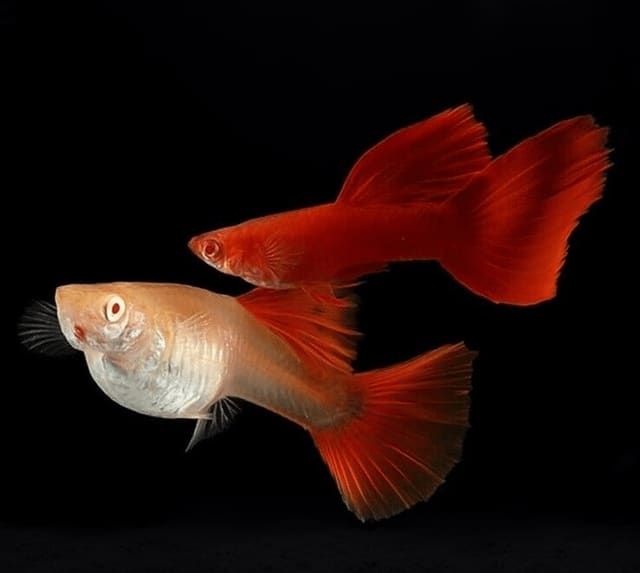
Full Red Albino Female Guppy (Poecilia reticulata)
22–28°C · pH 7–8
£15.99
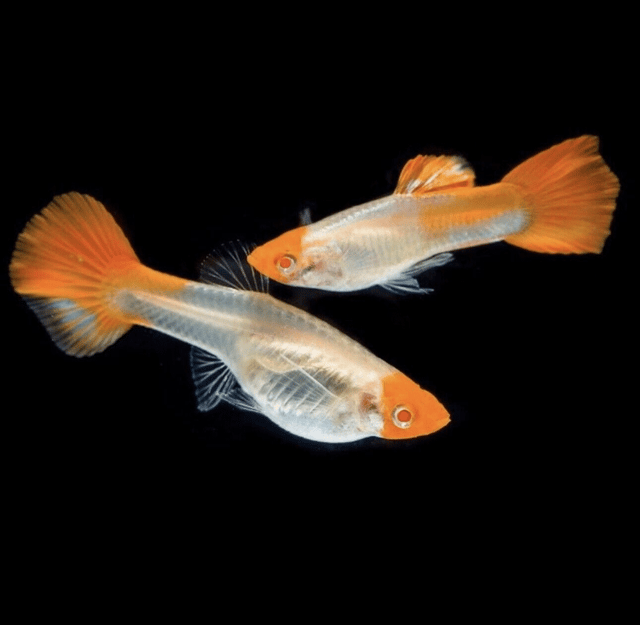
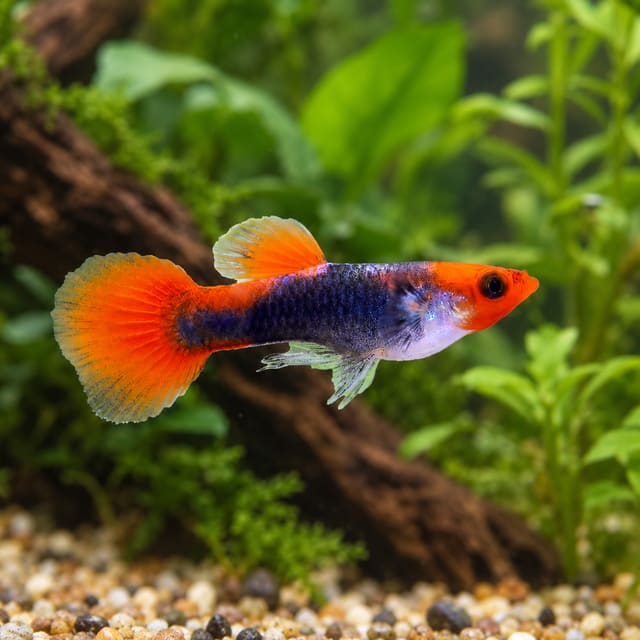
One full red albino male guppy (Poecilia reticulata), a red-eyed fancy line of the classic livebearer. Males reach 5 cm standard length and do best in a peaceful, planted tank of at least 45 litres with hard, warm water at 18–28 °C and pH 7.0–8.0.
Adult size is the maximum length this species reaches at full maturity (scientific sources). The livestock you receive will be younger and smaller. Product-photo provenance and any image-specific limitations are stated on the listing.
Poecilia reticulata
Shoaling fish: kept in a group they feel safer, stay calmer and show their best colour.
One full red albino male guppy (Poecilia reticulata), a red-eyed fancy line of the classic livebearer. Males reach 5 cm standard length and do best in a peaceful, planted tank of at least 45 litres with hard, warm water at 18–28 °C and pH 7.0–8.0.
Adult size is the maximum length this species reaches at full maturity (scientific sources). The livestock you receive will be younger and smaller. Product-photo provenance and any image-specific limitations are stated on the listing.
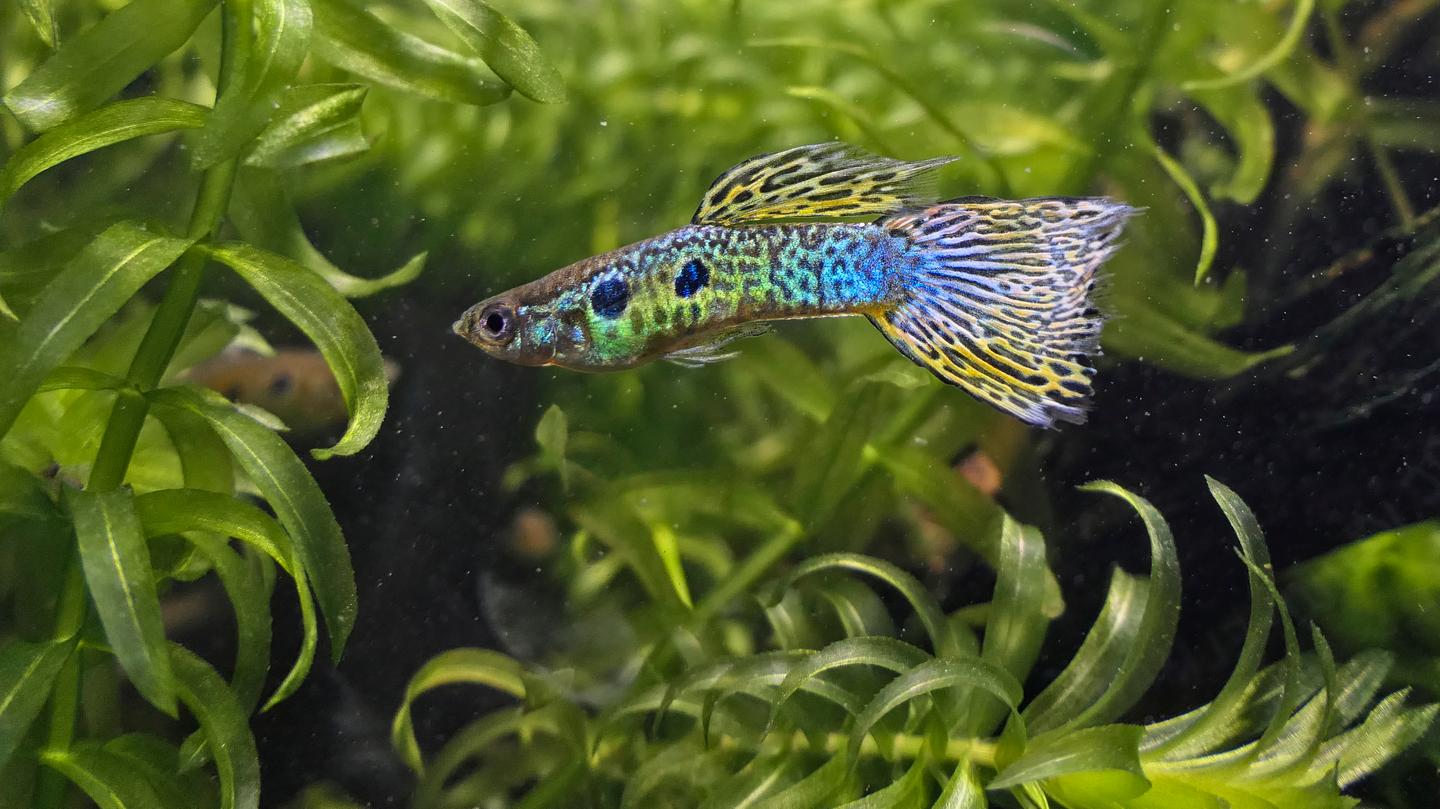
Guppies are social livebearers suited to a prepared beginner, not a fish-per-litre formula. Use a mature filtered aquarium, tested neutral-to-alkaline mineral-bearing water, deliberate sex and population planning, open swimming room, cover and a separation option.
Maintain these water conditions for optimal health and vibrant colors
This listing is for one male guppy from a full red albino line. Each unit is a single male, so if you want three of them for a small display group, order a quantity of three. He belongs to Poecilia reticulata, the species Wilhelm Peters described in 1859, and he is a domestic, selectively bred form of it. Every fancy guppy in the hobby, from tuxedos to mosaics, is the same species underneath, which is why everything below about water, feeding and tank mates applies to him in full.
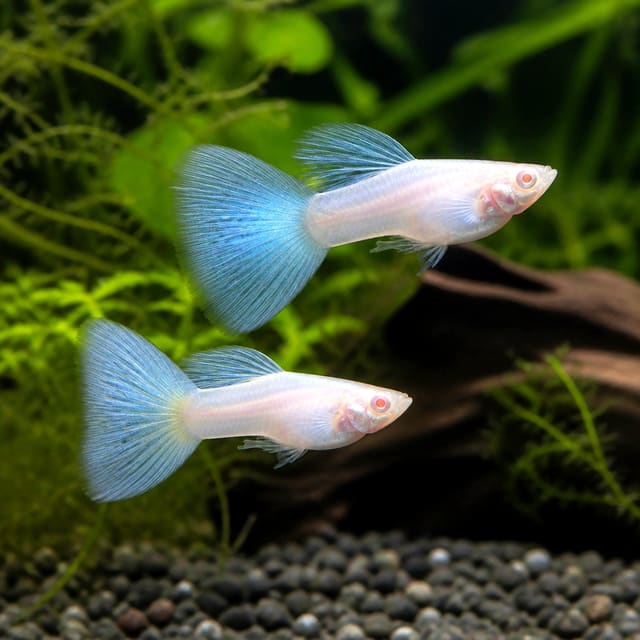
The trade name has two parts, and they describe different things. "Full red" is the colour the line is bred for. "Albino" describes his eyes and the pigment behind them. Wild guppies have black eyes, as do many of the fancy strains you will see in a shop. In 2024 a team at China Agricultural University published a study of red-eyed domestic guppies and described the red eye as characteristic of albinism. With little or no pigment in the iris, the iris turns see-through and the colour of the blood vessels behind it shows. So when you are picking an albino out of a mixed tank, look at the eye first and the fins second.
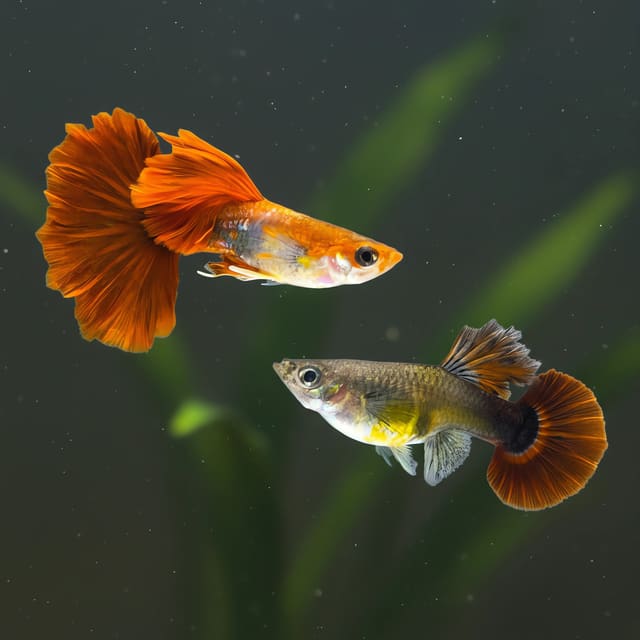
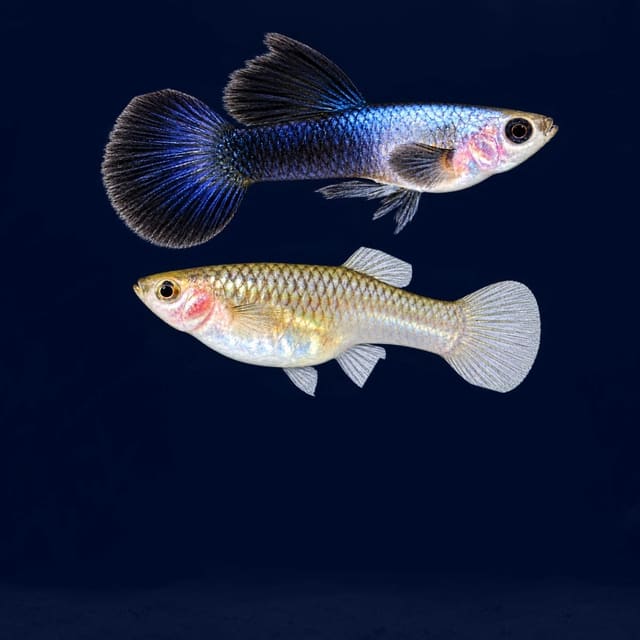
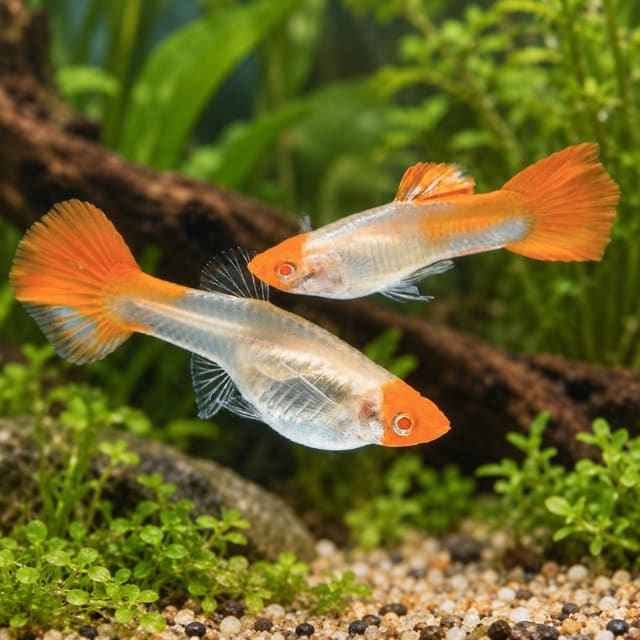
Male guppies are the smaller, showier sex. FishBase describes males as about half the size of females, with a colourful tail and caudal fin, and Wikipedia gives typical lengths of 1.5 to 4 cm for males against 3 to 7 cm for females. The certain check is the anal fin. In a male it has become a narrow, tube-like organ called the gonopodium, which sits directly behind the pelvic fins and is used in mating. A female keeps a plain triangular anal fin, as the OATA care sheet points out, and Seriously Fish describes females as larger and plumper with duller colour. Once you have seen the two side by side you will not mix them up again.
FishBase gives a maximum length of 5.0 cm standard length for male guppies and 6.0 cm for females. Standard length runs from the snout to the base of the tail, so the tail itself comes on top of that figure. FishBase also lists a common length of 2.8 cm total length for males, which is a fairer idea of an ordinary adult than the record. As with any fish, set the tank up for the adult and not for the size he is in the bag on the day he arrives.
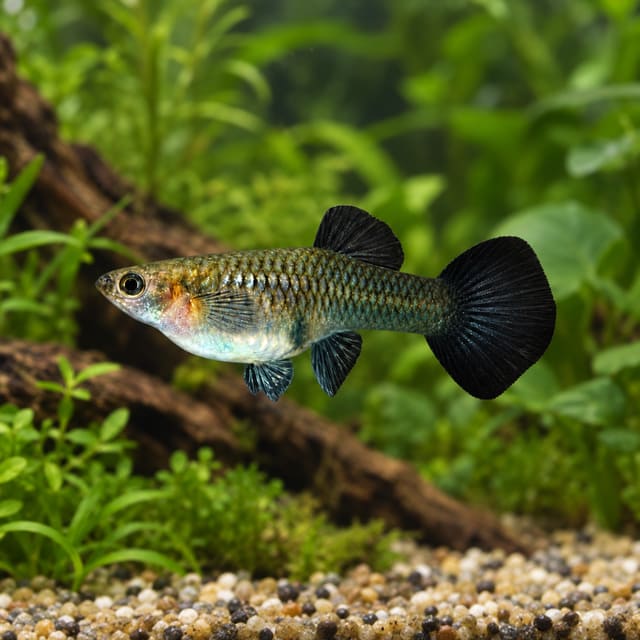
Albino describes pigment, nothing more. The 2024 study compared red-eyed and black-eyed guppies and found that the genes behaving differently were mainly ones involved in making melanin, the dark pigment, with a gene called OCA2 as the strongest candidate. A follow-up by the same group in 2025 crossed a red-eyed strain with a black-eyed one and found that the red eye behaved as a simple recessive trait. In every way that affects his care you are buying an ordinary guppy, carrying one inherited difference that shows most clearly in his eyes. If you would rather have a strong red male with dark eyes, we also list the full red male guppy.
A lot of keepers buy male guppies purely for colour, and a tank with no females in it at all is a sound way to keep them. Males carry the decoration in this species: Wikipedia notes that wild males have splashes, spots or stripes of colour along with ornamental tail and dorsal fins, while wild-type females are grey. Without a female there is no breeding, so a males-only group stays at the number you bought. That suits a community tank where you want colour without a steady supply of fry, and it suits anyone with no plans to rear young.
If you do want females with him, follow the ratios the care sources give. OATA, the UK ornamental fish trade association, recommends keeping at least three guppies together, with two females to each male. Seriously Fish puts it as several females to each male. Spreading one male's courtship across a few females means no single female is on the receiving end of all of it.
To keep the line together, the shop lists full red albino female guppies as well. Matching an albino male with albino females is the straightforward route to red-eyed young; the breeding section further down explains why pairing him with dark-eyed females gives a different result.
One detail catches people out. A female guppy can store sperm and keep fertilising her eggs for up to eight months, according to Wikipedia, and Seriously Fish notes that females can go on producing young for six months or more with no male present. If you add females that have already lived with other males, the first few broods may have nothing to do with your red male. That is no problem if you simply enjoy having young about, but if you care what the babies look like, be patient and judge the results on the later broods.
How many males should you start with? None of the sources sets a figure for a males-only group, so let the size of your tank and its filter decide. Whatever the number, add fish gradually. OATA warns that the bacteria in the filter need time to catch up with each new arrival, and that stocking a new tank too quickly risks the rise in ammonia and nitrite known as new tank syndrome. A small group of males in a well-run tank, with more added a few weeks later once the readings stay clean, is a far safer start than a crowd on day one.
If you are building a breeding group around him, the OATA ratio makes the arithmetic simple: for every male, two females. One male with two females is the smallest group OATA suggests; two males would want four females, and so on. Remember that the females are the bigger fish, reaching 6.0 cm standard length against his 5.0 cm according to FishBase, and that a breeding group grows quickly once broods start arriving. A tank that looks roomy with six adults can be crowded a few months later, so either plan where the young will go or be ready to separate the sexes once you have the fry you want.
Every fancy guppy goes back to a small fish from north-eastern South America and the southern Caribbean. FishBase gives the native range as Venezuela, Barbados, Trinidad, northern Brazil and the Guyanas, and Seriously Fish adds Tobago, Antigua and Barbuda and the Netherlands Antilles. FishBase describes guppies living in warm springs, weedy ditches and canals. Seriously Fish goes further: the species turns up in almost every type of water, from streams at altitude to murky swamps, and does best where there is plenty of algae, marginal vegetation or aquatic plants. Some wild populations even live in brackish water. Wikipedia sums up how adaptable the fish is: guppies have colonised almost every freshwater body they could reach.
Wild guppies look very little like the fish on this page. Wild-type females are grey, and wild males have patches of colour on a plainer body. They also share their water with predators; Wikipedia names Crenicichla alta, Anablepsoides hartii and Aequidens pulcher among them. Predation shapes the fish. Research summarised in the 2024 albino study found that guppies from high-predation streams were smaller and younger when they matured and produced more young per brood, while females from low-predation streams showed a stronger preference for males with more orange and red colouring. Wikipedia likewise notes that females are drawn to brightly coloured males, especially those with orange spots on the flank.
The common name has a story of its own. Albert Günther named the fish Girardinus guppii in honour of Robert John Lechmere Guppy, but Peters' earlier name, Poecilia reticulata, is the one in use. Older books may call it Lebistes reticulatus, a name now treated as a synonym, so if you inherit a dusty fishkeeping manual, that is the same fish.
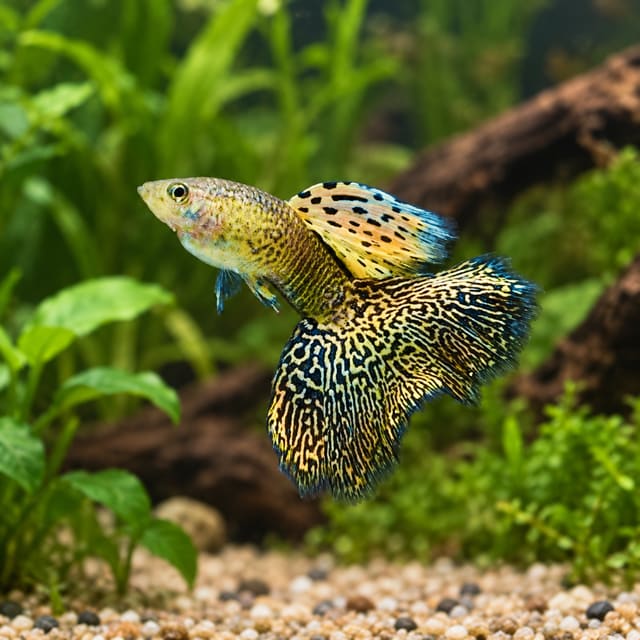
Breeders turned that variable wild fish into the strains kept today. Wikipedia notes that the genes for male ornament are carried on the Y chromosome and are heritable, and that fancy strains are produced by selective breeding. The 2024 study mentions around 30 domestic colour and tail strains being reared in Singapore alone. A full red albino is one result of that work: a colour selected over many generations, with the red-eyed trait carried along with it.
The same qualities that make guppies easy to breed at home have made them one of science's favourite fish. The 2024 study describes the guppy as a model species in genetics and breeding research, used to investigate genetic drift, inbreeding, hybrid vigour, adaptation and the inheritance of traits, as well as evolution and mate choice. Part of the appeal is speed. The same paper notes that, in nature, a guppy generation takes around 100 days where fish communities are complex and 180 to 200 days in smaller streams, so changes that would take decades in larger animals can be followed within a few years.
That history comes with a responsibility. Guppies have been released on every continent except Antarctica, most often for mosquito control, and Wikipedia records that in many places they have harmed native fish. FishBase lists the species as a potential pest. Never put a guppy, or its young, into a garden pond, ditch or stream.
Guppies are small, but they still need a proper heated aquarium with a filter. Seriously Fish recommends a base of at least 45 × 30 cm, roughly 41 litres, and OATA gives 45 litres as the minimum for small groups of guppies and mollies. Treat those as floors rather than targets. A larger volume holds its temperature and water quality more steadily, and it gives a group of males room to show off.
The OATA care sheet sets out the basics. A filter is always essential. A heater is needed all year round to keep the temperature steady. Use aquarium gravel or sand, ideally with live plants for cover, or artificial plants and ornaments such as caves if you prefer. Keep the tank away from draughts, radiators and other heat sources, direct sunlight and loud noise.
Seriously Fish suggests a planted tank with floating vegetation and advises against strong currents, advice that matters all the more for a male bred for long fins. Angle the filter outlet so that it moves the surface without pushing fish across the tank, and leave quieter water among the plants where he can hold position without effort.
The 2024 study explains that a pigment-free iris lets more light pass into the eye. We have not found research measuring how albino guppies cope with bright aquarium lighting, so we will not tell you they need a dark tank. What we can say is that the layout the care sources already recommend suits them well. Floating plants give shaded patches a fish can choose for itself. OATA's advice to keep the aquarium out of direct sunlight applies to every guppy. A light on a timer gives a regular day and night; for comparison, the research colony in that study was kept on 10 hours of light a day. If your male spends most of his time under cover once the lights are on, add more surface plants and see whether he settles.
Nothing elaborate is needed. A sand or fine gravel floor, a few clumps of plants towards the back and sides, open water at the front where you can watch him swim, and a raft of floating plants across part of the surface will do the job. Leave a gap in the surface cover over the spot where you feed, so food reaches the fish rather than catching in the leaves. If you use ornaments, check them for sharp edges, because a male's fins are thin and tear more easily than the body.
Guppies come from warm, mineral-rich water, and Seriously Fish describes them plainly as a hard-water fish. The three main care references agree on the broad picture, though their exact figures differ a little.
| Parameter | FishBase | Seriously Fish | OATA |
|---|---|---|---|
| Temperature | 18–28 °C | 17–28 °C | 20–28 °C |
| pH | 7.0–8.0 | 7.0–8.5 | 7.0–8.0 |
| General hardness | 9–19 °dH | 8–30 °dGH | 8–18 °dH |
| Carbonate hardness | not given | not given | 5–15 °dKH |
The figures all three share are 20–28 °C, pH 7.0–8.0 and a general hardness of roughly 9–18 °dGH. That is the zone to aim for. Within it, Wikipedia reports that guppies prefer 25.5–27.8 °C in the aquarium, and the breeding colony in the 2024 study was kept at 22–28 °C. A steady temperature matters more than hitting an exact number, so pick a setting in the mid-20s, set the heater and leave it alone.
Test your tap water for pH and hardness before you order. If it already sits inside these ranges, you have very little to adjust. If your water is soft and acidic, guppies are a harder fit, and it is worth asking us for advice before you buy rather than trying to correct the water after the fish have arrived.
Hardness causes more confusion than any other reading, because test kits and water company reports use different units. The figures above are in German degrees (°dH, also written dGH). One German degree equals 17.848 mg per litre, or parts per million, expressed as calcium carbonate. In those terms, FishBase's 9–19 °dH works out at about 160–340 ppm, and OATA's 8–18 °dH at about 145–320 ppm. OATA's carbonate hardness of 5–15 °dKH is roughly 90–270 ppm. If your water report gives hardness in mg/l or ppm, divide by about 18 to compare it with the table.
Clean water is the rest of the job. OATA's targets are zero ammonia, zero nitrite, and nitrate no more than 20 mg per litre above the level in your tap water. Test at least once a week for ammonia, nitrite, nitrate, pH and hardness. Change about 25% of the water every week, treat the new water with a tap water conditioner before it goes in, and bring it to roughly the same temperature as the tank. When the filter needs cleaning, rinse the media in water you have taken out of the tank, never under the tap, so the bacteria that break down waste are not washed away or killed.
You may read that guppies tolerate salt. They do: Seriously Fish notes that some wild populations live in brackish water, and Wikipedia reports that the species can withstand salinity up to 150% of normal seawater. Those are records of what the species can survive, not targets for a home aquarium. None of the care sources we used calls for salt in a guppy tank, so keep him in ordinary fresh water.
In the wild, guppies eat whatever small food their streams provide. FishBase lists zooplankton, small insects and detritus. Wikipedia mentions benthic algae and the larvae of aquatic insects, and Seriously Fish describes wild fish as mainly insectivorous. Captive-bred guppies, Seriously Fish adds, will accept most foods offered.
OATA's advice makes a good daily routine. Feed a good quality flake or granule with a high algae content every day, and add frozen foods such as daphnia, bloodworm and cyclops for variety. Give only as much as the fish will clear in a few minutes, once a day. A male guppy has a small mouth, so crush larger flakes between your fingers and choose the smallest granule size you can find.
Overfeeding is easy with guppies, because they always seem keen. Whatever they leave sinks and rots, and that feeds straight into the ammonia and nitrite readings OATA asks you to keep at zero. If food is still lying on the floor a few minutes after a meal, give less next time.
In a mixed community, watch that faster tank mates are not taking everything before the guppies reach it. Spreading food across the surface helps. If you keep bottom-dwelling fish such as corydoras, give them their own food so they are not left relying on what the guppies drop.
Variety is the point of the frozen foods. Flake can be the everyday staple, but the wild diet the sources describe is mostly small animal food, so a couple of meals a week of thawed daphnia or cyclops brings his menu closer to what the species evolved on. Thaw frozen food in a little tank water first and pour away the melt water rather than adding it to the aquarium.
Guppies are gentle fish. Seriously Fish calls the species very peaceful, and a red male spends his day swimming in the open, showing his fins and picking at food. The risk runs the other way: long, coloured fins are a target for any fish that nips.
Seriously Fish names tiger barbs and serpae tetras as fin-nippers to keep away from guppies, and OATA's guppy advice is to avoid fin-nipping species. Leave out anything large enough to swallow a fish of 3 to 5 cm as well. In the wild, guppies are prey for several larger fish, and a predatory tank mate will treat them the same way at home.
For company, Seriously Fish suggests other livebearers, rasboras, corydoras and tetras. Choose from the peaceful end of each group. A tetra you are unsure of is worth checking first, since the serpae is a tetra too. Keep the community calm and size the tank for the whole group, not only the guppies.
Other guppies are the obvious companions, but remember that they are all one species and will interbreed. A males-only tank of several strains is a simple way round that, and it makes a bright display. Add females of a different strain, though, and his offspring will be crosses. That is fine if you simply enjoy fry, less so if you want the full red albino line to stay true.
OATA describes a healthy fish as having clear, bright eyes, undamaged fins, intact scales and no ulcers or lumps. Those checks work just as well on an albino. His eyes will be red rather than black, but they should still look clear and bright, not cloudy or swollen. Look along the edges of his fins for splits or ragged patches, especially if he shares the tank with other species.
The early signs of trouble OATA lists are clamped fins, held tight against the body instead of spread; flicking or rubbing against the gravel and ornaments; and shimmying, a shaking motion on the spot. If you see any of these, test the water before anything else. Poor water quality is something you can measure and correct the same day, and a partial water change is a sensible first step while you work out what has changed.
Be realistic about fancy guppies. Seriously Fish warns that many commercially bred guppies are weakened by inbreeding and over-production, and are prone to disease and early death. That is a reason to keep conditions stable, feed well and avoid crowding, not a reason to steer clear of the strain. A male kept in clean, steady water with peaceful company has the best chance of a full life.
How long is a full life? Wikipedia gives a typical wild lifespan of around two years, though it varies a great deal, and OATA says guppies can live several years in a well-matured aquarium.
A few habits keep problems small. Count your fish at feeding time, when they all come out into view. Watch the newest arrival most closely for the first fortnight. Keep a simple note of test results and water changes, so that if something does go wrong you can see what changed. And if anything worries you, ask us for advice early rather than late.
Guppies are livebearers: a female carries her young and gives birth to free-swimming fry rather than laying eggs. They mature quickly. FishBase puts maturity at two months for males and three for females, and Wikipedia says males can be mature in seven weeks or less, with females first producing young at 10 to 20 weeks old.
Gestation and brood size vary from source to source, which reflects how much they vary in real fish. FishBase and Seriously Fish give four to six weeks; OATA gives 24 to 30 days; Wikipedia records anything from 20 to 60 days at 25 to 27.8 °C. The 2024 study notes that female guppies generally give birth about once a month. For brood size, FishBase says 20 to 40 young, OATA 20 to 80, Seriously Fish between 5 and 100, and Wikipedia two to 200, usually 30 to 60.
Seriously Fish warns that adult guppies eat fry, so if you want to raise young, plan for it. OATA suggests a breeding net to protect the fry, then rearing them separately until they are big enough to rejoin the adults.
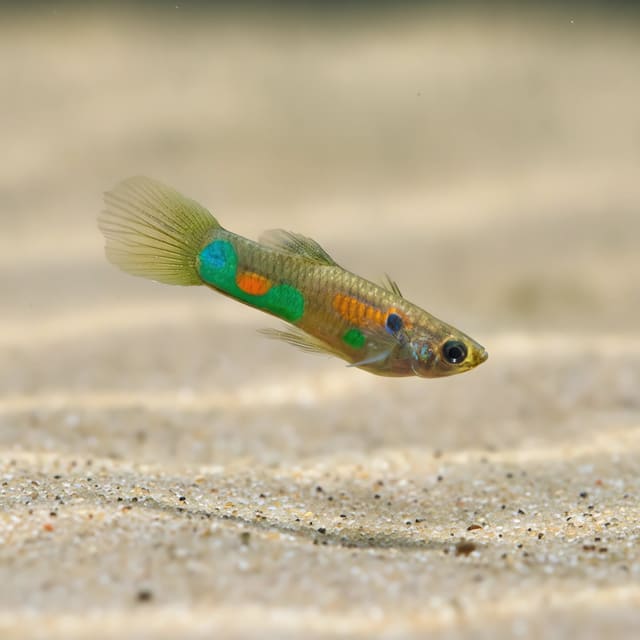
This is where an albino male gets more interesting than most. Early reports, cited in the 2024 study, showed albinism in guppies being inherited as an autosomal Mendelian trait. The 2025 study crossed a red-eyed sky blue strain with a black-eyed strain. Black eye proved dominant, and in the second generation black-eyed and red-eyed fish appeared in the 3:1 ratio expected of a single recessive gene. If you would like to see another red-eyed line, we also list albino sky blue guppy pairs.
If the full red albino line follows the same pattern, here is what to expect:
Two cautions. First, both studies worked with other strains, and the 2024 paper names several candidate genes, including TYR, OCA2, SLC45A2 and SLC24A5, so treat this as the expected pattern rather than a promise for every brood. Second, eye colour and colour pattern are inherited separately. Wikipedia notes that the genes for male ornament sit on the Y chromosome, so a male's ornament genes pass to his sons, while the red-eye trait, being autosomal, can pass to sons and daughters alike.
Anyone who breeds albinos for several generations runs into the problem Seriously Fish describes in commercial guppies: inbreeding. Breeding albino to albino, sibling to sibling, keeps the red eyes but narrows the line each time. The genetics above offer a way round it. Cross your albino male into an unrelated dark-eyed female of a similar colour, raise the black-eyed young, then pair those young together or back to albinos. Red-eyed fish reappear in the next generation, now carrying fresh blood. It takes longer than straight albino-to-albino breeding, but it is the route the inheritance pattern points to if you want to widen the line rather than simply produce more of the same fish.
Have the aquarium fully running before you order: filter working, water tested and the temperature steady. Someone must be at the delivery address to receive him, because live animals need to go straight from the courier into careful hands.
Please read our delivery and live arrival information before ordering. Your male travels in an oxygen-filled bag inside insulated packaging, with heat packs when conditions call for them, carried by a tracked courier licensed to transport live animals. We email you the confirmed delivery date and the tracking details.
Our live arrival policy has a few firm steps. Start a continuous unboxing video while the parcel is still sealed, open it in the same take, and show the fish in the still-sealed bag. If a fish has arrived dead, dying or clearly compromised, email hello@tropicalfishco.co.uk on the day of delivery with your order number and that video. Photos on their own do not meet the policy. The resolution is a replacement with your next order, or a refund for the affected fish, subject to the guarantee terms.
Float the sealed bag in the aquarium for 20 to 30 minutes so the water inside reaches the tank's temperature. Floating matches temperature only; it does nothing for pH or hardness, so if your water is very different from the ranges above, ask us for advice before he arrives. Then net him across into the tank and throw the bag water away. Never pour it into the aquarium.
Keep the lights low for the rest of the day. Over the first week, watch his breathing, his appetite and his behaviour. A male that swims in the open, spreads his fins and comes up for food is settling well. If he hides constantly, clamps his fins or ignores food, test the water first and then get in touch.
These are the main sources behind the facts on this page, and they are worth reading if you want more depth.
No reviews for this item yet. Bought one? Honest reviews only, good or bad.
What customers say about ordering from us
Easy website plenty of info on fish your buying great to pick a time slot
TRACEY DURRANT · 7 Oct 2026
Got some lovely fish thank you
Kevin Mackie · 7 Oct 2026
Reviews of our shop, collected by Judge.me, an independent third-party review collector. Newest first.