Easy
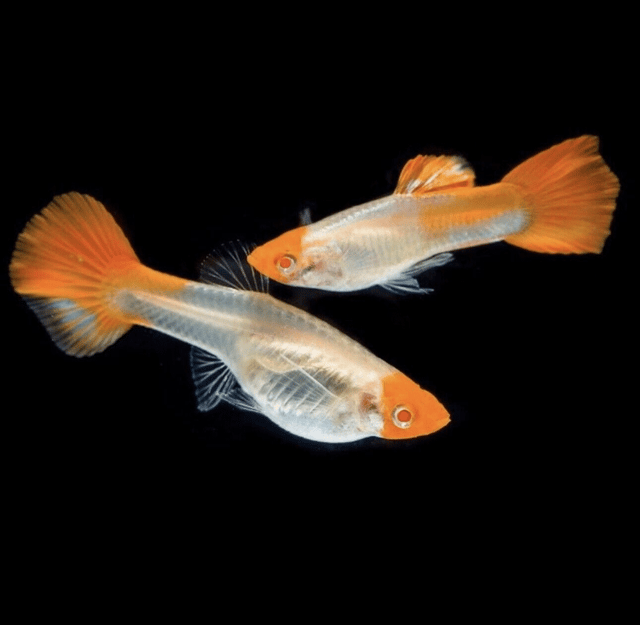
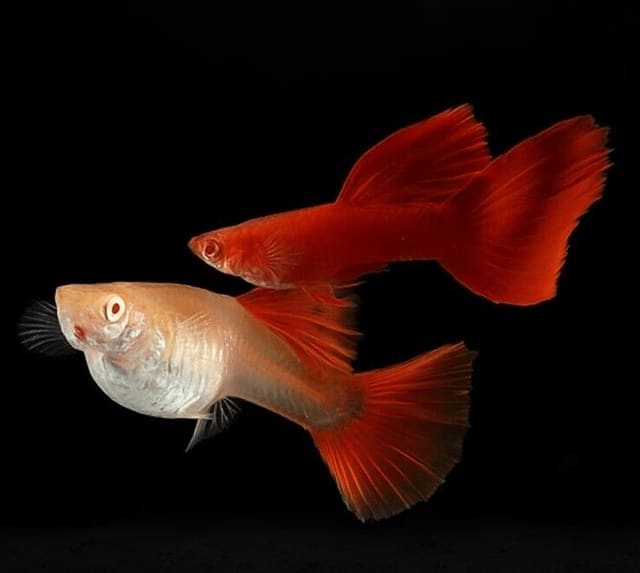
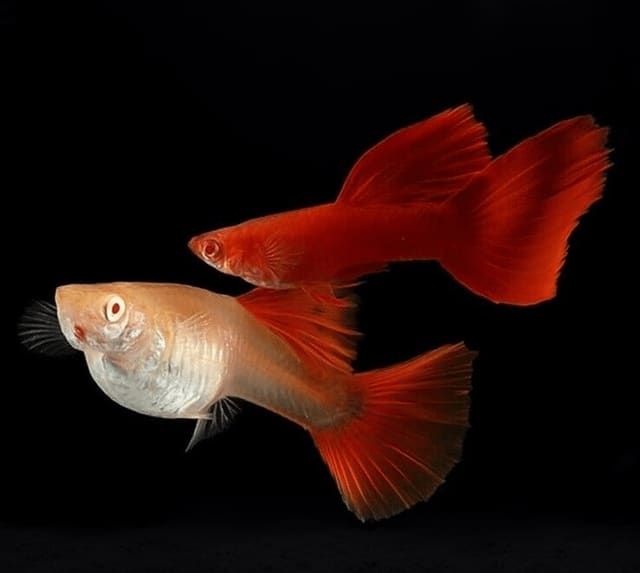
Full Red Albino Female Guppy (Poecilia reticulata)
22–28°C · pH 7–8
£15.99
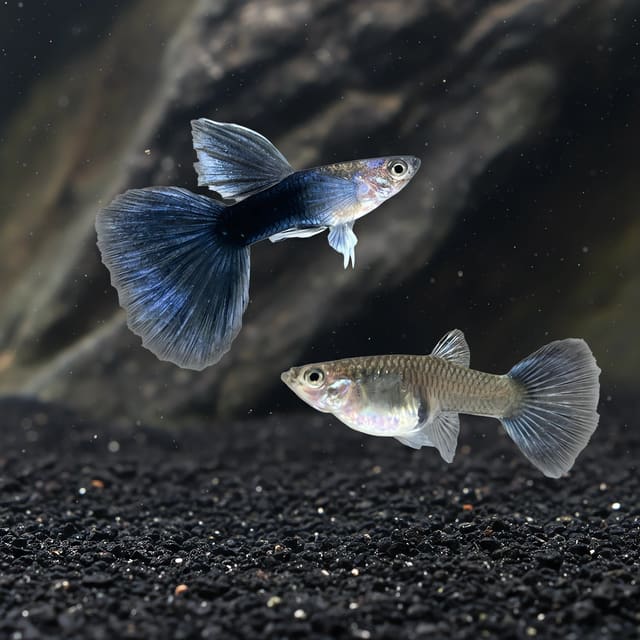
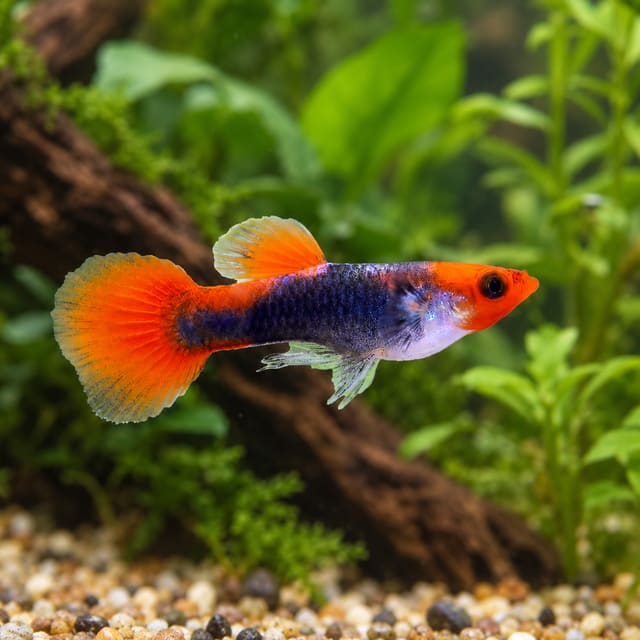
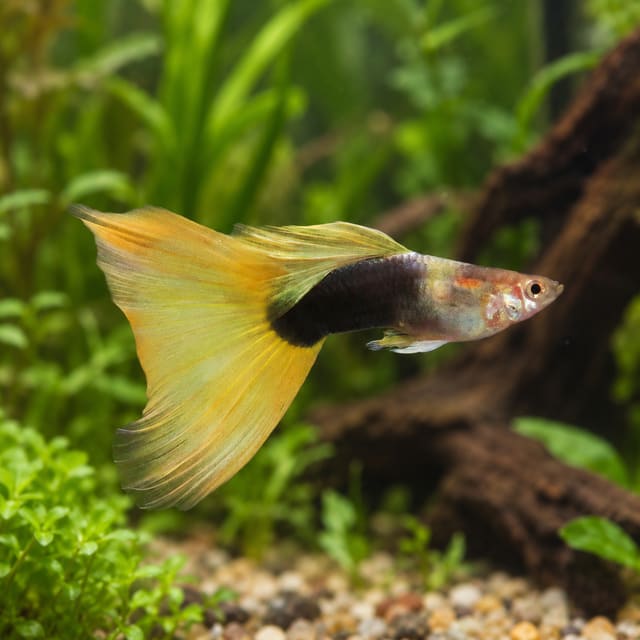
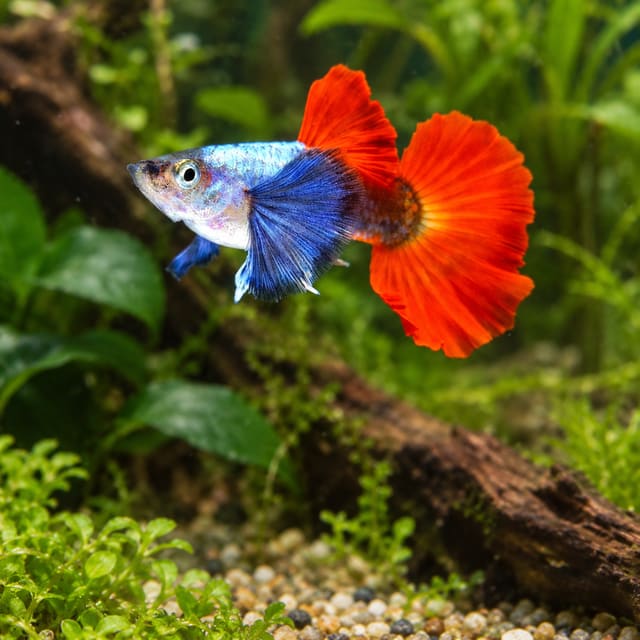
Mixed Colour Male Guppy (Poecilia reticulata) is a colourful male livebearer for a mature, filtered aquarium with neutral-to-alkaline, mineral-bearing water. Plan a social group, gentle flow, open swimming room and companions that will not nip long fins. One purchase supplies one live male fish.
Poecilia reticulata
Shoaling fish: kept in a group they feel safer, stay calmer and show their best colour.
Mixed Colour Male Guppy (Poecilia reticulata) is a colourful male livebearer for a mature, filtered aquarium with neutral-to-alkaline, mineral-bearing water. Plan a social group, gentle flow, open swimming room and companions that will not nip long fins. One purchase supplies one live male fish.
Guppies are social livebearers suited to a prepared beginner, not a fish-per-litre formula. Use a mature filtered aquarium, tested neutral-to-alkaline mineral-bearing water, deliberate sex and population planning, open swimming room, cover and a separation option.
Maintain these water conditions for optimal health and vibrant colors
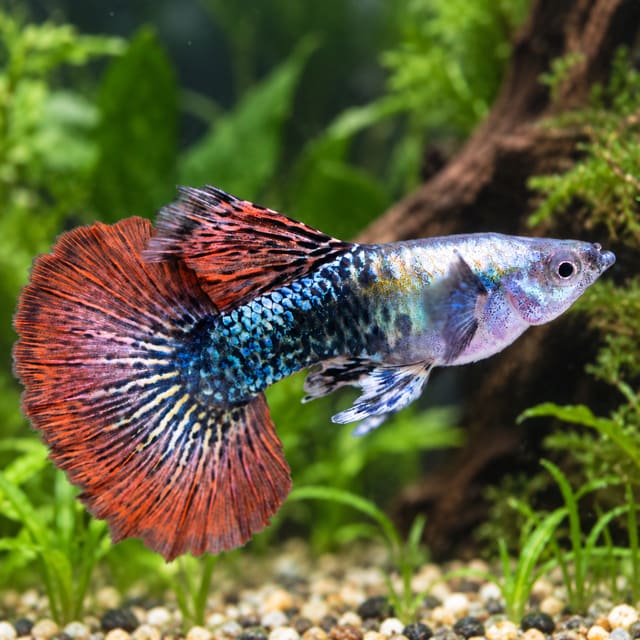
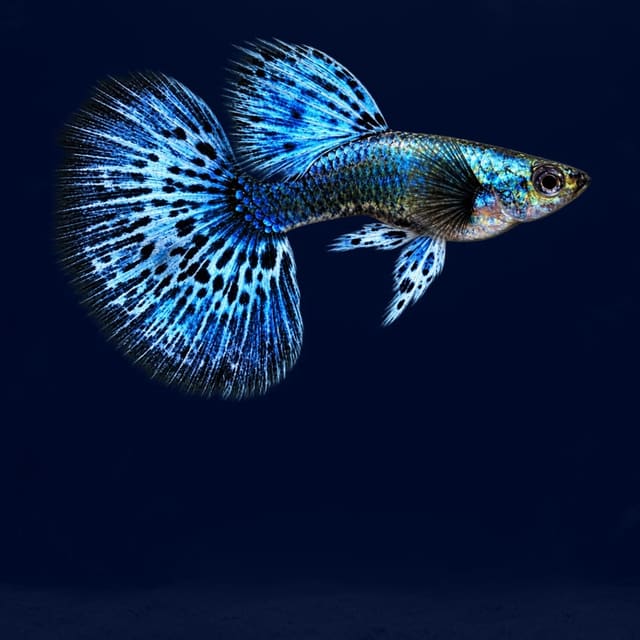
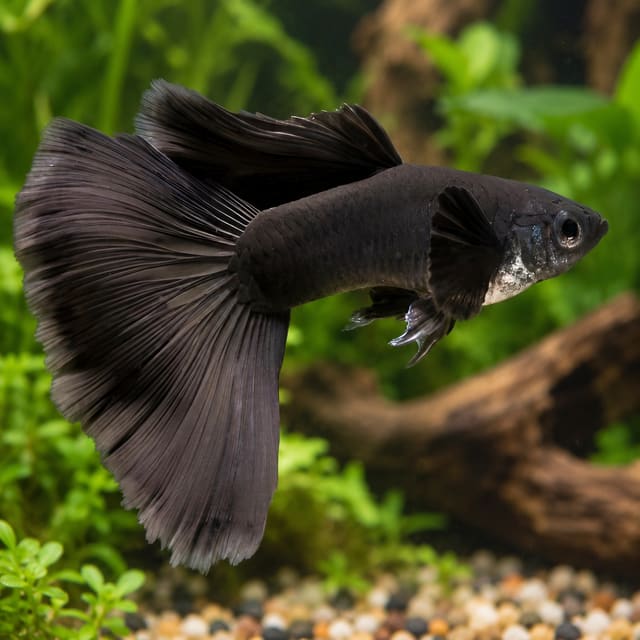
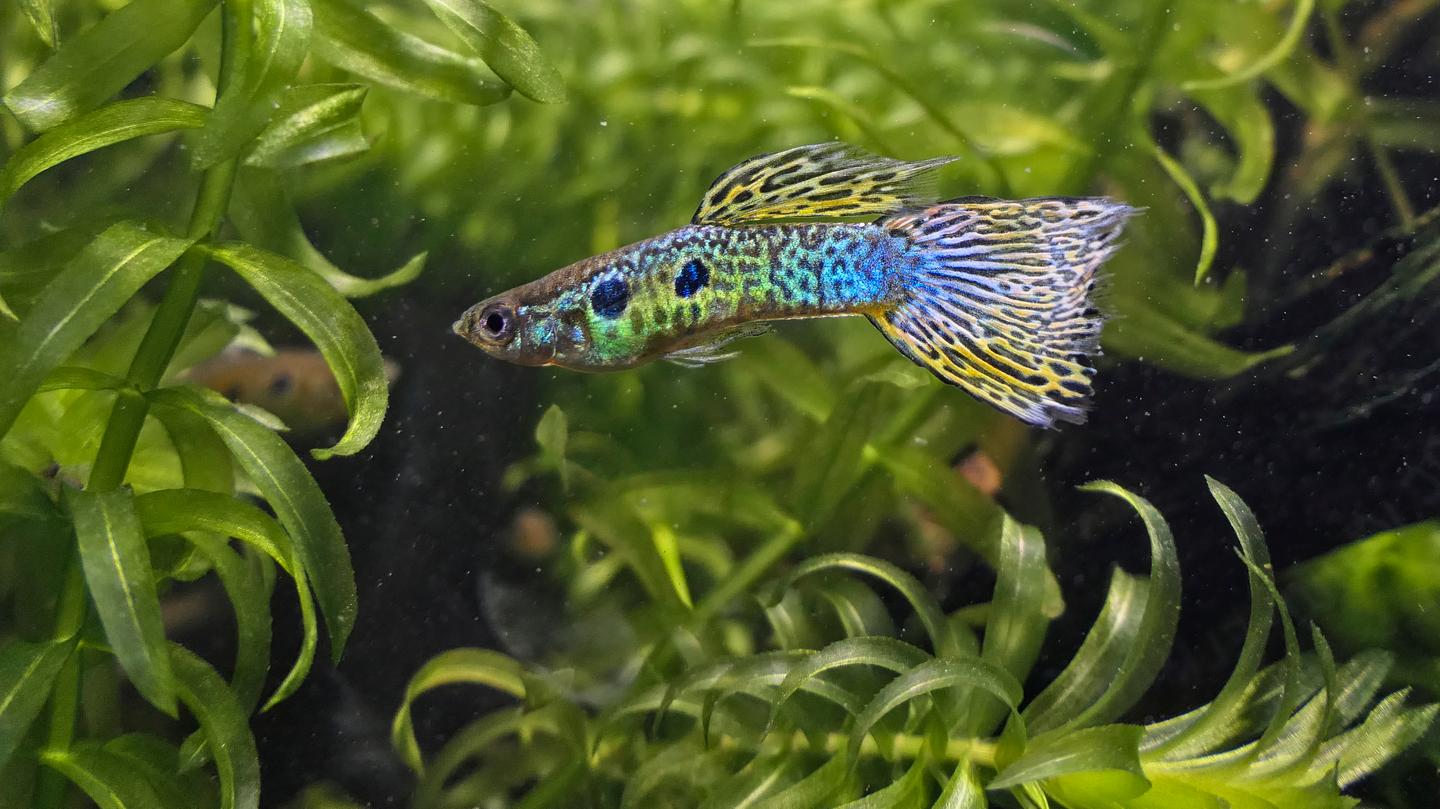
Mixed Colour Male Guppy (Poecilia reticulata) is sold here as one live male fish per purchase. The appeal is the individuality: domestic males may show different combinations of colour, pattern and fin shape, so the trade wording describes a mixed-colour offer rather than one fixed strain. This is still the familiar guppy species, not a separate colour-form species, and the husbandry starts with stable mineral-bearing water, mature filtration and a deliberate group plan.
The product explicitly sells a male. Sex is guaranteed only when the exact product or selected option explicitly states male or female. This Mixed Colour Male Guppy listing is sold as male. That offer statement does not promise an exact pattern, tail outline, age or breeding history. One fish is the sold unit; a customer building a social group should choose the total number and composition for the aquarium rather than read a group promise into one purchase.
| Suits | A prepared beginner or experienced keeper with a mature filtered aquarium, neutral-to-alkaline mineral-bearing water and room for a social group. |
|---|---|
| Needs | Open swimming space, planted or artificial cover, gentle enough flow for normal swimming, a secure layout and regular water tests. |
| Avoid | Uncycled containers, soft acidic long-term conditions, persistent fin-nippers and any plan that ignores chasing or future population. |
| Sold unit | One live male guppy per purchase. |
FishBase records a maximum of 5 cm standard length for male or unsexed guppies and separately notes that females reach 5 cm standard length. Tropical Fish Co's Guppy Care Guide uses 6 cm standard length as a broader female planning figure. These records differ by source and scope, and neither guarantees the exact adult size of an individual fish. Standard length measures the body without the tail fin. For this male offer, expect a small fish that still needs adult group space, a reliable filter and enough open water to move without long fins being pushed by strong current.
The accepted scientific name is Poecilia reticulata, a poeciliid native to Venezuela, Barbados, Trinidad, northern Brazil and the Guianas according to FishBase. Guppies have also been introduced widely outside that native range. That history explains their ability to occupy varied waters, but wild occurrence is not a reason to expose aquarium fish to fluctuating extremes. The practical target is the stable routine range set out below.
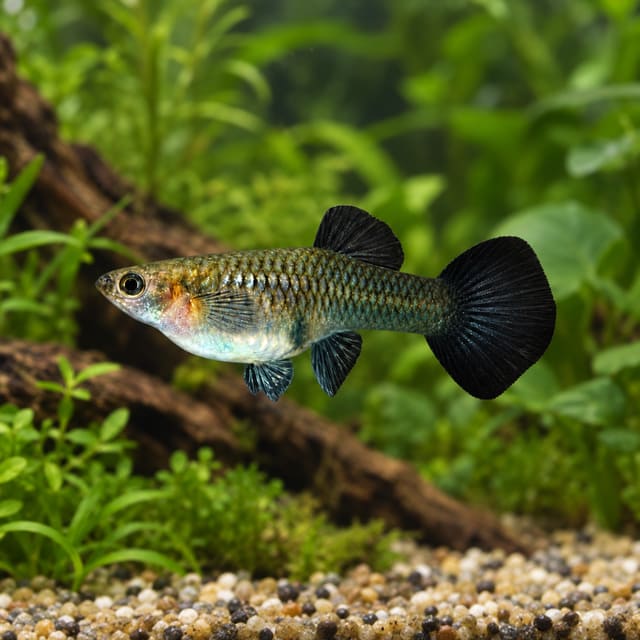
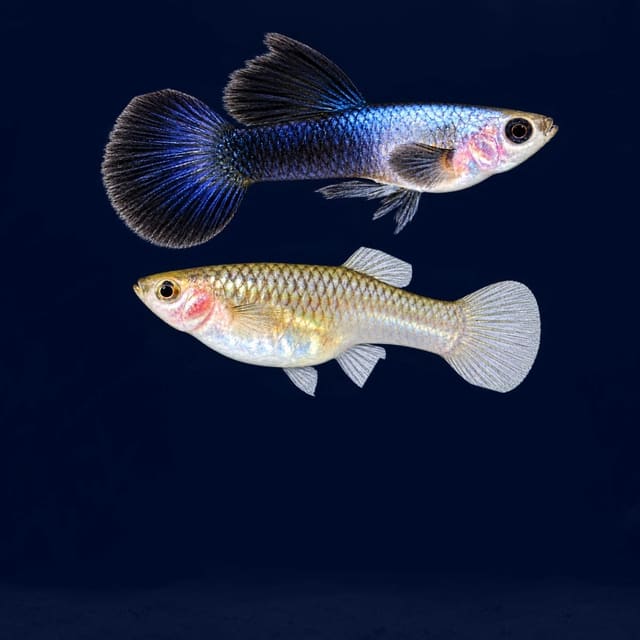
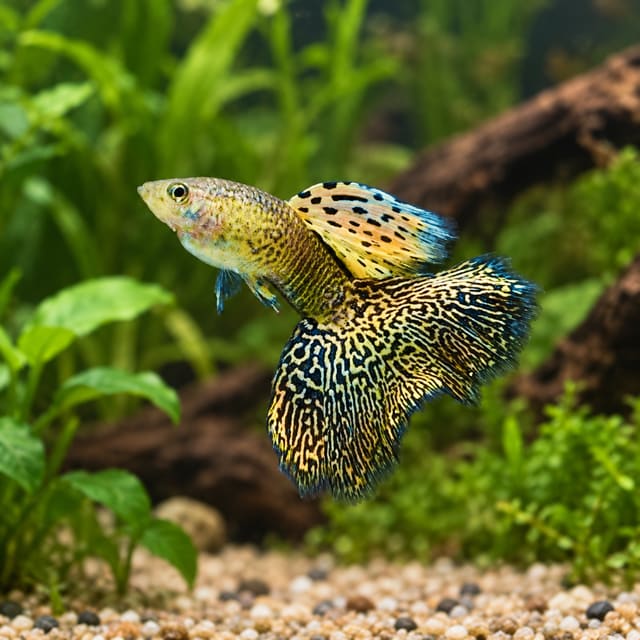
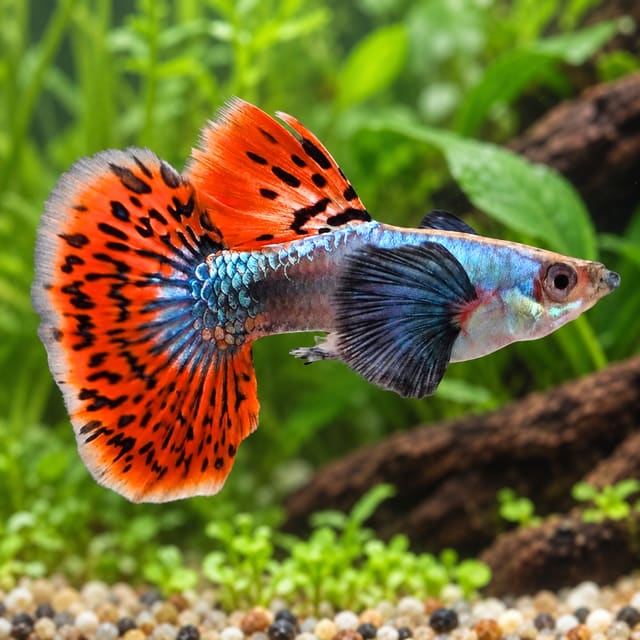
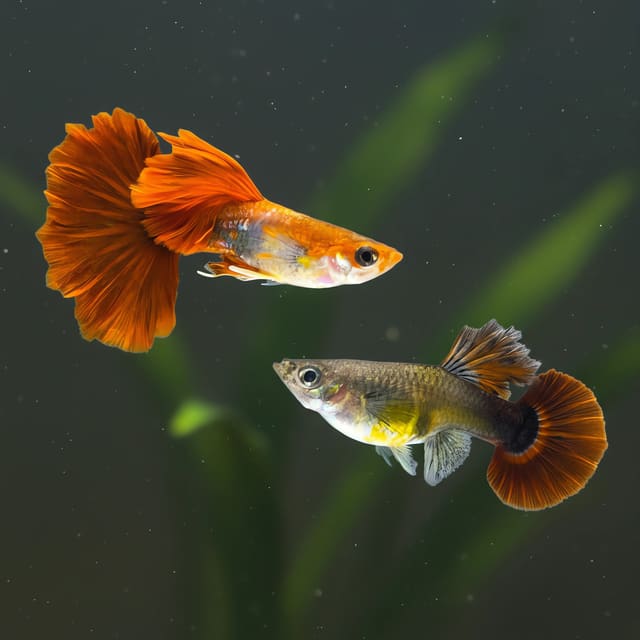
“Mixed colour” describes the appearance category of this male offer. It does not establish pedigree or a named strain. Colour alone is also an unreliable way to judge sex across domestic guppies: the offer controls the guarantee here, while biology explains why mature males usually look smaller and more ornate than females. If keeping a documented strain matters, obtain lineage evidence rather than assuming a mixed-colour animal belongs to one.
A male-only group avoids new mating within that group, but it does not remove every social decision. Males may display, pursue and compete for space. Provide cover that lets a fish move out of another's immediate path without sacrificing the open swimming room guppies use. Watch feeding and body condition. Repeated cornering, hiding, torn fins or exclusion from food calls for a change to the group or layout, not a claim that all peaceful species will settle by themselves.
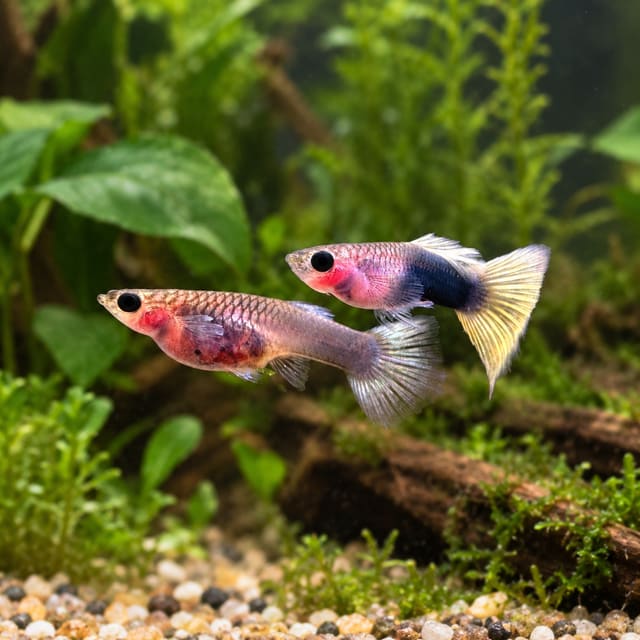
Gallery images have been digitally enhanced to improve image quality. Natural colour, pattern, size and maturity can vary between live animals.
The complete Guppy Care Guide explains the store's conservative policy in more depth. Use it to plan the aquarium before purchase, then use this product page for the exact sold sex and unit.
Small adult length does not make a bowl suitable. Seriously Fish gives a 45 × 30 cm base and approximately 41 litres for Poecilia reticulata. OATA's combined guppy-and-molly sheet gives 45 litres for a small group of the smaller livebearers. FishBase's secondary aquarium note gives a minimum length of 60 cm and a group of five or more. Tropical Fish Co therefore uses the more conservative house screen: a mature filtered aquarium at least 60 cm long for one small guppy group, then adjusts for the actual sex plan, tank mates, filtration and test results.
Length, footprint and furnishing matter because fish need routes around one another. Keep an area of open water for normal movement and provide planted or artificial cover where a fish can pause without being trapped. Smooth décor protects trailing fins better than rough or sharp ornaments. Seriously Fish notes that floating vegetation is appreciated and that strong current should be avoided. Aim for circulation that carries waste to the filter while allowing every guppy to hold position and feed without constant effort.
Nominal litres cannot set a safe maximum. A 60-litre aquarium may be a candidate when it is at least about 60 cm long, mature, filtered and not already fully occupied, but existing fish, future fry, decoration and water quality can make the same nominal volume unsuitable. Start with the welfare of the whole group rather than filling a calculated capacity.
If this is a first aquarium, follow the first tropical tank guide before ordering. Cycling is demonstrated by water tests and a functioning biological filter, not by placing hardy fish into untreated new water. Ammonia and nitrite should both be zero before the guppy arrives.
Review the layout from the normal feeding position. Every fish should have a route to food and away from a persistent display. A dense wall of plants can hide a problem from the keeper, while an empty tank can leave no refuge. The useful middle ground is open water broken by monitored cover, with equipment accessible for cleaning and enough surface movement to support oxygen exchange.
For everyday care, use the store's routine temperature range of 22–28°C. OATA's broad guppy-and-molly guidance gives pH 7.0–8.0, general hardness 8–18°dH and carbonate hardness 5–15°dKH. The Seriously Fish species profile gives a wider 17–28°C, pH 7.0–8.5 and 8–30 dGH range, while warning that long-term maintenance should be in moderately hard or harder water. The store range is deliberately straightforward for UK aquarium planning rather than a claim that every wild occurrence is an aquarium target.
| Routine temperature | 22–28°C as Tropical Fish Co's routine range |
|---|---|
| pH | 7.0–8.0 under OATA's broad guppy-and-molly guidance |
| General hardness | 8–18°dH under the same broad guidance |
| Ammonia and nitrite | Zero mg per litre |
| Nitrate | No more than 20 mg/l above the normal tap-water level under OATA guidance |
Use the water-chemistry guide to understand the measurements, then compare tested water with the plan using the water matcher. Test the actual source water because UK supplies differ by place and can change. If hardness or pH is outside the intended range, identify the cause before adding buffers or minerals; abrupt corrections can be more disruptive than a carefully planned gradual adjustment.
The RSPCA aquarium environment guidance explains the biological filter's job. Fish release toxic ammonia; established bacteria convert it to nitrite and then nitrate. A clear tank can still contain harmful dissolved waste, so testing matters even when nothing looks dirty. Choose a filter for the completed group, maintain steady surface movement and check that the current does not exhaust long-finned animals.
OATA strongly recommends a partial water change of 25% at least once every week. Test at least weekly as well. Treat replacement tap water for chlorine or chloramine and bring it close to the aquarium temperature before use. Siphon waste from accessible areas without turning the whole layout upside down. If filter media needs cleaning, rinse it lightly in water removed from the aquarium; never run it under the tap, because chlorine or chloramine may harm the useful bacteria.
Record temperature, pH, hardness, ammonia, nitrite and nitrate. A sequence of results reveals whether feeding, stocking or filter performance is changing. When several fish breathe rapidly, hang at the surface or lose appetite together, test the water and check circulation immediately. Water quality is the first practical question, not a diagnosis to skip on the way to medication.
Temperature stability matters at both ends of the routine. Confirm the aquarium with an independent thermometer rather than relying only on the heater dial. In a warm room, a heater cannot cool the water; in a cool room, an undersized heater may remain on continuously. Place equipment where circulation carries warmed water through the aquarium, then verify the result at the fish's swimming level. Any adjustment should be measured in the water, not assumed from a setting.
Mineral content deserves equal attention. Guppies are often described as adaptable, yet Seriously Fish specifically characterises them as hard-water fish and warns against long-term soft or acidic maintenance. A fish surviving a chemistry mismatch does not show that the plan is good. Measure general hardness and pH before purchase, compare the tap supply with the intended aquarium, and choose livestock whose needs overlap rather than repeatedly forcing incompatible water towards different targets.
Wild guppies use a varied diet that can include small insects, zooplankton and detritus. Domestic fish accept prepared foods readily. Use a nutritionally complete, appropriately sized omnivore flake or granule as the staple, then add safe compatible variety rather than relying on one treat. OATA's broad guidance for guppies and mollies recommends quality flake or granules with a high algae content, with small live or frozen items such as daphnia as possible variety.
OATA advises feeding only what the fish can eat within a few minutes once a day. Treat that as broad group guidance and adjust the portion to the actual animals and food. Watch that each fish reaches food, particularly when one male is bolder than the others. Remove uneaten material where practical. Excess food decomposes into extra waste and can make oxygen, ammonia and nitrate management harder.
Do not collect detritus or insects from an unknown outdoor source to imitate wild ecology. Aquarium foods should be biosecure and nutritionally dependable. A natural-history description explains what the species has evolved to use; it does not create a precise home recipe for every age and system.
Feeding is also a useful daily health check. A settled guppy should swim steadily, breathe regularly, hold open undamaged fins, maintain a normal body profile and show consistent interest in food. Clamped fins, surface gasping, spots, wounds, loss of balance or sudden refusal to eat are warning signs rather than diagnoses. Test water, inspect equipment and separate safely where appropriate. The RSPCA fish-health guidance supports watching for changes and checking water, while the OATA fish-vet directory provides a UK route to qualified help when focused diagnosis or treatment is needed.
A separate quarantine system should be mature, filtered and tested, with dedicated equipment. The MSD Veterinary Manual recommends at least 30 days of isolation, with longer periods where indicated. This is professional US veterinary guidance; use lawful UK products and veterinary direction rather than copying drug doses or choosing salt and heat from one symptom.
Track condition across time instead of judging one meal. A fish that eats eagerly can still lose weight if it is repeatedly displaced or if the food is unsuitable. View the group from both ends of the aquarium and confirm that each animal can approach the feeding area. If a male hangs back, check fins, breathing, buoyancy, water quality and social pressure before simply increasing the total ration.
Fry require food that fits a much smaller mouth and water kept exceptionally clean, but this male-only sale does not itself create a breeding promise. If the aquarium later includes females, decide in advance where young fish would live and how they would be rehomed. More frequent feeding for fry increases waste, so nursery filtration and testing must be ready before a brood appears.
Finish cycling, heating and testing before the fish is dispatched. The current delivery and Live Arrival Guarantee policy is the source for packing, courier and claim conditions. Tropical Fish Co hand-bags fish in pure oxygen, uses an insulated poly box and adds a heat pack when the weather calls for one. Tracking and the confirmed Thursday or Friday delivery date are sent by email, and a licensed live-animal courier carries the parcel.
Someone must be present to receive live fish. Open and inspect the parcel on the day it arrives. If there is a problem, contact the store the same day with the order number and the continuous video. These steps protect both the animal and a genuine claim; the policy page carries the full current terms.
Keep the first hours calm and check that established fish do not prevent the newcomer from resting or reaching food. Continue normal testing, because a new animal increases the biological load. Avoid a large celebratory feed. A modest portion and close observation show more about appetite and behaviour while placing less immediate demand on the filter.
Seriously Fish describes Poecilia reticulata as very peaceful and names quiet community companions including other livebearers, rasboras, corydoras, small loricariids and tetras. That is a starting list, not a guarantee. Check the exact companion for adult size, temperature, pH, hardness, activity, feeding style and fin behaviour. A fish that technically tolerates the water can still be unsuitable if it nips fins, dominates food or turns a male guppy's display into constant conflict.
| Potentially suitable | Quiet community fish of compatible adult size and overlapping moderately hard water needs, after the exact species has been checked. |
|---|---|
| Avoid | Persistent fin-nippers such as tiger barbs and serpae tetras, predators able to swallow a guppy, and soft-water specialists outside the planned chemistry. |
| Watch | Chasing that prevents rest or feeding, damaged fins, repeated hiding, weight loss and any animal controlling the only refuge. |
A male-only guppy group avoids new mating within the aquarium, which is useful for keepers who do not want fry. It can still involve display and pursuit. A mixed-sex group requires a population plan before purchase. OATA suggests at least three guppies with two females per male as broad group guidance, but the store's conservative policy is five or more where space and the sex plan allow. No ratio guarantees that females will be free from attention or that reproduction will remain manageable.
Female guppies can store sperm after mating, so even a female-only group does not prove that fry cannot appear after purchase. That biological context matters when another listing is considered for the same aquarium. Plan capacity, nursery filtration and responsible rehoming before mixing sexes. Do not use predation by adult fish as a population-control method.
Introduce fish slowly enough for the biological filter to adjust and observe every feeding. A compatible community lets each fish move, rest and eat normally. If a newcomer is pinned near the surface, hides continuously, misses food or develops torn fins, act early. Safe separation is preferable to waiting for a textbook description to become true.
Look beyond a label such as “community fish.” Rasboras and tetras cover many species with different adult sizes, temperatures and water chemistry. Corydoras also need their own social group and suitable substrate; adding one as a token bottom fish does not meet its needs. A small loricariid may add a different feeding zone, yet it still contributes waste and may need food the guppies do not. Build the combined stocking list from complete adult requirements.
Invertebrates need the same caution. A broad phrase such as “shrimp safe” cannot cover every size or life stage. Small shrimp or young can be eaten, and mineral or medication choices may affect invertebrates differently. If a mixed fish-and-invertebrate aquarium is planned, check the exact animal, protect access to appropriate food and avoid reading one peaceful temperament note as a guarantee for every encounter.
Check the aquarium after lights come on, during feeding and later in the day. A fish may feed normally while another animal is nearby yet be chased whenever it approaches cover. Repeated short observations reveal patterns that a single glance misses. Keep notes when fins become damaged or a fish changes its usual position, because timing can point to a social, equipment or water-quality change.
If the real aim is an animal that grazes aquarium surfaces rather than a colourful livebearer, browse the algae eaters collection as a separate shopping path. Do not treat that collection as a list of guppy tank mates; every animal still needs its own water, group and adult-space check.
FishBase records a maximum of 5 cm standard length for male or unsexed Poecilia reticulata and separately notes that females reach 5 cm standard length. Seriously Fish lists 60 mm standard length at species-profile level without assigning that endpoint to this male offer. Standard length excludes the tail fin, and neither record guarantees the exact adult size of an individual fish.
The store's conservative house screen is a mature, filtered aquarium at least 60 cm long for one small guppy group. Seriously Fish gives a 45 × 30 cm base and about 41 litres, while OATA gives 45 litres for a small group; length, filtration, sex plan and other livestock still decide suitability.
FishBase's aquarium note gives a group of five or more, which is also Tropical Fish Co's conservative house policy where space and the sex plan allow. A male-only group avoids new mixed-sex breeding, but display and chasing still need monitoring.
It can suit a prepared beginner, but not an uncycled bowl. Start with a mature filter, zero detectable ammonia and nitrite, stable suitable mineral content, a planned social group and a response plan for chasing, damaged fins or illness.
Use a complete, appropriately sized omnivore flake or granule as the staple, with safe compatible variety. OATA's broad guppy-and-molly guidance advises portions eaten within a few minutes once a day; watch that every fish feeds and remove leftovers before they affect water quality.
Use the store's routine 22–28°C range. OATA's broad guppy-and-molly guidance gives pH 7.0–8.0 and 8–18 dGH, with ammonia and nitrite at zero. Test the aquarium and source water, then keep conditions stable rather than making abrupt corrections.
Guppies are generally peaceful, but males can display and chase one another. Their own long fins are vulnerable to persistent fin-nippers, so monitor access to food and cover and separate any fish that is repeatedly cornered or damaged.
Seriously Fish names peaceful livebearers, rasboras, corydoras, small loricariids and tetras as possible companions in a quiet community. Match the exact species for adult size, water, activity and feeding, and exclude known fin-nippers rather than treating any group as automatically safe.
Tropical Fish Co hand-packs live fish in oxygenated bags inside an insulated box, using a heat pack when weather calls for one, and uses a licensed live-animal courier. Start a continuous unboxing video with the parcel still sealed, inspect the fish in the unopened bag on arrival, then float the sealed bag for 20–30 minutes before release; the current delivery policy carries the full Live Arrival Guarantee conditions.
FishBase and Seriously Fish supply species identity, biology and aquarium context. OATA's sheet supplies broad guppy-and-molly guidance. The store care guide states Tropical Fish Co's conservative house policy, while the delivery page controls current packing and Live Arrival Guarantee wording.
No reviews for this item yet. Bought one? Honest reviews only, good or bad.
What customers say about ordering from us
Easy website plenty of info on fish your buying great to pick a time slot
TRACEY DURRANT · 7 Oct 2026
Got some lovely fish thank you
Kevin Mackie · 7 Oct 2026
Reviews of our shop, collected by Judge.me, an independent third-party review collector. Newest first.