Easy
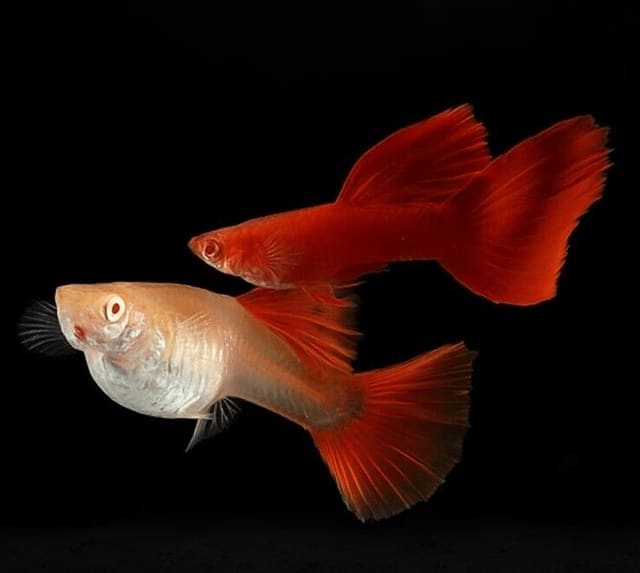
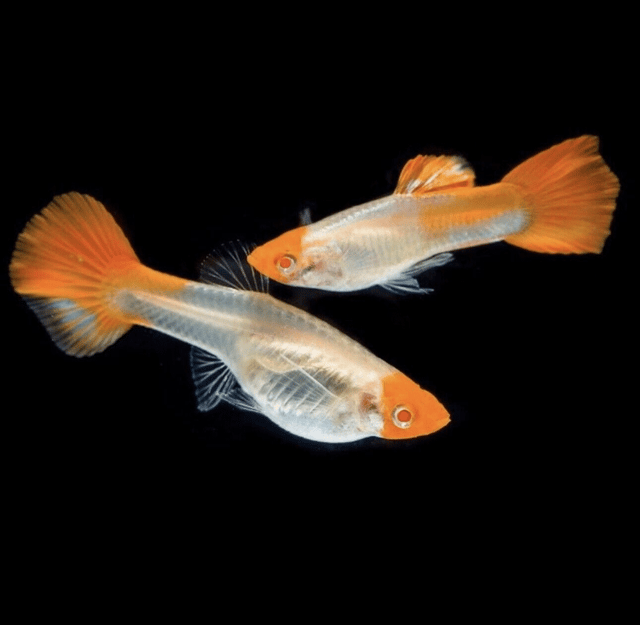
Albino Koi Glassbelly Guppy Pair (Poecilia reticulata)
22–28°C · pH 7–8
£18.99
Photo coming soon
The size, price and care details on this page are for this listing.
One Sunset Blond Female Guppy (Poecilia reticulata) per cart quantity. Plan a mature filtered aquarium at least 60 cm long and a social group the tank can support; the six-fish suggestion is care guidance, not a compulsory quantity.
Adult size is the maximum length this species reaches at full maturity (scientific sources). The livestock you receive will be younger and smaller. Product-photo provenance and any image-specific limitations are stated on the listing.
Poecilia reticulata
Shoaling fish: kept in a group they feel safer, stay calmer and show their best colour.
One Sunset Blond Female Guppy (Poecilia reticulata) per cart quantity. Plan a mature filtered aquarium at least 60 cm long and a social group the tank can support; the six-fish suggestion is care guidance, not a compulsory quantity.
Adult size is the maximum length this species reaches at full maturity (scientific sources). The livestock you receive will be younger and smaller. Product-photo provenance and any image-specific limitations are stated on the listing.
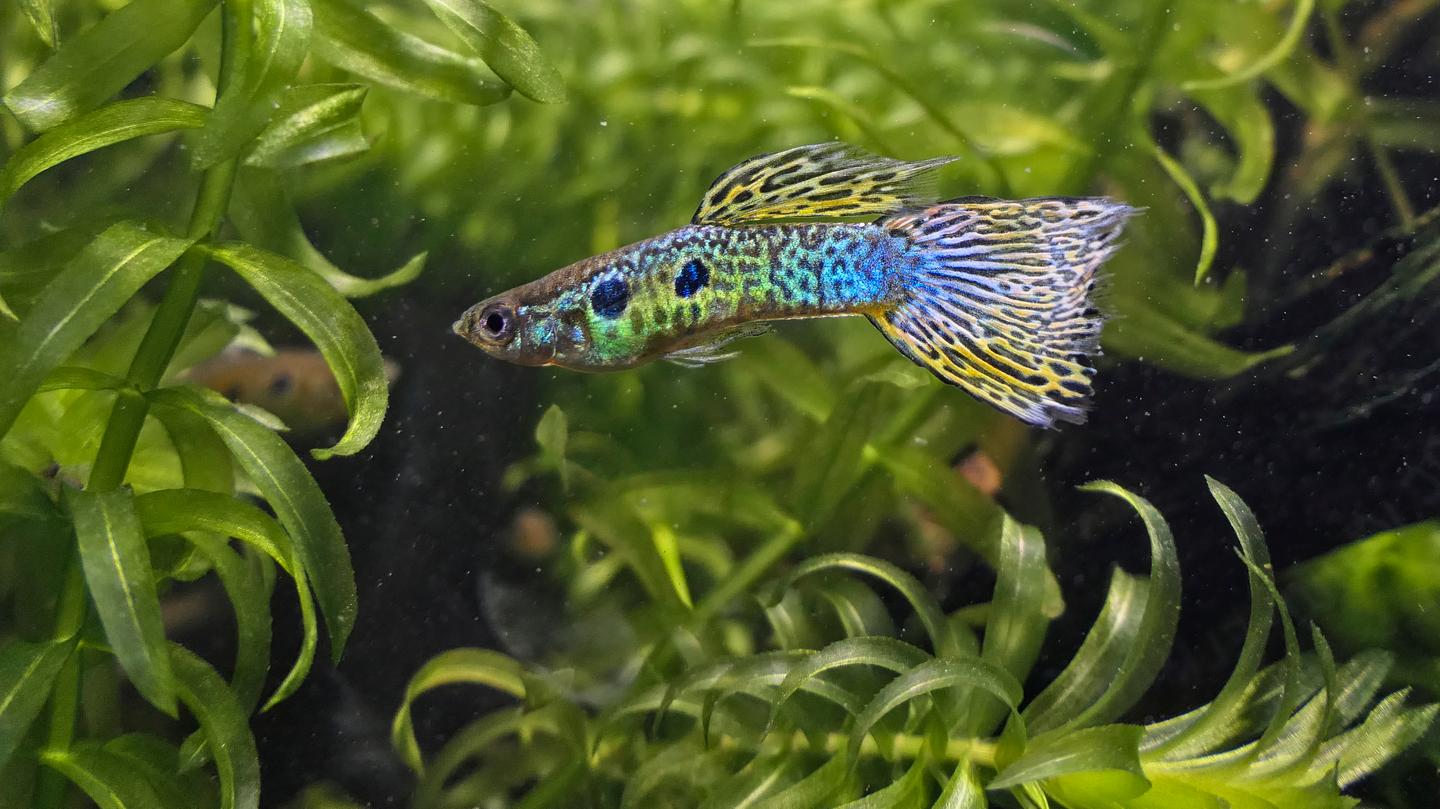
Guppies are social livebearers suited to a prepared beginner, not a fish-per-litre formula. Use a mature filtered aquarium, tested neutral-to-alkaline mineral-bearing water, deliberate sex and population planning, open swimming room, cover and a separation option.
Maintain these water conditions for optimal health and vibrant colors
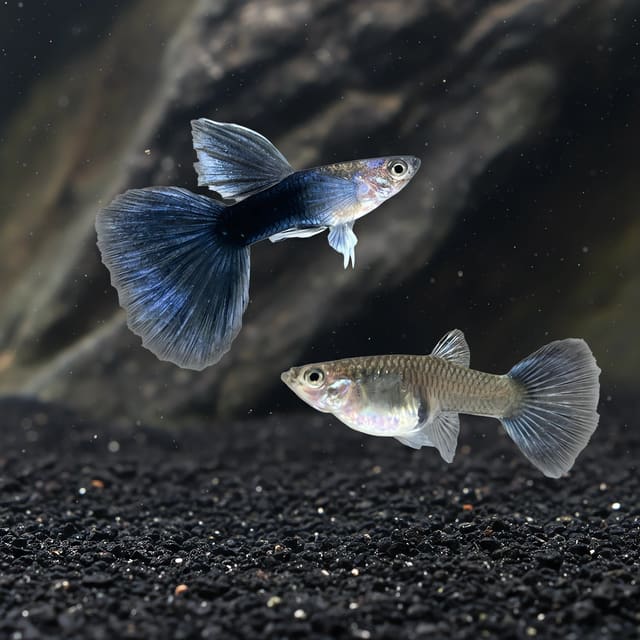
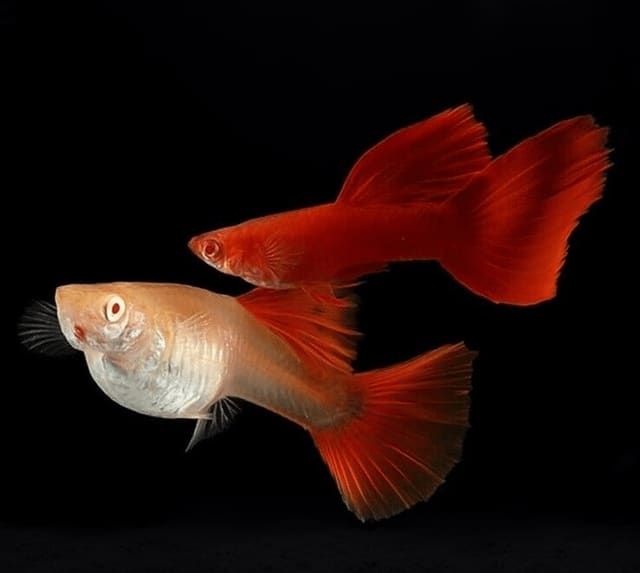
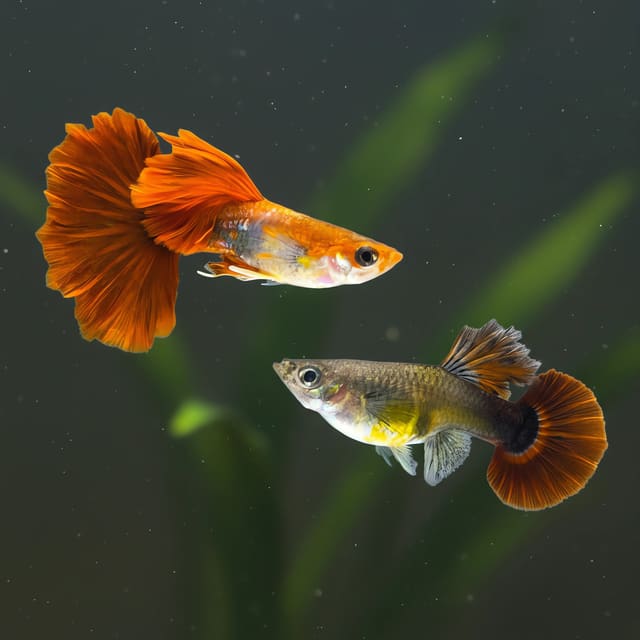
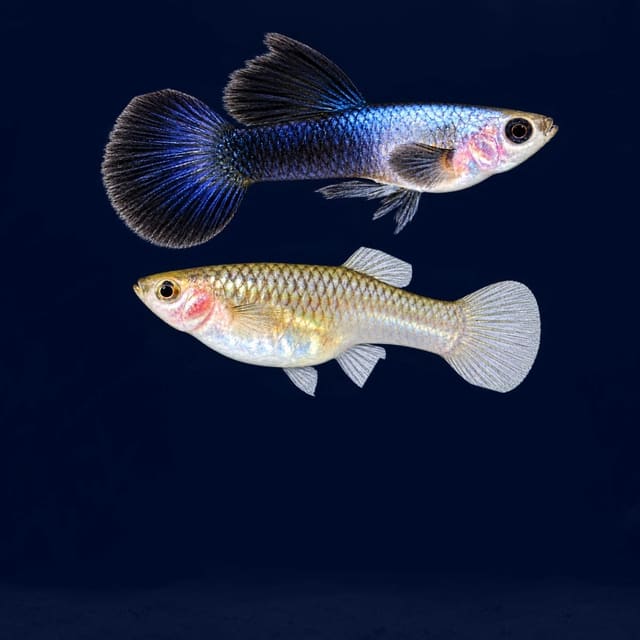
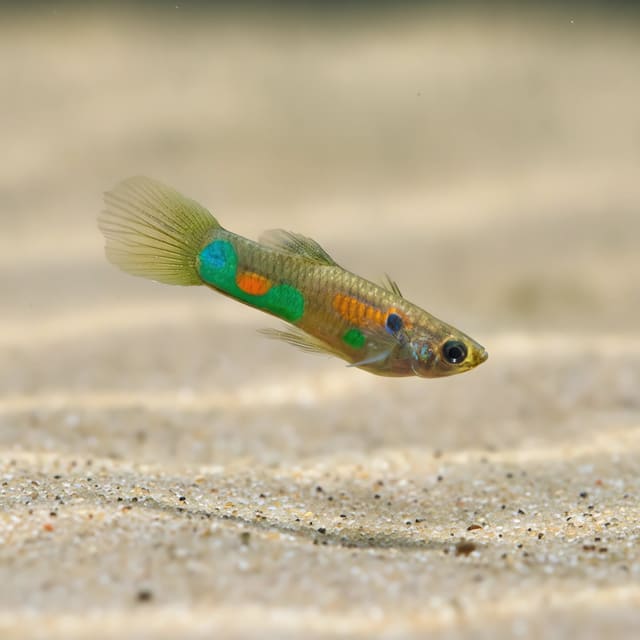
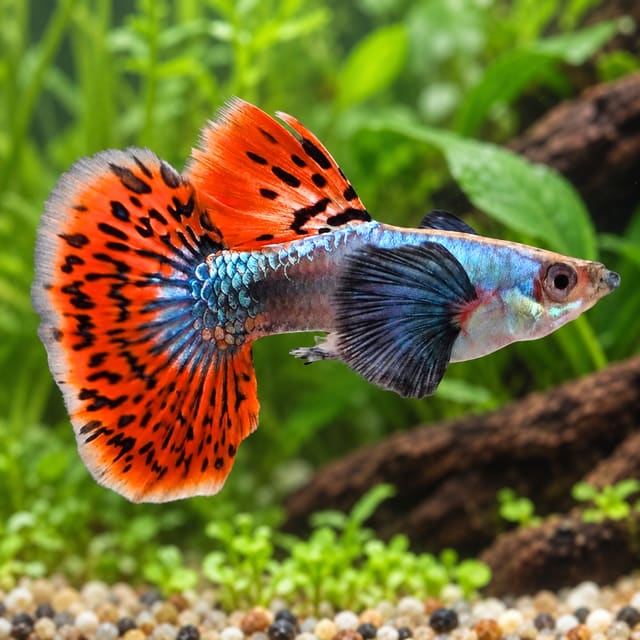
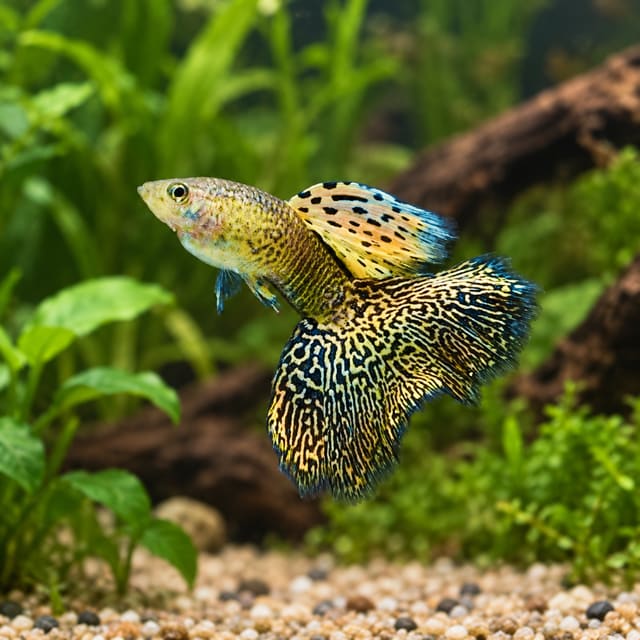
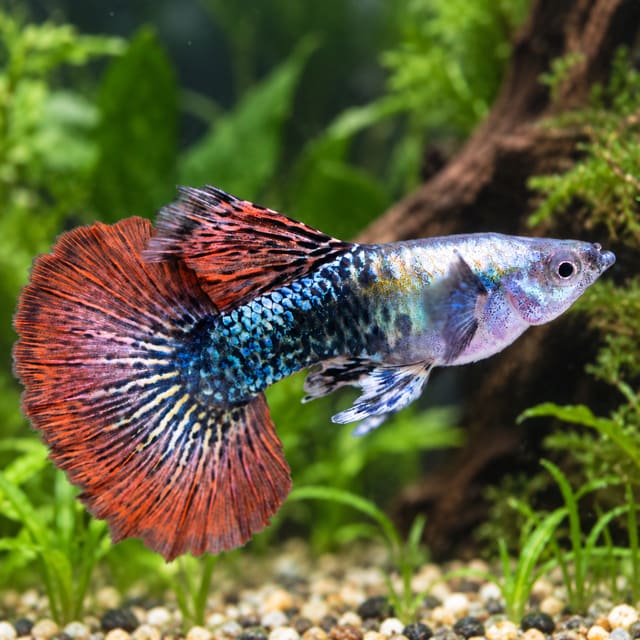
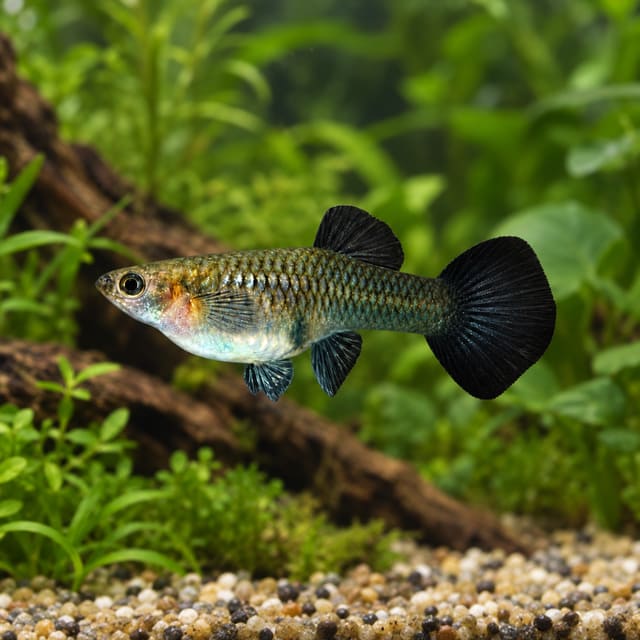
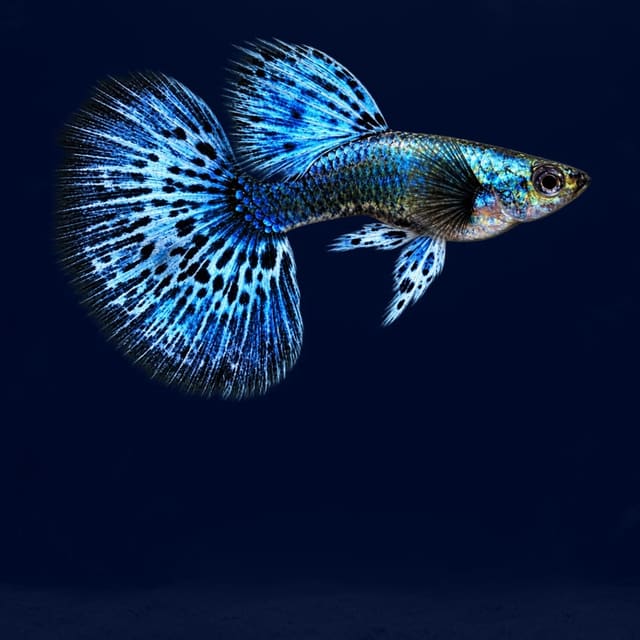
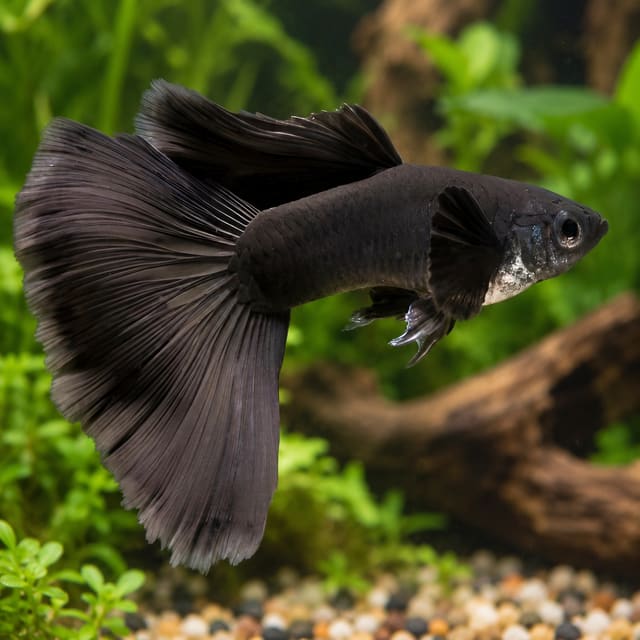
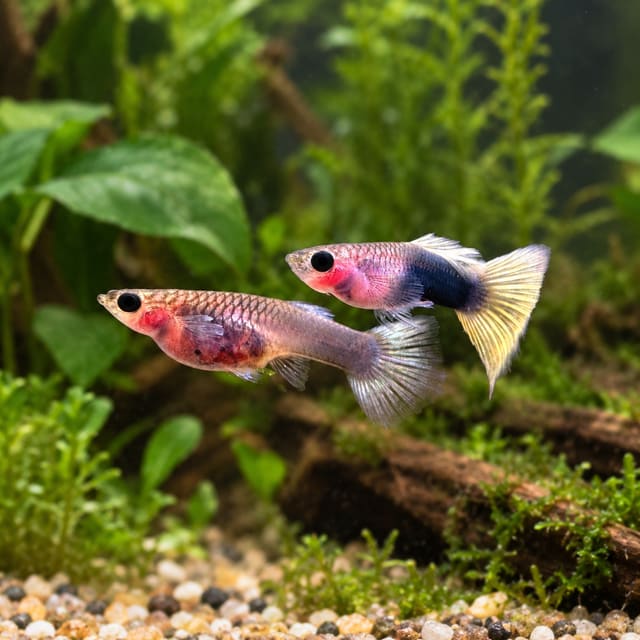
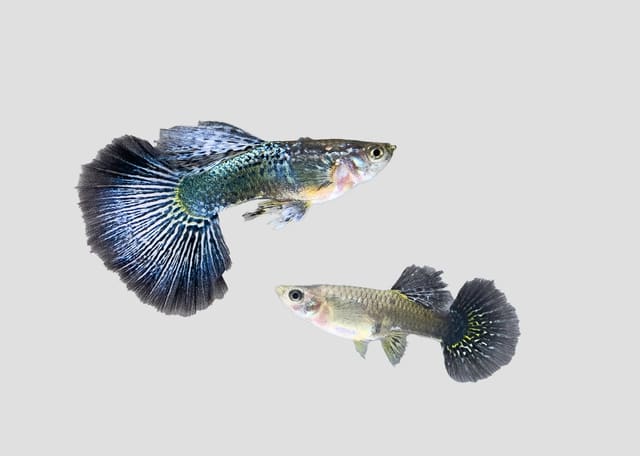
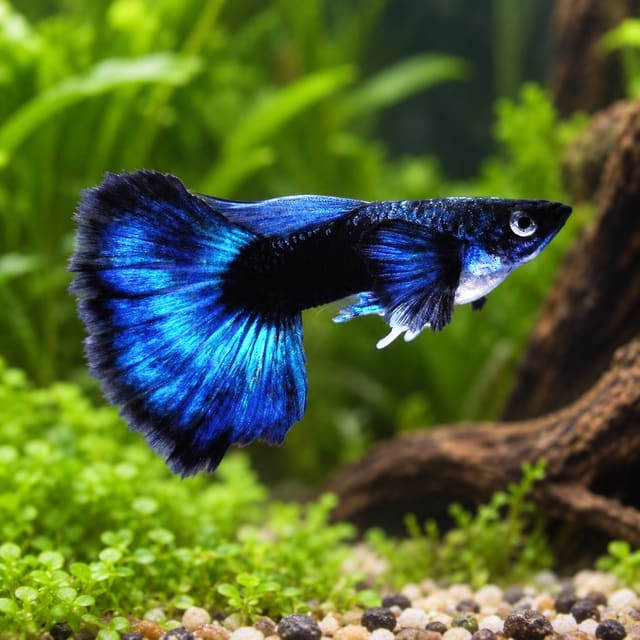
The Sunset Blond Female Guppy is a female colour form of the guppy, Poecilia reticulata. Each cart quantity buys one live female fish. Sex is guaranteed only when the exact product or selected option explicitly states male or female. This Sunset Blond Female Guppy listing is sold as female. The trade name identifies the offered colour form; it does not establish a separate species, pedigree, pregnancy status or identical colour in every individual. A guppy is a social fish, so the first question is where this female will live and which other guppies will share that space.
The buy box permits a single fish and also presents six fish as a healthy-shoal suggestion. Six is group care advice, not a compulsory order quantity. One can be appropriate when adding a female to an established guppy group in a suitable aquarium. A new group needs its own plan for tank length, filtration, sex composition and future numbers. Tropical Fish Co recommends five or more guppies in a mature filtered aquarium at least 60 cm long when the rest of the stocking plan allows. OATA's wider guppy-and-molly sheet suggests a smaller floor of three, while FishBase's aquarium note supports five or more and 60 cm. No number can guarantee that the actual fish will be comfortable if water tests, space or behaviour are poor.
Think through the whole adult group before selecting a quantity. A female can grow beyond the length of a trade-sized young fish. FishBase describes a 5 cm female standard length, while Tropical Fish Co's Guppy Care Guide gives 6 cm for females. Standard length stops at the base of the tail; a domestic tail may make the fish appear longer. Plan for adult space rather than a small arrival size. Ask the team to measure the fish before purchase if size matters to the established group.
This species belongs to the livebearing family Poeciliidae. FishBase records native guppies across northern South America and parts of the Caribbean, and records wild populations in freshwater and brackish habitats. That ecological range does not ask you to keep a Sunset Blond Female Guppy in salt water. For routine freshwater care, the store uses 22–28 °C and OATA's broad guppy-and-molly guidance gives pH 7–8 and 8–18 dGH. Check a stable, mineral-bearing aquarium rather than aiming for the edge of a wide wild range. A prepared beginner may keep guppies well, but the tank needs maturity, tests, cover and a way to respond if fish chase or breed.
Female-only planning is useful, but it does not promise that fry cannot appear. Female guppies can store sperm after an earlier mating. A new male is not needed for every later brood, and a rounded belly alone is not proof that an individual is pregnant. If young fish would be difficult to house, make a rehoming plan before adding more females. Mixed groups bring ongoing courtship and the possibility of repeated broods. Neither a female-biased ratio nor a six-fish label removes the need to watch the actual group.
The Guppy Care Guide covers the wider species. This page takes the buyer through the decisions most relevant to a female addition: whether the existing aquarium can support another adult, how to protect water quality as the group grows, how to introduce her with minimal stress and how to recognise a social plan that needs changing.
| Decision before adding her | Useful answer to have ready |
|---|---|
| Who shares the aquarium? | List adult residents and the planned guppy group, including sex mix and possible young. |
| Can the tank support another fish? | Confirm at least 60 cm length under the store plan, a matured filter and steady waste tests. |
| Where will a stressed fish go? | Prepare a separate, biologically supported place before pursuit or illness makes it urgent. |
Start with the tank itself. Measure its usable length, not just the litres printed on the packaging. The store's 60 cm recommendation leaves swimming room for a small guppy group and gives you space to furnish the tank without forcing fish to remain in one cramped patch. A long, well-planted aquarium can work differently from a tall narrow aquarium holding the same volume. OATA suggests at least 45 litres for a small group of smaller livebearers in its broad guppy-and-molly sheet; that number does not remove the store's length test. Check how many animals already use the tank, their adult sizes, feeding locations and territorial areas. If the aquarium is crowded before this fish arrives, a single extra guppy does not become harmless because she is small.
The filter must be biologically established and maintained. Fish produce ammonia, which is toxic; filter bacteria convert it through nitrite to nitrate. The RSPCA explains why a functioning filter is essential rather than optional decoration. Before adding livestock, test repeatedly for no detectable ammonia or nitrite. A filter that has run for a number of weeks is not proof by itself. After an addition, feed with restraint and repeat tests while the bacterial population responds to the new load. Increasing the group in stages gives you a chance to see whether waste processing and behaviour remain sound. The first tropical tank guide is useful if this is your first cycle, but do not use live fish to establish it.
Choose a layout that lets every fish be seen, feed and withdraw from a pursuer. Plants, floating vegetation and smooth cover are useful. Leave an open lane for swimming, then create several quieter edges and sight breaks. One retreat is rarely enough if it can be guarded by a more assertive fish. Keep filter intakes protected and check that the water movement does not pin a fish against a corner or keep her swimming hard without rest. Surface agitation helps gas exchange, while a secure lid or cover reduces escape during a startle or maintenance. Inspect artificial plants and ornaments for rough edges that could damage fins. After rearranging the tank, watch the fish rather than assuming an attractive layout functions well for them.
Guppies are sometimes described as hardy. That reputation should not be used to excuse unstable water. The store's routine display temperature is 22–28 °C. OATA's guppy-and-molly sheet gives pH 7–8, 8–18 dGH, zero ammonia and nitrite, and nitrate no more than 20 mg per litre above normal tap-water levels. Those pH and hardness figures are group-level guidance, not a species-specific optimum. Seriously Fish also describes guppies as hard-water fish best maintained in moderately hard or harder water over the long term. Test the water you actually use and compare it with the fish's needs before purchase.
UK water differs between homes and can change with source blending. Test general hardness and pH rather than judging them by postcode or the appearance of the water. An independent thermometer tells you what the aquarium is doing, which may differ from the heater setting or room temperature. Keep a record of the values and the time of day; a pattern is more useful than one reading. If something drifts, first check the test kit, recent water changes, filter and heater. Avoid sudden large corrections. The water chemistry guide explains what GH, KH and pH measure, and the water matcher can help compare tested water with care ranges. Neither replaces observation of the fish.
FishBase's wild environmental span includes 18–28 °C and water harder than many soft-water aquarium recipes. Seriously Fish gives a broad aquarium envelope too. These ranges explain why guppies have been recorded in varied settings, but they should not be treated as a request to keep changing conditions or to use an endpoint as a routine target. Consistent suitable freshwater is the priority. FishBase also records brackish occurrences; routine salt is unnecessary for a guppy freshwater setup and could conflict with plants and tank mates. Do not use salt as a substitute for minerals, cycling or diagnosis. If a particular treatment is proposed, first establish what is wrong and whether the other residents can tolerate it.
During maintenance, dechlorinate replacement tap water and bring it reasonably close to the aquarium's temperature. Make partial changes at a rate informed by feeding, stocking and test results. OATA recommends about a quarter weekly as a broad starting pattern. Siphon visible waste, but do not strip every surface or replace all filter material at once. Chlorine or chloramine in tap water can harm useful filter bacteria, so do not rinse media under the tap. Rinse it lightly in water removed from the aquarium when cleaning is needed. A missed maintenance day is less damaging than a hurried, drastic change that swings temperature or chemistry. If nitrate rises or food accumulates, solve the cause as well as changing water.
A small complete omnivore flake or granule is a practical staple for adult guppies. Choose particles that this female can take readily and add suitable variety such as algal and small invertebrate foods. OATA's broad sheet suggests quality flake or granule plus small live or frozen items. FishBase describes wild guppies eating zooplankton, insects and detritus, while Seriously Fish notes that aquarium strains accept many prepared foods. None of those observations makes a single treat or a collected wild food a balanced staple. Use biosecure aquarium foods, store them properly and introduce new foods carefully so you can judge acceptance and waste.
At a meal, ask whether each fish eats, not only whether food disappears. Established guppies may rush a new fish at the surface. Offer modest portions in more than one place if needed, and watch for a female that repeatedly hangs back. Excess food can decay into waste and lead to poorer water even when the fish appear eager. Remove leftovers and adapt the portion to the actual group. A fixed amount printed on a packet is a starting hint, not a measurement of this aquarium's population and filter. Young fish, if present, need food sized for them and close attention to water quality, which adds work to the original stocking plan.
Be at the delivery address when live fish arrive and have the aquarium ready first. The delivery and Live Arrival Guarantee page explains packing, the licensed live-animal courier, receipt and reporting conditions. Inspect the parcel on arrival. If anything is wrong, follow the page's same-day contact instructions and continuous video requirement showing the sealed parcel being opened and the fish still in the bag. That recording documents a claim; it is not a reason to delay appropriate care. Keep the fish protected from excess heat, cold and bright light while following the supplied introduction instructions.
The store's arrival guidance advises floating the sealed bag for 20–30 minutes, acclimatising slowly and avoiding the transfer of bag water into the aquarium. Prepare a clean net or transfer method in advance. Sudden changes in temperature or water chemistry can add stress after a journey. Introduce the fish during a calm period, then watch breathing, balance, fin position and whether established fish pursue her. Brief hiding can be part of settling, but persistent surface gasping, inability to swim normally or damage calls for prompt water tests and further help. Do not add food heavily just to tempt a fish that has only just been released.
Quarantine can reduce the chance of introducing disease to an established community, but the isolation tank needs its own matured filter, temperature control, tests and dedicated equipment. The MSD Veterinary Manual recommends at least 30 days, longer when indicated. That is professional guidance for biosecurity, not permission to hold a fish in an uncycled container. Observe the newcomer for changes in appetite, breathing or appearance, then introduce her only when both systems are stable. If you notice spots, sores, clamped fins or abnormal swimming, test the water first and seek qualified advice. Salt, heat and medication should not be guessed from one sign.
A female group may avoid male pursuit within the tank, yet individual females still compete for feeding space and cover. Watch at quiet times as well as during meals. If one fish is continually hidden, cornered or thin, more females may worsen the pressure unless space and layout change too. In a mixed group, OATA advises a female-biased ratio to reduce pressure, but no ratio can ensure peaceful behaviour. Provide more than one escape route and keep a mature separation option. Being female is the sex sold here; it is not a promise that the fish has never met a male.
Because female guppies can store sperm, a brood may appear even in a tank without males. Prepare for that possibility before you order, especially if you are using the six-fish care suggestion to establish a larger group. Decide whether there is a biosecure nursery with established filtration, how young fish would be fed and tested, and how additional adults would be housed or responsibly rehomed. Do not rely on other fish eating fry to solve a population problem. Plants and floating cover may help young survive, which is welcome only if there is room to care for them. Avoid promises about an individual female's gestation length, brood count or exact timing; those vary and cannot be inferred from appearance.
Look for regular swimming and breathing, intact fins and scales, a normal body profile and consistent feeding once settled. RSPCA fish-health guidance treats changes in behaviour and appearance as reasons to investigate. Surface gasping, sudden hiding, wounds, white spots, clamped fins, balance problems or lost appetite are signals to test ammonia, nitrite, nitrate, pH and temperature promptly. Check the filter, heater, recent new fish and social interactions. Record what changed and when, then ask an aquatic vet if signs persist or you are unsure. Avoid treating every symptom as the same disease or dosing a whole community without a diagnosis.
Poecilia reticulata has been introduced beyond its native range. Never release a guppy, fry, aquarium plants or untreated aquarium water into a natural pond or watercourse. Arrange a suitable home for surplus fish and dispose of aquarium waste without spreading live organisms. Rehoming early is kinder than allowing a breeding group to outgrow its filtration. Keep the original care plan under review as fish mature, numbers change and equipment ages; a group that fitted at purchase may need a different arrangement later.
A newcomer changes both social behaviour and waste production. During the first days, look at her from a distance at several times rather than judging the whole introduction at one feeding. Can she travel through the tank without one resident shadowing her? Does she use the planted edges as a choice rather than as the only safe place? Does she rise or search for food, then settle normally? Those details show whether the arrangement works. Keep a short note of water readings and behaviour so a developing problem is easier to spot. A fish that hides briefly after transport may settle; a fish that remains excluded, stops feeding or shows damaged fins needs a change to the plan.
Test ammonia and nitrite again after feeding begins and after any further addition. If a reading rises, protect water quality and review how many fish and how much food the biological filter must support. Small changes are easier to understand when you have a baseline from before the fish joined. Do not respond by adding several more guppies at once in the hope that numbers alone will diffuse conflict. First assess space, sex mix, shelter and the behaviour of the fish already there. When a group is stable, continued observation still matters as females mature or young fish develop.
A group recommendation helps discourage the idea of a solitary guppy. It is not a six-fish stocking calculator. If six adult guppies would overwhelm an aquarium already holding other fish, the answer is to rethink the tank or keep the existing appropriate group, not to squeeze six in for the sake of a label. If the aquarium is new and large enough, establish its filter first, then decide whether one introduction of a small group or staged additions best fits the tested biological capacity and a suitable isolation plan. With a mixed group, even a sensible starting number may grow through breeding. Ask where the young will live if that occurs.
Conversely, a single Sunset Blond Female Guppy can make sense when she joins an established social group and you have room for another adult. The cart unit makes that choice possible. Assess the receiving fish too: long-term residents may dominate a new arrival despite being peaceful with each other. Open swimming room and several feeding routes give you more ways to notice and address that pressure. Keep the group coherent and watch its actual welfare rather than treating a discount tier, a litre number or a familiar species reputation as the final decision.
The Sunset Blond Female Guppy is generally peaceful, but compatibility depends on the actual community. Start with the water: the other animals should thrive in the same stable temperature, pH and mineral content, not merely survive at the touching edges of two published ranges. Then consider adult size, feeding, fin safety and the room needed for every social group. Seriously Fish lists livebearers, rasboras, corydoras, small loricariids and tetras among possible companions in a quiet community. That list names possibilities, not a licence to combine any species from those families. Check the individual species, tank footprint and present residents before adding this female.
Avoid fish known to nip fins, including tiger barbs and serpae tetras. A fin nipper can damage a guppy even if the species shares her preferred water chemistry. A much larger fish may swallow her, while territorial fish can deny her access to food or shelter. Long-finned or display-oriented fish can attract attention in unpredictable ways, so do not assume a calm introduction proves a combination will always work. Observe the aquarium after feeding and at rest. If she spends most of the day escaping or her fins deteriorate, change the stocking arrangement rather than calling the behaviour normal guppy socialising.
Other livebearers bring reproduction and capacity questions. If a male guppy joins, this female may face repeated pursuit and the tank may gain fry. Female-only groups still need observation and adequate food access. Endler's livebearer, Poecilia wingei, is a different species that can hybridise with guppies; keep documented lines separate if their identity matters. The Sunset Blond colour label does not itself prove ancestry or protect a line from a cross. A companion should be chosen because its own needs fit this tank, not because it appears as a related shop product.
For every proposed resident, ask four questions: can both live well in the measured water, can neither injure or swallow the other, is there enough usable room for their adult social groups, and can each reach food and refuge? Keep a way to separate fish if the answer changes in practice. Small shrimp and fry can be vulnerable even in a community of fish called peaceful. The welfare of the individual fish you see in the tank is more useful than a universal compatibility score.
Allow for an adult female around 5–6 cm standard length in the supplied species records and reviewed guppy guide. The tail is excluded from standard length, and the aquarium should be planned for an adult rather than an arrival size.
The store's conservative plan is a mature filtered aquarium at least 60 cm long for a small guppy group. Check other residents, water tests, usable swimming room and the group's adult size before adding fish.
Guppies are social; the store recommends five or more where aquarium capacity and the sex plan allow. The six-fish buy-box tier expresses group care advice, while each cart quantity is one female fish.
A prepared beginner can, with a matured filter, no detectable ammonia or nitrite, stable suitable water and a plan for a social group and possible fry. Do not use guppies to cycle a new tank.
Offer a suitably sized complete omnivore flake or granule as the staple, with safe compatible algal and small invertebrate variety. Check that quieter fish eat and that excess food does not collect.
The store's routine guppy display range is 22–28 °C. OATA's broader guppy-and-molly sheet advises pH 7–8 and 8–18 dGH. Maintain stable mineral-bearing water with no detectable ammonia or nitrite.
Guppies are generally peaceful, but watch individuals for repeated pursuit or food exclusion. Protect them from fin nippers such as tiger barbs and serpae tetras.
Some peaceful livebearers, rasboras, corydoras, small loricariids or tetras may fit when the exact species, water, adult size, group space and behaviour match. No category is an automatic safe tank mate.
Tropical Fish Co hand-packs live fish for a tracked licensed live-animal courier and confirms the delivery date. Someone must receive and inspect the parcel; packing, acclimatisation and Live Arrival Guarantee terms are on the delivery page.
FishBase supplies species identity, native range and recorded biology; Seriously Fish covers aquarium husbandry; OATA's guppy and molly sheet gives broad UK group care; and the RSPCA explains filtration and water welfare. These sources serve different purposes, so a wild range is not treated as an aquarium target.
No reviews for this item yet. Bought one? Honest reviews only, good or bad.
What customers say about ordering from us
Easy website plenty of info on fish your buying great to pick a time slot
TRACEY DURRANT · 7 Oct 2026
Got some lovely fish thank you
Kevin Mackie · 7 Oct 2026
Reviews of our shop, collected by Judge.me, an independent third-party review collector. Newest first.