Guppy (Poecilia reticulata) - Live tropical fish for sale UK

Poecilia reticulata

Yellow Snakeskin Miniature Guppy - Moderate Care UK

Beginner Friendly
Peaceful
£14.99In Stock

Add striking Yellow Snakeskin Miniature Guppies to your tank for colour and breeding appeal. Ideal for guppy temperature setups. Buy online with UK delivery.

Breeding FishColour FishFreshwater FishGuppiesLivebearersModerate CareUK Delivery

Care at a Glance

Scientific Name
Poecilia reticulata
Adult Size
6 cm
Lifespan
2 years
Care Level
Easy
Temperament
Peaceful
Temperature
22–28°C
pH Range
6.8–8.5
Hardness
10–30 dGH
Minimum Tank
40L
Diet
Omnivore - flakes, micro pellets, frozen foods, algae

Premium Quality

Healthy, vibrant fish from trusted suppliers

Expert Care

Detailed care guides and support

Live Arrival Guarantee

Your fish arrives healthy or we'll replace it

Acclimated

Properly quarantined and ready for your tank

Quick Care Guide

Temperature
22–28°C
pH Range
6.8–8.5
Minimum Tank
40L
Adult Size
6 cm
Lifespan
2 years
Care Level
Easy
Temperament
Peaceful
Diet
Omnivore - flakes, micro pellets, frozen foods, algae
Water Hardness
10–30 dGH
Tank Region
All

Water Parameters

Maintain these water conditions for optimal health and vibrant colors

Temperature
22–28°C
22°CIdeal Range28°C
pH Level
6.8–8.5
6.8Ideal Range8.5
Water Hardness
10–30 dGH
10 dGHIdeal Range30 dGH

Why Choose This Fish?

Add striking Yellow Snakeskin Miniature Guppies to your tank for colour and breeding appeal. Ideal for guppy temperature setups. Buy online with UK delivery.

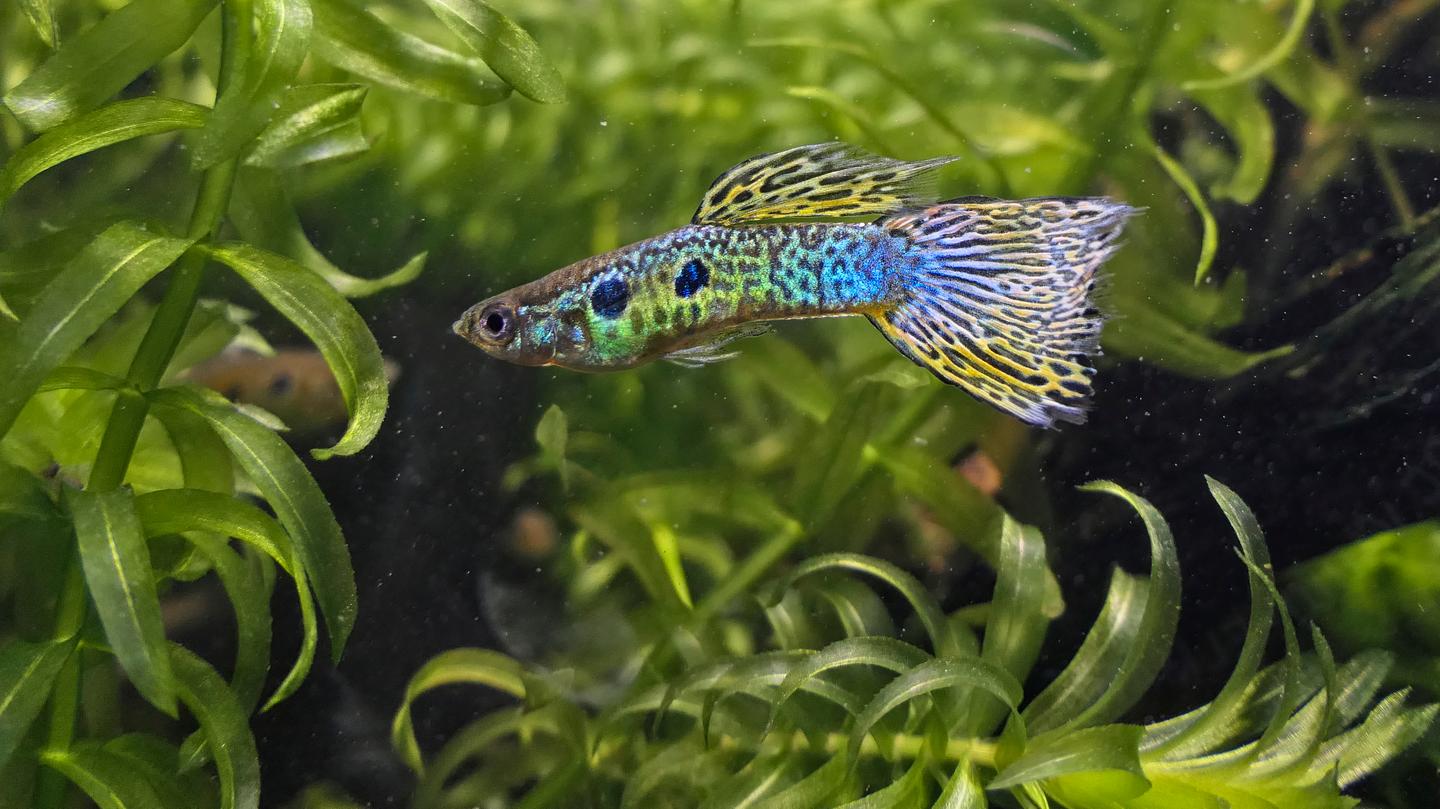
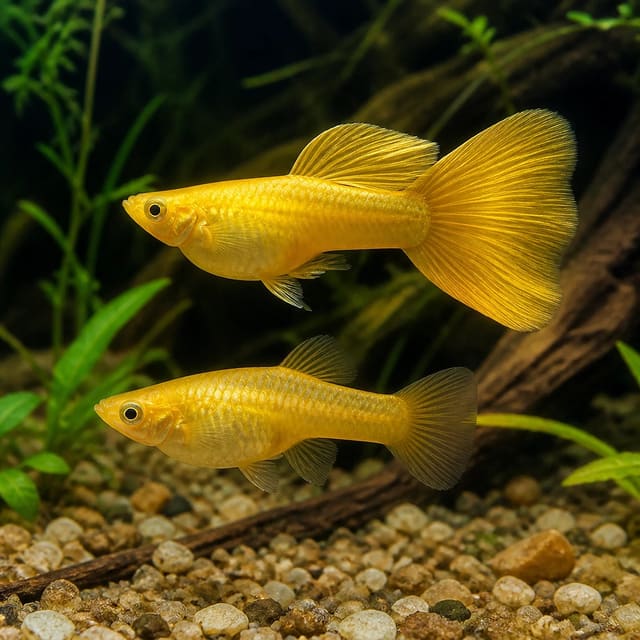
The Yellow Snakeskin Miniature Guppy is a standout livebearer for aquarists who want vivid colour, active movement, and a fish that genuinely rewards good husbandry. In the hobby, Poecilia reticulata is loved for its easy care, peaceful temperament, and endless variety, but this yellow snakeskin strain adds a sharper, more refined look than many standard guppy lines. If you are researching guppy temperature, guppy water temperature, or the best temperature for guppy fish, this species is a great example of why stable water matters so much. It thrives in the classic guppy range, grows to around 6 cm, and usually lives up to 2 years with consistent care. Because it is a true peaceful guppy for community tank setups, it suits beginners and experienced keepers alike. See our detailed photos showing the snakeskin pattern, compact body shape, and the bright yellow tones that make this strain popular in colourful nano fish UK collections. Whether you are planning a guppy nano tank setup, comparing guppy tank size options, or looking for the best guppy for beginners, this fish offers colour, movement, and reliable breeding potential in one attractive package.

🔹 Quick Facts

  • Scientific Name: Poecilia reticulata
  • Care Level: Easy
  • Min Tank Size: 40 litres (10 gallons)
  • Temperature: 22-28°C (72-82°F)
  • pH Range: 6.8-8.5
  • Lifespan: Up to 2 years
  • Temperament: Peaceful
  • Diet: Omnivore

Classification

  • Order: Cyprinodontiformes
  • Family: Poeciliidae
  • Genus: Poecilia

Guppies are one of the most recognisable freshwater livebearers UK hobbyists keep, and they sit in the same family as mollies, platies, and swordtails. The Yellow Snakeskin Miniature Guppy is a selectively bred colour form, prized in rare guppy collection tanks and planted aquariums. It is closely related to other fancy guppy strains such as the of Marbled Platinum Dwarf Guppy, of Saiga Dwarf Guppy, and X Pairs of Guppies, which makes it easy to build a themed livebearer display. In the aquarium hobby, guppies are often the first fish people keep successfully because they adapt well, breed readily, and show clear responses to water quality, diet, and temperature.

Where Do Yellow Snakeskin Miniature Guppies Come From? Natural Habitat Explained

Wild guppies originate from Trinidad, Venezuela, Guyana, and parts of northern Brazil, where they live in slow-moving streams, ditches, marsh edges, and shallow pools with plenty of cover. In nature, temperature for freshwater fish in these habitats is often stable and warm, which is why guppy fish temperature matters so much in the home aquarium. Wild populations experience mineral-rich water, dense vegetation, leaf litter, and frequent access to microfoods such as algae, insect larvae, and tiny crustaceans. That is why guppy aquarium requirements usually include gentle filtration, planted cover, and a steady temperature for guppies breeding if you want healthy, active fish.

These fish are not open-water swimmers like some tetras; they spend much of their time near plants and shallow margins, picking at biofilm and grazing through the water column. In the wild, guppies face predators, so they stay alert and benefit from group living. That social behaviour is one reason guppy behaviour looks more natural when you keep several together rather than a lone fish. Their native waters are usually hard to moderately hard, slightly alkaline, and warm throughout the year, which is why guppy temperature degrees celsius in the aquarium should stay within a stable 22-28°C. If you have ever wondered about keeping guppies in cold water, the short answer is that they may survive for a while, but long-term health, colour, and breeding success decline quickly.

Conservation-wise, the species is widespread in the hobby and not generally considered threatened, but local wild populations can still be affected by habitat change and pollution. For aquarists, the lesson is simple: mimic the natural setting as closely as possible. A planted tank with gentle movement, open swimming space, and stable water chemistry supports stronger immune function and better colour. This is especially important for a Yellow Snakeskin Miniature Guppy for planted tank display, where the fish’s yellow body and dark snakeskin markings look best against green plants and dark substrate.

💡 Expert Tip

Mimicking the natural habitat improves health and brings out natural behaviours. Use live plants, a mature filter, and stable guppy water temperature rather than chasing frequent changes. A calm, well-structured tank often produces better colour, stronger feeding response, and fewer stress-related health issues.

How to Set Up the Perfect Tank for Yellow Snakeskin Miniature Guppies

Tank Size Requirements

The minimum tank size for a small group is 40 litres, but a larger aquarium is always better for stability and breeding control. If you are asking what size tank do guppies need, think in terms of group size, male-to-female ratio, and filtration capacity. A pair can survive in a smaller system, but what size tank for 2 guppies should still be large enough to provide swimming room, plant cover, and room for future fry. For most home aquarists, the practical answer to guppy minimum tank size is 40 litres, while 60-90 litres gives you far better water quality and more flexibility. Guppies have a light bioload individually, but they breed fast, so a small tank can become crowded quickly.

If you are planning a guppy tank for a colony, remember that males display constantly and females need space to avoid stress. A guppy tank size of 60 litres or more is ideal for a mixed group, especially if you want to keep a male with two or three females. That ratio supports healthier guppy breeding and reduces harassment. For a guppy nano tank setup, keep stocking light, maintain excellent filtration, and trim plants regularly so the fish still have open water.

Water Parameters

The best guppy temperature is 22-28°C, with 24-26°C being the sweet spot for everyday care. In UK homes, this is why many keepers search for guppy temperature uk advice and ask do guppies need a heater; in most rooms, yes, a heater is strongly recommended to avoid daily swings. The minimum temperature for guppies is around 22°C, and the guppy max temperature should stay below 28°C for long-term health. If you are matching species, water temperature for guppies and mollies overlaps well, but always check the needs of each species before combining them. The guppy fish tank temperature should be stable, not just warm.

For water chemistry, aim for pH 6.8-8.5 and hardness of 10-30 dGH. That range suits healthy growth, colour development, and breeding. Many aquarists ask about guppy water parameters because guppies are hardy, but hard, alkaline water is still best. If your tap water is soft, mineral supplementation may help, especially in breeding tanks. Stable conditions matter more than chasing exact numbers every day, and sudden swings are one of the fastest ways to trigger stress, fin clamping, or guppies dying suddenly.

22-28°C
Temperature Range
6.8-8.5
pH Range
10-30 dGH
Hardness Range
40L+
Minimum Tank Size

Filtration, Substrate, Plants & Lighting

A sponge filter or gentle internal filter works very well because guppies prefer moderate flow, not strong current. Good oxygenation helps, but avoid blasting the fish around the tank. If you are setting up a guppy aquarium requirements list, include a heater, filter, lid, water conditioner, and a maintenance kit. A dark fine gravel or sand substrate can make the yellow body colour pop, while a planted background gives fry and females plenty of shelter. For plants, guppy keepers often do well with Java fern, Anubias, hornwort, water sprite, and floating plants. These are especially useful in a guppy nano tank setup where cover reduces stress and helps fry survive.

Lighting should be moderate, around 6-8 hours per day, enough to support plant growth without encouraging excessive algae. If you want stronger colour, use a balanced full-spectrum light and keep the tank clean. The best setups for this strain often combine open swimming space with dense side and rear planting. A planted tank also makes it easier to observe natural grazing and courtship behaviour. For a reliable setup, consider a quality aquarium heater for guppies, a gentle filter for small tropical tanks, and a natural substrate for planted aquariums. If you want more cover, add live aquarium plants that suit low to medium light.

💡 Pro Tip

Always cycle the tank for 4-6 weeks before adding guppies. A mature aquarium gives you stable bacteria, safer ammonia processing, and fewer problems when fry appear. This matters even more if you are planning guppy breeding temperature conditions and want steady growth from the start.

🔹 Quick Setup Checklist

  • 40 litres or larger for a small group
  • Heater set to 24-26°C
  • Gentle filtration and good surface movement
  • Live plants for cover and fry survival
  • Stable pH and hardness
  • Regular water changes of 25-30% weekly

What Do Yellow Snakeskin Miniature Guppies Eat? Complete Feeding Guide

Guppies are omnivores, which means they need both plant-based and protein-rich foods to stay healthy. A good guppy diet should include quality flakes, micro pellets, frozen foods, and occasional algae-based foods. If you are looking for a practical guppy feeding guide, the simplest rule is to feed small portions once or twice a day and only what they can finish in about 30-60 seconds. That approach supports growth without polluting the water. Many new keepers search for guppy food or guppy fish food because they want colour and breeding success, but the key is variety rather than one single product.

Staple foods should be a high-quality tropical flake or micro pellet designed for small livebearers. Supplemental foods such as daphnia, brine shrimp, and finely chopped frozen foods help support conditioning and fry production. For breeding adults, richer foods can improve body condition and encourage courtship. If you are trying to improve guppy fish care, think of food as part of water quality management: overfeeding creates waste, waste creates ammonia, and ammonia stresses fish. That is also why people asking do guppies need a heater should also ask whether they are feeding appropriately, because warm water speeds metabolism and digestion.

Time Food Amount
Morning Micro pellets or quality flakes Small pinch, fully eaten in 1 minute
Evening Frozen daphnia, brine shrimp, or crushed flakes Small portion, no leftovers

For colour and breeding support, use live or frozen foods 2-3 times per week. This is especially useful in a guppy breeding project, where conditioned females and active males produce stronger fry. Avoid feeding bread, mammal foods, or anything oily. Also avoid copper-heavy medications in the food unless directed by a fish vet, because they can damage delicate tank ecosystems. If you want to simplify feeding, try a dedicated guppy fish food with small pellets, plus a quality frozen daphnia food or brine shrimp food for conditioning.

⚠️ Overfeeding causes ammonia spikes and water quality issues

Guppies have small stomachs, and excess food quickly breaks down in warm water. Feed lightly, remove leftovers, and test the water if fish look bloated, lethargic, or start hanging near the bottom. Poor feeding habits are a common reason keepers think they have guppies dying suddenly when the real problem is water quality.

Yellow Snakeskin Miniature Guppy Appearance: Colors, Patterns & Varieties

This strain is compact, elegant, and highly decorative. Adults usually reach about 4-6 cm, with males often appearing slimmer and more intensely coloured than females. The body is a bright yellow base with a snakeskin-style reticulated pattern across the flank, giving it a layered look that stands out under aquarium lighting. In a well-kept tank, the pattern can look almost metallic, especially against dark substrate and green plants. That is why the Yellow Snakeskin Miniature Guppy for planted tank look is so popular with aquascapers.

Sexual dimorphism is easy to see. Males are smaller, more colourful, and have a modified anal fin called a gonopodium. Females are larger, rounder, and usually less patterned. If you are comparing what size tank do guppies need for a display of males only, remember that males are more active and more visible, but mixed groups often show richer natural behaviour. Colour enhancement comes from stable guppy temperature degrees celsius, good nutrition, and low stress. Many keepers also notice that a dark background improves contrast, while bright white gravel can wash out the yellow tones.

Among colourful guppy varieties, this strain sits between bold show fish and practical community fish. It is attractive without being overly delicate. Our photos show how the yellow body colour deepens when the fish are well fed and kept in stable, mineral-rich water. For aquarists building a rare guppy collection, this strain pairs well with other patterned livebearers such as the Guppy Poecilia Ret in Pairs Gallexy, or with female strains like the Cobra Red Female Guppy, Red Cap Female Guppy, Green Cobra Female Guppy, and Blue Neon Female Guppy.

What Fish Can Live With Yellow Snakeskin Miniature Guppies? Compatibility Guide

Guppies are peaceful, social, and ideal for community aquariums, but their tank mates must match their water needs and temperament. If you are asking what are guppies compatible with, the best answer is small, calm fish that enjoy similar temperatures and water chemistry. Good guppy tank mates include endlers, small rasboras, corydoras that tolerate warmer water, peaceful dwarf livebearers, and in some setups, shrimp and snails. The key is avoiding fin-nippers, aggressive species, and fish that need cooler water or much stronger flow. That is why best temp for guppies and tetras depends on the tetra species, with some, like neon tetras, overlapping well at around 24-26°C.

If you are wondering what fish can live with guppies in a 20 gallon tank, think in terms of light stocking and similar activity levels. In a 5 gallon tank, the answer to what fish can live with guppies in a 5 gallon tank is usually very few, and often the best choice is a single male with plants, or better yet, a larger tank. Guppies do best in groups, and a small tank can quickly become unstable. A peaceful guppy for community tank setup works best when the tank has hiding places, gentle filtration, and plenty of visual breaks.

Species Compatible? Notes
Red Cap Female Guppy ✅ Yes Similar water needs and calm temperament
Blue Neon Female Guppy ✅ Yes Great for mixed livebearer displays
Guppy Poecilia Ret in Pairs Gallexy ✅ Yes Compatible livebearer with similar care
Betta splendens ⚠️ Caution Possible in large, carefully aquascaped tanks, but fin-nipping and stress are risks
Goldfish ❌ Avoid Different temperature, feeding, and filtration needs

For invertebrates, guppies can work well with shrimp if the tank is planted and the shrimp are adult-sized, though fry may be eaten. Snails are usually safe. If you want a dedicated breeding tank, keep males and females separated until you are ready to breed. Always quarantine new fish before adding them, especially if you are mixing strains or buying from multiple sources. A good compatibility plan reduces stress, improves colour, and helps prevent disease transmission.

💡 Always quarantine new arrivals for 2-4 weeks

Quarantine gives you time to watch for parasites, fin damage, and feeding issues before fish enter the main display. This is one of the easiest ways to protect a healthy colony, especially in a busy guppy breeding setup.

Tank Mate Compatible? Best Use
of Marbled Platinum Dwarf Guppy ✅ Yes Colourful mixed guppy display
of Saiga Dwarf Guppy ✅ Yes Small livebearer community
X Pairs of Guppies ✅ Yes Breeding or colony stocking
Neon tetra ⚠️ Caution Works only if temperature and tank size suit both species
Large barbs ❌ Avoid Likely to nip fins and stress guppies

How to Breed Yellow Snakeskin Miniature Guppies: Complete Breeding Guide

Guppies are among the easiest fish to breed, which is why how to breed guppy is one of the most searched questions in the hobby. Breeding difficulty is easy, but success depends on water quality, sex ratio, and fry protection. A good breeding group is one male to two or three females, which reduces stress on the females and improves the odds of healthy fry. If you are planning guppy breeding, keep the water at 24-26°C and maintain excellent filtration. That range is also ideal for temperature for guppy fry, because fry grow faster and feed more reliably in stable warmth.

Breeding often starts with male display behaviour, chasing, and courtship. Females give birth to live young after a gestation period of about 21-30 days, depending on temperature and feeding. Unlike egg layers, guppies do not require egg incubation, but fry care is still important. The best fry foods are infusoria, powdered fry food, newly hatched brine shrimp, and very fine micro foods. If you are asking about guppy fry care, the main priorities are small meals, clean water, and hiding places. Dense plants or a breeder box can help, but a heavily planted tank often produces better survival rates than a bare setup.

Conditioning adults with rich food before breeding is useful, especially if you are running a guppy breeding project. Feed live or frozen foods several times a week, and keep the water stable. Common breeding challenges include females being harassed, weak fry due to poor nutrition, and overcrowding from too many offspring. If you want to control numbers, separate males and females or rehome fry early. Some keepers ask can you keep a tank of all male guppies; yes, you can, and it is a great way to enjoy colour without constant fry production.

Advanced Breeding Tip

For stronger colour lines, select the most vivid males and the healthiest females from the same strain, then raise fry in a separate grow-out tank with stable guppy breeding temperature and frequent small feeds. This selective approach improves body shape, pattern clarity, and overall guppy health in the next generation.

Yellow Snakeskin Miniature Guppy vs Similar Species: Which Should You Choose?

Comparing guppy strains helps you choose the right fish for your tank size, water conditions, and visual style. The Yellow Snakeskin Miniature Guppy is ideal if you want a compact, active, easy-care fish with strong patterning and reliable breeding. If you prefer a more delicate or more intensely showy look, other strains may suit you better. Many customers who search for healthy guppies for sale want a fish that is both attractive and hardy, and this strain fits that brief well.

Feature Yellow Snakeskin Miniature Guppy Blue Neon Female Guppy
Max Size 6 cm 6 cm
Care Level Easy Easy
Temperature 22-28°C 22-28°C
Price £14.52 Varies
Best For Planted nano tanks and breeding Colour-focused community tanks

If you want a brighter, more patterned fish for a planted display, choose this strain. If you want to build a mixed female line-up, the Green Cobra Female Guppy and Red Cap Female Guppy are strong companions. For buyers comparing which guppies for sale best, the answer depends on whether you value colour, breeding potential, or simplicity. This strain is especially good for aquarists who want a fish that looks impressive without demanding advanced care. It is also a smart choice if you are comparing which guppies for sale is the longest lived, because stable husbandry often matters more than strain alone.

Common Health Problems in Yellow Snakeskin Miniature Guppies & How to Prevent Them

Healthy guppies are active, alert, and eager to feed. Their fins should be open, their colour should be clean and bright, and they should spend most of the day swimming rather than resting at the bottom. If you notice clamped fins, faded colour, rapid breathing, or a fish guppy dying at bottom of tank, check water quality first. Many keepers search how to save a guppy from dying when the real issue is ammonia, nitrite, low oxygen, or temperature swings. A quick water test and a partial water change can make a big difference.

Common issues include ich, fin rot, internal parasites, and stress from overcrowding. Prevention is straightforward: stable guppy temperature, regular water changes, varied diet, and quarantine for new arrivals. If you are asking what is the best temperature for my guppies, remember that consistency is more important than chasing the top end of the range. The best long-term approach is to keep the tank clean, avoid sudden changes, and feed lightly but nutritiously. This is especially true in breeding tanks, where guppy health affects both adults and fry.

⚠️ NEVER use copper-based medications with invertebrates

Copper can be lethal to shrimp and harmful to many snails. If you keep guppy with shrimp or plan to add invertebrates later, choose treatments carefully and move affected fish to a separate hospital tank where possible.

🔹 Quarantine Protocol

  • Use a separate 2-4 week quarantine tank
  • Match temperature and pH to the main aquarium
  • Observe for parasites, flashing, or white spots
  • Feed lightly and monitor appetite
  • Only move fish after they are active and symptom-free

If you are searching guppies dying suddenly or guppy water parameters, the most common causes are poor acclimation, overstocking, and unstable water. Good maintenance is the best medicine. For keepers who want a deeper reference, a practical goldfish care guide is not relevant to guppies, and that is exactly why species-specific care matters: guppies have different temperature, diet, and stocking needs than goldfish, bettas, or other popular aquarium fish.

Understanding Yellow Snakeskin Miniature Guppy Behavior in the Aquarium

Guppies are active, social, and constantly on the move, which is part of their charm. They are shoaling fish rather than strict schooling fish, so they feel more secure when kept in groups. In a proper setup, you will see grazing, chasing, courtship displays, and quick dashes through plants. Males often display their fins and colours to impress females, while females tend to cruise calmly and feed steadily. This is one reason why a balanced male-to-female ratio improves guppy behaviour and reduces stress.

They are not nocturnal, but they do rest more when the lights go off. If you want natural behaviour, provide cover, open lanes for swimming, and stable lighting. A group of five or more usually looks more confident than a pair, especially in a planted tank. Keep in mind that guppies are curious and may investigate food, bubbles, and tank changes quickly. In a healthy environment, they are among the most rewarding fish for beginners because their behaviour makes it easy to spot whether something is wrong.

Why Buy from Tropical Fish Co?

Our Yellow Snakeskin Miniature Guppies are selected for strong body shape, clear patterning, and reliable health, not just colour alone. Each fish is quarantined before sale, carefully observed for feeding response, and acclimated to UK water conditions so they settle in faster after arrival. We use tracked delivery, insulated packaging, and seasonal heat packs in winter to help protect live fish in transit. That attention to detail matters when you are ordering guppy fish for sale or comparing guppies for sale online, because live arrival quality depends on packing, stress reduction, and temperature control.

If you want to buy Yellow Snakeskin Miniature Guppy UK, order guppy online UK, or find a guppy for sale UK that suits a planted tank, this strain is a strong choice. It is also a good option if you are searching for live guppy for sale UK, rare guppy for sale UK, or a dependable fish for a breeding project. We include practical care guidance with every order, so you know the right guppy temperature uk, feeding routine, and acclimation steps from day one. If you are comparing Yellow Snakeskin Miniature Guppy price UK options, remember that healthy, quarantined fish often save money in the long run by reducing losses and treatment costs.

Order your Yellow Snakeskin Miniature Guppy today with confidence and build a brighter, healthier community tank.

Why Choose Tropical Fish Co for Yellow Snakeskin Miniature Guppy

  • Carefully selected yellow snakeskin strain with strong pattern definition
  • Quarantined and monitored before dispatch for better arrival health
  • Prepared for UK water conditions, with clear advice on temperature and feeding

Complete your livebearer setup with Red Cap Female Guppy for colour contrast, Blue Neon Female Guppy for a cooler-toned community display, or Guppy Poecilia Ret in Pairs Gallexy for a more patterned mixed collection. For equipment, pair them with a gentle aquarium filter, a high-quality guppy fish food, and a live plant pack to create a stable, colourful home.