Easy
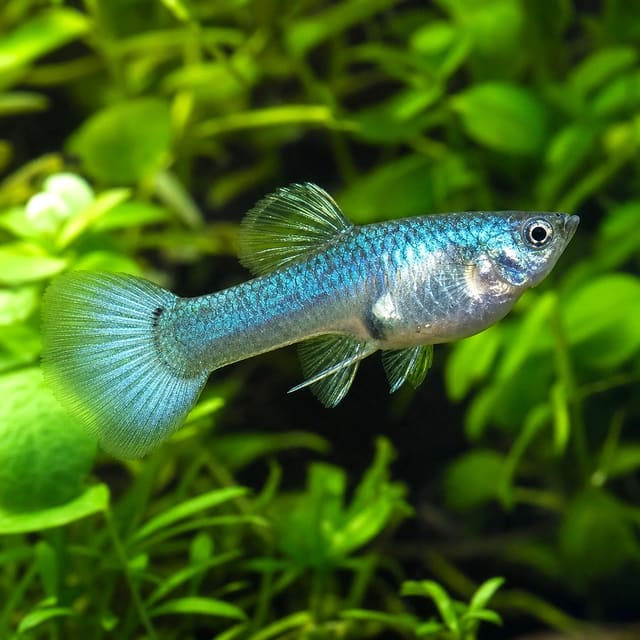
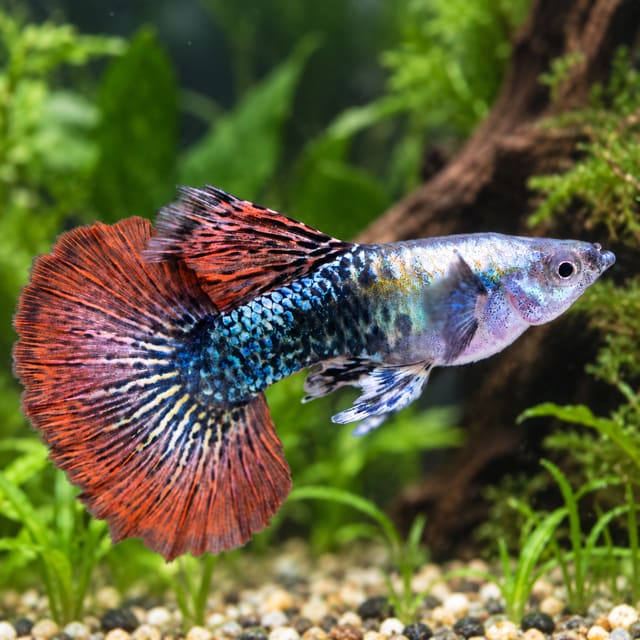
Blue Moscow Male Guppy (Poecilia reticulata)
22–28°C · pH 7–8 · 45L
£5.99

Photo coming soon
The size, price and care details on this page are for this listing.
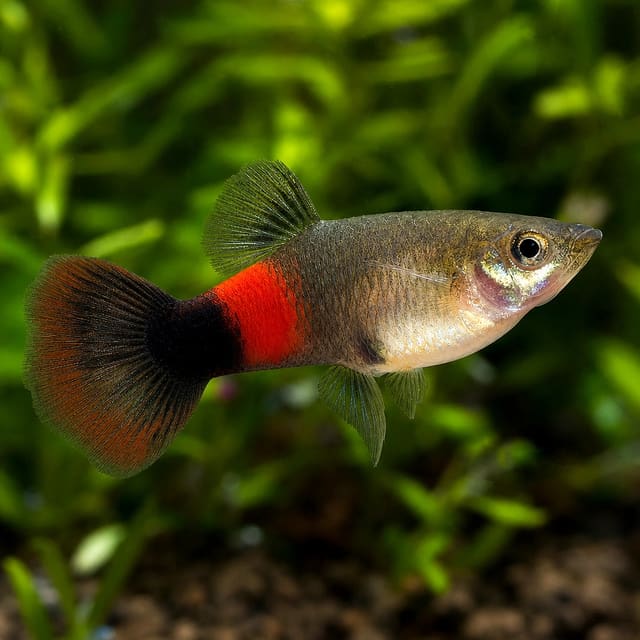
The Cobra Red Female Guppy (Poecilia reticulata) is a Poeciliidae livebearer native to Venezuela, Barbados, Trinidad, northern Brazil and the Guyanas that reaches 6 cm standard length. It suits a prepared beginner; keep five or more, using the 22–28°C, pH 7.0–8.0 and 9–18 dGH overlap of FishBase, Seriously Fish and the Tropical Fish Co care guide. Sold individually at approximately 3–4 cm.
Adult size is the maximum length this species reaches at full maturity (scientific sources). The livestock you receive will be younger and smaller. Product-photo provenance and any image-specific limitations are stated on the listing.
Poecilia reticulata
Shoaling fish: kept in a group they feel safer, stay calmer and show their best colour.
Minimum of 2 per order.
The Cobra Red Female Guppy (Poecilia reticulata) is a Poeciliidae livebearer native to Venezuela, Barbados, Trinidad, northern Brazil and the Guyanas that reaches 6 cm standard length. It suits a prepared beginner; keep five or more, using the 22–28°C, pH 7.0–8.0 and 9–18 dGH overlap of FishBase, Seriously Fish and the Tropical Fish Co care guide. Sold individually at approximately 3–4 cm.
Adult size is the maximum length this species reaches at full maturity (scientific sources). The livestock you receive will be younger and smaller. Product-photo provenance and any image-specific limitations are stated on the listing.
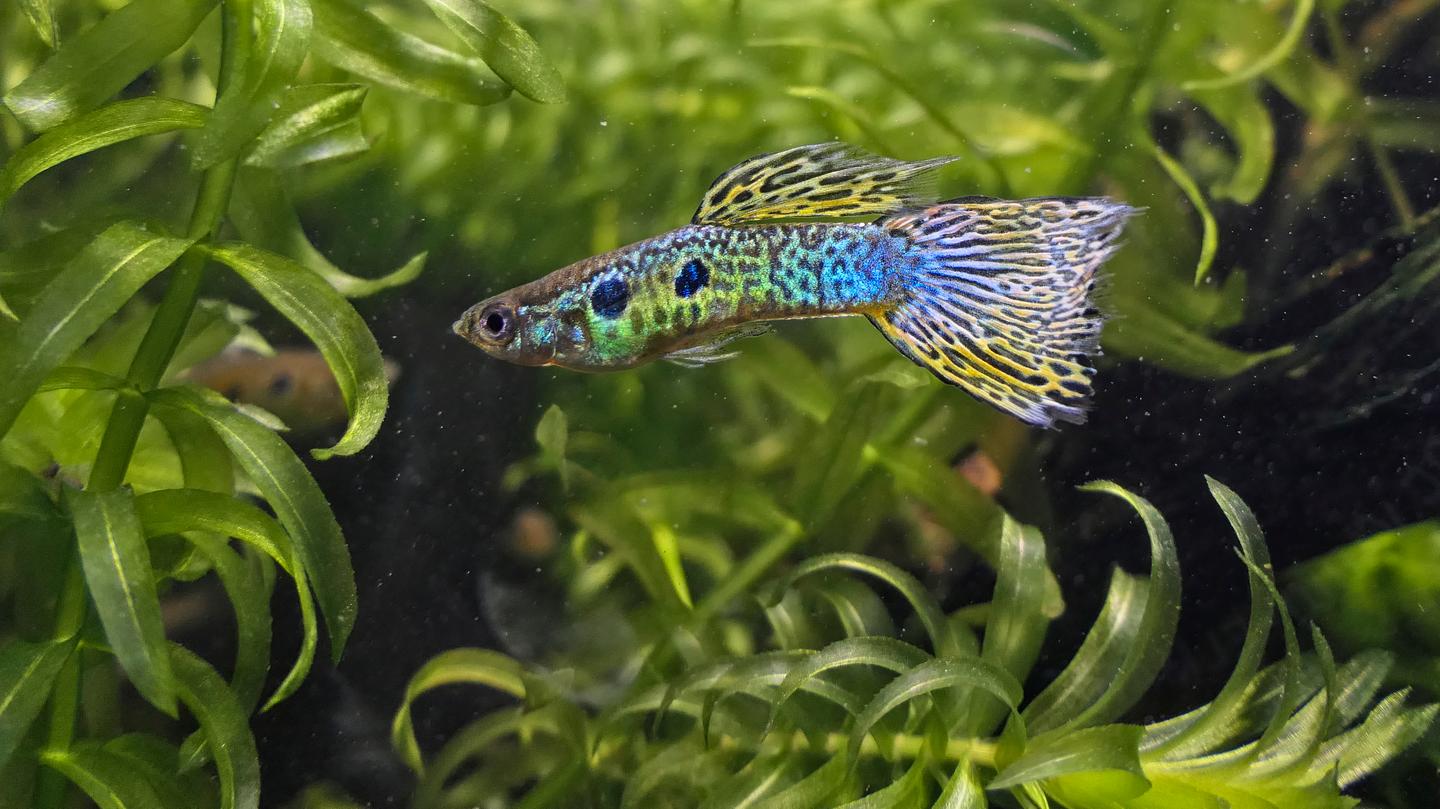
Guppies are social livebearers suited to a prepared beginner, not a fish-per-litre formula. Use a mature filtered aquarium, tested neutral-to-alkaline mineral-bearing water, deliberate sex and population planning, open swimming room, cover and a separation option.
Maintain these water conditions for optimal health and vibrant colors
The Cobra Red Female Guppy (Poecilia reticulata) is a small livebearing fish in the family Poeciliidae. Its native range covers Venezuela, Barbados, Trinidad, northern Brazil and the Guyanas, and the female reaches 5 cm standard length. It suits a prepared beginner who can provide a mature filtered aquarium, mineral-bearing water, a properly planned guppy group and a response plan for fry or persistent pursuit.
FishBase describes the guppy using the accepted scientific name Poecilia reticulata. Wild adults occupy habitats including warm springs, weedy ditches, canals, densely vegetated lakes and streams. They feed on zooplankton, small insects and detritus. These natural-history details explain the value of cover, quiet swimming areas and an animal-inclusive diet without turning one wild habitat into a rigid aquarium design.
The accepted name and authorship are also listed by Eschmeyer’s Catalog of Fishes. Cobra Red is an ornamental trade label within this species, not a separate scientific identity. Our complete Guppy Care Guide rates guppies as easy for a prepared beginner, but that rating assumes the aquarium is cycled, tested and planned around adult fish rather than used as permission for an unfiltered bowl.
| Suits | Not suited to |
|---|---|
| A prepared beginner with a mature filtered aquarium | An uncycled or unfiltered container |
| A social plan for five or more guppies | Permanent solitary keeping |
| Neutral-to-alkaline, moderately hard or harder water | Long-term soft, acidic conditions |
| A quiet community screened for fin behaviour | Tiger barbs, serpae tetras or other fin-nipping fish |
| An aquarium at least 60 cm long under our care policy | A plan based only on the fish’s dispatch size |
Plan around 5 cm standard length for this female. Seriously Fish uses 6 cm standard length as its planning reference, so do not use the smaller dispatch measurement to calculate adult capacity. FishBase recommends a group of five or more and a minimum aquarium length of 60 cm; Tropical Fish Co uses those more conservative figures where filtration, sex planning, water tests and other livestock allow.
One purchase supplies one live female at approximately 3–4 cm. This is the dispatch size, not the adult size, and quantity one is not a pair, trio or complete social group. Plan the aquarium for a 5 cm adult and for the total number of guppies and other animals that will share the biological load.
Sex is guaranteed only when the exact product or selected option explicitly states male or female. This Cobra Red Female Guppy listing is sold as female.
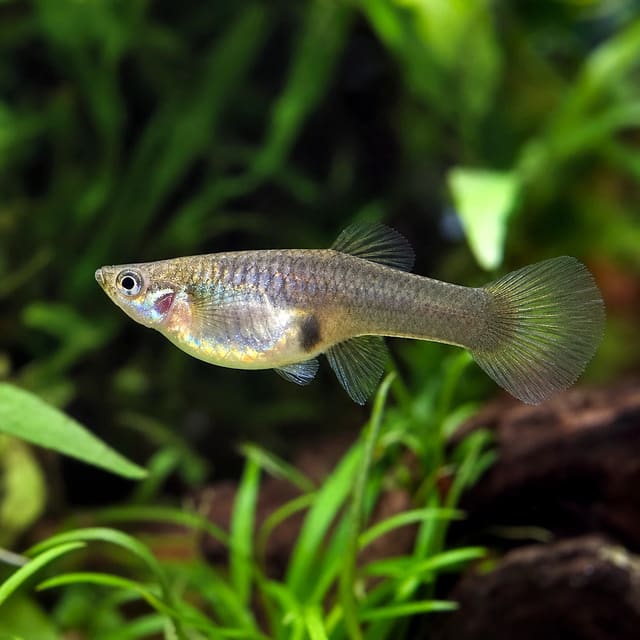
Female guppies are larger and plumper than males according to Seriously Fish, while domestic females may still carry strong colour in the tail. Sexing mature fish should rely on anal-fin structure rather than colour alone: a male has a narrow modified anal fin called a gonopodium, while the female anal fin is broader and triangular. Body shape, colour or a dark abdominal area should not be used to promise pregnancy.
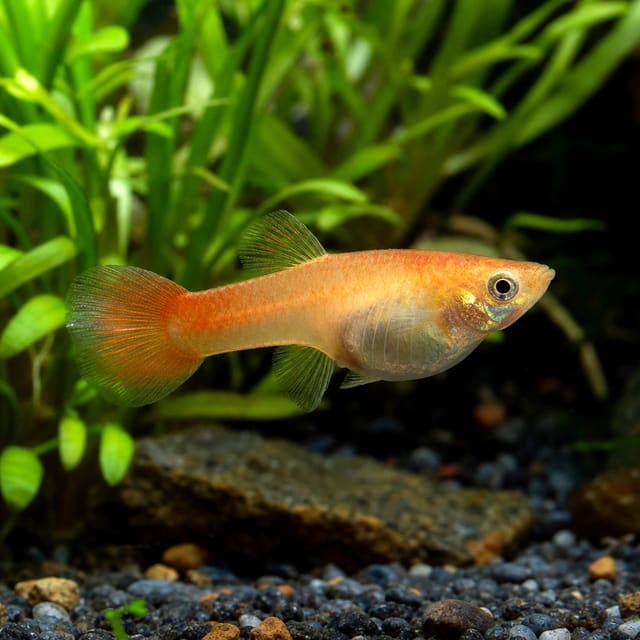
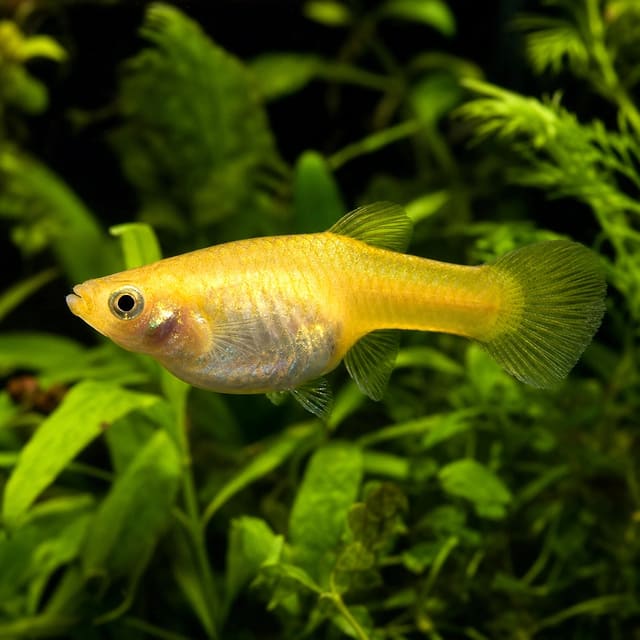
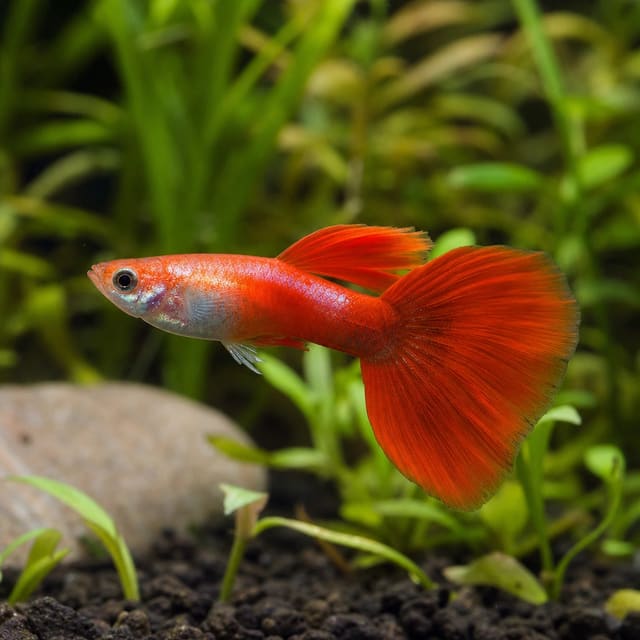
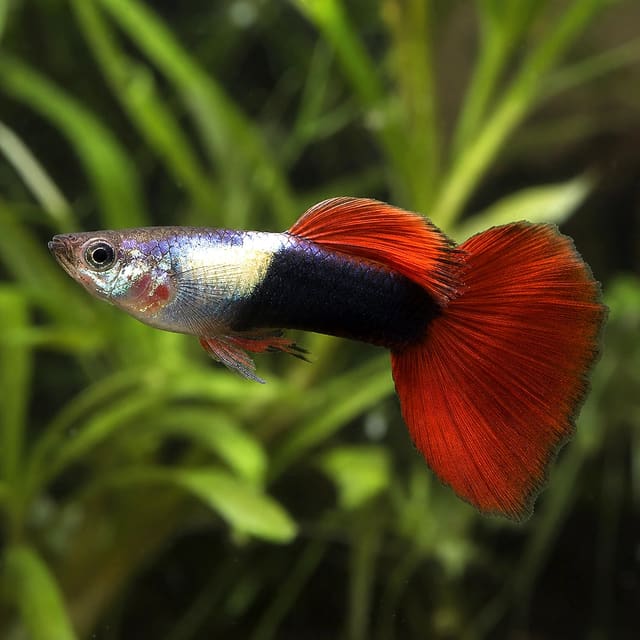
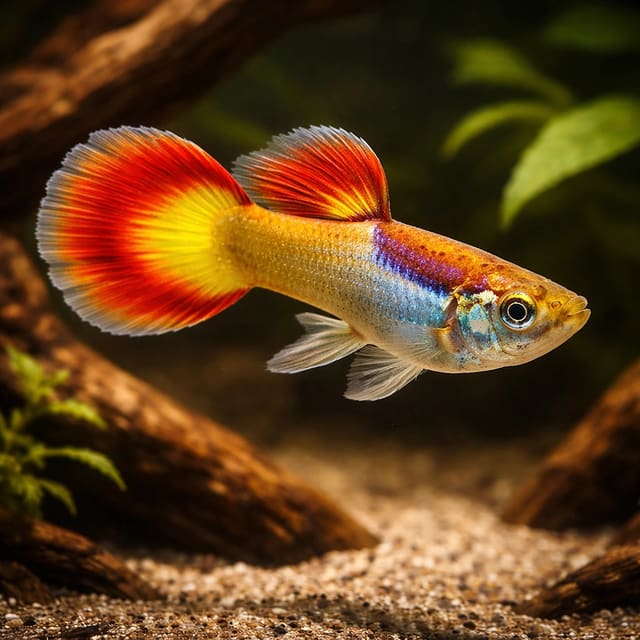
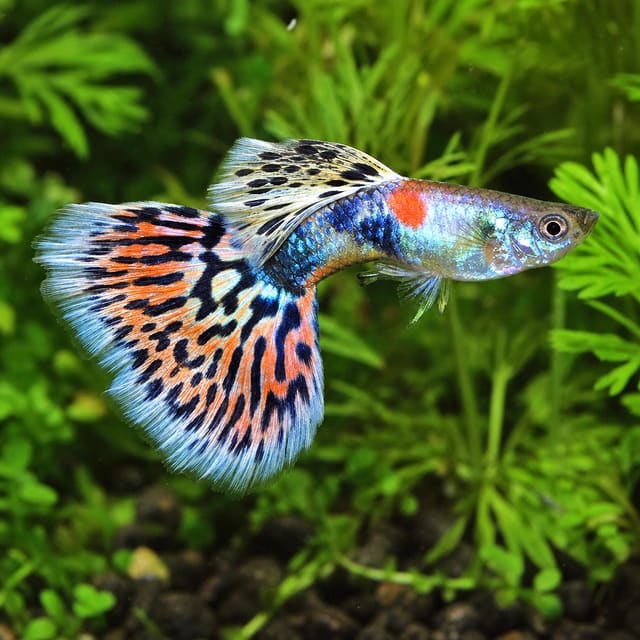
Some gallery images have been digitally enhanced to improve image quality. They show the listed type of animal rather than guaranteeing the exact markings of the individual supplied, so natural colour and pattern can vary.
The Cobra Red name describes the ornamental form rather than a second species. Individual living fish need not reproduce every mark, shade or proportion shown in a representative scene. The written identity, female offer and care requirements remain the basis for deciding whether this fish fits the aquarium.
| Offer detail | Planning meaning |
|---|---|
| One female fish | Add further guppies only within the complete social and capacity plan |
| Approximately 3–4 cm | Temporary dispatch measurement, not adult capacity |
| 5 cm adult planning size | Use this figure for long-term stocking |
| Cobra Red trade form | Expect individual variation in a living ornamental fish |
Keep documented guppy strains separate if preserving a particular line matters. If colour is secondary to the care fit, use the same adult-space, water and social checks while browsing the guppy collection.
Keep this guppy at 22–28°C, pH 7.0–8.0 and 9–18 dGH. That routine range is the overlap of FishBase, Seriously Fish and the Tropical Fish Co care guide. Use stable results within the range rather than repeatedly changing the aquarium to chase one exact number.
FishBase records the species across 18–28°C, pH 7.0–8.0 and 9–19 dH. Seriously Fish uses 17–28°C, pH 7.0–8.5 and 8–30 dGH for aquarium care, while our routine display guidance narrows the plan to 22–28°C, pH 7.0–8.0 and 8–18 dGH. The final 9–18 dGH instruction stays inside all three ranges.
OATA’s guppy-and-molly sheet supplies group guidance of 20–28°C, pH 7.0–8.0 and 8–18 dGH, not a species-specific optimum. It also calls for zero ammonia, zero nitrite and nitrate no more than 20 mg per litre above the normal tap-water level.
The aquarium water chemistry guide explains what each test means. Enter measured results into the water matcher to compare them with this range; a regional tap-water assumption is not a substitute for testing the water actually used.
Do not add salt simply because guppies can occur in brackish habitats. Use measured freshwater chemistry that fits every animal and plant, dechlorinate replacement tap water and change conditions gradually.
Use a mature, well-maintained filter and confirm zero ammonia and zero nitrite before the guppy enters the aquarium. The RSPCA explains that biological filtration supports bacteria that convert toxic ammonia into nitrite and then into the safer nitrate. Clear water alone cannot show whether that biological process is working.
Prepare and mature the aquarium before livestock arrives. The first tropical aquarium guide gives a practical sequence for setting up and testing a new system. Confirm the suitable temperature, pH and mineral content as well as the nitrogen readings; a working pump cannot compensate for unsuitable water chemistry.
Add fish gradually because the beneficial bacterial population must respond when fish numbers and feeding increase. OATA warns that stocking too quickly can produce new tank syndrome, with ammonia or nitrite rising beyond the filter’s current processing capacity. Recheck the water after the biological load changes rather than assuming an earlier result still represents the aquarium.
| Task | Instruction |
|---|---|
| Water change | At least once every week, change 25% of the water |
| Water tests | Test at least once per week for ammonia and nitrite |
| Replacement water | Treat it with tap-water conditioner before adding it |
| Filter check | Inspect for blockages and loss of normal flow |
| Filter cleaning | Rinse media lightly in removed aquarium water |
Do not run filter media under the tap because chlorine or chloramine may kill the beneficial bacterial population established in it. Avoid replacing all mature media during routine cleaning. Preserve the biological community while removing enough trapped waste to restore normal operation.
If ammonia or nitrite appears, test again carefully, inspect the filter and review recent stocking, feeding and maintenance. Use conditioned replacement water and continue monitoring until readings return to zero. Reduced feeding may limit further waste while the cause is addressed, but it does not replace correcting a failed or overloaded filter.
Use a mature filtered aquarium at least 60 cm long for one small guppy group under Tropical Fish Co’s care policy. FishBase recommends the same minimum length and a group of five or more. Litres remain relevant to stability and waste dilution, but the label on an aquarium cannot show its usable swimming length, footprint, filtration or existing biological load.
Seriously Fish cites a 45 × 30 cm base and approximately 41 litres as a guppy planning reference. Our 60 cm length policy is more conservative, so an aquarium should meet the length screen even when its stated volume exceeds 41 litres. Do not place a young 3–4 cm fish in shorter permanent accommodation on the assumption that it can be moved later.
OATA recommends gravel or sand, live plants where possible and shelter from plants or suitable ornaments. Seriously Fish describes the species as unfussy but notes that planted aquaria with floating vegetation are appreciated and that strong currents should be avoided. Arrange cover around usable open swimming room rather than filling every route with decor.
| Feature | Practical decision |
|---|---|
| Aquarium length | Use at least 60 cm for the small guppy group |
| Planting | Provide cover and sight breaks while retaining open swimming room |
| Substrate | Use aquarium gravel or sand that can be maintained cleanly |
| Ornaments | Choose smooth items without sharp edges that could damage fins |
| Flow | Avoid a strong current that prevents comfortable swimming |
| Cover | Use a secure aquarium cover and check equipment gaps |
Watch the fish rather than judging flow by equipment labels alone. A suitable current lets every guppy swim, feed and rest without being held in one area. If a fish continually struggles against the outlet or cannot reach food, redirect or diffuse the flow while preserving filtration and water movement.
More water can improve environmental stability, but it does not create a fixed entitlement to add fish. Reassess the usable footprint after plants, decor, tank mates and each social group are included. A mixed community, persistent pursuit or growing fry can make the same aquarium unsuitable even when its basic dimensions have not changed.
Use an appropriately sized, nutritionally complete omnivore flake or granule as the staple, then add safe compatible invertebrate and algal variety. FishBase records wild guppies eating zooplankton, small insects and detritus, while Seriously Fish describes wild fish as primarily insectivorous and aquarium strains as willing to accept most foods offered. The staple therefore needs to support a small omnivorous fish while the animal component remains meaningful.
OATA advises feeding guppies only what they can eat within a few minutes once a day. Watch the whole group during that period. Spread a measured portion where necessary so a confident fish cannot take everything before quieter fish feed, and reduce the next portion if food reaches the substrate uneaten.
| Food role | How to use it |
|---|---|
| Complete staple | Offer a suitably small omnivore flake or granule |
| Invertebrate variety | Rotate small live or frozen daphnia, bloodworm or tubifex |
| Algal variety | Use as one compatible part of the mixed diet |
| Portion check | Feed only what the group consumes within a few minutes |
| Leftovers | Remove them and reduce the next feed |
Uneaten food breaks down and releases waste into the water. A larger portion does not improve care when it raises ammonia, nitrite or nitrate or allows one fish to become overconditioned while another misses out. Tie the portion to observed consumption, group condition and water-test trends.
Use aquarium foods handled and stored as their labels direct. Food sized for a larger fish may be difficult for a 3–4 cm guppy to take cleanly, while crushing more than the group can consume creates fine waste. Choose a particle size the fish can swallow and confirm that every individual feeds consistently.
Keep five or more compatible guppies where aquarium capacity, filtration, sex planning and other livestock allow. FishBase recommends groups of five or more, and Tropical Fish Co uses that number as its conservative social policy. It is a starting group rather than a maximum stocking formula; behaviour and water tests still decide whether the aquarium is coping.
This purchase supplies one female, so it may join compatible guppies already living in a suitable aquarium or form part of a planned new group. Do not add fish simply to reach five if the aquarium cannot accommodate the complete adult group. Conversely, do not treat one female as a permanent social arrangement because the sale unit is one animal.
| Group plan | Decision to make |
|---|---|
| Female group | Avoids new mating within that group, but fry may still appear after previous mating |
| Mixed-sex group | Plan for courtship, mating and possible population growth |
| Adding a male | OATA suggests two females to each male to reduce pressure |
| Any group | Watch feeding, pursuit, hiding, fin condition and body condition |
Seriously Fish describes male guppies as vigorous in their pursuit of females and advises keeping several females to each male. A ratio cannot guarantee calm behaviour, so provide sight breaks and a mature separation option. Repeated pursuit, cornering, missed feeding or fin damage calls for intervention rather than another fish.
Female guppies can store viable sperm after earlier contact with a male and may later produce young when no male is present. A female-only aquarium prevents new mating inside that group but cannot make a fry-free promise. This fish is not presented as pregnant, and body shape or colour should not be used to assign reproductive status.
Before mixing sexes, decide how young fish would be housed, fed and responsibly rehomed. Seriously Fish notes that adults may eat young and that dense planting can increase fry survival. Use planting for cover, but do not rely on predation as a population plan or place a female in an uncycled container as a shortcut.
Prepare the mature aquarium before the journey: confirm zero ammonia and nitrite, stable suitable water, normal filter operation and enough adult group space. These aquarium checks come from OATA and the Tropical Fish Co care guide and should be complete before the parcel reaches you.
The Tropical Fish Co delivery and Live Arrival Guarantee policy describes hand-bagging in pure oxygen, an insulated poly box and a heat pack when the weather calls for it. Someone must be at the delivery address to receive the live fish; the parcel cannot be left unattended.
The video instruction applies to every delivery: begin with the sealed parcel before opening, inspecting or floating the bag. Keep the fish in the sealed bag while its condition is shown, then follow the stated floating period before release.
After release, OATA advises checking that new fish show clear eyes, intact scales, undamaged fins and appropriate swimming behaviour. Increase the aquarium population slowly so the biological filter can respond to the greater waste and feeding load. Test the water when the fish is introduced and continue watching ammonia, nitrite and behaviour as the group settles.
A fish that hangs at the surface, remains on the bottom, swims erratically, breathes unusually, loses interest in food or develops visible damage needs prompt attention. Begin with the aquarium tests and equipment checks described in the health section rather than selecting a treatment from one sign.
Check swimming, breathing, fins, scales, body condition, colour and feeding every day. OATA identifies surface hanging, bottom sitting, erratic swimming, unusual breathing, increased hiding, colour changes, white spots, fluffy growths, loss of fins or scales and reduced food intake as warning signs that need investigation.
RSPCA fish-health guidance supports checking water quality and seeking veterinary help when health changes persist. A symptom is not a diagnosis. Start by testing ammonia, nitrite, nitrate, pH and temperature, then inspect the filter, heater, recent maintenance, food, additions and social behaviour.
| If you see | Do this first |
|---|---|
| Surface hanging or rapid breathing | Test water immediately and inspect filtration and temperature |
| Clamped or damaged fins | Check water and observe pursuit or fin-nipping |
| Reduced appetite | Confirm water values and whether every fish can reach food |
| Erratic swimming or loss of balance | Check the environment promptly and isolate safely where appropriate |
| Spots, growths or wounds | Record the signs and seek a diagnosis before treating |
Use a separate biosecure quarantine system with dedicated equipment, mature filtration and repeated testing. The MSD Veterinary Manual recommends at least 30 days of isolation, with longer periods where indicated. A newly filled unfiltered container is not a safe substitute for quarantine.
Do not choose salt, heat or medication from one visible symptom. In the UK, use lawful labelled products and veterinary direction. OATA maintains a fish-vet directory for qualified diagnosis and treatment.
During the first week, record feeding, breathing, swimming and water results so changes are easier to identify. During the first month, maintain the weekly 25% water change, preserve mature filter media and confirm that each fish can feed without persistent pursuit. Escalate worsening signs rather than waiting for several symptoms to appear.
The Cobra Red Female Guppy is a very peaceful fish suited to a quiet community when the other animals pass the complete compatibility screen. Seriously Fish names other livebearers, rasboras, corydoras, small loricariids and tetras as possible community directions. These names are candidates, not universal promises, because exact species can differ in water needs, adult size, group size and fin behaviour.
Screen the proposed combination before adding either group. Match temperature, pH and hardness across a comfortable shared range rather than at the extreme edge of each profile. Include the adult size and required number of every species, then check the usable footprint after decor and existing livestock are counted.
| Question | Pass condition |
|---|---|
| Do the water ranges match? | Both can remain within 22–28°C, pH 7.0–8.0 and 9–18 dGH without compromise |
| Is there enough adult space? | Both social groups fit the usable footprint and filtration plan |
| Are the fins safe? | The candidate is not a fin-nipping species |
| Can every fish feed? | Feeding pace and food placement do not exclude quieter fish |
| Can either animal injure the other? | Adult size, mouth size and territorial behaviour have been checked |
| Is separation possible? | A mature alternative space exists if observed behaviour changes |
Other livebearers may share broadly similar care, but their own adult dimensions, social needs and population growth still count. Rasboras and tetras cover many different species, so choose only an exact fish whose water and behaviour match. Corydoras and small loricariids also need their own floor space, group plan, feeding access and water range.
Compatibility remains an observed outcome rather than a permanent label. Reassess the combination if one fish hides more, misses food, develops fin damage or is repeatedly displaced. Adding cover may improve sight breaks, but it cannot make an unsuitable species or overcrowded aquarium safe.
Avoid tiger barbs, serpae tetras and any other species that may nip guppy fins. Seriously Fish explicitly advises against those combinations, and OATA likewise says guppies should not be kept with fish that might nip their fins. The avoid remains unconditional even in a larger or heavily planted aquarium.
Do not assume every tetra or barb behaves in the same way. Seriously Fish includes tetras among possible quiet-community companions while naming serpae tetras as fin-nippers. This means the exact species must be identified and screened; the broad group name alone is not enough to approve the combination.
Male and female guppies can live in the same appropriately planned group, but males may pursue females vigorously and fry can result. OATA suggests two females to each male, while Seriously Fish advises several females per male. Neither ratio removes the need to monitor pursuit, feeding, fin condition and population growth.
Endler’s livebearer is a separate species, Poecilia wingei. Its formal description is set out in the 2005 description of Poecilia wingei, and Eschmeyer’s Catalog of Fishes lists that name as valid. Guppies and Endler’s livebearers can hybridise, so keep documented lines apart and do not describe hybrid descendants as pure examples of either species.
Never release guppies, fry, plants, snails, aquarium water or pathogens outdoors or into a surface-water drain, pond or natural waterway. Rehome livestock responsibly and dispose of aquarium water and substrate so organisms cannot reach natural watercourses.
Plan for 5 cm standard length, the female size recorded by FishBase. Seriously Fish uses 6 cm standard length as a planning reference, so provide adult space rather than stocking around the 3–4 cm dispatch measurement.
Use a mature filtered aquarium at least 60 cm long under Tropical Fish Co’s guppy policy. Seriously Fish cites approximately 41 litres at 45 × 30 cm, but the 60 cm length is our more conservative screen.
Yes. Keep five or more guppies where capacity and the sex plan allow; FishBase recommends groups of five or more, while Tropical Fish Co uses five as its conservative starting policy rather than a maximum.
It can suit a prepared beginner and is rated easy in the Tropical Fish Co care guide. It still needs a mature filtered aquarium, tested mineral-bearing water, a social plan and preparation for possible fry.
Feed an appropriately sized complete omnivore flake or granule as the staple, with safe invertebrate and algal variety. OATA advises only what the group consumes within a few minutes once a day.
Keep it at 22–28°C, pH 7.0–8.0 and 9–18 dGH, the overlap of FishBase, Seriously Fish and the Tropical Fish Co care guide. Maintain zero ammonia and zero nitrite.
Seriously Fish describes guppies as very peaceful. Keep them away from tiger barbs, serpae tetras and other fish that may nip their fins, and monitor pursuit within mixed-sex guppy groups.
Seriously Fish names other livebearers, rasboras, corydoras, small loricariids and tetras for quiet communities. Screen the exact species for water, adult size, group space, feeding and fin behaviour, excluding serpae tetras and other fin-nippers.
Start filming the sealed parcel before opening it or floating the bag. Tropical Fish Co uses pure oxygen, an insulated poly box and a heat pack when needed; receive it in person, open in one continuous take, show the sealed bag, then float the bag for 20–30 minutes before release.
No reviews for this item yet. Bought one? Honest reviews only, good or bad.
What customers say about ordering from us
I have a small group of long finned mountain minnows. So was delighted to be able to order ten of this variety to increase the genetics in my tank . The ones I recieved are healthy but it’s to early to give a verdict on wether they are of a long finned type since they are small currently.
Gordon Walker · 23 Sept 2026
100% success travel and "installation". Pleased with quality of purchase. The Siamese fighter a bit "shy" so have not yet seen him at his best yet but looking good. Happy customer. GG
George E Garratt · 21 Sept 2026
Reviews of our shop, collected by Judge.me, an independent third-party review collector. Newest first.