Easy
Japan Blue Endler Guppy (Poecilia endler)
24–30°C · pH 7–8.5
£6.99

Male and female Japan Blue Guppy pair for peaceful hard-water community aquariums; colourful Poecilia livebearers with natural breeding behaviour.
Poecilia reticulata x wingei
Japan Blue Guppy Pair are a shoaling species — they need 6+ to feel safe and show their full colour. Larger shoals stay calmer, eat better, and look stunning.
Confirm your email, then we’ll send an availability message for this exact item if it returns within 180 days.
This request is only for this product—no newsletter or other promotions. A mail-provider retry may very rarely duplicate the same availability message. Unconfirmed addresses are removed after 48 hours. See our privacy policy.
Male and female Japan Blue Guppy pair for peaceful hard-water community aquariums; colourful Poecilia livebearers with natural breeding behaviour.
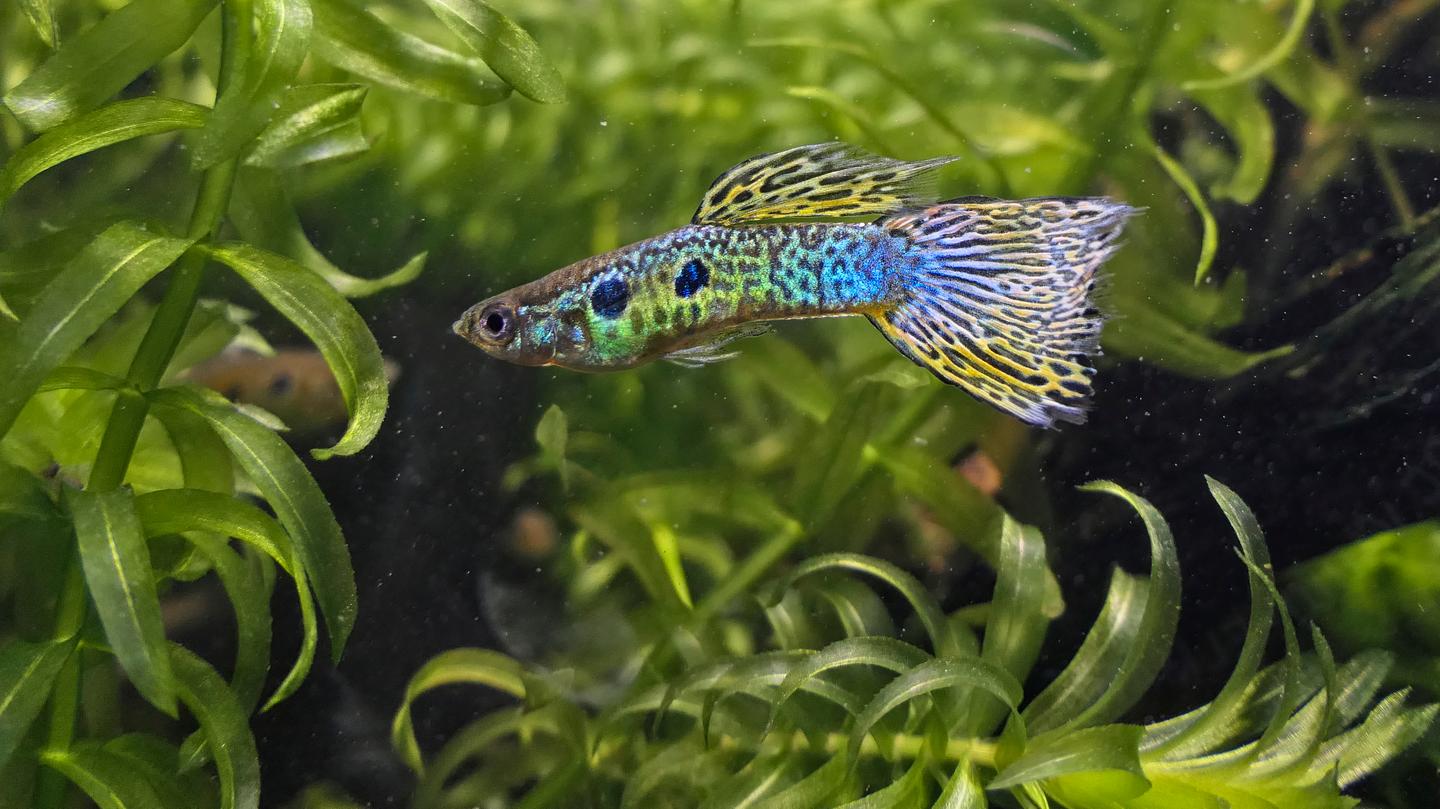
Guppies are social livebearers suited to a prepared beginner, not a fish-per-litre formula. Use a mature filtered aquarium, tested neutral-to-alkaline mineral-bearing water, deliberate sex and population planning, open swimming room, cover and a separation option.
Maintain these water conditions for optimal health and vibrant colors
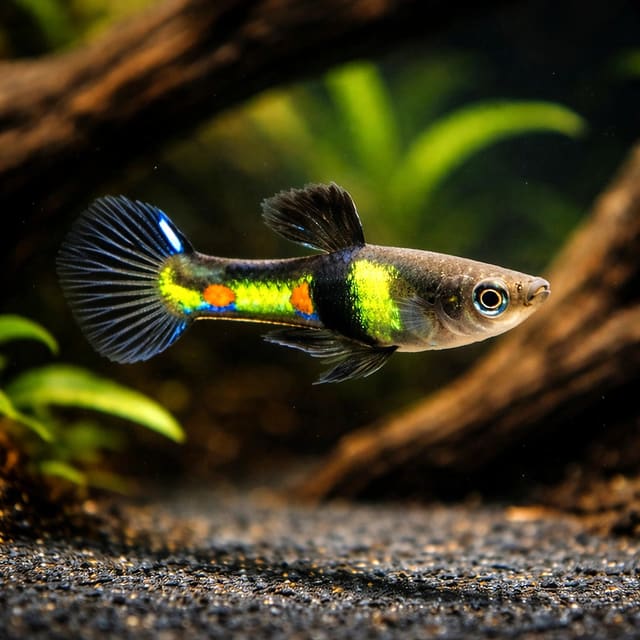
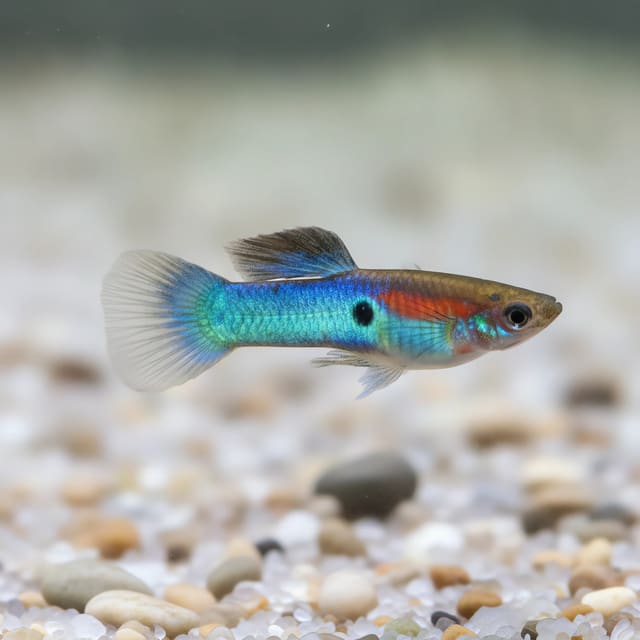
Japan Blue Guppy Pair (Poecilia reticulata x wingei) is a male-and-female livebearer pair for peaceful community aquariums. This line is chosen for active movement, easy care and metallic blue male colour, while the female adds the natural social balance that makes livebearers so watchable in a planted tank.
This listing is best treated as a Japan Blue guppy / Endler-type hybrid rather than a pure wild Endler line. Expect a hardy, colourful Poecilia livebearer that suits warm, mature, mineral-rich freshwater aquariums.
| Listing | Male and female Japan Blue Guppy pair |
|---|---|
| Scientific/trade identity | Poecilia reticulata x wingei Japan Blue line |
| Adult size | Usually around 3-6 cm, with females larger than males |
| Care level | Easy, if the aquarium is mature and stable |
| Best aquarium | Planted community aquarium with calm tank mates |
| Temperament | Peaceful, active, social livebearer |
| Diet | Fine flakes, micro pellets, spirulina foods and small frozen foods |
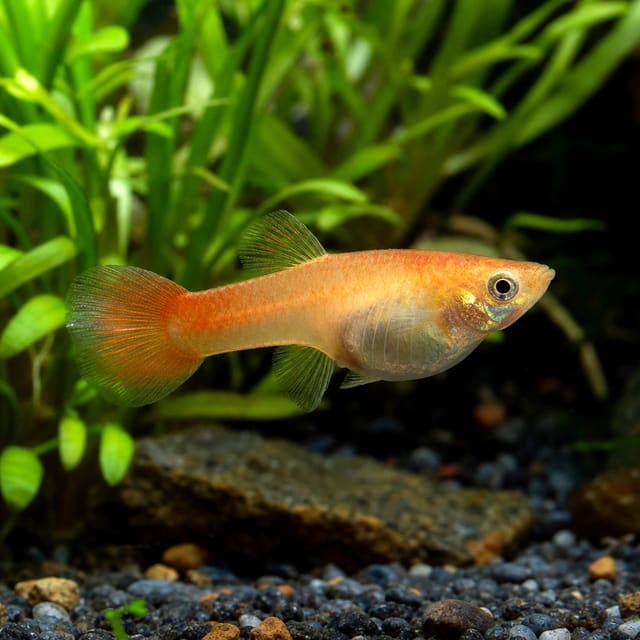
Japan Blue Guppies are popular because they bring bright movement without needing a specialist species-only aquarium. The male carries the stronger colour signal, usually with a metallic blue sheen that shows best under clean light and against planting. The female is plainer but just as important: she gives the pair natural behaviour and, in the right setup, the possibility of fry.
Because this is a livebearer pair, plan for breeding rather than being surprised by it. Females can store sperm, fry may appear after arrival, and adults may eat some fry unless the aquarium has moss, floating plants or fine-leaved cover. If you want to raise more young, use a gentle nursery area. If you simply want a colourful community feature, a planted tank lets nature balance the numbers more softly.
| Temperature | 22-28°C; keep stable and avoid cold swings |
|---|---|
| pH | Neutral to alkaline is preferred; around 7.0-8.2 is a sensible target |
| Hardness | Moderately hard to hard water suits Poecilia livebearers best |
| Filtration | Gentle to moderate flow with good oxygen and no ammonia/nitrite |
| Water changes | Small, regular changes are better than large irregular corrections |
Guppies are adaptable, but they do not enjoy unstable water. Use a mature filter, match temperature carefully on arrival, and avoid soft acidic setups built for blackwater tetras. If your tap water is naturally hard, this can be a very practical choice compared with species that need soft acidic water.
| Minimum size | 40 litres or larger for a pair; larger is better if fry are expected |
|---|---|
| Planting | Fine plants, moss and floating cover help females and fry |
| Swimming space | Leave open areas at the front and top of the aquarium |
| Substrate | Any aquarium-safe substrate; live plants matter more than colour |
| Lid | Recommended, as small livebearers can jump when startled |
A good setup has both cover and open water. Dense corners let the female rest away from constant male attention, while open space keeps the pair active and visible. Avoid sharp decor that can damage fins, and keep the aquarium away from sudden temperature changes.
| Good choices | Other peaceful guppies, Endler-type livebearers, small rasboras, suitable Corydoras, snails and adult dwarf shrimp |
|---|---|
| Use care with | Very soft-water species, boisterous barbs, large gourami and fish that outcompete them at feeding time |
| Avoid | Fin nippers, predatory fish, large cichlids and any fish big enough to swallow them |
| Breeding note | Keep away from pure Endler lines if you want to preserve strain purity |
These guppies are peaceful, but the right water chemistry still matters. They are not ideal tank mates for delicate soft-water species that need low mineral content. They fit best with community fish that also tolerate harder, cleaner, well-oxygenated freshwater.
| Daily food | High-quality fine flake or micro pellet |
|---|---|
| Colour and condition | Spirulina, daphnia, cyclops and baby brine shrimp in rotation |
| Feeding style | Small portions once or twice daily |
| Fry food | Powdered fry food, infusoria-style foods or newly hatched baby brine shrimp |
They have small mouths and do best with small foods. Feed lightly, watch that food is eaten quickly, and remove excess before it spoils the water. A varied diet keeps the body shape strong and helps the male colour remain clear.
| Before arrival | Check temperature, pH, hardness, ammonia and nitrite |
|---|---|
| On arrival | Float to equalise temperature, then acclimate slowly to your aquarium water |
| After release | Keep lights low and avoid feeding heavily for the first few hours |
| Guarantee | Covered by our Live Arrival Guarantee when the published delivery and acclimation steps are followed |
| First order | Use WELCOME10 when eligible for 10% off your first order |
When available, livestock is packed carefully for overnight live-animal courier delivery. If the product is temporarily out of stock, the page remains useful as a care reference and a restock target, rather than being padded with repeated sales language.
Choose this Japan Blue Guppy pair if you want a small, colourful, active livebearer for a planted community aquarium with harder water. It is a strong option for beginners who can keep water stable, and for experienced keepers who enjoy Poecilia behaviour without needing a demanding specialist setup.
Best with calm community fish that tolerate similar mineral-rich water. Provide plants or moss if fry survival is desired.
Always research specific species before adding them to your tank. Consider:
No reviews for this item yet. Bought one? Honest reviews only, good or bad.
What customers say about ordering from us
I have a small group of long finned mountain minnows. So was delighted to be able to order ten of this variety to increase the genetics in my tank . The ones I recieved are healthy but it’s to early to give a verdict on wether they are of a long finned type since they are small currently.
Gordon Walker · 23 Sept 2026
100% success travel and "installation". Pleased with quality of purchase. The Siamese fighter a bit "shy" so have not yet seen him at his best yet but looking good. Happy customer. GG
George E Garratt · 21 Sept 2026
Reviews of our shop, collected by Judge.me, an independent third-party review collector. Newest first.