Easy
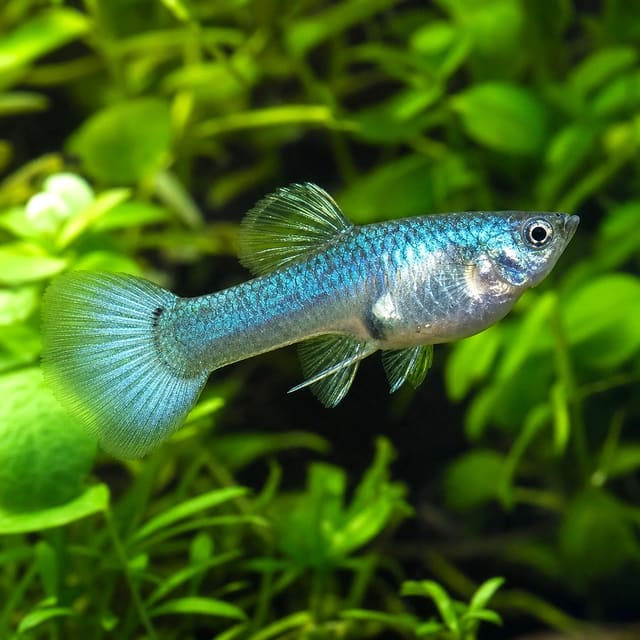
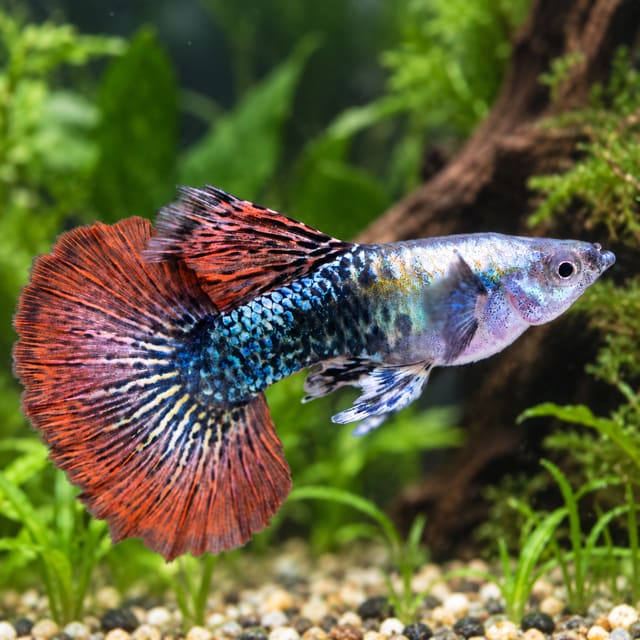
Blue Moscow Male Guppy (Poecilia reticulata)
22–28°C · pH 7–8 · 45L
£6.49
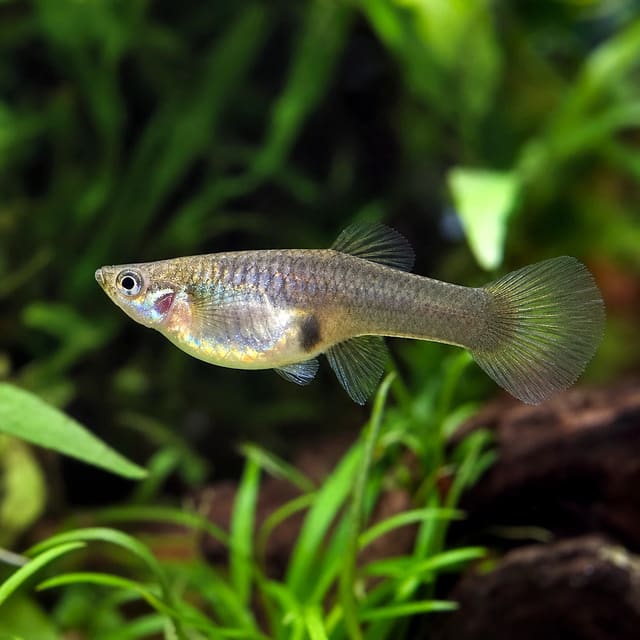
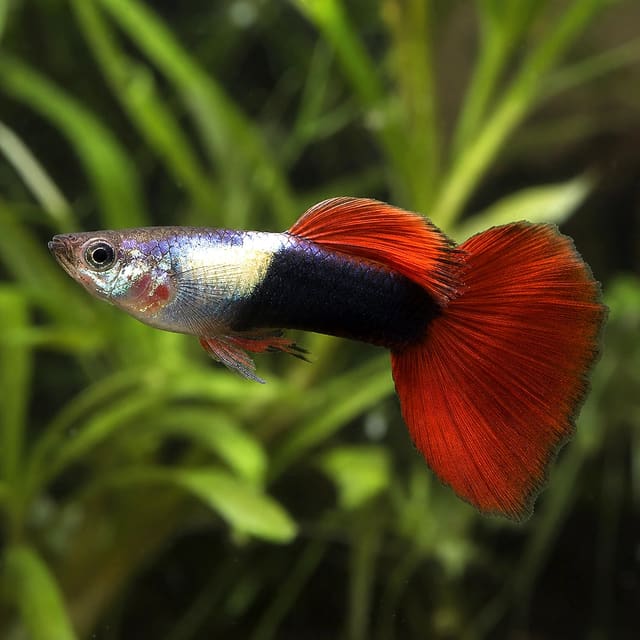
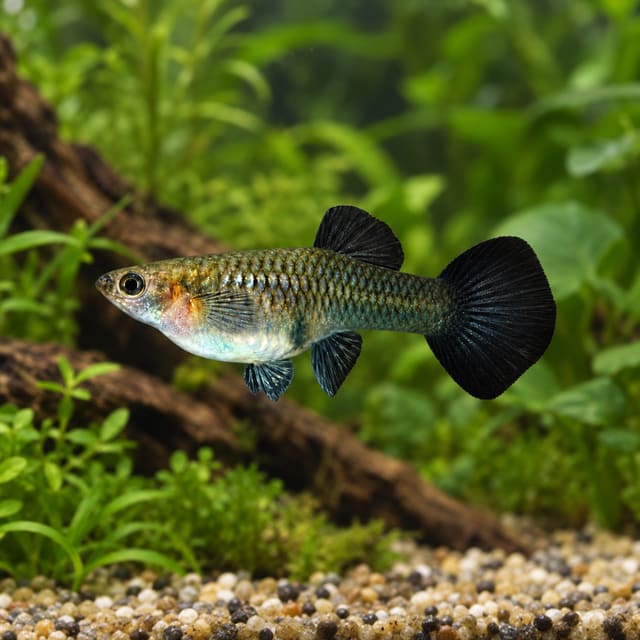
Red Tuxedo Female Guppy (Poecilia reticulata) is a peaceful livebearer sold as one female fish. She suits a mature, filtered community aquarium with mineral-bearing water, a deliberately planned guppy group, open swimming space and planted cover. Prior contact with a male means a female may still produce fry, so capacity and rehoming should be planned before purchase.
Adult size is the maximum length this species reaches at full maturity (scientific sources). The livestock you receive will be younger and smaller. Product-photo provenance and any image-specific limitations are stated on the listing.
Poecilia reticulata
Shoaling fish: kept in a group they feel safer, stay calmer and show their best colour.
Minimum of 2 per order.
Red Tuxedo Female Guppy (Poecilia reticulata) is a peaceful livebearer sold as one female fish. She suits a mature, filtered community aquarium with mineral-bearing water, a deliberately planned guppy group, open swimming space and planted cover. Prior contact with a male means a female may still produce fry, so capacity and rehoming should be planned before purchase.
Adult size is the maximum length this species reaches at full maturity (scientific sources). The livestock you receive will be younger and smaller. Product-photo provenance and any image-specific limitations are stated on the listing.

Guppies are social livebearers suited to a prepared beginner, not a fish-per-litre formula. Use a mature filtered aquarium, tested neutral-to-alkaline mineral-bearing water, deliberate sex and population planning, open swimming room, cover and a separation option.
Maintain these water conditions for optimal health and vibrant colors
Red Tuxedo Female Guppy (Poecilia reticulata) is a selectively bred form of one of the world's best-known livebearers. The red and tuxedo wording describes the trade appearance; the scientific species remains Poecilia reticulata. This exact product is sold as a female, one live fish per purchase, with a supplier dispatch grade of 3–4 cm.
Females are often larger and fuller-bodied than males, but colour alone is not a reliable sex test in domestic strains. Mature anal-fin shape is more useful: a female has a broader triangular anal fin, while a male has the narrow modified gonopodium. A rounded abdomen or darker area is not proof of pregnancy, and this listing does not promise fertility, pregnancy, pattern, tail shape or breeding outcome.
| Suits | A prepared beginner or experienced keeper with a mature filtered aquarium, tested neutral-to-alkaline mineral-bearing water and a deliberate social and population plan |
|---|---|
| Less suitable for | An uncycled bowl, a solitary-fish plan, a soft acidic setup or a community containing persistent fin nippers |
| Adult planning size | Up to about 6 cm standard length for females; standard length excludes the tail fin |
| Routine care guidance | 22–28 °C, pH 7.0–8.0 and 8–18 dGH, with pH and hardness taken from broad OATA guppy-and-molly guidance rather than a species-specific optimum |
| Social plan | Five or more under Tropical Fish Co's conservative policy where capacity and the sex plan allow |
| Feeding | A complete, appropriately sized omnivore flake or granule with safe compatible algal and invertebrate variety |
Sex is guaranteed only when the exact product or selected option explicitly states male or female. This Red Tuxedo Female Guppy listing is sold as female. The guarantee refers to the sold sex, not to reproductive history. Guppy females can store sperm after earlier contact with a male and may later produce fry even when no male is present in the home aquarium. A female-only purchase therefore reduces new mating in the group but cannot promise a fry-free aquarium.
Before ordering, decide how an unexpected brood would be managed. Fry need suitable food, stable warm water, biologically supported filtration and enough capacity as they grow. Responsible rehoming must be realistic before numbers rise. Adults eating fry is not a population-control plan, and a small uncycled container is not a safe nursery.
A species profile records 60 mm standard length. The reviewed Guppy Care Guide uses 6 cm as the maximum standard length recorded for females and notes a 5 cm FishBase record for male or unsexed fish. Standard length stops at the base of the tail, so domestic finnage can extend beyond that number. Plan for the adult body, social group and swimming room rather than using the 3–4 cm dispatch grade as a permanent size.
Seriously Fish gives a 45 × 30 cm base and about 41 litres for the species. OATA gives at least 45 litres for a small group of smaller livebearers, while FishBase's aquarium note gives a 60 cm minimum length and a group of five or more. Tropical Fish Co uses the more conservative screen: a mature filtered aquarium at least 60 cm long for one small guppy group, with five or more fish where the sex plan, water tests, filtration and other livestock allow.
That store policy is a planning screen, not a fish-per-litre entitlement. A nominal 60-litre aquarium may be a candidate when it is at least around 60 cm long and not already crowded, but existing livestock, fry, weak filtration or persistent pursuit can make the same volume unsuitable. Observe the actual group and keep a mature separation option ready.
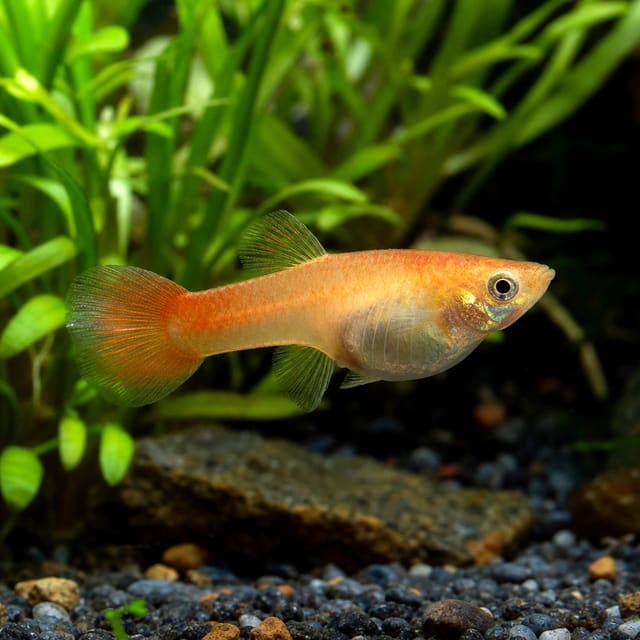
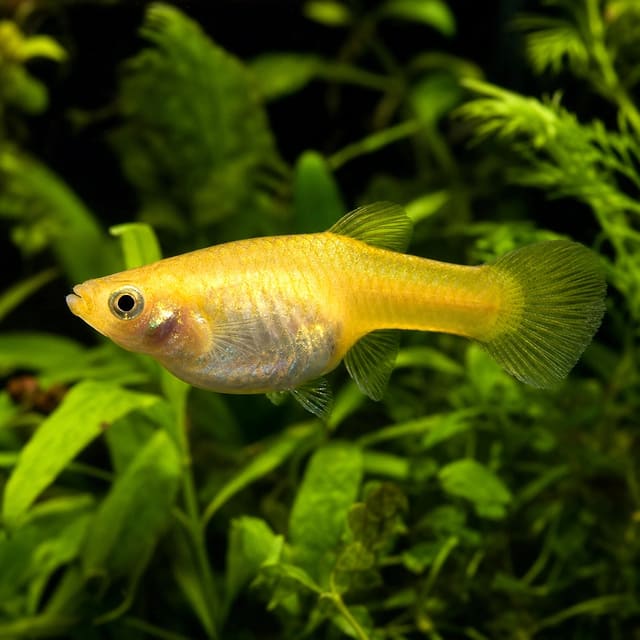
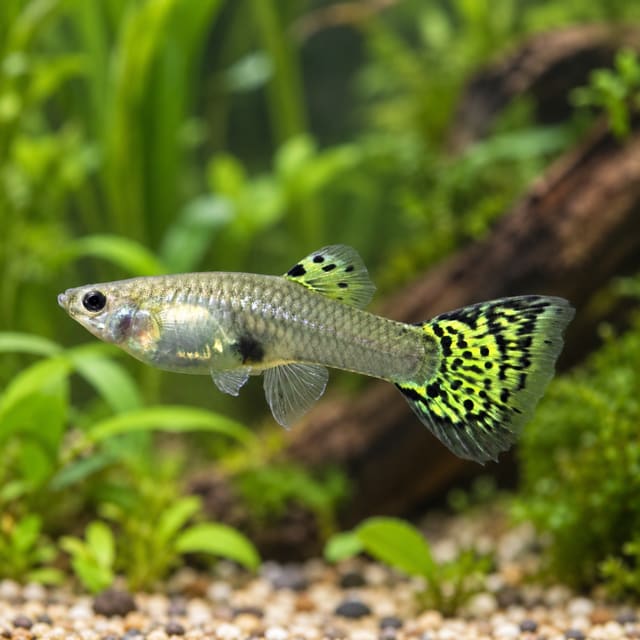
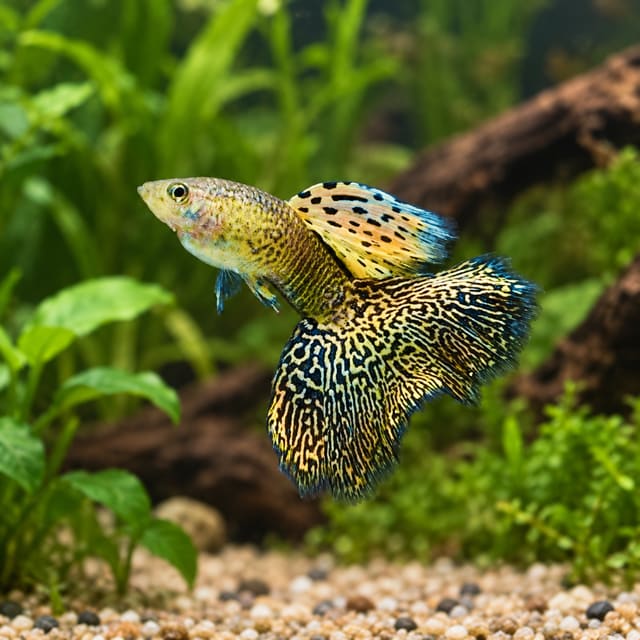
Red tuxedo is a trade colour label within a domesticated species. Individual shade, body marking, tail development and maturity can differ. Feed and water quality support normal condition, but they cannot make every female look identical. Choose this fish because the adult care, group plan and female offer suit the aquarium, with appearance as a welcome part of that decision rather than the only one.
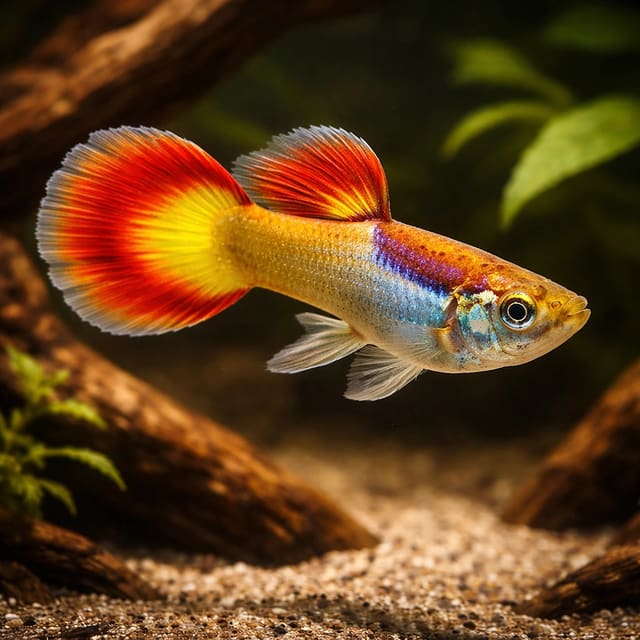
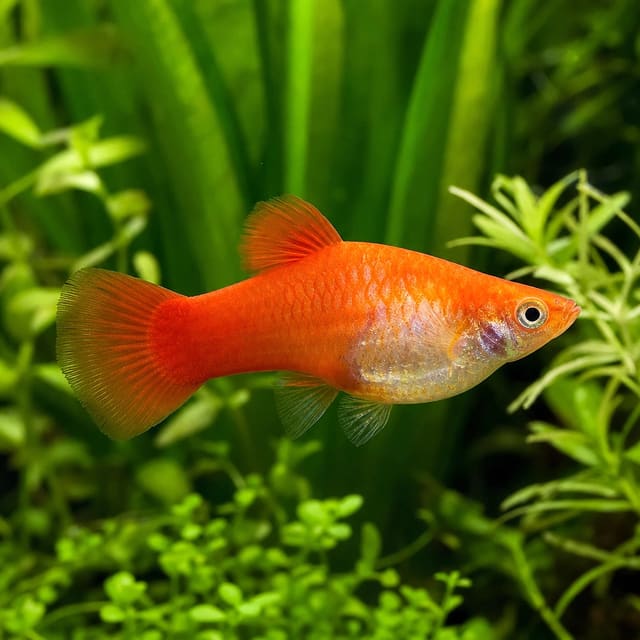
Gallery images have been digitally enhanced to improve image quality. Natural colour, pattern, size and maturity can vary between live animals.
Guppies are often described as easy, but that label assumes a cycled aquarium, stable tested water, suitable minerals, a social plan and routine maintenance. It does not make a new bowl safe. A biological filter needs an established bacterial community to process ammonia and nitrite, both of which are toxic. The first tropical aquarium guide covers preparation; use repeated water tests to confirm zero detectable ammonia and nitrite before livestock arrives.
Choose the aquarium by internal length and footprint as well as litres. The species profile's 45 × 30 cm base and approximately 41 litres help establish a lower practical scale, but Tropical Fish Co uses a conservative 60 cm length policy for a small social group. Leave open horizontal swimming room, then add planted cover and sight breaks without turning the aquarium into a dense obstacle course.
A secure cover closes escape gaps around cables and pipes. Fit a filter that keeps oxygen and water quality reliable without creating a current that pins or exhausts the fish. Long-finned domestic fish can struggle in excessive flow, while still water with weak gas exchange is not a solution. Adjust the return so food circulates gently and every fish can hold position normally.
Tropical Fish Co's routine display range is 22–28 °C. OATA's broad guppy-and-molly guidance gives pH 7.0–8.0 and medium-hard water at 8–18 dGH; these are group-care values rather than a species-specific optimum. The species profile describes a wider 17–28 °C, pH 7.0–8.5 and 8–30 dGH range. For a straightforward home plan, use the narrower store/OATA routine range and keep it stable.
The water chemistry guide explains what the main measurements mean, and the water matcher can help compare real results with the guidance here. Test the source water as well as the aquarium. UK supplies vary between areas and can change when water companies blend sources.
| Measurement | Routine planning guidance |
|---|---|
| Temperature | 22–28 °C under the store's routine guppy policy |
| pH | 7.0–8.0 from broad OATA guppy-and-molly guidance |
| General hardness | 8–18 dGH from the same broad group guidance |
| Ammonia and nitrite | Zero detectable |
| Nitrate | Kept controlled through stocking, feeding, filtration and regular partial water changes |
Guppies occur in freshwater and brackish environments, but that does not mean routine aquarium salt is required. Adding salt without a measured purpose can create problems for tank mates and plants. If water needs adjustment, change it gradually and use a method that can be measured and repeated; avoid rapid pH correction or unexplained mineral dosing.
Provide an open swimming area with planted or artificial cover around it. Floating vegetation can create shade and security, while rooted plants and carefully placed décor give fish routes out of direct pursuit. Every item must be smooth enough for fins and arranged so no fish is trapped in a dead end.
Cover does not remove the need for space. Dense planting can increase fry survival, which may be welcome in a managed breeding setup but adds population pressure in an ordinary community. Decide whether that outcome is wanted. Keep an intake safe for small fish and fry, and make sure plants do not conceal a filter blockage or prevent surface movement.
Observe how the actual fish use the layout. A female that always hides, misses food or is pursued whenever she enters open water needs intervention. Rearranging cover may help, but continued pressure calls for separation rather than adding more fish automatically. A simple layout that allows swimming, feeding and retreat is better than a decorative display that leaves no usable route.
Use an appropriately sized, nutritionally complete omnivore flake or granule as the staple. Safe compatible variety can include algal material and small live or frozen invertebrate foods. Wild guppies eat invertebrates, detritus and plant-associated material, but that ecological detail is not an instruction to collect wild food or rely on aquarium waste.
Offer portions the group can consume without leftovers decomposing. Spread food so each fish can feed; a bold fish eating quickly does not prove that every female received enough. Watch body condition over time and adjust the portion to the group, food type, life stage and filter capacity rather than following a rigid clock that ignores the aquarium.
Store food dry and use pieces small enough to swallow comfortably. Variety should complement a complete staple, not replace it with treats. Remove uneaten food and review the portion if nitrate rises more quickly or waste gathers. Fry, if they appear, need smaller food and especially close water-quality monitoring.
OATA recommends a partial water change of 25% at least once every week for guppies and mollies. Use that as a routine starting point, then respond to measured nitrate, stocking and feeding without making sudden chemistry swings. Dechlorinate replacement water correctly and bring it close to the aquarium temperature before adding it.
Check filter flow for blockages. If media needs cleaning, rinse it lightly in water removed from the aquarium; do not run it under the tap, because chlorine or chloramine can harm the bacteria. Avoid replacing all biological media at once. Siphon waste from open areas while leaving enough stable habitat for the group.
Keep a record of temperature, pH, ammonia, nitrite and nitrate, especially after introducing fish or changing the feeding load. A log makes drift visible before behaviour deteriorates. The RSPCA's general aquarium guidance explains why working filtration is central to fish welfare rather than optional equipment.
A settled guppy should swim steadily, breathe regularly, hold open undamaged fins, maintain a normal body profile and feed consistently. Hiding, clamped fins, surface gasping, unusual balance, spots, wounds or a sudden loss of appetite are warning signs rather than diagnoses. Test water immediately, inspect heater and filter performance, and review recent maintenance, new arrivals and social pressure.
Do not choose salt, heat or medicine from one symptom. Isolate safely where appropriate and seek qualified fish-veterinary advice for persistent or serious signs. Use a separate quarantine aquarium with dedicated equipment, mature biological support and testing. Professional veterinary guidance recommends at least 30 days of quarantine, with longer isolation where the case requires it; lawful UK products and veterinary direction still govern any treatment.
Have the mature aquarium ready and somebody present to receive the parcel. The current delivery and Live Arrival Guarantee policy is the authority for coverage, confirmed delivery timing and claim conditions. Follow the practical order below:
After transfer, observe breathing, balance and swimming without crowding the fish. Test the aquarium if behaviour is concerning. A brief period of caution after transport can occur, but continuing distress, loss of balance or gasping should prompt immediate checks rather than being dismissed as normal transit stress.
Guppies are social. OATA advises at least three, while FishBase gives an aquarium note of five or more. Tropical Fish Co uses five or more as the conservative group policy where aquarium capacity and sex planning allow. That is not a magic welfare number: the group still needs adequate space, stable water, feeding access and a response plan for pursuit.
A female-only group avoids new mating inside that group, but it does not guarantee that no fry will appear. A female may have stored sperm from earlier contact with a male. Watch body condition without declaring pregnancy from shape or a dark area, and prepare capacity before young fish arrive rather than after the filter and space are overloaded.
If mixing sexes elsewhere in the aquarium, OATA suggests two females per male to reduce pressure. No ratio makes harassment impossible or reproduction manageable by itself. Provide cover and open routes, check that every female can feed, and keep a mature separation option. Persistent chasing, hiding, missed feeding or damage requires action.
Every surviving fry increases feeding, waste and future adult space requirements. Dense cover may improve survival, so planting decisions affect population as well as appearance. Before deliberately raising young, prepare a biosecure nursery with suitable filtration, stable temperature and food sized for small mouths. A breeding box or small uncycled container is not a substitute for water quality and swimming space.
Plan responsible rehoming honestly. Local demand can change, colour and sex cannot be promised in advance and not every young fish will match a named strain. Do not release fish, fry, plants, snails or aquarium water outdoors or into surface drains. Guppies have established introduced populations in many places, and release can harm native ecosystems or spread pathogens.
Aquarium capacity is not fixed by the label on the tank. Adult growth, added tank mates, fry, filter performance and behaviour can all change the safe plan. Recount fish, watch feeding access and check nitrate trends after every material change. If the group is growing faster than planned, stop additions and solve housing before conditions decline.
Use the complete Guppy Care Guide for deeper planning around group numbers, sex, water, health and fry. The guppy collection can help compare available forms, but a product name or shared species never replaces the social and capacity checks for the aquarium already at home.
During the first days, learn what ordinary behaviour looks like for this fish in this aquarium. Note swimming level, breathing, fin position, appetite and how she moves around the group. A baseline helps you recognise a real change without treating every moment of hiding as illness. Observe from a distance before reaching into the aquarium or moving décor.
Check water at the same time each day during the early settling period. Temperature should remain stable, while ammonia and nitrite stay at zero detectable. Record nitrate and pH so gradual change is visible. If a result is unexpected, repeat the test correctly and inspect the filter, heater and recent maintenance before making a large correction.
Offer a modest portion and watch where it goes. A female that approaches but repeatedly loses food to faster fish may need the food distributed across more than one area. If she does not approach, review social pressure, flow and water quality. Adding more food without solving exclusion can leave waste while the intended fish still eats too little.
Body shape should be judged over time rather than from one meal. Domestic females can be naturally fuller than males, and reproductive state can alter appearance, but sudden swelling, weight loss, raised scales or a change in swimming deserves closer attention. A dark area or rounded abdomen alone is not a diagnosis or proof of pregnancy.
When warning signs appear, start with measurements and context: water tests, temperature, equipment, recent additions, feeding and aggression. Photograph or record the change so progression can be described accurately. Moving a fish to a quarantine system can be appropriate when that system is already mature, temperature-matched and equipped with dedicated tools.
A treatment chosen from a single symptom can delay the correct response and expose every aquarium resident unnecessarily. Seek qualified veterinary advice for serious, worsening or persistent signs. The OATA fish-vet directory can help locate professional support in the UK. Keep medicine doses, salt decisions and temperature changes under product-label or veterinary direction rather than copying an unrelated case.
Count the fish and check whether each can feed, swim in open water and retreat. Look closely at fins and body condition. A group can change when a fish matures, a brood appears or a new tank mate is added. If one female is continually pursued or excluded, use the prepared separation option while investigating the cause.
Check that plants still leave swimming room, the filter intake is clear and surface movement remains adequate. Trim or reposition growth deliberately rather than stripping all cover at once. If fry appear, reassess the feeding load, intake safety and future space immediately. Early planning is much easier than responding after water quality and crowding have already deteriorated.
A weekly change schedule is a starting point, not a reason to ignore test trends. If nitrate climbs quickly or waste gathers, review stocking and feeding as well as maintenance. If pH or hardness shifts after a change, compare the aquarium and source water and adjust the method gradually. Stability matters more than chasing one reading for appearance's sake.
At the end of the first month, the record should show whether the original plan works: stable water, predictable maintenance, consistent feeding, intact fins and ordinary social behaviour. Keep the routine that produces those results. Where it does not, reduce pressure through space, stocking or separation before considering further livestock.
Guppies are generally peaceful community fish, but individuals still compete, display and pursue. A female may be stressed by persistent male attention or by another fish monopolising food. Compatibility therefore includes the guppy group's internal behaviour as well as the names of other species.
Watch the whole group during feeding and quiet periods. Every fish should be able to swim in open water, reach food and retreat without being trapped. Repeated pursuit, clamped fins, hiding, weight loss or fin damage means the arrangement needs intervention. More décor can help only when the aquarium still has enough swimming room; separation is the right response when pressure continues.
Seriously Fish names other livebearers, rasboras, corydoras, small loricariids and tetras as possibilities for a quiet community. Treat those as categories to investigate, not a guarantee. Exact species differ in adult size, temperature, hardness, social needs and feeding. A corydoras group, for example, adds its own bottom-space requirement; “small catfish” is not enough information.
The species profile specifically says not to keep guppies with fin-nipping tiger barbs or serpae tetras. Long fins and conspicuous movement can attract repeated attention. Other barbs or tetras cannot be judged solely by their family name; use a current species-specific care record and observed behaviour.
A betta-and-guppy combination is not a sensible default. Both domestic display traits and individual behaviour vary, so a larger planted tank still cannot guarantee safety. Predatory fish, forceful territorial cichlids and animals requiring substantially softer, more acidic water also fail the basic screen.
Buying a female does not automatically balance an existing mixed group. Count mature males and females, observe pursuit and consider stored sperm and fry capacity. A stated ratio is a starting plan rather than protection against every individual interaction.
Red tuxedo, Moscow, Cobra, Mosaic and other trade labels describe appearance within Poecilia reticulata; they do not create separate care species. Endler's livebearer is different: Poecilia wingei is a separately described valid species, and laboratory research shows that it can hybridise with the guppy. Keep documented guppy and Endler lines apart, and do not sell hybrid descendants as pure examples of either species.
“Adult invertebrates” is too broad to promise as tank mates. A large snail, small shrimp, newly moulted shrimp and shrimp young present different risks and care needs. Guppies investigate small moving food, so young invertebrates and fry may be eaten. Any mixed plan needs species-level water overlap, refuge, feeding access and acceptance that predation risk cannot be designed away completely.
Review compatibility after every new arrival, layout change and brood. A combination that was calm with juveniles can change at maturity. Stop adding livestock when water tests, feeding competition or behaviour show pressure; the solution is capacity and management, not another animal intended to distract the group.
Plan for up to about 6 cm standard length for a female. Standard length excludes the tail fin, and domestic tail shape varies. The 3–4 cm supplier dispatch grade is the size supplied, not the adult planning size.
Seriously Fish gives a 45 × 30 cm base and about 41 litres, while FishBase gives a 60 cm minimum length. Tropical Fish Co uses the conservative screen of a mature filtered aquarium at least 60 cm long for one small group, then adjusts for sex mix, tank mates, filtration, tests and fry.
OATA advises at least three guppies, while the store's conservative policy is five or more where capacity and the sex plan allow. A female may produce fry from stored sperm after earlier contact with a male, so even a female-only purchase needs a population and rehoming plan.
It can suit a prepared beginner, but “easy” does not mean safe in an uncycled bowl. Start with a mature filtered aquarium, zero detectable ammonia and nitrite, stable mineral-bearing water, a planned social group and a mature separation option.
Use an appropriately sized, complete omnivore flake or granule as the staple, with safe compatible algal and small invertebrate variety. Feed portions the group can finish, remove leftovers and check that every fish can reach food.
Store guidance uses 22–28 °C. Broad OATA guppy-and-molly guidance gives pH 7.0–8.0 and 8–18 dGH rather than a species-specific optimum. Test the actual aquarium, keep conditions stable and avoid adding salt without a measured purpose.
Guppies are generally peaceful, but pursuit and competition can still occur. Provide space, cover and feeding access, then intervene if one fish is repeatedly chased, hidden, excluded from food or physically damaged.
Seriously Fish names other livebearers, rasboras, corydoras, small loricariids and tetras as quiet-community possibilities. Check the exact species for matching water, adult size, group needs and feeding, and avoid fin-nipping tiger barbs and serpae tetras.
Tropical Fish Co hand-packs livestock in oxygenated bags inside an insulated box, using a heat pack when conditions call for it, and sends it by a licensed live-animal courier. Be present to receive it and begin a continuous unboxing video while the parcel is still sealed; keep the fish in the sealed bag during the opening record and follow the current delivery policy for the Live Arrival Guarantee.
Routine values on this listing keep their stated scope. Store policy provides a conservative home-aquarium plan, while broad group sheets and wild occurrence records are not presented as one universal optimum.
No reviews for this item yet. Bought one? Honest reviews only, good or bad.
What customers say about ordering from us
Easy website plenty of info on fish your buying great to pick a time slot
TRACEY DURRANT · 7 Oct 2026
Got some lovely fish thank you
Kevin Mackie · 7 Oct 2026
Reviews of our shop, collected by Judge.me, an independent third-party review collector. Newest first.