Easy
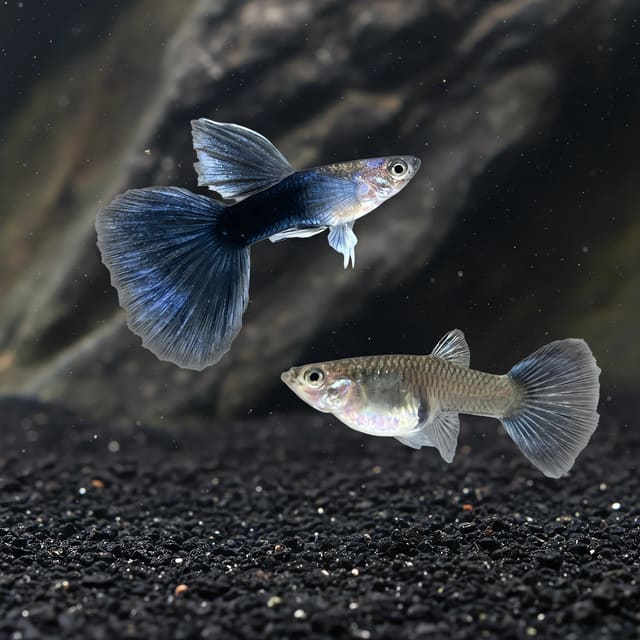
Blue Moscow Male Guppy (Poecilia reticulata)
22–28°C · pH 7–8 · 45L
£4.09
The Blue Moscow Female Guppy (Poecilia reticulata) is a peaceful Poeciliidae livebearer from Venezuela, Barbados, Trinidad, northern Brazil and the Guianas that reaches 5 cm standard length. It suits a prepared beginner; store policy uses five or more where capacity and sex planning allow, with a routine 22–28°C and the FishBase, Seriously Fish and OATA overlap of pH 7.0–8.0 and 9–18 dGH. Sold individually as one female live fish.
Adult size is the maximum length this species reaches at full maturity (scientific sources). The livestock you receive will be younger and smaller. Product-photo provenance and any image-specific limitations are stated on the listing.
Poecilia reticulata
Shoaling fish: kept in a group they feel safer, stay calmer and show their best colour.
Minimum of 2 per order.
The Blue Moscow Female Guppy (Poecilia reticulata) is a peaceful Poeciliidae livebearer from Venezuela, Barbados, Trinidad, northern Brazil and the Guianas that reaches 5 cm standard length. It suits a prepared beginner; store policy uses five or more where capacity and sex planning allow, with a routine 22–28°C and the FishBase, Seriously Fish and OATA overlap of pH 7.0–8.0 and 9–18 dGH. Sold individually as one female live fish.
Adult size is the maximum length this species reaches at full maturity (scientific sources). The livestock you receive will be younger and smaller. Product-photo provenance and any image-specific limitations are stated on the listing.

Guppies are social livebearers suited to a prepared beginner, not a fish-per-litre formula. Use a mature filtered aquarium, tested neutral-to-alkaline mineral-bearing water, deliberate sex and population planning, open swimming room, cover and a separation option.
Maintain these water conditions for optimal health and vibrant colors
The Blue Moscow Female Guppy (Poecilia reticulata) is a peaceful freshwater livebearer in the Poeciliidae family. Its native range covers Venezuela, Barbados, Trinidad, northern Brazil and the Guianas, and a female reaches 5 cm standard length. It can suit a prepared beginner who has a mature, filtered aquarium, tested mineral-bearing water and a deliberate plan for the social group and any fry.
FishBase describes the guppy’s varied native habitats, including vegetated lakes, springs, ditches, canals and streams. The Blue Moscow name describes a selected aquarium colour form rather than a separate species. Expect colour pattern and temperament to vary between individuals, and treat the name as a colour form rather than a record of pedigree or breeding history.
Keep the aquarium at 22–28°C, Tropical Fish Co’s routine range, with pH 7.0–8.0 and 9–18 dGH. The pH and hardness are the overlap of FishBase, Seriously Fish and OATA, and 22–28°C sits inside all three references’ temperature ranges. OATA’s guppy-and-molly figures are group-level guidance used within the ranges recorded for Poecilia reticulata. Maintain zero detectable ammonia and nitrite, provide open swimming room and avoid strong currents.
Tropical Fish Co rates this fish easy, meaning suitable for a prepared beginner rather than tolerant of an uncycled aquarium. The decisive checks are aquarium length, mature filtration, stable water, social planning and a practical response if chasing, illness or fry appear.
| Suits | Not suited to |
|---|---|
| A mature, filtered aquarium at least 60 cm long under store policy | An uncycled container or a plan based only on nominal litres |
| A planned group of five or more where capacity and sex planning allow | Keeping one guppy alone or adding a mixed group without a fry plan |
| Stable 22–28°C, pH 7.0–8.0 and 9–18 dGH | Unstable water or conditions outside the planned routine range |
| A quiet community with suitable water and no fin-nipping species | Tiger barbs, serpae tetras or other fish likely to nip fins |
| Open swimming room, plants, cover and monitored sight breaks | Sharp decor, overpowering flow or no separation option |
A nominal volume is only the beginning of the decision. Aquarium length, footprint and the whole community matter as much as volume. Tropical Fish Co applies the more conservative screen of a mature aquarium at least 60 cm long for one small guppy group. The aquarium must still have enough usable room for every other animal and its required social group.
Read the complete Guppy Care Guide when planning the wider aquarium. It explains why test results, sex mix, existing livestock, filtration and behaviour matter more than a fish-per-litre calculation.
One purchase supplies one female live fish. The dispatch grade is 3–4 cm, which describes the fish at dispatch rather than its adult size. Plan the permanent aquarium for an adult length of 5 cm standard length from the start, and have that aquarium ready before the fish arrives.
Sex is guaranteed only when the exact product or selected option explicitly states male or female. This Blue Moscow Female Guppy listing is sold as female.
FishBase records that a female reaches 5 cm standard length. Standard length excludes the tail fin, and individual body and fin proportions can vary. The Blue Moscow trade label identifies selected colour and appearance, not a different scientific identity.
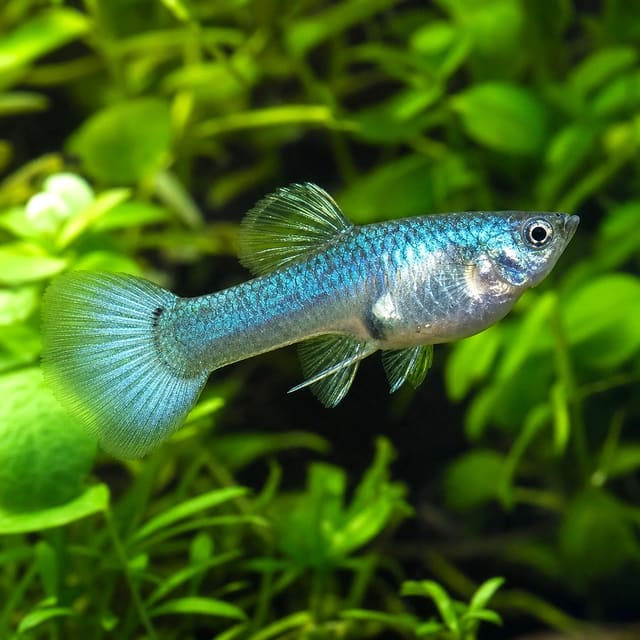
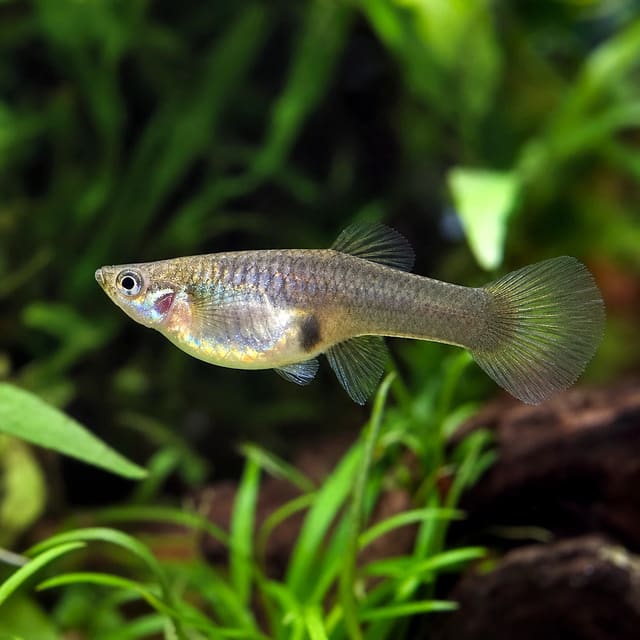
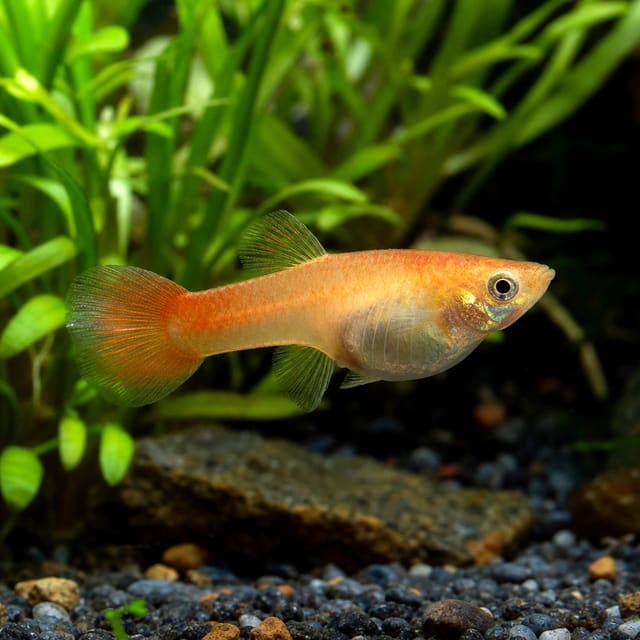
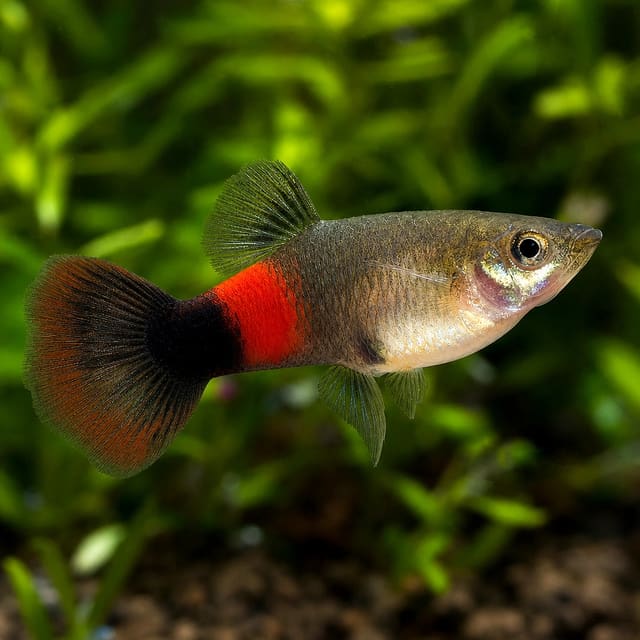
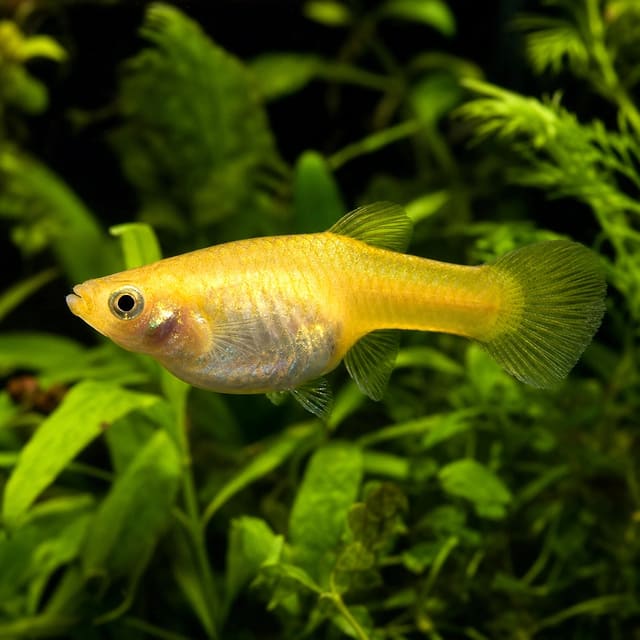
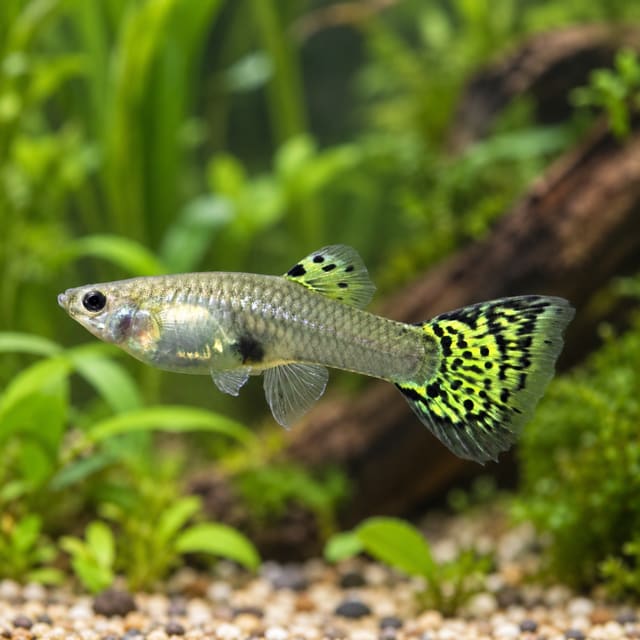
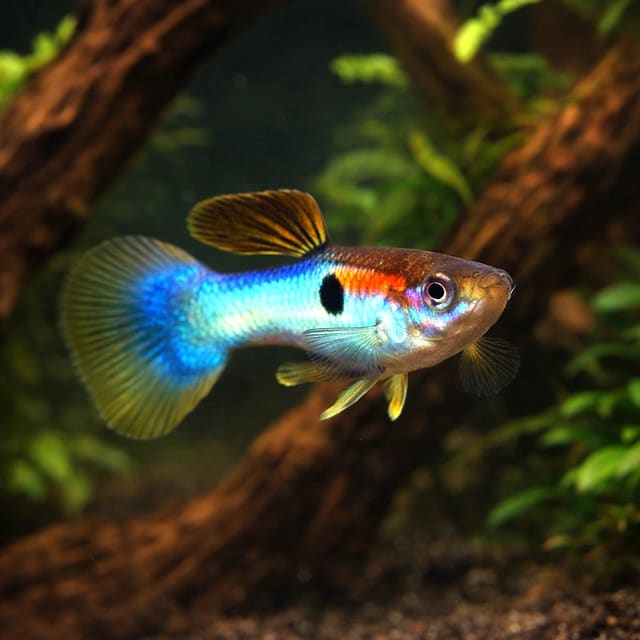
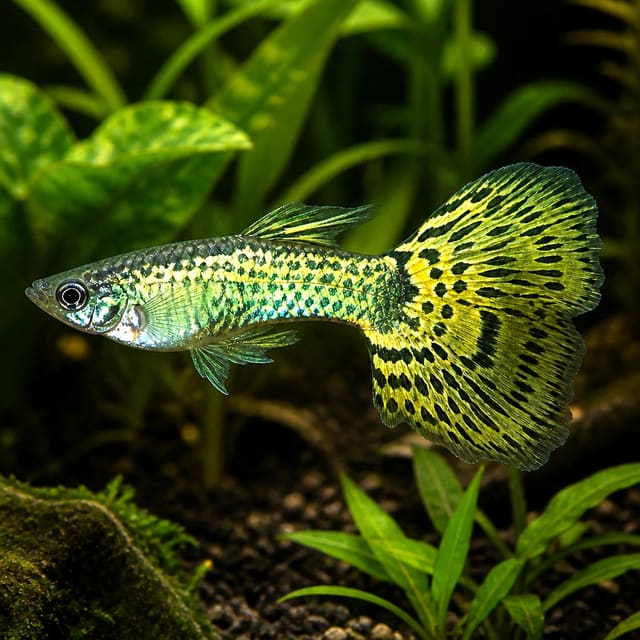
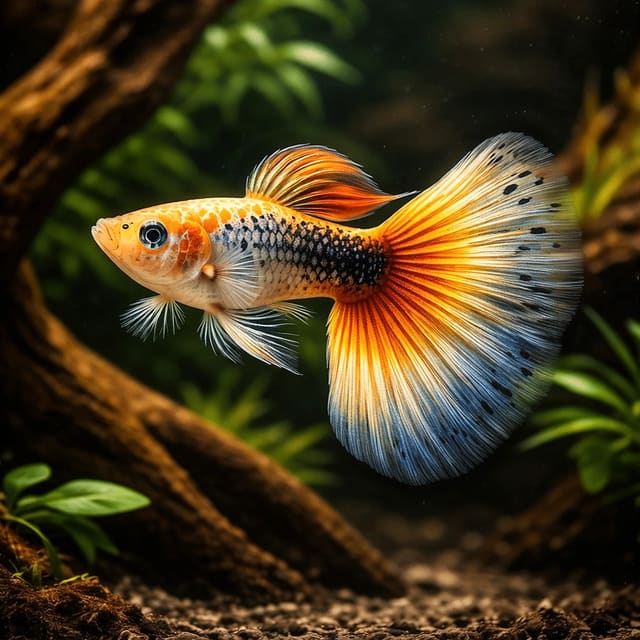
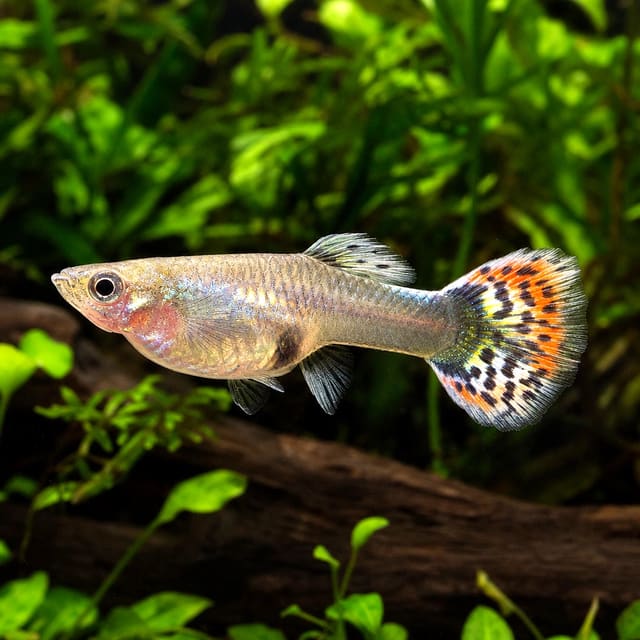
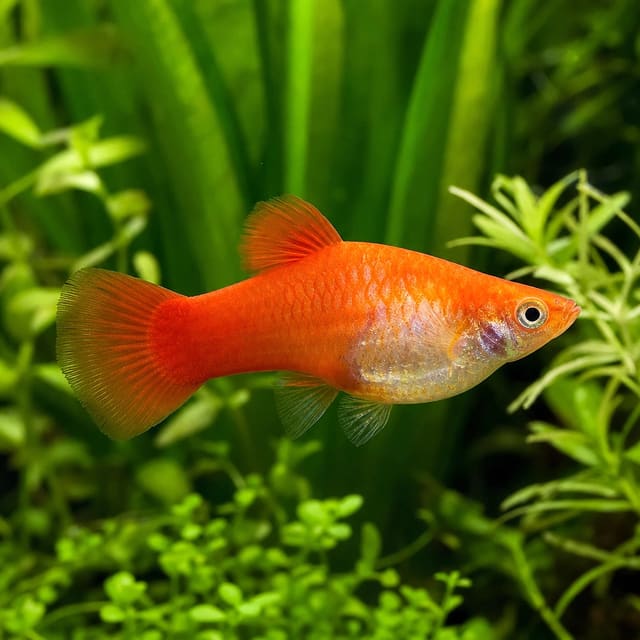
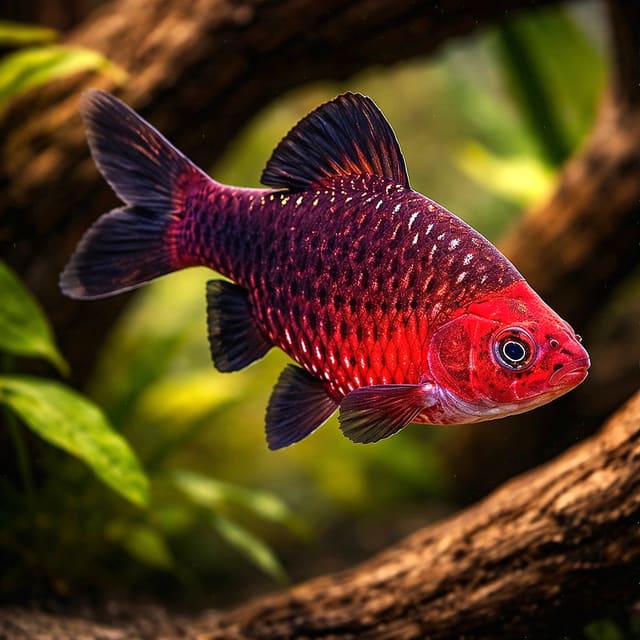
The gallery images are representative of this type of animal rather than photographs of the exact animal supplied, so colours can look slightly different from the live animal.
Use the fish’s confirmed identity, adult needs and sex when planning the group rather than trying to match an individual photograph. For comparisons between guppy strains and stated sexes, browse the guppy collection and read each animal’s own offer details.
Use a mature, filtered aquarium at least 60 cm long and plan for five or more guppies where the sex plan, filtration, test results and other livestock allow. FishBase gives a 60 cm minimum aquarium length and groups of five or more; Tropical Fish Co adopts those figures as its conservative house policy.
Treat the smaller figures below as lower planning points, not a stocking formula. Seriously Fish gives a 45 × 30 cm base and approximately 41 litres for the species. OATA advises at least 45 litres for a small group of smaller livebearers and at least three guppies, with two females per male in a mixed group. The 60 cm store screen remains the practical starting point because aquarium length, social space and the footprint cannot be judged from litres alone.
| Check | Decision |
|---|---|
| Length and footprint | Use at least 60 cm of aquarium length and preserve open swimming room. |
| Social group | Plan five or more only where all fish can feed, move away from pursuit and use cover. |
| Other livestock | Include every tank mate’s adult size, water needs and social group before adding guppies. |
| Filtration | Confirm zero detectable ammonia and nitrite before adding livestock. |
| Population | Reserve capacity and a responsible rehoming plan in case fry appear. |
A 60-litre aquarium can be a candidate for a small group only if it is at least about 60 cm long, mature, filtered, suitably furnished and not already occupied. Five guppies can be a conservative starting group under store policy, but that is not an automatic maximum. A mixed-sex plan, weak biological filtration, existing fish or persistent pursuit can make the same aquarium unsuitable.
Keep the water at 22–28°C, Tropical Fish Co’s routine range, with pH 7.0–8.0 and 9–18 dGH. The pH and hardness are the overlap of FishBase, Seriously Fish and OATA, and 22–28°C sits inside all three references’ temperature ranges. Measure the aquarium and source water rather than assuming that every local tap supply is suitable.
Use a thermostatically controlled aquarium heater where the room cannot keep the water within 22–28°C, and confirm the actual temperature with an independent aquarium thermometer. Adjust water conditions gradually. A heater dial, room temperature or a water-company report cannot replace testing the aquarium itself.
Use the water chemistry guide to understand what each measurement means, then use the water matcher to compare measured values with the planned range. Test after maintenance or any unexplained behavioural change as well as during the normal routine.
Although FishBase records guppies in fresh and brackish environments, do not add aquarium salt or minerals simply because the species can occur in brackish water. Any adjustment needs a measured purpose and must suit every fish, invertebrate and plant sharing the aquarium.
Use a mature biological filter in every guppy aquarium. The RSPCA explains that biological filtration supports bacteria that convert toxic ammonia to nitrite and then to safer nitrate. Those bacteria need time to establish, so verify cycling with repeated water tests before adding fish.
If this is a new setup, follow the first tropical aquarium guide before livestock arrives. Add fish gradually because feeding and waste increase the demand on the biological filter. Zero ammonia and nitrite before the first addition do not remove the need to test again after the livestock load changes.
Seriously Fish advises avoiding strong currents. For its example aquarium of approximately 41 litres, it suggests a turnover of four to five times the aquarium volume each hour, corresponding to a filter rated around 165–205 litres per hour. Treat that as an example for that aquarium size, not a universal filter choice. Decor, filter condition and outlet position alter the flow experienced by the fish.
| Provide | Avoid |
|---|---|
| Open horizontal swimming room | Decor that blocks most usable space |
| Live or suitable artificial plants and cover | Sharp ornaments that may damage fins |
| Floating vegetation and monitored sight breaks | A layout that traps one fish away from food |
| A protected intake and gentle usable flow | Flow that pins, exhausts or prevents normal swimming |
Plants and cover can help a fish move out of another’s line of sight, but they do not replace adequate space or a separation plan. Dense cover may also increase fry survival, which makes population planning more important. Observe how the fish use the layout and adjust it if one individual is repeatedly cornered, excluded from food or forced into the strongest current.
Use an appropriately sized, nutritionally complete omnivore flake or granule as the staple food. FishBase records wild guppies feeding on zooplankton, small insects and detritus, while Seriously Fish notes that aquarium strains accept most foods offered. The staple should therefore provide balanced everyday nutrition rather than relying on one treat food.
Add safe, compatible variety in small amounts. OATA names daphnia, small bloodworm and tubifex as suitable live or frozen examples for guppies and mollies, while the Tropical Fish Co guide supports compatible algal and invertebrate variety. Use biosecure aquarium foods and choose pieces small enough for the fish to take readily.
Feed only what the fish can consume within a few minutes, once a day, following OATA’s schedule. Watch the whole group instead of judging the portion by the quickest fish. A shy or pursued fish may miss food even when the total amount looks generous.
| If you see | Do this |
|---|---|
| Food reaching the substrate uneaten | Reduce the next portion and remove the remains before they decay. |
| One fish taking most of the food | Spread a measured portion across more than one accessible point and observe again. |
| Reduced interest in food | Test water and check breathing, swimming, body condition and social pressure. |
| Food too large to swallow | Change to a smaller, appropriately sized complete food. |
Overfeeding adds waste that can raise ammonia and nitrite, particularly after the group grows or fry appear. Do not compensate for missed maintenance with less food, and do not use extra food as a response to persistent chasing. Correct the aquarium or social problem that prevents every fish from feeding normally.
Complete a 25% partial water change at least once every week, and test ammonia and nitrite at least weekly. Treat replacement tap water with a suitable conditioner before it enters the aquarium so chlorine or chloramine does not harm the fish or filter bacteria.
A settled guppy should swim steadily, breathe regularly, hold open undamaged fins, maintain a normal body profile and feed consistently. Treat hiding, clamped fins, surface gasping, unusual balance, spots, wounds and sudden appetite changes as warning signs rather than diagnoses, and use the RSPCA’s fish-health guidance to recognise normal and concerning condition.
If a warning sign appears, test ammonia, nitrite, nitrate, pH and temperature immediately. Check the filter, heater, recent maintenance, food, new arrivals and interactions between fish. Isolate safely where appropriate, using a mature filtered system rather than an uncycled container. Do not choose salt, heat or medication from one symptom alone.
The MSD Veterinary Manual recommends at least 30 days of biosecure quarantine, with longer isolation where indicated. Keep quarantine equipment separate and maintain the same attention to filtration and testing. For diagnosis and treatment in the UK, use OATA’s fish-vet directory to locate qualified help.
Plan for possible fry even in a female-only aquarium. Guppies are livebearers, and a female that encountered a male previously may store viable sperm for several months and later produce young. Removing males or buying females does not prevent every later brood.
Decide before purchase how young fish would be housed, fed and responsibly rehomed. A nursery needs biologically supported filtration, suitable temperature and repeated testing that maintains zero detectable ammonia and nitrite. A small uncycled container or confinement of the female is not a safe population plan.
| Group plan | What still needs attention |
|---|---|
| Female-only group | Prior mating may lead to fry, and individuals can still compete or pursue one another. |
| Mixed-sex group | OATA suggests two females per male, but the ratio does not guarantee low pressure or manageable reproduction. |
| Group with dense cover | More fry may survive, increasing the demand for space, filtration and rehoming. |
| Group with tank mates | Predation is not a responsible population-control plan. |
Monitor whether each female can feed, rest and move through the aquarium without persistent pursuit. Repeated cornering, hiding, missed meals or fin damage calls for intervention and a cycled separation option. Adding more fish is not an automatic remedy because it also increases biological load and space requirements.
Do not use colour, a rounded abdomen or a dark area alone to declare pregnancy. Domestic females can carry strong colour, and body shape varies. Prepare for fry at any time, because brood timing and size vary between individual fish.
Tropical Fish Co hand-packs live fish in oxygenated bags inside an insulated box and adds a heat pack when the weather calls for it. Be at the delivery address to receive the parcel in person, because live fish must not be left unattended, and have the mature aquarium prepared before it arrives.
Follow the current delivery and Live Arrival Guarantee policy in this order:
Keep the order number and video. If the fish’s condition causes concern, report it on the day of arrival with the order number and the continuous video showing the sealed parcel, the opening and the fish inside the sealed bag. The video shows the fish’s condition before anything is disturbed.
After release, observe swimming, breathing, balance and fin position. Use the health response described above if warning signs continue: test the aquarium promptly, inspect the equipment and separate the fish safely where appropriate.
This female guppy is peaceful, but compatibility remains conditional on matching water, adult size, behaviour, social space and feeding access. Seriously Fish names other livebearers, rasboras, corydoras, small loricariids and suitable tetras as possible companions in a quiet community. Each exact animal must still pass the complete screen before it is added.
Avoid fin-nipping species. Seriously Fish specifically names tiger barbs and serpae tetras, and OATA advises against fish that may nip guppy fins. A broad category is not a universal promise: some tetras may suit, while the serpae tetra is an explicit animal to avoid.
| May suit after screening | Avoid |
|---|---|
| Other livebearers with overlapping water and enough room for both social plans | Tiger barbs |
| Rasboras whose adult size, behaviour and water needs fit | Serpae tetras |
| Corydoras with compatible water and adequate capacity for their own group | Other species likely to nip guppy fins |
| Small loricariids after adult-size and feeding checks | Any animal able to swallow or injure the guppy |
| Suitable tetra species assessed individually | A combination with no safe separation plan |
Judge a community by what the animals actually do after they have passed the initial compatibility screen. A peaceful species label does not make persistent pursuit, hiding, missed feeding or fin damage acceptable. Observe all feeding points and sight breaks so a problem is not concealed behind plants or decor.
| What you observe | What to do |
|---|---|
| All fish feed, swim normally and move away from one another | Continue the planned routine and regular observation. |
| One fish repeatedly hides or misses food | Assess pursuit and feeding competition, then separate safely if the pattern continues. |
| Torn fins or repeated nipping | Separate the animals; do not rely on extra decor to make a named fin-nipper suitable. |
| Persistent courtship or cornering | Use the prepared separation option and reassess the sex and population plan. |
| Normal social behaviour changes suddenly | Test water and inspect health and equipment as well as compatibility. |
For a rasbora, corydoras, small loricariid, tetra or another livebearer, compare the exact species rather than matching only the common group name. Include its full adult size and complete social group in the space calculation. A betta and guppy combination is not a sensible default because territorial, display and long-fin interactions vary by individual.
Screen each invertebrate species on its own rather than treating invertebrates as one compatible group. Small shrimp or young may be eaten, and an adult invertebrate still needs matching water, space and feeding conditions. If preserving a documented guppy or Endler line matters, house the lines separately because Poecilia reticulata and Poecilia wingei can hybridise.
Reassess after any addition, layout change or population increase. Fry change the biological load and usable space, while another social species brings its own minimum group and feeding demands. A combination that initially fits may need intervention as numbers or behaviour change.
A female reaches 5 cm standard length, as recorded by FishBase. Standard length excludes the tail fin, so adult body and fin proportions can differ between individuals.
Use a mature, filtered aquarium at least 60 cm long under Tropical Fish Co policy. Seriously Fish gives a 45 × 30 cm base and approximately 41 litres, while OATA advises at least 45 litres for a small group; litres alone do not set a safe stocking maximum.
Tropical Fish Co policy uses five or more where aquarium capacity and sex planning allow, aligning with FishBase’s aquarium note. OATA advises at least three and suggests two females per male for mixed groups, but no number or ratio removes the need to monitor pursuit and feeding.
It can suit a prepared beginner and carries the store’s easy care label, but it still needs a mature filtered aquarium, zero detectable ammonia and nitrite, stable mineral-bearing water, weekly maintenance and a planned social group.
Use an appropriately sized, nutritionally complete omnivore flake or granule as the staple. Offer only what the group consumes within a few minutes once a day, with compatible variety such as daphnia or small frozen foods, and remove uneaten food.
Keep Poecilia reticulata at 22–28°C, Tropical Fish Co’s routine range, with pH 7.0–8.0 and 9–18 dGH, the overlap of FishBase, Seriously Fish and OATA, and zero detectable ammonia and nitrite.
Treat it as a peaceful community fish and monitor pursuit, hiding, feeding access and fin condition. Avoid fin-nipping species, including tiger barbs and serpae tetras, because they may damage guppy fins.
Other livebearers, rasboras, corydoras, small loricariids and suitable tetras may work after matching water, adult size, social space, behaviour and feeding access. Small shrimp or young may be eaten, and every combination needs a safe separation plan.
Tropical Fish Co hand-packs it in an oxygenated bag inside an insulated box, adding a heat pack when the weather calls for it. Be present to receive the parcel, start a continuous video before opening the sealed parcel, inspect it the same day, float the bag for 20–30 minutes before releasing the fish, and retain the order number and video for any Live Arrival Guarantee claim.
No reviews for this item yet. Bought one? Honest reviews only, good or bad.
What customers say about ordering from us
Easy website plenty of info on fish your buying great to pick a time slot
TRACEY DURRANT · 7 Oct 2026
Got some lovely fish thank you
Kevin Mackie · 7 Oct 2026
Reviews of our shop, collected by Judge.me, an independent third-party review collector. Newest first.