Advanced
Clown Loach (Chromobotia macracanthus)
24–30°C · pH 5–7 · 648L
From £10.99Some sizes on sale

The Kuhli Loach (Acanthophthalmus kuhli) is an eel-like freshwater loach from Java, Indonesia, that reaches 12 cm. It suits a keeper who can provide fine substrate; OATA’s loach guidance recommends at least five and at least 80 litres for a shoal of the smallest species, while the FishBase–OATA overlap is 24–27°C, pH 6.5 and 4–5°dH. Sold individually in sizes from 4–5 cm to 7–8 cm.
Adult size is the maximum length this species reaches at full maturity (scientific sources). The livestock you receive will be younger and smaller — pick a size above for the actual shipping size. Product-photo provenance and any image-specific limitations are stated on the listing.
Shoaling fish: kept in a group they feel safer, stay calmer and show their best colour.
Minimum of 2 per order.
The Kuhli Loach (Acanthophthalmus kuhli) is an eel-like freshwater loach from Java, Indonesia, that reaches 12 cm. It suits a keeper who can provide fine substrate; OATA’s loach guidance recommends at least five and at least 80 litres for a shoal of the smallest species, while the FishBase–OATA overlap is 24–27°C, pH 6.5 and 4–5°dH. Sold individually in sizes from 4–5 cm to 7–8 cm.
Adult size is the maximum length this species reaches at full maturity (scientific sources). The livestock you receive will be younger and smaller — pick a size above for the actual shipping size. Product-photo provenance and any image-specific limitations are stated on the listing.
Maintain these water conditions for optimal health and vibrant colors
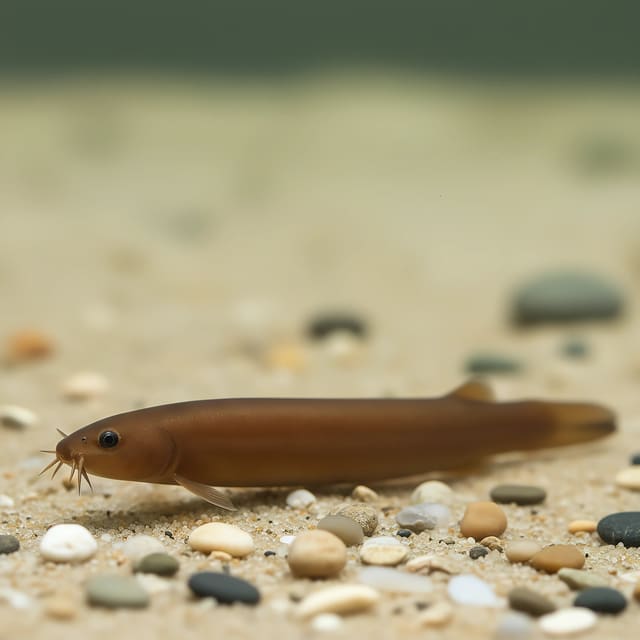
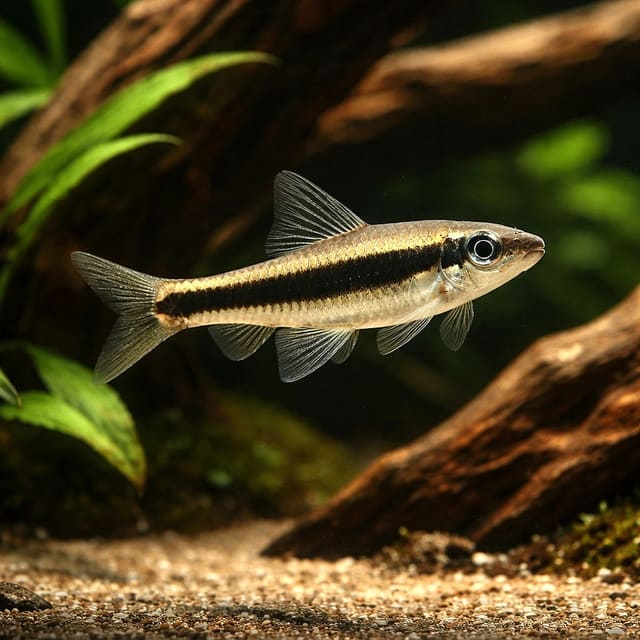
The Kuhli Loach (Acanthophthalmus kuhli) is a slender, eel-like freshwater member of the loach family Cobitidae from Java in Indonesia. It reaches a recorded maximum length of 12 cm and suits a keeper prepared to plan for a social group, provide a fine bottom and maintain a biologically mature, filtered aquarium. Its nocturnal routine rewards observation at quieter times rather than an expectation of continuous daytime activity.
Wikipedia’s account of the Kuhli Loach describes an orange-pink, worm-shaped body marked by triangular black stripes. These are natural-history traits of the species.
| Name | How it is used |
|---|---|
| Kuhli Loach | The principal common name used here. |
| Coolie loach | An established alternative common name. |
| Eel loach | An occasional name referring to its slender shape. |
| Striped Loach | A trade name associated with this exact offer. |
| Prickly Eye | A trade name referring to the spine beneath each eye. |
| Suits | Not suited to |
|---|---|
| A plan for a social group of at least five | A plan centred on keeping one loach alone |
| Sand or fine aquarium gravel | A bottom that may injure sensitive skin or barbels |
| A mature aquarium with an established filter | An unfiltered or biologically immature aquarium |
| A community screened for water, activity and feeding access | A community chosen without checking those requirements |
Browse our loaches and oddballs collection when comparing its body shape and aquarium role with other fish.
One purchase supplies one animal in the size selected. The size choices are 4–5 cm, 5–6 cm, 6–7 cm and 7–8 cm. Use the live size selector to see which choices can be selected when you order.
The size you select is the size supplied, not the adult size. A 4–5 cm fish therefore requires the same long-term planning as a larger supplied size. Choose according to the aquarium and existing fish, but base the permanent setup on the recorded maximum length and the intended social group.
Sex is guaranteed only when the selected option explicitly states male or female. This Kuhli Loach listing has no sex-guaranteed option.
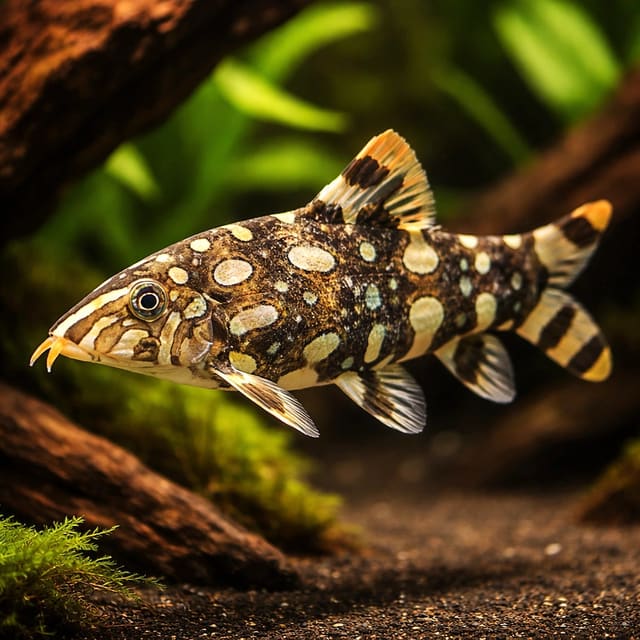
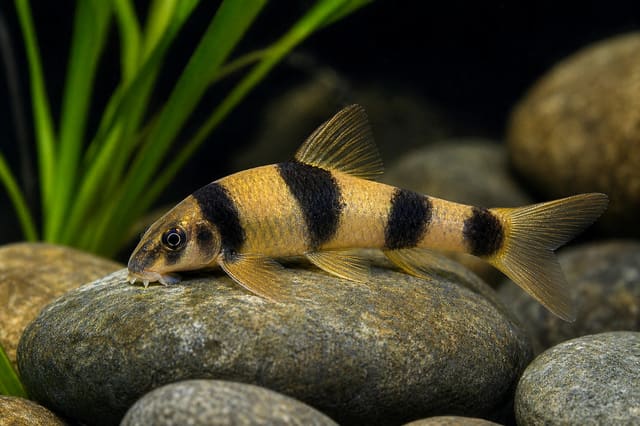
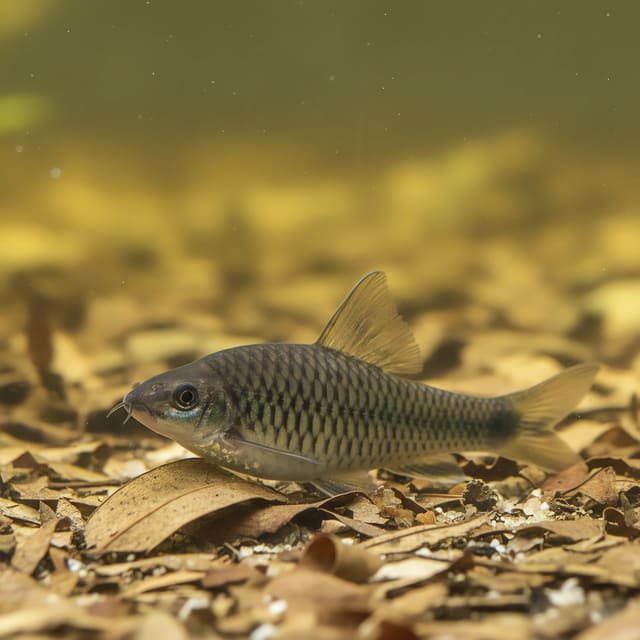
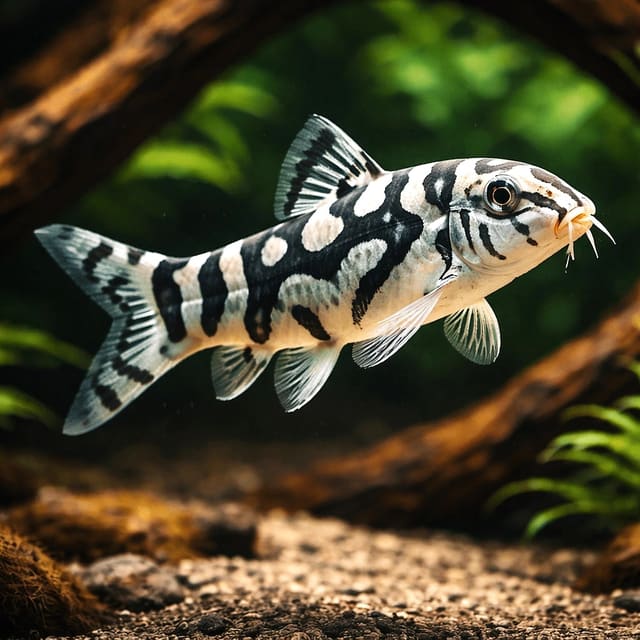
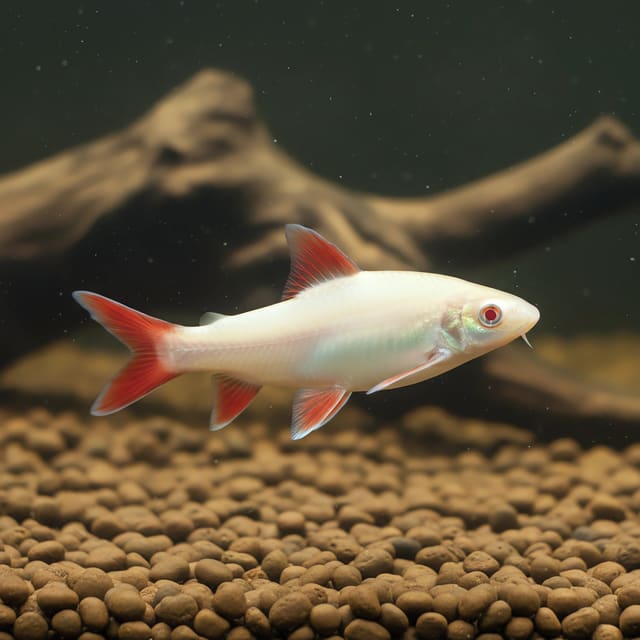
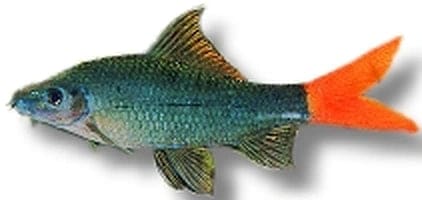
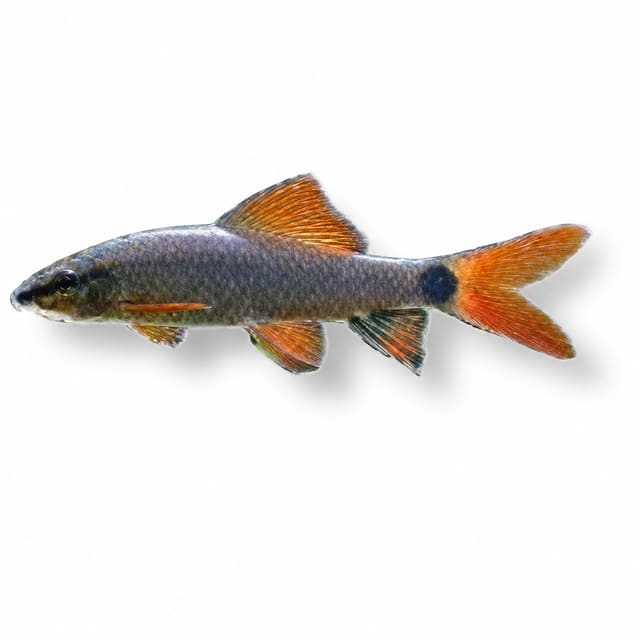
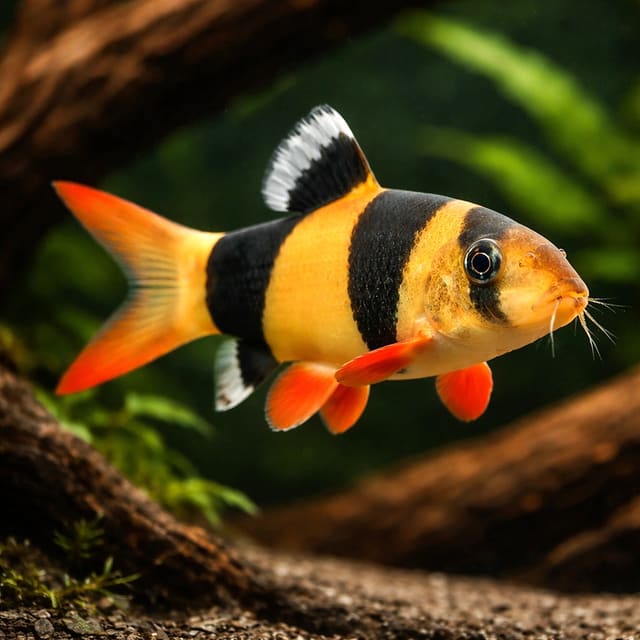
The gallery images are representative, based on reference photographs of this species, so colours can look slightly different from the live animal.
FishBase records a maximum length of 12 cm total length for the identified species, alongside an environmental range of 24–30°C, pH 5.5–6.5 and hardness up to 5°dH. FishBase now lists it as Pangio kuhlii, with Acanthophthalmus kuhli treated as a synonym. Use 12 cm as the decisive length for long-term planning rather than assuming the fish will remain within its supplied size band.
OATA’s freshwater loach guidance gives 22–27°C, pH 6.5–8.0 and general hardness of 4–12°dH for the group, not a species-specific optimum. The routine aquarium overlap between the FishBase species values and OATA guidance is 24–27°C, pH 6.5 and 4–5°dH. OATA also recommends a group of at least five, with more being better, and an aquarium of at least 80 litres for a shoal of the smallest loach species.
| Decision | Planning figure |
|---|---|
| Recorded maximum length | 12 cm total length |
| Social group | At least five; more is better |
| Space baseline | At least 80 litres for a shoal of the smallest loaches |
| Aquarium temperature | 24–27°C |
| Aquarium pH | 6.5 |
| General hardness | 4–5°dH |
Start with the 80-litre group baseline, then account for the full community, swimming space, cover, waste load and adult dimensions. A larger aquarium generally gives more stable temperature and water quality, so capacity should rise when other fish share the system.
Use fine aquarium gravel or, ideally, sand across the areas the loaches will explore. OATA identifies a fine substrate as important because loaches have sensitive skin and barbels that may be injured while burying or moving across unsuitable material.
Plan the lower part of the aquarium as a connected living area rather than leaving a single isolated cave. Live plants are useful for cover, especially for shy fish. Where live plants are impractical, use aquarium-safe artificial plants and suitable ornaments such as model caves or plant pots to create shelter.
For an 80-litre planning baseline, first reserve enough clear bottom area for the group to move between shelters. Add caves and planting around that route rather than filling every open patch. The result should offer cover without preventing maintenance or making uneaten food impossible to see.
Inspect ornaments for rough contact surfaces before placing them. The goal is to provide a fine bottom, practical shelter and an aquarium that can be cleaned without repeatedly dismantling the loaches’ cover.
Look across the aquarium floor before filling the final gaps with decoration. A loach leaving one shelter should be able to reach another protected area without crossing the entire tank in exposed space. Keep at least one feeding patch visible from the front so you can confirm that food reaches the substrate and is eaten.
After the aquarium is running, check whether waste gathers behind caves or beneath artificial plants. If routine siphoning cannot reach those areas, move the decoration before the group is introduced. A practical layout lets you remove waste while leaving most shelter undisturbed, which makes weekly maintenance more consistent.
A working biological filter is essential. The RSPCA’s aquarium welfare guidance explains that fish release toxic ammonia. Beneficial bacteria in a well-established filter convert ammonia to nitrite and then to the safer nitrate.
Prepare and mature the aquarium before livestock is introduced. Our first tropical aquarium guide explains the practical sequence for establishing the system. Do not use the arrival of the loaches as the event that begins filter maturation.
Stocking too quickly can cause new tank syndrome. This happens when the filter does not contain enough nitrifying bacteria to process the increased waste, allowing ammonia or nitrite to rise to harmful levels.
Treat every addition to the community as a new demand on the filter. A test result of 0 mg per litre ammonia and 0 mg per litre nitrite before introduction is a starting condition, not permission to add an unlimited number of fish at once. Increase the population gradually and keep testing as feeding and waste rise.
Test ammonia and nitrite after the livestock addition rather than waiting for the normal weekly maintenance day. If either result rises above 0 mg per litre, pause further additions, check that the filter is operating normally and continue testing while the increased biological load settles.
Compare each result with the amount fed and the number of animals added. A rise after a larger addition is a reason to slow the stocking sequence, not to compensate by adding another group. Keep feeding within the once-daily few-minute limit so the filter is processing fish waste rather than avoidable leftovers.
Use 24–27°C, pH 6.5 and general hardness of 4–5°dH as the routine aquarium range. These values are the overlap between the species-level FishBase environmental values and OATA’s loach-group aquarium guidance. Use carbonate hardness of 3–10°dKH as OATA’s broader group guide. Measure the aquarium rather than relying on heater settings, tap-water assumptions or an old test.
FishBase records the species in a tropical freshwater environment of 24–30°C, pH 5.5–6.5 and hardness up to 5°dH. OATA’s aquarium guidance gives 22–27°C, pH 6.5–8.0 and 4–12°dH for loaches. Keep routine values within the overlap rather than widening the species range.
Our water chemistry guide explains what each measurement means. Enter measured results in the water matcher when comparing the aquarium with the stated ranges.
OATA recommends that aquarium nitrate should not exceed 20 mg per litre above the normal tap-water level. This is a relative ceiling, so test the source water as well as the aquarium.
| Normal tap-water nitrate | Aquarium ceiling |
|---|---|
| 5 mg per litre | 25 mg per litre |
| 10 mg per litre | 30 mg per litre |
| 20 mg per litre | 40 mg per litre |
The calculation is the normal tap result plus 20 mg per litre. Ammonia and nitrite remain at 0 mg per litre regardless of the tap-water nitrate reading. If a result moves outside the intended range, check the test, maintenance record, stocking pace, feeding and filter operation before adding more fish.
Read temperature, pH and hardness together because a single matching value does not make the whole aquarium suitable. For example, water at 25°C is within the routine temperature range, but the pH and hardness still need their own measurements before the aquarium passes the water check.
When a new result differs from the previous one, repeat the test before acting and review what changed between readings. Check replacement water, recent maintenance, stocking and feeding. This separates a testing error from a developing aquarium change and prevents unnecessary adjustments based on one isolated result.
Carry out a partial water change of 25% at least once every week. In an 80-litre aquarium, 25% is 20 litres. Base the calculation on the aquarium’s actual water volume when displacement from substrate and ornaments is known.
Treat replacement tap water with a suitable conditioner before it enters the aquarium so chlorine or chloramine does not harm the fish or the filter bacteria. Use a siphon to remove solid waste while protecting the fine substrate and keeping established cover usable.
If the filter needs cleaning, do not run it under the tap because chlorine or chloramine may kill the beneficial bacteria living in the media. Rinse it lightly in aquarium water removed during the partial water change to reduce the amount of bacteria lost.
A filter check does not mean replacing or scrubbing every component each week. Look for a blockage or loss of normal operation and clean only as needed. Pair that inspection with the weekly water tests so a change in filter performance is identified before ammonia or nitrite accumulates.
Regular maintenance also limits the breakdown of uneaten food. This matters for a bottom-feeding group because sinking food remains close to the substrate if too much is offered.
| Actual water volume | 25% change |
|---|---|
| 80 litres | 20 litres |
| 100 litres | 25 litres |
| 120 litres | 30 litres |
Use these examples as arithmetic rather than as aquarium-size recommendations. Multiply the actual water volume by 0.25 to calculate a 25% change, and carry it out at least once every week. If an aquarium holds 100 litres after allowing for substrate and ornaments, removing 25 litres completes the change.
Record the amount changed beside the test results. A consistent record makes it easier to notice whether nitrate is approaching its tap-water-based ceiling or whether a missed maintenance task coincides with a change in water quality.
Feed once a day and offer only what the fish can eat within a few minutes. Loaches are omnivorous, and their staple should be good-quality sinking pellets or granules that reach the bottom rather than remaining at the surface.
Add small live or frozen foods such as daphnia, small bloodworm or tubifex for variety. Keep the pieces suitable for the fish to take and count these items as part of the daily ration rather than adding them without adjusting the staple amount.
Do not expect bottom-dwelling fish to live on accidental scraps. A direct ration makes it possible to judge food intake and reduce the risk that faster community fish consume the whole meal first.
Some loach species may eat aquarium snails, but that group observation does not make snail control a dependable role for this fish. Choose the Kuhli Loach for its own care and behaviour, then manage pest snails through feeding control and aquarium maintenance.
Use body condition, interest in food and the amount left after a few minutes to refine portions. A reduced appetite is a health-change signal, while persistent leftovers indicate that the ration, feeding position or community competition needs attention.
If food remains after a few minutes on the first day, remove what you can and offer less at the next daily feed. If every item is intercepted before reaching the substrate, divide the same total ration between two accessible bottom areas instead of increasing the amount.
Watch more than the fastest animal. A feeding plan works only when the group can reach the food within the allowed period. When one area is repeatedly dominated, move one portion nearer a second shelter and confirm that the quieter fish feed there.
Check the substrate again after the feeding period. Food lodged where it cannot be eaten should be removed, and the placement should change at the next feed. This links portion control with water quality rather than allowing hidden leftovers to accumulate.
Plan for at least five loaches in the home aquarium, with more being better. Count the group as part of the aquarium’s total adult stocking plan rather than treating several slender fish as having no effect on capacity or filtration.
The Kuhli Loach is nocturnal, so schedule some observation when the aquarium is quiet and the fish are naturally active. Daytime inactivity alone should not be used to judge the whole group’s feeding or condition.
| Question | Decision |
|---|---|
| How many loaches? | At least five; more is better. |
| How much aquarium space? | Start from the 80-litre small-loach shoal baseline and include every other fish. |
| How many shelters? | Provide cover across the bottom rather than one congested refuge. |
| When should they be watched? | Include a quiet nocturnal observation period. |
| How should additions be made? | Increase fish numbers slowly so the biological filter can adjust. |
Where a complete group cannot be introduced at one time without overloading the filter, choose a stocking sequence that protects water quality. Test ammonia and nitrite as the population increases, and pause further additions if either rises above 0 mg per litre.
Observe whether all group members can reach shelter and sinking food. If one feeding point becomes dominated, divide the ration between accessible bottom areas without increasing the total amount. This addresses access while retaining the once-daily, few-minute feeding limit.
Count the animals during a quiet observation period and note which shelters and feeding areas they use. The purpose is not to force every fish into view at once, but to learn where each member can be checked and whether all parts of the group have access to food.
Keep the stocking sequence tied to water results. When ammonia and nitrite remain at 0 mg per litre and feeding produces no persistent leftovers, the aquarium is coping with the present load. If either water value rises or food access becomes unreliable, pause the sequence and resolve that issue before increasing the group or adding community fish.
Once the planned group is complete, continue counting it within every future capacity decision. Adding upper- or mid-water fish still increases waste and feeding demand even when those animals occupy a different part of the aquarium.
Loaches have a spine immediately beneath each eye and must be handled carefully. They also have reduced or absent scales and may be intolerant of some medications. Check that any medicine is suitable for loaches before use and follow qualified product guidance rather than increasing a dose.
Healthy-fish checks include clear, bright eyes, undamaged fins, no ulcers or bumps and appropriate swimming behaviour. Establish what normal nocturnal activity looks like for the group so a genuine change is easier to recognise.
| Change noticed | First response |
|---|---|
| Hanging at the surface or erratic swimming | Test ammonia, nitrite, nitrate and temperature. |
| Breathing faster or slower than normal | Check water quality and filter operation promptly. |
| Darker or paler colour | Compare behaviour, breathing and recent water results. |
| More hiding than normal | Check water, activity in the community and access to shelter. |
| White spots or fluffy growths | Seek fish-health guidance before choosing medication. |
| Reduced food intake | Check water quality, feeding access and other visible changes. |
If any livestock shows a concerning change, test the aquarium first and contact us for health guidance. Keep the exact water results, the time the change began and a description of swimming, breathing, colour and feeding to hand.
Do not treat a nocturnal routine as illness without looking at the whole pattern. A health decision should combine water tests with a change from the fish’s normal behaviour or appearance. Equally, do not dismiss rapid breathing, abnormal swimming or loss of appetite simply because the fish often rests during the day.
Many loaches can mix with community fish, but every proposed combination remains conditional. The aquarium must suit the adult dimensions and water needs of all inhabitants, provide enough capacity for the full stocking plan and allow the loach group to reach sinking food.
General loach guidance notes that active loaches may be too busy for some shy fish. It gives danios, larger tetras and barbs as examples of more confident community fish, but those examples still require checks for water overlap, aquarium capacity and individual behaviour before they are combined with Kuhli Loaches.
No named companion is a universal match. Individual fish behaviour, aquarium layout and the number of animals present can change the outcome even where basic water values overlap.
For a stocking and compatibility assessment, ask us with the aquarium volume, dimensions, measured water values, filter status, current livestock and intended numbers. Those details allow a useful decision instead of relying on a generic list.
A shared temperature range is not enough when the proposed fish requires different pH or hardness, when adult dimensions exceed the aquarium plan or when activity prevents the loaches from feeding. Treat each failed check as a reason to revise the combination rather than averaging several unsuitable conditions into one decision.
Capacity must include the full intended numbers. An aquarium that can accept one additional fish has not passed the screen for a social group of at least five. Likewise, an aquarium with enough nominal volume can still fail when decoration removes usable bottom space or every feeding route is controlled by faster inhabitants.
Write down the proposed numbers before adding anything. Compare those numbers with the mature aquarium, water measurements and feeding layout, then decide whether the entire combination works together.
Start with the Kuhli Loach group as a fixed requirement: at least five, planned around a recorded maximum length of 12 cm each. Then add the adult size, water range and activity of every proposed companion to the decision.
A candidate group occupies the middle of the aquarium, uses overlapping water conditions and continues to leave sinking food accessible. This passes the first screen, but capacity, filter maturity and observed behaviour still decide whether the combination can work. Add fish numbers slowly and test ammonia and nitrite after the waste load increases.
If existing fish become more withdrawn when other inhabitants move actively around them, adding loaches may increase that disturbance. Choose a different stocking plan rather than assuming every peaceful community label guarantees a suitable activity match.
A water-compatible community still fails the feeding screen when faster fish consume the whole ration before sinking pellets or granules reach the bottom. Change food placement and divide the same daily ration between reachable feeding points. If reliable access cannot be created, the combination is unsuitable.
Do not add a social species as a single token fish merely because there is no room for the recommended group. Rework the stocking plan around at least five loaches and the 80-litre small-loach shoal baseline, allowing more capacity for a larger mixed community.
An aquarium may meet the volume baseline yet leave too little usable bottom area after large ornaments are installed. Rework the layout so the group has connected shelter, accessible feeding patches and areas that can be siphoned. If that cannot be achieved without crowding the other inhabitants, choose a different community plan.
Record ammonia and nitrite after additions, confirm both remain at 0 mg per litre and watch whether every group member reaches food. Compare hiding, swimming, colour, breathing and feeding with the pattern established before the new fish arrived.
If the combination changes feeding access or causes shy fish to withdraw, adjust food placement or revise the stocking plan promptly. Do not add another species while an existing compatibility issue remains unresolved.
Continue observing after introduction. Changes in hiding, feeding, swimming, colour or breathing can indicate that the social or environmental match needs prompt attention.
FishBase records a maximum adult length of 12 cm total length, so plan the permanent aquarium around that figure rather than the size supplied.
OATA’s loach guidance uses at least 80 litres for a shoal of the smallest loach species; include the full community, adult dimensions, cover and waste load when deciding whether more space is needed.
OATA’s loach guidance recommends at least five in the home aquarium, with more being better.
It suits a keeper who can mature and maintain a filtered aquarium, keep ammonia and nitrite at 0 mg per litre, provide fine substrate and plan for a group of at least five.
Feed good-quality sinking pellets or granules once daily, offering only what is eaten within a few minutes, with small daphnia, bloodworm or tubifex for variety.
Use the FishBase–OATA overlap of 24–27°C, pH 6.5 and 4–5°dH for routine aquarium care, with ammonia and nitrite at 0 mg per litre.
OATA describes many loaches as peaceful, easy-going community fish, although their activity may disturb shy species; screen every match for activity, water needs, capacity and feeding access.
OATA names danios, larger tetras and barbs as examples of confident community fish for loaches, but each combination still needs matching water requirements, enough aquarium capacity and reliable access to sinking food.
Film every delivery continuously from the sealed parcel before opening it, keeping the outer box visible as it is opened and showing the fish still inside the sealed bag. Someone must be present to receive the parcel. Float the bag for 20–30 minutes before releasing the fish, and never pour the bag water into the aquarium.
Independently collected by Judge.me from customers who bought this item. All reviews are shown.
all was great