
 By Connor Boyle
Kuhli Loach (Acanthophthalmus kuhli)
24–27°C · pH 6.5–6.5
£2.99
Loaches & Oddballs · Buying Guide
Kuhli loaches (Pangio kuhlii) — the eel-like substrate-burrowers every UK planted tank wants. Social biology, substrate welfare, species ID, and live stock.
8 products in stock today
Live prices and stock. Every fish covered by our Live Arrival Guarantee.
24–27°C · pH 6.5–6.5
24–28°C · pH 5.5–7.5 · 60L
22–27°C · pH 6.5–7.5
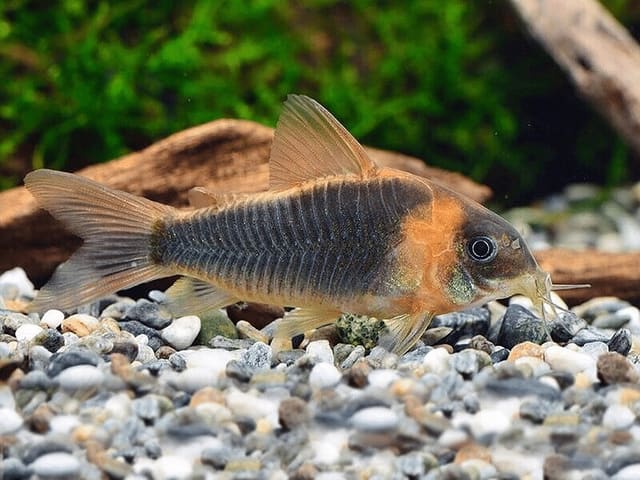
24–26°C · pH 6–8 · 81L
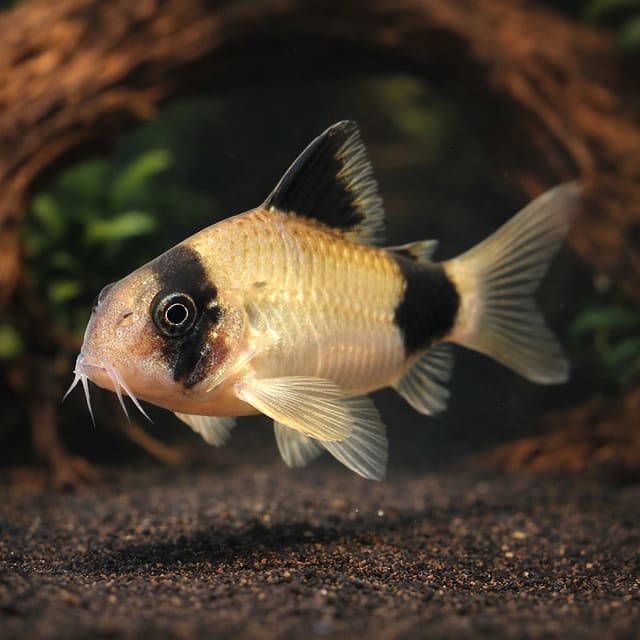
22–25°C · pH 6–7.4
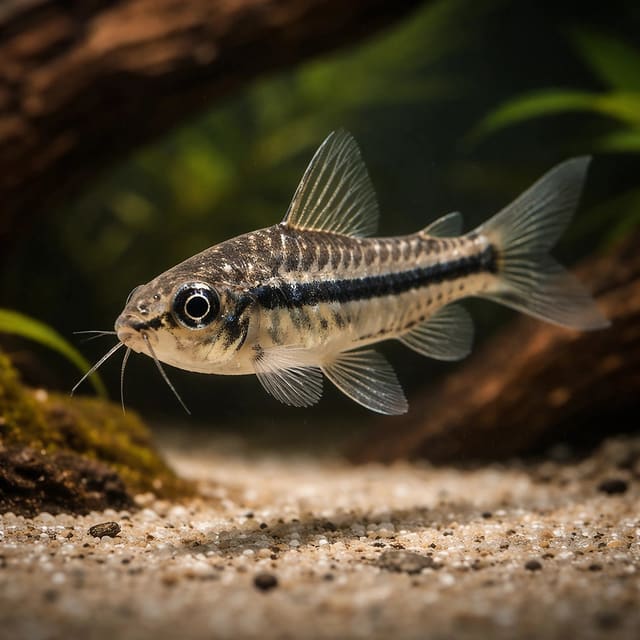
22–26°C · pH 6.4–7.4 · 41L
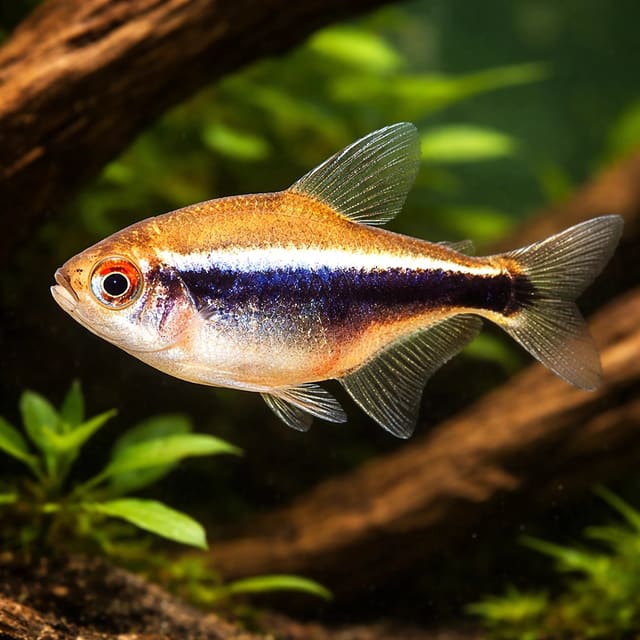
20–28°C · pH 5–7.5 · 72L
The shaded band shows the range kuhli loach is comfortable in. Match it to your tap water before you buy.
Our trained assistant knows this kuhli loach page inside out. Ask it anything — water parameters, tank mates, how many to buy — or have it read the guide aloud while you set up your tank.
Before the misconceptions about diet, appearance, and activity — a kuhli loach is a 7–10 cm eel-shaped Cobitoid loach from the forest streams of Southeast Asia. Indonesia, Malaysia, Thailand, parts of Borneo [1]. The eel shape is convergent evolution for substrate-burrowing; they're not related to eels at all.
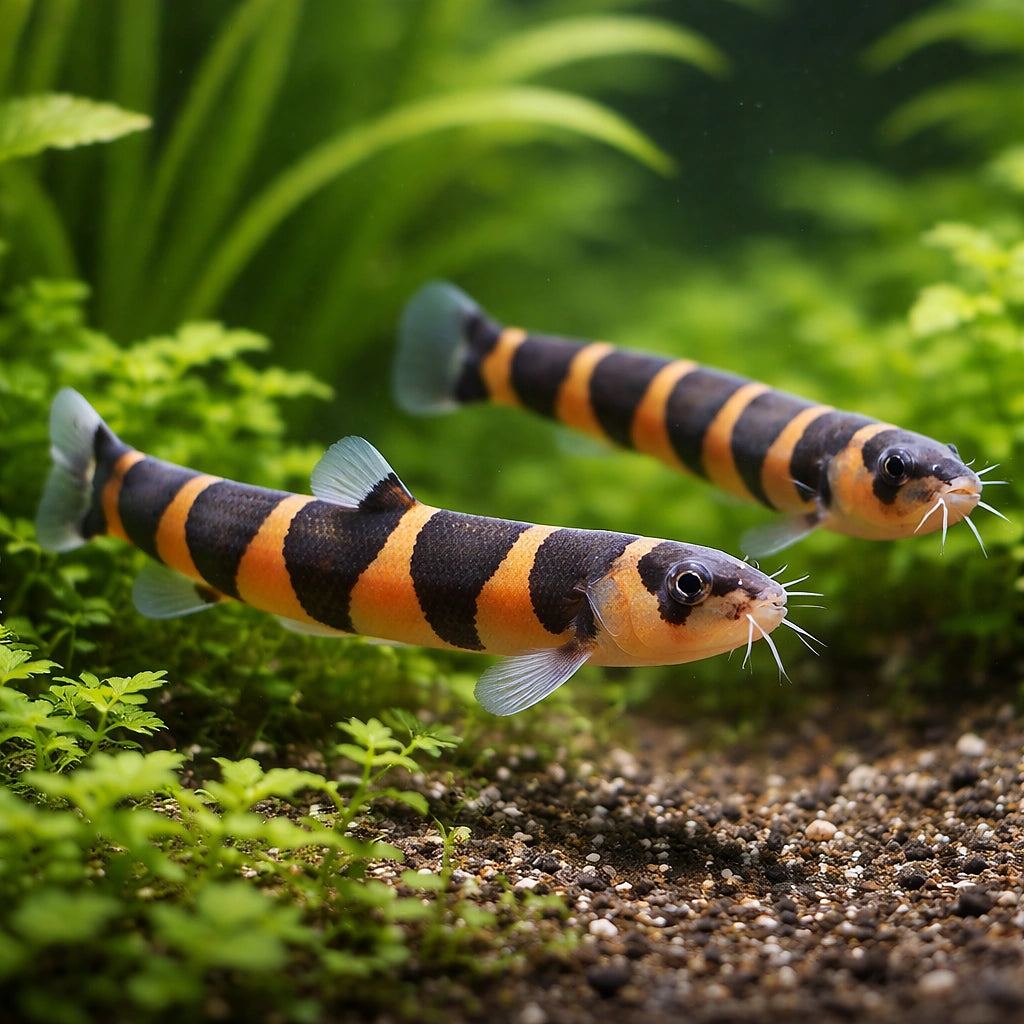
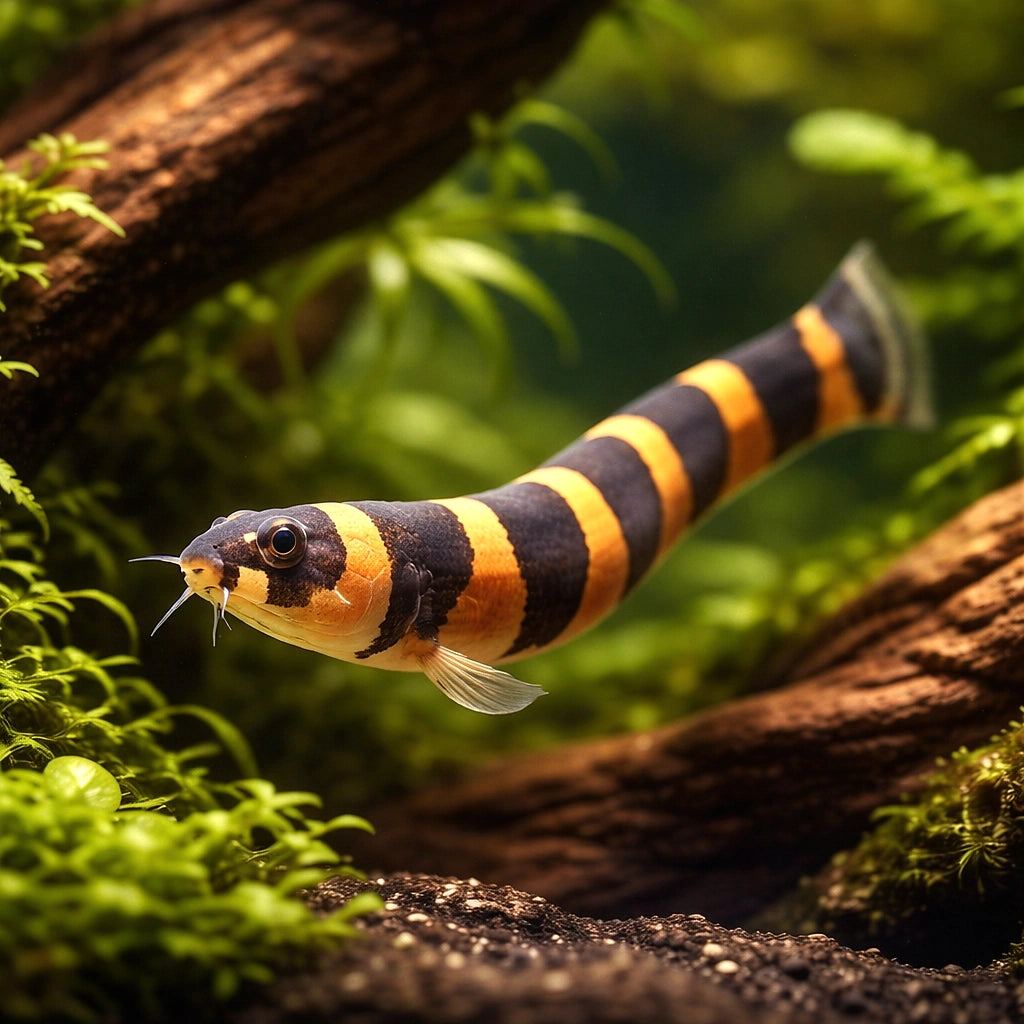
Two Kuhli Loaches showing the characteristic vertical black banding over a warm orange-brown body. The pattern helps them disappear against substrate and leaf litter in their natural habitat. Photo: Tropical Fish Co warehouse.
I'm Connor Boyle, the site's coldwater and UK-native specialist — I came to the hobby via temperate setups and unusual species, and kuhli loaches have been in my own tanks since I pivoted from marine to freshwater in 2017. This guide is the version I'd write for someone who just bought three kuhlis and is confused about why they've disappeared.
This is the welfare point UK hobby sources underplay.
Kuhli loaches are scaleless. Where most fish have overlapping dermal scales that protect the underlying skin, kuhli loaches (like catfish and some other loach species) have bare skin with a mucus coating for protection. The mucus regenerates continuously, but it doesn't protect against mechanical abrasion the way scales do.
Every burrowing motion — and kuhli loaches burrow many times a day — brings their skin into contact with substrate. Sharp- edged substrate causes:
The welfare guidance is clear: substrate for burrowing species must be soft enough to allow burrowing without injury [7].
The social biology of Pangio kuhlii isn't extensively studied in the peer-reviewed literature, but observational work on related Cobitoid loaches and direct aquarium observation [2] points at the same pattern we see across loaches generally:
The welfare floor for group size is five. If you keep three because that's what your shop had, the fish aren't "fine" — they're chronically under-socialised. Buy a complete group or wait until you can.
| Common name | Species | Body pattern | UK availability |
|---|---|---|---|
| Standard Kuhli Loach | Pangio kuhlii | Horizontal banded (orange + black) | Widely available |
| Brown / Chocolate Kuhli | Pangio oblonga | Uniform dark brown | Less common |
| Black Kuhli | Pangio myersi | Uniform black | Uncommon |
| Panda Kuhli | Pangio cuneovirgata | White + black bands | Specialist shops |
| Half-banded Kuhli | Pangio semicincta | Incomplete banding | Rare |
| Giant Kuhli | Pangio myersi (larger) | Brown, 15 cm | Very rare |
Historically all these species were sold as "Kuhli Loach" — modern taxonomy separates them [3]. Most UK shops now label the standard banded species as Pangio kuhlii specifically.
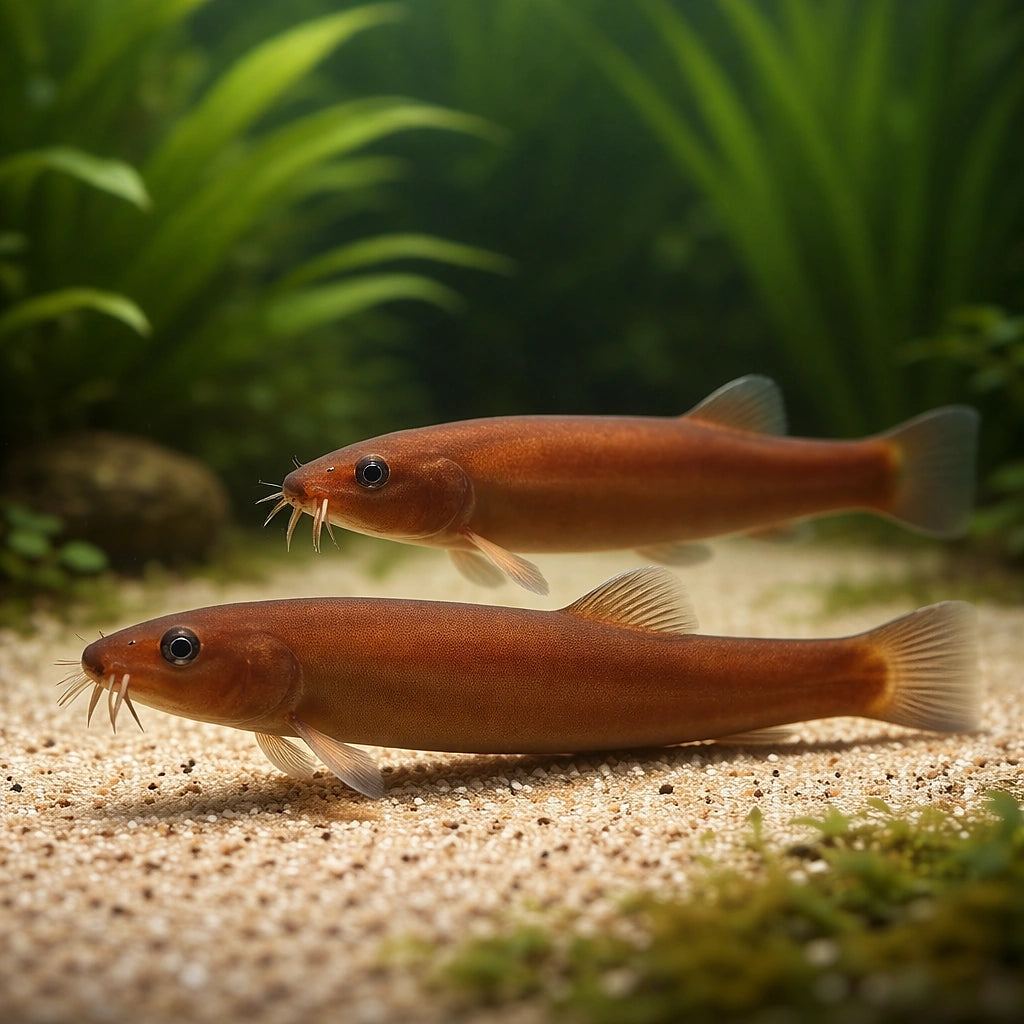
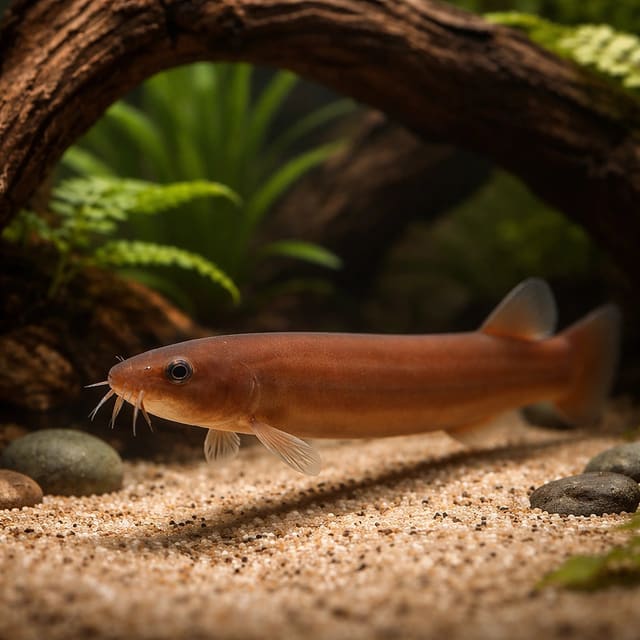
A Brown Kuhli Loach. Uniform brown body without the banded pattern of the standard species — a completely different visual effect in a planted tank. Photo: Tropical Fish Co warehouse.
Kuhli loaches have three distinct activity phases:
Daylight hours: hidden almost entirely. Under driftwood, inside caves, burrowed into substrate with only their head occasionally visible. This is normal. It's the behaviour they would show in a stream in Indonesia, and it's not a problem that needs fixing.
Dusk/evening (lights-off to ~1 hour after): most active phase. Schooling behaviour across the substrate, active foraging for leftover food, interaction with tank mates. If you want to observe your kuhlis, this is when.
Overnight: continued foraging but slower pace. A moonlight LED (blue-biased low-intensity) lets you watch them without disturbing natural behaviour.
Install a £15 blue-LED moonlight above the tank on a timer that comes on when the main lighting goes off. Kuhli loaches ignore blue-biased low-intensity light — they'll continue normal foraging for 30–60 minutes after lights-off, visible to you. It's the single best way to actually see your kuhli colony.
Excellent companions:
Safe-with-caveat:
Avoid:
What's labelled "Kuhli Loach" in UK trade is actually multiple species. Use this table to identify what you're buying:
| Feature | Pangio kuhlii (Standard) | Pangio oblonga (Brown) | Pangio myersi (Black) | Pangio cuneovirgata (Panda) |
|---|---|---|---|---|
| Pattern | Horizontal orange + black bands | Uniform brown-olive | Uniform black | White + black bands |
| Typical adult size | 8 cm | 8–10 cm | 10–12 cm | 6–7 cm |
| Colour contrast needed in tank | Dark substrate shows bands | Light substrate shows body | Dense planted backdrop | Dark substrate + light plants |
| Breeding difficulty | Moderate | Moderate | Difficult | Difficult |
| UK trade availability | Widely available | Uncommon | Rare | Specialist |
| Typical UK 2026 price | £3–£5 | £4–£7 | £6–£10 | £8–£15 |
The standard banded Pangio kuhlii is what 95% of UK hobbyists actually buy. The rarer species are worth knowing for when you see them mis-labelled in shops.
| Symptom | Probable cause | Fix |
|---|---|---|
| Never seen during day | Normal nocturnal behaviour | Use moonlight LED, observe at lights-off |
| White cottony skin patches | Fungal (from substrate abrasion) | Change to sand substrate + antifungal |
| Skin missing pigment in patches | Fin rot / bacterial infection | Water quality check + antibacterial |
| Cloudy eyes | Bacterial infection | Antibacterial; check water parameters |
| Torn body near substrate | Sharp substrate damage | Change substrate to sand immediately |
| Group hiding permanently | Group too small (<5) | Add more kuhlis to reach 5+ |
| All escape attempts nightly | Dissolved O₂ too low | Add airstone or reduce stocking |
Kuhli loaches are moderate shippers but sensitive to ammonia in the bag due to small body + tight packing.
The welfare rule: we only ship kuhlis in groups of 5+, never solo. Our minimum order is 5.
For the species deep-dive, see our kuhli loach care guide — it covers breeding attempts, disease prevention, and year-one keeping.
Compatible species: the corydoras care guide covers the other substrate schooler, and the cardinal tetra guide covers the community water-column companion.
Full range: loaches & oddballs hub has every species in stock today. Broader bottom-dweller options at the bottom dwellers hub.
Visual route into the rest of our UK live-fish range.
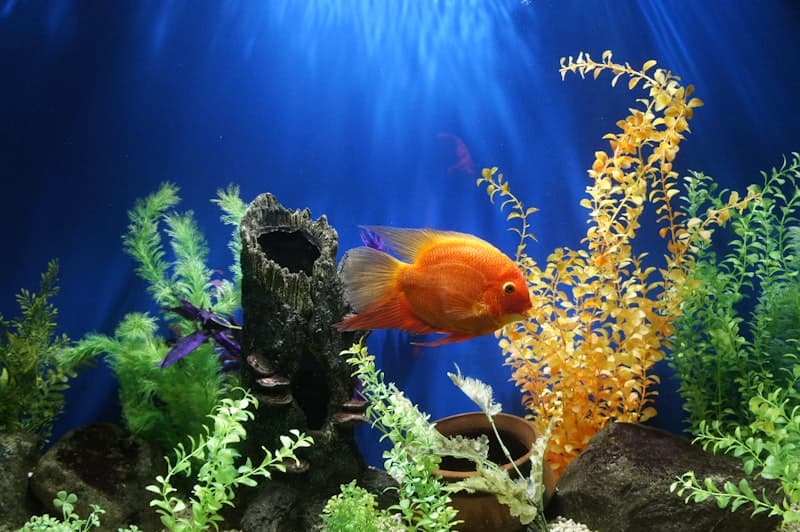
Loaches and oddball fish for sale UK — Kuhli, Clown, Yoyo, Knife Fish, Bichirs, Puffers, Mudskippers, Eels.
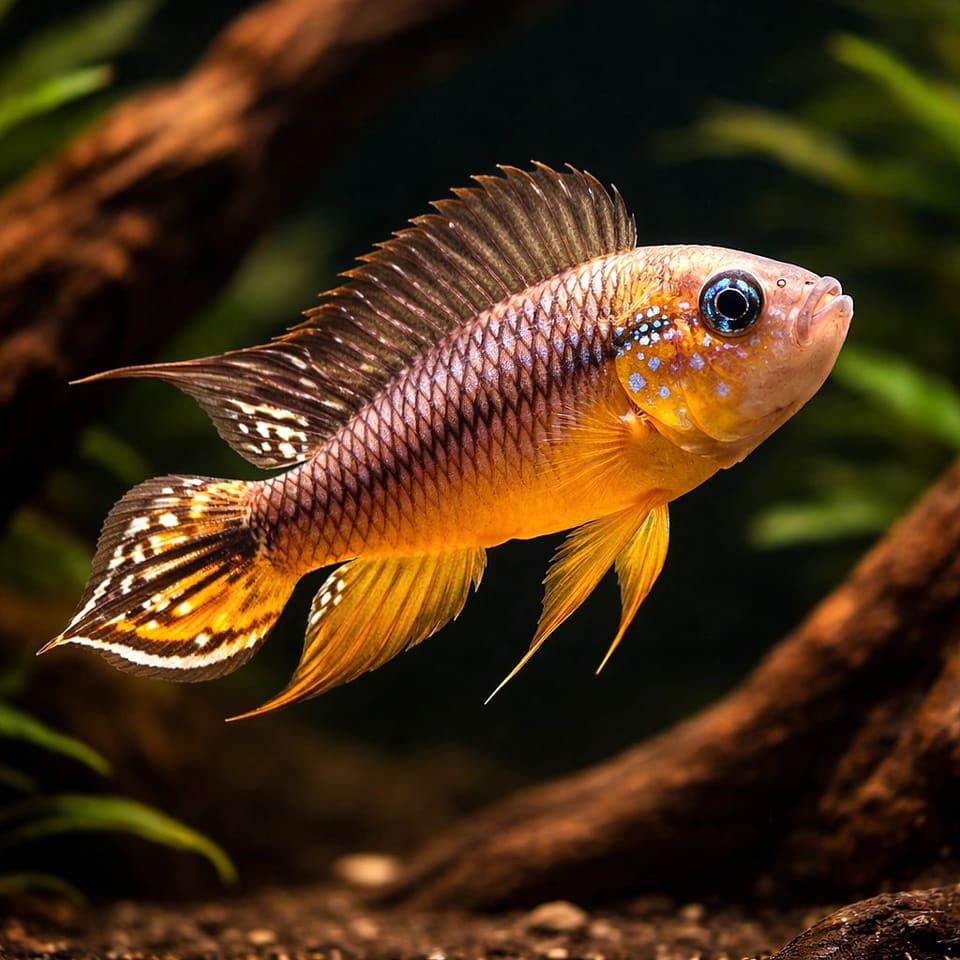
Bottom dweller fish for sale UK — Corydoras, Loaches, Plecos, Synodontis. Cleanup crew for the aquarium substrate.
Planted-tank fish for sale UK — peaceful, plant-safe species that showcase aquascaped layouts. Tetras, rasboras, dwarf cichlids, shrimps.
Material factual claims cite the sources below; store policy and cautious inference are labelled in the article. Sources are grouped by type so you can judge their weight at a glance.
Modern taxonomic treatment separating Pangio kuhlii from related species.
Source for taxonomy, habitat, and water-parameter ranges.
Least Concern — stable wild populations.
Husbandry + group-size welfare reference.
Species identification reference.
UK husbandry reference cited on substrate and tank-mate notes.
Video reference on nocturnal behaviour and group dynamics.
Welfare guidance on substrate + group requirements.
Fishkeeping moves fast and we want every guide spot-on. If you think something here is wrong, out of date, or could be clearer, tell us — our team reads every message and updates the page.
Suggest an editLoaches and oddball fish for sale UK — Kuhli, Clown, Yoyo, Knife Fish, Bichirs, Puffers, Mudskippers, Eels.
Bottom dweller fish for sale UK — Corydoras, Loaches, Plecos, Synodontis. Cleanup crew for the aquarium substrate.
Planted-tank fish for sale UK — peaceful, plant-safe species that showcase aquascaped layouts. Tetras, rasboras, dwarf cichlids, shrimps.
Kuhli loach care for UK keepers: plan an 80-litre group tank, compare water needs, choose safe substrate and avoid risky medication shortcuts.
Corydoras care for UK aquariums: compare popular cory catfish by adult size and temperature, then check tank, group, substrate, food and tank mates.
Amano shrimp care for UK aquariums: plan a mature 20L-plus tank, group, stable water, feeding, algae limits, tank mates, moulting and breeding.
Keep cardinal tetras thriving in UK water: check tank size, group size, tank mates, temperature and cardinal vs neon differences before you buy.
Marine & Coldwater Specialist · 9+ years in the hobby
Connor kept a reef aquarium for four years before switching to coldwater native fish and goldfish — he now runs a 400-litre river-community tank modelled on the Thames chalk streams. He writes Tropical Fish Co's coldwater, native-UK, and future marine guides.